

ProductPRODUCT
Featured products
Contact Us
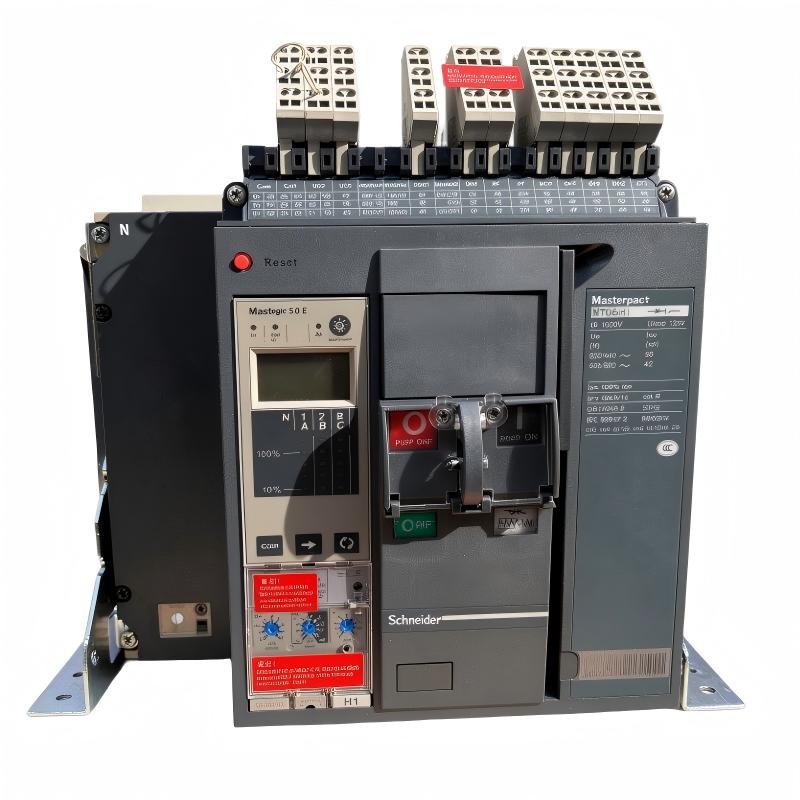
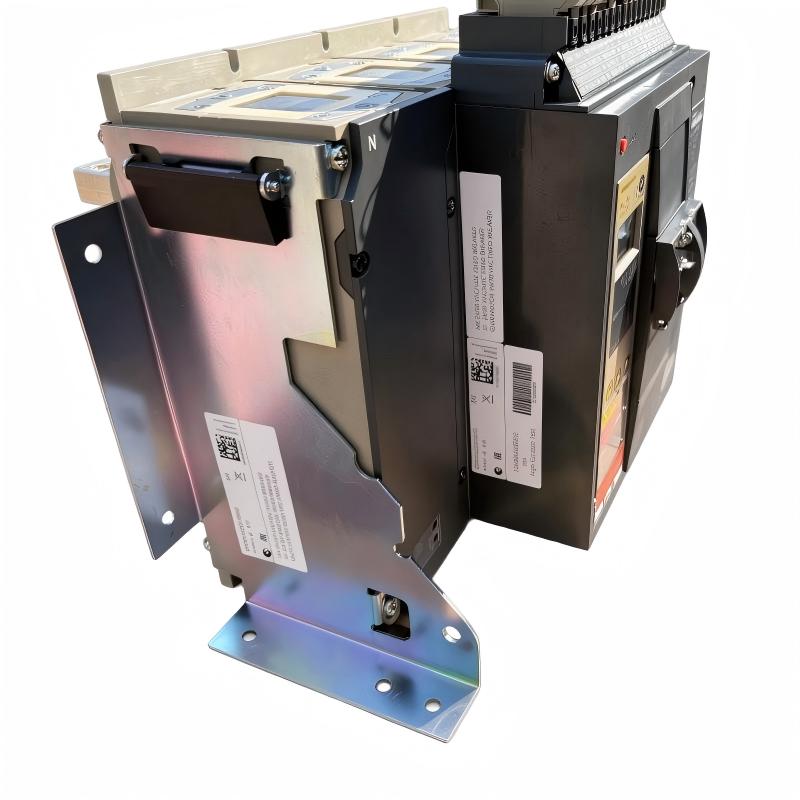
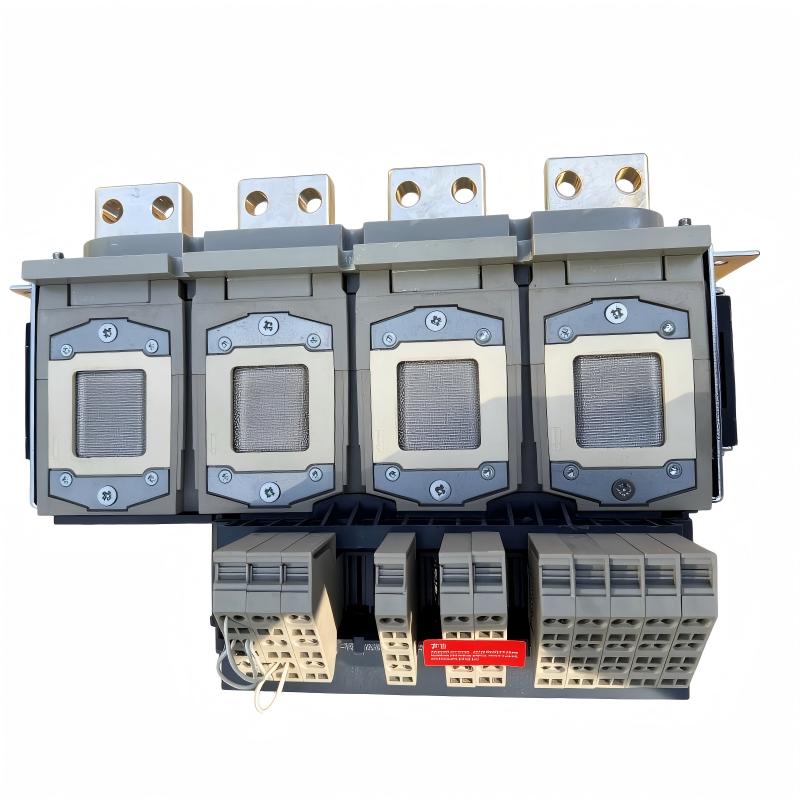
- Schneider
- NT06H1
- Circuit Breaker
- France
- 322 x 288 x 277 mm
- 30 kg
- Xiamen, China
- New & In Stock
- T/T, PayPal, Western Union
- 1 Year
- 1-3 Working Days
- DHL, UPS, TNT, FedEx and EMS.
- 24-Hour Service
- COO
- 3
Our advantage

Global Logistics
We have a 10-year logistics and express cooperation agreement, so our products can be shipped to any place in the world.

Brand new and original
Our products are imported in bulk from the place of origin. Because of the cooperative relationship, our products are all original and 100% new.

24-hour service
We provide 7*24 hours service to our customers. We will be there whenever you need us.

Price advantage
All our products are priced very favorably because we have our own warehouse and supply.
| Company Information | |||
| [email protected] | |||
| Mobile | +8615980777398 | ||
| +8615980777398 | |||
| 15980777398 |
Product Overview
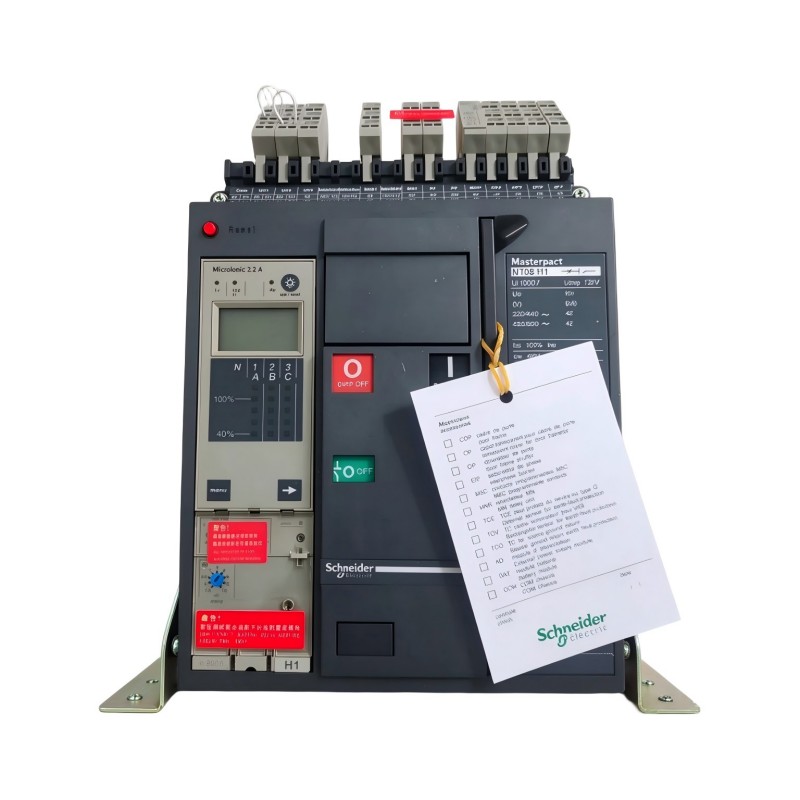
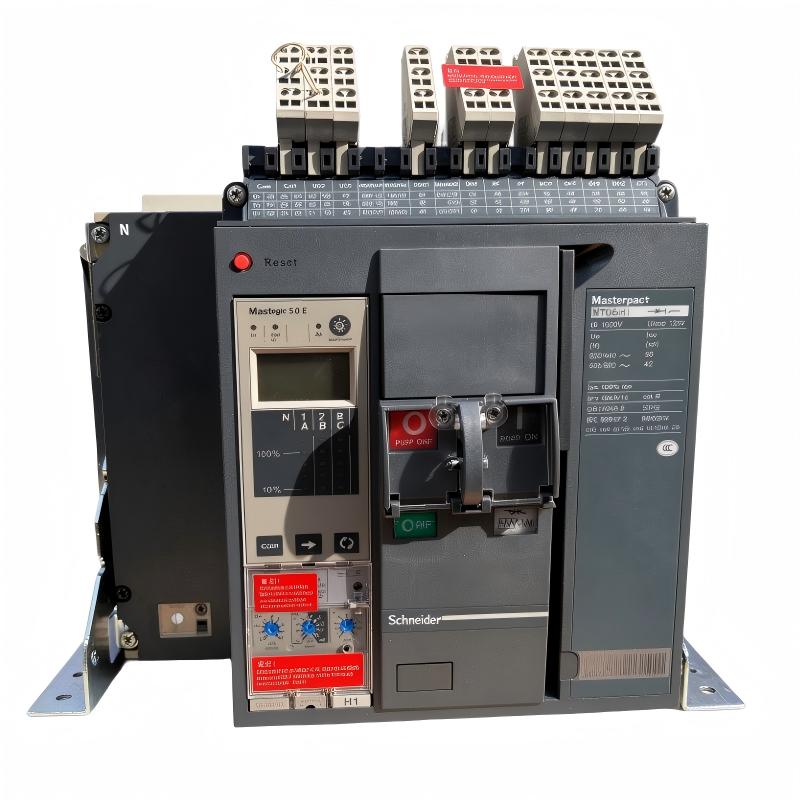
The Schneider Electric NT06H1 MasterPact NT Circuit Breaker is a low-voltage air circuit breaker designed for electrical power distribution and protection in industrial facilities, commercial buildings, and large electrical installations. It belongs to the MasterPact NT product family, which is designed for applications requiring high-current switching, reliable circuit isolation, and protection of electrical distribution systems.
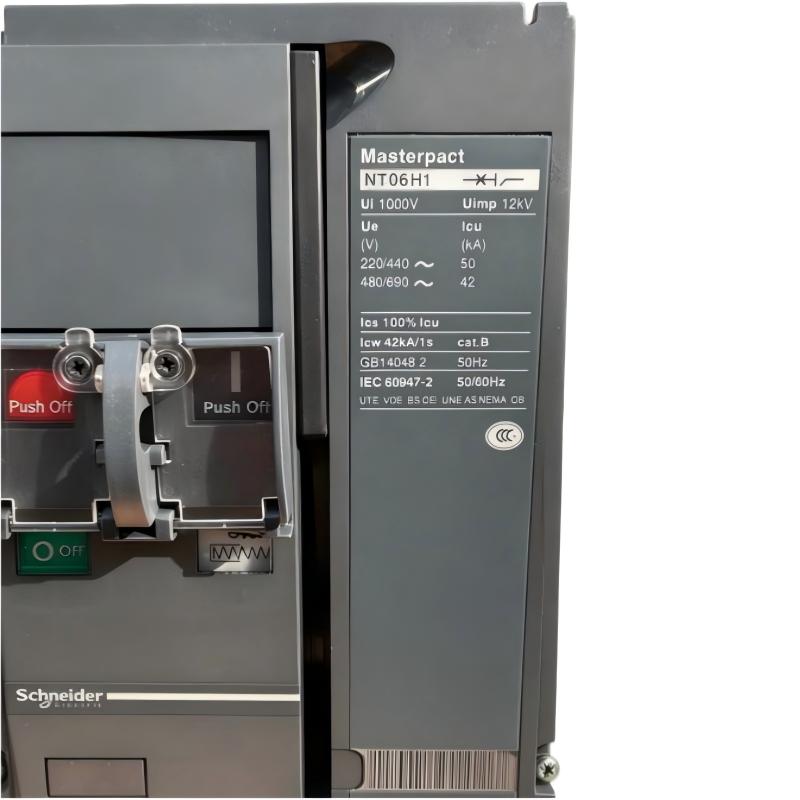
The NT06H1 is associated with a 630 A frame rating and an H1 breaking-capacity class. Its rated operational voltage can reach 690 V AC, depending on the installation configuration. The H1 version provides a rated ultimate short-circuit breaking capacity of 42 kA at 440 V AC. These characteristics make it suitable for appropriately engineered low-voltage distribution systems where protection and switching performance must be coordinated with the electrical network.
The supplied dimensions and weight correspond to the three-pole drawout configuration. The drawout design allows the circuit breaker to be withdrawn from its cradle for inspection, maintenance, or replacement without removing the entire switchgear assembly. This arrangement is particularly useful in installations where maintenance access and equipment availability are important.
The NT06H1 designation identifies the breaker family and breaking-capacity class rather than every detail of the complete product configuration. The final assembly may differ according to the number of poles, mounting arrangement, trip unit, connection type, and installed accessories. Buyers should therefore confirm the complete catalog number before ordering.
Technical Specifications
| Parameter | Specification |
|---|---|
| Brand | Schneider Electric |
| Product Family | MasterPact NT |
| Model | NT06H1 |
| Product Type | Air Circuit Breaker |
| Circuit Breaker Frame | NT06 |
| Rated Frame Current | 630 A |
| Breaking Capacity Class | H1 |
| Rated Operational Voltage | Up to 690 V AC |
| Network Frequency | 50/60 Hz |
| Ultimate Short-Circuit Breaking Capacity | 42 kA at 440 V AC |
| Number of Poles | 3P configuration corresponding to supplied dimensions |
| Mounting Configuration | Drawout, based on supplied dimensions |
| Control Unit | Must be verified against the complete catalog number |
| Insulation Voltage | 1000 V AC |
| Impulse Withstand Voltage | 12 kV |
| Applicable Standard | IEC 60947-2 |
| Dimensions | 322 × 288 × 277 mm |
| Weight | 30 kg |
| Typical Application | Low-voltage power distribution and circuit protection |
Note: NT06H1 is a breaker configuration designation, not a complete ordering reference. The specifications above describe the three-pole drawout configuration associated with the supplied dimensions. Verify the exact trip unit, connection arrangement, and accessories before installation.
Function and Working Principle
The MasterPact NT06H1 is designed to control and protect electrical circuits in low-voltage distribution systems. It provides switching and isolation functions while supporting interruption of fault currents within its specified breaking capacity.
1. Circuit Switching
The circuit breaker can be used to connect or disconnect an electrical circuit under the operating conditions permitted by its design. Switching operations allow electrical distribution equipment to be placed into or removed from service.
In industrial installations, this function is important when distributing power to production lines, large machinery, transformers, and other electrical loads.
2. Overcurrent Protection
An appropriately equipped circuit breaker uses a protection unit to monitor electrical current and initiate a trip when configured protection thresholds are exceeded.
Overcurrent protection helps protect cables, busbars, and connected equipment from excessive current. The actual protection functions and settings depend on the installed trip unit.
The NT06H1 designation alone does not confirm which protection unit is fitted. The installed trip unit must be identified before relying on specific protection functions.
3. Short-Circuit Interruption
Short circuits can produce extremely high fault currents within a very short period. The circuit breaker’s interruption system is designed to separate its contacts and extinguish the resulting electrical arc.
The H1 breaking-capacity class provides a rated ultimate short-circuit breaking capacity of 42 kA at 440 V AC. The available protection and interruption performance must be assessed against the prospective fault current at the installation point.
4. Electrical Isolation
The MasterPact NT06H1 is designed for isolation in accordance with the applicable IEC requirements. Isolation capability is important during maintenance and inspection because electrical equipment must be safely separated from its supply.
The correct isolation procedure must still include the required lockout, verification, and safety measures. A circuit breaker should not be treated as a substitute for the complete site electrical safety procedure.
5. Drawout Operation
In a drawout installation, the breaker is mounted in a dedicated cradle. It can be moved between defined operating positions according to the manufacturer’s procedure.
This arrangement supports inspection and maintenance without dismantling the entire switchgear structure. Operators must follow the specified racking procedure and ensure the breaker is in the correct condition before moving it.
Role in Industrial Power Distribution Systems
The NT06H1 can serve as an important switching and protection device within a low-voltage electrical distribution architecture.
Main Incoming Protection
In suitable switchgear designs, an air circuit breaker can be installed as an incoming protection device. It provides a means of switching and protecting the electrical supply entering a distribution section.
The selection must account for the available fault current, rated load current, protection coordination, and system grounding arrangement.
Feeder Circuit Protection
The breaker may also be used in feeder arrangements supplying downstream distribution boards, motor-control centers, or industrial equipment.
Correct coordination with downstream protective devices helps limit the impact of electrical faults and supports selective isolation where the system design allows it.
Integration with Electrical Monitoring
Depending on the installed trip unit and optional accessories, the breaker may support electrical measurement, protection status indication, and communication functions.
These capabilities should not be assumed from the NT06H1 designation alone. The complete installed configuration determines which monitoring and communication functions are available.
Maintenance and Equipment Availability
The drawout arrangement supports maintenance planning in larger switchgear systems. A breaker can be withdrawn from its cradle for inspection or replacement according to the manufacturer’s procedures.
This can simplify service work compared with a fixed installation, although the switchgear must still be safely isolated and handled by qualified personnel.
Industrial Applications
1. Industrial Main Distribution Panels
Manufacturing facilities often use low-voltage switchgear to distribute electrical power to different production areas. A suitably rated air circuit breaker can provide switching and protection at a major distribution point.
The NT06H1’s 630 A frame rating and H1 breaking-capacity class make it relevant to appropriately designed distribution systems.
2. Motor Control Centers
Motor-control centers supply power to groups of motors, drives, and auxiliary equipment. An air circuit breaker may be used as an incoming or feeder protective device within the wider electrical architecture.
Its selection should consider motor starting characteristics, system fault levels, and coordination with downstream protective equipment.
3. Industrial Manufacturing Plants
Large manufacturing facilities may contain automated production lines, material-handling equipment, compressors, pumps, and process machinery. Reliable power distribution is necessary for maintaining stable operation.
The NT06H1 can be considered for suitable switchgear applications where its current rating, voltage rating, and interruption capacity meet the system design requirements.
4. Commercial and Infrastructure Electrical Systems
Large commercial buildings and infrastructure facilities may use air circuit breakers in their main low-voltage distribution systems. These applications require appropriate protection coordination and compliance with applicable electrical standards.
The breaker configuration must match the electrical characteristics and installation requirements of the facility.
5. Utility and Auxiliary Power Distribution
Industrial utility systems may distribute power to cooling equipment, ventilation systems, water treatment equipment, and other essential services.
A properly selected air circuit breaker can provide switching and protection for these distribution circuits.
Installation and System Integration
Correct installation is essential for electrical safety and dependable circuit-breaker operation.
1. Verify the Complete Product Configuration
Before installation, identify the full catalog number and check the following:
- Three-pole or four-pole configuration.
- Fixed or drawout mounting arrangement.
- Rated current and sensor configuration.
- Installed trip unit and protection functions.
- Front or rear connection arrangement.
- Auxiliary contacts and electrical accessories.
- Communication and monitoring options.
The NT06H1 designation alone is insufficient to establish all these details.
2. Check Electrical System Compatibility
Confirm that the installation voltage, rated current, frequency, and prospective short-circuit current are within the breaker’s applicable ratings.
The H1 breaking-capacity class must be evaluated against the actual fault level at the installation point. Protection coordination with upstream and downstream devices is also necessary.
3. Prepare the Switchgear Compartment
The supplied dimensions are 322 × 288 × 277 mm. These values correspond to the three-pole drawout configuration.
Before installing the breaker, verify the cradle dimensions, mounting arrangement, connection position, busbar spacing, and required operating clearances. The switchgear compartment must be designed for the exact breaker configuration.
4. Inspect Primary Connections
Inspect the primary contacts, terminals, busbar connections, and insulation surfaces before placing the breaker into service.
Connections must be clean, correctly aligned, and tightened according to the manufacturer’s requirements. Incorrect connection conditions can cause overheating, increased contact resistance, or equipment damage.
5. Verify the Trip Unit
The installed trip unit determines the available protection functions and settings. Confirm its type, current rating, and protection configuration before energizing the system.
Protection settings should be established through an engineering study that considers cable ratings, load characteristics, fault levels, and coordination requirements.
6. Test Mechanical and Electrical Functions
Before returning the breaker to service, qualified personnel should verify the mechanical operating mechanism, opening and closing functions, position indications, interlocks, and installed auxiliary circuits.
Electrical protection testing should follow the manufacturer’s procedures and the maintenance requirements of the facility.
Compatible System Components
The NT06H1 operates as part of a larger switchgear and power-distribution assembly. The following components may be used in a compatible installation, depending on the complete breaker configuration.
| Component | Function | Integration Considerations |
|---|---|---|
| MasterPact NT drawout cradle | Supports the drawout breaker | Must match the breaker frame, pole configuration, and mounting arrangement |
| MicroLogic trip unit | Provides protection functions | Select the correct model and rating for the application |
| Auxiliary contacts | Provide breaker status signals | Confirm contact configuration and control-circuit voltage |
| Undervoltage release | Provides an undervoltage-related tripping function | Verify the required coil voltage and accessory compatibility |
| Shunt trip release | Enables remote electrical tripping | Confirm coil rating and control-circuit design |
| Closing release | Supports electrical closing operation | Verify the correct accessory and supply voltage |
| Switchgear busbars | Carry electrical power through the assembly | Check current capacity, connection geometry, and thermal limits |
| Electrical protection relay | Supports system-level protection coordination | Coordinate settings with the breaker and downstream devices |
| Power monitoring system | Monitors electrical parameters | Depends on the installed trip unit and communication accessories |
These are possible system components, not a statement that all accessories are included with the NT06H1. Confirm the actual bill of materials before ordering.
Alternative Models and Replacement Considerations
The MasterPact NT family includes different frame sizes, breaking-capacity classes, and installation configurations. A replacement must be selected according to the electrical system and mechanical arrangement.
| Alternative or Related Model | Considerations |
|---|---|
| MasterPact NT06H2 | Same general frame family with a different breaking-capacity class; verify fault-level requirements |
| MasterPact NT06L1 | A different breaking-capacity version intended for specific high-interruption applications |
| MasterPact NT08 | Higher frame-current class; not automatically interchangeable |
| MasterPact NT10 | Larger frame-current class requiring a separate compatibility assessment |
| MasterPact NW series | A different MasterPact family for applications requiring a different frame and rating range |
| Current-generation Schneider Electric air circuit breaker | May be considered for an upgrade, but mechanical and electrical modifications may be required |
Before replacing an NT06H1, compare:
- Rated operational voltage.
- Rated current and sensor configuration.
- Ultimate and service short-circuit breaking capacity.
- Number of poles.
- Fixed or drawout mounting.
- Cradle and connection dimensions.
- Trip unit type and protection settings.
- Auxiliary and electrical accessories.
- Control voltage and communication requirements.
- Applicable standards and certification requirements.
A breaker with the same nominal current rating may not be a direct replacement if its breaking capacity, trip unit, connection arrangement, or drawout mechanism differs.
Key Advantages
High-Current Distribution Capability
The NT06 frame is associated with a 630 A rated current, making it suitable for appropriately engineered low-voltage distribution applications.
H1 Breaking-Capacity Class
The H1 version provides a rated ultimate short-circuit breaking capacity of 42 kA at 440 V AC, subject to the specified operating conditions.
Drawout Installation
The three-pole drawout configuration allows the breaker to be withdrawn from its cradle for maintenance and inspection.
Isolation Capability
The breaker is designed for isolation in accordance with applicable IEC requirements, supporting safe maintenance procedures when used correctly.
Configurable Protection
The MasterPact NT platform supports different trip-unit configurations and accessories. The actual protection functions depend on the unit installed.
Industrial Switchgear Integration
The breaker can be incorporated into suitable low-voltage switchgear assemblies used in manufacturing, infrastructure, and commercial power distribution.
Technical FAQs
1. What is the Schneider NT06H1 circuit breaker?
The NT06H1 is a MasterPact NT air circuit breaker configuration from Schneider Electric. It is associated with a 630 A frame rating and an H1 short-circuit breaking-capacity class.
2. What is the rated current of the NT06H1?
The NT06 frame has a rated current of 630 A at the specified reference temperature. The installed sensor and trip-unit configuration should be checked before determining the actual protection settings.
3. What does H1 mean?
H1 identifies the breaker’s breaking-capacity performance class. For the NT06H1, the rated ultimate short-circuit breaking capacity is 42 kA at 440 V AC.
4. Is the NT06H1 a fixed or drawout circuit breaker?
The NT06H1 family is available in different mounting arrangements. The supplied dimensions of 322 × 288 × 277 mm and weight of 30 kg correspond to the three-pole drawout configuration.
5. Does the NT06H1 include a MicroLogic trip unit?
Not necessarily. Some NT06H1 basic-frame configurations are supplied without a control unit. The complete catalog number and actual hardware must be checked to determine whether a trip unit is included.
6. What is the rated operational voltage?
The MasterPact NT06H1 has a rated operational voltage of up to 690 V AC, subject to the applicable electrical configuration and manufacturer specifications.
7. Can the NT06H1 be used for main incoming protection?
It may be used as a main incoming breaker when its current rating, breaking capacity, protection configuration, and installation arrangement meet the electrical system requirements.
8. What is the difference between NT06H1 and NT06H2?
Both belong to the MasterPact NT06 frame family, but they have different breaking-capacity classes. The H1 version is rated at 42 kA at 440 V AC, while the H2 version provides a different specified interruption level. Selection must be based on the system fault current.
9. What should be checked before purchasing a replacement?
Confirm the complete catalog number, number of poles, mounting arrangement, trip unit, current rating, connection type, accessories, and physical condition. Also verify that the replacement is compatible with the existing cradle and switchgear assembly.
10. What maintenance is required?
Maintenance should follow Schneider Electric’s instructions and the facility’s electrical maintenance program. Typical checks include mechanical operation, contact condition, insulation surfaces, connection integrity, accessory operation, and trip-unit testing.
Procurement and Maintenance Recommendations
When sourcing a Schneider Electric NT06H1 circuit breaker, buyers should verify the full product configuration rather than relying only on the NT06H1 designation.
The first step is to identify whether the required unit is three-pole or four-pole, fixed or drawout, and supplied with or without a trip unit. The cradle, connection arrangement, and installed accessories should also be compared with the existing switchgear.
For used or surplus equipment, request clear photographs of the nameplate, terminals, operating mechanism, and connection contacts. Check the condition of the primary contacts, insulation surfaces, mechanical components, and any installed trip unit. Confirm whether the breaker has been tested and whether accessories are included.
For maintenance, follow the manufacturer’s inspection and testing procedures. Check mechanical operation, connection integrity, auxiliary circuits, and protection settings. Any abnormal wear, overheating, contamination, or mechanical damage should be assessed by qualified personnel.
Replacement planning should include electrical protection coordination and mechanical compatibility. A different MasterPact model may require a matching cradle, connection modifications, revised protection settings, or switchgear engineering work.
Conclusion
The Schneider Electric NT06H1 MasterPact NT Circuit Breaker is a low-voltage air circuit breaker designed for industrial and commercial power distribution systems. Its NT06 frame is associated with a 630 A rating, while the H1 breaking-capacity class provides 42 kA ultimate short-circuit breaking capacity at 440 V AC.
The supplied dimensions and weight correspond to the three-pole drawout configuration. Because the NT06H1 designation does not identify every component of the complete assembly, buyers should verify the full catalog number, trip unit, pole configuration, cradle, and accessories before purchasing or replacing the breaker.
Accurate configuration matching and appropriate protection coordination are essential for safe installation and dependable operation in low-voltage switchgear systems.