

ProductPRODUCT
Featured products
Contact Us
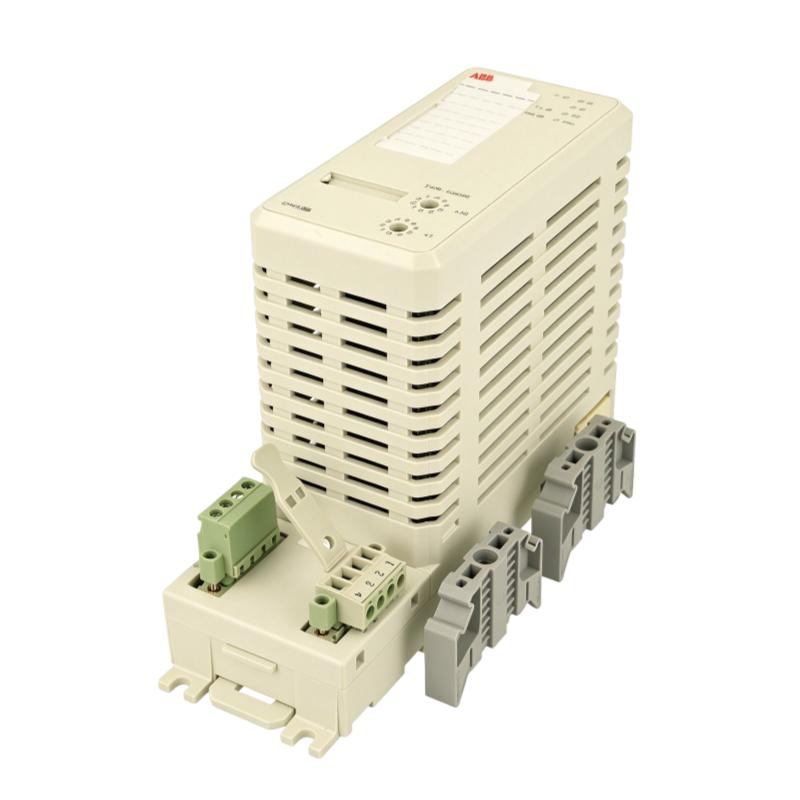
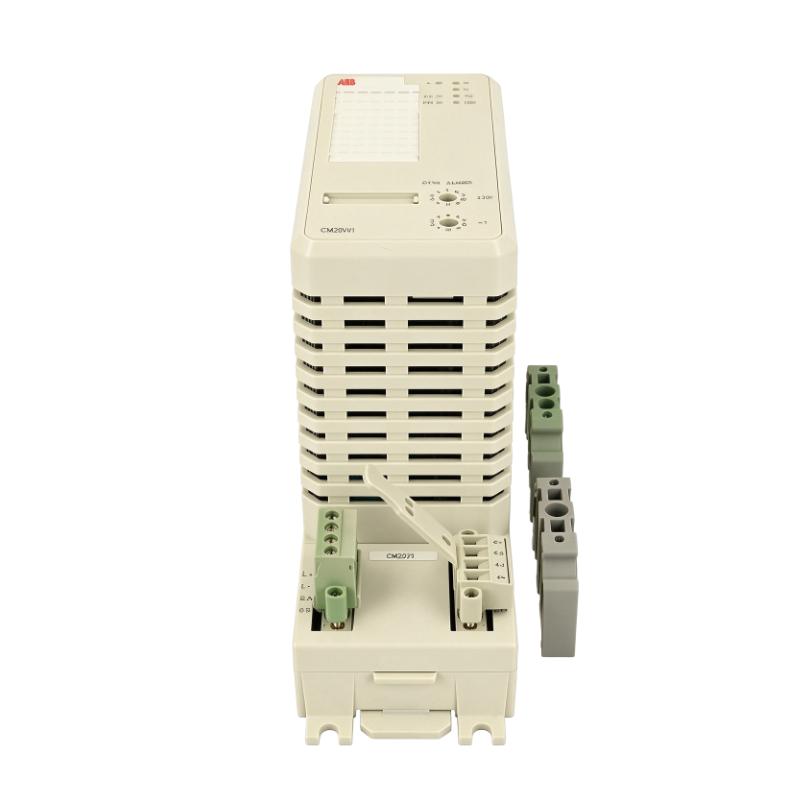
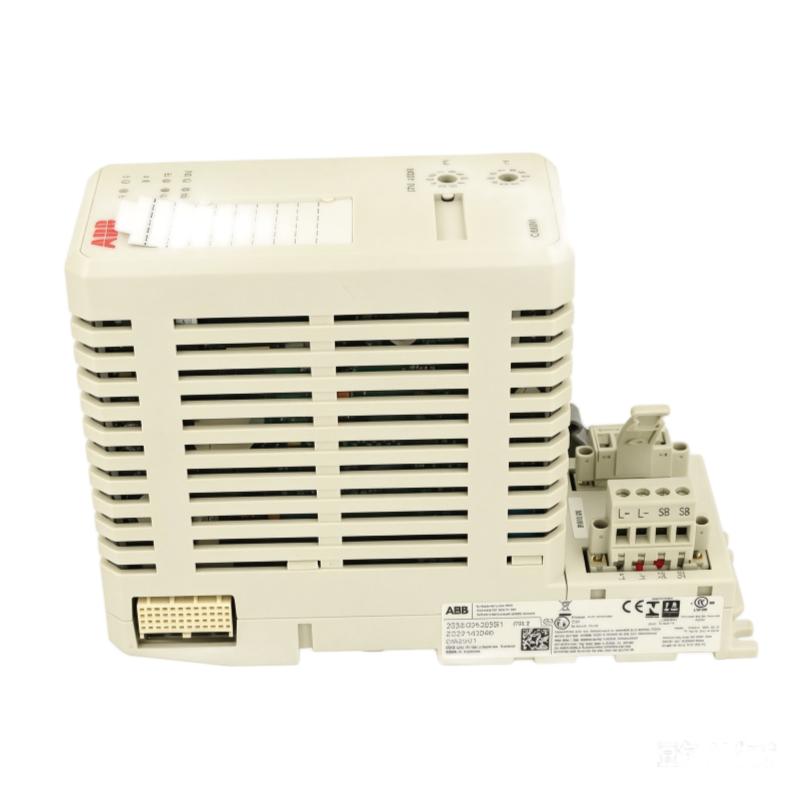
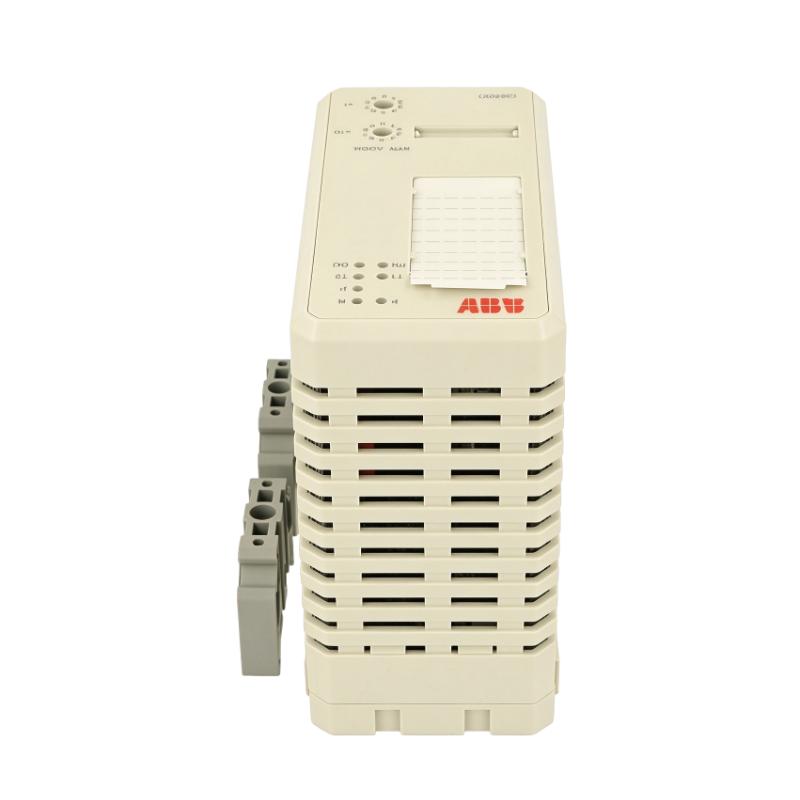
- ABB
- CI820V1 3BSE025255R0001
- Redundant Fieldbus Communication Interface Module
- Sweden (SE)
- 170 × 54 × 122 mm
- 0.6 kg
- Xiamen, China
- New & In Stock
- T/T, PayPal, Western Union
- 1 Year
- 1-3 Working Days
- DHL, UPS, TNT, FedEx and EMS.
- 24-Hour Service
- COO
- 10
Our advantage

Global Logistics
We have a 10-year logistics and express cooperation agreement, so our products can be shipped to any place in the world.

Brand new and original
Our products are imported in bulk from the place of origin. Because of the cooperative relationship, our products are all original and 100% new.

24-hour service
We provide 7*24 hours service to our customers. We will be there whenever you need us.

Price advantage
All our products are priced very favorably because we have our own warehouse and supply.
| Company Information | |||
| [email protected] | |||
| Mobile | +8615980777398 | ||
| +8615980777398 | |||
| 15980777398 |
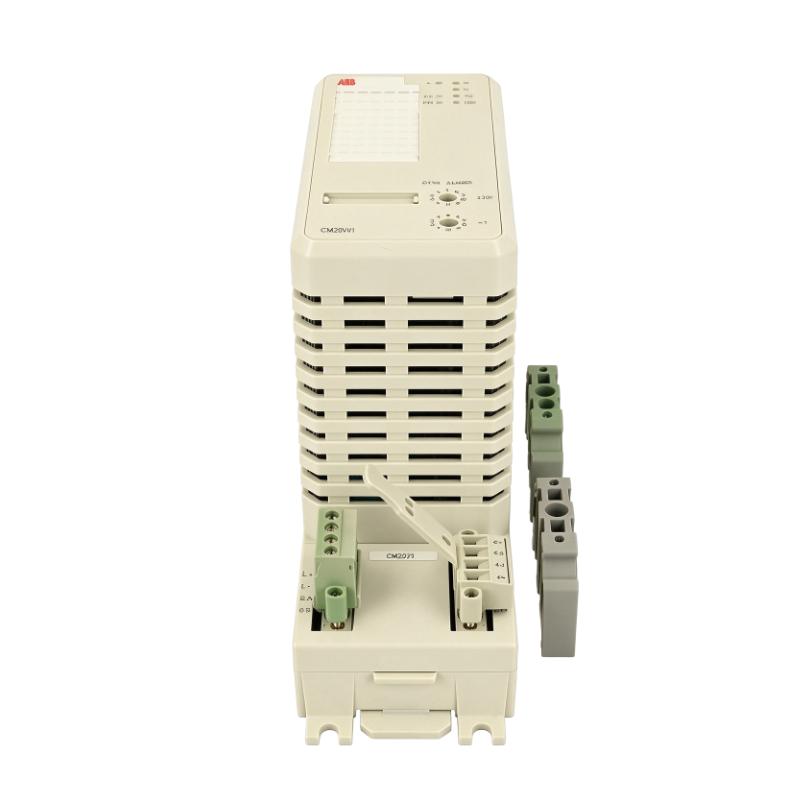
Product Overview
The ABB CI820V1 3BSE025255R0001 S800 I/O Redundant Fieldbus Communication Interface Module is part of ABB’s S800 I/O distributed automation platform. It provides a communication interface between the field I/O station and the associated control system, allowing configured input and output data to be exchanged across the automation network.
In a process plant, field instruments and actuators are often distributed across different equipment areas, while control logic runs in a centralized or distributed controller. An S800 I/O communication interface connects the remote I/O station to the control architecture, reducing the need to bring every field signal directly to the controller cabinet. This arrangement is useful in applications such as process monitoring, machinery control, and plant-wide automation.
The redundant fieldbus designation indicates that redundancy is relevant to the module’s communication role. In a suitably configured system, redundant communication arrangements can help maintain data exchange when a supported communication path or associated component becomes unavailable. The actual redundancy behavior depends on the installed hardware, network arrangement, controller configuration, and system settings.
The CI820V1 model and 3BSE025255R0001 order number are important for identifying the required module during maintenance and replacement. Before installing a replacement, technicians should verify the module reference, station configuration, connection arrangement, and compatibility with the existing S800 I/O system.
Technical Specifications
| Parameter | Specification |
|---|---|
| Manufacturer | ABB |
| Model | CI820V1 |
| Order Number | 3BSE025255R0001 |
| Product Series | S800 I/O |
| Product Type | Redundant Fieldbus Communication Interface Module |
| Product Category | Distributed I/O Communication Hardware |
| Primary Function | Communication between the S800 I/O station and the control system |
| Communication Role | Fieldbus interface |
| Redundancy | Redundant communication arrangement, subject to system configuration |
| System Architecture | Distributed control and remote I/O |
| Data Exchange | Transfer of configured I/O data between the fieldbus interface and control system |
| Installation Context | S800 I/O station |
| Maintenance Application | Module inspection, communication fault diagnosis, and replacement |
| Dimensions | 170 × 54 × 122 mm |
| Weight | 0.6 kg |
Product Features
- S800 I/O integration: Operates within ABB’s S800 I/O platform as part of a distributed automation architecture.
- Fieldbus communication: Supports the exchange of configured I/O data between the remote I/O station and the control system.
- Redundancy-related functionality: Supports installations using the applicable redundant communication arrangement, subject to the system configuration.
- Distributed I/O architecture: Allows field signals to be handled at remote I/O locations instead of routing every signal directly to the controller cabinet.
- System-level coordination: Works with the controller, I/O modules, and associated communication infrastructure to support automated process operation.
- Model-specific identification: The CI820V1 designation and complete order number help distinguish the module from other S800 I/O communication interfaces.
- Maintenance support: Provides a specific hardware reference for investigating communication interruptions and planning module replacement.
- Configuration-dependent operation: Correct operation depends on compatible station hardware, network settings, and the installed control-system configuration.
Working Principle
The ABB CI820V1 functions as a communication interface within an S800 I/O station. During operation, the control system exchanges data with the remote I/O station through the configured fieldbus connection. The communication interface supports the transfer of I/O information required by the controller application.
For example, a process controller may need measurements from pressure transmitters installed in a remote plant area. The relevant S800 I/O modules acquire the field signals, while the communication interface supports the transfer of the configured I/O data to the control system. The controller processes the received values and determines the appropriate response according to the application logic.
The same architecture supports output control. Commands generated by the controller are transferred through the configured communication path to the remote I/O station, where the relevant output modules operate compatible field devices. The communication interface therefore connects the field I/O layer with the wider control architecture rather than performing the complete control task independently.
In a redundant installation, the system uses the configured redundant communication arrangement to support continued data exchange under the conditions covered by that design. The exact behavior during a communication-path failure depends on the supported redundancy configuration and the other installed components.
When diagnosing a communication problem, technicians should examine the module status, network connections, station configuration, and associated controller diagnostics. A fault may originate in the interface module, the communication path, the station configuration, or another connected component.
Role in an S800 I/O Control Architecture
Within an ABB S800 I/O architecture, the CI820V1 provides the communication interface between the remote I/O station and the wider control system. It works alongside the station’s I/O modules and associated network infrastructure to support the exchange of process data and control commands.
| System Component | Function | Relationship to the CI820V1 |
|---|---|---|
| ABB Controller | Executes control logic and coordinates process operation | Exchanges configured I/O data through the communication architecture |
| CI820V1 Communication Interface | Supports fieldbus communication for the S800 I/O station | Connects the station with the control-system communication path |
| S800 I/O Modules | Acquire field inputs or control field outputs | Supply or receive the I/O data exchanged through the station |
| Fieldbus Network | Carries communication data between compatible system components | Provides the communication path associated with the interface |
| Redundant Communication Path | Supports communication continuity in a configured redundant arrangement | Contributes to the redundancy strategy where implemented |
| Field Instruments | Measure process variables such as pressure, temperature, or flow | Supply signals through the relevant input modules |
| Actuators and Control Devices | Respond to commands from the automation system | Receive commands through compatible output modules |
| Engineering and Diagnostic Tools | Support configuration, monitoring, and fault investigation | Help technicians assess station and communication status |
Industrial Applications
| Application Area | Typical Use | Relevance of the CI820V1 |
|---|---|---|
| Process Automation | Exchange process data between remote I/O and controller equipment | Supports communication within a compatible S800 I/O installation |
| Chemical Processing | Connect distributed field instrumentation with control-system hardware | Provides the fieldbus interface for the configured I/O station |
| Oil and Gas Facilities | Coordinate remote I/O across equipment areas | Supports the communication architecture where the module is specified |
| Power Generation | Transfer field measurements and control commands | Connects the applicable S800 I/O station to the control system |
| Water and Wastewater Treatment | Monitor distributed instruments and operate connected equipment | Supports remote I/O communication for compatible applications |
| Manufacturing Plants | Integrate field signals with controller logic | Supports data exchange between the I/O station and automation system |
| Redundant Control Installations | Maintain communication through a supported redundant arrangement | Contributes to the configured communication redundancy strategy |
| Control-System Maintenance | Diagnose communication interruptions or replace an installed interface | Provides a model-specific reference for service work |
Installation and Maintenance
- Verify the module identification: Confirm that CI820V1 and order number 3BSE025255R0001 match the required hardware reference in the installed system.
- Check system compatibility: Verify that the module is appropriate for the existing S800 I/O station, controller architecture, and communication arrangement.
- Review the station configuration: Record the module position, connected components, network arrangement, and relevant hardware settings before beginning maintenance.
- Apply electrical isolation procedures: Follow the site’s approved safety procedures and determine the operational consequences before removing or replacing the module.
- Inspect the installation area: Check the module position, mounting arrangement, connectors, and surrounding equipment for visible damage or contamination.
- Verify the communication connections: Identify the applicable fieldbus connections and confirm that the installed wiring matches the system’s documented arrangement.
- Check the redundancy configuration: Where redundant communication is used, verify the intended configuration and identify the communication paths affected by the maintenance activity.
- Handle the module with ESD precautions: Use suitable electrostatic discharge protection and avoid unnecessary contact with exposed electronic components or conductive contacts.
- Install the replacement module: Fit the verified replacement in the intended position and ensure that the mechanical and electrical interfaces are properly seated.
- Restore the configured connections: Reconnect the relevant interfaces according to the recorded arrangement and check that connectors and securing mechanisms are properly engaged.
- Perform communication and functional tests: Restore the system according to the approved procedure and check module status, controller diagnostics, I/O data exchange, and the applicable redundancy behavior.
- Document the maintenance activity: Record the module identification, observed fault, replacement details, configuration changes, and post-maintenance test results.
Compatible System Components
| Component | Function | Relationship to the CI820V1 |
|---|---|---|
| ABB S800 I/O Modules | Acquire field inputs and control field outputs | Exchange I/O data through the configured station architecture |
| ABB Control System Controller | Executes application logic | Uses process data supplied by the remote I/O station |
| Fieldbus Communication Infrastructure | Transfers data between compatible system components | Provides the communication path associated with the interface module |
| Redundant Network Components | Support a configured redundant communication arrangement | May be part of the wider redundancy implementation |
| S800 I/O Station Hardware | Houses and connects the station’s modules | Provides the installation environment for the communication interface |
| Field Transmitters | Measure process conditions | Supply signals to compatible input modules |
| Output Modules and Actuators | Convert control commands into equipment responses | Operate according to commands exchanged through the control system |
| Engineering and Diagnostic Software | Supports configuration and fault analysis | Assists with station configuration checks and communication troubleshooting |
Recommended Related Models
| Model or Product Category | Product Type | Relationship |
|---|---|---|
| ABB CI820V1 3BSE025255R0001 | S800 I/O Redundant Fieldbus Communication Interface Module | Specified model for identification and replacement |
| ABB S800 I/O Communication Interfaces | Fieldbus Communication Interface Modules | Related category for distributed I/O communication |
| ABB S800 I/O Input Modules | Digital or Analog Input Modules | Acquire field signals for the controller application |
| ABB S800 I/O Output Modules | Digital or Analog Output Modules | Operate compatible field devices through controller commands |
| ABB S800 I/O Module Accessories | I/O Installation and Connection Accessories | Support installation and interconnection within the S800 I/O station |
| ABB Control-System Communication Components | Industrial Communication Hardware | Related category for maintaining the wider control-system network |
Key Advantages
- Distributed I/O communication: Supports data exchange between a compatible S800 I/O station and the control system.
- Redundancy-related support: Fits system arrangements that use the applicable redundant fieldbus configuration.
- Modular system integration: Works with the S800 I/O platform and its associated field interface modules.
- Clear hardware identification: The model and order number support spare-parts management and replacement planning.
- Structured fault diagnosis: Helps maintenance teams investigate communication problems at the interface and network levels.
- Support for installed automation systems: Provides a defined component reference for maintaining compatible S800 I/O installations.
Technical FAQs
What is the function of the ABB CI820V1 3BSE025255R0001?
The CI820V1 is identified as an S800 I/O redundant fieldbus communication interface module. It supports communication between the configured S800 I/O station and the associated control system.
What does redundant fieldbus communication mean for this module?
Redundant communication refers to a system arrangement intended to maintain communication availability through supported alternate or redundant paths. The actual behavior depends on the installed hardware, network configuration, and control-system design.
Can the CI820V1 be replaced with another S800 I/O communication interface?
Not automatically. Different interface modules may have different communication capabilities, system requirements, and redundancy support. The replacement must match the intended system configuration and hardware requirements.
What should be checked if the S800 I/O station loses communication?
Check the module status, fieldbus connections, station configuration, controller diagnostics, and any configured redundant communication paths. Confirm that the fault is not caused by external wiring or another network component before replacing the interface module.