

ProductPRODUCT
Featured products
Contact Us
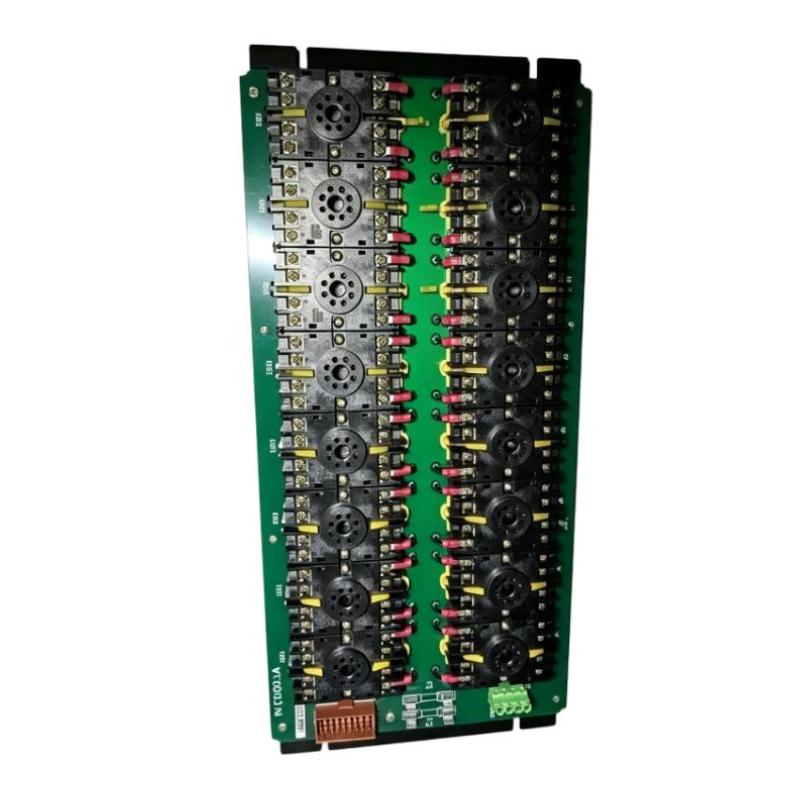
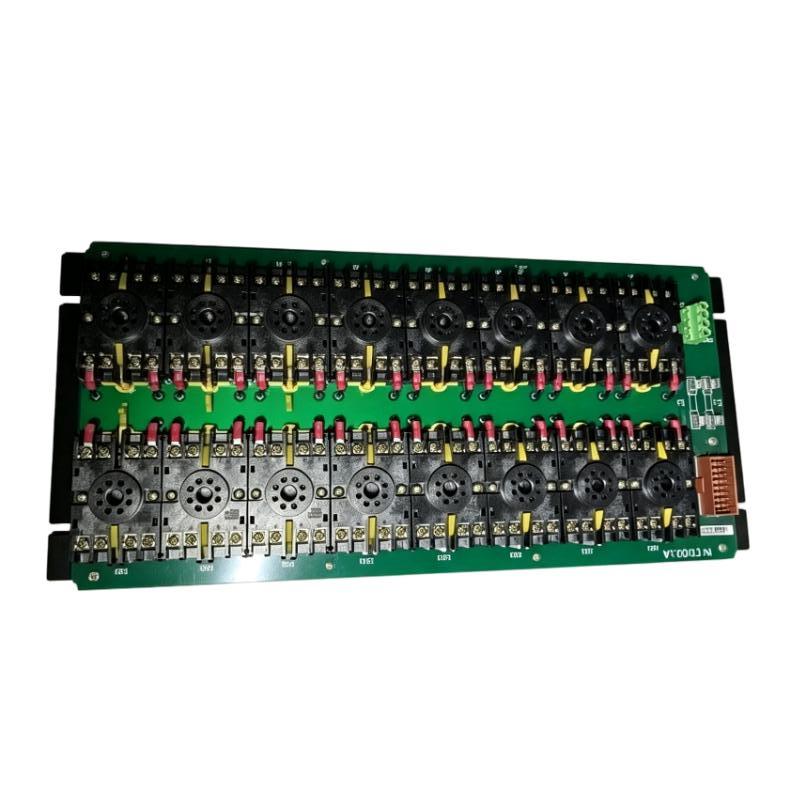
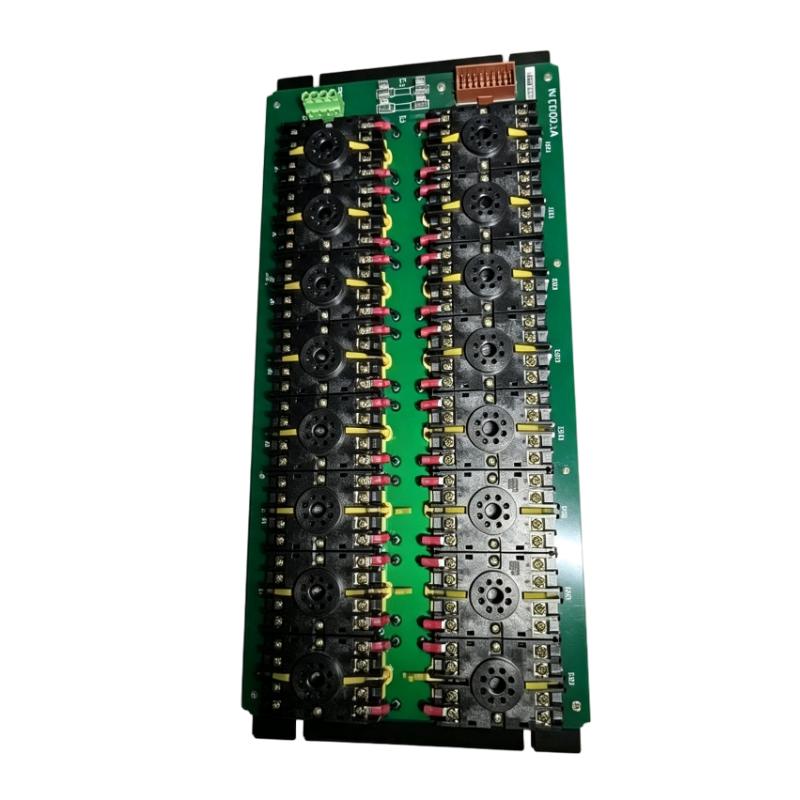
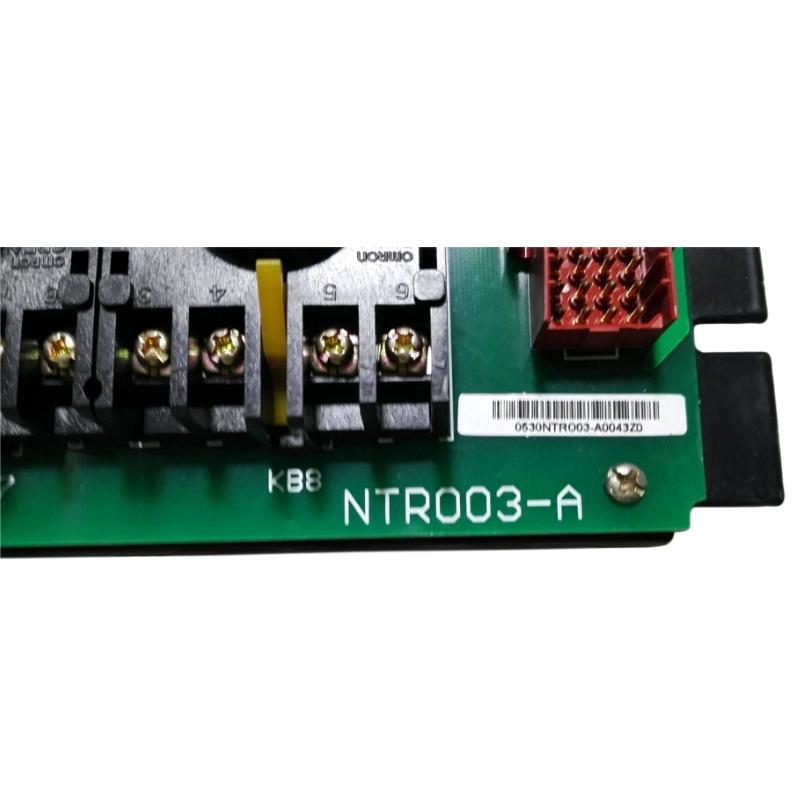
- ABB Bailey
- NTRO03
- Digital I/O Terminal Unit Module
- Sweden (SE)
- 160 x 30 x 100 mm
- 0.4 kg
- Xiamen, China
- New & In Stock
- T/T, PayPal, Western Union
- 1 Year
- 1-3 Working Days
- DHL, UPS, TNT, FedEx and EMS.
- 24-Hour Service
- COO
- 3
Our advantage

Global Logistics
We have a 10-year logistics and express cooperation agreement, so our products can be shipped to any place in the world.

Brand new and original
Our products are imported in bulk from the place of origin. Because of the cooperative relationship, our products are all original and 100% new.

24-hour service
We provide 7*24 hours service to our customers. We will be there whenever you need us.

Price advantage
All our products are priced very favorably because we have our own warehouse and supply.
| Company Information | |||
| [email protected] | |||
| Mobile | +8615980777398 | ||
| +8615980777398 | |||
| 15980777398 |
Product Overview
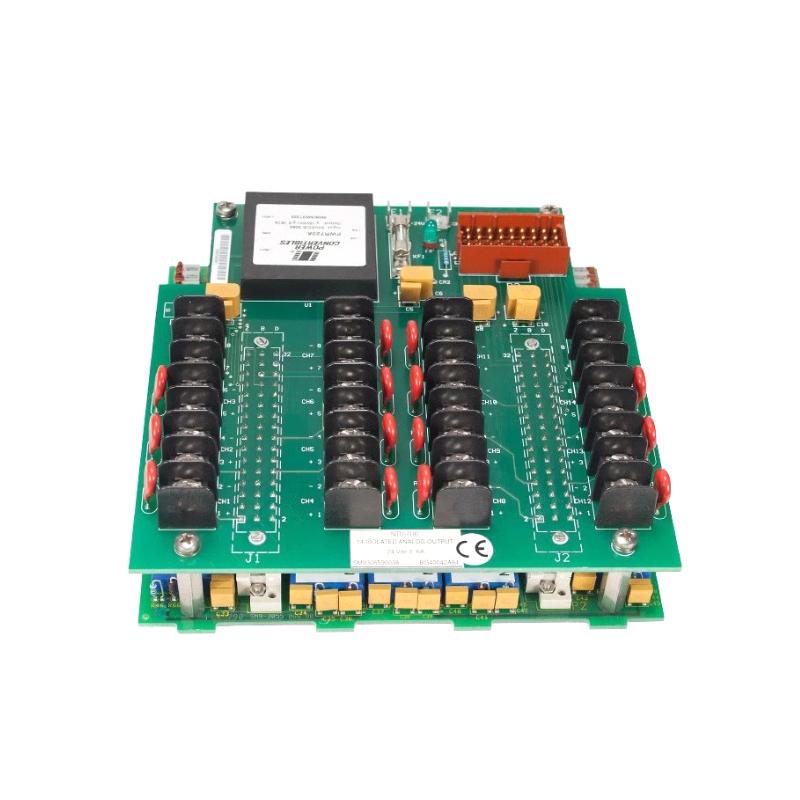
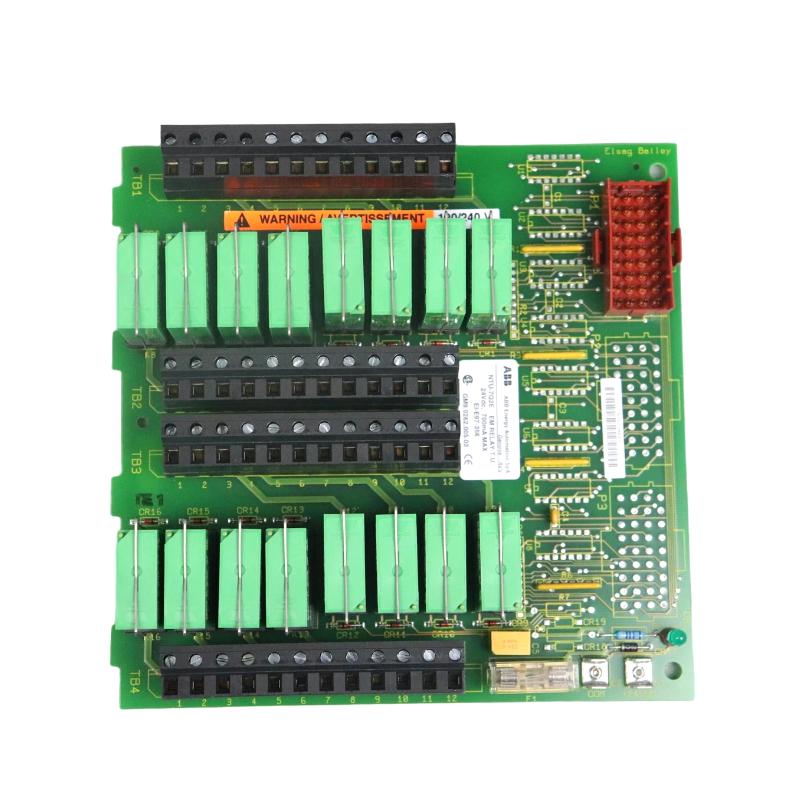
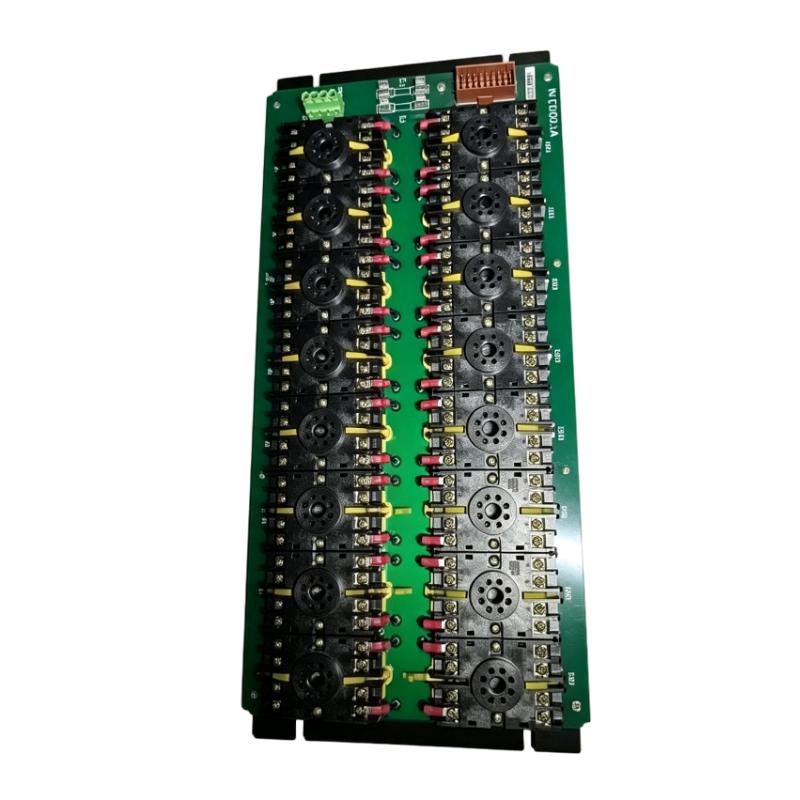
The ABB Bailey NTRO03 Digital I/O Terminal Unit Module is a specialized industrial interface component designed to support digital signal connections within compatible ABB Bailey automation and process control systems. It provides an organized termination and interface point between field wiring and the associated I/O architecture, helping connect discrete field devices with the control system.
Digital I/O signals are widely used throughout industrial plants to represent equipment states and discrete operating conditions. Motor running feedback, valve position, alarm contacts, limit switches, permissive signals, interlocks, and equipment fault indications are typical examples. A dedicated terminal unit provides a structured connection between these field signals and the corresponding I/O electronics.
The ABB Bailey NTRO03 has supplied dimensions of 160 × 30 × 100 mm and a weight of 0.4 kg. Its compact construction makes it suitable for industrial control cabinets where organized field termination, efficient space utilization, and straightforward maintenance are important.
The NTRO03 should be understood as part of the I/O interface layer rather than as a standalone PLC processor. Its actual electrical characteristics, terminal assignments, supported signal configuration, and system compatibility should be verified against the applicable ABB Bailey system documentation and hardware revision.
Technical Specifications
| Parameter | Specification |
|---|---|
| Manufacturer | ABB Bailey |
| Model | NTRO03 |
| Product Type | Digital I/O Terminal Unit Module |
| Product Family | ABB Bailey Industrial Control |
| Primary Function | Digital I/O field signal termination and interface |
| Signal Type | Digital / Discrete I/O |
| Application | Industrial Automation and Process Control |
| Interface Role | Field wiring to compatible I/O system |
| Dimensions | 160 × 30 × 100 mm |
| Weight | 0.4 kg |
| Installation | Industrial control cabinet / compatible Bailey system |
| Typical Applications | Process control, equipment monitoring, plant automation, discrete signal interfacing |
Exact channel count, signal voltage, current capacity, terminal assignments, isolation characteristics, and other electrical specifications should be confirmed against the applicable NTRO03 system documentation.
What Is the ABB Bailey NTRO03?
The ABB Bailey NTRO03 Digital I/O Terminal Unit Module is designed to form part of the field-interface structure of an ABB Bailey control system.
In a typical industrial automation installation, information travels between physical process equipment and the control system through several layers. Field devices generate status signals or receive control commands. Terminal interfaces organize the field wiring, while I/O electronics process the electrical signals and controllers execute the associated control logic.
A simplified architecture is:
Field Device → Field Wiring → NTRO03 → I/O Interface → Control Processor → HMI / SCADA
The reverse path can be used for digital output commands:
Control Processor → I/O Electronics → NTRO03 → Field Device
This arrangement separates field connections from higher-level control processing and provides a structured method for connecting industrial equipment to the automation system.
Digital I/O Terminal Unit Working Principle
Field Signal Connection
The terminal unit provides an organized point where field wiring can be connected to the compatible I/O architecture.
Industrial control cabinets may contain wiring from numerous:
- Motors
- Pumps
- Valves
- Switches
- Relays
- Contactors
- Protection devices
- Alarm circuits
- Limit switches
A dedicated terminal interface helps organize these connections and makes the overall control cabinet easier to understand.
Digital Input Signal Flow
For a digital input, the basic signal path can be represented as:
Field Device → NTRO03 → Digital I/O Electronics → Controller
A field device may indicate whether a machine is operating, a valve has reached its position, or an alarm condition has occurred.
The associated I/O electronics detect the appropriate discrete state and provide the information to the control processor.
Digital Output Signal Flow
For a digital output:
Controller → Digital Output Electronics → NTRO03 → Field Device
The controller may issue a command to a compatible relay, solenoid, actuator, valve, or other discrete device.
The NTRO03 provides the physical interface within the system’s field-wiring architecture.
Signal Organization
The terminal unit helps establish a clear boundary between field wiring and internal control-system wiring. This can simplify:
- Installation
- Signal tracing
- Commissioning
- Maintenance
- Troubleshooting
- Replacement work
The exact implementation depends on the ABB Bailey system in which the NTRO03 is installed.
Role in ABB Bailey Control Systems
The NTRO03 can contribute to the digital I/O infrastructure of an ABB Bailey industrial automation system.
Large process-control installations often contain substantial numbers of discrete signals. Without organized field termination, wiring can become difficult to trace and maintain.
A terminal unit helps establish a structured interface for these signals.
Its general role includes:
- Field signal termination
- Digital I/O organization
- Signal routing
- Cabinet wiring management
- Equipment status monitoring
- Discrete control-command distribution
- Maintenance support
- Troubleshooting assistance
The terminal unit therefore serves an important physical integration function even though it does not perform the control logic executed by the system processor.
Digital Input Applications
Digital input signals allow a control system to identify discrete field conditions.
Motor Status
Motor auxiliary contacts can provide running, stopped, or fault feedback.
A simplified arrangement is:
Motor Auxiliary Contact → NTRO03 → Digital Input → Controller
The controller can use this information for sequencing, alarming, interlocking, and operator display.
Valve Position
Limit switches can provide open and closed feedback from process valves.
This allows the control system to compare the commanded valve position with the actual field condition.
Equipment Faults
Protective devices can generate discrete fault signals when abnormal operating conditions occur.
These signals can be incorporated into alarm and shutdown logic where appropriate.
Interlocks and Permissives
Digital inputs are commonly used to confirm that required conditions exist before equipment is allowed to operate.
Examples include:
- Pump permissive
- Fan permissive
- Valve permissive
- Safety interlock
- Equipment ready signal
Alarm Contacts
External alarm contacts can be connected to the digital I/O architecture for centralized monitoring.
Digital Output Applications
Digital outputs allow the control system to send discrete commands to field equipment.
Typical applications include:
- Motor start commands
- Motor stop commands
- Valve commands
- Solenoid activation
- Relay control
- Equipment enable signals
- Alarm activation
- Auxiliary control commands
The NTRO03 forms part of the physical connection between the I/O electronics and the field wiring.
The actual output-load requirements must be evaluated using the specifications of the associated I/O hardware. The terminal unit should not be assumed to directly switch a load unless that function is explicitly supported by the complete system configuration.
Integration with Industrial Automation Architecture
The NTRO03 can be incorporated into a layered industrial control architecture.
A typical arrangement may include:
Process Equipment
↓
Field Sensors and Switches
↓
Field Wiring
↓
Terminal Unit
↓
Digital I/O Modules
↓
Control Processor
↓
Industrial Control Network
↓
HMI / SCADA
Each layer performs a different function.
The terminal unit primarily supports the physical field-interface layer, while the I/O electronics interpret the signals and the controller executes control logic.
This separation makes large automation systems easier to engineer, document, maintain, and expand.
Industrial Applications
Process Manufacturing
Manufacturing plants use digital signals to monitor equipment status and control discrete actuators.
The NTRO03 can form part of a compatible ABB Bailey control cabinet where numerous field devices must be connected to the control system.
Chemical Processing
Chemical plants contain large numbers of pumps, valves, motors, alarms, and interlocking devices. Reliable digital signal termination is important for coordinating these systems.
Water and Wastewater Treatment
Water-treatment systems frequently use digital signals for pump status, valve position, blower operation, alarm conditions, and equipment permissives.
Power and Utility Facilities
Utility installations may monitor breakers, motors, pumps, fans, valves, and auxiliary equipment through digital status signals.
Oil and Gas Processing
Discrete equipment conditions are commonly integrated into process control and safety-related monitoring architectures.
General Industrial Automation
The NTRO03 can also support compatible industrial automation installations where organized digital field-signal termination is required.
Installation Guidelines
Proper installation is important for reliable digital I/O performance.
Verify the Model
Before installation or replacement, confirm:
- Model number
- Hardware revision
- Terminal configuration
- Connector arrangement
- Associated I/O module
- Cabinet location
- System architecture
The complete NTRO03 identification should be checked against the installed equipment documentation.
Follow Electrical Safety Procedures
Before working on the terminal unit or connected field wiring, follow the plant’s electrical isolation and lockout/tagout procedures.
Field circuits may remain energized even when parts of the control system have been powered down.
Identify Field Wiring
Before removing an existing unit, record:
- Wire numbers
- Terminal numbers
- Signal names
- Device tags
- I/O channel assignments
- Cable identification
Clear labeling reduces the risk of incorrect reconnection.
Verify Mechanical Installation
The NTRO03 should be securely installed according to the mounting arrangement specified for the compatible ABB Bailey equipment.
Cabinet Installation and Space Planning
The supplied physical dimensions of the ABB Bailey NTRO03 are:
160 × 30 × 100 mm
These dimensions should be considered when planning control cabinet layouts.
The 30 mm dimension indicates a relatively narrow physical profile, which can be useful where multiple interface components must be arranged within a restricted cabinet area.
However, the complete installation envelope also needs to account for:
- Terminal access
- Connector clearance
- Cable bend radius
- Wiring ducts
- Adjacent equipment
- Ventilation
- Maintenance access
- Cabinet door clearance
The nominal module dimensions should therefore be combined with the actual system mounting requirements during cabinet design.
Wiring and Cable Management
Proper field wiring is essential for dependable digital signal operation.
Each connection should be clearly identified and routed according to the approved electrical drawings.
Where different types of wiring share the same cabinet, suitable separation should be considered between:
- Digital I/O cables
- Analog instrumentation cables
- Communication cables
- AC control wiring
- Power conductors
- Motor cables
- High-current switching circuits
Good cable organization also improves maintenance efficiency because technicians can trace individual signals more easily.
EMC and Signal Integrity
Industrial control cabinets can contain electrical noise generated by motors, contactors, drives, transformers, switching supplies, and other equipment.
Although digital signals are generally less sensitive than low-level analog signals, poor wiring practices can still result in unwanted signal behavior.
Engineering measures may include:
- Appropriate cable routing
- Separation from high-power conductors
- Proper grounding
- Secure terminal connections
- Clean connectors
- Correct shielding practices where applicable
- Avoidance of unnecessary cable loops
The exact grounding and shielding method should follow the requirements of the complete ABB Bailey system.
Commissioning Procedure
After installation, the NTRO03 should be commissioned as part of the complete I/O system.
Step 1: Mechanical Inspection
Confirm that the module is securely mounted and that there is no visible physical damage.
Step 2: Wiring Verification
Compare the field connections against the approved drawings and I/O documentation.
Step 3: Connector Check
Inspect all relevant connectors and ensure they are properly seated.
Step 4: System Power-Up
Restore system power according to the approved commissioning procedure.
Step 5: Digital Input Testing
Activate representative field devices and verify that the corresponding digital states are correctly detected by the control system.
Step 6: Digital Output Testing
Where permitted, issue representative output commands and confirm the expected response at the field device.
Step 7: Alarm and Interlock Verification
Confirm that applicable alarms, permissives, and interlocks respond correctly.
Step 8: Documentation
Record the final wiring, configuration, and replacement information for future maintenance.
Troubleshooting the NTRO03
Troubleshooting should consider the complete signal path instead of immediately assuming that the terminal unit is defective.
No Input Signal
If a field signal does not appear at the controller, inspect:
- Field device
- Field cable
- Terminal connection
- NTRO03 interface
- Associated I/O module
- I/O channel configuration
- Controller diagnostics
A failed switch or open cable can create the same symptom as an electronic interface problem.
Input Permanently ON or OFF
A digital input that remains in one state may result from:
- Failed field contact
- Short circuit
- Open circuit
- Incorrect wiring
- Incorrect terminal assignment
- I/O module fault
- Configuration error
The field device should be tested independently where practical.
Output Command Has No Field Response
If the controller shows an output command but the external device does not respond, inspect:
- Control logic
- I/O channel status
- Associated output electronics
- Terminal connections
- Field wiring
- External power
- Relay or actuator
- Field equipment
Intermittent Signal
Intermittent operation can be associated with:
- Loose terminals
- Poor connector contact
- Cable damage
- Vibration
- Electrical interference
- Moisture
- Aging field equipment
Signal monitoring combined with physical inspection can help identify the source.
Preventive Maintenance
Regular inspection can help maintain reliable terminal-unit operation.
Inspect Connections
Check accessible terminals and connectors for looseness, contamination, corrosion, or physical damage.
Inspect Field Cables
Look for:
- Damaged insulation
- Abrasion
- Broken conductors
- Moisture
- Corrosion
- Excessive bending
Review Signal Behavior
Repeated unexpected state changes can sometimes indicate a developing field-device or wiring problem.
Monitoring abnormal digital-state patterns can therefore be useful during preventive maintenance.
Maintain Cabinet Conditions
The cabinet should be maintained according to the environmental requirements of the installed ABB Bailey equipment.
Excessive heat, dust, moisture, or vibration can negatively affect long-term system reliability.
Maintain Documentation
Keep wiring diagrams, I/O lists, terminal schedules, and equipment records up to date.
Accurate documentation can significantly reduce troubleshooting time.
Replacement and Spare-Part Planning
When sourcing a replacement for the ABB Bailey NTRO03 Digital I/O Terminal Unit Module, technicians should verify the complete model identification and system compatibility.
Important information includes:
- NTRO03 model
- Hardware revision
- Terminal arrangement
- Connector configuration
- Associated I/O module
- Existing cabinet location
- Host control-system configuration
The supplied physical specifications are:
Dimensions: 160 × 30 × 100 mm
Weight: 0.4 kg
These values are useful for:
- Cabinet layout
- Spare-parts storage
- Shipping preparation
- Handling
- Replacement planning
- Inventory management
A different ABB Bailey terminal unit should not automatically be considered a direct replacement simply because its external dimensions are similar.
Compatible System Components
The NTRO03 may be integrated with several layers of an ABB Bailey automation system.
| Component | Typical Function |
|---|---|
| Digital Input Module | Acquires discrete field status |
| Digital Output Module | Provides discrete control commands |
| Terminal Unit | Organizes field signal connections |
| Field Switches | Provide discrete process states |
| Limit Switches | Provide equipment position feedback |
| Relays | Provide switching or interface functions |
| Solenoid Valves | Receive discrete control commands |
| Motor Starters | Control motor operation |
| Control Processor | Executes automation logic |
| HMI / Operator Station | Displays status and alarms |
| Engineering Station | Supports configuration and diagnostics |
| Control Network | Transfers system information |
The actual compatible components depend on the host ABB Bailey system and its installed I/O architecture.
Recommended Related ABB Bailey Components
| Component Category | General Function |
|---|---|
| ABB Bailey Digital Input Modules | Discrete signal acquisition |
| ABB Bailey Digital Output Modules | Discrete equipment control |
| ABB Bailey Terminal Units | Field wiring termination |
| ABB Bailey I/O Interface Components | Signal connection and routing |
| ABB Bailey Control Processors | Control logic execution |
| ABB Bailey Communication Components | Control-system communication |
| ABB Bailey Backplanes | Module interconnection |
| ABB Bailey Power Components | System power distribution |
These components may be combined in different configurations according to the requirements of the individual control system.
Engineering Best Practices
Use Accurate I/O Documentation
Every field signal should correspond to a documented I/O point and terminal assignment.
Label All Field Wiring
Consistent cable and terminal identification makes commissioning and maintenance more efficient.
Maintain Signal Separation
Power and signal wiring should be routed according to the applicable electrical and EMC design practices.
Verify Replacement Hardware
Before replacing a terminal unit, compare the model, revision, connectors, wiring, and host-system requirements.
Keep Spare Components Properly Stored
Electronic modules and terminal components should be stored in an environment suitable for industrial control equipment.
Test Before Returning to Service
After replacement, representative digital inputs and outputs should be tested before the equipment is returned to normal automatic operation.
Key Advantages
Organized Field Interface
The ABB Bailey NTRO03 provides a structured interface for digital field connections within compatible control architectures.
Compact Construction
With supplied dimensions of 160 × 30 × 100 mm, the module can fit into space-conscious industrial control cabinet designs.
Simplified Wiring
A dedicated terminal interface helps organize numerous discrete field connections.
Easier Troubleshooting
Structured termination makes signal tracing and field-circuit inspection more straightforward.
Industrial Automation Integration
The NTRO03 can form part of a larger ABB Bailey I/O and control architecture.
Support for Discrete Process Signals
Digital signals can be used for equipment status, alarms, interlocks, permissives, and discrete control commands.
Technical FAQs
What is the ABB Bailey NTRO03?
The ABB Bailey NTRO03 is a Digital I/O Terminal Unit Module designed to provide field-signal termination and interface functionality within compatible ABB Bailey industrial control systems.
What type of signals are associated with the NTRO03?
The NTRO03 is associated with digital or discrete I/O signals. Exact signal characteristics should be confirmed from the applicable system documentation.
What are the dimensions of the NTRO03?
The supplied dimensions are 160 × 30 × 100 mm.
What is the weight of the NTRO03?
The supplied weight is 0.4 kg.
Is the NTRO03 a controller?
No. The NTRO03 is a Digital I/O Terminal Unit Module and should not be confused with a PLC CPU or standalone control processor.
What equipment can use digital I/O signals?
Digital I/O can be used with motors, pumps, valves, switches, relays, contactors, alarms, interlocks, and other discrete industrial equipment.
What should be checked before replacing an NTRO03?
Verify the model, revision, terminal configuration, connectors, field wiring, associated I/O hardware, and host ABB Bailey system configuration.
What can cause an NTRO03-related I/O problem?
Possible causes include incorrect wiring, loose connections, faulty field devices, damaged cables, I/O module faults, configuration problems, or electrical interference.
How should the NTRO03 be maintained?
Maintenance should include inspection of terminals, connectors, field wiring, cabinet conditions, documentation, and associated I/O equipment.
Can another ABB Bailey terminal unit replace the NTRO03?
Not automatically. Compatibility must be confirmed using the complete model identification, hardware revision, terminal arrangement, system configuration, and applicable engineering documentation.
Conclusion
The ABB Bailey NTRO03 Digital I/O Terminal Unit Module is a compact industrial interface component designed to support organized digital field-signal connections within compatible ABB Bailey automation and process control systems. It forms part of the physical I/O layer that connects field equipment with digital I/O electronics and higher-level control functions.
Digital I/O plays an important role in industrial automation by providing discrete information about motor status, valve position, alarms, equipment faults, interlocks, permissives, and other operating conditions. A properly organized terminal interface helps maintain clear field wiring while simplifying commissioning, troubleshooting, and preventive maintenance.
The ABB Bailey NTRO03 has supplied dimensions of 160 × 30 × 100 mm and a weight of 0.4 kg. These physical specifications are useful for cabinet planning, spare-parts management, shipping, and replacement preparation.
For installation or replacement, the complete NTRO03 identification should be checked against the existing ABB Bailey system. Technicians should verify the terminal arrangement, associated I/O hardware, field wiring, hardware revision, and system configuration before placing the module into service. Proper installation, signal verification, cable management, and systematic troubleshooting help maintain dependable digital I/O performance in demanding industrial environments.