

ProductPRODUCT
Featured products
Contact Us
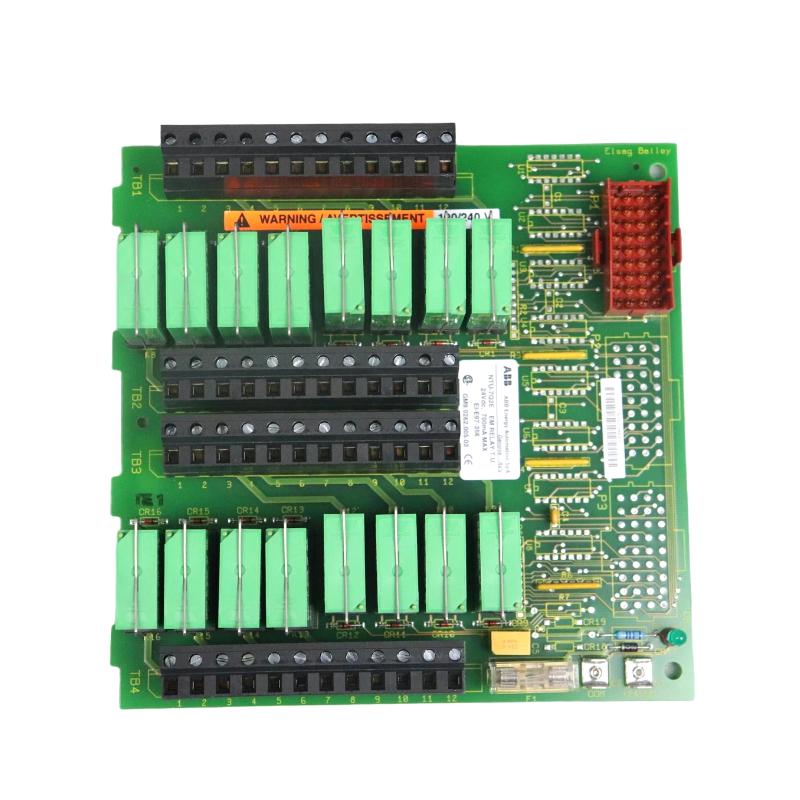
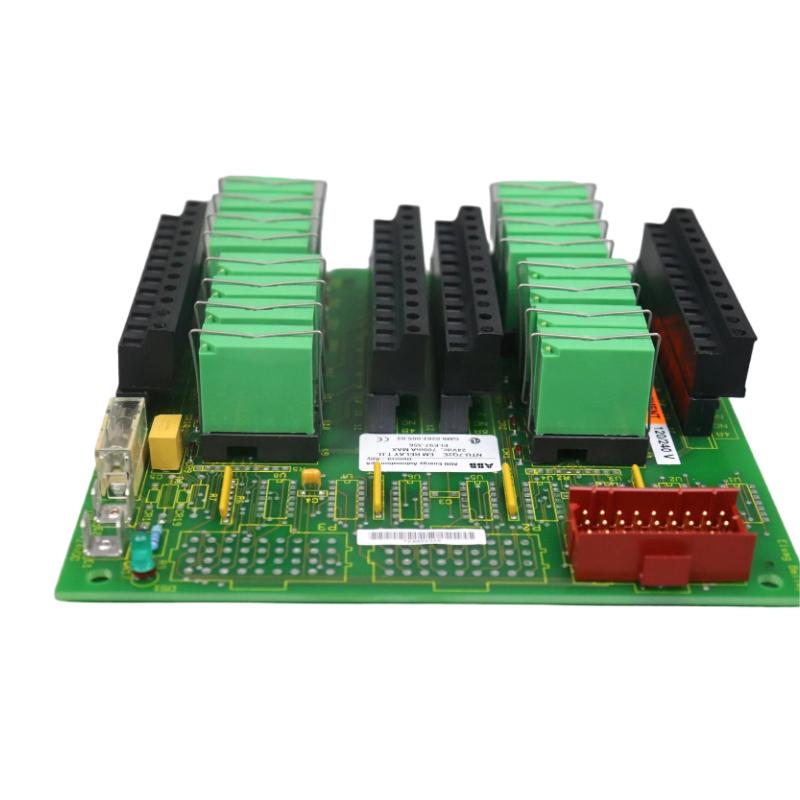
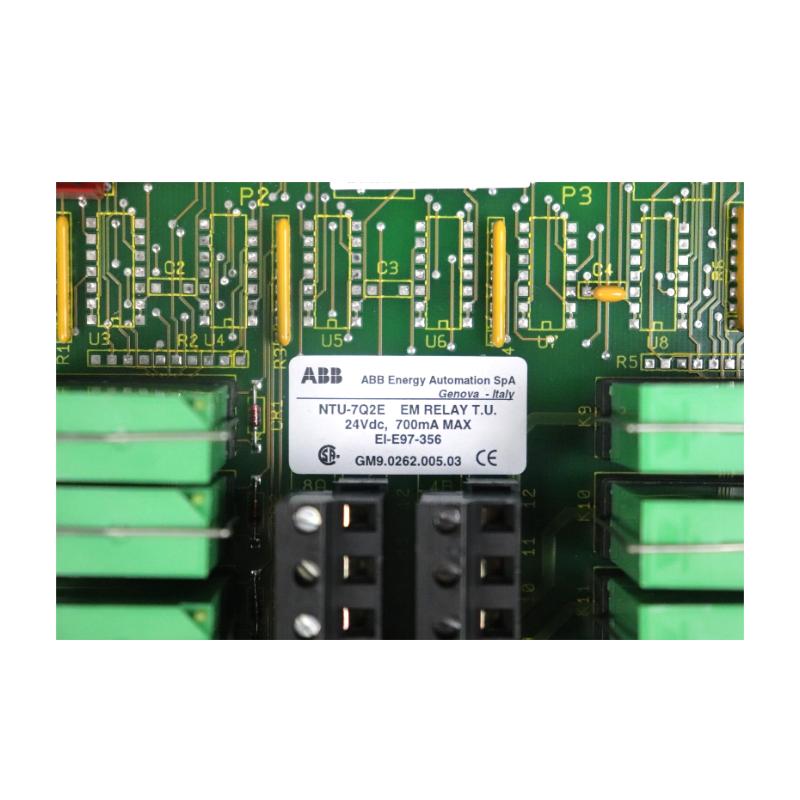
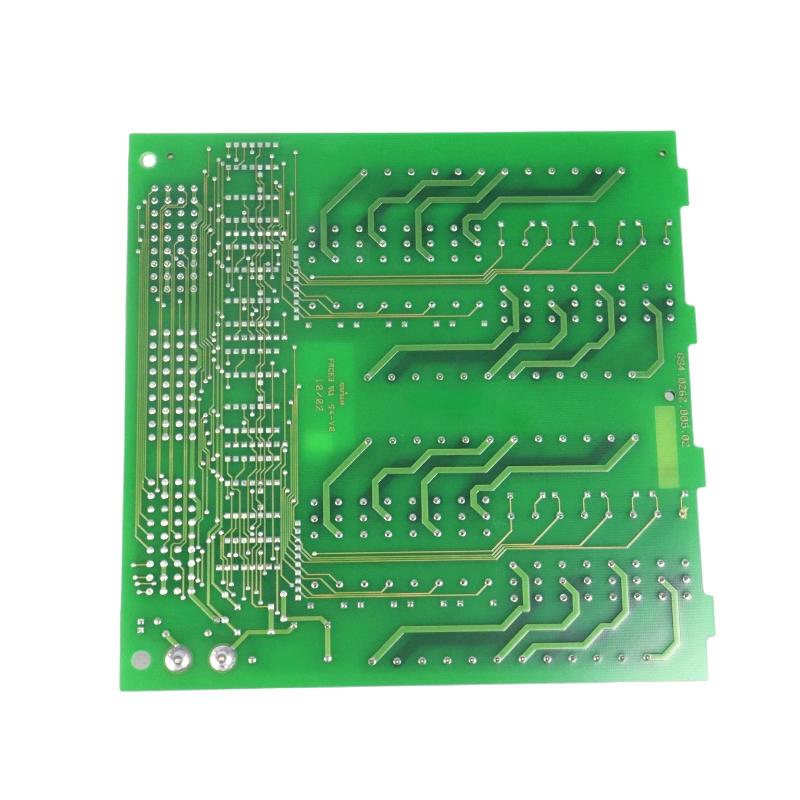
- ABB Bailey
- NTU-7Q2E GM9.0262.0005.03
- Digital Output Relay Terminal Unit
- Sweden (SE)
- 185 x 40 x 150 mm
- 0.789 kg
- Xiamen, China
- New & In Stock
- T/T, PayPal, Western Union
- 1 Year
- 1-3 Working Days
- DHL, UPS, TNT, FedEx and EMS.
- 24-Hour Service
- COO
- 5
Our advantage

Global Logistics
We have a 10-year logistics and express cooperation agreement, so our products can be shipped to any place in the world.

Brand new and original
Our products are imported in bulk from the place of origin. Because of the cooperative relationship, our products are all original and 100% new.

24-hour service
We provide 7*24 hours service to our customers. We will be there whenever you need us.

Price advantage
All our products are priced very favorably because we have our own warehouse and supply.
| Company Information | |||
| [email protected] | |||
| Mobile | +8615980777398 | ||
| +8615980777398 | |||
| 15980777398 |
Product Overview
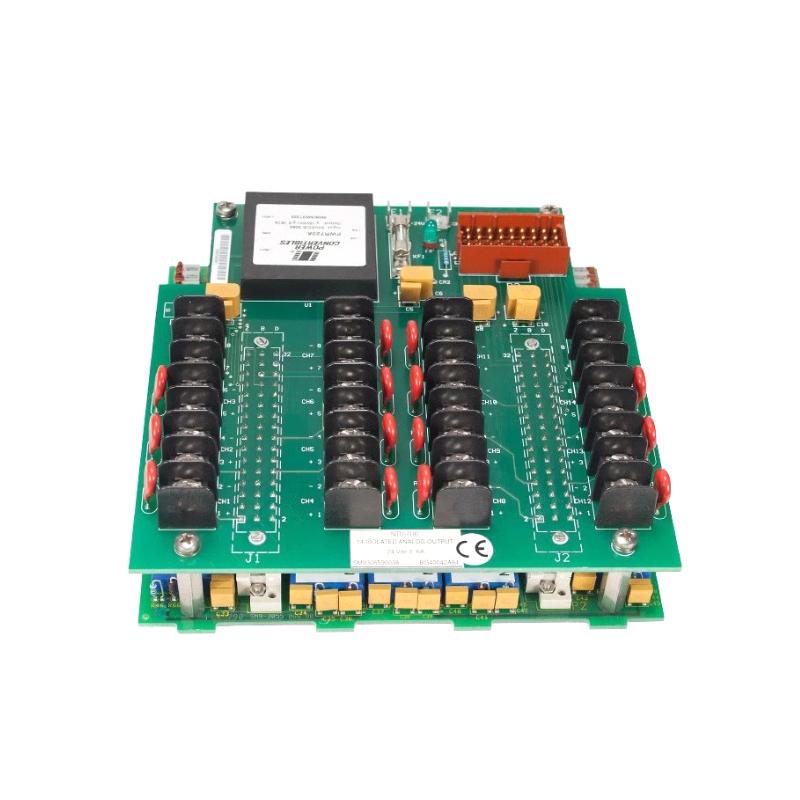
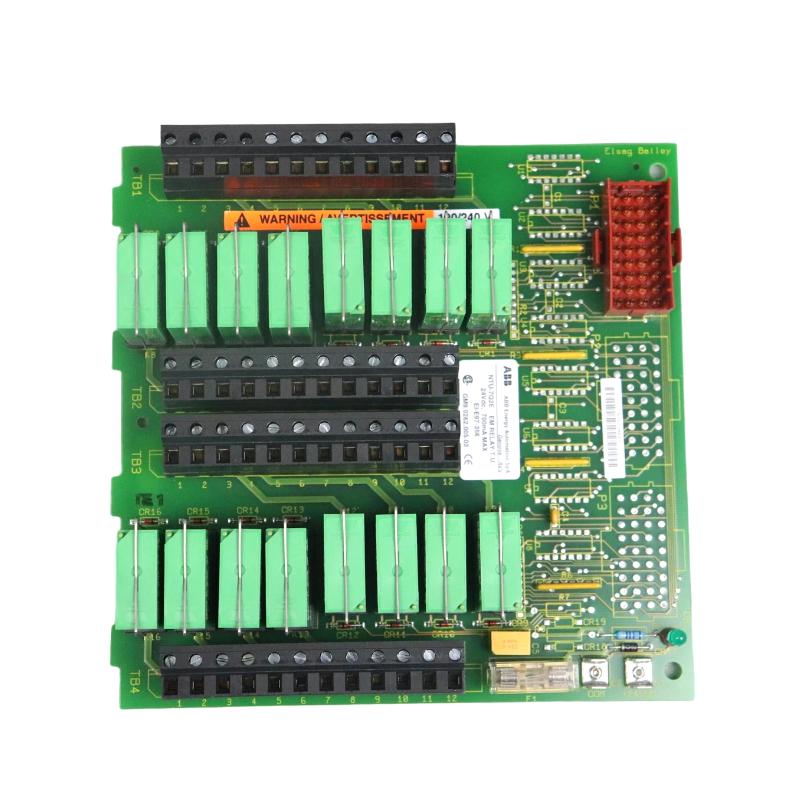
The ABB Bailey NTU-7Q2E GM9.0262.0005.03 Digital Output Relay Terminal Unit is a specialized industrial interface component designed to provide relay-based termination and connection for discrete output signals within compatible ABB Bailey automation and process control systems. It forms part of the field-interface layer between control-system output electronics and external equipment, providing a structured connection point for relay-controlled discrete signals.
Digital output relay interfaces are commonly used when a control system needs to operate external devices such as contactors, solenoid valves, annunciators, interposing circuits, status indicators, or other discrete loads. The relay interface provides an electrical switching point between the control electronics and the field circuit, helping separate the control-side signal from the external load circuit.
The ABB Bailey NTU-7Q2E GM9.0262.0005.03 has listed dimensions of 185 × 40 × 150 mm and a weight of 0.789 kg. Its compact construction makes it suitable for integration into industrial control cabinets where organized field termination, relay switching, and convenient maintenance access are required.
Technical Specifications
| Parameter | Specification |
|---|---|
| Manufacturer | ABB Bailey |
| Model | NTU-7Q2E |
| Part Number | GM9.0262.0005.03 |
| Product Type | Digital Output Relay Terminal Unit |
| Product Family | ABB Bailey Industrial Control System |
| Primary Function | Relay-based digital output termination and interface |
| Signal Type | Digital Output |
| Interface Type | Relay Output Interface |
| Application | Industrial automation and process control |
| Interface Role | Control output to field-device interface |
| Installation | Compatible ABB Bailey control equipment |
| Dimensions | 185 × 40 × 150 mm |
| Weight | 0.789 kg |
| Typical Applications | Valve control, contactor control, alarms, annunciators and discrete equipment control |
Exact relay contact ratings, channel configuration, coil characteristics, terminal assignments, isolation specifications, and supported field-load types should be confirmed against the applicable NTU-7Q2E hardware revision and system documentation.
What Is the ABB Bailey NTU-7Q2E?
The ABB Bailey NTU-7Q2E GM9.0262.0005.03 is a Digital Output Relay Terminal Unit designed to provide an interface between digital output circuitry and external field equipment.
In an industrial control system, a controller typically generates a logical command such as ON or OFF. The associated output interface then transfers this command toward the field layer. When relay switching is required, a relay terminal unit can provide the physical switching interface needed to operate the external circuit.
A simplified control path can be represented as:
Controller → Digital Output Module → NTU-7Q2E Relay Terminal Unit → Field Device
Depending on the system architecture, additional interface, protection, or interposing equipment may be present.
The NTU-7Q2E is therefore primarily an output interface and relay termination component, rather than a programmable controller.
Digital Output Relay Principle
A digital output communicates a discrete command from the control system to external equipment.
Typical commands include:
- Start
- Stop
- Open
- Close
- Enable
- Disable
- Alarm
- Reset
- Trip
- Equipment selection
A relay interface converts the control-side output into a switched electrical connection suitable for the associated field circuit, subject to the electrical ratings and configuration of the installed system.
The general signal chain is:
Control Logic → Digital Output → Relay Interface → Switched Field Circuit → Controlled Equipment
This arrangement is widely used when the control system needs to interact with field devices while maintaining an appropriate electrical interface between the control and load circuits.
Function and Working Principle
Digital Command Reception
The associated control system generates a discrete output command based on programmed logic.
For example, a controller may issue an output command when a process condition is satisfied.
Relay Interface
The NTU-7Q2E provides the relay-based interface associated with the output circuit.
When the corresponding output command is activated, the relay interface changes its switching state according to the design of the connected circuit.
Field Circuit Switching
The relay contacts provide the switching point for the external field circuit.
This allows the control system to operate compatible external equipment without directly connecting the controller output circuitry to every field load.
Equipment Response
The switched field circuit can operate or signal an external device.
Depending on the application, this may include:
- Solenoid valves
- Contactors
- Relays
- Alarm devices
- Indicator circuits
- Interposing circuits
- Discrete equipment interfaces
The exact permissible load must always be checked against the applicable relay specifications.
Role in ABB Bailey Industrial Automation
The NTU-7Q2E contributes to the output interface layer of an ABB Bailey industrial control system.
A typical architecture can be represented as:
Process Control Logic
↓
ABB Bailey Controller
↓
Digital Output Electronics
↓
NTU-7Q2E Digital Output Relay Terminal Unit
↓
Field Wiring
↓
External Equipment
The terminal unit therefore helps bridge the gap between electronic control logic and physical field equipment.
This separation can make control-system wiring more organized and easier to maintain.
Applications of Digital Output Relay Terminals
Solenoid Valve Control
Industrial process systems frequently use solenoid valves for pneumatic or hydraulic control.
A digital output can command the valve circuit through the appropriate relay interface.
Motor Contactor Control
Small control circuits associated with motor contactors may require discrete ON/OFF commands.
The NTU-7Q2E can form part of the interface between the control-system output and the associated contactor circuit when the electrical characteristics are appropriate.
Alarm and Annunciator Circuits
Digital outputs can be used to activate:
- Audible alarms
- Warning lamps
- Annunciators
- External alarm relays
The relay interface provides a convenient switching point for these circuits.
Equipment Enable Signals
Many industrial machines require an external enable or permissive signal before operation.
A digital output relay interface can be incorporated into this type of control circuit.
Process Equipment Control
Discrete commands may be used to operate pumps, valves, fans, dampers, auxiliary equipment, and other process devices.
Integration with Industrial Control Systems
The NTU-7Q2E should be integrated with the specific ABB Bailey control architecture for which the terminal unit is intended.
A typical system can contain several layers:
| System Layer | Typical Function |
|---|---|
| Controller | Executes process-control logic |
| Digital Output Module | Generates discrete commands |
| NTU-7Q2E | Provides relay-based output termination |
| Field Wiring | Transfers switched signals |
| Interposing Equipment | Provides additional interface where required |
| Field Device | Performs the commanded action |
| HMI | Displays equipment status |
| SCADA | Provides supervisory control and monitoring |
The exact arrangement depends on the installed ABB Bailey platform and project design.
Installation Guidelines
Verify Model and Part Number
Before installation, confirm the complete product identification:
- Model: NTU-7Q2E
- Part Number: GM9.0262.0005.03
- Hardware revision
- Existing terminal location
- Associated digital output module
- Field wiring
- Relay configuration
- Host ABB Bailey system
This is particularly important when several terminal units with similar dimensions are installed in the same cabinet.
Physical Installation
The listed dimensions are:
185 × 40 × 150 mm
The cabinet layout should provide sufficient room for:
- Terminal connections
- Relay wiring
- Cable routing
- Inspection
- Maintenance
- Heat dissipation
- Connector access
Wiring Verification
Each field conductor should be checked against the approved wiring diagram before energization.
Incorrect output wiring can cause unintended equipment operation.
Load Compatibility
Before connecting a field load, verify that its electrical characteristics are compatible with the relay interface and the complete output circuit.
Do not assume that every field device can be connected directly to the relay contacts.
Relay Output Wiring Considerations
Relay-based output circuits require careful attention to the connected load.
Resistive Loads
A resistive load typically has a relatively predictable electrical behavior, but its voltage and current must still remain within the applicable relay limits.
Inductive Loads
Solenoids, contactors, and similar devices can generate transient voltage when switched.
Appropriate suppression and protection should be applied according to the system design.
External Protection
Depending on the field circuit, additional protective components may be required.
These can include suitable fuses, circuit protection, suppression devices, or interposing relays.
Field Isolation
The relay interface may provide separation between control-side and field-side circuits, but the actual isolation characteristics must be confirmed from the applicable hardware documentation.
Commissioning Procedure
A systematic commissioning process helps prevent unintended output operation.
Step 1: Verify Installation
Confirm that the NTU-7Q2E is securely installed and correctly identified.
Step 2: Check Wiring
Compare all connections with the approved system drawings.
Step 3: Verify Field Load
Confirm that the connected equipment is suitable for the relay interface.
Step 4: Check Output Logic
Review the controller logic to ensure that the intended output corresponds to the correct field device.
Step 5: Perform Controlled Output Testing
Activate the output under controlled commissioning conditions and observe the corresponding relay and field-device response.
Step 6: Verify Feedback
Where feedback signals are available, confirm that the field equipment has responded correctly.
Step 7: Check Alarms and Interlocks
Verify that safety, permissive, alarm, and interlock logic operates as intended.
Troubleshooting the NTU-7Q2E
Digital output problems should be diagnosed across the complete control-to-field signal chain.
Output Does Not Operate
Possible causes include:
- Missing controller command
- Digital output module problem
- Incorrect wiring
- Loose terminal
- Relay interface issue
- Open field circuit
- Field-device fault
- Configuration problem
Begin by determining whether the control system is actually generating the intended output command.
Output Remains Permanently Active
Possible causes may include:
- Incorrect control logic
- Output configuration issue
- Wiring fault
- Relay contact problem
- External circuit fault
The controller status should be compared with the physical field condition.
Intermittent Output
Possible causes include:
- Loose wiring
- Relay contact degradation
- Vibration
- Electrical interference
- Damaged field cable
- Unstable control signal
- Field-load problems
Monitoring the output during controlled operation can help isolate the fault.
Relay Operates but Field Device Does Not
If the relay interface changes state but the external device does not respond, inspect the field circuit.
Check:
- Load power
- Fuse or circuit protection
- Field wiring
- Device coil
- Contact continuity
- External interposing equipment
This helps distinguish a terminal-unit issue from a field-device problem.
Multiple Outputs Fail
If multiple outputs are affected simultaneously, investigate common components first.
Potential areas include:
- Power supply
- Digital output module
- Common wiring
- System backplane
- Controller configuration
- Communication or I/O architecture
A single terminal-unit failure is not automatically the cause of multiple unrelated output faults.
Preventive Maintenance
Inspect Relay Terminals
Check for loose connections, corrosion, contamination, or physical damage.
Inspect Field Wiring
Look for:
- Damaged insulation
- Loose conductors
- Excessive bending
- Mechanical stress
- Moisture ingress
Check Relay Operation
Where appropriate, maintenance personnel can verify relay operation during scheduled equipment testing.
Inspect Connected Loads
A relay interface can appear faulty when the actual problem is a damaged solenoid, contactor, fuse, or field device.
The complete circuit should therefore be considered during maintenance.
Maintain Cabinet Conditions
Keep the control cabinet within the environmental requirements of the installed system and protect equipment from excessive dust, moisture, heat, and vibration.
Replacement and Spare-Part Planning
When sourcing a replacement for the ABB Bailey NTU-7Q2E, verify the complete product identification:
Model: NTU-7Q2E
Part Number: GM9.0262.0005.03
Product Type: Digital Output Relay Terminal Unit
The listed physical dimensions are:
185 × 40 × 150 mm
The listed weight is:
0.789 kg
These specifications can assist with spare-parts inventory, shipping, cabinet planning, and maintenance logistics.
However, physical dimensions alone are not sufficient to establish compatibility. The relay configuration, terminal arrangement, hardware revision, associated output module, and host-system architecture should also be verified.
Physical Dimensions and Weight
The ABB Bailey NTU-7Q2E GM9.0262.0005.03 has listed dimensions of 185 × 40 × 150 mm.
Its listed weight is 0.789 kg.
The compact form factor is suitable for industrial control cabinets where field termination and relay interfaces need to be installed alongside other automation equipment.
During cabinet planning, engineers should also account for wiring clearance and access around the terminal connections.
Compatible System Components
The NTU-7Q2E may be integrated into a larger ABB Bailey control architecture consisting of several functional layers.
| Component | Typical Function |
|---|---|
| ABB Bailey Controller | Executes control logic |
| Digital Output Module | Generates discrete output commands |
| NTU-7Q2E | Provides relay output termination |
| Field Wiring | Transfers switched signals |
| Interposing Relay | Provides additional interface where required |
| Solenoid Valve | Performs process-control action |
| Contactor | Switches equipment circuits |
| HMI | Displays equipment status |
| SCADA System | Provides supervisory monitoring |
The exact combination depends on the specific ABB Bailey system and application.
Recommended Related ABB Bailey Components
| Component | General Function | Relationship |
|---|---|---|
| NTU-715 | Digital Input Terminal | Discrete input interface |
| NTRO02 | Digital I/O Terminal Unit | Digital field interface |
| NTRO03 | Digital I/O Terminal Unit | Digital signal termination |
| NTRO04 | Digital I/O Terminal Unit | Digital I/O interface |
| NTSM01 | Server Module Terminal Unit | System interface |
| NTRL03 | Remote Link Terminal | Remote communication interface |
| NMMU01 | Modular Mount Unit Chassis Rack | Mechanical mounting |
| NKTU Series | Terminal Unit Cable | I/O connectivity |
These components perform different functions and should not be considered direct replacements for the NTU-7Q2E GM9.0262.0005.03 without confirming system compatibility.
Engineering Best Practices
Separate Control and Field Wiring
Organize control-side and field-side wiring clearly to simplify maintenance and reduce the possibility of wiring errors.
Label Every Output
Each output circuit should have a clear identification corresponding to the system documentation.
Protect Inductive Loads
When switching inductive devices such as solenoids and contactors, use appropriate suppression and protection according to the electrical design.
Verify the Load Before Energization
The field device should be checked against the relay interface specifications before commissioning.
Use Controlled Testing
Output testing should be performed under controlled conditions, particularly when the connected equipment can start machinery, open valves, energize actuators, or generate other process actions.
Keep Replacement Records
Record the model, part number, revision, installation location, and associated output module for future maintenance.
Key Advantages
Relay-Based Digital Output Interface
The NTU-7Q2E provides a dedicated relay-based interface for discrete control outputs.
Organized Field Termination
The terminal-unit design provides a structured point for connecting output circuits to field equipment.
Suitable for Industrial Process Control
Relay outputs can be incorporated into a wide range of industrial control applications involving discrete equipment commands.
Supports Equipment Control
The interface can form part of circuits used to control valves, contactors, alarms, indicators, and other compatible devices.
Compact Construction
With listed dimensions of 185 × 40 × 150 mm, the unit can be integrated into industrial cabinets with efficient use of available space.
Defined Spare-Part Identification
The combination of NTU-7Q2E and GM9.0262.0005.03 provides a clear identification reference for maintenance and inventory management.
Technical FAQs
What is the ABB Bailey NTU-7Q2E?
The ABB Bailey NTU-7Q2E is a Digital Output Relay Terminal Unit designed to provide relay-based termination and interface functionality for discrete output signals.
What is the part number?
The listed part number is GM9.0262.0005.03.
What is the primary function of the NTU-7Q2E?
Its primary function is to provide a relay-based interface between compatible digital output circuitry and external field circuits.
What devices can digital relay outputs control?
Depending on the electrical ratings and system configuration, digital relay outputs can be used in circuits associated with solenoid valves, contactors, alarms, indicators, interposing relays, and other discrete field devices.
What are the dimensions of the NTU-7Q2E?
The listed dimensions are 185 × 40 × 150 mm.
How much does the NTU-7Q2E weigh?
The listed weight is 0.789 kg.
Is the NTU-7Q2E a PLC?
No. It is a Digital Output Relay Terminal Unit and does not replace a PLC or process-control processor.
Why is a relay interface useful?
A relay interface provides a physical switching point between control-system output circuitry and compatible external field circuits. It can also simplify field wiring and provide an appropriate interface for certain load types.
What can cause a relay output to fail?
Possible causes include incorrect wiring, excessive load, relay contact degradation, field-circuit faults, loose terminals, output-module problems, or controller configuration issues.
Can the NTU-7Q2E replace another ABB Bailey terminal unit?
Not automatically. The complete model number, part number, revision, relay characteristics, terminal arrangement, associated I/O hardware, and host-system configuration should be checked before replacement.
Conclusion
The ABB Bailey NTU-7Q2E GM9.0262.0005.03 Digital Output Relay Terminal Unit is a specialized industrial interface component designed to connect compatible digital output circuitry with relay-switched field circuits. It provides a structured termination point for discrete control signals used in applications such as valve operation, contactor control, alarm circuits, equipment enable signals, and other industrial automation functions.
As part of an ABB Bailey control architecture, the NTU-7Q2E can help organize the interface between control logic and field equipment. Reliable operation depends on correct wiring, appropriate load selection, proper relay protection, accurate system configuration, and systematic commissioning.
With listed dimensions of 185 × 40 × 150 mm and a weight of 0.789 kg, the unit provides a compact solution for industrial cabinet integration. For replacement and maintenance, the complete NTU-7Q2E GM9.0262.0005.03 identification should be verified together with the hardware revision, terminal arrangement, associated digital output module, relay characteristics, and host ABB Bailey system.
When correctly matched to the intended control architecture, the ABB Bailey NTU-7Q2E Digital Output Relay Terminal Unit provides a practical interface between industrial control electronics and discrete field equipment.