

ProductPRODUCT
Featured products
Contact Us
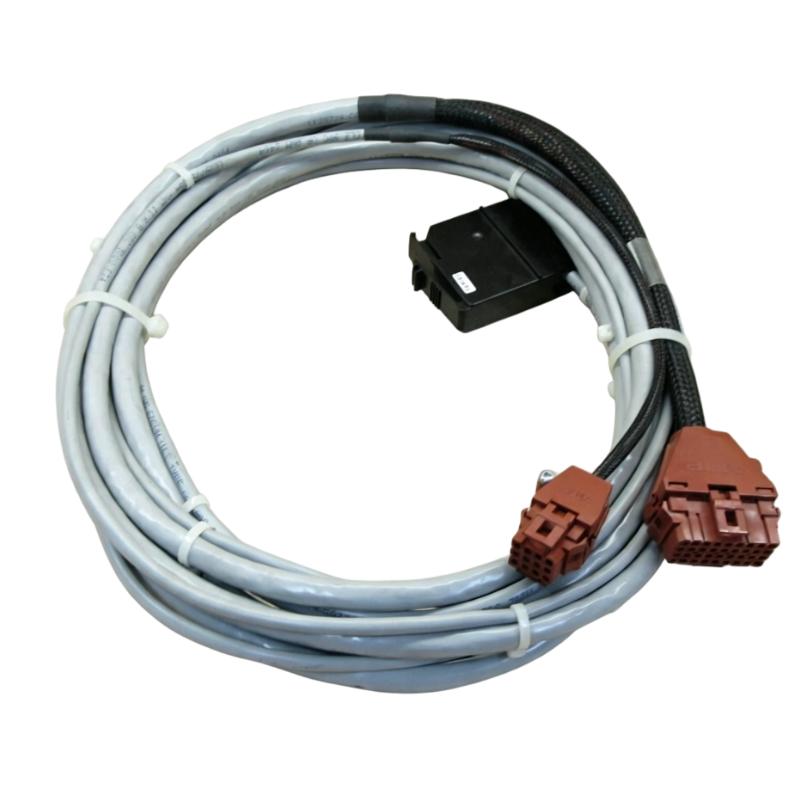
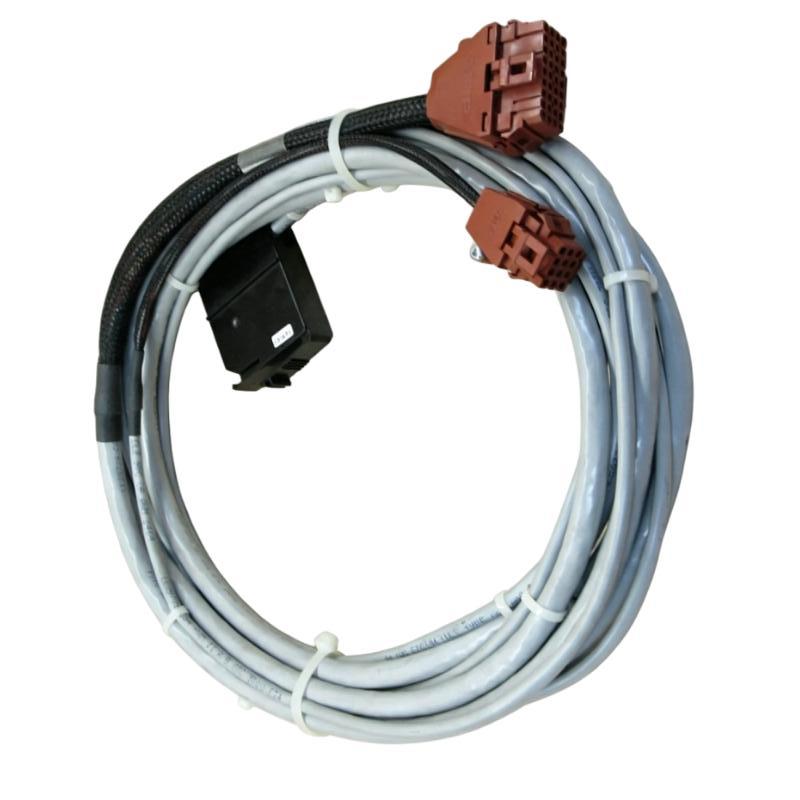
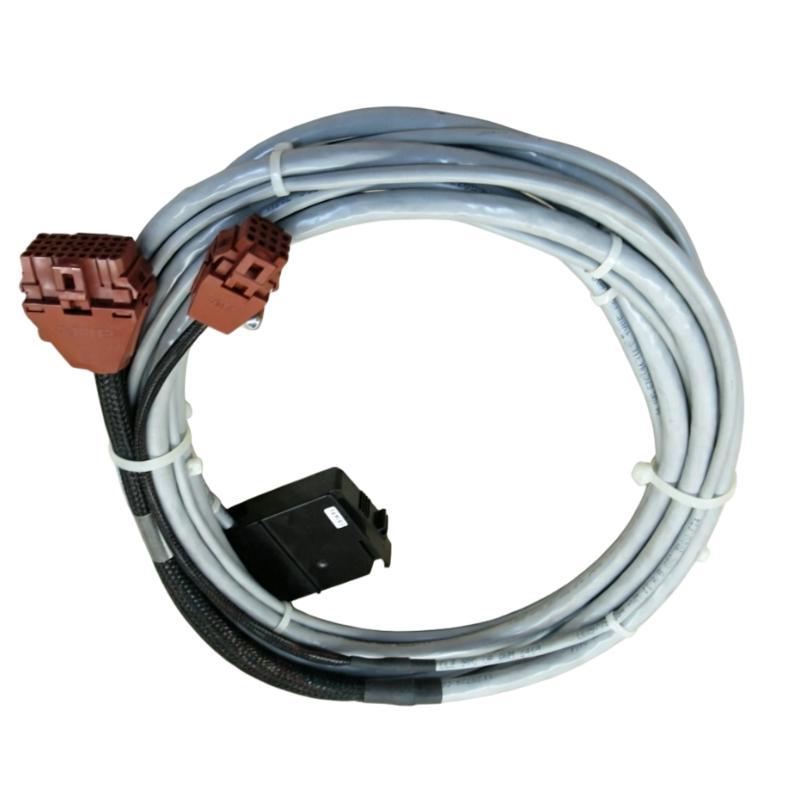
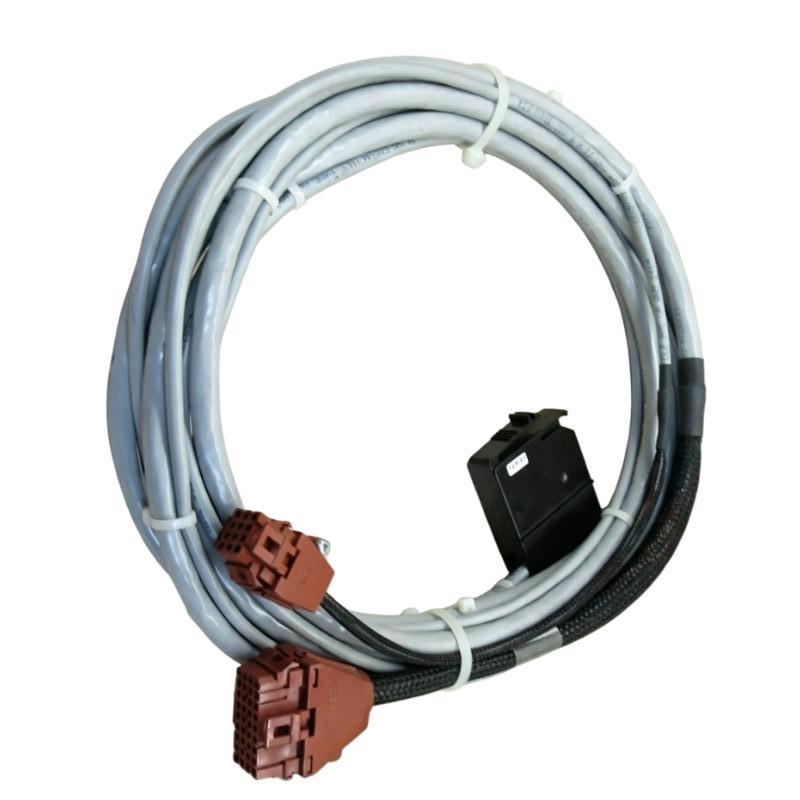
- ABB Bailey
- NKST11
- SOE Time Synchronization Cable
- Sweden (SE)
- Optional
- 3 kg
- Xiamen, China
- New & In Stock
- T/T, PayPal, Western Union
- 1 Year
- 1-3 Working Days
- DHL, UPS, TNT, FedEx and EMS.
- 24-Hour Service
- COO
- 77
Our advantage

Global Logistics
We have a 10-year logistics and express cooperation agreement, so our products can be shipped to any place in the world.

Brand new and original
Our products are imported in bulk from the place of origin. Because of the cooperative relationship, our products are all original and 100% new.

24-hour service
We provide 7*24 hours service to our customers. We will be there whenever you need us.

Price advantage
All our products are priced very favorably because we have our own warehouse and supply.
| Company Information | |||
| [email protected] | |||
| Mobile | +8615980777398 | ||
| +8615980777398 | |||
| 15980777398 |
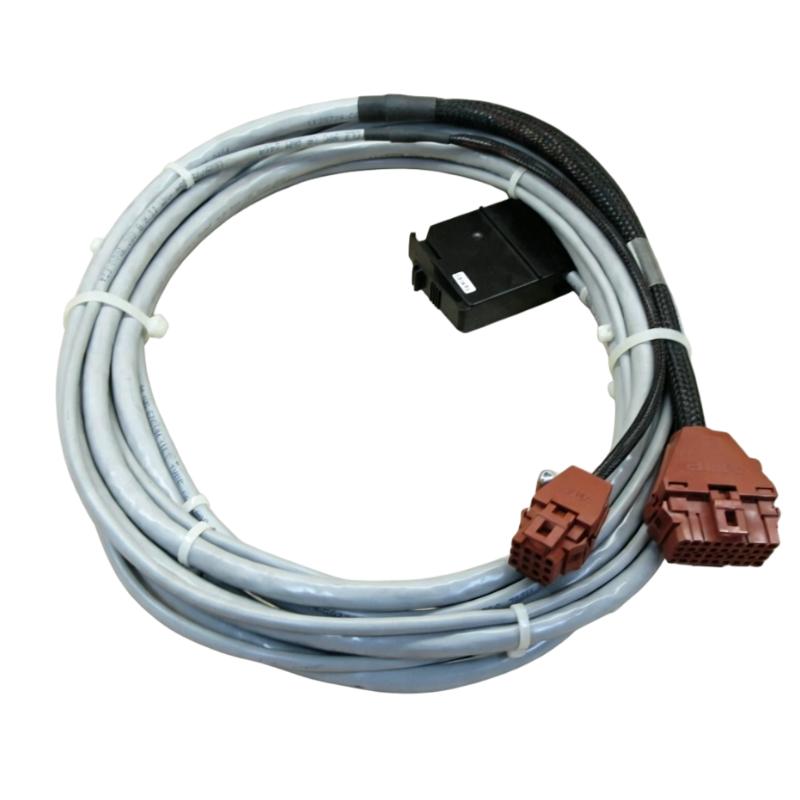
Product Overview
The ABB Bailey NKST11 INFI 90 SOE Time Synchronization Cable is used within ABB Bailey INFI 90 systems where sequence-of-events equipment requires a time synchronization connection.
In a process plant, many equipment states can change within a very short period during a trip or abnormal operating condition. A motor may stop, a breaker may open, an interlock may activate, and an alarm contact may change state almost simultaneously. SOE systems record these transitions so engineers can later determine the order in which they occurred.
The NKST11 belongs to the physical connection layer supporting this timing function. It is not an I/O module and does not process the field event itself. Instead, it connects compatible timing or SOE hardware within the INFI 90 architecture.
A typical relationship is:
Time Synchronization Hardware → NKST11 → INFI 90 SOE System → Time-Correlated Events
The cable is particularly relevant in power-generation facilities, process plants, oil and gas installations, and other continuous-operation systems where accurate event chronology is useful for disturbance investigation.
For maintenance work, the exact cable configuration should be checked against the existing installation before replacement. The NKST11 identification alone should not be used to assume connector arrangement or cable length when those details are not documented.
Technical Specifications
| Parameter | Specification |
|---|---|
| Manufacturer | ABB Bailey |
| Model | NKST11 |
| Product Family | INFI 90 |
| Product Type | SOE Time Synchronization Cable |
| Primary Function | SOE Time Synchronization |
| System Role | Timing / Synchronization Connection |
| Application | Industrial Automation / Process Control |
| Cable Length | Optional |
| Shipping Weight | 3 kg |
Product Features
- ABB Bailey INFI 90 SOE Time Synchronization Cable
- Model NKST11
- Intended for SOE timing applications
- Used as part of the INFI 90 synchronization infrastructure
- Applicable to time-correlated event recording
- Suitable for process-control environments
- Useful for system maintenance and cable replacement
- Supports connections between compatible synchronization hardware
- Applicable to disturbance and event-analysis systems
- Cable configuration should match the existing installation
Working Principle
The NKST11 functions as a physical link in the timing path used by the INFI 90 SOE arrangement.
The practical relationship is:
Common Time Reference → Synchronization Hardware → NKST11 → SOE Equipment
When a field event occurs, the associated I/O hardware detects the change. The SOE system records the event together with timing information derived from the system’s synchronization arrangement.
For example:
Breaker Opens → Digital Input Changes → SOE System Records Event → Synchronized Time Assigned
If another event occurs moments later:
Protection Signal → Input State Changes → SOE Record Created → Same Time Reference
The synchronization cable does not decide which event occurred first. Its role is to support the timing connection that allows separate event records to be compared using a common time reference.
This becomes particularly useful when troubleshooting a plant disturbance where several alarms and equipment changes appear almost simultaneous.
Role in an INFI 90 SOE Architecture
The NKST11 belongs to the synchronization infrastructure surrounding the SOE recording function.
Time Reference → NKST11 → SOE Infrastructure → Event Records → Operator / Engineering Analysis
| System Element | Function |
|---|---|
| ABB Bailey NKST11 | Provides the SOE synchronization connection |
| INFI 90 Control System | Provides process-control infrastructure |
| SOE Hardware | Records sequence-of-events information |
| Time Synchronization Source | Establishes the common time reference |
| Digital Input Hardware | Detects discrete field events |
| Field Contacts | Generate equipment-status changes |
| Protection Equipment | Generates protection-related events |
| Controller Hardware | Processes control information |
| Operator Interface | Displays process and event information |
| Engineering Workstation | Supports event investigation |
The exact connection arrangement depends on the installed INFI 90 system architecture.
SOE Event Correlation
SOE becomes especially useful when several devices change state during one disturbance.
A typical event sequence might look like:
Protection Trip → Breaker Status Change → Motor Stop → Alarm Contact → Interlock Activation
Without a common time reference, the sequence can be difficult to reconstruct when the events are separated by only a short interval.
With synchronized event timing, engineers can compare the recorded timestamps and determine the likely progression of the disturbance.
Common event sources include:
| Event Source | Example Information |
|---|---|
| Circuit Breaker | Open / closed state |
| Motor | Running / stopped condition |
| Protection Relay | Trip indication |
| Valve | Position change |
| Pump | Operating status |
| Interlock | Permissive state |
| Alarm Contact | Abnormal condition |
| Equipment Controller | State transition |
The NKST11 supports the timing infrastructure used to correlate such information within a compatible INFI 90 installation.
Industrial Applications
| Application | Typical Use |
|---|---|
| Power Generation | Trip and disturbance analysis |
| Oil and Gas | Equipment-event chronology |
| Petrochemical Plants | Alarm and interlock sequence analysis |
| Chemical Processing | Process-event correlation |
| Power Distribution | Breaker and protection events |
| Water Treatment | Equipment-state event recording |
| Industrial Utilities | Time-correlated equipment monitoring |
| Process Automation | SOE event investigation |
Installation and Maintenance
The NKST11 should be treated as a system-specific synchronization cable rather than a generic signal cable.
- Confirm the complete NKST11 model.
- Verify that the installation uses INFI 90 SOE timing hardware.
- Identify both ends of the existing cable.
- Record the existing cable routing.
- Verify the required cable configuration.
- Confirm the required cable length before ordering a replacement.
- Inspect connectors for physical damage.
- Check the cable jacket for cuts or deformation.
- Avoid excessive bending or pulling during installation.
- Keep the cable routed according to the existing system arrangement.
- Confirm connector seating.
- Check the associated synchronization hardware.
- Verify synchronization status after installation.
- Review SOE event timestamps.
- Compare event timing with known equipment operations.
- Confirm that newly generated events contain the expected timing information.
- Record the installed cable configuration.
If SOE timestamps become inconsistent after replacement, inspect the complete timing path, including the synchronization source, cable connections, receiving hardware, and system configuration.
Compatible System Components
| Component | Function |
|---|---|
| ABB Bailey NKST11 | INFI 90 SOE Time Synchronization Cable |
| INFI 90 Control Hardware | Process-control system infrastructure |
| SOE Interface Hardware | Sequence-of-events processing |
| Time Synchronization Equipment | Provides common timing reference |
| Digital Input Modules | Detect discrete equipment states |
| Field Contacts | Generate event signals |
| Protection Devices | Generate trip and protection events |
| Controller Hardware | Processes system information |
| Operator Interface | Displays events and equipment status |
| Engineering Station | Supports event analysis |
Recommended Related Models
| Model / Product Family | Product Type | Typical Application |
|---|---|---|
| ABB Bailey NKST11 | INFI 90 SOE Time Synchronization Cable | SOE timing connection |
| ABB Bailey NKST01-10 | INFI 90 SOE Time Synchronization Cable | SOE timing connection |
| ABB Bailey INFI 90 | Distributed Control System | Process control |
| ABB Bailey SOE Hardware | Sequence-of-Events Equipment | Event recording |
| ABB Bailey Digital Input Hardware | Discrete Input Equipment | Field-event acquisition |
| ABB Bailey Time Synchronization Hardware | Synchronization Equipment | Common event timing |
| ABB Bailey INFI 90 I/O Hardware | I/O System Components | Field signal processing |
Key Advantages
- ABB Bailey INFI 90 SOE Time Synchronization Cable.
- Model NKST11.
- Supports SOE timing connections.
- Suitable for time-correlated event recording.
- Useful for trip and disturbance analysis.
- Applicable to alarm and interlock event investigation.
- Suitable for INFI 90 maintenance applications.
- Cable length can be selected according to the required configuration.
Technical FAQs
What is the function of the ABB Bailey NKST11?
The NKST11 is an INFI 90 SOE time synchronization cable used as part of the physical timing connection between compatible synchronization and SOE hardware. It supports the common time reference needed for meaningful event correlation.
Why is cable length important when replacing an NKST11?
The replacement cable must physically reach the required connection points without creating excessive slack or mechanical stress. Since the available configuration is installation-dependent, the existing cable arrangement should be checked before selecting the replacement length.
What happens to SOE analysis if synchronization is unavailable?
The individual event inputs may still detect state changes, but the timing relationship between events can become unreliable or inconsistent. This makes it more difficult to establish the exact sequence of equipment actions during a disturbance.
How can an engineer verify that an NKST11 replacement is functioning correctly?
After confirming the physical connections, check the associated synchronization status and review newly generated SOE records. Comparing timestamps against known equipment actions can help determine whether the timing path is operating as expected.