
NewsNEWCENTER
Featured products
Contact Us
ABB Advances Reliable Data Center Power Solutions to Support Green and Efficient AI Computing
2026-10-23ABB Focuses on Reliable Power and Energy Efficiency as AI Computing Demand Grows
The rapid expansion of artificial intelligence (AI), cloud computing, and high-performance computing is placing increasing pressure on data center power infrastructure. As computing workloads become more intensive, operators must deliver greater electrical capacity while maintaining power quality, operational reliability, and energy efficiency.
ABB is addressing these challenges through its portfolio of electrification, automation, motor, drive, and digital technologies for data centers. Its solutions cover multiple stages of the electrical power chain, from medium-voltage distribution and power conversion to low-voltage protection, equipment monitoring, and cooling-system optimization.
In September 2026, ABB presented data center technologies at the Apsara Conference in Hangzhou, China, highlighting the concept of coordinated computing and power infrastructure. The company also announced its Infinitus direct-current portfolio, designed to support the evolving electrical requirements of AI data centers.
The developments reflect an important industry trend: reliable computing infrastructure increasingly depends on the coordinated design of electrical distribution, power protection, cooling, and intelligent energy management.
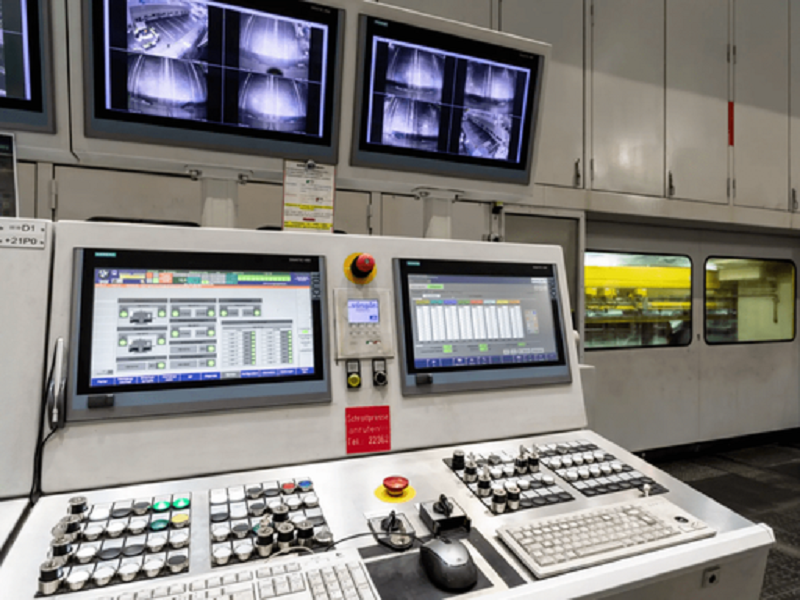
Why Reliable Power Is Critical for Modern Data Centers
Data centers depend on a continuous supply of electricity to operate servers, storage systems, networking equipment, cooling infrastructure, and building-management systems. Even a brief power disturbance can affect sensitive equipment or interrupt services if the facility’s electrical architecture does not respond appropriately.
AI workloads introduce additional challenges. High-performance processors can create substantial and rapidly changing electrical loads, while densely packed server racks increase the demands placed on power distribution and thermal management systems.
For data center operators, several priorities are becoming increasingly important:
- Power continuity: Maintaining supply to critical computing and control equipment during electrical disturbances.
- Power quality: Managing voltage fluctuations, harmonics, and other electrical conditions that may affect sensitive loads.
- Energy efficiency: Reducing avoidable losses in power conversion, distribution, and cooling.
- Scalability: Allowing electrical infrastructure to accommodate higher rack densities and future capacity expansion.
- Operational visibility: Using monitoring and automation to identify abnormal conditions and support maintenance decisions.
These requirements cannot be addressed by a single component. They depend on a coordinated electrical design that considers the utility connection, backup generation, uninterruptible power supply systems, switchgear, distribution equipment, and the loads being served.
ABB’s Approach: From Power Source to Server Rack
ABB’s data center portfolio covers a broad range of electrification and automation technologies. Depending on the facility design and application, these technologies can help operators manage incoming power, distribute electricity, protect equipment, monitor electrical performance, and optimize supporting systems.
1. Medium-Voltage Power Distribution
Medium-voltage equipment forms a critical part of the electrical infrastructure connecting incoming utility supplies or other power sources to a data center’s downstream distribution network.
Switchgear, protection systems, and related electrical equipment help manage power flow and isolate faults when abnormal conditions occur. Appropriate protection coordination is essential because a fault in one section should not unnecessarily affect healthy sections of the facility.
ABB offers medium-voltage power and distribution technologies that can be incorporated into data center designs according to site capacity, utility requirements, redundancy strategy, and applicable electrical standards.
2. Low-Voltage Switchgear and Circuit Protection
Low-voltage distribution equipment supplies power to downstream loads, including server power systems, cooling equipment, pumps, fans, and auxiliary services.
Circuit breakers and switchgear provide protection and switching functions. When correctly selected and coordinated, these devices help limit the impact of electrical faults and support safe maintenance procedures.
For data centers, engineering considerations include rated current, short-circuit breaking capacity, selectivity, temperature rise, installation conditions, and compatibility with the overall protection system.
ABB’s low-voltage solutions, including its MNS switchgear and SACE circuit-breaker families, are relevant to a range of electrical distribution applications. The appropriate configuration depends on the requirements of each project.
3. Direct-Current Distribution for AI Infrastructure
One of ABB’s notable developments in 2026 is its Infinitus portfolio for direct-current power distribution in AI data centers.
Announced on September 21, 2026, the portfolio is designed to support power architectures that can accommodate increasing computing density and reduce unnecessary conversion stages. It includes technologies for medium-voltage power, DC sources and power quality, DC distribution, DC protection, and cooling optimization.
An 800 VDC architecture is one approach being explored for next-generation AI infrastructure. Compared with conventional power architectures, a carefully engineered DC system may reduce conversion losses and electrical infrastructure footprint in suitable applications.
However, the potential benefits depend on the complete system design, including conversion equipment, protection devices, server power requirements, redundancy arrangements, and operating conditions. DC distribution also requires protection and isolation technologies designed specifically for the relevant voltage and current characteristics.
ABB’s Infinitus portfolio is intended to provide building blocks for both DC-native and hybrid AC/DC designs rather than requiring every existing data center to replace its conventional AC infrastructure.
4. Intelligent Monitoring and Power Management
Electrical monitoring helps operators understand how power is being distributed and consumed across a facility.
Measurements such as current, voltage, power, energy consumption, and power quality can support fault investigation, capacity planning, and energy optimization. When monitoring data is integrated with operational procedures, maintenance teams can identify developing problems before they become major interruptions.
ABB’s digital technologies and power-management solutions can support this work by improving visibility into electrical assets and operating conditions.
Digital monitoring does not eliminate the need for physical inspection, protection testing, or maintenance. Instead, it provides additional information that helps engineers make better-informed decisions.
Cooling Efficiency Is Part of the Power Challenge
Electrical reliability and cooling performance are closely connected in high-density computing environments. Servers convert much of the electricity they consume into heat, which must be removed to maintain acceptable operating temperatures.
Cooling infrastructure can include chillers, cooling towers, pumps, fans, and, in some facilities, liquid-cooling systems. These auxiliary systems consume electricity themselves, so improving their efficiency can reduce the total energy required to operate the data center.
ABB’s motor and variable-speed drive technologies can help regulate the operation of pumps and fans according to system demand. Instead of operating continuously at full speed, suitably configured equipment can adjust output to match changing cooling requirements.
The potential benefits include lower auxiliary power consumption, improved process control, and reduced mechanical stress under appropriate operating conditions.
Nevertheless, energy savings depend on the equipment selected, the control strategy, the cooling architecture, and the facility’s operating profile. Actual results should be verified through engineering analysis and measured operating data.
Coordinating Computing Loads with Energy Supply
Another important development is the growing interest in coordinating data center electricity demand with renewable generation, energy storage, and grid conditions.
ABB has highlighted the concept of computing-power and electricity coordination in its 2026 China data center activities. Under this approach, energy resources such as solar generation, battery storage, and conventional power supplies may be coordinated with facility demand where the electrical design, grid rules, and operating requirements permit.
A well-designed system can improve energy visibility and create opportunities to use electricity more flexibly. In some applications, controllable workloads may be scheduled according to energy availability, while storage systems help manage short-term differences between supply and demand.
Such coordination must not compromise critical computing services. Essential loads still require appropriate redundancy, protection, and backup-power arrangements, and not every workload can be shifted freely.
Renewable integration alone also does not guarantee uninterrupted power. Reliable operation requires a complete strategy for power quality, energy storage where appropriate, backup supply, fault isolation, and operational control.
Practical Considerations for Data Center Engineers
Selecting equipment for a data center requires more than comparing rated power or product prices. Electrical engineers and facility operators must evaluate the full installation and its operating requirements.
Key considerations include:
Electrical capacity and future expansion: Distribution equipment should be selected according to expected demand, diversity assumptions, fault levels, and planned growth.
Redundancy and fault isolation: The architecture should define how critical loads remain supplied when equipment fails or maintenance is required. Redundancy labels alone do not guarantee resilience; the actual electrical paths and failure modes must be assessed.
Protection coordination: Circuit breakers, switchgear, UPS equipment, and other devices must operate together in a coordinated manner under expected fault conditions.
Compatibility with DC systems: Where direct-current distribution is considered, all relevant equipment must be rated for the intended DC voltage, current, interruption duty, and installation conditions.
Monitoring and communications: Digital devices and control systems should be selected with appropriate communication protocols, cybersecurity measures, and integration requirements.
Maintenance and lifecycle support: Access to replacement components, technical documentation, testing procedures, and qualified service personnel is important for long-term operational reliability.
These requirements should be addressed during design and commissioning, not only after the data center enters service.
What ABB’s Developments Mean for the Industrial Equipment Market
The growth of AI infrastructure is creating opportunities across the industrial electrical equipment sector. Demand is not limited to servers and computing accelerators; it also extends to switchgear, circuit breakers, busway systems, UPS equipment, power conversion, motors, drives, monitoring devices, and automation platforms.
For industrial equipment suppliers, the market is increasingly focused on integrated performance rather than isolated component specifications. Customers need equipment that works reliably within a complete electrical and mechanical system.
ABB’s developments illustrate how established electrification and automation technologies are being adapted to the needs of high-density computing environments. The introduction of its Infinitus DC portfolio also demonstrates the industry’s interest in alternative power architectures as AI infrastructure continues to evolve.
For equipment buyers and system integrators, the most important task is to assess each technology against real project requirements. A solution that works well for a new AI-focused facility may not be the most practical choice for an existing data center with established AC distribution infrastructure.
Project-specific engineering, compatibility assessment, lifecycle cost analysis, and verification of performance claims remain essential.
Conclusion
ABB is advancing its data center offering as AI computing increases the demands placed on electrical power systems. Its portfolio spans medium- and low-voltage distribution, circuit protection, direct-current power architectures, digital monitoring, motors, and drives used in cooling applications.
These technologies address several connected priorities: maintaining reliable power, improving energy efficiency, supporting higher computing density, and preparing infrastructure for future expansion.
The company’s September 2026 announcements on data center solutions and the Infinitus DC portfolio provide a timely example of how electrification technology is evolving alongside AI infrastructure.
For data center operators, electrical contractors, automation engineers, and industrial equipment buyers, the key lesson is that dependable computing requires a carefully engineered power chain. Protection, distribution, backup supply, cooling, monitoring, and energy management must work together to support safe and efficient operation.
SEO Keywords: ABB data center solutions, ABB Infinitus DC portfolio, data center power distribution, AI data center power supply, reliable electrical infrastructure, low-voltage switchgear, medium-voltage power distribution, data center energy efficiency, industrial automation equipment, direct current power distribution, data center cooling optimization, intelligent power management.