
NewsNEWCENTER
Featured products
Contact Us
ABB Advances Next-Generation Motion Control as Smart Machines Demand More Precise Industrial Automation
2026-08-20Motion Control Is Becoming a Critical Part of Intelligent Manufacturing
Industrial automation is moving toward higher speed, greater precision and increased flexibility.
Modern manufacturing equipment is expected to produce more products while maintaining consistent quality.
This requirement is particularly important in industries such as:
- Electronics
- Semiconductor manufacturing
- Packaging
- Automotive
- Battery production
- Machine building
- Food processing
In these applications, traditional motor control is often not enough.
Machines increasingly require precise control of:
- Position
- Speed
- Torque
- Acceleration
- Synchronization
This is where advanced motion control becomes increasingly important.
ABB continues to develop automation and motion technologies that connect motors, drives, controllers and intelligent software into integrated machine architectures.
Why Motion Control Matters
A conventional motor application may only require the motor to start and stop.
Modern machines often require much more sophisticated movement.
A production machine may need to:
- Accelerate rapidly.
- Reach a precise speed.
- Synchronize with another axis.
- Move to an exact position.
- Change direction.
- Repeat the operation thousands of times.
Small positioning errors can affect product quality.
Therefore, motion control has become a fundamental part of high-performance automation.
Servo Systems Provide Precise Machine Movement
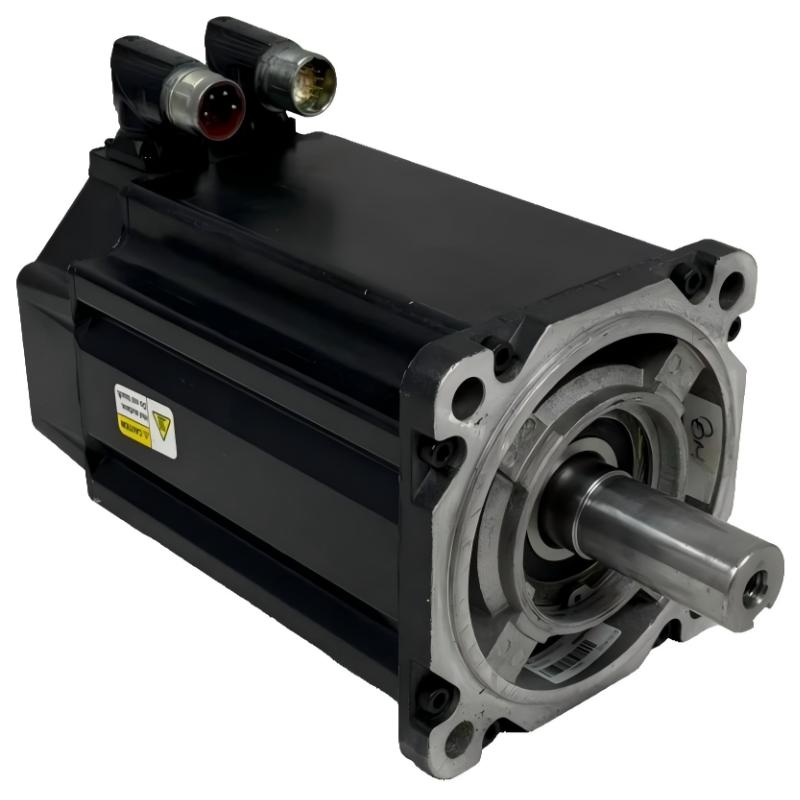
Servo systems are widely used when precise movement is required.
A typical servo system includes:
- Servo motor
- Servo drive
- Encoder
- Controller
- Mechanical transmission
The encoder continuously provides feedback about motor position and speed.
The controller compares the desired position with the actual position.
The drive then adjusts motor operation.
This closed-loop structure allows highly precise movement.
PLCs and Motion Controllers Work Together
Modern PLC platforms increasingly include motion-control capabilities.
A PLC can coordinate:
- Conveyor systems
- Servo axes
- Sensors
- Robots
- Pneumatic equipment
For example, a packaging machine may require several axes to operate simultaneously.
The PLC can coordinate the production sequence while motion functions control individual servo axes.
This creates a unified automation architecture.
Synchronization Is Critical in High-Speed Production
High-speed machines often contain multiple moving components.
Consider a packaging line.
A product may move along a conveyor while another mechanism places packaging material around it.
If the two systems are not synchronized, the machine can produce defective products.
Motion control allows the different axes to operate according to precise timing and position relationships.
This can significantly improve production consistency.
Electronic Gearing Replaces Some Mechanical Complexity
Traditional machines often use mechanical gears, chains and shafts to synchronize movement.
Modern motion systems can achieve synchronization electronically.
Electronic gearing allows one axis to follow another according to a programmed relationship.
This can reduce mechanical complexity.
It can also make machines easier to reconfigure.
Electronic Cam Functions Improve Machine Flexibility
Electronic camming allows one motion axis to follow a predefined position profile relative to another axis.
This is useful in:
- Packaging
- Printing
- Labeling
- Cutting
- Material handling
The movement profile can be modified through software.
This provides manufacturers with greater flexibility compared with fixed mechanical mechanisms.
Motion Control Supports Flexible Manufacturing
Manufacturers increasingly need to produce multiple products on the same machine.
A software-based motion system can support different production recipes.
Engineers can adjust:
- Speed
- Acceleration
- Position
- Timing
- Motion profiles
without making major mechanical modifications.
This reduces changeover time.
Predictive Maintenance Is Expanding Into Motion Systems
Motion equipment also produces valuable operational data.
A servo drive can provide information about:
- Motor current
- Torque
- Temperature
- Position error
- Operating hours
Changes in these values can indicate developing mechanical problems.
For example, increasing torque demand may indicate:
- Mechanical friction
- Bearing wear
- Misalignment
- Increased machine load
Monitoring these parameters can help maintenance teams detect problems earlier.
Energy Efficiency Is Becoming More Important
Motion systems also influence factory energy consumption.
Efficient drives and motors can reduce unnecessary energy losses.
Regenerative technologies can potentially recover energy during deceleration in suitable applications.
This is particularly relevant to machines with frequent acceleration and braking cycles.
As energy costs and sustainability requirements increase, motion efficiency will become a more important engineering consideration.
Motion Control and Robotics Are Converging
Industrial robots are essentially advanced motion-control systems.
Modern production lines may combine:
- Servo axes
- Robotic arms
- Linear motors
- Conveyors
- Vision systems
These systems must operate together.
A PLC or supervisory controller can coordinate the overall process while specialized controllers manage individual motion systems.
This allows highly automated production cells to operate as integrated systems.
Digital Twins Can Improve Motion Engineering
Motion systems can be simulated before physical installation.
Engineers can test:
- Axis movement
- Acceleration
- Cycle time
- Position accuracy
- Mechanical interference
This can help identify design problems before commissioning.
Virtual testing can also help engineers optimize motion profiles.
AI Can Optimize Motion Performance
Artificial intelligence may eventually play a larger role in motion optimization.
AI can analyze:
- Historical motion data
- Cycle times
- Motor loads
- Position errors
- Energy consumption
The objective can be to identify operating conditions that improve:
- Speed
- Accuracy
- Energy efficiency
- Equipment life
AI therefore provides another layer above conventional motion control.
The Future of Industrial Motion Control
Future motion systems will increasingly combine:
- High-performance servo technology
- PLC control
- Industrial Ethernet
- Robotics
- Machine vision
- AI
- Digital engineering
The machine will become more software-defined.
Instead of relying heavily on mechanical modifications, manufacturers will increasingly use software to change machine behavior.
Conclusion
ABB’s continued development of motion and automation technologies reflects the growing importance of precision movement in modern manufacturing.
As factories demand higher speed, flexibility and product quality, motion control is becoming a core component of intelligent automation.
Servo systems, drives, PLCs and robotics are increasingly working together as integrated systems.
At the same time, predictive maintenance, energy optimization and digital engineering are adding new capabilities.
The future of motion control will therefore not be limited to simply moving a motor.
It will involve creating intelligent machines capable of precise, efficient and flexible operation.