

ProductPRODUCT
Featured products
Contact Us
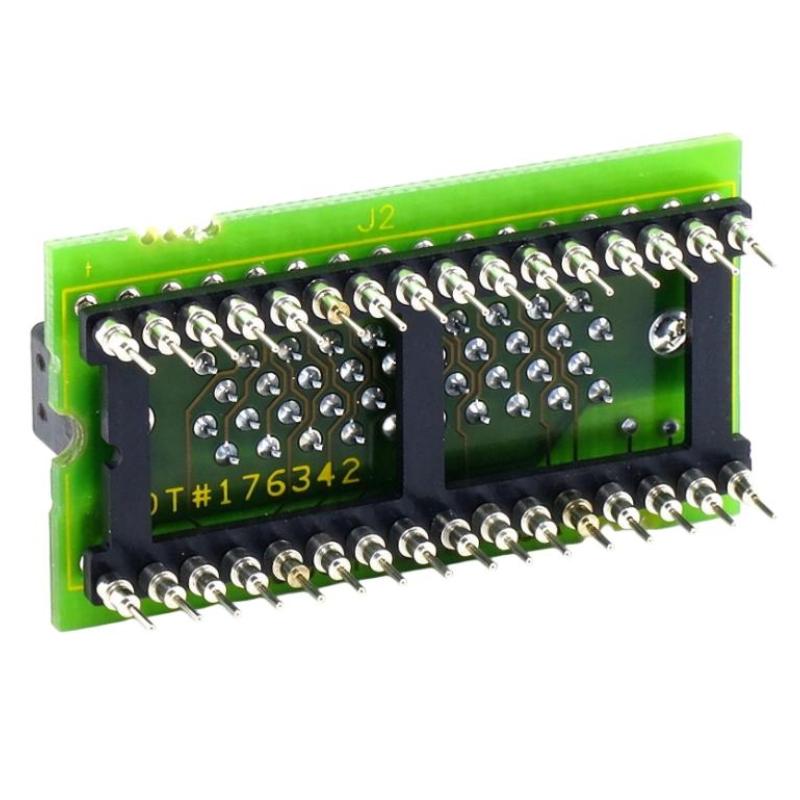
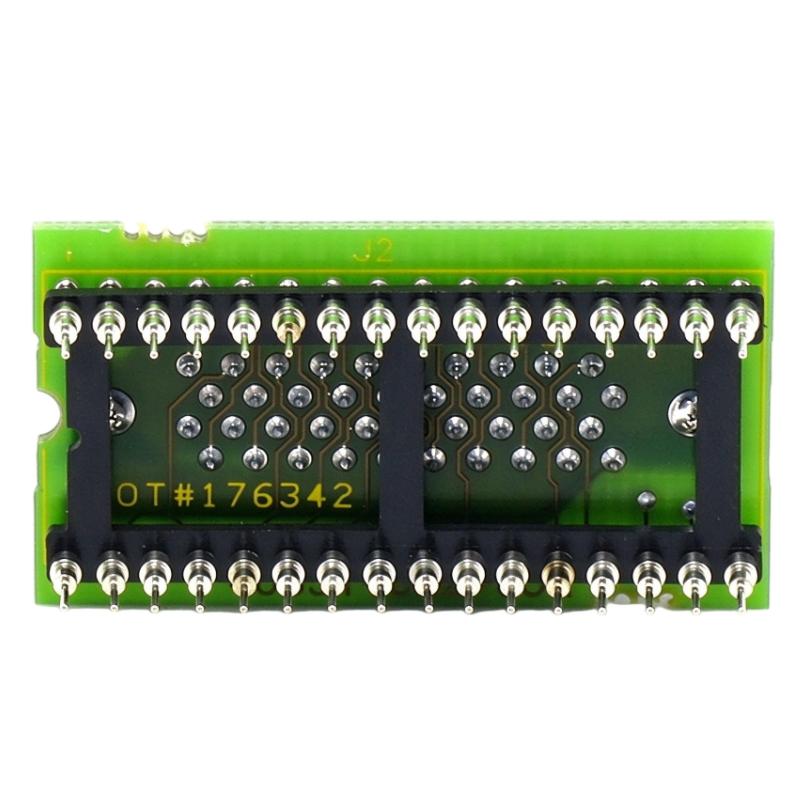
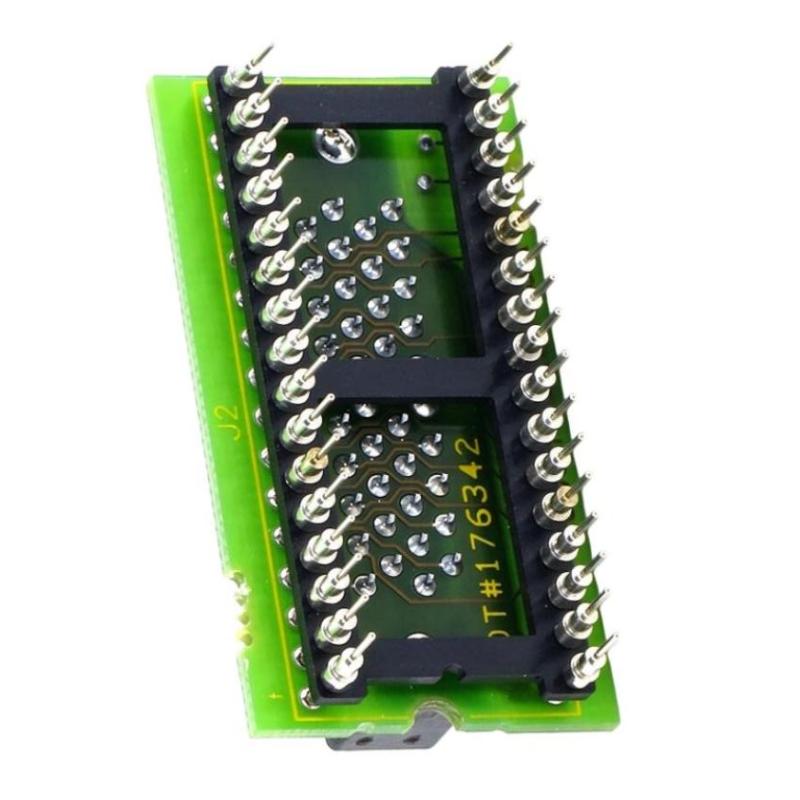
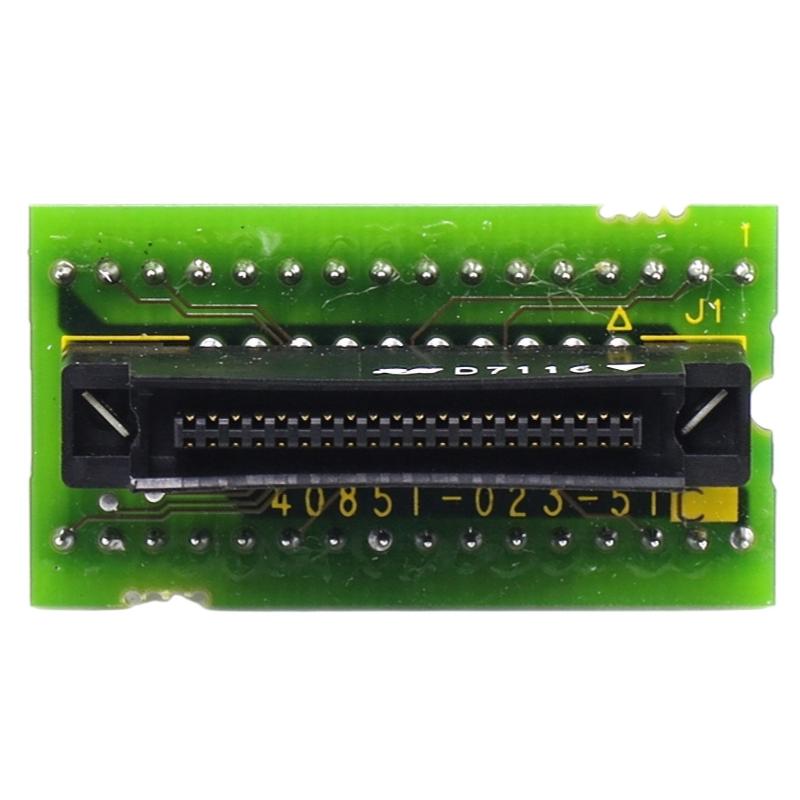
- Allen Bradley
- 1747-M15
- EEPROM Memory Module Adapter
- USA
- 74 x 25 x 10 mm
- 0.05 kg
- Xiamen, China
- New & In Stock
- T/T, PayPal, Western Union
- 1 Year
- 1-3 Working Days
- DHL, UPS, TNT, FedEx and EMS.
- 24-Hour Service
- COO
- 4
Our advantage

Global Logistics
We have a 10-year logistics and express cooperation agreement, so our products can be shipped to any place in the world.

Brand new and original
Our products are imported in bulk from the place of origin. Because of the cooperative relationship, our products are all original and 100% new.

24-hour service
We provide 7*24 hours service to our customers. We will be there whenever you need us.

Price advantage
All our products are priced very favorably because we have our own warehouse and supply.
| Company Information | |||
| [email protected] | |||
| Mobile | +8615980777398 | ||
| +8615980777398 | |||
| 15980777398 |
Product Overview
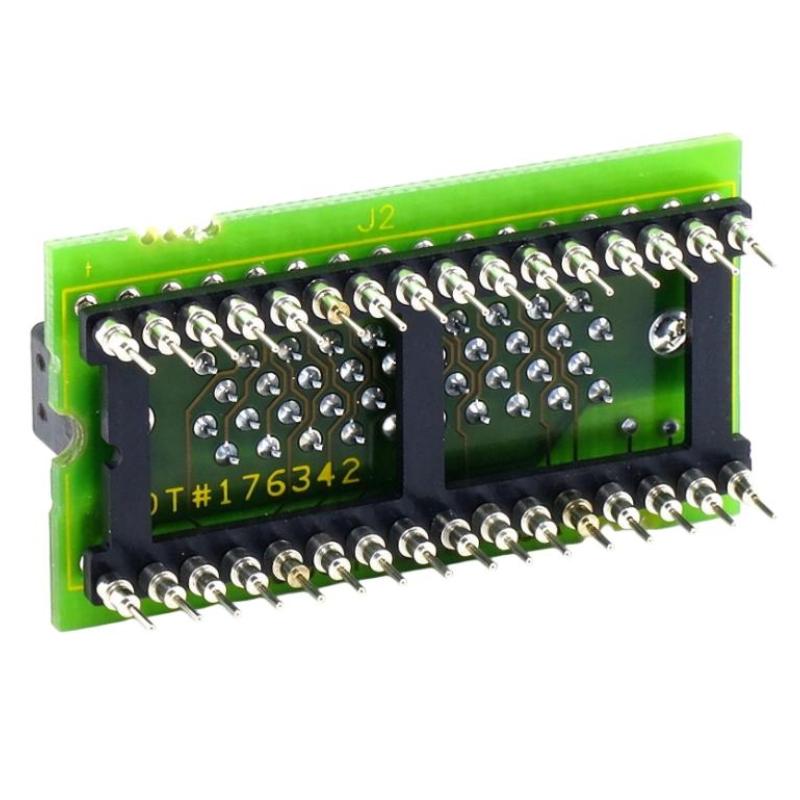
The Allen-Bradley 1747-M15 SLC 500 EEPROM Memory Module Adapter is a programming accessory designed for use with compatible memory modules in the Allen-Bradley SLC 500 programmable logic controller family. Manufactured by Rockwell Automation, this adapter provides an interface between supported memory modules and commercial PROM programming equipment.
Unlike a conventional PLC memory module, the 1747-M15 does not independently store application programs or operate as a controller component. Its primary purpose is to hold and interface with a compatible memory device during programming and erasing operations. The adapter allows the memory module to be inserted into a suitable programming setup, helping engineers manage program storage and backup procedures for legacy SLC 500 systems.
The 1747-M15 is associated with the SLC 5/03, SLC 5/04, and SLC 5/05 processor families. It is identified as an adapter socket for compatible SLC memory modules, including the 1747-M11 and 1747-M12. Rockwell Automation documentation also identifies the Series B adapter socket for use with the 1747-M13 Flash EPROM in applicable programming equipment.
In industrial automation environments, reliable program backup and recovery are important for maintaining older PLC installations. The 1747-M15 supports memory-programming workflows by providing the appropriate physical interface for compatible memory devices and programming equipment.
Its compact construction makes it convenient for maintenance departments, automation workshops, and facilities that continue to service SLC 500 controllers. Since the product has been discontinued, accurate catalog-number identification and verification of the adapter revision are important when sourcing replacement equipment.
Technical Specifications
| Parameter | Specification |
|---|---|
| Brand | Allen-Bradley |
| Manufacturer | Rockwell Automation |
| Model | 1747-M15 |
| Product Series | SLC 500 |
| Product Type | EEPROM Memory Module Adapter |
| Product Category | Memory Programming Adapter Socket |
| Primary Function | Interfaces compatible memory modules with commercial PROM programming equipment |
| Compatible Memory Modules | 1747-M11 and 1747-M12; applicable 1747-M13 programming setups should be checked by adapter revision |
| Related Processor Families | SLC 5/03, SLC 5/04, SLC 5/05 |
| Installation Type | Plug-in adapter socket |
| Programming Equipment | Compatible commercial PROM programmer |
| Memory Storage | No independent memory capacity |
| Dimensions | 74 × 25 × 10 mm |
| Weight | 0.05 kg |
| Product Lifecycle | Discontinued |
| Typical Application | PLC memory programming, maintenance, and program backup workflows |
Note: The 1747-M15 is an adapter socket, not the memory device itself. Compatibility depends on the memory-module catalog number, adapter series, and programming equipment.
Function and Working Principle
The 1747-M15 provides a physical interface for connecting compatible SLC 500 memory modules to commercial PROM programming equipment. Its role is part of the memory programming process rather than the normal execution of PLC control logic.
1. Memory Module Interface
The adapter provides a socket arrangement for a compatible memory module. The memory device is inserted into the adapter, which can then be installed in the appropriate programming equipment.
This arrangement allows the programming hardware to access the memory device through the required electrical and physical interface.
The adapter itself does not contain the user program. The actual program storage is provided by the compatible memory module.
2. Program Writing and Erasing
In a typical memory programming workflow, the memory module is connected to a suitable PROM programmer through the adapter. The programming equipment can then perform supported operations such as writing or erasing the memory device.
These operations are useful when preparing replacement memory modules, maintaining backup copies, or handling program storage for legacy control systems.
The exact programming procedure depends on the memory-module type and the capabilities of the PROM programmer.
3. Program Backup Support
Non-volatile memory modules can preserve PLC application information without depending exclusively on the controller’s active memory. This is valuable in installations where program restoration may be required after equipment failure or controller replacement.
The 1747-M15 supports the external programming process for compatible memory devices. It does not independently create backups or automatically transfer programs between PLCs.
4. Compatibility with SLC 500 Memory Devices
The adapter is associated with memory devices used in SLC 5/03, SLC 5/04, and SLC 5/05 systems. However, compatibility should be checked at the memory-module level.
For example, Rockwell documentation identifies the 1747-M15 as an adapter for 1747-M11 and 1747-M12. The SLC 500 documentation also describes the Series B adapter socket for use with the 1747-M13 Flash EPROM in compatible programming equipment.
Before programming, verify the adapter revision, memory-module catalog number, and programmer requirements.
5. Physical Connection and Handling
The adapter must be inserted correctly into the programming equipment. Incorrect insertion or improper alignment may damage the adapter, memory module, or programmer socket.
Maintenance personnel should inspect the connector contacts and housing before use. Avoid forcing the adapter into a socket or handling exposed contacts unnecessarily.
Role in Industrial Control Systems
Although the 1747-M15 does not directly control machine operation, it supports the maintenance and lifecycle management of SLC 500 automation systems.
PLC Program Maintenance
SLC 500 controllers use application programs to coordinate industrial processes, including motor control, machine sequencing, sensor monitoring, and equipment interlocking.
During maintenance, engineers may need to prepare or replace compatible memory devices containing application information. The 1747-M15 provides the adapter interface needed for supported external programming operations.
Controller Replacement and Recovery
When an existing controller or memory device requires replacement, program restoration may become an important part of the maintenance process.
A compatible memory module can be prepared using suitable programming equipment, helping maintenance personnel manage program recovery procedures. The adapter is one component in this process and must be used with the correct memory device and programming setup.
Engineering Workshop Applications
Automation workshops may maintain dedicated programming equipment for servicing legacy PLC components. The 1747-M15 can be used as part of such a setup when the supported memory-module type and adapter revision match the programming requirements.
Support for Legacy Automation Equipment
Many industrial facilities continue to operate established SLC 500 installations. Maintaining access to compatible programming accessories can help technicians service these systems without immediately replacing the entire control architecture.
The 1747-M15 is therefore relevant to legacy PLC maintenance, spare-parts management, and program-storage workflows.
Industrial Applications
The 1747-M15 is primarily used in maintenance and programming environments rather than as a permanent field-installed control component.
1. PLC Maintenance Workshops
Industrial automation workshops often maintain programming tools and accessories for servicing PLC memory devices. The 1747-M15 can form part of a compatible PROM programming setup.
It helps technicians establish the required physical connection between supported memory modules and programming equipment.
2. SLC 500 Controller Maintenance
Facilities operating SLC 5/03, SLC 5/04, and SLC 5/05 controllers may need to maintain compatible memory devices as part of their equipment-support procedures.
The adapter can assist with external memory programming when the module and programming equipment are compatible.
3. Industrial Program Backup Procedures
Program backup is an important part of maintaining production equipment. A properly prepared non-volatile memory module can provide an additional recovery resource for supported PLC configurations.
The 1747-M15 supports the programming process for compatible modules, while the actual memory storage and backup content remain the responsibility of the memory device and engineering procedure.
4. Legacy Equipment Refurbishment
During refurbishment of older automation equipment, technicians may need to inspect, program, or replace memory components.
The 1747-M15 can be useful where the maintenance process requires a compatible adapter socket for external memory programming.
5. Spare-Parts and Engineering Support
Industrial spare-parts suppliers and automation service departments may maintain the 1747-M15 for customers operating older SLC 500 systems.
Its compact size and specialized function make it a relevant accessory for facilities that still depend on legacy Rockwell Automation equipment.
Installation and System Integration
The 1747-M15 is used in a programming environment rather than installed as a standard PLC chassis module. Correct handling and compatibility verification are essential.
1. Verify the Adapter Catalog Number
Before use, confirm that the adapter is marked 1747-M15. Check the adapter revision where applicable, particularly when using a 1747-M13 memory module.
Do not assume that every adapter revision supports every SLC 500 memory device.
2. Confirm Memory Module Compatibility
Identify the exact memory-module catalog number before connecting it to the adapter.
The 1747-M15 is documented for use with 1747-M11 and 1747-M12 memory modules. Rockwell documentation also identifies a Series B adapter socket for the 1747-M13 Flash EPROM programming arrangement.
The memory-module revision and the target processor’s operating-system requirements should also be checked.
3. Check Programming Equipment
Confirm that the commercial PROM programmer supports the memory device and adapter arrangement. Verify the required socket type and programming voltage before starting the operation.
Different programming equipment may have different hardware and configuration requirements.
4. Insert the Adapter Correctly
Align the adapter with the programming equipment socket and insert it according to the equipment instructions.
Do not force the adapter into the socket. Incorrect insertion may cause physical or electrical damage.
5. Follow the Programming Procedure
Use the programming software or equipment instructions applicable to the selected memory device.
Confirm that the correct program file and memory configuration have been selected before writing or erasing the device. Where program compatibility is important, verify the target processor type and firmware requirements.
6. Inspect and Store the Adapter
After use, remove the adapter carefully and inspect its connector contacts and housing. Store it in a clean, dry environment with suitable protection against electrostatic discharge and physical damage.
Avoid placing heavy objects on the adapter or exposing it to contaminants that could affect its contacts.
Compatible System Components
The 1747-M15 is part of a memory-programming arrangement. The following components may be relevant to its use.
| Component | Function | Compatibility Considerations |
|---|---|---|
| 1747-M11 Memory Module | Provides non-volatile memory for supported SLC 500 systems | Confirm module revision and target processor requirements |
| 1747-M12 Memory Module | Provides memory backup for compatible SLC 500 processors | Verify memory-module and processor compatibility |
| 1747-M13 Flash EPROM | Provides non-volatile program storage for applicable SLC 5/03, 5/04, and 5/05 processors | Check Series B adapter requirements and processor firmware |
| SLC 5/03 Processor | Executes PLC application logic | Verify memory-module compatibility and operating-system revision |
| SLC 5/04 Processor | Provides PLC control and application execution | Confirm memory-module and firmware requirements |
| SLC 5/05 Processor | Provides PLC control with Ethernet communication capabilities | Confirm supported memory device and firmware |
| Commercial PROM Programmer | Programs or erases compatible memory devices | Must support the memory module and adapter arrangement |
| Programming Software | Supports PLC program preparation and memory operations | Follow the relevant software and controller documentation |
| ESD Protection Equipment | Helps protect electronic components during handling | Use appropriate electrostatic-discharge precautions |
The 1747-M15 is not a substitute for any of the memory modules listed above. It is an adapter used in conjunction with compatible programming equipment.
Alternative Models and Replacement Considerations
The 1747-M15 has been discontinued. When sourcing a replacement, it is important to distinguish between adapter sockets and actual memory modules.
| Model or Component | Product Type | Replacement Considerations |
|---|---|---|
| 1747-M15 | SLC EEPROM Memory Module Adapter | Original adapter model; verify revision and condition |
| 1747-M5 | SLC 500 Adapter Socket | Designed for different SLC processor and memory-module applications; not a direct substitute |
| 1747-M11 | Memory Module | Actual memory device, not an adapter replacement |
| 1747-M12 | Memory Module | Actual memory device, not an adapter replacement |
| 1747-M13 | Flash EPROM Memory Module | Used with applicable SLC 5/03, 5/04, and 5/05 systems; requires the appropriate programming arrangement |
Before selecting an alternative, compare:
- Adapter catalog number and series.
- Supported memory-module type.
- Programming equipment socket requirements.
- Programming voltage and device support.
- Target PLC processor family.
- Processor firmware and operating-system revision.
- Physical connector arrangement.
- Condition of the adapter contacts and housing.
A memory module and an adapter socket perform different functions. Replacing the 1747-M15 with a memory module will not provide the same programming interface.
Key Advantages
Dedicated Memory Programming Interface
The 1747-M15 provides a dedicated adapter arrangement for compatible SLC 500 memory devices and commercial PROM programming equipment.
Support for Legacy SLC 500 Systems
It is relevant to maintenance environments that continue to service SLC 5/03, SLC 5/04, and SLC 5/05 controller installations.
Compact Physical Design
Its supplied dimensions of 74 × 25 × 10 mm make it a compact accessory that can be stored with other PLC programming tools.
Supports Memory Maintenance Workflows
The adapter can assist technicians with supported memory programming and erasing procedures, helping maintain access to program-storage resources for legacy equipment.
Specialized Maintenance Accessory
The 1747-M15 serves a specific role in external memory programming. Its function is distinct from that of a controller, I/O module, or independent memory device.
Useful for Legacy Equipment Support
For facilities that still operate SLC 500 controllers, maintaining compatible programming accessories can support troubleshooting, refurbishment, and spare-parts planning.
Technical FAQs
1. What is the Allen-Bradley 1747-M15?
The 1747-M15 is an SLC 500 EEPROM Memory Module Adapter. It is an adapter socket used to interface compatible memory modules with commercial PROM programming equipment.
2. Is the 1747-M15 an actual EEPROM memory module?
No. It is an adapter socket and does not independently store PLC programs. The compatible memory module provides the actual non-volatile storage.
3. Which memory modules are compatible with the 1747-M15?
Rockwell Automation product documentation identifies the 1747-M15 as an adapter for the 1747-M11 and 1747-M12. SLC 500 documentation also identifies a Series B adapter socket for programming the 1747-M13 Flash EPROM. Verify the adapter revision and programmer requirements before use.
4. Which PLC systems are associated with the 1747-M15?
It is associated with the SLC 5/03, SLC 5/04, and SLC 5/05 processor families through their compatible memory modules.
5. Does the 1747-M15 install directly into an SLC 500 chassis?
It is primarily an adapter socket for external memory programming equipment. It should not be confused with a standard PLC chassis module.
6. What is the purpose of the adapter?
Its purpose is to provide the required physical interface between a compatible memory module and a commercial PROM programmer for supported programming or erasing operations.
7. Can the 1747-M15 store a PLC program?
No. Program storage is provided by the compatible memory module. The 1747-M15 only provides the adapter interface needed for the programming setup.
8. Is the 1747-M15 still in production?
No. Rockwell Automation lists the product as discontinued, with a discontinuation date of December 31, 2022. Availability may depend on remaining inventory and industrial spare-parts suppliers.
9. What should be checked before purchasing a used 1747-M15?
Check the complete catalog number, adapter revision, connector condition, housing condition, and compatibility with the intended memory module and PROM programmer. Request clear photographs and functional verification where possible.
10. Can another SLC 500 adapter replace the 1747-M15?
Not automatically. Other adapter sockets may support different memory modules or processor generations. Compare the supported memory device, connector arrangement, and programming equipment requirements before selecting an alternative.
Procurement and Maintenance Recommendations
When purchasing the Allen-Bradley 1747-M15, begin by confirming that the required component is an adapter socket rather than an actual memory module. This distinction is important because the adapter and memory device have different functions in the programming process.
Verify the complete catalog number and adapter revision. If the intended application involves a 1747-M11, 1747-M12, or 1747-M13 memory device, check the relevant Rockwell Automation documentation for the correct adapter and programming arrangement.
For used or surplus units, inspect the connector contacts, housing, and physical alignment. Request photographs of the actual product and confirm whether the adapter has been tested with compatible programming equipment.
During maintenance, handle the adapter with appropriate electrostatic-discharge precautions. Keep the connector clean and avoid unnecessary mechanical stress. Store it in a dry, protected location when not in use.
Because the 1747-M15 is discontinued, maintenance departments should consider retaining suitable spare adapters where legacy SLC 500 memory programming remains part of their service procedures. They should also maintain independent backups of PLC application programs and document the processor model, firmware revision, and memory-module configuration.
Conclusion
The Allen-Bradley 1747-M15 SLC 500 EEPROM Memory Module Adapter is a specialized programming accessory for compatible memory devices used in legacy SLC 500 automation systems. It provides an interface between supported memory modules and commercial PROM programming equipment, helping maintenance personnel manage memory programming and erasing operations.
The 1747-M15 is not an independent memory module or a standard PLC chassis component. Its correct application depends on the memory-module catalog number, adapter revision, programming equipment, and target processor requirements.
For industrial maintenance and spare-parts procurement, accurate identification is essential. Confirming these details helps ensure that the adapter is suitable for the intended SLC 500 memory-programming workflow.