

ProductPRODUCT
Featured products
Contact Us
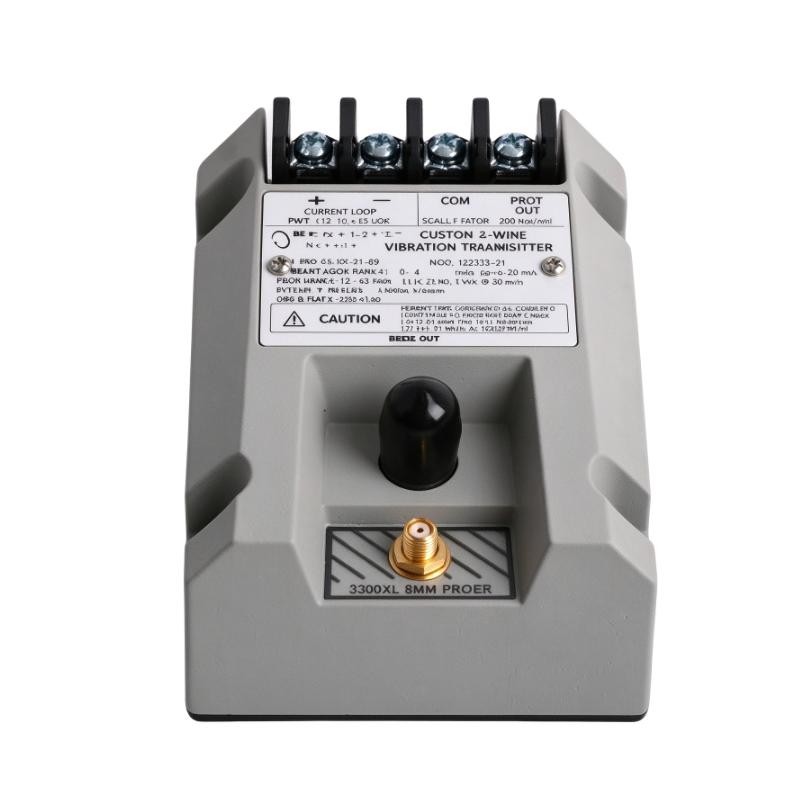
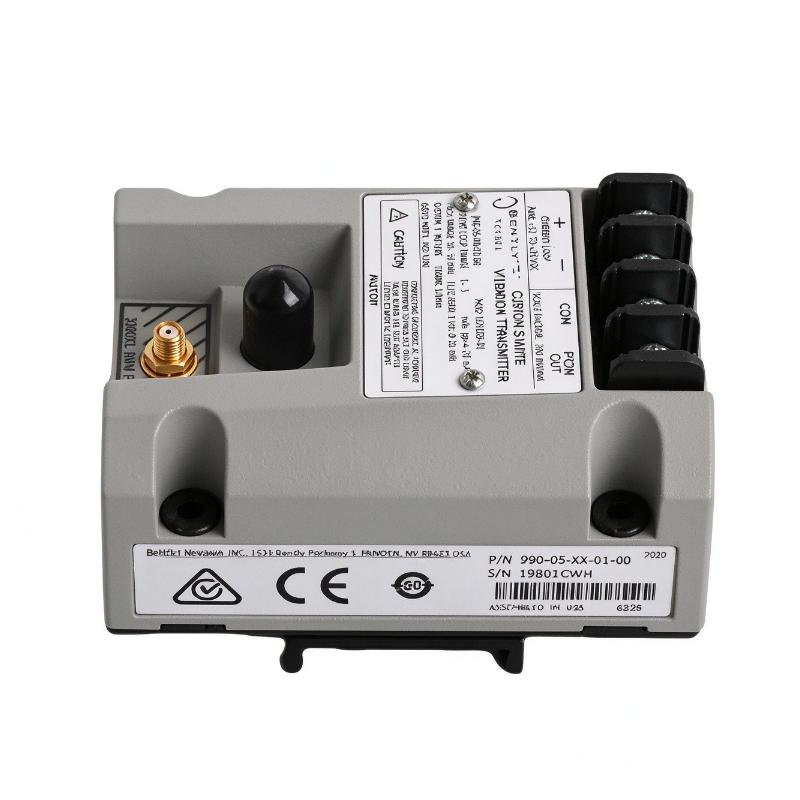
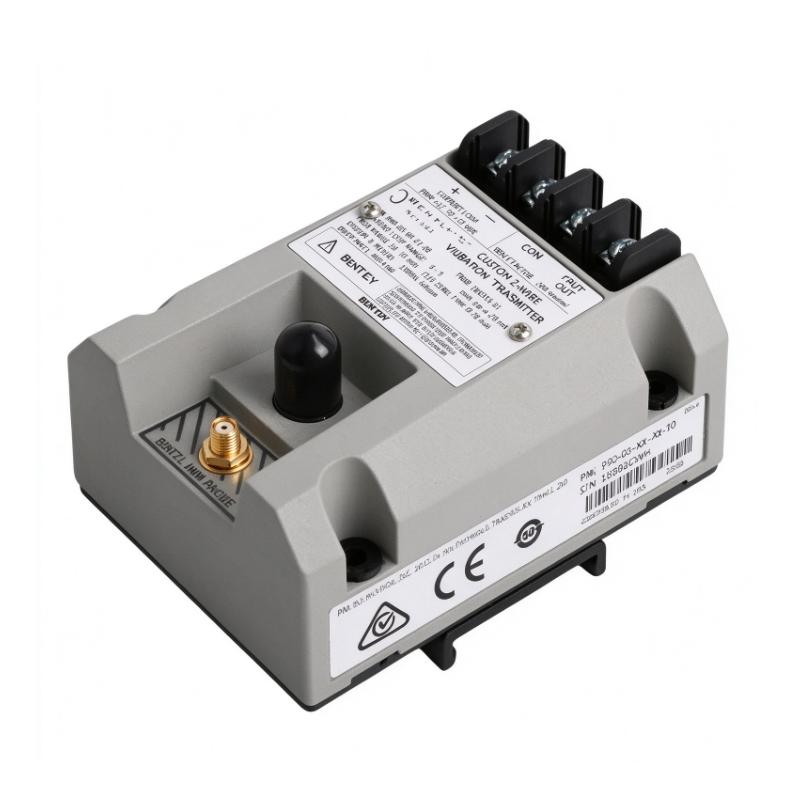
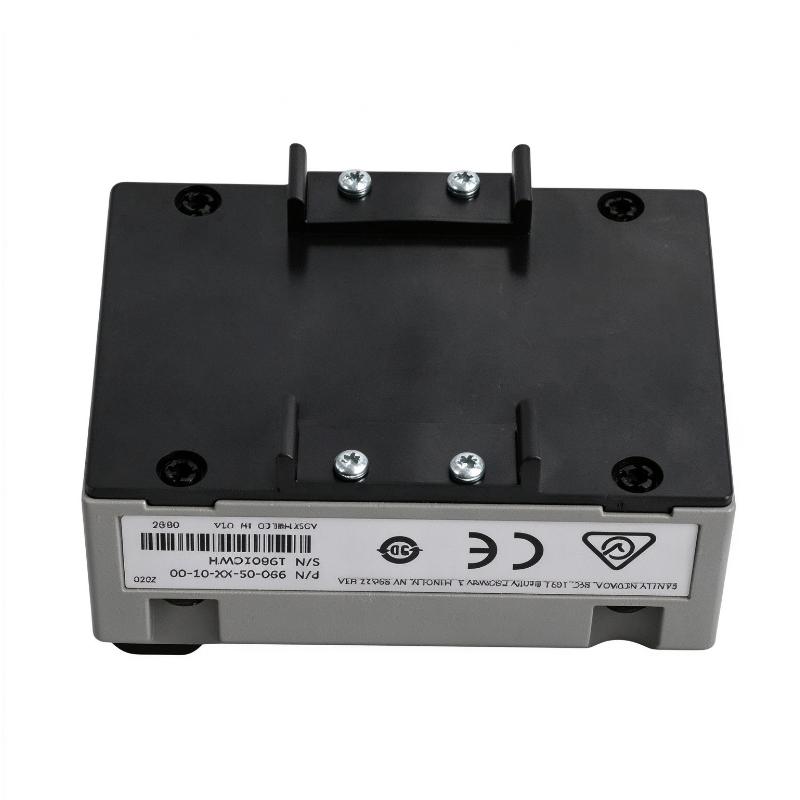
- Bently Nevada
- 990-08-XX-01-00 2832278-01
- 990 Vibration Transmitter
- USA
- 100.1 x 73.9 x 53.3 mm
- 0.43 kg
- Xiamen, China
- New & In Stock
- T/T, PayPal, Western Union
- 1 Year
- 1-3 Working Days
- DHL, UPS, TNT, FedEx and EMS.
- 24-Hour Service
- COO
- 5
Our advantage

Global Logistics
We have a 10-year logistics and express cooperation agreement, so our products can be shipped to any place in the world.

Brand new and original
Our products are imported in bulk from the place of origin. Because of the cooperative relationship, our products are all original and 100% new.

24-hour service
We provide 7*24 hours service to our customers. We will be there whenever you need us.

Price advantage
All our products are priced very favorably because we have our own warehouse and supply.
| Company Information | |||
| [email protected] | |||
| Mobile | +8615980777398 | ||
| +8615980777398 | |||
| 15980777398 |
Product Overview
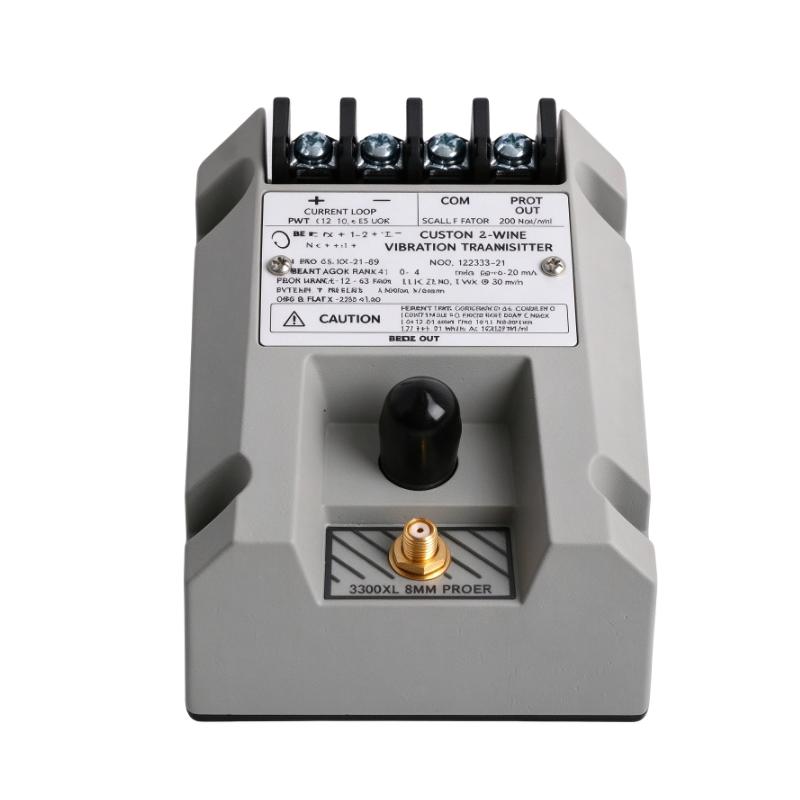
The Bently Nevada 990-08-XX-01-00 Vibration Transmitter is an industrial machinery monitoring device designed to measure radial vibration and provide a standardized electrical output for condition monitoring and machinery protection applications. It belongs to the Bently Nevada 990 Vibration Transmitter series and is commonly used with compatible 3300 NSv proximity probes and extension cables.
The transmitter is designed primarily for applications involving centrifugal air compressors, small pumps, motors, fans, and other rotating machinery. It converts vibration measurements into a proportional 4–20 mA DC signal that can be transmitted to a PLC, DCS, or other industrial control system.
Unlike a conventional vibration monitoring arrangement that may require separate sensor interface equipment, the 990 transmitter integrates signal-conditioning and Proximitor functionality into a compact device. This simplifies the measurement arrangement for OEM machinery and industrial equipment manufacturers that require a proportional vibration signal.
The 990-08 configuration has a full-scale measurement range of 0–8 mils peak-to-peak, equivalent to approximately 0–200 μm peak-to-peak. The transmitter accepts signals from a compatible 3300 NSv proximity probe and its matching extension cable. The system length must be selected according to the installed probe and cable configuration.
The device uses a two-wire, loop-powered design and provides a 4–20 mA output proportional to measured vibration amplitude. This signal can be connected to a suitable analog input channel for continuous monitoring, alarm processing, and maintenance analysis.
With dimensions of 100.1 × 73.9 × 53.3 mm and a supplied weight of 0.43 kg, the transmitter is suitable for compact industrial installations where reliable vibration information is required without installing a large monitoring rack.
Technical Specifications
| Parameter | Specification |
|---|---|
| Brand | Bently Nevada |
| Product Series | 990 Vibration Transmitter |
| Model | 990-08-XX-01-00 |
| Additional Part Number | 2832278-01 (verify against equipment label) |
| Product Type | Two-Wire Vibration Transmitter |
| Measurement Type | Radial Vibration |
| Full-Scale Range | 0–8 mils peak-to-peak |
| Metric Measurement Range | 0–200 μm peak-to-peak |
| Output Signal | 4–20 mA DC |
| Power Supply | +12 to +35 V DC |
| Power Configuration | Two-wire, loop-powered |
| Compatible Probe | Bently Nevada 3300 NSv Proximity Probe |
| Extension Cable | Matching 3300 NSv extension cable |
| System Length Options | 5 m or 7 m, depending on configuration |
| Frequency Response | 5 Hz to 6,000 Hz |
| Mounting Option | 35 mm DIN rail clips |
| Dynamic Signal Output | PROX OUT / COM terminals and coaxial connector |
| Operating Temperature | Refer to the applicable manufacturer datasheet and configuration |
| Dimensions | 100.1 × 73.9 × 53.3 mm |
| Weight | 0.43 kg |
| Typical Applications | Pumps, motors, fans, compressors, rotating machinery |
Note: The XX portion of the model number represents a configuration option and should be verified against the actual system length. The additional part number should also be checked against the transmitter’s nameplate before procurement.
Function and Working Principle
The main function of the Bently Nevada 990 vibration transmitter is to convert mechanical vibration information into an electrical signal that can be processed by industrial control and monitoring equipment.
1. Vibration Signal Acquisition
The transmitter works with a compatible 3300 NSv proximity probe. The probe is installed near a suitable conductive target on the rotating machine, where it measures changes in the distance between the probe tip and the target surface.
As the rotating shaft moves relative to the probe, the measured gap changes. These variations contain information about the radial vibration of the shaft.
The probe and extension cable must be compatible with the transmitter’s electrical characteristics and selected system length. Incorrect combinations can affect measurement accuracy and system performance.
2. Signal Conditioning
The transmitter receives the proximity probe signal and processes it internally. Its integrated Proximitor functionality eliminates the need for a separate external Proximitor unit in the intended configuration.
The internal signal-conditioning circuitry converts the measurement into an engineering-unit representation of peak-to-peak vibration amplitude.
For the 990-08 version, the full-scale range is 0–8 mils peak-to-peak, corresponding to approximately 0–200 μm peak-to-peak.
3. 4–20 mA Output Conversion
After processing the vibration measurement, the transmitter provides a proportional 4–20 mA DC output.
The current signal is suitable for transmission to an industrial analog input channel. The receiving PLC or DCS can scale the signal into vibration engineering units and use it for monitoring, alarm processing, and control-system reporting.
The 4 mA level represents the lower end of the configured measurement range, while 20 mA represents the full-scale value.
4. Two-Wire Loop-Powered Operation
The 990 transmitter uses a two-wire loop-powered design. The same two-wire circuit supplies the transmitter and carries its measurement signal.
The specified supply range is +12 to +35 V DC at the transmitter terminals. The external loop power supply, analog input resistance, and wiring must be selected to maintain sufficient operating voltage.
This arrangement can simplify field wiring and reduce the number of separate power connections required for the measurement point.
5. Dynamic Signal and Diagnostic Access
The transmitter also provides dynamic signal and gap-voltage diagnostic access through its designated output connections.
These signals can be useful when maintenance personnel need to examine the measurement system beyond the standard 4–20 mA process value.
The diagnostic connection and associated test equipment should be used according to the manufacturer’s instructions to avoid disturbing the measurement circuit.
Role in Industrial Control Systems
The Bently Nevada 990-08-XX-01-00 can function as a vibration measurement device within an industrial automation and machinery protection architecture.
Its primary role is to provide vibration information to a higher-level control or monitoring system. The receiving system can then display the measurement, compare it with configured limits, and initiate appropriate alarm or maintenance responses.
PLC Integration
A PLC can receive the transmitter’s 4–20 mA output through a compatible analog input module.
The PLC program can scale the current signal into engineering units and compare the measured vibration against predefined alarm thresholds. Depending on the machine design, the control logic may also generate warning signals, equipment interlocks, or shutdown requests.
The transmitter provides measurement information; the actual alarm and shutdown logic must be implemented in the receiving control or protection system.
DCS Integration
In a distributed control system, vibration information can be displayed alongside other process measurements, such as pressure, temperature, flow, and motor current.
This allows operators to evaluate machinery conditions in relation to the wider operating process. For example, a change in vibration may be assessed together with pump discharge pressure or compressor operating conditions.
Machinery Protection Systems
The transmitter’s proportional vibration output can be used as an input to a suitable machinery protection arrangement.
The receiving system must be configured with appropriate measurement scaling, alarm limits, and response logic. For critical machinery, the complete protection architecture should be evaluated to ensure that the transmitter, analog input, control logic, and final shutdown devices meet the required safety and reliability objectives.
Condition Monitoring and Maintenance
Continuous vibration measurements can help maintenance teams identify changes in machinery behavior.
By reviewing trends over time, engineers may detect developing mechanical problems before they cause unexpected equipment downtime. The 990 transmitter therefore provides useful measurement data for condition-based maintenance programs.
Industrial Applications
The Bently Nevada 990 vibration transmitter is intended primarily for machinery applications where a proportional vibration signal is required by an OEM machine controller or industrial automation system.
1. Industrial Pumps
Pumps are commonly used in water treatment, chemical processing, power generation, and manufacturing facilities.
The transmitter can provide vibration measurements from compatible pump installations. Changes in vibration may indicate developing mechanical conditions such as imbalance, misalignment, bearing deterioration, or looseness.
When combined with other process measurements, vibration information can help maintenance personnel assess pump operating conditions.
2. Electric Motors
Electric motors are essential components in industrial production systems. Continuous vibration monitoring can help identify mechanical changes that may affect motor reliability.
The 990 transmitter can be used in suitable motor applications where a compatible proximity measurement arrangement is installed.
Vibration trends can support maintenance inspections and help identify abnormal operating behavior.
3. Industrial Fans
Large ventilation and industrial fan systems operate continuously in many manufacturing facilities.
Vibration monitoring can help detect changes associated with rotor imbalance, mechanical looseness, bearing problems, or other developing faults.
The transmitter provides a proportional signal that can be monitored by a PLC or other compatible system.
4. Air Compressors
Centrifugal air compressors and other rotating compressor equipment require reliable condition monitoring to maintain stable operation.
The Bently Nevada 990 transmitter is particularly relevant to OEM applications involving centrifugal air compressors and small rotating machinery.
Its 4–20 mA output allows vibration information to be incorporated into the compressor’s control and monitoring system.
5. Industrial Machinery and OEM Equipment
Machine manufacturers may integrate the 990 transmitter into equipment packages that require a simple vibration output.
The compact design and two-wire loop-powered arrangement can simplify integration into machinery control cabinets and field instrumentation systems.
Typical applications include packaged equipment, auxiliary machinery, and industrial systems where vibration measurements are required as part of the operating data.
Installation and System Integration
Correct installation is essential for reliable vibration measurements. The transmitter must be matched with the correct probe, extension cable, power supply, and receiving instrumentation.
1. Verify Probe Compatibility
The 990-08-XX-01-00 is designed to work with a compatible 3300 NSv proximity probe and matching extension cable.
Before installation, confirm that the probe type, extension cable, and total system length correspond to the transmitter configuration.
The XX option should not be treated as an interchangeable placeholder during procurement. The actual system length must be identified from the equipment documentation and nameplate.
2. Select the Correct Mounting Location
The transmitter can be installed using its 35 mm DIN rail mounting clips.
Choose a location that provides convenient access for wiring, inspection, and maintenance. Avoid unnecessary exposure to vibration, excessive heat, moisture, and electrical interference.
The mounting arrangement should also protect the transmitter from mechanical damage and ensure that the field wiring remains secure.
3. Connect the Power Supply
The transmitter requires a DC supply within the specified +12 to +35 V range at its terminals.
Because the device is loop-powered, the power supply and receiving analog input must be designed as a compatible current loop.
Check the total loop resistance, cable length, analog input resistance, and voltage drop before commissioning.
4. Connect the 4–20 mA Output
Connect the transmitter output to a compatible analog input channel on the PLC, DCS, or monitoring system.
Configure the receiving channel for the correct current range and scale the signal according to the transmitter’s 0–8 mils peak-to-peak measurement range.
Incorrect scaling can cause the displayed vibration value to differ from the actual measurement.
5. Configure Alarm Thresholds
Alarm limits should be established according to the machinery manufacturer’s recommendations, operating conditions, and applicable machinery monitoring standards.
The transmitter provides the measurement signal, while the receiving system performs the alarm comparison and response logic.
Avoid using arbitrary thresholds without considering machine type, normal operating vibration, and measurement location.
6. Commission and Verify the Measurement
After installation, verify the probe and cable connections, loop supply voltage, current output, and analog input scaling.
Compare the displayed measurement with the expected operating condition and check that the receiving system responds correctly to changes in the input signal.
Document the final configuration, system length, calibration information, and alarm settings for future maintenance.
Compatible System Components
The 990-08-XX-01-00 operates as part of a complete vibration measurement arrangement. The following components may be required depending on the application.
| Component | Function | Compatibility Considerations |
|---|---|---|
| Bently Nevada 3300 NSv Proximity Probe | Measures shaft displacement relative to the probe tip | Must match the transmitter’s electrical and measurement requirements |
| 3300 NSv Extension Cable | Connects the proximity probe to the transmitter | Select the correct cable type and system length |
| PLC Analog Input Module | Receives the 4–20 mA signal | Must support the required current input range |
| DCS Analog Input Channel | Collects and displays vibration measurements | Configure correct engineering-unit scaling |
| DC Loop Power Supply | Provides operating power to the transmitter | Maintain +12 to +35 V DC at the transmitter terminals |
| DIN Rail | Provides mechanical mounting | Compatible with the 35 mm DIN rail mounting option |
| Signal Cable | Carries the measurement loop signal | Select suitable cable and installation practices |
| Machinery Monitoring System | Displays vibration trends and alarm conditions | Configure measurement scaling and alarm logic |
| Diagnostic Equipment | Supports signal and gap-voltage inspection | Use compatible equipment and manufacturer-approved procedures |
The transmitter, proximity probe, and extension cable should be treated as a matched measurement system. Selecting components only by physical appearance or connector type is not sufficient.
Alternative Models and Replacement Considerations
The Bently Nevada 990 series includes different measurement ranges and configuration options. When selecting an alternative, engineers should compare the complete model number rather than relying only on the series name.
| Related Model or Option | Main Consideration |
|---|---|
| 990-04 Series | Different full-scale vibration range; verify the required measurement span |
| 990-05 Series | Alternative measurement configuration; confirm sensor compatibility |
| 990-08-50-01-00 | 0–8 mils range with a specified 5 m system length |
| 990-08-70-01-00 | 0–8 mils range with a specified 7 m system length |
| 990-08-XX-01-00 | XX must be resolved to the actual system-length configuration |
| Bently Nevada 991 Series | Different transmitter family; verify electrical and functional compatibility |
Before replacing the transmitter, compare the following:
- Full model number and modification identifier.
- Full-scale vibration measurement range.
- Compatible proximity probe type.
- Extension cable type and system length.
- Supply voltage and loop requirements.
- 4–20 mA output characteristics.
- Mounting arrangement.
- Dynamic diagnostic output requirements.
- PLC or DCS analog input configuration.
- Alarm scaling and machinery protection settings.
A transmitter with the same 4–20 mA output is not necessarily a direct replacement. The measurement range and probe compatibility must also match the original installation.
Key Advantages
Integrated Proximitor Functionality
The transmitter integrates Proximitor functionality, reducing the need for a separate external Proximitor unit in the intended measurement arrangement.
Standard 4–20 mA Output
The proportional current output can be connected to compatible industrial analog input channels, making it suitable for PLC and DCS integration.
Two-Wire Loop-Powered Design
The two-wire configuration combines power and signal transmission in one loop, simplifying field wiring in suitable installations.
Defined Vibration Measurement Range
The 990-08 version provides a full-scale range of 0–8 mils peak-to-peak, equivalent to approximately 0–200 μm peak-to-peak.
Compact Installation
Its compact housing and DIN rail mounting option support installation in industrial control cabinets and machinery packages.
Diagnostic Signal Access
The available dynamic output connections provide additional access for measurement-system inspection and troubleshooting.
Support for Continuous Monitoring
The proportional output allows connected control systems to collect vibration measurements continuously and use them for condition monitoring and maintenance planning.
Technical FAQs
1. What is the Bently Nevada 990-08-XX-01-00?
It is a two-wire, loop-powered vibration transmitter designed to measure radial vibration using a compatible 3300 NSv proximity probe and provide a proportional 4–20 mA DC output.
2. What does the 08 in the model number mean?
The 08 identifies the full-scale vibration measurement range of 0–8 mils peak-to-peak, equivalent to approximately 0–200 μm peak-to-peak.
3. What does XX represent?
XX represents the system-length configuration. Common options include 5.0 m and 7.0 m. The actual configuration must be verified against the installed probe and extension cable.
4. What output signal does the transmitter provide?
The transmitter provides a proportional 4–20 mA DC signal representing vibration amplitude.
5. What power supply does it require?
The specified supply range is +12 to +35 V DC at the transmitter terminals. The complete loop must be designed to maintain sufficient operating voltage.
6. Which proximity probe is compatible with this transmitter?
The 990 transmitter is designed to accept a compatible Bently Nevada 3300 NSv proximity probe and matching extension cable. Confirm the exact probe and cable configuration before installation.
7. Can it connect directly to a PLC?
Yes. Its 4–20 mA output can be connected to a compatible PLC analog input channel, provided that the loop supply, input resistance, wiring, and signal scaling are correctly configured.
8. What machinery can it monitor?
Typical applications include centrifugal air compressors, small pumps, motors, fans, and other suitable rotating machinery.
9. Does the transmitter replace a complete machinery protection system?
No. It provides a vibration measurement signal. The receiving control or protection system is responsible for processing the signal, generating alarms, and implementing any required shutdown logic.
10. What should be checked before purchasing a replacement?
Verify the full model number, modification identifier, measurement range, system length, probe compatibility, supply requirements, output signal, and physical condition. For critical applications, confirm the transmitter’s functional test and calibration status.
Procurement and Maintenance Recommendations
When purchasing the Bently Nevada 990-08-XX-01-00, begin by checking the full model number and the actual system configuration. The XX option is particularly important because the transmitter must match the installed proximity probe and extension cable length.
Buyers should also verify the additional part or modification number printed on the equipment label. Similar product descriptions may refer to different hardware revisions or modifications, so the complete identification information should be confirmed before placing an order.
For used or surplus equipment, request clear photographs of the nameplate, housing, terminals, connectors, and mounting clips. Confirm the condition of the electrical connections and ask whether the transmitter has been functionally tested.
During maintenance, inspect the transmitter wiring, probe cable, grounding arrangement, and loop power supply. Check for loose connections, damaged insulation, and signs of environmental deterioration.
It is also important to review vibration trends rather than relying exclusively on a single measurement. Changes in vibration over time may provide useful information about developing machinery problems. Maintenance personnel should document the normal operating baseline and review alarm settings periodically.
For replacement projects, verify the receiving PLC or DCS analog input configuration and confirm that the new transmitter’s output scaling matches the existing control-system configuration.
Conclusion
The Bently Nevada 990-08-XX-01-00 990 Vibration Transmitter is a compact, two-wire, loop-powered device designed for continuous radial vibration monitoring of compatible rotating machinery. It works with a 3300 NSv proximity probe and matching extension cable, converts vibration measurements into a proportional 4–20 mA DC signal, and supports integration with PLC, DCS, and machinery monitoring systems.
With its 0–8 mils peak-to-peak measurement range, integrated Proximitor functionality, and DIN rail mounting option, the transmitter is suitable for selected pump, motor, fan, and compressor monitoring applications.
For procurement and maintenance, the most important considerations are the exact model configuration, system length, probe compatibility, loop power requirements, and receiving-system signal scaling. Verifying these details helps ensure reliable installation and accurate machinery vibration monitoring.