

ProductPRODUCT
Featured products
Contact Us
- Honeywell
- LEM-320
- Loop Expander Module
- USA
- 185 × 20 × 120 mm
- 0.45 kg
- Xiamen, China
- New & In Stock
- T/T, PayPal, Western Union
- 1 Year
- 1-3 Working Days
- DHL, UPS, TNT, FedEx and EMS.
- 24-Hour Service
- COO
- 8
Our advantage

Global Logistics
We have a 10-year logistics and express cooperation agreement, so our products can be shipped to any place in the world.

Brand new and original
Our products are imported in bulk from the place of origin. Because of the cooperative relationship, our products are all original and 100% new.

24-hour service
We provide 7*24 hours service to our customers. We will be there whenever you need us.

Price advantage
All our products are priced very favorably because we have our own warehouse and supply.
| Company Information | |||
| [email protected] | |||
| Mobile | +8615980777398 | ||
| +8615980777398 | |||
| 15980777398 |
Product Overview
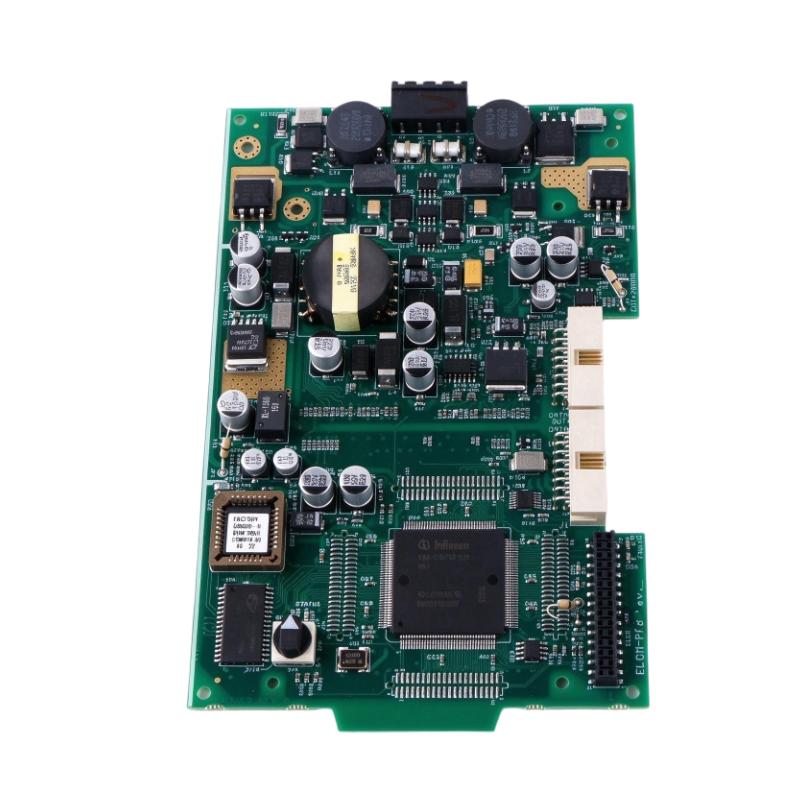
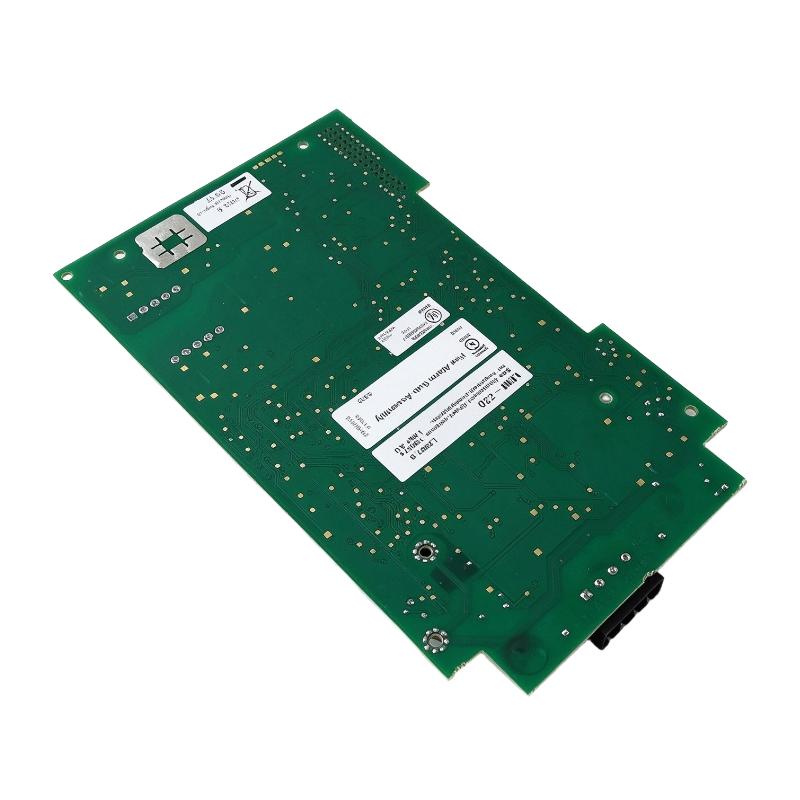
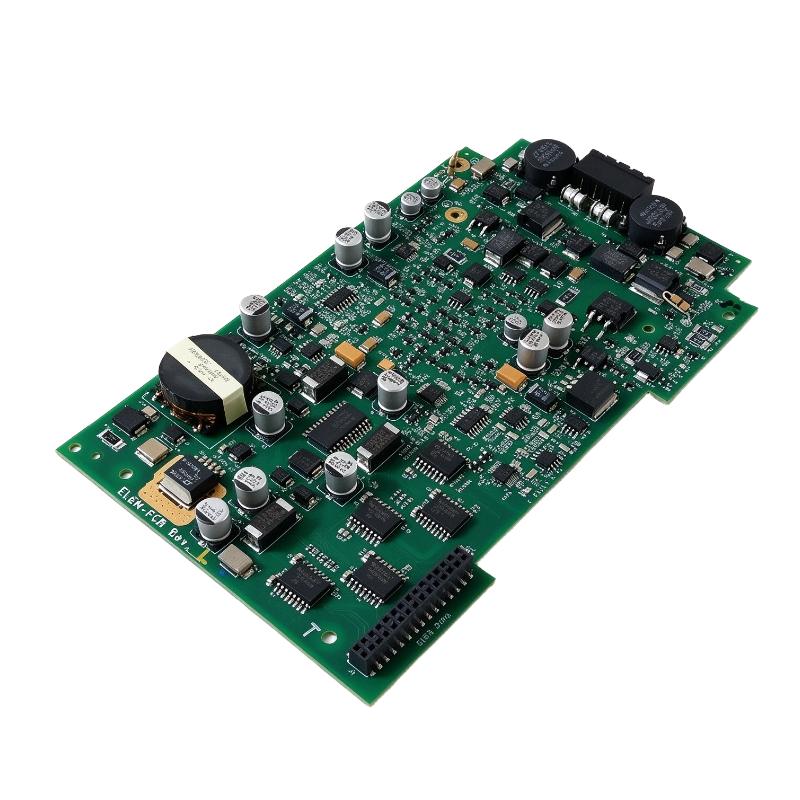
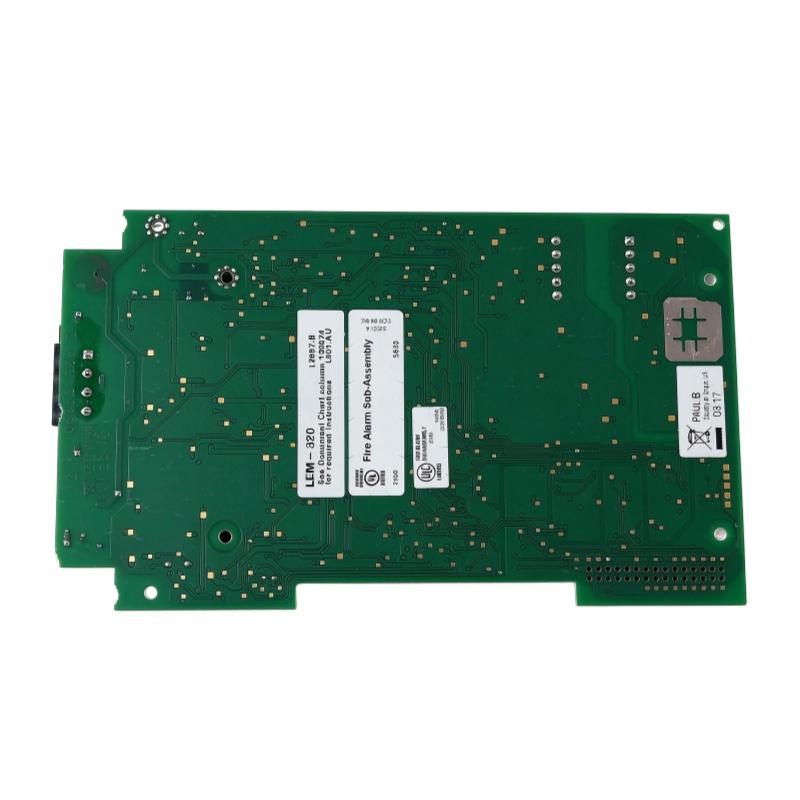
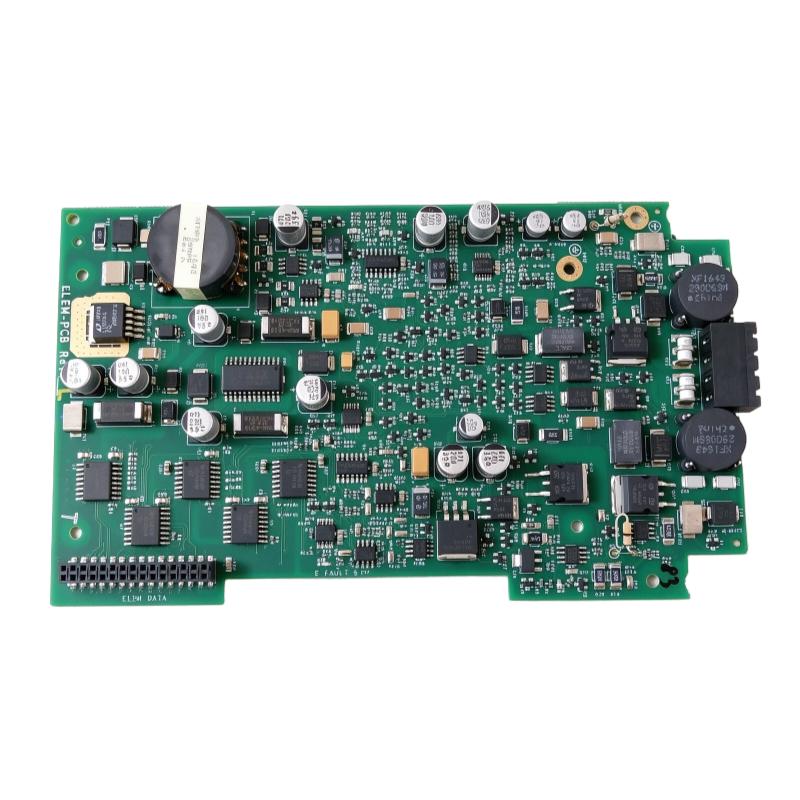
The Honeywell NOTIFIER LEM-320 is a Loop Expander Module for ONYX Series Fire Alarm Control Panels (FACP). It provides additional Signaling Line Circuit (SLC) capacity, allowing compatible fire alarm systems to support additional addressable detection and control devices.
The LEM-320 is used together with the LCM-320 Loop Control Module in NFS-3030 and NFS2-3030 systems. Each LCM-320 supports an associated LEM-320 expansion module, allowing additional SLC loops to be incorporated into the fire alarm architecture.
For NFS-640 and NFS2-640 control panels, the LEM-320 expands the system from one SLC loop to two. This provides additional capacity for connecting addressable smoke detectors, manual call points, monitor modules, control modules, and other compatible SLC devices.
One of the important characteristics of the LEM-320 is its plug-in installation arrangement. Rather than requiring a separate standalone control panel, the module integrates into the designated ONYX panel hardware. This arrangement helps accommodate multiple signaling loops within a relatively compact fire alarm control enclosure.
The module also incorporates a degraded-mode operating feature to improve system survivability. Its SLC wiring supports Class B (Style 4) configurations with a maximum wiring distance of 12,500 feet (3,810 meters), subject to the specified cable gauge and circuit resistance limitations.
For fire alarm system expansion projects, the LEM-320 is particularly relevant when an existing ONYX installation requires additional addressable device capacity without replacing the main control panel.
Technical Specifications
| Parameter | Specification |
|---|---|
| Manufacturer | Honeywell |
| Brand | NOTIFIER |
| Model | LEM-320 |
| Product Series | ONYX |
| Product Type | Loop Expander Module |
| Application | Intelligent Fire Alarm Control Panel |
| Circuit Type | Signaling Line Circuit (SLC) |
| Operating Voltage | 24 V DC Nominal |
| Maximum Operating Voltage | 27.6 V DC |
| Maximum Current Consumption | 100 mA |
| Maximum SLC Current | 400 mA |
| Maximum Loop Length | 12,500 ft (3,810 m) with 12 AWG cable |
| Maximum Loop Resistance | 50 Ω |
| Supported Wiring | Class B (Style 4), Class A configurations as applicable |
| Installation Type | Plug-in Module |
| Compatible Control Panels | NFS-640, NFS2-640, NFS-3030, NFS2-3030 |
| Expansion Configuration | Second SLC Loop on NFS-640/NFS2-640 |
| Degraded Mode | Built-in |
| Certifications | UL, ULC, FM, CSFM |
| Dimensions | 185 × 20 × 120 mm |
| Weight | 0.45 kg |
Product Features
- SLC Loop Expansion: Adds additional Signaling Line Circuit capacity to compatible ONYX fire alarm control panels.
- ONYX System Integration: Works with the NFS-640, NFS2-640, NFS-3030, and NFS2-3030 control panel families.
- LCM-320 Compatibility: Provides an additional SLC loop for each supported LCM-320 installation.
- 24 V DC Operation: Uses a nominal operating voltage of 24 V DC, with a maximum of 27.6 V DC.
- Long-Distance SLC Wiring: Supports Class B wiring distances up to 12,500 feet (3,810 meters) with 12 AWG cable.
- Built-In Degraded Mode: Improves system survivability under specified fault conditions.
- Plug-In Installation: Uses a direct plug-in arrangement for integration into the designated fire alarm control panel.
- Compact Loop Configuration: Allows multiple signaling loops to be accommodated within a relatively small enclosure.
- Fire Alarm System Certification: The product documentation identifies UL, ULC, FM, and CSFM approvals.
Product Working Principle
The LEM-320 works as an expansion interface for the Signaling Line Circuit architecture of compatible NOTIFIER ONYX fire alarm control panels.
In an addressable fire alarm system, the SLC provides the communication path between the control panel and connected field devices. These devices can include smoke detectors, heat detectors, manual pull stations, monitor modules, and control modules.
The LEM-320 adds an additional SLC connection to the supported system architecture. When installed with the appropriate control module or panel configuration, it allows additional addressable devices to communicate with the fire alarm control panel.
For an NFS2-640 installation, the LEM-320 expands the available signaling capacity to two SLC loops. In an NFS2-3030 system, each installed LCM-320 can support an associated LEM-320, allowing the system to accommodate additional loops.
A simplified system arrangement is:
ONYX Fire Alarm Control Panel → LCM-320 / LEM-320 Expansion Configuration → SLC Wiring → Addressable Detectors and Modules
The control panel supervises the connected SLC circuits and processes communication from the addressable field devices. When a detector reports an alarm condition, the information is transmitted through the signaling circuit to the control panel for programmed alarm processing.
The built-in degraded-mode feature is intended to improve system survivability when certain communication or operating conditions are compromised.
For long-distance installations, cable gauge and loop resistance must be considered. With 12 AWG twisted-pair wiring, the documented maximum Class B loop distance is 12,500 feet. Smaller conductor sizes have shorter permitted distances.
The LEM-320 itself does not replace the main fire alarm controller. Its function is to increase the available signaling circuit capacity within the supported ONYX architecture.
Role in Honeywell NOTIFIER ONYX Control Architecture
Within the NOTIFIER ONYX architecture, the LEM-320 provides additional SLC capacity for addressable fire detection and control networks.
The module works with the appropriate LCM-320 or designated ONYX control panel configuration. It allows additional field devices to be connected through a separate signaling loop rather than concentrating all devices on one circuit.
The supported expansion arrangements differ between panel families:
- NFS-640 / NFS2-640: One LEM-320 can be used to expand the control panel to a second SLC loop.
- NFS-3030 / NFS2-3030: The system supports up to five LCM-320 modules and five LEM-320 modules. Each LCM-320 supports an associated LEM-320.
A typical architecture is:
ONYX Fire Alarm Control Panel → LCM-320 / LEM-320 → SLC Loop → Addressable Fire Detection and Control Devices
| System Component | Function |
|---|---|
| NOTIFIER NFS2-640 | Intelligent fire alarm control panel supporting LEM-320 loop expansion |
| NOTIFIER NFS-640 | ONYX fire alarm control panel supporting an additional SLC loop |
| NOTIFIER NFS2-3030 | Intelligent fire alarm control panel supporting multiple LCM-320 and LEM-320 modules |
| NOTIFIER NFS-3030 | ONYX fire alarm control panel with expandable SLC architecture |
| NOTIFIER LCM-320 | Loop Control Module providing additional SLC circuits |
| NOTIFIER LEM-320 | Loop Expander Module providing additional SLC capacity |
| Addressable Smoke Detectors | Detect smoke conditions and report device status |
| Monitor Modules | Monitor external initiating devices and dry-contact signals |
| Control Modules | Interface the fire alarm system with external control equipment |
Industrial Applications
The LEM-320 is used in addressable fire alarm installations where additional SLC capacity is required to accommodate a larger number of detection and control devices.
| Application | Typical Use |
|---|---|
| Commercial Buildings | Expanding addressable fire detection circuits across multiple building areas |
| Industrial Plants | Connecting additional detectors and monitoring modules in production facilities |
| Power Generation Facilities | Expanding fire alarm coverage in equipment and electrical rooms |
| Oil and Gas Facilities | Supporting addressable fire detection in process and utility areas |
| Hospitals | Accommodating additional fire detection circuits in large healthcare facilities |
| Airports | Expanding addressable detection coverage across terminal areas |
| Shopping Centers | Supporting multiple SLC loops across retail and public spaces |
| Data Centers | Connecting additional fire detection devices in technical areas |
| Warehouses | Expanding detector coverage across storage and material handling zones |
| Manufacturing Facilities | Integrating additional addressable detectors and control modules into existing fire alarm systems |
Installation and Maintenance
- Verify Panel Compatibility: Confirm that the installed fire alarm control panel is an NFS-640, NFS2-640, NFS-3030, or NFS2-3030 configured to support the LEM-320.
- Inspect the Module: Check the circuit board, connector contacts, and mounting points for visible damage before installation.
- Review the System Configuration: Determine whether the LEM-320 will be installed with an LCM-320 or used in the designated NFS-640/NFS2-640 expansion arrangement.
- Isolate the Fire Alarm Panel: Follow the manufacturer’s maintenance procedure and applicable fire protection requirements before working inside the control panel.
- Prepare the Installation Position: Identify the designated module position within the compatible ONYX chassis.
- Install the Module: Insert the LEM-320 into the designated plug-in connection and verify that it is fully seated.
- Check Module Connections: Inspect the connector engagement and associated hardware to ensure that the expansion interface is properly installed.
- Prepare SLC Wiring: Select the appropriate twisted-pair cable and confirm that its conductor gauge supports the intended loop distance.
- Verify Circuit Resistance: Ensure that the SLC wiring resistance does not exceed the specified 50 Ω limit.
- Configure the Additional Loop: Confirm the correct loop assignment and address configuration for all connected addressable devices.
- Perform System Testing: Test the additional SLC circuit, verify device communication, and check alarm and fault reporting through the fire alarm control panel.
- Complete Maintenance Inspection: Inspect module seating, wiring connections, circuit supervision, and device communication during scheduled fire alarm system maintenance.
Because the LEM-320 is part of a life-safety system, installation, commissioning, and maintenance should be performed by qualified fire alarm technicians in accordance with the applicable NOTIFIER documentation and local fire protection regulations.
Compatible System Components
| Component | Function |
|---|---|
| NOTIFIER NFS-640 | ONYX intelligent fire alarm control panel |
| NOTIFIER NFS2-640 | ONYX intelligent fire alarm control panel |
| NOTIFIER NFS-3030 | Expandable intelligent fire alarm control panel |
| NOTIFIER NFS2-3030 | Expandable intelligent fire alarm control panel |
| NOTIFIER LCM-320 | Loop Control Module used with the LEM-320 |
| Addressable Smoke Detectors | Provide fire detection signals through the SLC |
| Addressable Heat Detectors | Monitor temperature-related fire conditions |
| Monitor Modules | Interface external initiating circuits |
| Control Modules | Control external fire protection equipment |
Recommended Related Models
| Model / Product | Product Type | Typical Application |
|---|---|---|
| NOTIFIER LCM-320 | ONYX Loop Control Module | Adds SLC circuits to compatible ONYX panels |
| NOTIFIER NFS2-640 | ONYX Intelligent Fire Alarm Control Panel | Mid-sized addressable fire alarm systems |
| NOTIFIER NFS-640 | ONYX Intelligent Fire Alarm Control Panel | Addressable fire detection and control |
| NOTIFIER NFS2-3030 | ONYX Intelligent Fire Alarm Control Panel | Large-scale expandable fire alarm systems |
| NOTIFIER NFS-3030 | ONYX Intelligent Fire Alarm Control Panel | Multi-loop fire alarm installations |
| NOTIFIER NFS2-640E | ONYX Intelligent Fire Alarm Control Panel | Related ONYX fire alarm panel configuration |
Key Advantages
- Adds SLC capacity to compatible ONYX fire alarm systems.
- Supports expansion of NFS-640 and NFS2-640 to two loops.
- Works with LCM-320 in NFS-3030 and NFS2-3030 configurations.
- Supports long-distance Class B SLC wiring.
- Built-in degraded-mode operation.
- Plug-in module installation.
- Supports UL, ULC, FM, and CSFM listed configurations.
- Suitable for expanding addressable fire detection networks.
Technical FAQs
1. What is the main difference between the LEM-320 and LCM-320?
The LCM-320 is a Loop Control Module that adds SLC capacity to compatible ONYX panels. The LEM-320 is an expansion module that works with the LCM-320 to provide an additional loop. For NFS-640 and NFS2-640 systems, the LEM-320 expands the panel to two SLC loops.
2. How many LEM-320 modules can be installed in an NFS2-3030 system?
The NFS2-3030 supports up to five LCM-320 modules and five LEM-320 modules. Each installed LCM-320 supports an associated LEM-320 expansion module, allowing multiple SLC circuits to be incorporated into the system.
3. What is the maximum SLC wiring distance supported by the LEM-320?
For a Class B (Style 4) SLC loop using 12 AWG twisted-pair cable, the maximum documented wiring distance is 12,500 feet (3,810 meters). The permitted distance decreases when smaller conductor sizes are used. The maximum specified circuit resistance is 50 Ω.
4. Does the LEM-320 require a separate external power supply?
The LEM-320 operates within the designated ONYX fire alarm control panel architecture and has a nominal operating voltage of 24 V DC, with a maximum of 27.6 V DC. Its documented maximum current consumption is 100 mA. The installation should follow the control panel’s specified power and module connection arrangements.