

ProductPRODUCT
Featured products
Contact Us
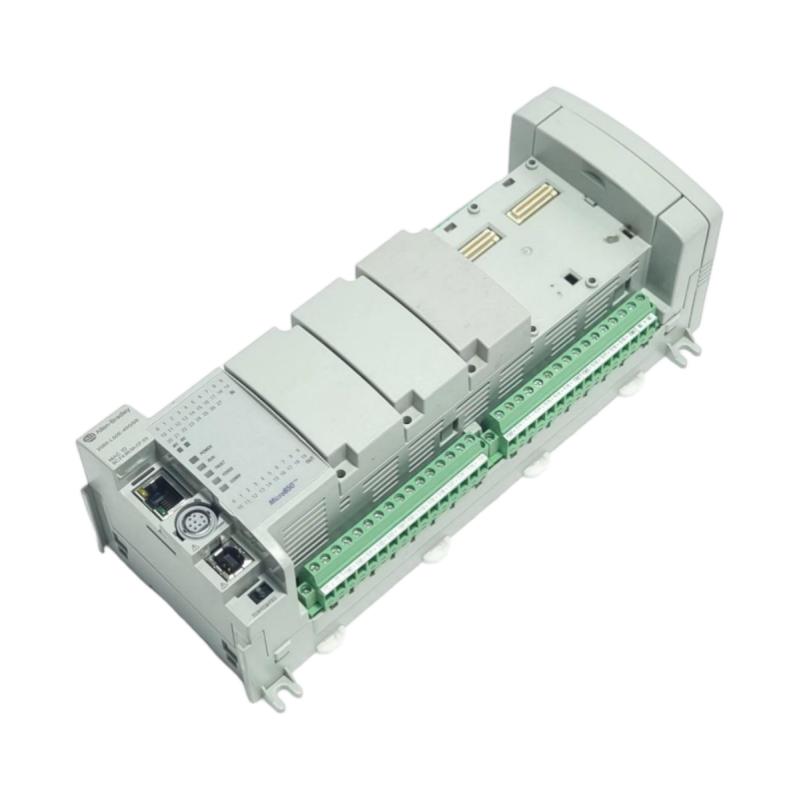
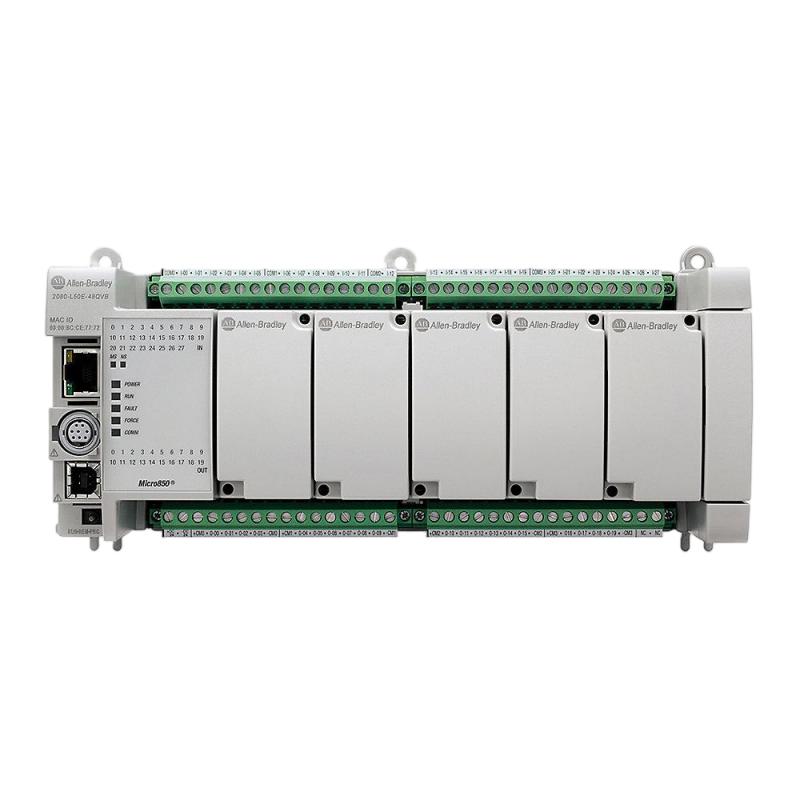
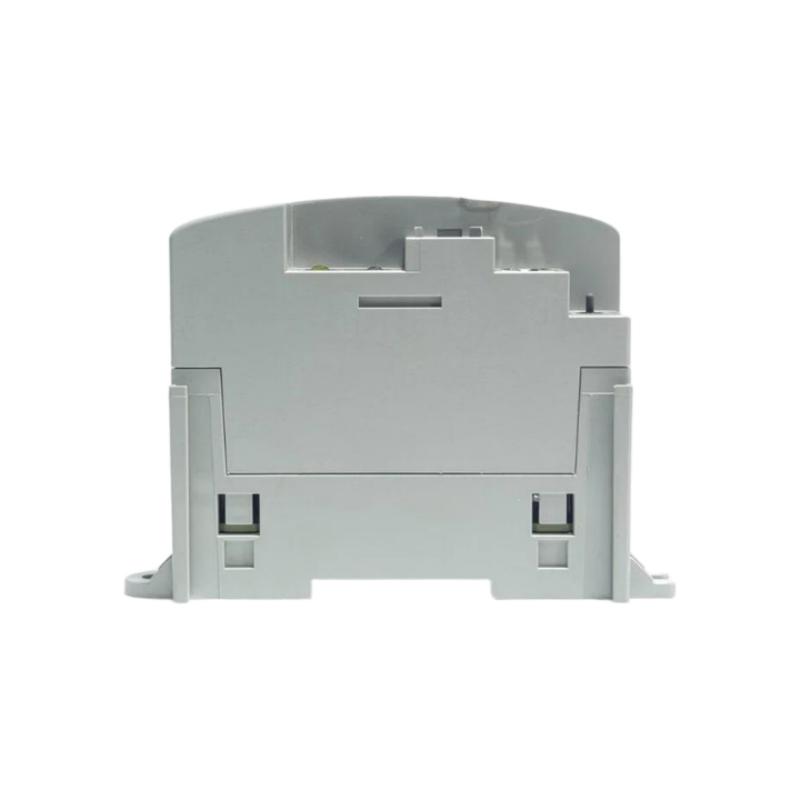
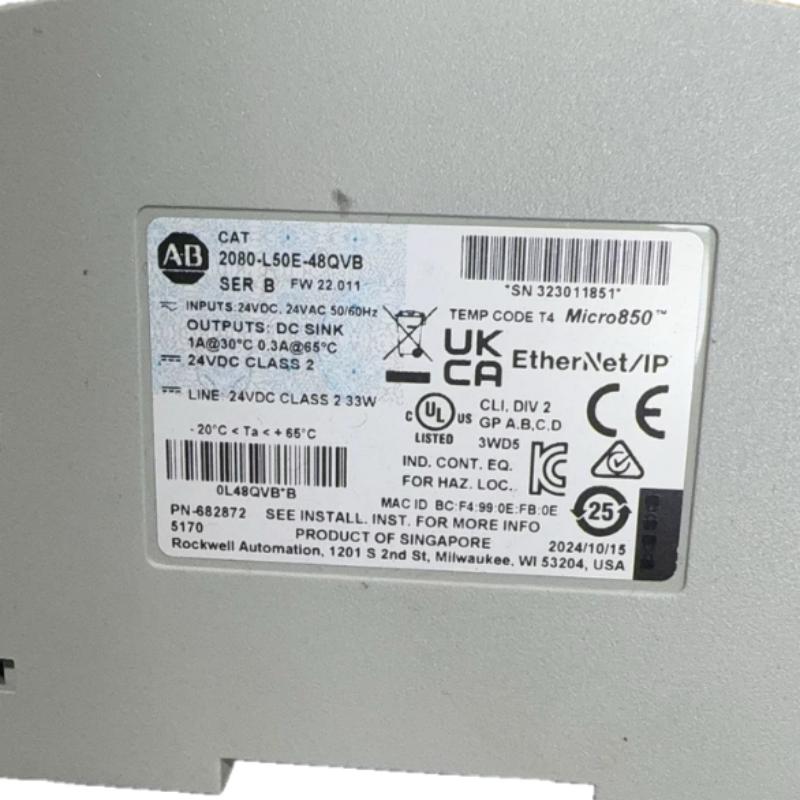
- Allen Bradley
- 2080-L50E-48QVB
- Micro850 Programmable Controller
- USA
- 238 x 80 x 90 mm
- 0.725 kg
- Xiamen, China
- New & In Stock
- T/T, PayPal, Western Union
- 1 Year
- 1-3 Working Days
- DHL, UPS, TNT, FedEx and EMS.
- 24-Hour Service
- COO
- 5
Our advantage

Global Logistics
We have a 10-year logistics and express cooperation agreement, so our products can be shipped to any place in the world.

Brand new and original
Our products are imported in bulk from the place of origin. Because of the cooperative relationship, our products are all original and 100% new.

24-hour service
We provide 7*24 hours service to our customers. We will be there whenever you need us.

Price advantage
All our products are priced very favorably because we have our own warehouse and supply.
| Company Information | |||
| [email protected] | |||
| Mobile | +8615980777398 | ||
| +8615980777398 | |||
| 15980777398 |
Product Overview
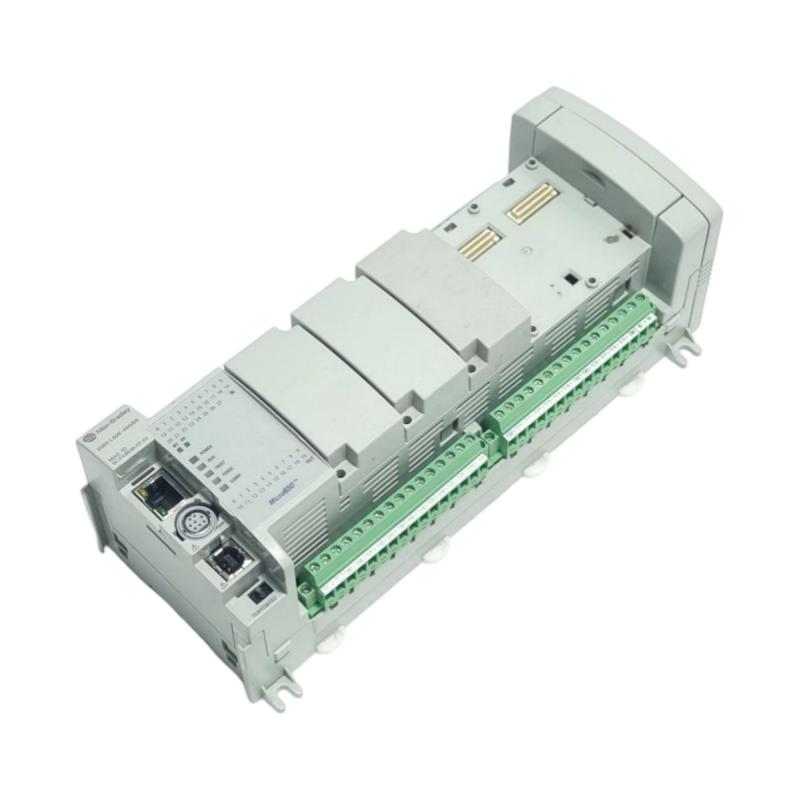
The Allen-Bradley 2080-L50E-48QVB Micro850 Programmable Logic Controller (PLC) is a compact industrial automation controller developed by Rockwell Automation for machine control, equipment automation, and small to medium-sized industrial applications. As part of the Micro800 controller family, the Micro850 series combines digital I/O, Ethernet communication, and expandable control capabilities in a compact controller platform.
The 2080-L50E-48QVB provides 48 built-in I/O points, consisting of 28 digital inputs and 20 digital outputs. Its inputs support 24 V DC/AC signals, while its outputs use a 24 V DC sinking configuration. This arrangement allows the controller to interface with a range of industrial sensors, switches, relays, and compatible control devices.
The controller features integrated EtherNet/IP communication, allowing it to exchange data with supported industrial devices and participate in networked automation systems. It also supports plug-in expansion modules, enabling users to add selected functions according to application requirements.
The Micro850 platform is designed for applications where compact dimensions, practical I/O capacity, and flexible machine control are important. It can be used in packaging equipment, conveyor systems, material handling, small production machines, and other industrial automation installations.
The 2080-L50E-48QVB is particularly suitable for applications requiring a combination of digital input monitoring, transistor output control, and Ethernet-based communication. Its 48-point I/O configuration provides a practical foundation for controlling multiple machine operations without requiring a large modular PLC rack.
Technical Specifications
| Parameter | Specification |
|---|---|
| Brand | Allen-Bradley |
| Manufacturer | Rockwell Automation |
| Model | 2080-L50E-48QVB |
| Product Series | Micro850 |
| Product Family | Micro800 |
| Product Type | Programmable Logic Controller |
| Controller Category | 48 I/O EtherNet/IP Controller |
| Total I/O Points | 48 |
| Digital Input Points | 28 |
| Digital Output Points | 20 |
| Input Type | 24 V DC/AC |
| Output Type | 24 V DC Sink |
| Communication | EtherNet/IP |
| Power Supply | 24 V DC |
| Power Supply Range | 21.4–26.4 V DC |
| Maximum Power Consumption | 11 W without plug-in and expansion I/O modules; up to 33 W with supported modules |
| Plug-in Module Slots | Up to 5 |
| High-Speed Counter Support | Up to 6, depending on configuration |
| Pulse Train Output Support | Up to 3, depending on configuration |
| Dimensions Provided | 238 × 80 × 90 mm |
| Approximate Shipping Weight | 0.725 kg |
| Mounting | Industrial control panel / DIN rail installation |
| Lifecycle Status | Active according to manufacturer listing |
Specifications should be checked against the controller’s hardware series, firmware version, and applicable technical documentation before system design.
Function and Working Principle
The 2080-L50E-48QVB operates as the central processing unit of a compact automation system. It receives signals from connected field devices, executes the programmed control logic, and updates its outputs according to the machine’s operating conditions.
1. Digital Input Signal Processing
The controller provides 28 digital input points. These inputs allow it to monitor signals from industrial sensors, limit switches, push buttons, proximity switches, and other compatible devices.
For example, a photoelectric sensor may detect whether a product has reached a conveyor inspection position. The sensor sends a signal to the PLC input, and the controller processes that information according to the programmed logic.
The 24 V DC/AC input configuration provides flexibility for compatible field signal arrangements. Wiring polarity, voltage levels, and input circuit requirements must still be checked before connecting field devices.
2. Digital Output Control
The controller provides 20 digital outputs using a 24 V DC sinking configuration.
These outputs can control compatible loads such as indicator devices, relay interfaces, solenoid valve circuits, and other industrial control components.
A sinking output provides a current path toward the common reference when activated. Therefore, the external wiring and load arrangement must be designed according to the controller’s output specifications.
Output current limitations and temperature-related derating should be considered when connecting multiple loads. External interposing relays may be appropriate where the field load exceeds the controller’s output capacity.
3. PLC Logic Execution
The controller executes a user-developed control program to coordinate machine operations.
A typical control sequence may include:
- Reading input signals from sensors and switches.
- Checking machine operating conditions and interlocks.
- Executing timers, counters, and comparison instructions.
- Processing sequence and equipment-control logic.
- Updating digital outputs.
- Exchanging operating information with connected network devices.
This cyclic process allows the controller to coordinate multiple machine functions in a predictable manner.
4. Ethernet Communication
The 2080-L50E-48QVB includes EtherNet/IP communication capability. This enables communication with compatible industrial equipment and automation devices.
EtherNet/IP can be used for controller data exchange, networked device integration, and communication with supported supervisory or machine-control systems.
Network configuration requires appropriate IP addressing, device compatibility, and communication settings. The network architecture should also account for traffic, network security, and the communication requirements of connected equipment.
5. Expansion and Additional Functions
The Micro850 controller supports plug-in modules that can extend selected functions.
Depending on the selected module and controller configuration, additional capabilities may include high-speed counting, pulse train output, and other application-specific functions.
This modular approach allows engineers to adapt the controller to changing machine requirements without replacing the entire control platform.
Role in Industrial Control Systems
The Allen-Bradley 2080-L50E-48QVB can serve as the main machine controller in compact automation systems. It coordinates field devices, processes control logic, and exchanges information with other equipment.
PLC-Based Machine Automation
In a machine-control application, the controller receives operating conditions from sensors and operator controls. It then executes the programmed sequence and activates the appropriate outputs.
For example, in an automated packaging machine, the controller may monitor product detection sensors, coordinate conveyor movement, control pneumatic actuators, and manage machine status signals.
Integration with HMI Systems
A human-machine interface can provide operators with access to machine status, operating commands, alarms, and production information.
Through a suitable EtherNet/IP communication arrangement, the Micro850 controller can exchange data with compatible operator-interface equipment.
The HMI can display information such as:
- Machine operating status.
- Production counts.
- Alarm conditions.
- Operating modes.
- Sensor states.
- Maintenance notifications.
The actual communication setup depends on the HMI model, software configuration, and network architecture.
Integration with Industrial Sensors
The 28 digital input points allow the controller to monitor multiple field signals.
Typical devices include:
- Photoelectric sensors.
- Inductive proximity switches.
- Limit switches.
- Push-button stations.
- Pressure switch contacts.
- Position detection devices.
These inputs provide information that the PLC uses to make control decisions.
Coordination with Actuators
The 20 digital outputs can operate compatible 24 V DC control loads, often through suitable relay interfaces or driver circuits.
Examples include solenoid valve control circuits, indicator lamps, and auxiliary machine-control signals.
When selecting output loads, engineers must consider current requirements, switching frequency, electrical protection, and the controller’s output specifications.
Industrial Applications
The Micro850 2080-L50E-48QVB is designed for compact automation systems that require a practical number of digital I/O points and network communication.
1. Packaging Machinery
Packaging machines often require coordinated control of sensors, conveyors, pneumatic actuators, and product-positioning mechanisms.
The controller can monitor product detection signals and execute programmed sequences to coordinate machine operations.
Its 48-point I/O configuration is useful for machines with multiple discrete control signals and a relatively compact control architecture.
2. Conveyor and Material Handling Systems
Conveyor systems use sensors and actuators to control product movement, detect blockages, and coordinate equipment sections.
The Micro850 can monitor sensor signals and control compatible motor-control interfaces, indicator devices, and other machine components.
EtherNet/IP communication can also support data exchange with compatible networked devices.
3. Assembly Machines
Automated assembly equipment may require multiple input signals to confirm component positions, detect workpiece presence, and verify operating conditions.
The controller can process these signals and coordinate output actions according to a programmed assembly sequence.
This approach supports repeatable machine operation and reduces the need for manual control of individual operations.
4. Small Manufacturing Equipment
Small production machines frequently combine sensors, push buttons, actuators, and operator interfaces.
The Micro850 provides a compact control platform for managing these devices and implementing machine logic.
Applications may include component feeding equipment, inspection stations, small processing machines, and auxiliary production systems.
5. Pump and Fan Control Systems
The controller can coordinate pump and fan operating commands through suitable control interfaces.
It may monitor pressure switches, flow switches, temperature contacts, and other digital signals to determine when equipment should operate.
For variable-speed motor control, the PLC can exchange commands with a compatible drive using an appropriate communication or I/O arrangement.
Installation and System Integration
Correct installation is essential for reliable controller operation and stable communication with connected industrial devices.
1. Power Supply Requirements
The 2080-L50E-48QVB uses a 24 V DC power supply. The documented operating range is 21.4–26.4 V DC.
The power supply should have sufficient capacity for the controller, connected field circuits, and supported expansion modules.
Engineers should calculate the total power demand rather than selecting the supply based only on the controller’s standalone consumption.
2. Mounting and Panel Layout
The supplied dimensions are 238 × 80 × 90 mm.
The manufacturer’s technical data lists the dimensions as 90 × 238 × 80 mm in height × width × depth order.
When designing a control panel, allow adequate clearance for terminal wiring, ventilation, maintenance access, and the installation of plug-in modules.
The controller should be mounted in an environment that complies with its specified operating temperature, humidity, and contamination requirements.
3. Digital Input Wiring
Before connecting field devices, confirm whether each input signal is DC or AC and verify that its voltage and electrical characteristics are compatible with the controller.
Use suitable conductors and follow the recommended wiring practices for signal separation and grounding.
Where sensors share a common reference, verify the wiring arrangement to prevent incorrect input states or unintended current paths.
4. Digital Output Wiring
The 20 outputs use a 24 V DC sinking configuration.
The connected field loads must be wired according to the required output circuit arrangement. Check the load current and switching characteristics before connecting solenoid valves, relays, or other devices.
For loads with inductive characteristics, use suitable suppression and protection components where required.
5. Ethernet Network Configuration
The controller’s EtherNet/IP interface can be integrated into a suitable industrial network.
During commissioning, engineers should configure:
- IP address and subnet information.
- Network device settings.
- Communication parameters.
- Controller-to-HMI data exchange.
- PLC-to-device communication.
- Network diagnostics and fault monitoring.
For reliable communication, use appropriate industrial Ethernet cabling and follow the recommended installation practices.
6. Programming and Commissioning
The Micro850 family is programmed using Rockwell Automation’s Connected Components Workbench (CCW) software environment.
The engineering process generally includes creating a project, selecting the correct controller model, developing the control program, configuring communication, and downloading the application.
Before production operation, test all input and output points, verify the machine sequence, and confirm the behavior of alarms and interlocks.
Compatible System Components
The 2080-L50E-48QVB can be used with a range of compatible industrial automation components.
| Component | Function | Integration Considerations |
|---|---|---|
| 24 V DC power supply | Provides controller operating power | Maintain the specified voltage range and sufficient capacity |
| Industrial sensors | Detect product position and machine conditions | Match input signal type and voltage |
| Photoelectric sensors | Detect objects and product presence | Confirm output wiring and electrical compatibility |
| Proximity switches | Detect metal objects or machine positions | Verify output type and input circuit requirements |
| Solenoid valves | Control pneumatic actuators | Use suitable output interfaces and protection |
| Interposing relays | Interface PLC outputs with external loads | Check coil voltage and contact ratings |
| HMI panel | Displays machine status and operating commands | Configure compatible communication and data mapping |
| Industrial Ethernet switch | Connects network devices | Use a suitable industrial network design |
| Plug-in expansion modules | Add selected controller functions | Verify model compatibility and supported module configuration |
| Variable frequency drive | Controls AC motor speed | Integrate through suitable I/O or supported communication arrangements |
The compatibility of each component should be confirmed against its electrical specifications and the controller’s hardware documentation.
Programming and Maintenance Considerations
Programming Environment
The Micro850 controller is supported by Connected Components Workbench, which provides an engineering environment for developing and maintaining controller applications.
The software can be used to configure the controller, develop logic, manage variables, and perform commissioning activities.
The project should use a controller profile and firmware version compatible with the installed hardware.
Firmware Management
Firmware compatibility is important when maintaining or replacing a Micro850 controller.
Before updating firmware, confirm the controller’s series and current firmware version. Back up the application and relevant configuration information before carrying out any update.
An incompatible firmware or software configuration may cause commissioning difficulties or communication problems.
Preventive Maintenance
Although a PLC has no routine mechanical servicing requirements comparable to rotating machinery, regular inspection helps maintain system reliability.
Recommended checks include:
- Inspecting terminal connections.
- Checking power supply voltage.
- Confirming Ethernet cable condition.
- Reviewing controller fault indicators.
- Checking cabinet temperature and ventilation.
- Inspecting field wiring and grounding.
- Backing up the controller program.
- Reviewing firmware and software compatibility.
Alternative Models and Replacement Considerations
When replacing the 2080-L50E-48QVB, the alternative controller must match the original I/O configuration and output characteristics.
| Model | Description | Replacement Considerations |
|---|---|---|
| 2080-L50E-48QWB | Micro850 48 I/O controller with relay outputs | Different output technology; not a direct electrical substitute |
| 2080-L50E-48QBB | Micro850 48 I/O controller with 24 V DC source outputs | Output wiring and load arrangements differ |
| 2080-L50E-24QVB | Micro850 controller with a smaller I/O configuration | May not provide enough built-in I/O points |
| 2080-L50E-48AWB | Micro850 controller with 120 V AC inputs and relay outputs | Different input and output electrical characteristics |
| 2080-LC50-48QVB | Earlier Micro850 controller configuration | Check lifecycle status, firmware, and replacement guidance |
Before selecting a replacement, compare:
- Total number of digital inputs and outputs.
- Input voltage and circuit type.
- Output type: sinking, sourcing, or relay.
- Power supply requirements.
- Ethernet communication requirements.
- Plug-in module compatibility.
- Firmware and programming software versions.
- Mounting dimensions and terminal arrangement.
- Existing PLC program and variable configuration.
A controller with the same number of I/O points may still require wiring changes if its output technology differs.
Key Advantages
48 Built-In I/O Points
The controller provides 28 digital inputs and 20 digital outputs, supporting a range of discrete machine-control tasks.
Integrated EtherNet/IP Communication
Built-in EtherNet/IP capability supports communication with compatible industrial equipment and networked automation systems.
Compact Controller Design
The Micro850 form factor helps simplify installation in compact control panels and machine enclosures.
Flexible Expansion
Up to five plug-in module positions are available for supported configurations, allowing selected functions to be added as application requirements change.
24 V DC Sink Outputs
The transistor output arrangement is suitable for compatible 24 V DC control loads and provides an option for applications requiring discrete electronic switching.
Practical Machine-Control Capability
The controller combines digital signal processing, programmable logic, and network communication in one compact platform.
Active Product Lifecycle
Rockwell Automation currently lists the 2080-L50E-48QVB as an active product, making it a relevant option for new applications and maintenance planning.
Technical FAQs
1. What is the Allen-Bradley 2080-L50E-48QVB?
It is a Micro850 programmable logic controller with 48 built-in I/O points and integrated EtherNet/IP communication. It is designed for compact industrial machine-control applications.
2. How many inputs and outputs does this controller have?
It has 28 digital inputs and 20 digital outputs, providing a total of 48 I/O points.
3. What input voltage does the 2080-L50E-48QVB support?
Its digital inputs support 24 V DC/AC signals. Confirm the electrical characteristics of each connected device before wiring.
4. What type of outputs does it use?
The controller uses 20 points of 24 V DC sinking outputs. The connected loads must be compatible with the output circuit and current specifications.
5. Does the controller support Ethernet communication?
Yes. The 2080-L50E-48QVB is an EtherNet/IP controller and can communicate with compatible industrial network devices.
6. What programming software is used?
The Micro850 family is programmed using Rockwell Automation’s Connected Components Workbench software.
7. Can additional modules be installed?
Yes. The controller supports up to five plug-in module positions, depending on the selected I/O configuration and compatible module options.
8. What power supply does it require?
It uses a 24 V DC supply with a documented operating range of 21.4–26.4 V DC.
9. Is the 2080-L50E-48QVB suitable for motor control?
It can coordinate motor-control equipment through compatible I/O or network communication. The controller itself is not a motor drive; a suitable variable frequency drive or motor starter is required to operate the motor.
10. Is this model still active?
Yes. Rockwell Automation’s product listing identifies the 2080-L50E-48QVB as an active product. Buyers should still confirm current availability and the applicable hardware series.
Procurement and Maintenance Recommendations
When purchasing the Allen-Bradley 2080-L50E-48QVB, verify the complete catalog number and inspect the product label. The QVB suffix is important because it identifies the controller’s 24 V DC sinking output configuration.
For replacement projects, confirm that the existing application uses compatible 24 V DC/AC inputs and 24 V DC sinking outputs. A controller with relay outputs or sourcing outputs may require different wiring and application modifications.
For new or surplus equipment, check the physical condition, terminal integrity, Ethernet port condition, product label, and firmware information where available. Confirm whether the controller is supplied with any accessories or plug-in modules.
During maintenance, back up the controller program and configuration. Record the firmware version and communication settings so that a replacement unit can be configured consistently.
Conclusion
The Allen-Bradley 2080-L50E-48QVB Micro850 Programmable Logic Controller is a compact 48-point automation controller designed for industrial machine control and networked equipment integration.
With 28 digital inputs, 20 sinking transistor outputs, integrated EtherNet/IP communication, and support for plug-in expansion modules, it provides a flexible control platform for packaging machinery, conveyors, assembly equipment, and other compact automation systems.
For successful installation and long-term operation, engineers should verify the input and output characteristics, power supply requirements, network configuration, firmware compatibility, and expansion-module selection. These checks help ensure that the controller operates reliably within the overall industrial automation system.