

ProductPRODUCT
Featured products
Contact Us
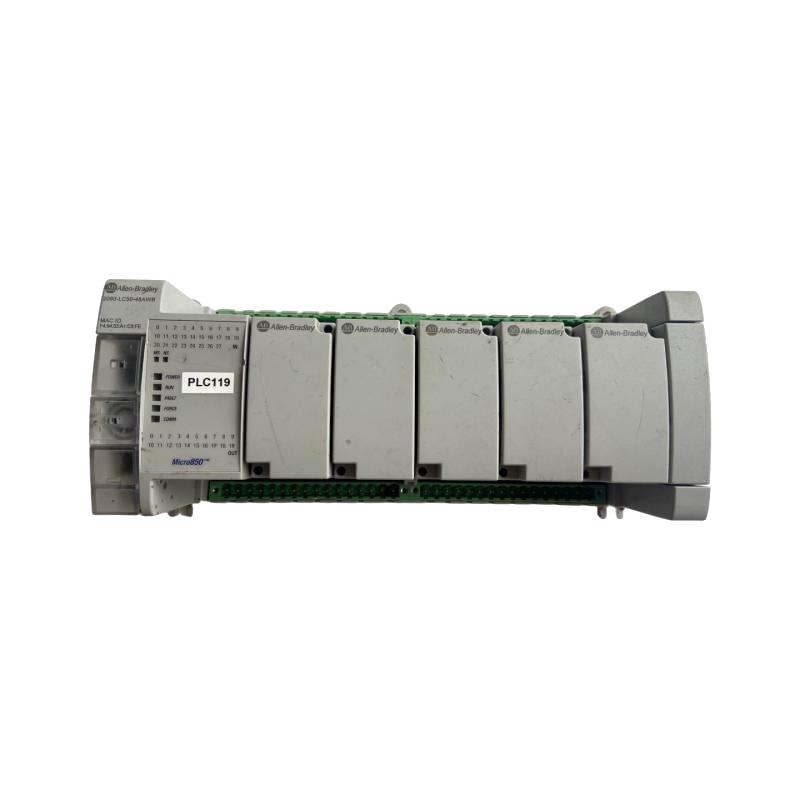
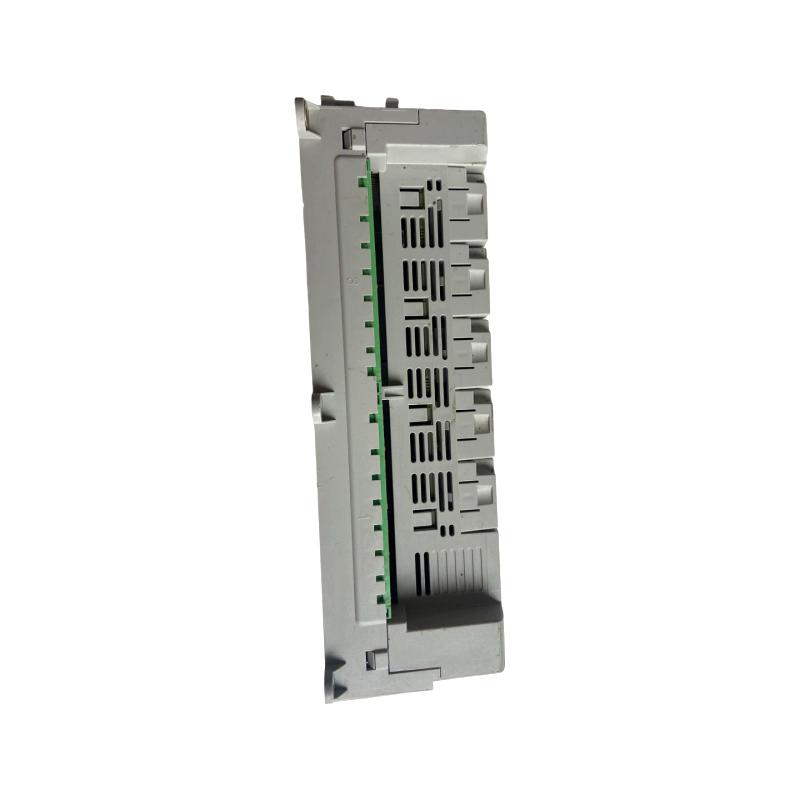
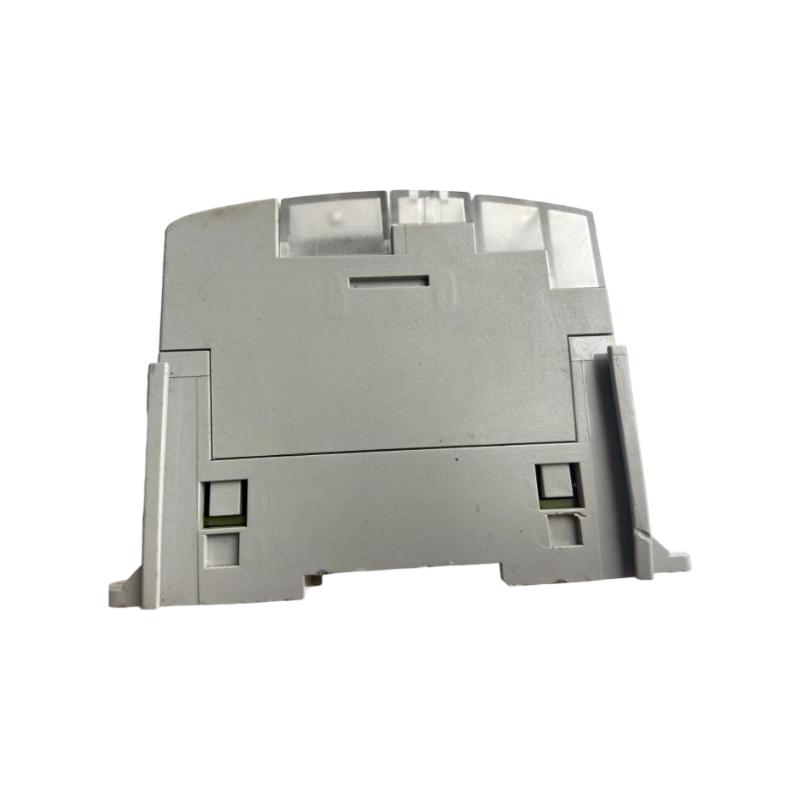
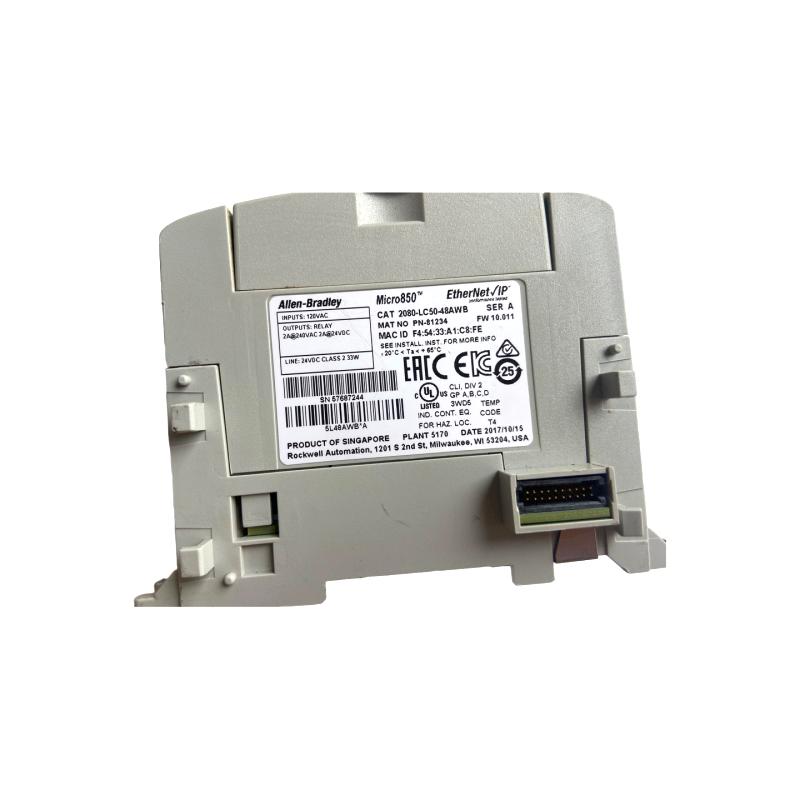
- Allen Bradley
- 2080-LC50-48AWB
- Micro850 Programmable Controller
- USA
- 238 x 80 x 90 mm
- 0.725 kg
- Xiamen, China
- New & In Stock
- T/T, PayPal, Western Union
- 1 Year
- 1-3 Working Days
- DHL, UPS, TNT, FedEx and EMS.
- 24-Hour Service
- COO
- 6
Our advantage

Global Logistics
We have a 10-year logistics and express cooperation agreement, so our products can be shipped to any place in the world.

Brand new and original
Our products are imported in bulk from the place of origin. Because of the cooperative relationship, our products are all original and 100% new.

24-hour service
We provide 7*24 hours service to our customers. We will be there whenever you need us.

Price advantage
All our products are priced very favorably because we have our own warehouse and supply.
| Company Information | |||
| [email protected] | |||
| Mobile | +8615980777398 | ||
| +8615980777398 | |||
| 15980777398 |
Product Overview
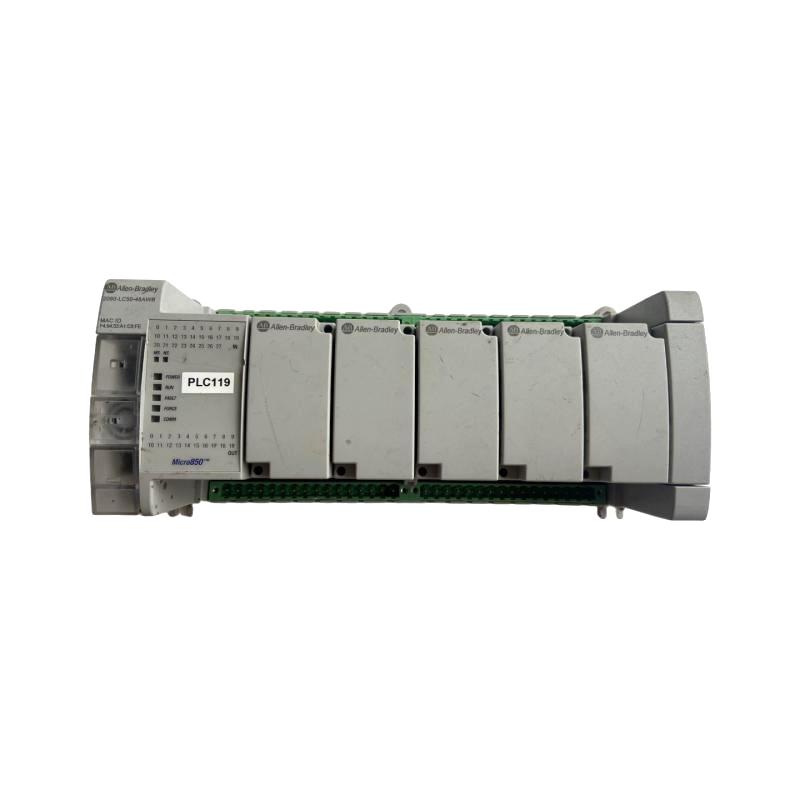
The Allen-Bradley 2080-LC50-48AWB Micro850 Programmable Controller is a compact programmable logic controller designed for industrial machine automation, equipment monitoring, and process control. Developed by Rockwell Automation, this controller belongs to the Micro850 family and provides integrated digital input and relay output capabilities for applications requiring centralized control of multiple electrical devices.
The Micro850 platform is designed for standalone machines and small-to-medium automation systems. Its compact construction combines controller processing, digital I/O, and communication capabilities in one unit. This reduces the need for multiple separate control components in applications where a fixed I/O configuration is sufficient.
The 2080-LC50-48AWB provides 48 built-in I/O points, consisting of 28 digital inputs and 20 relay outputs. Its input circuit is designed for 120 V AC signals, while the relay outputs can switch compatible AC or DC loads within their specified electrical ratings.
The controller also supports EtherNet/IP communication, allowing it to exchange data with compatible industrial devices and automation systems. It can be incorporated into control architectures involving operator interfaces, engineering workstations, networked equipment, and other controllers.
The 2080-LC50-48AWB is powered by an external 24 V DC supply. Its compact dimensions and integrated I/O make it suitable for machine-control cabinets where installation space and straightforward wiring are important considerations.
This model has been discontinued by Rockwell Automation. The manufacturer identifies 2080-L50E-48AWB as its functional replacement. When maintaining an existing installation, users should compare the original controller’s configuration, program compatibility, communication requirements, and wiring before selecting a replacement.
Technical Specifications
| Parameter | Specification |
|---|---|
| Brand | Allen-Bradley |
| Manufacturer | Rockwell Automation |
| Model | 2080-LC50-48AWB |
| Product Family | Micro850 |
| Product Type | Programmable Logic Controller |
| Controller Series | 2080-LC50 |
| Total I/O Points | 48 |
| Digital Inputs | 28 |
| Digital Outputs | 20 |
| Input Type | 120 V AC digital inputs |
| Output Type | Relay outputs |
| Input Current | 16 mA |
| Relay Output Rating | 2 A, 240 V AC; 2 A, 24 V DC |
| Communication | EtherNet/IP |
| Power Supply Voltage | 21.4–26.4 V DC |
| Power Supply Type | External 24 V DC |
| Maximum Power Consumption | Up to 33 W, depending on system configuration |
| Enclosure Rating | IP20 |
| Dimensions Provided | 238 × 80 × 90 mm |
| Official Dimensions | 90 × 238 × 80 mm (H × W × D) |
| Weight Provided | 0.725 kg |
| Approximate Shipping Weight | 0.725 kg |
| Mounting | Industrial control cabinet / DIN rail installation as specified |
| Product Lifecycle | Discontinued |
| Functional Replacement | 2080-L50E-48AWB |
Note: The I/O ratings and power-consumption values should be interpreted according to the manufacturer’s installation and technical documentation. Output loading, ambient temperature, expansion modules, and plug-in accessories may affect the overall system requirements.
Function and Working Principle
The Micro850 controller executes a user-defined control program to monitor input conditions, process logical instructions, and control connected output devices. It operates as the central control unit of a machine or compact automation system.
1. Digital Input Signal Processing
The 2080-LC50-48AWB provides 28 digital input points designed for 120 V AC input signals.
These inputs can receive status signals from compatible field devices, including:
- Limit switches.
- Industrial push buttons.
- Selector switches.
- AC-powered proximity or sensing devices with suitable interfaces.
- Auxiliary contacts from contactors and relays.
- Machine status and interlock circuits.
The controller reads the input states and makes the information available to its control program. The program can then determine whether a machine should start, stop, change operating mode, or trigger an alarm.
Input wiring must follow the manufacturer’s requirements. The 120 V AC input design should not be confused with the 24 V DC supply used to power the controller itself.
2. Relay Output Control
The controller includes 20 relay output points. These outputs allow the PLC to switch compatible external electrical loads according to the logic program.
Typical controlled devices include:
- Control relays.
- Contactor coils.
- Indicator lamps.
- Solenoid valves with suitable electrical ratings.
- Small auxiliary loads.
- Machine operating signals.
The documented output rating is up to 2 A at 240 V AC or 2 A at 24 V DC, subject to the applicable load and installation conditions.
Relay outputs provide electrical switching through mechanical contacts. Unlike transistor outputs, they are not intended for high-speed pulse generation. Applications requiring frequent high-speed switching or precise pulse control should use an appropriate output technology.
3. PLC Program Execution
The Micro850 executes the application program stored in its controller memory. The program evaluates input states, internal variables, timers, counters, and other logic instructions to determine the required output conditions.
For example, a packaging machine may use input signals from product sensors and safety interlocks. The PLC processes these signals and activates relay outputs to control conveyors, valves, or auxiliary equipment.
The control sequence can be modified through the supported programming environment to accommodate changes in machine operation.
4. EtherNet/IP Communication
The 2080-LC50-48AWB supports EtherNet/IP communication for exchanging industrial control data with compatible devices.
Network communication can be used for applications such as:
- PLC-to-HMI data exchange.
- Controller communication with compatible automation devices.
- Monitoring operating conditions.
- Accessing controller data from an engineering workstation.
- Integration into an Ethernet-based machine network.
Network configuration should account for IP addressing, device compatibility, network topology, and communication settings.
5. System Monitoring and Diagnostics
The controller provides status and diagnostic information to assist with commissioning and troubleshooting. Maintenance personnel can use controller indicators, programming tools, and system-level monitoring to identify communication problems, I/O faults, or program-related issues.
A well-documented control program and wiring diagram make fault diagnosis more efficient and help reduce unnecessary machine downtime.
Role in Industrial Automation Systems
The 2080-LC50-48AWB can serve as the main controller in a compact industrial automation installation. Its integrated I/O and Ethernet communication support machine-level control without requiring a large modular PLC rack.
PLC-Based Machine Control
The controller receives information from field devices, executes programmed logic, and switches connected output circuits. This structure is suitable for equipment that requires coordinated control of multiple sensors and actuators.
Typical machine functions include start/stop sequences, operating-mode selection, equipment interlocking, timing operations, and fault signaling.
HMI Integration
An operator interface can communicate with the Micro850 over a compatible Ethernet connection. The HMI can display operating status, alarms, production information, and operator commands.
For example, an operator may use an HMI to select an operating mode or adjust a process setpoint. The PLC processes the command and controls the corresponding equipment.
Equipment Networking
EtherNet/IP provides a communication path for connecting the controller to compatible industrial devices. This allows the Micro850 to exchange information with equipment that supports the required protocol and configuration.
Network design should include appropriate addressing, cable selection, switching equipment, and separation between control networks and general office networks where required.
Centralized Control of Field Devices
With 28 inputs and 20 relay outputs, the controller can manage a range of field signals directly. This can reduce the need for additional I/O hardware in applications that fit the available point count and electrical characteristics.
If an application requires additional points, engineers should evaluate supported expansion and plug-in options, overall power consumption, and controller compatibility.
Industrial Applications
The Micro850 2080-LC50-48AWB is intended for compact industrial automation systems where 120 V AC input signals and relay output switching are appropriate.
1. Packaging Machinery
Packaging machines often use sensors, push buttons, switches, and relay-controlled actuators. The Micro850 can coordinate machine sequences such as product feeding, positioning, packaging, and discharge.
The controller can process input signals from product detection devices and activate suitable output circuits according to the programmed sequence.
2. Conveyor Control Systems
Conveyor systems use sensors and control devices to manage product movement. The controller can monitor machine status and operate compatible contactors or relays to coordinate conveyor sections.
For example, an input signal from a product sensor can be used to initiate a programmed delay before activating a downstream conveyor.
3. Pump and Auxiliary Equipment Control
The controller can manage auxiliary pump operation through suitable relay and contactor circuits. It can process level switches, pressure-switch signals, and equipment interlocks to determine when a pump should operate.
The PLC should control the appropriate motor starter or drive interface rather than switching a motor directly through an output contact unless the electrical load is specifically within the permitted rating.
4. HVAC and Building Equipment
Certain industrial ventilation and auxiliary building systems use discrete sensors, switches, and relay-controlled equipment. The Micro850 can coordinate compatible operating sequences and monitor equipment status.
The suitability of the 120 V AC inputs and relay outputs must be checked against the actual field devices and electrical design.
5. General Manufacturing Equipment
Small manufacturing machines often require control of several discrete field devices. The Micro850 can handle operating sequences, equipment interlocks, status indication, and basic automation logic.
Its integrated I/O configuration is particularly useful where a compact controller is preferred over a larger modular PLC arrangement.
6. Water and Utility Systems
Small utility installations may use level switches, pressure switches, pump contactors, and alarm circuits. The controller can process these signals and manage the operating sequence.
Where the process requires analog measurement, specialized communication, or advanced process-control functions, additional compatible equipment may be necessary.
Installation and System Integration
Correct installation is essential for reliable controller operation and safe electrical integration.
1. Verify the Controller Model
Before installation, confirm that the unit is the 2080-LC50-48AWB. The Micro850 family includes models with different input and output configurations.
The suffix AWB is important because it identifies the specific I/O arrangement. A controller with a similar appearance but a different suffix may use different input voltages or output technologies.
2. Install the 24 V DC Power Supply
The controller requires an external 24 V DC power source. The specified supply range is 21.4–26.4 V DC.
Select a power supply with sufficient capacity for the controller and any connected plug-in or expansion equipment. Consider the total system load rather than selecting the supply based only on the controller’s basic consumption.
Observe the correct polarity and grounding requirements during installation.
3. Connect the Digital Inputs
The 28 digital inputs are designed for 120 V AC signals. Confirm that all connected field devices provide compatible signals.
Use appropriate wiring practices and follow the manufacturer’s terminal and conductor specifications. Keep input wiring organized and separate from other conductors where required by the electrical design.
Do not connect 24 V DC field signals directly to the 120 V AC input terminals.
4. Connect Relay Outputs
The 20 relay outputs should be connected to loads within their specified electrical ratings.
For inductive loads such as contactor coils and solenoid valves, use suitable suppression components where required. Consider inrush current, switching frequency, load type, and contact life when designing the output circuits.
For motor control, the relay outputs should normally operate an appropriately rated contactor or motor starter rather than directly switching the motor power circuit.
5. Configure EtherNet/IP Communication
Connect the controller to the industrial Ethernet network using suitable cabling and network equipment.
Configure the IP address and other required network parameters. Verify that connected HMIs, engineering workstations, and automation devices use compatible communication settings.
For reliable operation, document the network topology and device addresses.
6. Program and Commission the Controller
Use the supported Rockwell Automation programming environment for the Micro850 family to configure and develop the application.
A typical commissioning procedure includes:
- Confirm the controller model and hardware condition.
- Verify the 24 V DC supply.
- Check all input and output wiring.
- Configure Ethernet communication.
- Download or restore the application program.
- Verify I/O operation.
- Test operating sequences and interlocks.
- Confirm fault responses and system recovery behavior.
The program should be backed up after commissioning so that it can be restored during future maintenance.
7. Maintain Electrical Safety
Disconnect power and follow lockout procedures before wiring or servicing the controller. Remember that the input circuits are designed for 120 V AC, which presents an electrical hazard.
Use appropriate protective devices, terminal covers, wiring separation, and cabinet grounding. The controller’s IP20 rating does not provide protection against water or unrestricted environmental exposure.
Compatible System Components
The 2080-LC50-48AWB can be integrated with a range of industrial automation components, provided their electrical and communication characteristics are compatible.
| Component | Function | Integration Considerations |
|---|---|---|
| 24 V DC power supply | Powers the Micro850 controller | Maintain the specified 21.4–26.4 V DC range and sufficient capacity |
| 120 V AC field sensors | Provide machine status signals | Must be compatible with the controller’s AC input circuits |
| Push buttons and selector switches | Provide operator commands | Select suitable voltage and contact arrangements |
| Relay output loads | Switch external control circuits | Observe the 2 A output rating and applicable load limitations |
| Contactors | Control motors and larger electrical loads | Use appropriate coil ratings and suppression |
| HMI | Provides operator monitoring and control | Configure compatible EtherNet/IP communication |
| Ethernet switch | Connects networked devices | Select industrial-grade equipment where required |
| Engineering workstation | Supports programming and diagnostics | Use compatible programming software and communication settings |
| Expansion and plug-in modules | Extend system capabilities | Verify supported modules, power requirements, and configuration limits |
| Control cabinet | Protects and organizes equipment | Provide suitable ventilation, grounding, and IP protection |
The components listed above are examples of equipment that may be used in a complete automation system. They are not necessarily included with the controller.
Alternative Models and Replacement Considerations
Rockwell Automation has discontinued the 2080-LC50-48AWB and identifies the 2080-L50E-48AWB as its functional replacement.
| Model | Product Description | Replacement Considerations |
|---|---|---|
| 2080-LC50-48AWB | Micro850 48 I/O Controller | Original model; 28 AC inputs and 20 relay outputs |
| 2080-L50E-48AWB | Micro850 48 I/O Controller | Manufacturer-identified functional replacement |
| 2080-LC50-48QWB | Micro850 48 I/O Controller | Different input and output configuration; verify signal compatibility |
| 2080-LC50-48QVB | Micro850 48 I/O Controller | Uses a different digital I/O arrangement |
| 2080-LC50-48QBB | Micro850 48 I/O Controller | Different output configuration; not an automatic substitute |
When replacing the original controller, verify the following:
- Total I/O point requirements.
- Number and voltage type of digital inputs.
- Relay or transistor output requirements.
- Output current and load characteristics.
- External power supply requirements.
- Ethernet communication configuration.
- Controller firmware and programming compatibility.
- Plug-in and expansion module compatibility.
- Mounting dimensions and terminal wiring.
- Machine safety and interlock requirements.
A functional replacement does not necessarily mean that every existing installation can be upgraded without changes. The replacement project should include a review of the application program, wiring, communication settings, and connected field devices.
Key Advantages
Integrated 48-Point I/O
The controller combines 28 digital inputs and 20 relay outputs in one compact unit. This provides a practical arrangement for machines with multiple discrete control signals.
120 V AC Digital Inputs
The input configuration supports compatible 120 V AC field signals, which can simplify integration in installations using AC-powered switches and sensors.
Relay Output Flexibility
The relay outputs can switch compatible AC and DC control loads within the specified ratings. This makes the controller suitable for many conventional machine-control circuits.
EtherNet/IP Communication
EtherNet/IP support allows the controller to exchange data with compatible industrial devices, operator interfaces, and engineering systems.
Compact Installation
The controller’s compact form factor helps reduce panel space requirements in standalone machine-control applications.
Expandable Automation Architecture
The Micro850 platform supports compatible expansion and plug-in options, allowing engineers to extend system functionality when required.
Established Micro850 Platform
The Micro850 family is used in industrial machine automation. Its programming and communication ecosystem supports maintenance and integration work in existing installations.
Technical FAQs
1. What is the Allen-Bradley 2080-LC50-48AWB?
It is a Micro850 programmable logic controller with 48 built-in I/O points. The configuration includes 28 digital inputs and 20 relay outputs.
2. What voltage do the digital inputs use?
The 2080-LC50-48AWB uses 120 V AC digital inputs. These inputs should not be confused with the controller’s 24 V DC power supply.
3. How many outputs does this controller have?
It has 20 relay output points. The documented output rating is 2 A at 240 V AC or 2 A at 24 V DC, subject to the applicable load and installation conditions.
4. What power supply does the controller require?
It requires an external 24 V DC supply within the specified range of 21.4–26.4 V DC.
5. Does the 2080-LC50-48AWB support Ethernet communication?
Yes. It supports EtherNet/IP communication for exchanging data with compatible industrial devices and automation systems.
6. Can this PLC control motors directly?
The relay outputs are intended for compatible control loads. For most motor applications, the PLC should operate a properly rated contactor, motor starter, or drive interface rather than directly switching motor power.
7. Is the 2080-LC50-48AWB discontinued?
Yes. Rockwell Automation announced its discontinuation effective July 31, 2023.
8. What is the recommended replacement?
Rockwell Automation identifies the 2080-L50E-48AWB as the functional replacement. Verify the existing program, I/O wiring, and system requirements before upgrading.
9. What programming software is used?
The Micro850 family is programmed using Rockwell Automation’s supported Micro800 programming environment. Confirm the software version and firmware compatibility before downloading an application.
10. What is the weight of the 2080-LC50-48AWB?
The approximate shipping weight is 0.725 kg, matching the supplied listing value. Actual packaged weight may vary depending on accessories and packaging.
Procurement and Maintenance Recommendations
Since the 2080-LC50-48AWB is discontinued, buyers should confirm the complete model number and hardware condition before purchasing.
For replacement applications, check the controller’s 120 V AC input configuration, 20 relay outputs, Ethernet communication, and 24 V DC power requirements. Confirm that the replacement supports the existing control program and connected devices.
For used or surplus units, request clear photographs of the model label, terminal blocks, communication ports, and enclosure. Check for damaged terminals, signs of overheating, corrosion, or physical impact. Where possible, request a functional test and confirmation of the controller’s operating condition.
During routine maintenance, inspect wiring, terminal tightness, power supply stability, ventilation, and Ethernet connections. Keep an updated copy of the controller program and network configuration. Document all modifications to the application logic and I/O assignments.
For long-term system support, consider the manufacturer’s functional replacement and evaluate whether an upgrade is appropriate. A replacement project should include hardware verification, program review, communication testing, and complete machine commissioning.
Conclusion
The Allen-Bradley 2080-LC50-48AWB Micro850 Programmable Controller is a compact 48-point PLC designed for industrial machine automation and discrete control applications. It provides 28 digital inputs for 120 V AC signals, 20 relay outputs, and EtherNet/IP communication, with an external 24 V DC power supply.
Its integrated I/O configuration makes it suitable for standalone machines, conveyors, packaging equipment, and other compact automation systems. Because the model has been discontinued, accurate identification and compatibility checks are important when sourcing replacement equipment. The manufacturer identifies the 2080-L50E-48AWB as its functional replacement, but existing programs, wiring, and field-device requirements should always be reviewed before installation.