

ProductPRODUCT
Featured products
Contact Us
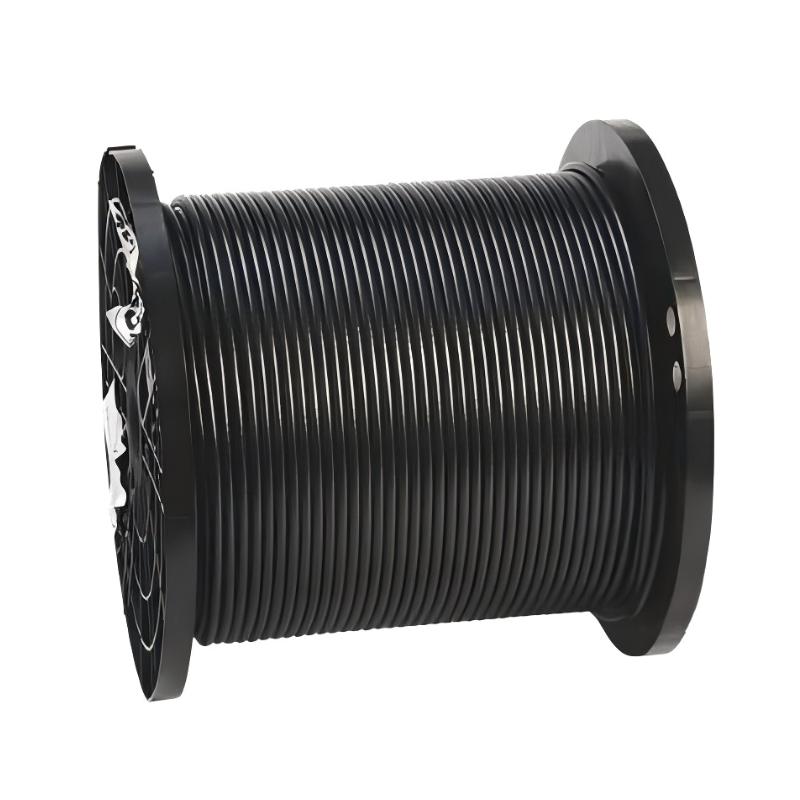
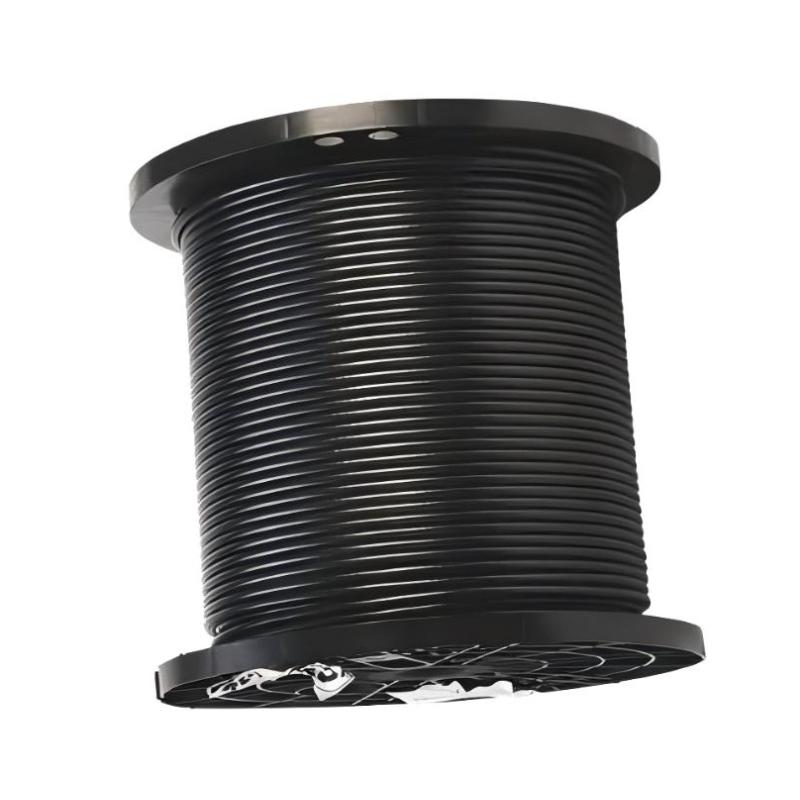
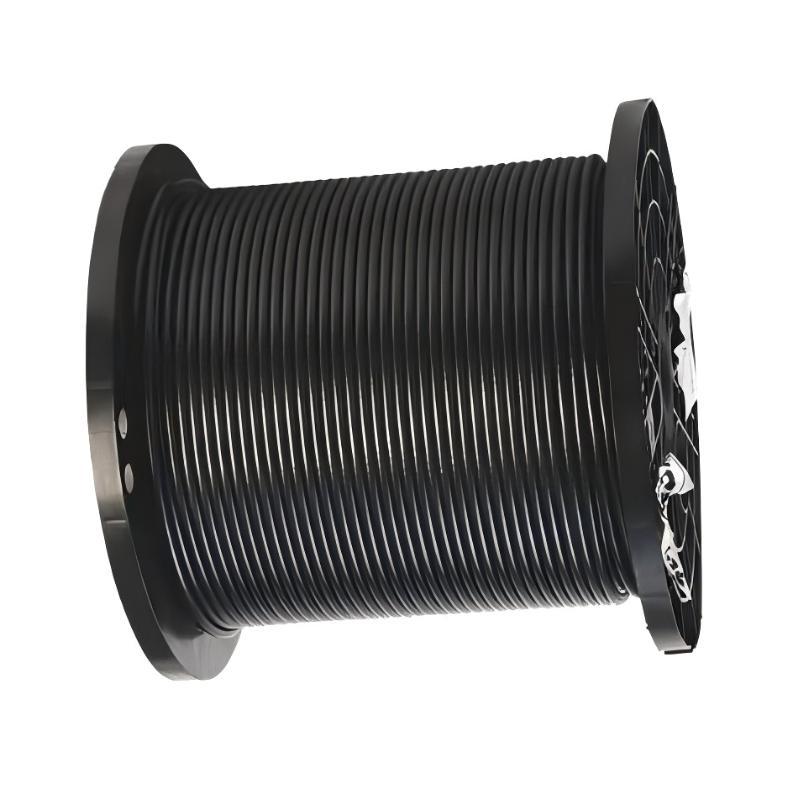
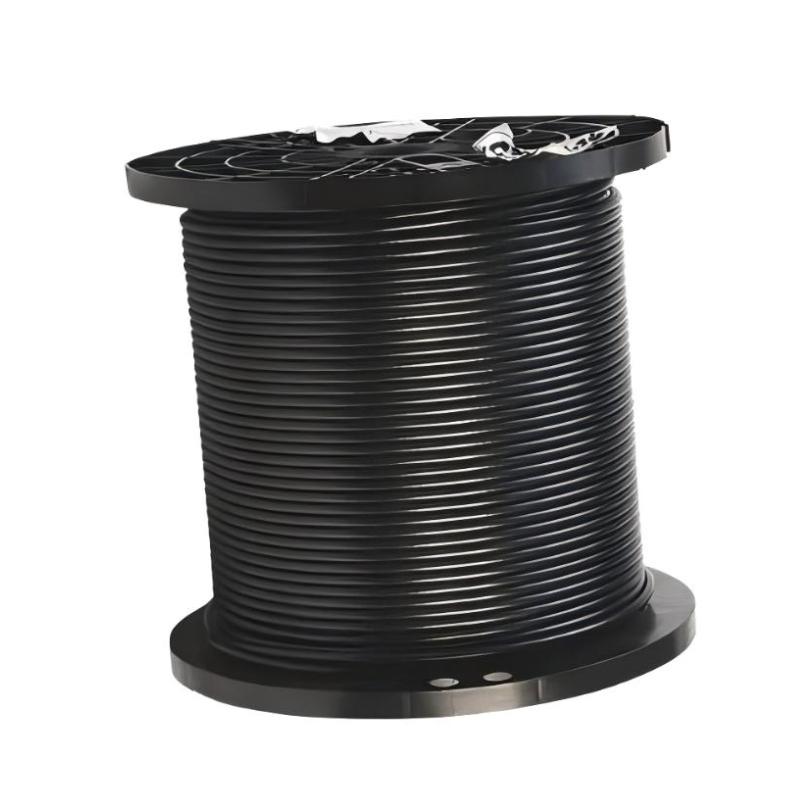
- Allen Bradley
- 1786-RG6
- ControlNet Coaxial Cable
- USA
- 1000 feet
- 3 kg
- Xiamen, China
- New & In Stock
- T/T, PayPal, Western Union
- 1 Year
- 1-3 Working Days
- DHL, UPS, TNT, FedEx and EMS.
- 24-Hour Service
- COO
- 4
Our advantage

Global Logistics
We have a 10-year logistics and express cooperation agreement, so our products can be shipped to any place in the world.

Brand new and original
Our products are imported in bulk from the place of origin. Because of the cooperative relationship, our products are all original and 100% new.

24-hour service
We provide 7*24 hours service to our customers. We will be there whenever you need us.

Price advantage
All our products are priced very favorably because we have our own warehouse and supply.
| Company Information | |||
| [email protected] | |||
| Mobile | +8615980777398 | ||
| +8615980777398 | |||
| 15980777398 |
Product Overview
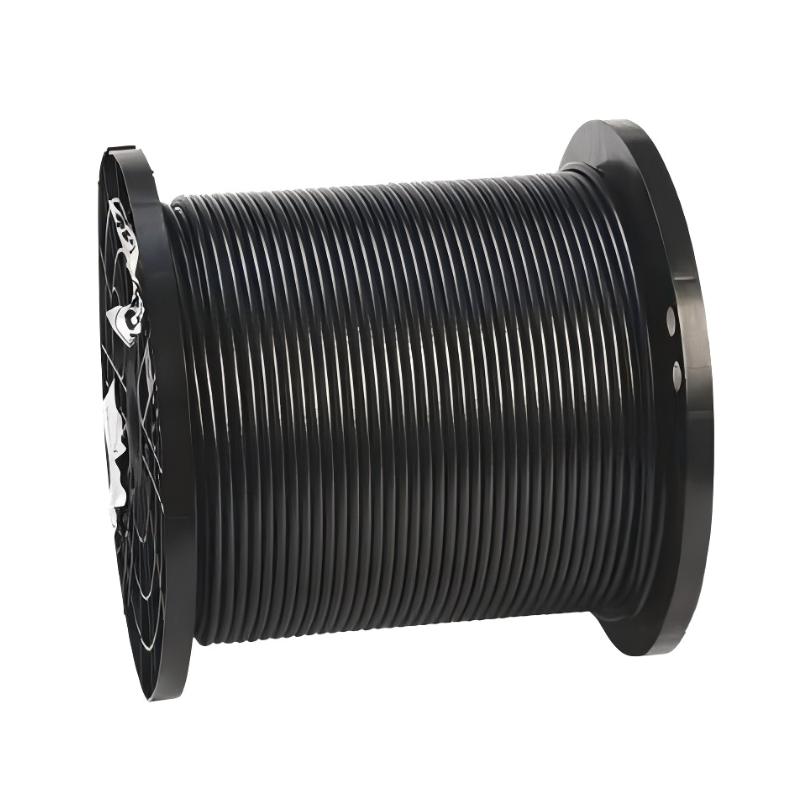
The Allen-Bradley 1786-RG6 is a standard RG-6 quad-shield coaxial cable used as the trunk cable in Allen-Bradley ControlNet communication networks. Supplied in a 1000-foot assembly, it forms the main physical communication path connecting network taps and distributed automation devices.
Unlike drop cables that connect individual devices to the network, the 1786-RG6 serves as the central bus of the coaxial media system. Multiple cable sections can be connected through ControlNet taps to create a continuous trunk line. PLC controllers, remote I/O stations, HMIs, and other network nodes then communicate through their respective tap connections.
In a production facility, for example, a ControlNet trunk may run along a machine line, passing several control cabinets and distributed I/O stations. The 1786-RG6 forms the main cable route, while individual taps provide the connection points for network devices.
Its quad-shield construction helps reduce external electrical interference affecting the coaxial transmission path. This is particularly relevant in industrial environments where motor drives, switching equipment, and power cables operate near communication infrastructure.
The 1786-RG6 is classified as standard RG-6 cable rather than the high-flex 1786-RG6F variant. It is therefore more appropriate for fixed trunk installations than applications involving repeated cable movement or continuous flexing.
An important part of using this cable is network segment planning. The permitted trunk length depends on the number of taps installed in the segment. Each segment also requires suitable termination at both ends to prevent signal reflections.
The 1786-RG6 is a passive transmission medium. It does not process network data or provide signal amplification. Its function is to maintain the coaxial communication path between ControlNet taps and connected network equipment.
Technical Specifications
| Parameter | Specification |
|---|---|
| Manufacturer | Allen-Bradley |
| Brand | Rockwell Automation |
| Model | 1786-RG6 |
| Product Series | ControlNet |
| Product Type | ControlNet Coaxial Cable |
| Cable Type | RG-6 Coaxial |
| Cable Construction | Quad-Shield |
| Cable Category | Standard Coaxial Cable |
| Jacket Material | PVC |
| Jacket Rating | CM-CL2 |
| Cable Impedance | 75 Ω |
| Cable Attenuation at 10 MHz | 5.99 dB per 1000 ft |
| Network Compatibility | Allen-Bradley ControlNet |
| Cable Application | ControlNet Trunk Line |
| Cable Length | 1000 feet |
| Shipping Weight | 3 kg |
Product Features
- 1000-Foot Cable Assembly: Supplied as a long cable assembly for building ControlNet coaxial trunk sections.
- RG-6 Construction: Uses RG-6 coaxial cable technology for industrial network communication.
- Quad-Shield Design: Provides four-layer shielding to help limit external interference affecting signal transmission.
- 75-Ohm Impedance: Matches the impedance requirement of the ControlNet coaxial media system.
- Standard PVC Jacket: Uses PVC CM-CL2 cable construction for fixed industrial cable routing.
- Low Signal Attenuation: Has a specified attenuation of 5.99 dB per 1000 feet at 10 MHz.
- ControlNet Trunk Compatibility: Serves as the central coaxial bus connecting network taps.
- Fixed Installation Application: Suitable for stationary cable routes in industrial control installations.
- Modular Network Layout: Multiple cable sections can be joined through compatible ControlNet connectors and taps.
- Passive Signal Transmission: Carries electrical communication signals without requiring an independent power supply.
Product Working Principle
The 1786-RG6 transmits ControlNet communication signals through a coaxial conductor structure.
Inside the cable, a central conductor carries the electrical signal. Surrounding dielectric insulation maintains the spacing between the conductor and the outer shielding layers. The quad-shield arrangement provides protection against external electrical interference, while the outer jacket protects the cable during installation and operation.
Within a ControlNet network, the 1786-RG6 acts as the trunk line. Network devices connect to this trunk through passive taps, which provide individual drop-cable connections.
A simplified network arrangement is:
ControlNet Trunk → 1786-RG6 Cable Section → 1786-TPS / 1786-TPR Tap → Device Drop Cable → PLC / Remote I/O / HMI
The cable carries communication signals along the trunk, while the taps allow individual network nodes to access the shared communication medium.
Termination is essential to this arrangement. A 75-ohm terminating resistor must be installed at each end of a coaxial segment. These resistors absorb signal energy and prevent reflections that could interfere with communication.
The electrical characteristics of the cable also affect the maximum usable segment length. For standard 1786-RG6 cable, the attenuation at 10 MHz is specified as 5.99 dB per 1000 feet. The total permitted segment length must account for the number of taps connected to the network.
Role in Allen-Bradley ControlNet Network Architecture
The 1786-RG6 forms the physical backbone of the ControlNet coaxial media system. It connects network taps into a trunk structure, allowing controllers and distributed devices to exchange communication signals through a shared network medium.
In a typical ControlNet installation, the trunk cable runs through the production area or control room. Each device connects to the trunk through a tap and its associated drop cable.
A typical arrangement is:
ControlNet Trunk → 1786-RG6 → 1786-TPS / 1786-TPR → Drop Cable → ControlNet Network Devices
| System Component | Function |
|---|---|
| Allen-Bradley 1786-RG6 | Provides the main coaxial ControlNet trunk cable |
| 1786-BNC | Connects coaxial cable sections to compatible BNC tap interfaces |
| 1786-TPS | Provides a straight coaxial network tap |
| 1786-TPR | Provides a right-angle coaxial network tap |
| 1786-XT | Provides 75-ohm BNC trunk termination |
| 1786-TCAP | Provides a dummy load for unused taps |
| 1786-RPA | Provides the modular repeater adapter interface |
| 1786-RG6F | Provides a high-flex coaxial cable option |
| ControlNet Communication Modules | Connect PLC controllers to the ControlNet network |
| Remote I/O Adapters | Connect distributed I/O stations to the network |
The number of taps and total trunk length must be considered together when planning each coaxial segment. If additional distance or network capacity is required, repeaters can be used to create separate segments.
Industrial Applications
The 1786-RG6 is suitable for fixed ControlNet trunk installations in industrial facilities where multiple automation devices share a coaxial communication network.
| Industrial Application | Typical Use |
|---|---|
| Automotive Manufacturing | Connecting PLC cabinets, robotic cells, and distributed production equipment |
| Packaging Machinery | Establishing the main ControlNet communication trunk along packaging lines |
| Steel Manufacturing | Connecting control stations and remote I/O equipment in production areas |
| Power Generation | Linking automation equipment through coaxial network segments |
| Oil and Gas Automation | Connecting distributed control equipment through ControlNet infrastructure |
| Chemical Processing | Building trunk communication routes between process control cabinets |
| Water Treatment | Connecting PLC systems and remote I/O stations across treatment facilities |
| Material Handling | Providing the main communication path for conveyor control systems |
| Industrial Drive Systems | Connecting drive controllers and associated automation equipment |
| General Manufacturing | Establishing fixed ControlNet communication infrastructure throughout production facilities |
Installation and Maintenance
- Verify Cable Type: Confirm that the 1786-RG6 standard quad-shield cable is appropriate for the intended fixed trunk installation.
- Plan the Network Segment: Determine the required trunk route and the number of taps before installing the cable.
- Inspect the Cable: Check the outer jacket for cuts, crushing, deformation, or other visible damage.
- Plan Cable Routing: Keep the coaxial trunk away from sharp edges, moving machinery, and unnecessary sources of electrical interference.
- Use Compatible Connectors: Use the appropriate 1786-BNC connectors when joining trunk cable sections to compatible BNC tap interfaces.
- Prepare Cable Ends: Follow the specified cable preparation procedure when installing connectors to maintain proper conductor and shielding contact.
- Check Electrical Continuity: Test the cable sections for continuity and electrical shorts before connecting them to the active network.
- Install Network Taps: Position taps according to the planned network layout and connect the associated device drop cables.
- Install Terminating Resistors: Fit a 75-ohm terminating resistor at each end of every coaxial segment.
- Check Unused Taps: Install a 1786-TCAP dummy load on each unused tap to prevent unwanted noise in the network.
- Verify Segment Length: Confirm that the total trunk length and number of taps remain within the permitted ControlNet segment limits.
- Test Network Communication: After installation, verify network communication and inspect the physical connections if communication errors occur.
During maintenance, inspect connector joints, terminating resistors, and exposed cable sections. Loose connections, damaged shielding, and incorrect termination can cause communication instability even when the connected controllers and network modules are operating normally.
Compatible System Components
| Component | Function |
|---|---|
| Allen-Bradley 1786-RG6 | Standard 1000-foot ControlNet coaxial trunk cable |
| Allen-Bradley 1786-RG6F | High-flex ControlNet coaxial cable |
| Allen-Bradley 1786-BNC | ControlNet BNC cable connector |
| Allen-Bradley 1786-TPS | Straight BNC coaxial network tap |
| Allen-Bradley 1786-TPR | Right-angle BNC coaxial network tap |
| Allen-Bradley 1786-XT | BNC terminating resistor |
| Allen-Bradley 1786-TCAP | ControlNet tap dummy load |
| Allen-Bradley 1786-RPA | ControlNet modular repeater adapter |
| Allen-Bradley 1786-RPFS | ControlNet short-distance fiber repeater |
| Allen-Bradley 1788-CNCHKR | ControlNet network diagnostic tool |
| Allen-Bradley 1788-MCHKR | NetLinx media diagnostic tool |
Recommended Related Models
| Model / Product | Product Type | Typical Application |
|---|---|---|
| Allen-Bradley 1786-RG6F | ControlNet High-Flex Coaxial Cable | Cable routes requiring greater flexibility |
| Allen-Bradley 1786-BNC | ControlNet BNC Cable Connector | Connecting coaxial trunk sections |
| Allen-Bradley 1786-TPS | ControlNet Straight BNC Tap | Connecting network devices to the trunk |
| Allen-Bradley 1786-TPR | ControlNet Right-Angle BNC Tap | Alternative tap connection arrangement |
| Allen-Bradley 1786-XT | ControlNet BNC Terminating Resistor | Terminating coaxial network segments |
| Allen-Bradley 1786-CTK | ControlNet Coax Toolkit | Preparing and installing coaxial cable connectors |
Key Advantages
- 1000-foot standard ControlNet coaxial cable assembly.
- RG-6 quad-shield construction.
- 75-ohm impedance for ControlNet media compatibility.
- PVC CM-CL2 outer jacket.
- Specified attenuation of 5.99 dB per 1000 feet at 10 MHz.
- Supports modular trunk-and-tap network layouts.
- Suitable for fixed industrial communication installations.
Technical FAQs
1. What is the difference between the 1786-RG6 and 1786-RG6F?
The 1786-RG6 is the standard RG-6 quad-shield coaxial cable, while the 1786-RG6F is the high-flex version. The standard RG6 is generally used for fixed trunk installations. The high-flex version is intended for locations where the cable experiences more movement or repeated flexing.
2. How many meters of cable are supplied with the 1786-RG6?
The standard assembly contains 1000 feet of cable, equivalent to approximately 304.8 meters. This length can be divided into multiple trunk sections according to the planned ControlNet network layout.
3. Why must the 1786-RG6 network segment have terminating resistors at both ends?
ControlNet coaxial segments require 75-ohm termination at both ends. The terminating resistors absorb signal energy and prevent reflections that could interfere with communication between network devices.
4. Does the maximum cable length depend on the number of network taps?
Yes. The permitted length of a standard RG-6 segment decreases as the number of taps increases. With two taps, the maximum segment length is 1000 meters (3280 feet). Each additional tap reduces the allowable length by approximately 16.3 meters (53.4 feet), subject to the applicable segment limits.