

ProductPRODUCT
Featured products
Contact Us
- Allen Bradley
- 1786-BNCP
- ControlNet BNC Coaxial Connector
- USA
- 50 × 20 × 40 mm
- 0.1 kg
- Xiamen, China
- New & In Stock
- T/T, PayPal, Western Union
- 1 Year
- 1-3 Working Days
- DHL, UPS, TNT, FedEx and EMS.
- 24-Hour Service
- COO
- 8
Our advantage

Global Logistics
We have a 10-year logistics and express cooperation agreement, so our products can be shipped to any place in the world.

Brand new and original
Our products are imported in bulk from the place of origin. Because of the cooperative relationship, our products are all original and 100% new.

24-hour service
We provide 7*24 hours service to our customers. We will be there whenever you need us.

Price advantage
All our products are priced very favorably because we have our own warehouse and supply.
| Company Information | |||
| [email protected] | |||
| Mobile | +8615980777398 | ||
| +8615980777398 | |||
| 15980777398 |
Product Overview
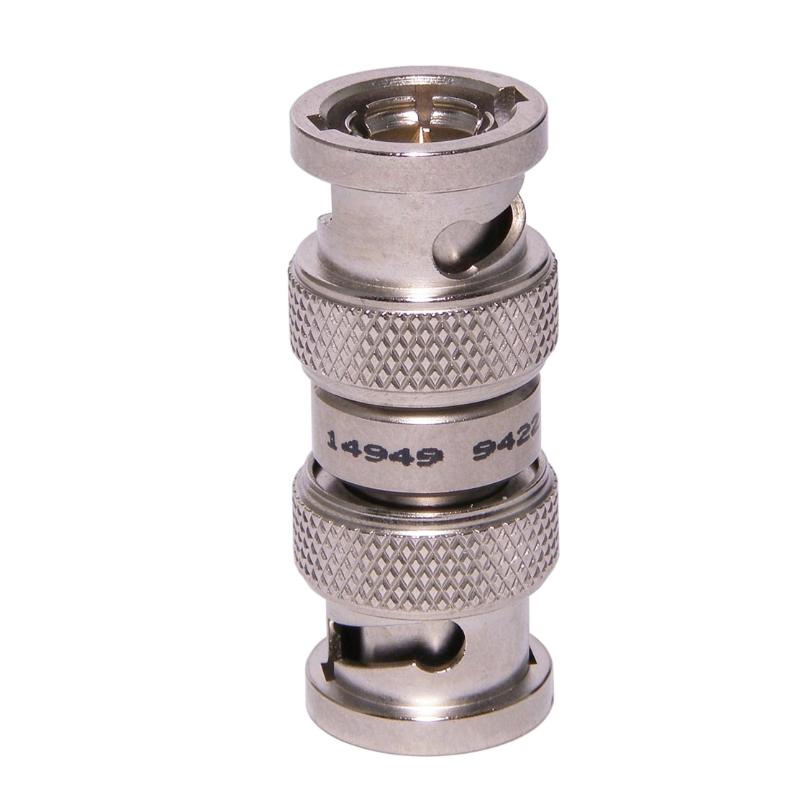
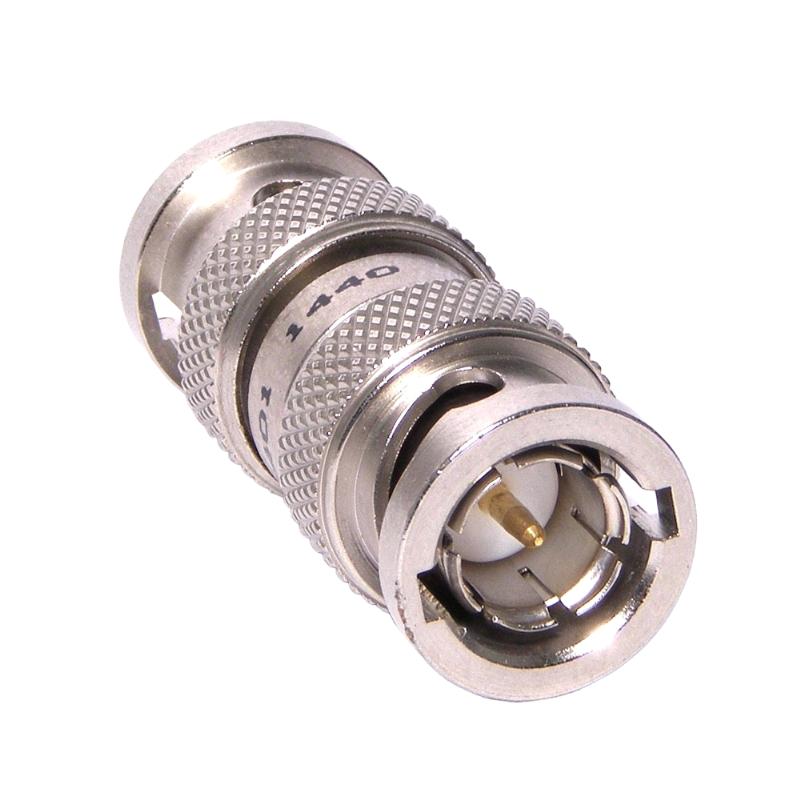
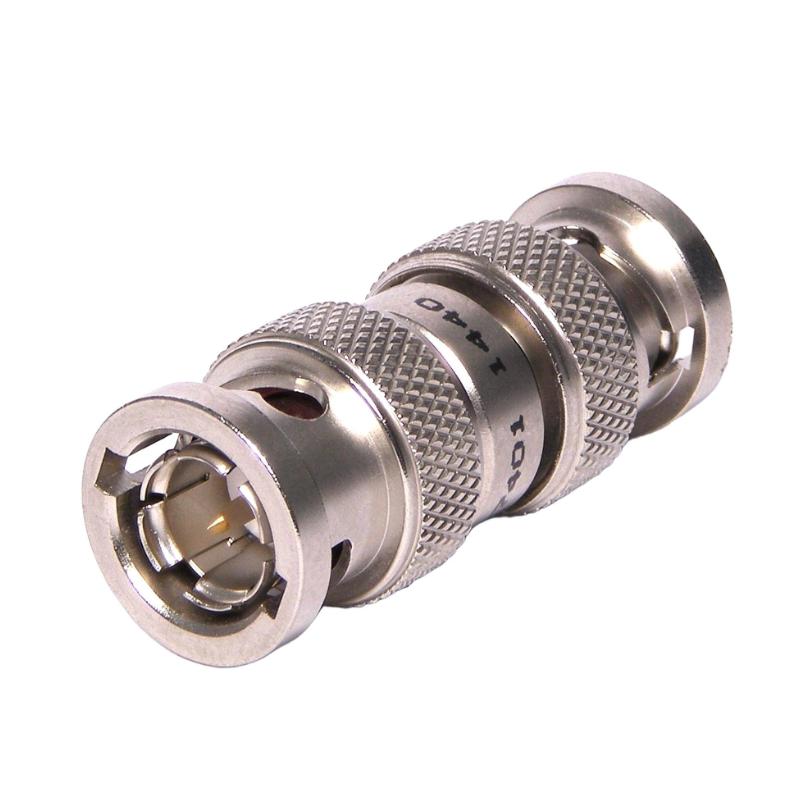
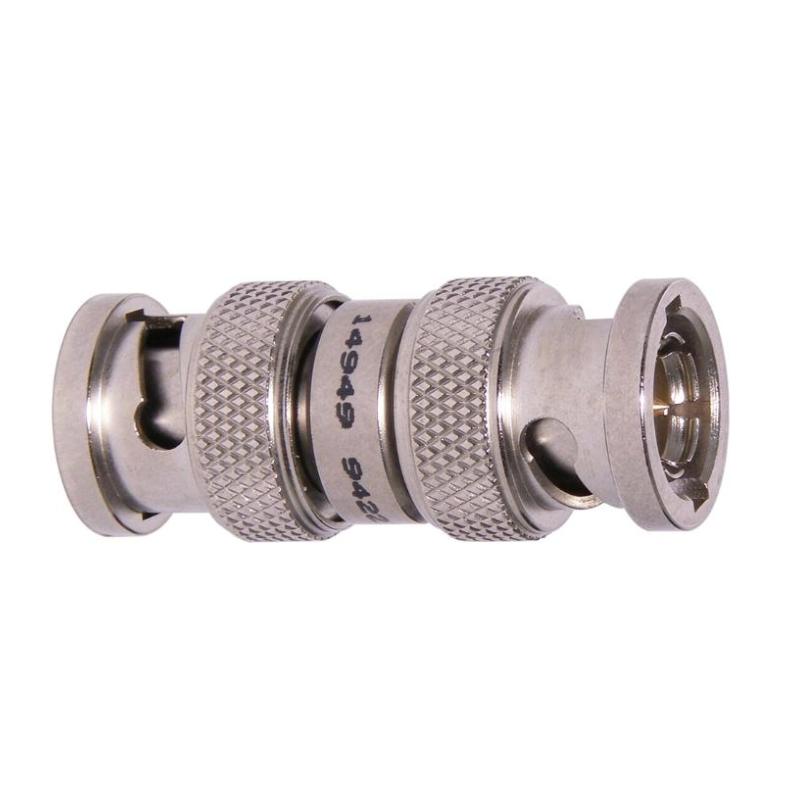
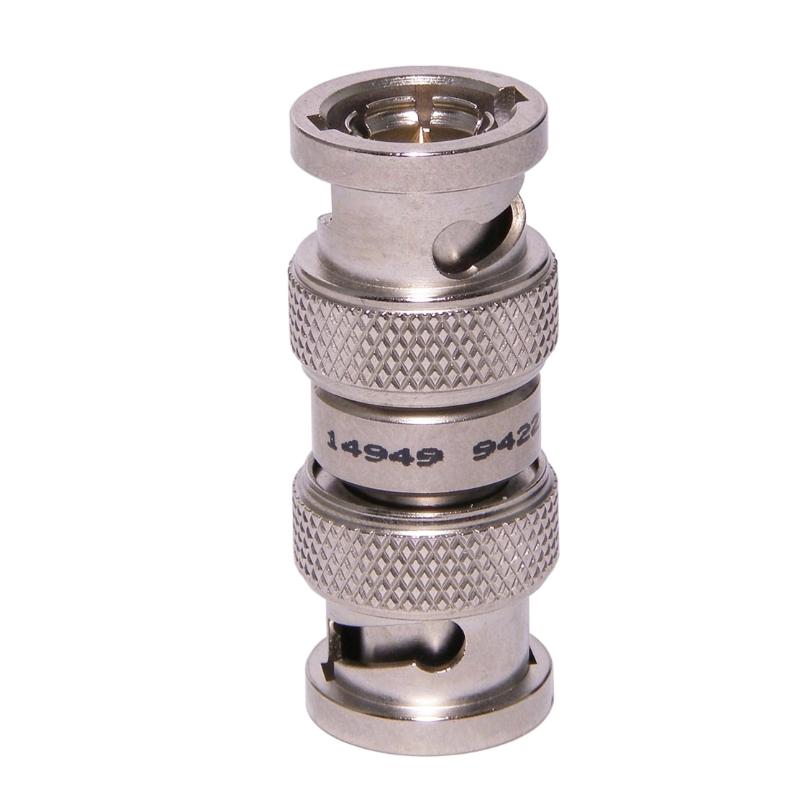
The Allen-Bradley 1786-BNCP is a barrel-type coaxial connector used in Allen-Bradley ControlNet communication networks. It features a plug-to-plug configuration and is intended to connect two adjacent ControlNet network taps without requiring a separate trunk-cable section between them.
In a typical ControlNet installation, coaxial trunk cables connect multiple network taps, which provide communication access for PLCs, remote I/O stations, and other network devices. When two taps are installed next to each other, the 1786-BNCP can bridge the connection directly between their BNC interfaces.
This arrangement is particularly useful in compact control cabinets and distributed automation panels where network taps are mounted close together. Instead of routing an additional coaxial cable between the taps, the barrel connector establishes a direct physical connection.
The 1786-BNCP uses a male-to-male plug arrangement. Both ends connect to compatible female BNC interfaces, forming a continuous coaxial signal path. Its 75-ohm characteristic impedance matches the ControlNet coaxial media system.
An important consideration is that the 1786-BNCP is different from the 1786-BNCJ and 1786-BNCJI. The BNCJ is a jack-to-jack bullet connector used to reserve a future tap position or splice trunk cable sections, while the BNCJI is an isolated bulkhead connector for passing trunk cables through grounded metal enclosures. The BNCP specifically connects adjacent taps without an intervening trunk-cable section.
The connector is a passive network component. It does not require an external power supply, process communication data, or regenerate network signals. Its function is limited to maintaining the coaxial connection between adjacent ControlNet taps.
Technical Specifications
| Parameter | Specification |
|---|---|
| Manufacturer | Allen-Bradley |
| Brand | Rockwell Automation |
| Model | 1786-BNCP |
| Product Series | ControlNet |
| Product Type | ControlNet BNC Coaxial Connector |
| Detailed Product Designation | CNet Media Barrel Plug-to-Plug TNC |
| Connector Configuration | Barrel Connector |
| Connector Arrangement | Plug-to-Plug (Male-to-Male) |
| Connector Interface | BNC Coaxial |
| Characteristic Impedance | 75 Ω |
| Network Compatibility | ControlNet |
| Cable System | RG-6 Coaxial Media |
| Connection Function | Connects Two Adjacent Network Taps |
| Signal Processing | Passive Connection |
| Power Requirement | None |
| Enclosure Rating | IP20 |
| Operating Temperature | -20 to +80°C |
| Mounting Type | Direct Tap-to-Tap Connection |
| Dimensions | 50 × 20 × 40 mm |
| Weight | 0.1 kg |
Product Features
- Plug-to-Plug Configuration: Provides two male BNC connections for joining adjacent network taps.
- Barrel Connector Design: Bridges two compatible tap interfaces without an additional trunk-cable section.
- 75 Ω Coaxial Interface: Matches the characteristic impedance of the ControlNet coaxial network.
- ControlNet Compatibility: Intended for use in Allen-Bradley ControlNet coaxial media installations.
- Direct Tap Connection: Simplifies connections between closely positioned network taps.
- Passive Signal Path: Requires no external power or active signal-processing circuitry.
- Compact Network Arrangement: Helps reduce unnecessary cable routing inside control cabinets.
- Ground Isolation Consideration: Requires proper installation to prevent metallic contact with grounded surfaces that could introduce network noise.
- IP20 Protection: Suitable for installation inside protected industrial enclosures.
- Industrial Temperature Range: Supports operation from -20 to +80°C.
Product Working Principle
The 1786-BNCP establishes a direct coaxial connection between two adjacent ControlNet taps.
ControlNet uses a 75 Ω coaxial media system in which the trunk cable carries communication signals between network connection points. Each tap provides a connection interface for attaching network nodes or continuing the trunk arrangement.
When two taps are positioned next to each other, the 1786-BNCP connects their corresponding female BNC interfaces through its two male plugs.
The connection path is:
ControlNet Tap A → 1786-BNCP → ControlNet Tap B
The connector maintains the coaxial electrical path between the two taps. Its barrel construction eliminates the need for a separate length of trunk cable between these adjacent connection points.
Because the connector is passive, it does not amplify, switch, or regenerate communication signals. Signal transmission depends on the integrity of the coaxial interfaces, the surrounding cable system, and correct network termination.
One installation detail deserves particular attention: metallic surfaces on BNC connectors and accessories must not contact grounded metallic surfaces. Unintended grounding can introduce electrical noise into the ControlNet network.
The 1786-BNCP should also not be confused with a 75 Ω trunk terminator. It connects adjacent taps; it does not terminate the end of a ControlNet network segment.
Role in Allen-Bradley ControlNet Network Architecture
The 1786-BNCP functions as a physical interconnection component in the ControlNet coaxial network. It is used where two adjacent taps need to be connected directly without a trunk-cable section between them.
A typical ControlNet architecture includes a PLC controller, communication modules, coaxial trunk cables, network taps, and 75 Ω terminators.
The connector occupies the physical media layer rather than the controller or communication-processing layer.
A simplified network arrangement is:
ControlNet Controller → Coaxial Trunk → Network Tap A → 1786-BNCP → Network Tap B → Coaxial Trunk
| System Component | Function |
|---|---|
| Allen-Bradley ControlNet Controller | Executes control logic and coordinates network communication |
| ControlNet Communication Module | Provides the controller’s ControlNet network interface |
| 1786-BNCP | Connects two adjacent ControlNet taps |
| 1786-BNC | Connects coaxial trunk-cable sections to tap BNC interfaces |
| 1786-BNCJ | Provides a jack-to-jack bullet connection for reserving a future tap position or joining trunk sections |
| 1786-BNCJI | Provides an isolated bulkhead connection through metal enclosure walls |
| 1786-RG6 | Provides standard ControlNet RG-6 coaxial trunk cable |
| ControlNet Taps | Connect network nodes to the coaxial trunk |
| 1786-XT | Provides 75 Ω termination at the end of a trunk segment |
| 1786-TCAP | Caps an unused tap drop connection |
The 1786-BNCP is especially useful when the physical layout requires two neighboring taps to be connected directly while maintaining the specified coaxial network arrangement.
Industrial Applications
The 1786-BNCP is used in industrial automation installations where ControlNet network taps are mounted close together and a direct coaxial connection is required.
| Industrial Application | Typical Use |
|---|---|
| Automotive Manufacturing | Connecting adjacent ControlNet taps in machine control cabinets |
| Packaging Machinery | Establishing direct coaxial connections between nearby network taps |
| Material Handling | Connecting network distribution points in conveyor control panels |
| Power Generation | Maintaining coaxial network connections between adjacent control equipment |
| Oil and Gas Automation | Connecting ControlNet taps in distributed control enclosures |
| Chemical Processing | Organizing coaxial network connections within process control cabinets |
| Water Treatment | Connecting adjacent network taps in remote I/O installations |
| Steel Manufacturing | Maintaining ControlNet media connections in industrial automation panels |
| Assembly Automation | Reducing unnecessary trunk-cable routing between neighboring taps |
| General Manufacturing | Providing direct tap-to-tap connections in ControlNet installations |
Installation and Maintenance
- Verify the Connector Model: Confirm that the component is Allen-Bradley 1786-BNCP and that a plug-to-plug barrel connector is required.
- Inspect the Network Layout: Confirm that the two ControlNet taps are positioned for direct connection without an intervening trunk-cable section.
- Check Connector Compatibility: Verify that both tap interfaces accept the connector’s male BNC plugs.
- Inspect the Connector Ends: Check both plugs for damaged contacts, contamination, or mechanical deformation.
- Check Ground Isolation: Ensure that metallic connector surfaces do not touch grounded metal cabinet surfaces.
- Position the Connector: Align the two male plugs with the corresponding female BNC interfaces on the adjacent taps.
- Make the Connections: Insert and secure both connector ends according to the BNC coupling arrangement.
- Avoid Mechanical Stress: Ensure that the connector is not subjected to excessive side loading or pressure from nearby cables and equipment.
- Check Network Termination: Confirm that the ControlNet segment has the required 75 Ω terminators at its two physical ends.
- Inspect Adjacent Cables: Check the RG-6 trunk cables and tap connections for damage, loose fittings, or improper routing.
- Verify Network Communication: Restore the network and check the communication status of the connected ControlNet devices.
- Record the Installation: Document the connector location and the associated tap arrangement for future maintenance.
If communication errors occur after installation, inspect both BNC interfaces, check for unintended grounding, and verify the segment termination arrangement before replacing the connector.
Compatible System Components
| Component | Function |
|---|---|
| Allen-Bradley 1786-BNCP | ControlNet barrel plug-to-plug connector |
| Allen-Bradley 1786-BNC | ControlNet coaxial cable plug |
| Allen-Bradley 1786-BNCJ | ControlNet jack-to-jack bullet connector |
| Allen-Bradley 1786-BNCJI | Isolated ControlNet bulkhead connector |
| Allen-Bradley 1786-XT | 75 Ω ControlNet coaxial terminator |
| Allen-Bradley 1786-TCAP | ControlNet tap dummy load |
| Allen-Bradley 1786-RG6 | Standard ControlNet RG-6 coaxial cable |
| Allen-Bradley 1786-RG6F | High-flex ControlNet coaxial cable |
| Allen-Bradley 1786-TPR | Right-angle ControlNet coaxial tap |
| Allen-Bradley 1786-TPS | Straight ControlNet coaxial tap |
| Allen-Bradley ControlNet Communication Modules | Provide network connectivity for automation controllers |
Recommended Related Models
| Model / Product | Product Type | Typical Application |
|---|---|---|
| Allen-Bradley 1786-BNC | ControlNet Media Coaxial BNC Connector | Connecting trunk-cable sections to network taps |
| Allen-Bradley 1786-BNCJ | ControlNet Media Jack-to-Jack TNC Connector | Reserving future tap positions or joining trunk sections |
| Allen-Bradley 1786-BNCJI | ControlNet Media Isolated Bulkhead Connector | Passing coaxial trunk cables through metal enclosures |
| Allen-Bradley 1786-XT | ControlNet Media Coaxial Terminator | Terminating ControlNet trunk segments |
| Allen-Bradley 1786-TCAP | ControlNet Tap Dummy Load | Capping unused tap drop connections |
| Allen-Bradley 1786-RG6 | ControlNet Coaxial Trunk Cable | Connecting distributed ControlNet network components |
Key Advantages
- Direct plug-to-plug connection between adjacent ControlNet taps.
- 75 Ω coaxial interface for ControlNet media.
- Eliminates the need for a separate trunk-cable section between neighboring taps.
- Passive operation without an external power supply.
- Compact connection arrangement for control cabinets.
- Supports established Allen-Bradley ControlNet coaxial network components.
- Simplifies physical network layout and cable maintenance.
Technical FAQs
1. What is the primary difference between the 1786-BNCP and 1786-BNCJ?
The 1786-BNCP is a plug-to-plug barrel connector used to connect two adjacent taps without a trunk-cable section between them. The 1786-BNCJ is a jack-to-jack bullet connector used to reserve space for a future tap or splice a trunk cable. Their connector genders and installation purposes are different.
2. Can the 1786-BNCP be used to connect two ControlNet taps directly?
Yes. This is its specific application. The two male BNC plugs connect to the female interfaces of adjacent taps, establishing a direct coaxial connection without an additional cable section.
3. Does the 1786-BNCP replace a ControlNet 75 Ω terminator?
No. The 1786-BNCP is a tap-to-tap connector, not a terminating resistor. Each ControlNet coaxial trunk segment must retain the required 75 Ω termination at its physical ends.
4. Why must the connector be kept away from grounded metal surfaces?
Unintended contact between metallic BNC connector surfaces and grounded metal can create an unwanted grounding path. This may introduce electrical noise into the ControlNet network and affect communication quality. Proper connector positioning and grounding isolation should therefore be checked during installation.