

ProductPRODUCT
Featured products
Contact Us
- Schneider
- STBXBE1000K
- EOS Internal Bus Expansion Module
- France
- 125 × 18.4 × 65.1 mm
- 0.13 kg
- Xiamen, China
- New & In Stock
- T/T, PayPal, Western Union
- 1 Year
- 1-3 Working Days
- DHL, UPS, TNT, FedEx and EMS.
- 24-Hour Service
- COO
- 5
Our advantage

Global Logistics
We have a 10-year logistics and express cooperation agreement, so our products can be shipped to any place in the world.

Brand new and original
Our products are imported in bulk from the place of origin. Because of the cooperative relationship, our products are all original and 100% new.

24-hour service
We provide 7*24 hours service to our customers. We will be there whenever you need us.

Price advantage
All our products are priced very favorably because we have our own warehouse and supply.
| Company Information | |||
| [email protected] | |||
| Mobile | +8615980777398 | ||
| +8615980777398 | |||
| 15980777398 |
Product Overview
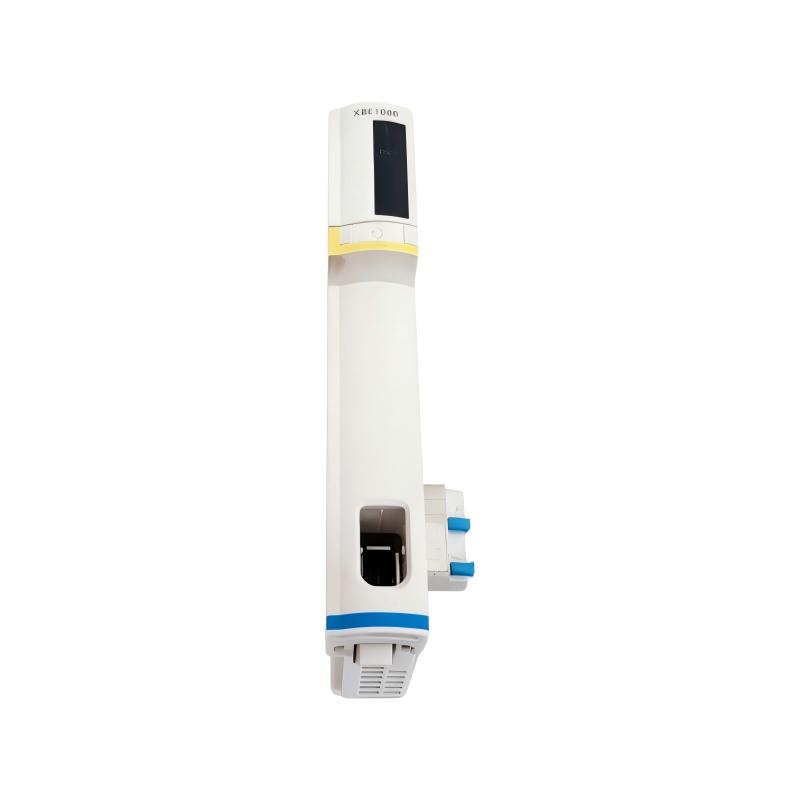
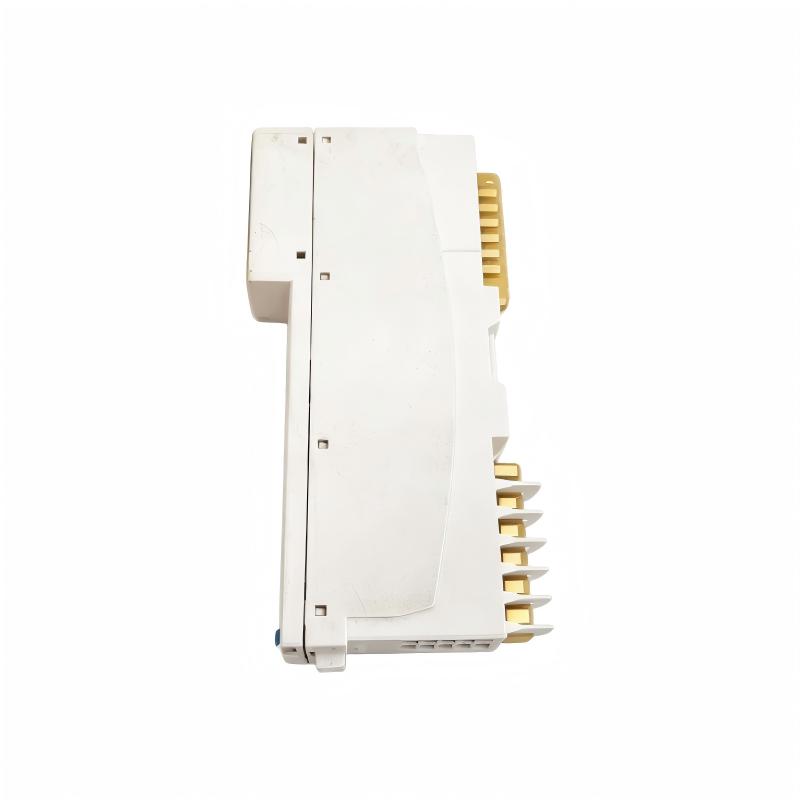
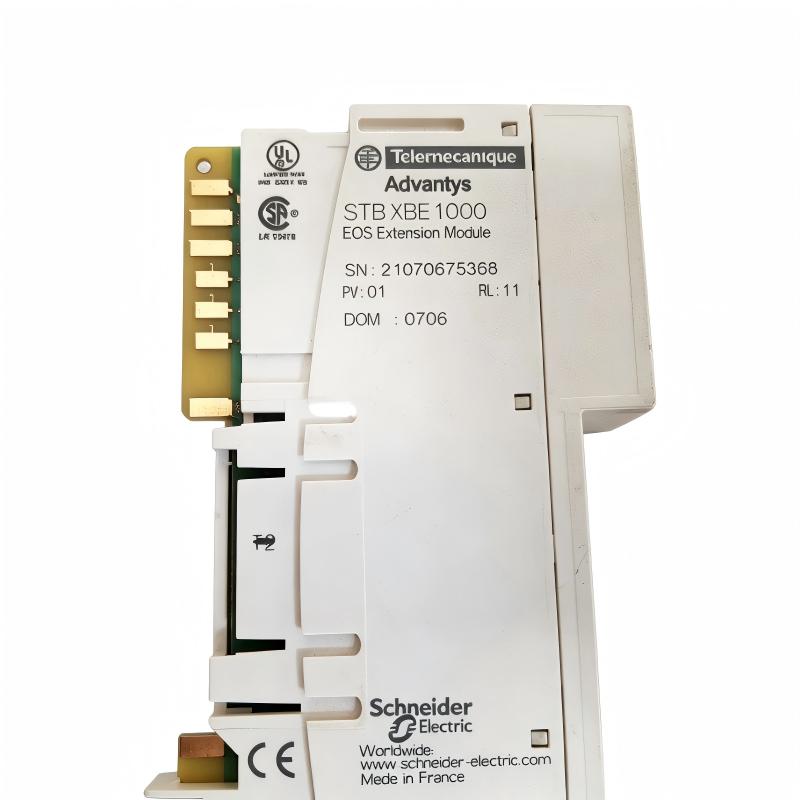
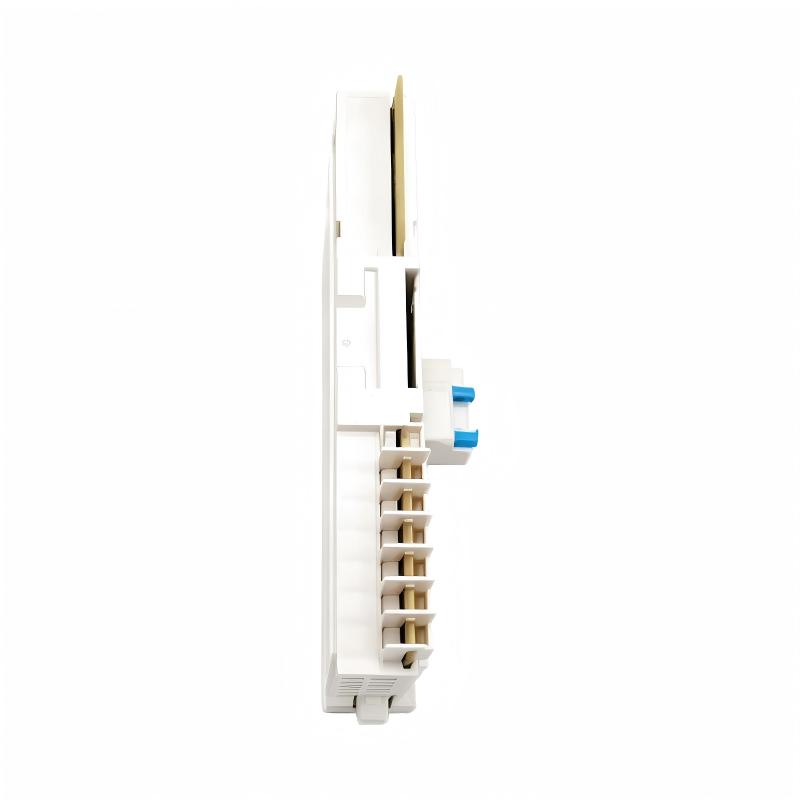
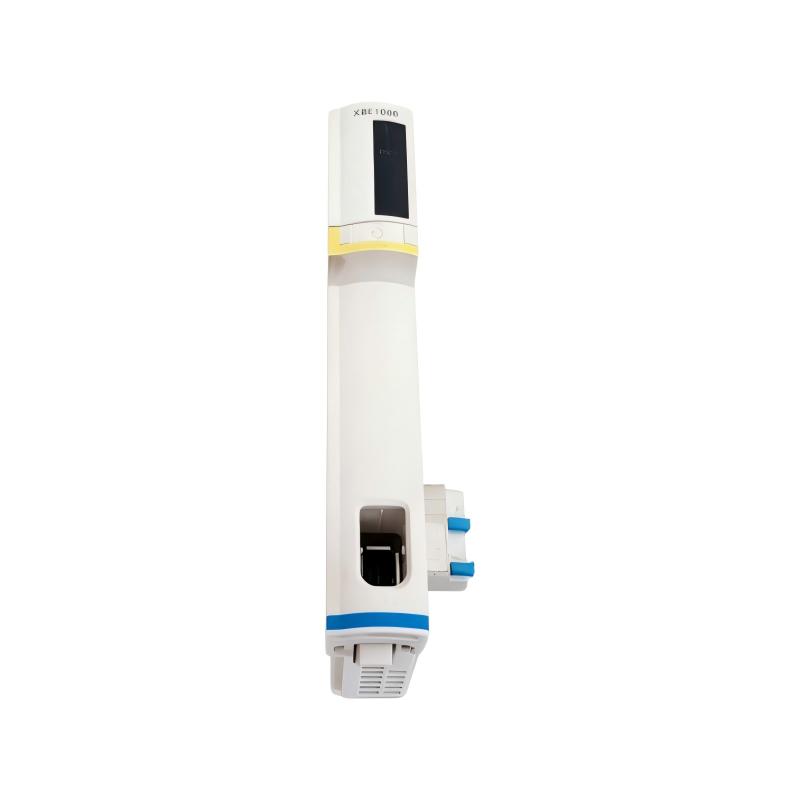
The Schneider Electric STBXBE1000K EOS Internal Bus Expansion Module is a bus expansion component designed for the Modicon Advantys STB distributed input/output (I/O) system. EOS stands for End of Segment. The module is installed at the end of an existing island bus segment, allowing the system to extend communication to another compatible segment through an appropriate island bus extension cable and beginning-of-segment module.
In industrial automation, distributed I/O systems allow sensors, actuators, and other field devices to connect to a controller through modular I/O stations. Rather than placing every I/O point in a central control cabinet, engineers can distribute I/O closer to the machinery or process equipment. This arrangement can simplify field wiring and provide flexibility when a machine or production line needs additional I/O capacity.
The STBXBE1000K forms part of the Advantys STB architecture. It serves a specific bus-extension role rather than functioning as a conventional digital input module, digital output module, or standalone PLC controller. Its purpose is to support the physical and communication arrangement required to connect compatible segments within an Advantys STB island.
This module is particularly relevant to maintenance teams working with existing Modicon STB installations. When a distributed I/O island requires an additional segment, the EOS module works with the corresponding BOS (Beginning of Segment) module and the appropriate extension cable. The entire arrangement must follow the system’s configuration and installation requirements.
The STBXBE1000K is a discontinued product. Schneider Electric documentation identifies the STBXBE1100K as the later EOS module in the Modicon STB product family, but replacement suitability should be confirmed against the installed base, connectors, segment architecture, and system documentation before substitution.
Technical Specifications
| Parameter | Specification |
|---|---|
| Brand | Schneider Electric |
| Product Family | Modicon Advantys STB |
| Model | STBXBE1000K |
| Product Type | EOS Internal Bus Expansion Module |
| EOS Meaning | End of Segment |
| Primary Function | Supports island bus extension between compatible segments |
| Installation Position | End of an existing segment, except the final segment of the island |
| System Architecture | Distributed I/O island bus |
| Module Width | 18.4 mm |
| Module Height, Unassembled | 125 mm |
| Module Depth, Unassembled | 65.1 mm |
| Dimensions Provided | 125 × 18.4 × 65.1 mm |
| Weight Provided | 0.13 kg |
| Compatible Base | STB XBA 2400 for the original STB XBE 1000 module |
| Bus Extension Connection | Island bus extension output |
| Hot-Swapping Support | Not supported |
| Operating Temperature | 0 to 60°C for the original module specification |
| Product Lifecycle | Discontinued |
| Related EOS Module | STBXBE1100K; verify compatibility before replacement |
Dimensions shown are for the module itself. Installed dimensions can differ when the mounting base and connectors are fitted. The weight of 0.13 kg is the supplied listing value and should be verified against the physical item.
Function and Working Principle
The STBXBE1000K supports the expansion of an Advantys STB island by providing an end-of-segment connection for the island bus. Its function is best understood as part of the overall distributed I/O architecture.
1. End-of-Segment Bus Connection
An Advantys STB island consists of a primary segment and, where required, additional expansion segments. The STBXBE1000K is installed at the end of a segment that needs to connect to a subsequent segment.
The module provides the appropriate interface for the island bus extension cable. The cable then connects to a compatible BOS module at the beginning of the next segment.
This arrangement enables the system to extend its physical layout while preserving the intended communication structure of the distributed I/O island.
2. Communication Continuity
The island bus carries communication signals and addressing information between compatible system components. The EOS module provides the connection point required for the bus to continue to another segment.
It does not independently execute PLC control logic or perform signal conversion like an I/O module. Instead, it supports the infrastructure that allows the distributed I/O system to operate as a coordinated installation.
Correct cable selection, module placement, and system configuration are necessary to maintain communication between segments.
3. Modular I/O Expansion
When a machine requires additional field connections, engineers may use a compatible expansion segment instead of replacing the entire distributed I/O arrangement.
A typical expansion segment can contain a BOS module, a power distribution module, and the required I/O modules. The EOS module at the preceding segment provides the extension connection.
The available I/O capacity depends on the complete Advantys STB system configuration, including the network interface module, power distribution, supported module count, addressing, and controller limitations.
4. Support for Distributed Automation
By enabling physical expansion of an island bus, the STBXBE1000K supports distributed automation designs in which I/O modules are grouped according to machine sections or process areas.
This can make panel layouts and field wiring easier to organize. However, the benefits depend on the actual equipment layout, cable routing, and engineering design.
Role in Industrial Control Systems
The STBXBE1000K occupies a specialized position within an industrial automation system. It supports the bus structure connecting distributed I/O segments rather than acting as the main controller.
PLC and Network Interface Integration
An Advantys STB island is typically connected to a higher-level automation system through a compatible network interface module (NIM). The NIM manages the island’s connection to the control network and exchanges I/O data with the controller.
The STBXBE1000K supports the physical extension of the island bus. It does not replace the NIM, PLC, or network communication infrastructure.
During system design or maintenance, engineers should verify that the NIM, island configuration, and expansion arrangement support the required number of segments and modules.
Distributed I/O Management
Distributed I/O modules collect signals from sensors and send control signals to actuators. These modules can be arranged into groups to suit a machine’s physical layout.
The EOS module enables the relevant bus extension connection at the end of an existing segment. This allows compatible expansion hardware to be installed in a separate segment when supported by the overall system design.
Maintenance and System Availability
In a legacy installation, a faulty bus expansion module may interrupt communication with an expansion segment or prevent the island from operating as configured.
Maintenance personnel should inspect the EOS module, mounting base, connectors, extension cable, BOS module, and power distribution arrangement when investigating segment communication faults.
Because the STBXBE1000K does not support hot swapping, it should not be removed or replaced while the system is energized unless the manufacturer’s documented procedure explicitly permits the relevant operation. The original module specification states that hot swapping is not supported.
Industrial Applications
The STBXBE1000K is used in systems that employ Modicon Advantys STB distributed I/O. Its application is therefore associated with the overall automation installation rather than a specific motor, sensor, or production process.
1. Manufacturing and Assembly Lines
Assembly lines often contain several machine sections, each requiring its own group of sensors, switches, and actuators. Distributed I/O can organize these connections into modular groups.
Where the original system architecture supports expansion, the STBXBE1000K provides the EOS connection for an additional I/O segment. This can help engineers maintain the established island architecture when extending or servicing an existing line.
2. Packaging Machinery
Packaging systems can use distributed I/O for product detection, position sensing, pneumatic valves, and equipment interlocks. An Advantys STB installation may group I/O according to feeding, filling, sealing, and discharge functions.
The EOS module can support a compatible expansion arrangement where additional field connections are required and the island’s configuration permits the added segment.
3. Material Handling Systems
Conveyors, sorting equipment, and transfer stations can have sensors and actuators distributed across a relatively large physical area. A modular distributed I/O arrangement can reduce the need to route every field signal back to one central cabinet.
The STBXBE1000K supports the bus-extension structure in suitable legacy Advantys STB installations. The maximum permitted cable lengths and system layout must be checked against the relevant hardware documentation.
4. Process Automation
Industrial process equipment may require distributed digital and analog I/O around pumps, valves, instrumentation panels, and auxiliary machinery.
Where an existing process-control system uses Advantys STB, the EOS module may form part of an expansion segment used to organize these connections. The actual I/O modules and their electrical characteristics must be selected separately.
5. Legacy Equipment Maintenance
The module is especially relevant to the maintenance of older machines and automation systems that continue to use the original Advantys STB architecture.
In these applications, retaining the original model may reduce the extent of hardware changes, provided that a suitable unit is available and its condition can be verified. Any alternative should be assessed against the exact installed system configuration.
Installation and System Integration
Correct installation is essential for reliable island bus communication and safe maintenance.
1. Confirm the Correct Mounting Base
The original STB XBE 1000 EOS module is designed for the STB XBA 2400 base. Do not assume that it can be installed on a base intended for a different Advantys STB module type.
Check the base model, module keying, connectors, and physical condition before fitting the module. Incorrect base selection may prevent proper installation or compromise the intended system arrangement.
2. Install at the Correct Segment Position
The STBXBE1000K is installed at the end of a segment that requires an island bus extension. It is not normally used as the EOS module at the end of the final segment of the island.
The next segment requires a compatible BOS module and the correct extension cable. Each segment must follow the system architecture defined in the Advantys STB documentation.
3. Select the Appropriate Extension Cable
The island bus extension cable carries communication and addressing signals between the EOS and BOS modules. The cable must match the intended connection and the permitted cable length for the system.
Cable routing should avoid unnecessary mechanical stress, sharp bends, and exposure to conditions outside the cable’s specified environmental limits. Ensure that connectors are fully seated and properly secured.
4. Verify System Configuration
Before commissioning an expansion segment, confirm that the network interface module, configuration software, I/O modules, power distribution modules, and addressing arrangement are compatible with the intended island configuration.
The expansion must remain within the supported limits of the controller, network interface, and distributed I/O architecture.
5. Observe Power Isolation Requirements
The STBXBE1000K does not support hot swapping. Before removing or replacing the module, follow the manufacturer’s shutdown and isolation procedure for the relevant island segment and connected equipment.
Confirm that the system is in a safe state and that any connected machinery cannot start unexpectedly. After replacement, inspect the connections and verify communication and I/O operation before returning the equipment to service.
6. Inspect the Installed Assembly
The module’s standalone dimensions are 125 mm high, 18.4 mm wide, and 65.1 mm deep. The complete installed assembly occupies more space when the base and connectors are included.
Check the available mounting space and cable access in the cabinet. Verify the actual hardware dimensions before planning a replacement or fabricating mounting arrangements.
Compatible System Components
The STBXBE1000K operates as part of a complete Advantys STB distributed I/O island. The following components are relevant to a typical bus-extension arrangement.
| Component | Function | Integration Considerations |
|---|---|---|
| STB XBA 2400 base | Mounting base for the original STB XBE 1000 EOS module | Confirm the exact base type and module keying |
| STB XCA series island bus extension cable | Connects the EOS module to a compatible BOS module | Verify cable model, length, connectors, and installation limits |
| STB XBE 1200 BOS module | Original beginning-of-segment module for an expansion segment | Confirm compatibility with the EOS module and installed base |
| STB XBE 1100K EOS module | Later EOS module in the Modicon STB family | Evaluate as a potential replacement only after checking system compatibility |
| Advantys STB network interface module | Connects the I/O island to the higher-level automation network | Confirm network type and supported island configuration |
| Power distribution module (PDM) | Distributes field power to compatible I/O modules | Select according to the electrical requirements of the segment |
| Digital I/O modules | Interface with discrete sensors and actuators | Check voltage, current, channel count, and field wiring |
| Analog I/O modules | Interface with analog instrumentation | Check signal type, range, accuracy, and isolation requirements |
| PLC or PAC | Executes control logic and manages the process | Confirm controller compatibility and I/O configuration |
The table identifies components commonly associated with the system architecture. It does not imply that every component is supplied with the STBXBE1000K.
Alternative Models and Replacement Considerations
The original STBXBE1000K is discontinued. Schneider Electric documentation identifies the STBXBE1100K as a later EOS module in the Modicon STB range, while the STBXBE1300K is the corresponding later BOS model used in the updated expansion arrangement.
However, a newer module should not be treated as an automatic drop-in replacement without verifying the complete installation.
| Model or Option | Description | Replacement Considerations |
|---|---|---|
| STBXBE1000K | Original EOS internal bus expansion module | Appropriate reference for identifying existing hardware |
| STBXBE1100K | Later EOS internal bus expansion module | Check base, connectors, system documentation, and island architecture |
| STBXBE1200K | Original BOS module for the expansion segment | Used at the beginning of the next segment in the original architecture |
| STBXBE1300K | Later BOS internal bus expansion module | Confirm compatibility with the selected EOS module and base |
| Complete Advantys STB segment upgrade | Replacement of an existing expansion arrangement | Requires a full review of modules, power distribution, addressing, and configuration |
Before purchasing a replacement, verify the exact module number, mounting base, connector arrangement, extension cable, NIM configuration, and installed firmware or software requirements.
Where the original hardware is retained, matching the exact part number can simplify maintenance. Where an upgrade is required, the entire expansion path should be evaluated rather than changing only the EOS module.
Key Advantages
Modular Bus Expansion
The STBXBE1000K supports the extension of compatible Advantys STB island bus segments, allowing distributed I/O to be organized into separate physical groups.
Support for Distributed I/O Architecture
The module helps maintain a structured connection between I/O segments in legacy distributed automation systems.
Compact Module Format
With a module width of 18.4 mm, it occupies a narrow position on its intended mounting base. Actual installed space requirements depend on the base and connectors.
Defined Segment-End Function
Its EOS role provides a clear position in the bus architecture, helping maintenance engineers identify the correct module type for an existing segment.
Useful for Legacy System Maintenance
The original catalog number can be important when servicing equipment that still depends on the original Advantys STB expansion arrangement.
Supports Organized Machine Layouts
When used in a properly designed distributed I/O system, bus expansion can help group field devices by machine section or process area.
Technical FAQs
1. What is the Schneider Electric STBXBE1000K?
The STBXBE1000K is an EOS internal bus expansion module for the Modicon Advantys STB distributed I/O system. It provides the end-of-segment connection used to extend a compatible island bus to another segment.
2. What does EOS mean?
EOS stands for End of Segment. The module is installed at the end of an existing island bus segment when another compatible segment must be connected.
3. Is the STBXBE1000K a digital input or output module?
No. It is a bus expansion module. Digital and analog I/O functions are provided by separate modules in the Advantys STB system.
4. Which mounting base does the original STBXBE1000K use?
The original STB XBE 1000 EOS module uses the STB XBA 2400 base. Verify the complete base and module references before installation.
5. Can the STBXBE1000K be hot-swapped?
No. The original module specification states that hot swapping is not supported. Follow the manufacturer’s shutdown and isolation procedure before removal or replacement.
6. What cable is used with this module?
An appropriate STB XCA series island bus extension cable is used to connect the EOS module to a compatible BOS module. Select the cable model and length according to the installation and system documentation.
7. Is the STBXBE1000K discontinued?
Yes. Schneider Electric lists the STBXBE1000K as discontinued, with commercial sales ending in September 2009 and standard service ending in January 2021.
8. Can the STBXBE1100K replace the STBXBE1000K?
The STBXBE1100K is a later EOS module in the Modicon STB range. Before substituting it, verify the mounting base, connector arrangement, expansion architecture, and the manufacturer’s compatibility guidance for the actual installation.
9. What is the size of the STBXBE1000K?
The supplied dimensions are 125 × 18.4 × 65.1 mm for the module itself. The installed dimensions increase when the mounting base and connectors are included.
10. What should buyers check when sourcing this discontinued module?
Confirm the complete part number, physical condition, connector integrity, mounting-base compatibility, and availability of any required accessories. For critical systems, request evidence of functional testing and verify the applicable warranty and return terms.
Procurement and Maintenance Recommendations
Because the STBXBE1000K is a discontinued industrial automation component, accurate identification is essential when sourcing a replacement. The part number should be checked against the installed module and the system documentation.
For used or surplus units, inspect the module housing, connector area, mounting interface, and visible signs of damage or contamination. Ask the supplier to clarify whether the module is sold individually or as part of a kit with the associated mounting base and connectors.
Before installing a replacement, verify the EOS and BOS models, extension cable, I/O segment configuration, network interface module, and power distribution arrangement. Do not assume that a newer EOS module will work with the original installation without a compatibility review.
During maintenance, check the physical connection between the module and its base, inspect the extension cable, and review the system’s diagnostic information if communication with an expansion segment is interrupted. Since hot swapping is not supported, use the prescribed isolation procedure before working on the module.
For long-term lifecycle planning, document the existing island architecture and assess the availability of compatible spare parts. If a broader modernization is necessary, evaluate the full distributed I/O system, including network interface, field power, I/O modules, cabling, and controller configuration.
Conclusion
The Schneider Electric STBXBE1000K Modicon Advantys STB EOS Internal Bus Expansion Module is a specialized component for extending the island bus of compatible distributed I/O systems. Installed at the end of an existing segment, it works with an appropriate extension cable and BOS module to support communication with a subsequent segment.
Its compact 125 × 18.4 × 65.1 mm module dimensions make it suitable for its intended mounting arrangement, while the complete installed footprint depends on the base and connectors. Because the product is discontinued and does not support hot swapping, procurement, installation, and replacement should be based on exact model identification and the original system documentation.