

ProductPRODUCT
Featured products
Contact Us
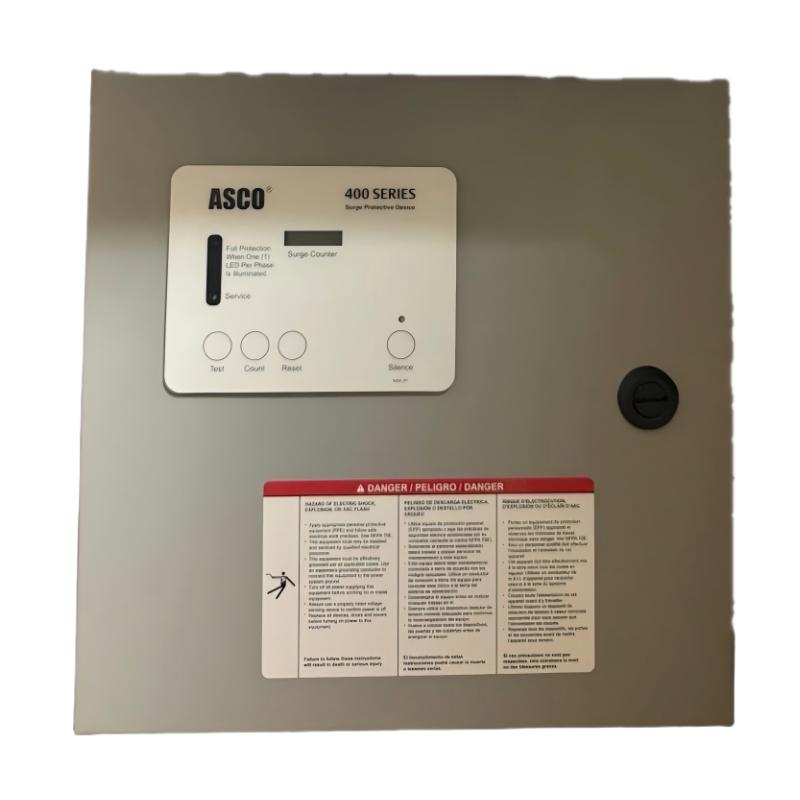
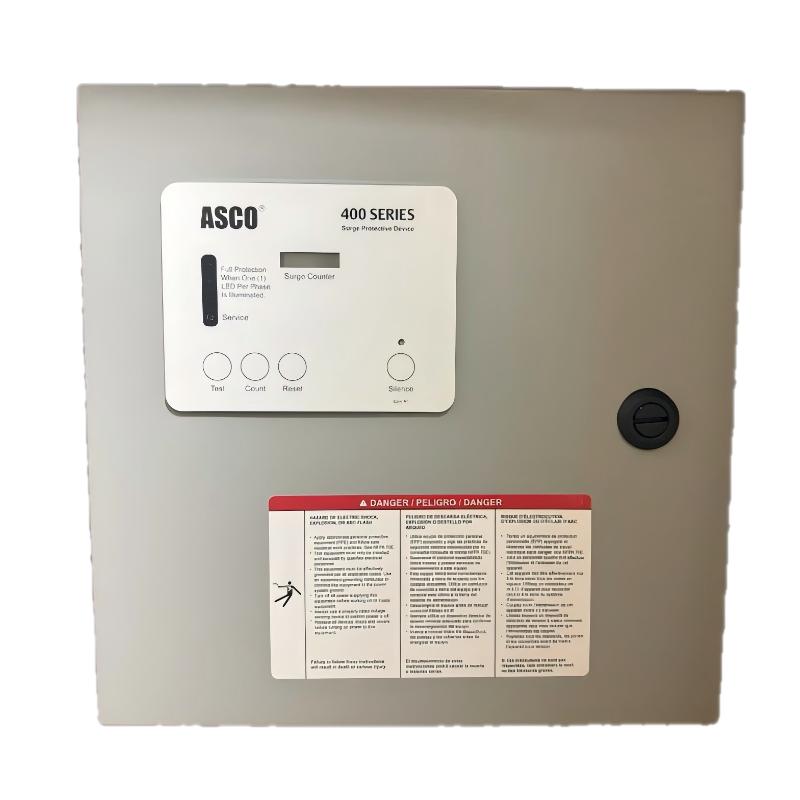
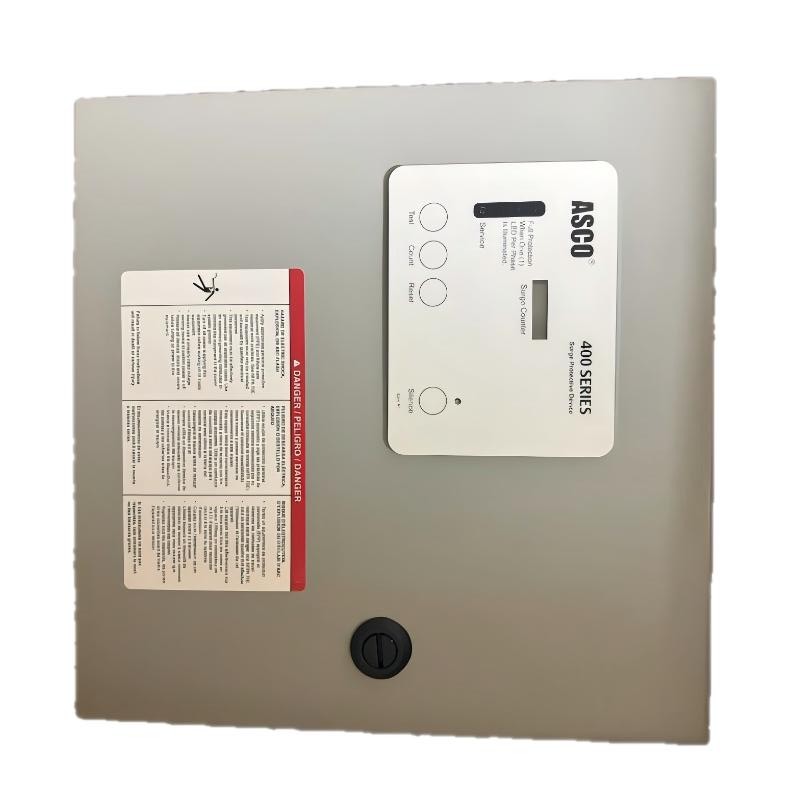
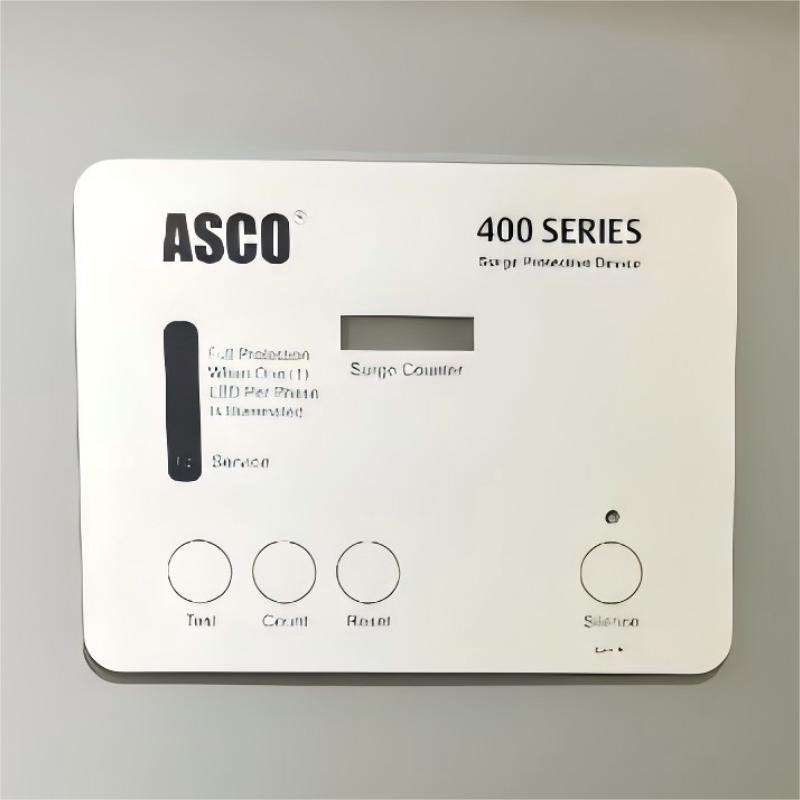
- Schneider
- 460277YP30ARCE10
- Surge Protector
- France
- 305 x 305 x 178 mm
- 10.4 kg
- Xiamen, China
- New & In Stock
- T/T, PayPal, Western Union
- 1 Year
- 1-3 Working Days
- DHL, UPS, TNT, FedEx and EMS.
- 24-Hour Service
- COO
- 9
Our advantage

Global Logistics
We have a 10-year logistics and express cooperation agreement, so our products can be shipped to any place in the world.

Brand new and original
Our products are imported in bulk from the place of origin. Because of the cooperative relationship, our products are all original and 100% new.

24-hour service
We provide 7*24 hours service to our customers. We will be there whenever you need us.

Price advantage
All our products are priced very favorably because we have our own warehouse and supply.
| Company Information | |||
| [email protected] | |||
| Mobile | +8615980777398 | ||
| +8615980777398 | |||
| 15980777398 |
Product Overview
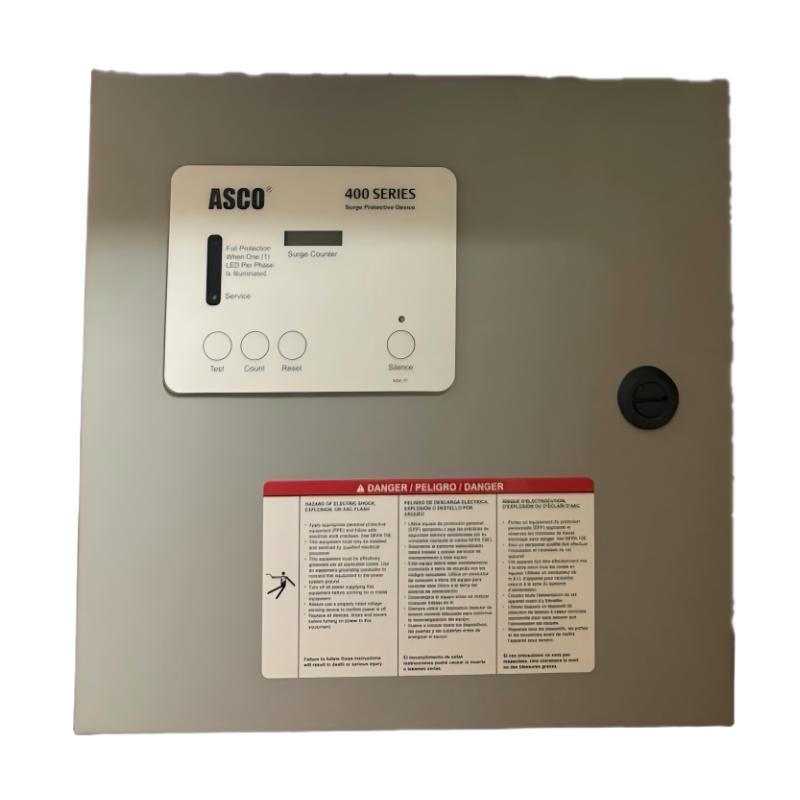
The Schneider Electric 460277YP30ARCE10 ASCO Surge Protective Device (SPD) is an industrial power protection component designed to reduce the effects of transient voltage surges in electrical distribution systems. Rated for 277/480 V applications, this three-phase surge protection device is intended for use in commercial and industrial power distribution environments where electrical disturbances can affect sensitive equipment and operational continuity.
Transient overvoltages may result from lightning-related disturbances, utility switching operations, or the switching of large electrical loads. These events can expose electrical equipment to voltage levels that exceed normal operating conditions. A properly selected surge protective device provides a controlled path for surge energy, helping limit the voltage stress experienced by downstream equipment.
The 460277YP30ARCE10 belongs to the ASCO surge protection product family associated with Schneider Electric. Product listings identify this configuration as a 277/480 V, three-phase surge protective device with a 300 kA surge rating and an integral disconnect. The integrated disconnect supports device isolation in the intended installation arrangement, while the SPD provides transient overvoltage protection.
This model is relevant to electrical distribution applications where protection is required for switchboards, distribution panels, and connected electrical loads. Depending on the overall system design, protected loads may include industrial automation equipment, control cabinets, power supplies, instrumentation, and other electrical devices that can be affected by voltage transients.
Selecting an SPD requires more than matching the nominal voltage. Engineers must verify the system grounding configuration, protection modes, surge current rating, voltage protection characteristics, short-circuit current rating, disconnecting requirements, and applicable electrical standards.
The 460277YP30ARCE10 should therefore be identified by its complete catalog number before ordering. Similar-looking ASCO and Schneider Electric surge protection devices may have different voltage configurations, surge ratings, disconnect arrangements, and monitoring features.
Technical Specifications
| Parameter | Specification |
|---|---|
| Brand | Schneider Electric / ASCO |
| Model | 460277YP30ARCE10 |
| Product Type | Surge Protective Device (SPD) |
| Product Family | ASCO Surge Protection |
| Nominal System Voltage | 277/480 V AC |
| System Configuration | Three-phase |
| Listed Surge Rating | 300 kA |
| Integral Disconnect | Yes |
| Primary Function | Transient overvoltage protection |
| Typical Installation | Electrical distribution equipment |
| Dimensions Provided | 305 × 305 × 178 mm |
| Weight Provided | 10.4 kg |
| Mounting and Connection | Confirm from the applicable installation documentation |
| Protection Modes | Verify from the model-specific technical documentation |
| Short-Circuit Current Rating | Verify from the nameplate and product documentation |
| Status and Monitoring Features | Confirm the supplied configuration |
Note: The dimensions and weight are the supplied listing values. The 300 kA figure is reproduced from product listings; confirm its exact rating basis and test conditions in the applicable technical documentation before using it as a formal engineering specification.
Function and Working Principle
The primary function of the 460277YP30ARCE10 is to limit the effects of transient overvoltages on a compatible electrical distribution system. It works as part of the overall protection arrangement rather than as a replacement for the system’s circuit breakers, fuses, grounding conductors, or other protective devices.
1. Detection and Response to Transient Surges
Electrical transients are short-duration disturbances that can produce voltage levels significantly above normal operating conditions. They may originate from lightning-induced events, switching operations, or disturbances propagating through the electrical network.
An SPD is designed to respond to these transient conditions by changing its electrical behavior and diverting surge current through its designed protection path. This action helps limit the voltage appearing across protected electrical equipment.
The actual protection level depends on the SPD’s internal design, response characteristics, installation wiring, grounding arrangement, and the nature of the surge.
2. Surge Energy Management
Surge protection involves managing the energy associated with a transient event. The protective device must be selected according to the expected electrical environment and the level of protection required.
A high surge current rating can be relevant when selecting protection for demanding distribution applications, but it does not by itself describe every aspect of device performance. Engineers should also consider the voltage protection rating, maximum continuous operating voltage, short-circuit current rating, and applicable test standard.
For the 460277YP30ARCE10, the exact interpretation of the published 300 kA rating should be confirmed against the model-specific documentation.
3. Three-Phase Distribution Protection
The 460277YP30ARCE10 is listed for 277/480 V three-phase applications. Correct application depends on the actual supply configuration, including whether the system uses a grounded wye arrangement or another grounding topology.
The voltage designation alone is not sufficient to establish compatibility. Line-to-line and line-to-ground voltages, neutral availability, grounding method, and the SPD’s approved protection modes must all be considered.
Installing an SPD designed for the wrong electrical configuration may result in inadequate protection or unsafe operating conditions.
4. Integral Disconnect Function
This model is identified as having an integral disconnect. A disconnect provides a means of isolating the protective device according to its design and installation requirements.
The disconnect function is important for maintenance and servicing, but it should not be confused with all forms of overcurrent protection. The installation must still comply with the manufacturer’s requirements for conductors, upstream protection, fault-current capability, and safe isolation.
5. Supporting Electrical System Reliability
By reducing the voltage stress caused by transient events, a correctly selected SPD can help protect connected equipment and reduce the likelihood of surge-related damage.
It cannot eliminate every electrical disturbance. Sustained overvoltage, undervoltage, overload, short circuit, and other power-quality problems may require separate protective or corrective measures.
Role in Industrial Power Distribution Systems
The 460277YP30ARCE10 can be incorporated into a broader electrical protection strategy serving industrial and commercial facilities.
Main Distribution Panels
Surge protection may be installed at a service entrance or main distribution point to reduce the propagation of transient overvoltages into the facility’s electrical network.
The actual installation point depends on the facility’s electrical design, the applicable electrical code, and the SPD’s approved use and connection requirements.
Industrial Control Cabinets
Industrial control cabinets often contain PLCs, communication equipment, power supplies, signal-conditioning devices, and other electronic components. These devices can be sensitive to electrical transients.
An SPD installed at an appropriate distribution point can form part of a coordinated protection strategy. It does not automatically provide complete protection for every circuit inside a cabinet, so additional protection may be needed for downstream power and signal circuits.
Automation and Process Equipment
Unexpected electrical disturbances can interrupt automated production and affect connected equipment. Surge protection can help reduce one source of electrical stress in facilities operating manufacturing machinery, process-control systems, and material-handling equipment.
System reliability depends on the complete electrical design, including grounding, bonding, cable routing, protective coordination, and maintenance.
Facility Power Infrastructure
Commercial and industrial facilities may use surge protective devices to protect electrical distribution equipment and connected loads from transient disturbances.
The SPD should be selected according to the facility’s voltage system, exposure to surge events, installation location, and protection objectives.
Industrial Applications
1. Manufacturing Facilities
Manufacturing plants may contain motors, drives, control panels, automation systems, and electronic monitoring equipment. Surge protection at suitable distribution points can help reduce the risk of transient voltage damage to connected electrical infrastructure.
The SPD must be coordinated with the facility’s existing protective devices and grounding system.
2. Data Centers and Server Facilities
Data centers depend on stable electrical infrastructure to support servers, network switches, storage systems, and auxiliary equipment. Surge protection can be one element of a wider power-protection strategy that also includes suitable distribution equipment, grounding, UPS systems, and monitoring.
An SPD does not replace a UPS or provide backup power during an outage. Each component serves a different purpose within the electrical system.
3. Commercial Buildings
Large commercial facilities may contain lighting systems, HVAC equipment, distribution panels, elevators, and building automation controls. Transient overvoltages can affect equipment connected to these systems.
A correctly selected SPD can provide an additional layer of protection when installed in accordance with the system design and local requirements.
4. Industrial Automation Systems
PLC-based control systems, remote I/O, industrial communication equipment, and instrumentation may be vulnerable to transient disturbances entering through their power supplies.
The 460277YP30ARCE10 may be considered as part of distribution-level protection where its electrical ratings and installation configuration are appropriate. Sensitive signal and communication circuits may require separate, application-specific protection.
5. Utility and Electrical Distribution Installations
Electrical distribution equipment can experience transient disturbances caused by switching events and external electrical activity. Suitable surge protective devices can help limit transient voltage stress on connected equipment.
The required protection level depends on the installation environment, system configuration, and relevant electrical standards.
Installation and System Integration
Proper installation is essential to obtain the intended protection performance and maintain electrical safety.
1. Verify System Voltage and Grounding
Before installation, confirm that the electrical system is compatible with the 277/480 V rating and the SPD’s approved configuration.
Determine the system grounding arrangement, including whether it is a grounded wye, delta, or another configuration. Confirm the available line-to-line and line-to-ground voltages and the required protection modes.
Do not select an SPD based only on the nominal voltage printed on the panel.
2. Select the Correct Installation Location
The installation point should be determined by the electrical distribution design and the device’s approved application.
A service entrance or distribution-panel installation may provide protection for a broad range of downstream equipment. Additional downstream SPDs may be appropriate where sensitive equipment, long cable runs, or separate distribution zones require coordinated protection.
Follow the applicable installation instructions and electrical codes when determining the location and connection method.
3. Follow Wiring and Grounding Requirements
The SPD must be connected using conductors and terminals that meet the manufacturer’s specifications. Grounding and bonding are especially important because the surge current must be directed through the intended protective path.
Keep connecting conductors as short and direct as the installation instructions permit. Excessive lead length can increase the voltage experienced by protected equipment during a surge event.
Conductor sizing, overcurrent protection, disconnecting arrangements, and terminal torque must follow the applicable documentation.
4. Confirm Upstream Protection
An SPD does not replace the circuit breaker or fuse protection required for the electrical distribution system.
Verify the manufacturer’s requirements for upstream overcurrent protection, conductor ampacity, and available fault current. The installation must remain within the SPD’s approved short-circuit current rating and other electrical limits.
5. Account for the Integral Disconnect
Because this model is listed with an integral disconnect, confirm the manufacturer’s specified connection and isolation procedure.
Do not assume that the presence of a disconnect eliminates every external isolation or overcurrent protection requirement. The complete arrangement must comply with the device instructions and the applicable electrical code.
6. Inspect Before Energization
Before energizing the system, inspect the enclosure, mounting, conductor routing, grounding connections, and terminal tightness. Confirm that the device is correctly rated for the actual electrical system.
Where the model provides status indicators or remote monitoring, verify their operation according to the manufacturer’s procedure. Do not return a unit with visible damage or an unresolved fault to service.
Electrical work should be performed by qualified personnel using the required isolation and verification procedures.
Compatible System Components
The 460277YP30ARCE10 is normally used as part of a complete electrical distribution and protection arrangement.
| Component | Function | Integration Considerations |
|---|---|---|
| Main distribution panel | Distributes electrical power to facility loads | Verify voltage, available space, and installation requirements |
| Circuit breaker or fuses | Provides overcurrent protection | Select according to manufacturer specifications and applicable codes |
| Grounding and bonding system | Provides the intended electrical reference and fault-current paths | Confirm conductor sizing and connection quality |
| Electrical disconnect | Supports isolation where required | Coordinate with the integral disconnect and installation design |
| Downstream distribution panels | Distribute power to equipment and subcircuits | Assess whether additional coordinated surge protection is needed |
| PLC power supply | Supplies control-system electronics | Confirm voltage compatibility and whether local protection is required |
| Industrial control cabinet | Houses automation and control equipment | Consider environmental conditions and coordinated protection |
| UPS system | Provides power continuity during specified interruptions | Complements surge protection but serves a different function |
| Monitoring or alarm interface | Reports equipment status where supported | Confirm whether the selected configuration includes suitable contacts or indicators |
These components are examples of equipment used in a complete installation. They are not necessarily supplied with the surge protective device.
Alternative Models and Replacement Considerations
The correct replacement for the 460277YP30ARCE10 must match the electrical system and protection requirements. A similar-looking SPD or one with the same nominal voltage may not provide equivalent protection.
| Alternative Category | Evaluation Criteria |
|---|---|
| ASCO 277/480 V SPD with a 300 kA rating | Compare the complete catalog number, rating basis, disconnect configuration, and protection modes |
| ASCO 277/480 V SPD with a different surge rating | Confirm that the alternative meets the facility’s required surge protection level |
| Schneider Electric Surgelogic SPD | Verify voltage compatibility, product family, installation type, and electrical ratings |
| Another manufacturer’s 480Y/277 V SPD | Check certification, surge rating, voltage protection characteristics, and system compatibility |
| Updated SPD model with monitoring features | Confirm physical dimensions, wiring, status contacts, and replacement requirements |
Before approving a replacement, compare:
- Nominal system voltage and grounding configuration.
- Number of phases and required protection modes.
- Maximum continuous operating voltage.
- Surge current rating and its stated measurement basis.
- Voltage protection rating.
- Short-circuit current rating.
- SPD type and approved installation location.
- Integral disconnect and external protection requirements.
- Status indication and remote monitoring features.
- Mounting dimensions and conductor requirements.
- Applicable standards and certifications.
A replacement should be approved only after its electrical ratings and installation requirements have been checked against the original device and the facility’s protection design.
Key Advantages
High-Capacity Surge Protection Configuration
The model is listed with a 300 kA surge rating, making it a candidate for evaluation in demanding distribution applications. The rating basis and application suitability must be confirmed from the relevant technical documentation.
277/480 V Three-Phase Compatibility
The voltage designation identifies the intended system class. Correct application still requires verification of the grounding topology and the actual system voltages.
Integral Disconnect
The listed disconnect feature supports the intended isolation arrangement for servicing the SPD, subject to the manufacturer’s instructions and applicable electrical codes.
Industrial Distribution Application
The device can be evaluated for use in distribution panels serving industrial machinery, automation systems, and commercial electrical infrastructure.
Support for Equipment Protection
When correctly selected and installed, the SPD can help limit transient voltage stress on connected electrical equipment.
Integration into a Coordinated Protection Strategy
The device can form part of a wider protection arrangement that includes grounding, bonding, circuit protection, downstream surge protection, and power-quality management.
Technical FAQs
1. What is the Schneider Electric 460277YP30ARCE10?
It is an ASCO surge protective device associated with Schneider Electric, listed for 277/480 V three-phase electrical systems and identified as a 300 kA model with an integral disconnect.
2. What is the primary function of this SPD?
Its purpose is to limit transient overvoltages and help protect compatible electrical distribution equipment and connected loads from surge-related voltage stress.
3. Is this device suitable for 480 V industrial systems?
It is listed for 277/480 V applications. Suitability depends on the exact system configuration, including grounding method, line-to-line and line-to-ground voltages, and the SPD’s approved protection modes.
4. What does the 300 kA rating mean?
The rating is reported in product listings, but its exact basis should be confirmed in the model-specific technical documentation. Do not assume it represents every protection mode or the voltage protection level.
5. Does the SPD replace circuit breakers or fuses?
No. Surge protection and overcurrent protection serve different purposes. The installation must include the circuit protection required by the manufacturer’s instructions and applicable electrical codes.
6. Does the integral disconnect eliminate the need for external isolation?
Not necessarily. The approved arrangement depends on the product design, installation instructions, and applicable code requirements. Verify whether additional isolation or upstream protection is required.
7. Can this device protect PLCs and industrial automation equipment?
It may help protect the electrical distribution supplying those systems when installed at an appropriate point. Sensitive downstream power, signal, and communication circuits may require additional coordinated protection.
8. Does an SPD protect against every power-quality problem?
No. SPDs are designed primarily for transient overvoltage events. They do not replace equipment intended to address sustained overvoltage, undervoltage, outages, frequency disturbances, or other power-quality problems.
9. What should be checked before purchasing a replacement?
Verify the complete catalog number, voltage configuration, surge rating, disconnect arrangement, protection modes, certification, physical condition, and supplier test or warranty information.
10. What dimensions and weight should be used for shipping?
The supplied listing values are 305 × 305 × 178 mm and 10.4 kg. Confirm the actual unit and packaging measurements before arranging transportation or calculating shipping charges.
Procurement and Maintenance Recommendations
When sourcing the Schneider Electric 460277YP30ARCE10, begin by confirming the complete catalog number and comparing it with the installed unit’s nameplate. Verify the intended 277/480 V system, three-phase configuration, stated surge rating, and integral disconnect arrangement.
For new, surplus, or refurbished equipment, request clear photographs of the product label, enclosure, terminals, and any available status indicators. Confirm the unit’s condition, whether it has been tested, and whether its documentation matches the exact catalog number.
Before installation, verify the electrical system configuration and ensure that the required grounding, bonding, conductor sizing, upstream protection, and isolation arrangements are in place. The manufacturer’s instructions and applicable electrical codes should govern the final installation.
During maintenance, inspect the enclosure and accessible connections for physical damage, corrosion, loose wiring, or signs of overheating. Check status indicators or remote alarm contacts if the particular configuration provides them. Follow the manufacturer’s procedures for determining when the device needs replacement after a significant surge event or fault indication.
Maintain records of the installation date, product catalog number, electrical system details, inspection results, and replacement history. These records can help maintenance teams evaluate the condition of the protection system and plan future service.
Conclusion
The Schneider Electric 460277YP30ARCE10 ASCO Surge Protective Device is listed for 277/480 V three-phase electrical distribution systems, with a stated 300 kA surge rating and an integral disconnect. It is intended to help reduce transient overvoltage stress on compatible electrical distribution equipment and connected loads.
Correct selection depends on more than nominal voltage and surge current rating. Engineers should verify the system grounding configuration, protection modes, voltage protection characteristics, short-circuit current rating, and installation requirements before commissioning or replacement.
For industrial facilities, this device can form part of a coordinated electrical protection strategy that combines surge protection with appropriate grounding, bonding, overcurrent protection, and downstream equipment safeguards.