

ProductPRODUCT
Featured products
Contact Us
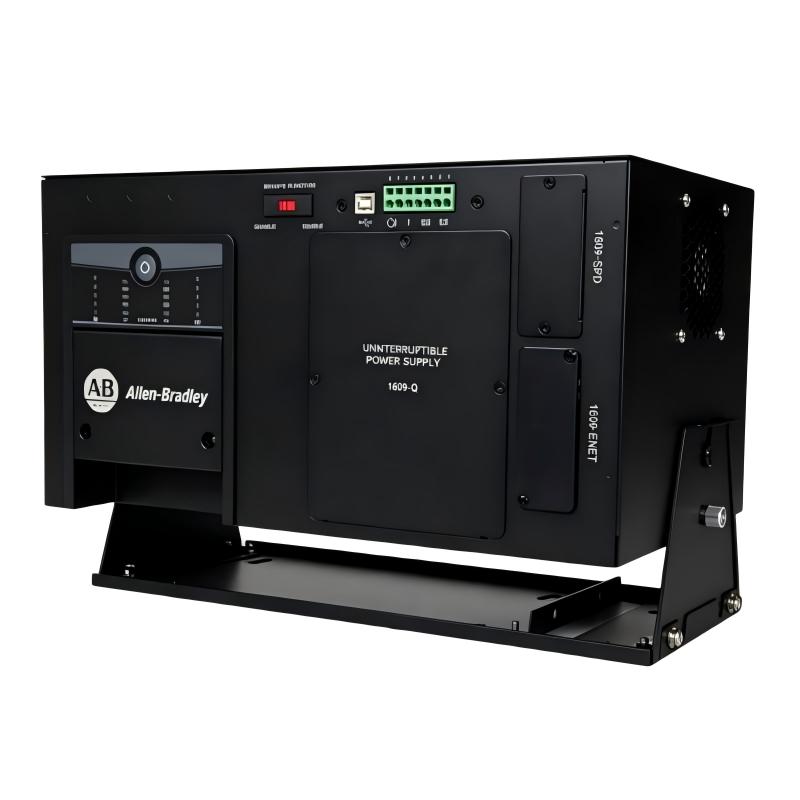
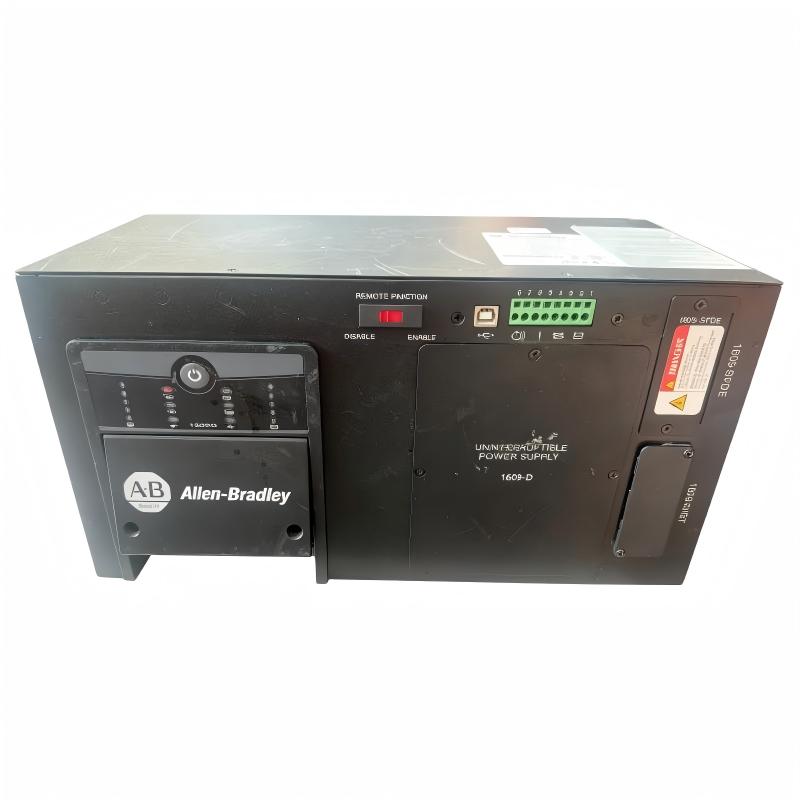
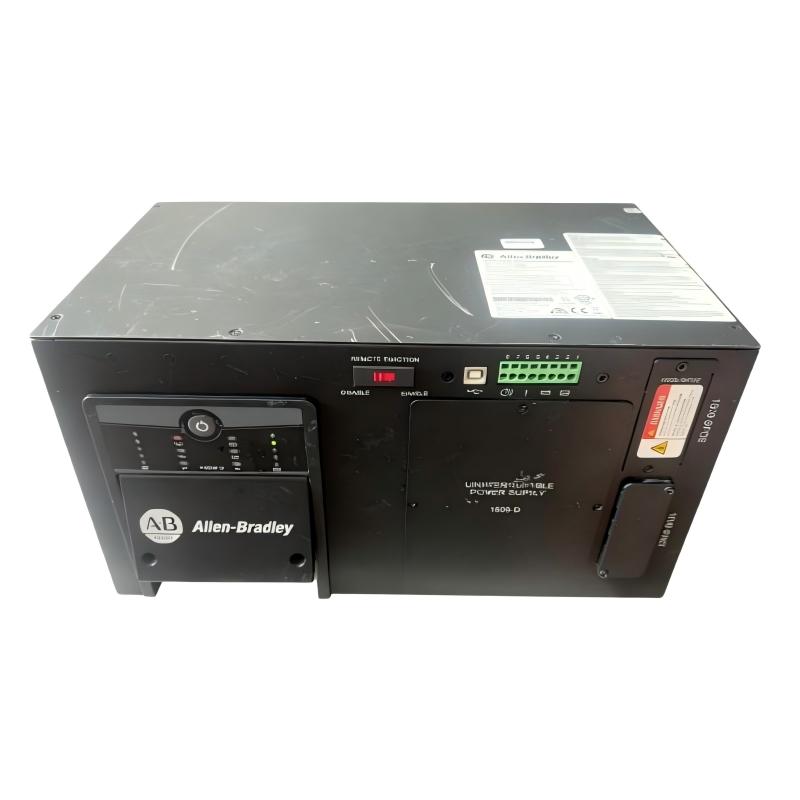
- Allen Bradley
- 1609-D1500E
- Uninterruptible Power Supply
- USA
- 410 x 220 x 260 mm
- 14.1 kg
- Xiamen, China
- New & In Stock
- T/T, PayPal, Western Union
- 1 Year
- 1-3 Working Days
- DHL, UPS, TNT, FedEx and EMS.
- 24-Hour Service
- COO
- 5
Our advantage

Global Logistics
We have a 10-year logistics and express cooperation agreement, so our products can be shipped to any place in the world.

Brand new and original
Our products are imported in bulk from the place of origin. Because of the cooperative relationship, our products are all original and 100% new.

24-hour service
We provide 7*24 hours service to our customers. We will be there whenever you need us.

Price advantage
All our products are priced very favorably because we have our own warehouse and supply.
| Company Information | |||
| [email protected] | |||
| Mobile | +8615980777398 | ||
| +8615980777398 | |||
| 15980777398 |
Product Overview
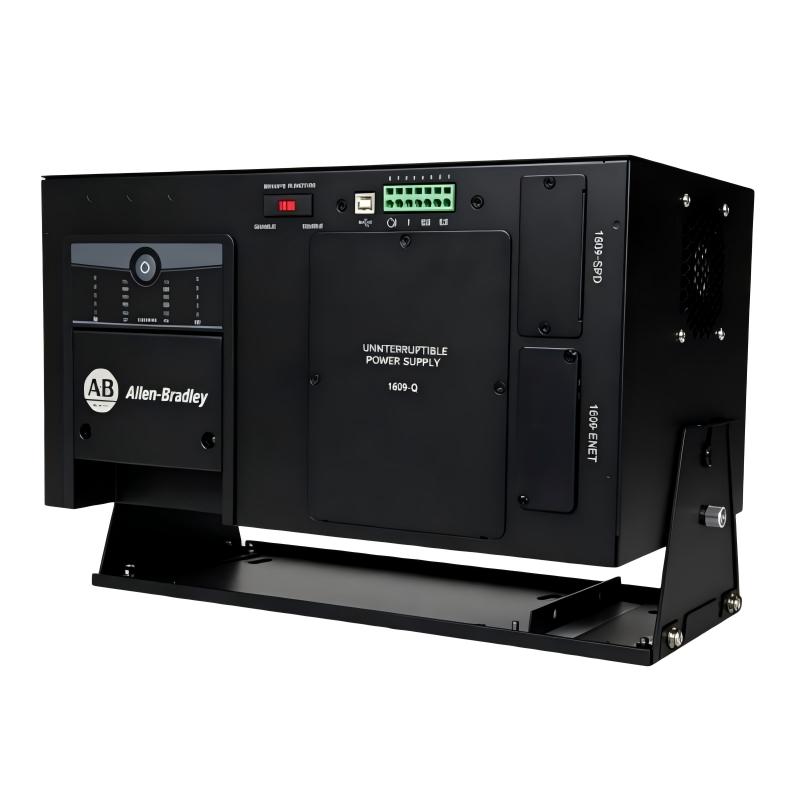
The Allen-Bradley 1609-D1500E Uninterruptible Power Supply (UPS) is a power protection device designed to provide temporary backup power and help maintain stable operation of connected electrical and industrial automation equipment during power interruptions. Manufactured by Rockwell Automation, this model belongs to the Allen-Bradley Bulletin 1609 Next Generation UPS family and is part of the Deluxe product range.
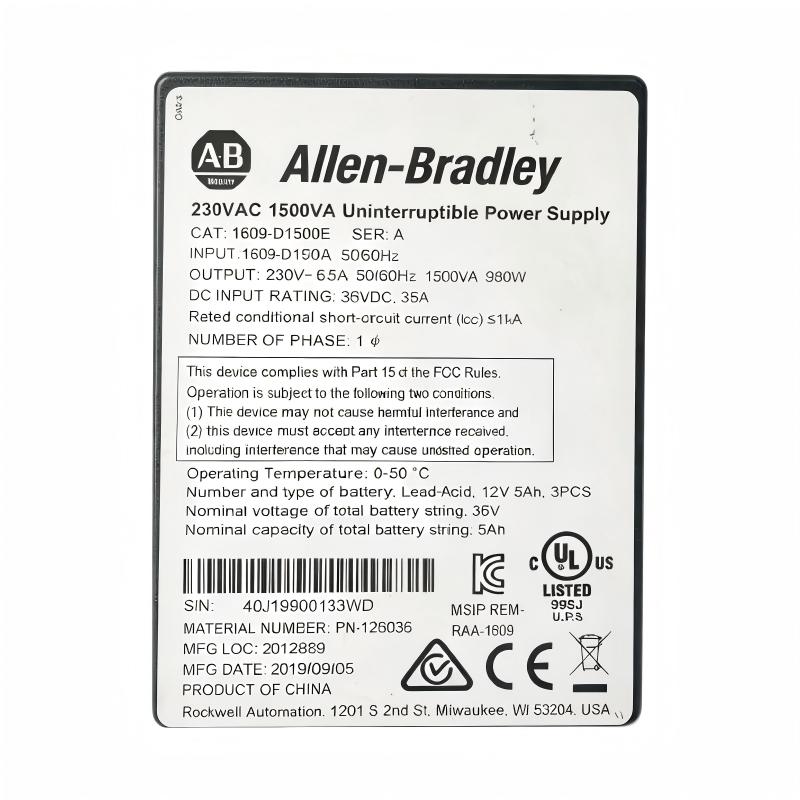
With a rated capacity of 1500 VA and an output power rating of 980 W, the 1609-D1500E is designed for 230 V AC applications. It can help protect compatible control systems, industrial computers, communication equipment, operator interfaces, and other critical loads against short-duration power failures and certain power disturbances.
In industrial automation environments, an unexpected loss of electrical power can interrupt production, affect data integrity, and cause control equipment to shut down abruptly. A UPS provides an additional layer of protection by supplying energy from its internal battery when the normal AC input is unavailable or outside the unit’s operating limits.
The Allen-Bradley 1609-D1500E is particularly relevant to existing control panels and legacy automation installations that were designed around the Bulletin 1609 series. Its role is not to replace the plant’s primary power supply, but to support continuity for selected loads and provide time for equipment to shut down safely or for backup power arrangements to take over.
The model has a nominal input and output voltage of 230 V AC and operates at 50/60 Hz. Its compact enclosure is listed as 410 × 220 × 260 mm, with a weight of approximately 14.1 kg. These specifications make physical dimensions, cabinet ventilation, mounting arrangements, and battery condition important considerations during installation and replacement.
Lifecycle note: The 1609-D1500E has been discontinued by the manufacturer. It may still be relevant for maintenance, repair, and replacement of installed equipment, subject to availability and verification of product condition.
Technical Specifications
| Parameter | Specification |
|---|---|
| Brand | Allen-Bradley |
| Manufacturer | Rockwell Automation |
| Model Number | 1609-D1500E |
| Product Series | Bulletin 1609 Next Generation UPS |
| Product Type | Uninterruptible Power Supply |
| Product Family | Deluxe |
| Rated Capacity | 1500 VA |
| Rated Output Power | 980 W |
| Nominal Input Voltage | 230 V AC |
| Nominal Output Voltage | 230 V AC |
| Input Frequency | 50/60 Hz |
| Output Frequency | 50/60 Hz, depending on operating mode |
| Default Input Voltage Range | 180–280 V AC |
| Battery Type | Sealed lead-acid battery |
| Battery Voltage | 36 V DC battery system |
| Communication | USB and supported UPS monitoring functions; verify the installed configuration |
| Approximate Dimensions | 410 × 220 × 260 mm |
| Approximate Weight | 14.1 kg |
| Lifecycle Status | Discontinued |
| Typical Applications | Industrial control panels, PLC systems, industrial computers, communication equipment, and other compatible critical loads |
Specifications are provided for product identification and selection. Confirm the individual unit’s nameplate, battery condition, and applicable technical documentation before installation or replacement.
Function and Working Principle
The Allen-Bradley 1609-D1500E is designed to maintain power to connected equipment when the normal AC supply is interrupted or becomes unsuitable for continued operation. Its operation combines AC power conditioning, battery charging, stored-energy backup, and monitoring functions.
1. Normal AC Power Operation
Under normal conditions, the UPS receives AC power from the incoming supply and provides power to connected loads. Its internal circuitry monitors the input and manages the transition to battery operation when required.
The unit is designed to operate with a nominal 230 V AC supply. Its specified input voltage range helps accommodate certain variations in the incoming supply, although the actual response depends on the operating mode and configured thresholds.
2. Battery Backup During Power Failure
When the incoming supply fails or falls outside the unit’s acceptable operating conditions, the UPS switches to battery operation. The stored energy is converted into AC output power to support compatible connected equipment.
This backup function can help prevent abrupt shutdowns of industrial computers, PLC-related equipment, communication devices, and other critical loads. The actual backup duration depends on the connected load, battery age, battery condition, ambient temperature, and operating conditions.
For the 1500 VA model, the manufacturer’s technical documentation lists a battery runtime of approximately 2.5 minutes at full rated load under the specified test conditions. Actual runtime can vary, so critical applications should be validated under their real load conditions.
3. Power Disturbance Protection
Electrical disturbances can cause control equipment to reset, communication systems to lose connectivity, or industrial computers to shut down unexpectedly. A UPS can help reduce the impact of certain voltage disturbances and short interruptions.
The 1609-D1500E also provides surge protection according to its specified design. It should not, however, be treated as a substitute for proper grounding, correctly rated overcurrent protection, or a comprehensive facility power-protection strategy.
4. Battery Charging and Recovery
When normal AC power is restored, the UPS resumes its normal operating process and recharges the internal battery according to its charging design.
Battery recharge time depends on the depth of discharge, battery condition, temperature, and charging characteristics. After a significant discharge or prolonged storage, verify that the battery has recovered adequately before relying on the UPS for critical service.
5. Status Monitoring
UPS monitoring functions help maintenance personnel evaluate operating conditions and identify issues such as power failure, battery operation, or battery-related warnings. Depending on the installation and supported software, a connected computer may also be able to receive status information through a supported communication interface.
Monitoring should be configured as part of the maintenance strategy so that battery deterioration and power events can be identified before they affect production equipment.
Role in Industrial Automation Systems
Reliable electrical power is essential for industrial control systems. PLCs, operator interfaces, industrial computers, communication equipment, and supervisory control devices may all depend on a stable supply to perform their intended functions.
The 1609-D1500E can be incorporated into an industrial power distribution arrangement to provide backup power to selected critical loads.
PLC and Control Panel Protection
A PLC system may control production sequences, machine interlocks, process measurements, and equipment status. If the control power supply fails unexpectedly, the PLC and connected devices may lose power, potentially interrupting the process.
A suitably sized UPS can support selected control loads during a power interruption. The design must account for the power consumption of the PLC, I/O modules, communication devices, power supplies, and any other equipment connected to the protected output.
The UPS should not be assumed to power an entire control cabinet unless the total load and required runtime have been calculated and verified.
Industrial Computer and HMI Support
Industrial computers and human-machine interfaces are often used for operator interaction, data collection, process visualization, and equipment diagnostics. Sudden power loss may interrupt these functions and, in some cases, risk data corruption.
By supplying temporary backup power, the UPS can provide an opportunity for the computer to remain operational briefly or execute a controlled shutdown, depending on the load and configured monitoring arrangements.
Communication and Network Equipment
Industrial Ethernet switches, serial communication devices, gateways, and other network components can be important to the availability of a control system. If these devices lose power, communications between controllers, supervisory systems, and remote equipment may be interrupted.
The 1609-D1500E can support compatible network equipment when its capacity and electrical output are suitable. Engineers should calculate the total connected load and ensure that the required communication equipment receives backup power from the intended output circuits.
Process Continuity and Controlled Shutdown
A UPS provides limited stored energy rather than an unlimited power source. Its main value is the time it can provide for a controlled shutdown, transition to an alternative power source, or recovery from a brief interruption.
For systems that require extended operation during a utility outage, a UPS may need to be combined with a generator, redundant power architecture, or other backup arrangements.
Industrial Applications
The Allen-Bradley 1609-D1500E is suitable for evaluating backup-power requirements in compatible 230 V AC applications. Its practical use depends on the load, required runtime, environmental conditions, and installation design.
1. PLC and DCS Control Cabinets
Industrial control cabinets may contain programmable logic controllers, distributed control system interface equipment, communication modules, and auxiliary devices. Selected control loads can be supplied through a UPS to help reduce the risk of unexpected power loss.
Before installation, determine whether the connected loads require continuous operation, a controlled shutdown, or only enough backup power to bridge a short interruption.
2. Industrial Computers and Supervisory Systems
Industrial PCs and supervisory computers may collect production data, display process information, or manage operator interaction. The 1609-D1500E can provide backup power for compatible equipment within its capacity limits.
A properly configured monitoring and shutdown strategy is particularly important when the computer stores process data or performs tasks that should not be interrupted abruptly.
3. Communication Cabinets
Industrial network equipment often supports communication among PLCs, HMIs, remote I/O, and supervisory systems. A brief loss of power may interrupt communications even when the main controller remains operational.
Providing UPS protection to selected network equipment can help maintain communication during short power disturbances, provided the backup capacity is sufficient for all connected devices.
4. Packaging and Manufacturing Equipment
Production lines may use industrial computers, barcode readers, operator panels, control interfaces, and network devices to coordinate machine operation. A UPS can help maintain power to selected electronic loads during brief outages.
The UPS should not be used to power high-current motors or other demanding loads unless the equipment ratings and application design explicitly support that use.
5. Utility and Facility Monitoring
Monitoring systems for building services, utility equipment, and facility operations may need to remain available during brief power interruptions. The 1609-D1500E can be considered for compatible monitoring and communication loads where the rated capacity and backup duration are sufficient.
Installation and System Integration
Correct installation is important for reliable UPS operation. Qualified personnel should follow the applicable manufacturer’s documentation, electrical codes, and site safety procedures.
1. Verify Input Voltage and Frequency
Confirm that the incoming supply matches the UPS’s nominal 230 V AC rating and supported frequency. Check the input voltage, branch-circuit protection, grounding, and wiring before energizing the unit.
Do not assume that a 120 V model from the same product family can be substituted for a 230 V model. The complete catalog number must be verified.
2. Calculate the Connected Load
The 1609-D1500E has a rated capacity of 1500 VA and 980 W. Both ratings must be considered when determining whether the connected equipment is suitable.
Calculate the total apparent power and real power of the intended loads. Allow for startup current, transient loads, power factor, and any manufacturer-specific restrictions. The connected load should remain within the UPS’s specified limits.
3. Plan the Backup Runtime
Estimate the required runtime for each protected load. A control system that only needs to complete a short shutdown sequence may have different requirements from a communication cabinet expected to remain online through a power transition.
Use actual load measurements and the applicable runtime data to validate the design. Do not assume that the UPS will provide the same runtime throughout its service life because battery capacity gradually changes with age and operating conditions.
4. Provide Suitable Ventilation
Install the UPS in a suitable location with adequate airflow and the manufacturer’s recommended clearances. Avoid exposing it to excessive heat, moisture, conductive dust, or other conditions that could affect electrical safety or battery life.
The listed dimensions of 410 × 220 × 260 mm should be considered when planning cabinet space. Confirm mounting orientation, cable access, and service clearance before finalizing the enclosure design.
5. Connect Critical Loads Correctly
Connect only the intended equipment to the protected output. Clearly identify which loads receive UPS power and which loads remain connected to the normal supply.
Avoid connecting equipment whose startup demand or power consumption exceeds the UPS’s ratings. High-power motors, heaters, and other heavy loads should not be connected without a verified electrical and application assessment.
6. Configure Monitoring
Where supported, configure the UPS monitoring interface and associated software to provide appropriate status information and notifications. If the connected equipment supports controlled shutdown, verify that the monitoring arrangement can initiate the intended sequence.
Communication functions should be tested during commissioning rather than assumed to work automatically.
7. Test the Complete System
After installation, verify normal operation, charging behavior, alarm indications, load compatibility, and the response to a controlled power-failure test. Testing should be performed safely and without placing critical production operations at risk.
Document the test results, connected loads, battery condition, and maintenance requirements for future service.
Compatible System Components
The following components are commonly considered in UPS-supported industrial installations. Their inclusion does not mean that every component is supplied with the UPS or is automatically compatible with every installation.
| Component | Function | Integration Considerations |
|---|---|---|
| Allen-Bradley PLC | Controls machine and process logic | Verify power consumption and required backup duration |
| Distributed Control System (DCS) Equipment | Supports process monitoring and control | Protect only the loads identified by the system design |
| Human-Machine Interface (HMI) | Provides operator monitoring and commands | Confirm input voltage and total load |
| Industrial Computer | Runs supervisory and diagnostic applications | Consider controlled shutdown and data protection |
| Industrial Ethernet Switch | Maintains network communication | Verify power requirements and required runtime |
| Control Power Supply | Converts AC input to the required DC control voltage | Confirm input compatibility and startup characteristics |
| UPS Monitoring Software | Supports status monitoring and notifications | Verify supported software, operating system, and communication interface |
| Electrical Distribution Panel | Distributes incoming power to protected equipment | Provide suitable protection, grounding, and circuit identification |
The UPS should be integrated as part of a coordinated power-protection design rather than treated as a stand-alone solution for every electrical load.
Alternative Models and Replacement Considerations
The 1609-D1500E is discontinued, and the manufacturer lists no planned direct replacement for this catalog number. A replacement should therefore be selected based on electrical and functional requirements rather than model-number similarity alone.
| Model | Product Description | Key Difference |
|---|---|---|
| 1609-D600E | 230 V AC, 600 VA Deluxe UPS | Lower rated capacity |
| 1609-D1000E | 230 V AC, 1000 VA Deluxe UPS | Lower rated capacity than the 1500 VA model |
| 1609-D1500E | 230 V AC, 1500 VA Deluxe UPS | Original model for legacy installations |
| 1609-D1500N | 120 V AC, 1500 VA Deluxe UPS | Different input/output voltage class; not a direct substitute for a 230 V unit |
These models are listed for comparison and identification only. The 600 VA and 1000 VA versions have lower capacity, while the 120 V version has a different voltage configuration. Neither should be selected as a direct replacement without confirming the application requirements.
When evaluating a replacement from another product family or manufacturer, consider:
- Nominal input and output voltage.
- Input frequency and supported operating range.
- VA and watt ratings.
- Required battery runtime at the actual connected load.
- Output waveform and load compatibility.
- Communication and monitoring requirements.
- Physical dimensions, mounting, and cable access.
- Battery type, replacement availability, and service requirements.
- Applicable electrical certifications and installation standards.
For existing machinery, record the original UPS wiring, load distribution, alarm behavior, and shutdown sequence before making changes. A replacement may require updates to wiring, mounting, monitoring software, or maintenance procedures.
Key Advantages of the 1609-D1500E
1. Backup Power for Critical Equipment
The UPS provides temporary backup power for compatible loads during interruptions to the normal AC supply, helping reduce the likelihood of immediate and uncontrolled shutdown.
2. 1500 VA Rated Capacity
Its 1500 VA capacity and 980 W power rating support a range of electronic and control loads when the total connected demand remains within the unit’s specifications.
3. 230 V AC Compatibility
The nominal 230 V AC input and output make the model relevant to equipment designed for this voltage class. The actual installation must still comply with local electrical requirements.
4. Industrial Control Applications
The UPS can support selected PLC-related equipment, HMIs, industrial computers, and communication devices, depending on load requirements and runtime needs.
5. Legacy Equipment Maintenance
For facilities that already use the Bulletin 1609 series, identifying the exact 1609-D1500E catalog number can simplify maintenance planning and help avoid confusion between 120 V and 230 V models.
6. Practical Power Monitoring
Supported monitoring functions can help maintenance teams identify operating conditions and battery-related issues. Monitoring is most useful when combined with periodic inspection and functional testing.
Technical FAQs
1. What is the Allen-Bradley 1609-D1500E?
The 1609-D1500E is an Allen-Bradley Bulletin 1609 Deluxe Uninterruptible Power Supply designed for 230 V AC applications. It has a rated capacity of 1500 VA and a rated output power of 980 W.
2. What are the input and output voltages?
The model has a nominal input voltage of 230 V AC and a nominal output voltage of 230 V AC. Verify the actual supply and equipment requirements before installation.
3. How much load can the 1609-D1500E support?
Its published ratings are 1500 VA and 980 W. The connected equipment must remain within both applicable limits, with allowance for startup demand and other load characteristics.
4. How long can it supply backup power?
Backup duration depends on the connected load and battery condition. The manufacturer’s documentation lists approximately 2.5 minutes at full rated load under specified test conditions. Actual runtime may differ, especially as the battery ages.
5. What are the dimensions and weight?
The listed dimensions are 410 × 220 × 260 mm, and the approximate weight is 14.1 kg. These values are useful for cabinet planning, handling, and shipping estimates.
6. Can it protect a PLC system?
Yes, it can be considered for compatible PLC-related equipment if the combined load is within its electrical ratings and the required backup runtime is achievable. Engineers should verify the power consumption of the PLC, I/O modules, communication equipment, and associated devices.
7. Is the 1609-D1500E still manufactured?
The model has been discontinued by Rockwell Automation. It may be available through remaining inventory or the industrial surplus market, but availability and condition must be verified with the supplier.
8. Does it have a direct manufacturer replacement?
The manufacturer lists no planned direct replacement for the 1609-D1500E. A substitute should be chosen based on the required voltage, capacity, runtime, communication functions, and installation constraints.
9. What should be checked when purchasing a used unit?
Confirm the full catalog number, product condition, operating history where available, battery condition, alarm status, output performance, and any included accessories. For critical applications, request evidence of functional testing before putting the unit into service.
10. How often should the UPS battery be checked?
Battery inspection and testing intervals should follow the manufacturer’s instructions and the site’s maintenance policy. Ambient temperature, discharge history, and battery age affect service life, so critical systems should have a documented inspection and replacement plan.
Procurement and Maintenance Recommendations
When sourcing the Allen-Bradley 1609-D1500E, verify the catalog number on the product label and confirm that the unit is designed for 230 V AC input and output. Similar-looking models may have different voltage ratings and should not be treated as interchangeable.
Because the model is discontinued, buyers should pay particular attention to the product’s condition and battery status. A unit that powers on successfully may still have a degraded battery and may not provide the expected runtime during a real power interruption.
For maintenance planning, record the connected load, required backup duration, battery test results, alarm history, and any communication or shutdown configuration. Periodic testing can help identify battery degradation before it affects protected equipment.
Before servicing the UPS, follow the required electrical isolation procedures and verify that the equipment is safe to handle. A UPS contains energy-storage components and may continue to present electrical hazards after the incoming supply has been disconnected.
For international procurement, confirm packaging, shipping weight, accessories, and the exact condition of the supplied unit. If the UPS will replace equipment in an existing control cabinet, provide the supplier with the original catalog number and the connected load information to help assess suitability.
Conclusion
The Allen-Bradley 1609-D1500E Uninterruptible Power Supply is a 1500 VA, 230 V AC power protection device designed to provide temporary backup power for compatible industrial and electronic loads. It can support selected PLC-related equipment, industrial computers, HMIs, and communication devices when the load and required runtime are within its specifications.
Although the 1609-D1500E has been discontinued, accurate model identification remains important for legacy-system maintenance and replacement planning. Checking the electrical ratings, battery condition, backup runtime, and installation requirements helps buyers and maintenance teams make better-informed decisions for industrial power-protection applications.