

ProductPRODUCT
Featured products
Contact Us
- Woodward
- 9907-1182
- 505 Enhanced Digital Control for Steam Turbines
- USA
- 242 × 185 × 62 mm
- 3.63 kg
- Xiamen, China
- New & In Stock
- T/T, PayPal, Western Union
- 1 Year
- 1-3 Working Days
- DHL, UPS, TNT, FedEx and EMS.
- 24-Hour Service
- COO
- 8
Our advantage

Global Logistics
We have a 10-year logistics and express cooperation agreement, so our products can be shipped to any place in the world.

Brand new and original
Our products are imported in bulk from the place of origin. Because of the cooperative relationship, our products are all original and 100% new.

24-hour service
We provide 7*24 hours service to our customers. We will be there whenever you need us.

Price advantage
All our products are priced very favorably because we have our own warehouse and supply.
| Company Information | |||
| [email protected] | |||
| Mobile | +8615980777398 | ||
| +8615980777398 | |||
| 15980777398 |
Product Overview
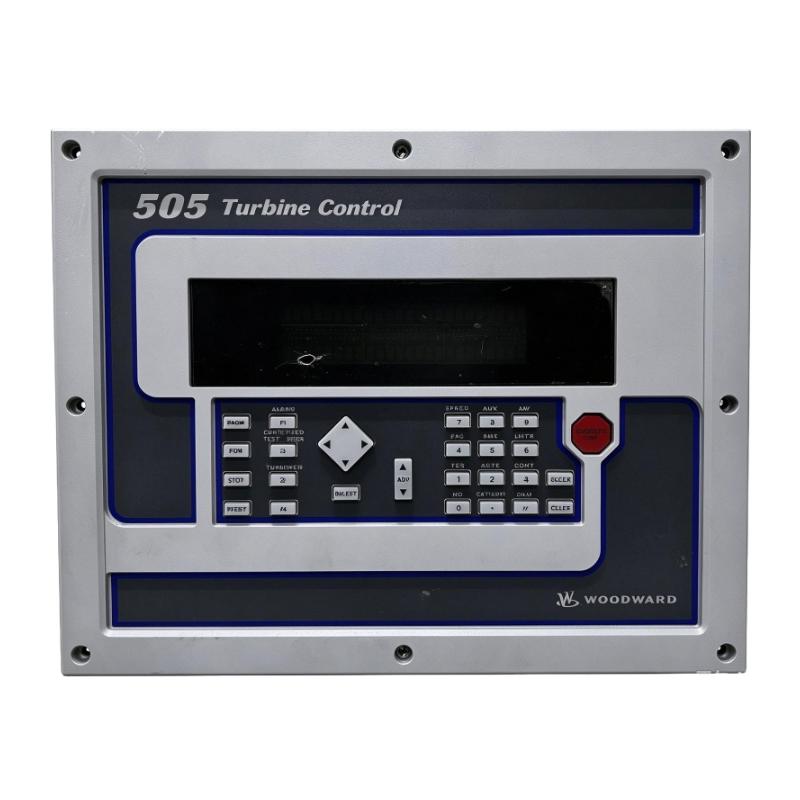
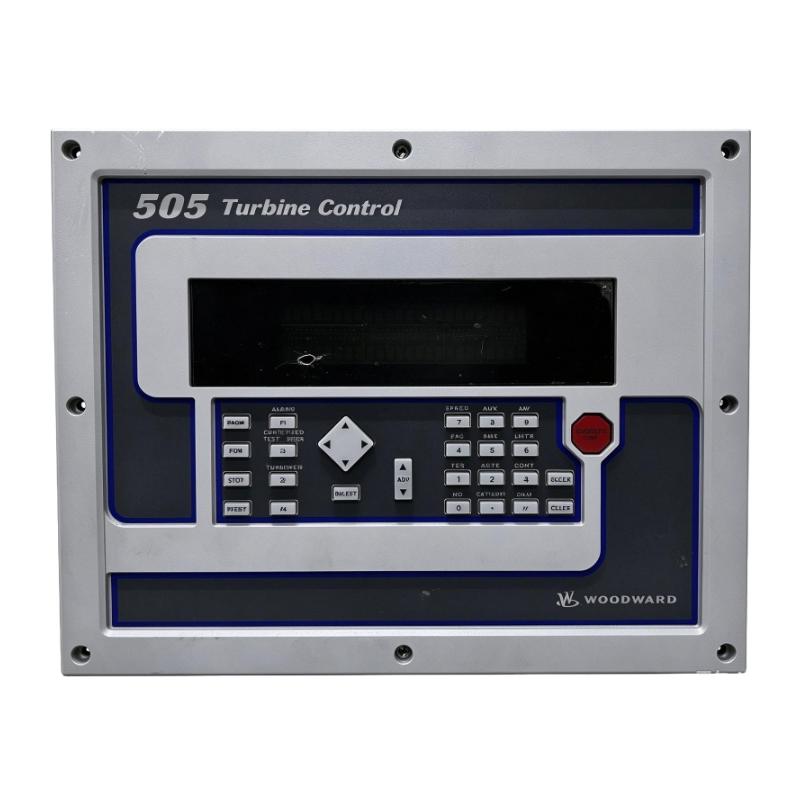
The Woodward 9907-1182 is a 505 Enhanced Digital Control used to govern industrial steam turbines with single or split-range actuators. It combines programmable turbine-control logic with an operator interface, allowing engineers to configure operating parameters, manage speed and load, and coordinate turbine operation with the wider plant control system.
In a steam-driven generator installation, the controller regulates turbine operation by processing speed feedback, operator commands, and configured control conditions. It adjusts the steam-valve actuator to control the energy entering the turbine. The same control platform can also support mechanical-drive applications, such as steam turbines driving compressors or pumps, when configured for the relevant operating requirements.
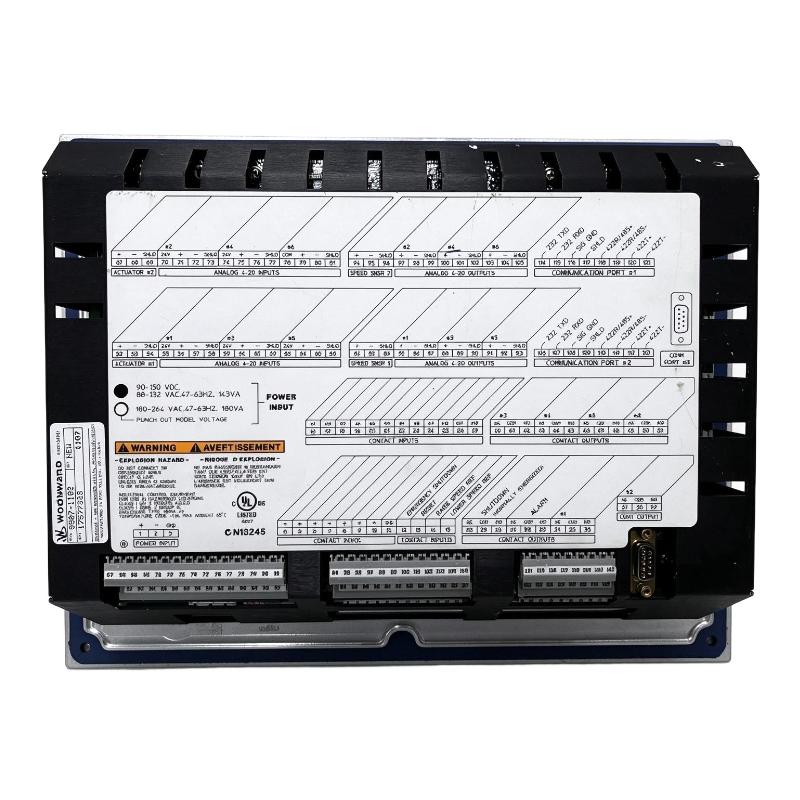
The 9907-1182 is the AC/DC-powered version of the enhanced 505 controller. Its specified input supply is 88–132 V AC or 90–150 V DC, distinguishing it from the 9907-1181 AC-powered version and the 9907-1183 low-voltage DC version. This supply configuration is a key consideration when replacing an existing controller or designing a turbine control panel.
Compared with earlier 505 configurations, the enhanced version incorporates changes to pressure compensation, redundant-operation behavior, and control-selection logic. These features are relevant to applications where turbine operating conditions and control-system availability must be managed carefully. The controller must nevertheless be configured for the specific turbine, actuator arrangement, and required operating sequence.
The 9907-1182 is part of the turbine governing system, not a standalone replacement for all turbine protection equipment. The complete installation must account for actuator compatibility, speed sensing, steam-valve behavior, emergency shutdown functions, and the plant’s operating and safety requirements.
Technical Specifications
| Parameter | Specification |
|---|---|
| Manufacturer | Woodward |
| Model / Part Number | 9907-1182 |
| Product Family | 505 Enhanced Digital Control |
| Product Type | Digital Control for Steam Turbines |
| Control Application | Single or split-range actuator turbine governing |
| Power Supply | 88–132 V AC or 90–150 V DC |
| AC Input Frequency | 47–63 Hz |
| Control Platform | Programmable digital turbine control |
| Operator Interface | Integrated display and keypad |
| Primary Control Function | Steam-turbine speed and operating control |
| Actuator Arrangement | Single or split-range |
| System Integration | Standalone operation or compatible plant DCS integration |
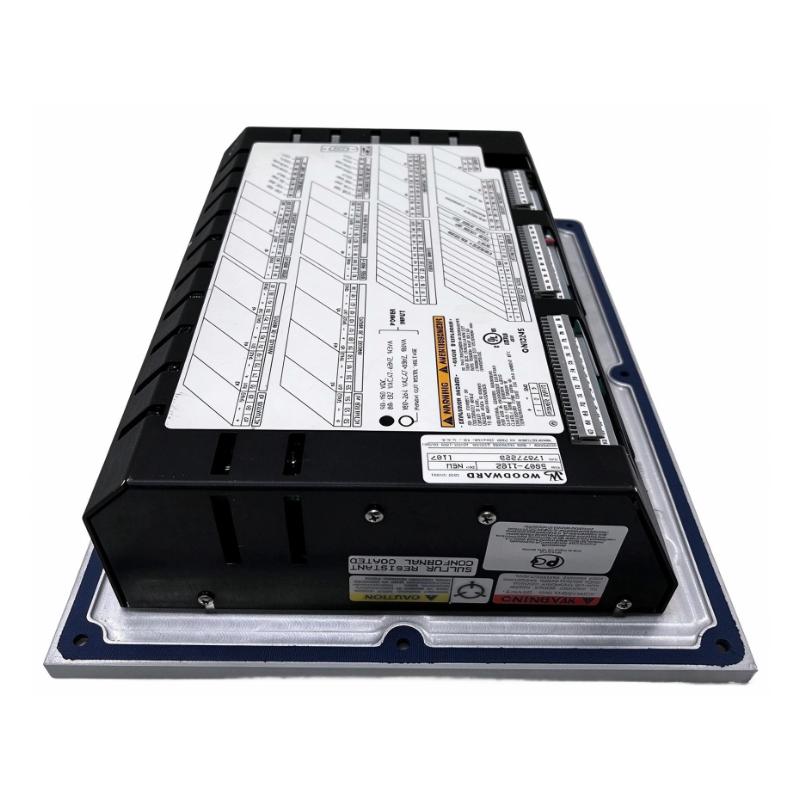
| Dimensions | 242 × 185 × 62 mm |
| Weight | 3.63 kg |
Product Features
- Programmable turbine governing: Configures control behavior for the operating requirements of compatible steam turbines.
- AC/DC power input: Accepts the specified AC or DC supply range, supporting installations with different control-panel power arrangements.
- Single or split-range actuator support: Accommodates compatible steam-valve actuator arrangements.
- Integrated operator interface: Allows operators and commissioning engineers to view information and enter configuration parameters.
- Enhanced control logic: Incorporates improvements to pressure compensation and control-selection behavior.
- Redundant-operation enhancements: Supports the enhanced control platform’s specified redundancy-related behavior where the complete installation is configured accordingly.
- Plant-system integration: Can operate independently or alongside a compatible distributed control system.
- Turbine application flexibility: Supports generator-drive and mechanical-drive turbine applications when configured for the required control functions.
Working Principle
The 9907-1182 regulates steam-turbine operation by processing speed feedback and configured control demands, then issuing commands to the steam-valve actuator. The actuator changes the valve position, regulating steam flow and consequently the mechanical power produced by the turbine.
A typical control sequence follows this path:
Speed and Process Sensors → 9907-1182 Controller → Steam-Valve Actuator → Turbine → Generator or Mechanical Load
During startup, the controller follows the configured startup sequence and regulates the steam valve to accelerate the turbine toward its target speed. Once operating conditions are satisfied, it can maintain the required speed or respond to load demands according to the selected application configuration.
For a generator-driven turbine, the control strategy may include speed governing and load-related functions appropriate to the installation. For a mechanical drive, the control settings must reflect the driven equipment’s operating requirements, including the permitted speed range and the response expected during load changes.
The enhanced 505 platform incorporates pressure-compensation and control-selection improvements. Their behavior depends on the configured application, the available process measurements, and the control logic enabled for the turbine. These features should be commissioned against the actual turbine operating characteristics rather than copied from a different machine.
The 9907-1182 also provides an operator interface for configuration and operational supervision. Its settings determine how sensor inputs, control demands, actuator commands, and operating conditions interact. Incorrect configuration can affect turbine acceleration, speed stability, or valve response, so parameter changes must follow the approved turbine commissioning procedure.
The controller does not eliminate the need for independent emergency shutdown and overspeed protection where required. Those protective functions must be designed and tested as part of the complete turbine installation.
Role in the Steam Turbine Control Architecture
The 9907-1182 serves as the primary digital governing unit in a compatible steam-turbine control system. It processes operating inputs and control demands, manages the actuator output, and coordinates configured control functions with the plant’s supervisory systems.
Speed Sensors and Process Inputs → 9907-1182 → Steam-Valve Actuator → Steam Turbine → Generator or Mechanical Drive
| System Component | Function |
|---|---|
| Woodward 9907-1182 | Executes configured turbine governing and control logic |
| Magnetic Speed Pickup | Measures turbine rotational speed |
| Steam Pressure Transmitter | Supplies process-pressure information where required by the configured application |
| Steam-Valve Actuator | Positions the inlet or associated steam-control valve |
| Steam Control Valve | Regulates steam flow into the turbine |
| Generator | Converts turbine shaft power into electrical energy |
| Driven Compressor or Pump | Uses turbine shaft power for mechanical process duties |
| Plant DCS or PLC | Exchanges supported commands and operating information with the turbine controller |
| Emergency Shutdown System | Provides independent shutdown functions as required by the turbine design |
| Control Power Supply | Provides the specified AC/DC input power to the controller |
Industrial Applications
| Application | Typical Use |
|---|---|
| Steam-Turbine Generator Sets | Regulating turbine speed and generator operating conditions |
| Industrial Power Plants | Coordinating turbine governing with plant operating requirements |
| Process Steam Systems | Controlling turbine operation in facilities that use steam for power generation |
| Mechanical-Drive Compressors | Regulating turbine speed to meet compressor operating demands |
| Industrial Pump Drives | Controlling steam turbines used to drive process pumps |
| Petrochemical Facilities | Integrating turbine control into process and utility systems |
| Combined Heat and Power Plants | Managing turbine operation within combined thermal and electrical generation systems |
| Refinery Utility Systems | Governing steam turbines used in auxiliary power and mechanical-drive applications |
| Turbine Control Retrofits | Replacing compatible 505 controllers after checking the complete hardware and application configuration |
| Turbine Commissioning | Configuring startup sequences, actuator response, speed control, and operating limits |
Installation and Maintenance
- Verify the model reference: Confirm that the controller is 9907-1182 and distinguish it from the 9907-1181 AC-powered and 9907-1183 low-voltage DC-powered versions.
- Check the power supply: Verify that the incoming supply is within 88–132 V AC or 90–150 V DC, as appropriate for the installation.
- Inspect the mounting arrangement: Check the panel cutout, mounting hardware, terminal access, and enclosure arrangement against the installed controller’s requirements.
- Confirm actuator compatibility: Verify the actuator type, output configuration, operating direction, and travel requirements against the turbine’s steam-valve mechanism.
- Check speed-sensor wiring: Inspect the magnetic pickup or other configured speed-sensing inputs, including signal quality, cable shielding, and terminal connections.
- Verify process-input configuration: Check pressure, auxiliary, remote setpoint, and other configured inputs against the turbine application and control-program settings.
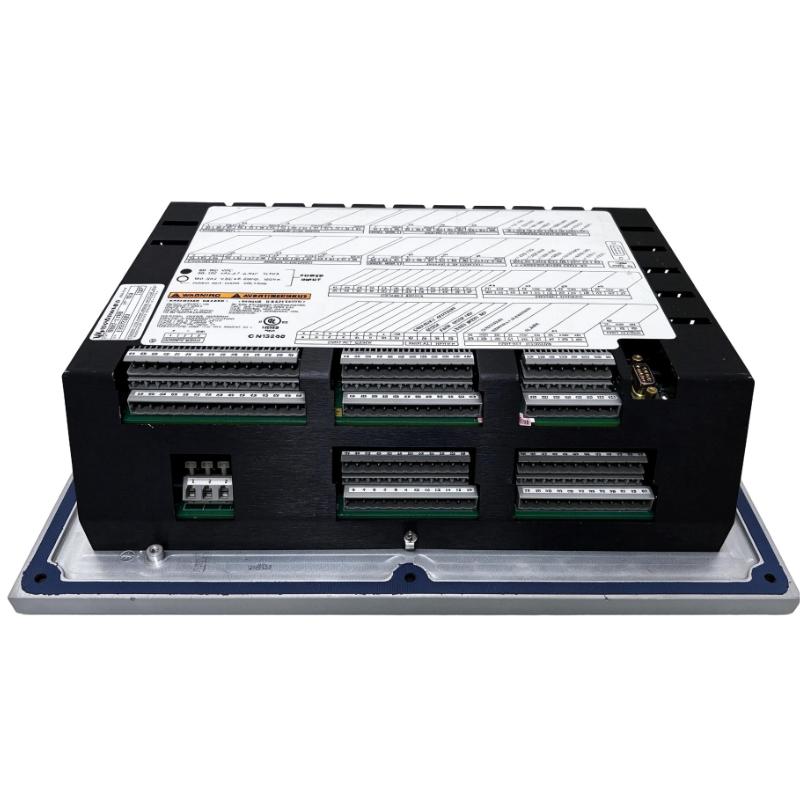
- Inspect the control wiring: Verify analog signals, contact inputs, relay outputs, and communication connections against the approved electrical drawings.
- Check grounding and shielding: Confirm protective grounding and the specified shielding arrangements for sensor, actuator, and communication circuits.
- Review the control program: Verify the programmed startup mode, speed references, actuator settings, operating limits, and enabled control functions before starting the turbine.
- Test actuator movement: Use the approved commissioning procedure to confirm correct valve travel, response direction, and actuator calibration before applying steam.
- Validate operating and shutdown sequences: Test the required startup, speed-control, controlled-stop, alarm, and trip responses under the applicable commissioning and safety procedures.
- Document the final configuration: Record the controller reference, supply type, application settings, actuator configuration, I/O assignments, and commissioning results for future maintenance.
Compatible System Components
| Component | Function |
|---|---|
| Woodward 9907-1182 | Provides programmable digital turbine governing |
| Magnetic Speed Pickup | Supplies turbine-speed feedback |
| Compatible Steam-Valve Actuator | Converts controller output into valve movement |
| Steam Inlet Control Valve | Regulates steam flow to the turbine |
| Pressure Transmitter | Supplies pressure feedback for configured control functions |
| Analog Input Devices | Provide supported process measurements and remote control signals |
| Relay Output Circuits | Interface with configured alarms, permissives, and control functions |
| Plant DCS or PLC | Coordinates turbine operation with the wider process-control system |
| RS-232, RS-422, or RS-485 Interface | Supports applicable serial communications configurations |
| Independent Overspeed Trip System | Protects the turbine against excessive rotational speed |
| Control Power Supply | Provides the required AC/DC operating supply |
Recommended Related Models
| Model | Product Type | Selection Consideration |
|---|---|---|
| Woodward 9907-1181 | 505 Enhanced Digital Control for Steam Turbines | AC-powered version with an 180–264 V AC input range |
| Woodward 9907-1182 | 505 Enhanced Digital Control for Steam Turbines | AC/DC version with an 88–132 V AC or 90–150 V DC input range |
| Woodward 9907-1183 | 505 Enhanced Digital Control for Steam Turbines | Low-voltage DC version with an 18–32 V DC input range |
| Woodward 8923-1704 | 505 Enhanced Digital Control for Steam Turbines | Marine low-voltage DC configuration |
| Woodward 8200-1300 | 505 Digital Control for Steam Turbines | Related 505 control platform; verify the specific application and hardware configuration |
| Woodward 505E Series | Digital Control for Extraction Steam Turbines | Consider for applications requiring extraction or admission pressure control |
| Woodward 505XT Series | Digital Control for Steam Turbines | Alternative control platform for applications requiring its specific control and I/O capabilities |
Key Advantages
- Supports programmable speed and operating control for compatible steam turbines.
- Accepts AC or DC power within the specified input range.
- Supports single or split-range steam-valve actuator arrangements.
- Incorporates enhanced pressure-compensation and control-selection logic.
- Provides an integrated operator interface for configuration and operational supervision.
- Supports communication with compatible plant control systems.
Technical FAQs
What distinguishes the 9907-1182 from the 9907-1181 and 9907-1183?
The main distinction is the power-input configuration. The 9907-1182 accepts 88–132 V AC or 90–150 V DC, while the 9907-1181 uses an 180–264 V AC supply and the 9907-1183 operates from 18–32 V DC. The enhanced versions also have specific hardware and control-logic differences that must be considered during replacement.
Can the 9907-1182 control both single and split-range steam valves?
Yes. The 505 Enhanced platform supports single or split-range actuator arrangements. The application program, actuator outputs, valve characteristics, and control settings must be configured for the actual turbine installation.
How does the controller handle turbine startup?
The controller supports configurable startup methods, including manual, semiautomatic, and automatic sequences where enabled by the application. Startup behavior depends on the programmed speed references, acceleration requirements, critical-speed avoidance settings, and actuator response.
What must be verified before replacing an existing 505 controller with the 9907-1182?
Confirm the exact controller version, power supply, application configuration, I/O assignments, actuator characteristics, and communication settings. Enhanced 505 versions have specific hardware and control-logic differences, so compatibility should be established for the complete turbine-control system rather than from the shared 505 family name alone.