
NewsNEWCENTER
Featured products

Contact Us
Schneider Electric Places 25 Million New Shares at €240 Each to Raise €6 Billion for PTC Acquisition
2026-10-20Schneider Electric Announces €6 Billion Capital Increase
Schneider Electric, the French energy management and industrial automation group, has successfully placed 25 million new ordinary shares at a subscription price of €240 per share, raising approximately €6 billion in gross proceeds.
The capital increase was announced on October 20, 2026, following an accelerated bookbuilding process targeting qualified institutional investors. The new shares represent approximately 4.32% of the company’s share capital before the issuance.
The subscription price represents a discount of approximately 4.99% to Schneider Electric’s closing share price of €252.60 on October 19, the last trading session before the capital increase was launched.
According to the company’s announcement, the net proceeds will be used to partially finance its proposed acquisition of PTC Inc., a US-based industrial software company. The transaction forms part of Schneider Electric’s strategy to strengthen its position in industrial software, digital engineering and industrial artificial intelligence.
The share placement was conducted without preferential subscription rights for existing shareholders. Settlement of the capital increase is expected on October 22, 2026.
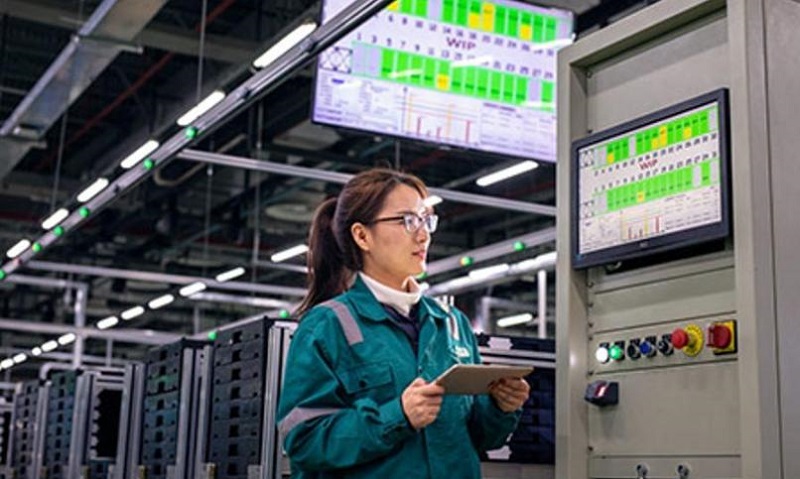
Funding the Proposed Acquisition of PTC
The capital increase is closely connected to Schneider Electric’s proposed acquisition of PTC, announced earlier in October 2026.
The proposed transaction values PTC at approximately $22.6 billion and is intended to expand Schneider Electric’s capabilities in industrial software, product lifecycle management, computer-aided design and engineering.
PTC develops software used by manufacturers to design products, manage product data and support engineering workflows throughout the product lifecycle. Its portfolio includes Creo for computer-aided design, Windchill for product lifecycle management and ThingWorx for industrial connectivity and application development.
Combining these capabilities with Schneider Electric’s expertise in energy management, automation and industrial software could strengthen the connection between product design, factory operations and digital manufacturing.
The acquisition is expected to close by the third quarter of 2027, subject to regulatory approvals and other customary closing conditions. It should therefore be regarded as a proposed transaction rather than a completed acquisition.
The €6 billion equity raise represents one component of the planned financing structure. Schneider Electric has indicated that the acquisition will also be supported by additional debt financing and potential drawings under committed bridge facilities.
What the New Share Issuance Means for Investors
The placement provides Schneider Electric with substantial capital while increasing the number of shares outstanding.
The €240 subscription price is approximately 4.99% below the previous closing price of €252.60. Such a discount is commonly used in accelerated placements to attract institutional investors and complete a large capital raise within a short period.
Because the new shares account for approximately 4.32% of the company’s pre-issuance share capital, existing shareholders who do not participate in the placement will experience a reduction in their proportional ownership.
Schneider Electric’s illustrative calculation indicates that a shareholder holding 1% of the company’s share capital before the issuance, and not subscribing to the new shares, would hold approximately 0.96% after the issuance.
The transaction’s longer-term financial impact will depend on the acquisition’s execution, financing costs, integration performance and the additional business value generated by combining the two companies.
For industrial customers and equipment suppliers, the capital increase is primarily relevant as a strategic financing development rather than a direct change to the specifications or availability of Schneider Electric’s existing automation products.
Strategic Implications for Industrial Automation
Schneider Electric operates across energy management, industrial automation, electrical distribution, process control and digital industrial software.
Its industrial automation portfolio includes Modicon programmable logic controllers, Altivar variable speed drives, Harmony human-machine interface products, industrial communication solutions and EcoStruxure automation and digitalization technologies.
These products support applications in manufacturing, process industries, infrastructure, data centers, building systems and energy-intensive facilities.
The proposed acquisition of PTC could expand Schneider Electric’s software capabilities beyond conventional control and energy management, potentially strengthening integration between engineering design, product data and manufacturing operations.
For manufacturers, closer integration between engineering and production systems can support more consistent data flows, improve collaboration between design and operations teams, and provide a foundation for digital manufacturing initiatives.
However, the practical benefits will depend on how the software portfolios are integrated, the compatibility of individual products and the development of commercial and technical roadmaps following completion of the acquisition.
Potential Impact on Smart Manufacturing and Industrial AI
Industrial artificial intelligence is becoming an important area of investment for manufacturers seeking to improve production efficiency, reduce unplanned downtime and optimize engineering processes.
Industrial AI applications may include predictive maintenance, process optimization, automated quality inspection, engineering assistance and analysis of production data.
Schneider Electric already provides automation and energy management technologies that collect operational data and support control and optimization functions. PTC’s engineering and product lifecycle software could complement these capabilities by connecting product design information with manufacturing and asset-related data.
A more integrated software environment could help manufacturers reduce information gaps between engineering, production and maintenance teams.
Nevertheless, industrial AI requires more than software integration. Reliable data, cybersecurity, clear system architecture, appropriate validation and compatibility with existing operational technology remain essential.
For factories using established PLCs, variable frequency drives, HMIs and distributed control systems, any digital transformation project must account for installed equipment, production continuity and lifecycle support.
What Industrial Equipment Buyers Should Watch
For industrial equipment distributors, system integrators and maintenance teams, the announcement does not itself indicate an immediate change to Schneider Electric’s product portfolio.
Customers should continue to select automation components according to application requirements, approved configurations and technical documentation.
Several areas are worth monitoring as the transaction progresses:
- Product continuity: Existing PLCs, drives, HMIs and control-system components remain subject to their published product specifications and applicable lifecycle announcements.
- Software integration: Future developments may affect how engineering software, industrial applications and automation data are connected.
- Digital transformation: Manufacturers may gain additional options for linking product engineering, production planning and factory operations if the acquisition is completed and the portfolios are successfully integrated.
- Procurement and maintenance: Equipment buyers should verify part numbers, compatibility, availability and warranty terms with authorized suppliers.
- Industrial AI implementation: Organizations should evaluate cybersecurity, data governance, operational reliability and the measurable benefits of new software capabilities before deployment.
These considerations are particularly relevant to manufacturers planning long-term automation upgrades or integrating engineering software with existing production systems.
Conclusion
Schneider Electric has completed the placement of 25 million new ordinary shares at €240 each, generating approximately €6 billion in gross proceeds. The capital increase is intended to partially finance the company’s proposed $22.6 billion acquisition of PTC, a strategic move aimed at expanding its industrial software and digital engineering capabilities.
For the industrial automation sector, the development highlights the growing importance of integrating energy management, process control, engineering software and industrial AI.
The proposed acquisition remains subject to regulatory approvals and other closing conditions, with completion expected by the third quarter of 2027. Until then, customers and industrial equipment suppliers should distinguish confirmed financing arrangements from potential future product and technology developments.
SEO Keywords: Schneider Electric share placement 2026, Schneider Electric €6 billion capital increase, Schneider Electric new shares €240, Schneider Electric PTC acquisition, industrial automation news, PTC industrial software, industrial artificial intelligence, Modicon PLC, Altivar variable speed drive, EcoStruxure automation, smart manufacturing, digital transformation in manufacturing.