

ProductPRODUCT
Featured products
Contact Us
- Allen Bradley
- 1756-PA50
- ControlLogix AC Power Supply
- USA
- 140 × 78 × 145 mm
- 0.77 kg
- Xiamen, China
- New & In Stock
- T/T, PayPal, Western Union
- 1 Year
- 1-3 Working Days
- DHL, UPS, TNT, FedEx and EMS.
- 24-Hour Service
- COO
- 5
Our advantage

Global Logistics
We have a 10-year logistics and express cooperation agreement, so our products can be shipped to any place in the world.

Brand new and original
Our products are imported in bulk from the place of origin. Because of the cooperative relationship, our products are all original and 100% new.

24-hour service
We provide 7*24 hours service to our customers. We will be there whenever you need us.

Price advantage
All our products are priced very favorably because we have our own warehouse and supply.
| Company Information | |||
| [email protected] | |||
| Mobile | +8615980777398 | ||
| +8615980777398 | |||
| 15980777398 |
Product Overview
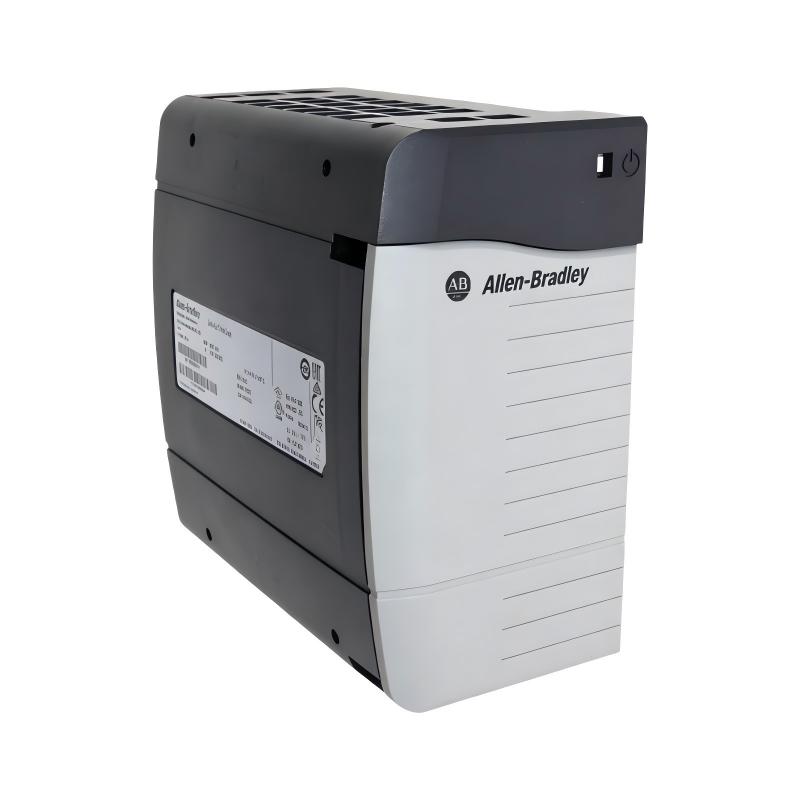
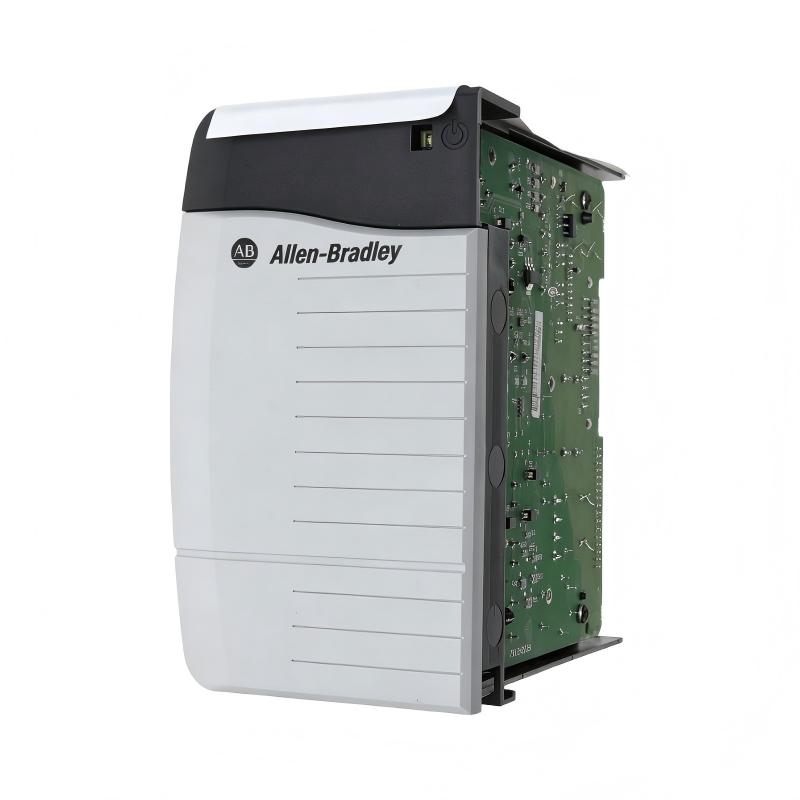
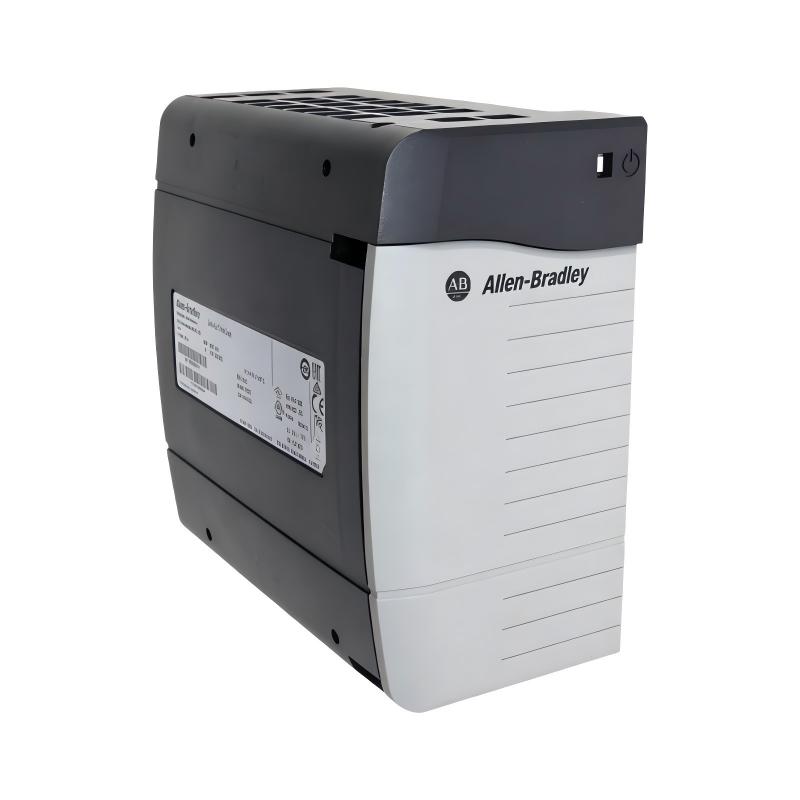
The Allen Bradley 1756-PA50 ControlLogix AC Power Supply is a slim-format power supply module used with ControlLogix programmable automation controllers. It converts incoming AC power into the DC voltage rails required by the controller chassis backplane, supplying the power needed by the installed processor, communication modules, and I/O modules.
In a production line, the ControlLogix chassis may contain a controller coordinating motor starters, remote I/O networks, process instruments, and machine interlocks. Each module draws power from the chassis backplane rather than requiring its own independent supply. The 1756-PA50 supports this arrangement by delivering several regulated DC outputs through the chassis power distribution system.
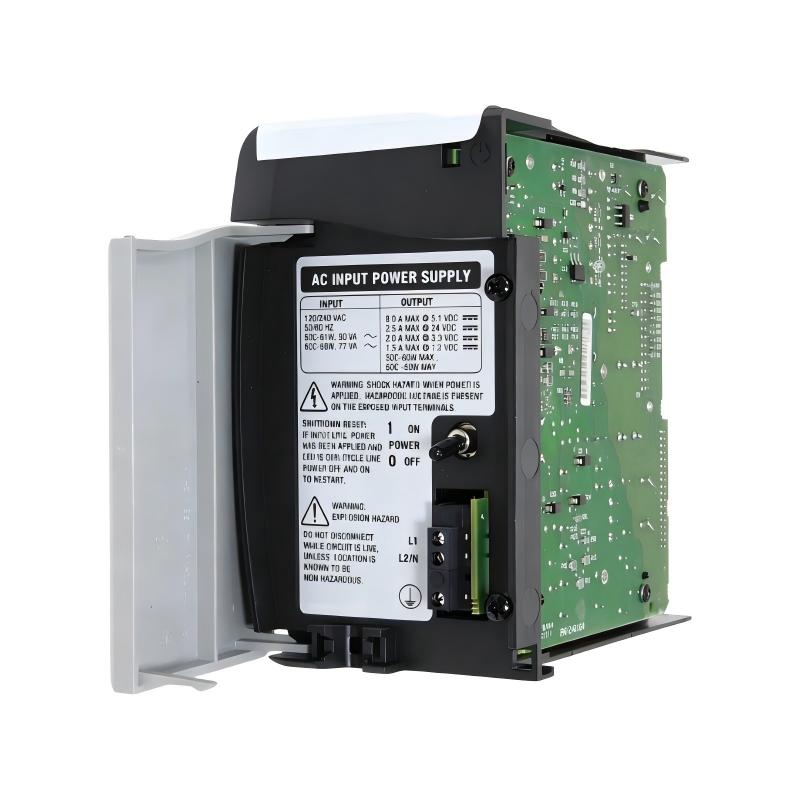
The module accepts an AC input across a range of 85–265V AC, covering common 120V and 240V AC installations. Its output ratings include 5.1V DC at up to 8 A under the specified 50°C operating condition, together with 3.3V DC, 1.2V DC, and 24V DC outputs for the backplane. The available current at some voltage rails is temperature-dependent, so the total power demand of the installed modules must be checked before selecting the supply.
The 1756-PA50 is mounted on the left side of a compatible ControlLogix chassis and connects directly to the backplane. Its slim construction makes it suitable for installations where cabinet space is limited but the controller system still requires multiple backplane voltage rails. It is intended for standard ControlLogix chassis rather than being a general-purpose DC power supply for external field devices.
A key consideration when using this model is the distinction between the supply’s individual output ratings and its total power capacity. A chassis may have enough capacity on one voltage rail but exceed the limit on another. For example, adding communication or specialty I/O modules can increase demand on particular backplane voltages. Power-supply selection should therefore be based on the combined load of the actual module lineup, not just the processor’s consumption.
The unit also provides a short hold-up interval during brief input-power disturbances. If the incoming AC supply falls outside its operating range for long enough, the power supply signals an impending voltage failure to the chassis modules, allowing the controller system to respond to the loss of power according to its design.
For maintenance teams, common checks include the incoming AC supply, terminal security, chassis seating, module load calculations, and the power supply’s operating temperature. If a controller chassis experiences repeated power-related faults, the issue may stem from the AC feed, excessive backplane demand, poor connections, or a failing supply. Reviewing these conditions together helps distinguish a supply problem from a fault in an individual controller or I/O module.
Technical Specifications
| Parameter | Specification |
|---|---|
| Manufacturer | Allen-Bradley |
| Model | 1756-PA50 |
| Product Type | ControlLogix AC Power Supply |
| Product Family | ControlLogix Bulletin 1756 |
| Power Supply Category | Slim AC Chassis Power Supply |
| Input Voltage Range | 85–265V AC |
| Nominal Input Voltage | 120/240V AC |
| Input Frequency Range | 47–63 Hz |
| Maximum Inrush Current | 20 A |
| Output Voltage and Current | 5.1V DC at 8 A; 3.3V DC at 2 A; 1.2V DC at 1.5 A; 24V DC at 2.5 A |
| Maximum Output Power | 60 W at 0–50°C; 50 W at 0–60°C |
| 5.1V DC Current Capacity | 8 A at 50°C; 6 A at 60°C |
| 24V DC Current Capacity | 2.5 A at 50°C; 2.0 A at 60°C |
| Maximum Input Power | 81 W at 50°C; 68 W at 60°C |
| Hold-Up Time | 4 AC cycles at 60 W; 5 AC cycles at 50 W, within the specified input conditions |
| Isolation Voltage | 250V continuous, reinforced insulation between power input and backplane |
| Mounting Position | Left side of the ControlLogix chassis |
| Compatible Chassis | 1756-A4, 1756-A7, 1756-A10, 1756-A13, 1756-A17 |
| Redundant Configuration | Not redundancy-capable as a standalone supply |
| Operating Temperature | 0–60°C |
| Relative Humidity | 5–95%, non-condensing |
| Dimensions | 140 × 78 × 145 mm |
| Weight | 0.77 kg |
Product Features
- Wide AC input range: Accepts 85–265V AC for use with common industrial AC supply levels.
- Multiple backplane voltage rails: Supplies 1.2V, 3.3V, 5.1V, and 24V DC to compatible ControlLogix chassis modules.
- Slim chassis format: Occupies a narrow mounting position on the left side of the chassis.
- Direct backplane connection: Delivers power through the chassis interface without a separate output cable for each module.
- Input disturbance tolerance: Provides a defined hold-up interval during brief interruptions or fluctuations in the AC supply.
- Voltage-failure signaling: Notifies chassis modules when the input supply can no longer maintain normal output conditions.
- Temperature-dependent output capacity: Specifies different output limits for operation at 50°C and 60°C.
- Broad chassis compatibility: Supports the listed standard 1756-A series chassis.
Working Principle
The 1756-PA50 converts incoming AC power into regulated DC outputs for the ControlLogix chassis backplane. These voltage rails support the electronic circuits in the controller, communication modules, and other installed modules.
AC Input → Power Conversion and Regulation → DC Output Rails → Chassis Backplane → ControlLogix Modules
When AC power enters the supply, its internal conversion circuitry produces the DC voltages required by the backplane. Each rail has a specified current capacity, and the combined output must remain within the supply’s overall power limit. The chassis distributes the regulated power to the modules installed in its slots.
Consider a ControlLogix system used to coordinate a packaging line. The controller executes the machine logic, communication modules exchange data with drives and remote I/O, and specialty modules handle application-specific signals. These modules rely on the chassis backplane for their operating power. The 1756-PA50 supplies that power while the controller performs its normal control tasks.
The power supply’s capacity must be evaluated against the actual module arrangement. A chassis containing a processor and several communication modules can have a different power profile from one containing numerous specialty I/O modules. Each module’s current consumption on the individual backplane rails must be included in the calculation.
The supply also responds to disturbances on the incoming AC line. Its hold-up capability allows it to maintain output for a limited interval during a brief interruption. If the disturbance persists beyond the supported interval, the supply signals voltage failure to the chassis modules. This helps the system recognize that its operating power is no longer being maintained normally.
The 1756-PA50 is a chassis power supply, not a universal 24V field power source. Although it has a 24V DC output rail for the backplane, external sensors, actuators, and other field devices must be powered according to their own requirements and the system’s wiring design.
Role in a ControlLogix Automation System
The 1756-PA50 provides the electrical foundation for a ControlLogix chassis. Without suitable backplane power, the processor and installed modules cannot operate as intended, regardless of whether the controller program and communication configuration are correct.
Industrial AC Supply → 1756-PA50 → ControlLogix Backplane → Processor, Communication and I/O Modules
| System Component | Function |
|---|---|
| Allen-Bradley 1756-PA50 | Converts AC input into regulated DC power for the chassis backplane |
| 1756 ControlLogix Chassis | Houses the processor and installed modules and distributes backplane power |
| ControlLogix Controller | Executes application logic and coordinates machine operations |
| Communication Module | Exchanges data with drives, remote I/O, and other networked devices |
| Digital I/O Module | Handles discrete input and output signals |
| Analog I/O Module | Processes analog measurements and control signals |
| Specialty Module | Performs application-specific control or interface functions |
| Upstream AC Protection | Provides protection for the incoming power circuit |
| Cabinet Grounding System | Provides the required protective grounding and bonding |
The power-supply rating must be checked against the complete chassis configuration, including every installed module and its demand on each voltage rail.
Industrial Applications
| Application | Typical Use |
|---|---|
| Packaging Lines | Powering ControlLogix chassis modules that coordinate filling, sealing, labeling, and indexing |
| Material Handling | Supplying backplane power to controllers managing conveyor and transfer equipment |
| Automotive Manufacturing | Supporting controller racks used for assembly sequencing and machine coordination |
| Process Automation | Powering controller and I/O modules in industrial process control systems |
| Water and Wastewater Systems | Supporting ControlLogix installations used for pump and treatment control |
| Food and Beverage Production | Supplying the chassis electronics used for line control and equipment monitoring |
| Machine Tools | Powering the controller modules responsible for machine sequencing and I/O processing |
| Energy and Utility Systems | Supporting compatible control systems for equipment monitoring and process operation |
| Industrial Test Equipment | Supplying the backplane modules used in automated test and measurement systems |
| General Manufacturing | Providing chassis power for PLC-based machine control and industrial communications |
The 1756-PA50 is most appropriate where the selected ControlLogix chassis and installed module lineup fit its electrical ratings. Applications requiring a redundant power architecture or greater backplane capacity need a supply arrangement selected for those requirements.
Installation and Maintenance
- Check the chassis compatibility: Confirm that the intended chassis belongs to the supported 1756-A series and provides the correct mounting position for the supply.
- Calculate backplane demand: Add the current requirements of the installed modules on each voltage rail and confirm that the supply can support the complete configuration.
- Verify the AC input: Check that the incoming voltage and frequency fall within the specified 85–265V AC and 47–63 Hz ranges.
- Isolate the power source: Disconnect the incoming supply and follow the applicable electrical safety procedures before installation or removal.
- Inspect the chassis connection: Check the power-supply mounting interface and backplane connector for contamination, damage, or signs of overheating.
- Secure the supply: Install the module in the designated left-side chassis position and confirm that it is fully seated.
- Check the incoming wiring: Use suitable copper conductors and ensure that the terminal connections are secure and correctly prepared.
- Review grounding and protection: Confirm that the cabinet grounding arrangement and upstream protective devices meet the installation requirements.
- Apply power under controlled conditions: Energize the system according to the commissioning procedure and check the supply’s status indications.
- Verify module operation: Confirm that the processor and installed modules start normally and that no chassis power-related faults are present.
- Monitor operating conditions: Investigate excessive cabinet temperature, repeated voltage-failure indications, or unexpected module resets.
- Record maintenance findings: Document the chassis configuration, calculated rail loads, AC supply measurements, and any corrective work.
If the chassis repeatedly loses power, check the incoming AC supply and total backplane load before replacing individual modules. A supply operating beyond its rating may produce symptoms that appear to originate from the processor or I/O system.
Related Components
| Component | Function |
|---|---|
| Allen-Bradley 1756-PA50 | Slim AC power supply for the ControlLogix chassis |
| Allen-Bradley 1756-A4 | Four-slot ControlLogix chassis |
| Allen-Bradley 1756-A7 | Seven-slot ControlLogix chassis |
| Allen-Bradley 1756-A10 | Ten-slot ControlLogix chassis |
| Allen-Bradley 1756-A13 | Thirteen-slot ControlLogix chassis |
| Allen-Bradley 1756-A17 | Seventeen-slot ControlLogix chassis |
| ControlLogix Controller | Executes control logic and coordinates system operation |
| ControlLogix Communication Module | Provides network connectivity for compatible automation equipment |
| ControlLogix Digital I/O Module | Interfaces with discrete field signals |
| ControlLogix Analog I/O Module | Interfaces with analog process signals |
| Upstream Circuit Protection | Protects the incoming AC power circuit |
Recommended Related Models
| Model | Product Type | Typical Application |
|---|---|---|
| Allen-Bradley 1756-PA50 | ControlLogix AC Power Supply | Slim AC supply for compatible standard ControlLogix chassis |
| Allen-Bradley 1756-PA72 | ControlLogix AC Power Supply | Standard AC power supply for compatible ControlLogix systems |
| Allen-Bradley 1756-PA75 | ControlLogix AC Power Supply | Higher-capacity AC power supply for supported chassis configurations |
| Allen-Bradley 1756-PB50 | ControlLogix DC Power Supply | Slim DC-input power supply for compatible ControlLogix chassis |
| Allen-Bradley 1756-PB72 | ControlLogix DC Power Supply | Standard DC-input supply for compatible ControlLogix systems |
| Allen-Bradley 1756-PB75 | ControlLogix DC Power Supply | Higher-capacity DC-input supply for supported chassis configurations |
Key Advantages
- Accepts a broad AC input range for industrial power installations.
- Supplies multiple regulated DC rails directly to the ControlLogix backplane.
- Uses a slim mounting format for compatible chassis.
- Provides defined hold-up behavior during short AC supply disturbances.
- Signals voltage failure when input power cannot be maintained.
- Supports several standard ControlLogix chassis sizes.
Technical FAQs
How should the 1756-PA50 be sized for a ControlLogix chassis?
Calculate the current required by every installed module on the 1.2V, 3.3V, 5.1V, and 24V backplane rails. Check each rail against the supply’s current rating and confirm that the total output remains within its permitted power capacity. The available current on some rails decreases at higher operating temperatures.
Can the 1756-PA50 operate from either 120V or 240V AC?
Yes. Its nominal input voltage is 120/240V AC, and its specified input range is 85–265V AC. The incoming supply must also remain within the specified frequency range and meet the installation’s electrical protection requirements.
Does the 1756-PA50 provide redundant power?
No. The 1756-PA50 is not redundancy-capable as a standalone power supply. Systems requiring redundant chassis power need a compatible redundant power architecture and the appropriate power-supply components.
What does a voltage-failure indication suggest?
It indicates that the power supply cannot maintain normal output conditions because of an input disturbance or another power-related problem. Check the incoming AC voltage, wiring, chassis connection, module load, and operating temperature. If the indication persists after those checks, further diagnosis of the supply may be required.