

ProductPRODUCT
Featured products
Contact Us
- Emerson
- 3D39861G01
- Electronic Assembly
- USA
- 130 × 35 × 105 mm
- 0.23 kg
- Xiamen, China
- New & In Stock
- T/T, PayPal, Western Union
- 1 Year
- 1-3 Working Days
- DHL, UPS, TNT, FedEx and EMS.
- 24-Hour Service
- COO
- 7
Our advantage

Global Logistics
We have a 10-year logistics and express cooperation agreement, so our products can be shipped to any place in the world.

Brand new and original
Our products are imported in bulk from the place of origin. Because of the cooperative relationship, our products are all original and 100% new.

24-hour service
We provide 7*24 hours service to our customers. We will be there whenever you need us.

Price advantage
All our products are priced very favorably because we have our own warehouse and supply.
| Company Information | |||
| [email protected] | |||
| Mobile | +8615980777398 | ||
| +8615980777398 | |||
| 15980777398 |
Product Overview
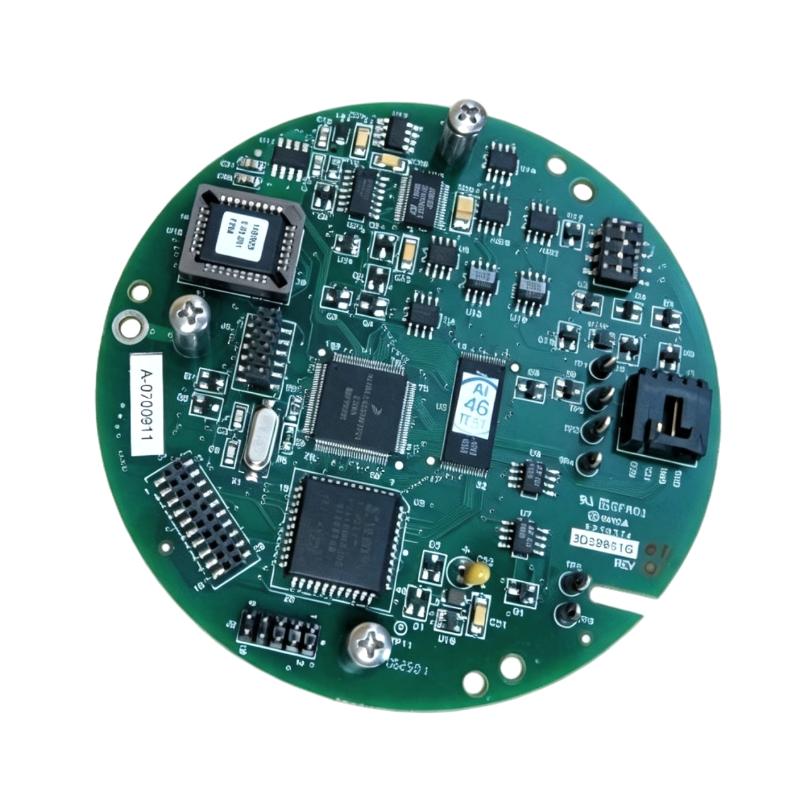
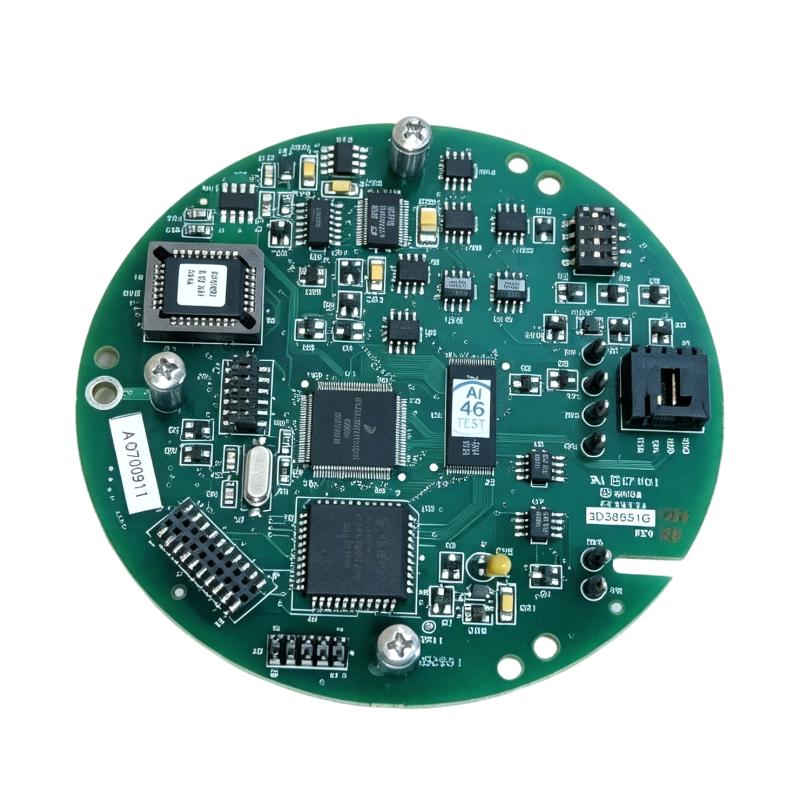
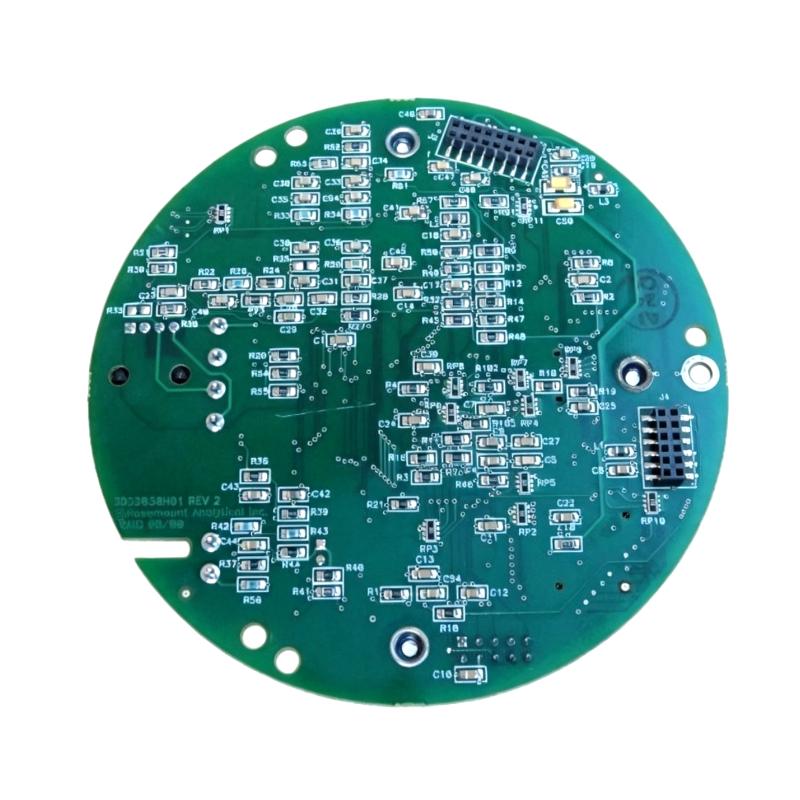
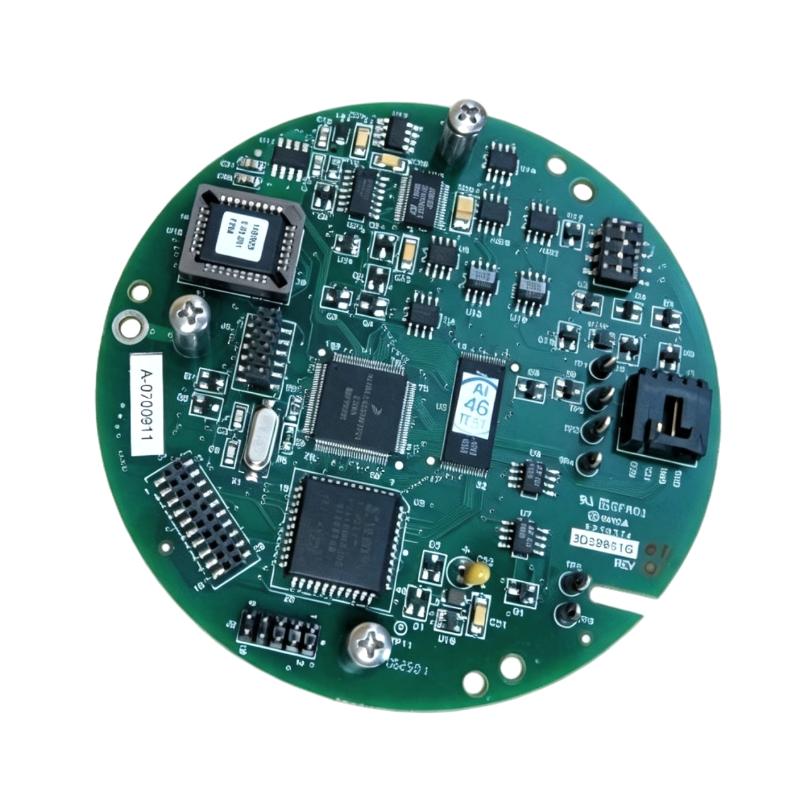
The Emerson 3D39861G01 is an electronic assembly used in the Rosemount Oxymitter 4000 in-situ oxygen transmitter. It is identified as the HART electronic board assembly and forms part of the transmitter’s measurement and signal-processing electronics. In combustion monitoring installations, this assembly supports oxygen measurement in flue gas from industrial boilers, furnaces and other combustion equipment.
The Oxymitter 4000 measures oxygen directly in the process gas stream. Its sensing cell produces a signal corresponding to the oxygen concentration, and the electronic assembly processes this measurement for transmission to the plant control or monitoring system. This arrangement allows combustion operators to monitor excess oxygen and assess combustion conditions without relying solely on periodic gas samples taken elsewhere in the system.
The 3D39861G01 is an electronic replacement component rather than a complete oxygen transmitter or probe assembly. Its application depends on the corresponding Oxymitter 4000 electronics configuration, connector arrangement and installed transmitter hardware. When replacing the assembly, technicians need to preserve the instrument’s wiring, configuration and signal interface so that oxygen measurements and HART communication operate as expected.
Technical Specifications
| Parameter | Specification |
|---|---|
| Manufacturer | Emerson |
| Model / Part Number | 3D39861G01 |
| Product Family | Rosemount Oxymitter 4000 |
| Product Type | Electronic Board Assembly (HART) |
| Application | In-situ oxygen measurement |
| Instrument Type | Oxygen Transmitter |
| Measurement Purpose | Oxygen concentration monitoring in combustion gas |
| Signal Processing | Processes sensing-cell signals |
| Communication | HART |
| Analog Output | 4–20 mA, according to the Oxymitter 4000 transmitter configuration |
| Installation Position | Transmitter electronics assembly |
| Compatible Equipment | Rosemount Oxymitter 4000 |
| Dimensions | 130 × 35 × 105 mm |
| Weight | 0.23 kg |
Product Features
- HART electronic assembly: Supports the HART-enabled electronics configuration of the Oxymitter 4000.
- Oxygen measurement processing: Handles signals from the transmitter’s oxygen sensing system.
- Industrial combustion monitoring: Supports oxygen measurement in applications such as boilers and process furnaces.
- Analog signal integration: Works within the transmitter configuration that provides a 4–20 mA measurement output.
- Replacement-board configuration: Serves as an internal electronic component rather than a complete transmitter.
- Instrument integration: Works with the associated sensing probe, electronics housing and transmitter connections.
- Maintenance support: Allows servicing of the electronics section without treating the complete oxygen transmitter as a single inseparable component.
Working Principle
The 3D39861G01 operates as part of the Oxymitter 4000 measurement chain. The sensing probe is inserted into the process gas stream, where its oxygen sensing cell responds to the difference in oxygen partial pressure between the process gas and the reference side of the cell. The resulting millivolt signal is processed by the transmitter electronics to determine oxygen concentration.
The electronic assembly also supports the instrument’s output and communication functions. The transmitter converts the processed oxygen measurement into a corresponding 4–20 mA signal and supports HART communication for configuration and diagnostic access, depending on the installed instrument setup.
For example, a boiler operator may use the transmitter’s oxygen reading to assess combustion air settings. If oxygen readings change as fuel demand varies, the control system can use the measurement as part of combustion monitoring or adjustment. The electronic assembly processes the sensor signal, while the wider control system determines how that information affects plant operation.
Correct operation depends on the sensing cell, probe temperature control, wiring and electronic configuration working together. A fault in the sensing probe or its connections can produce symptoms that resemble an electronic-board problem, so troubleshooting should distinguish between the sensor, wiring and signal-processing sections.
Role in a Rosemount Oxymitter 4000 Measurement Architecture
The 3D39861G01 is the electronic processing component between the oxygen sensing cell and the plant’s measurement interface. It works with the probe and associated transmitter hardware to convert the sensor response into a usable process measurement.
Combustion Gas → Oxygen Sensing Cell → 3D39861G01 Electronic Assembly → 4–20 mA / HART Interface → Plant Control or Monitoring System
| System Component | Function | Relationship to the 3D39861G01 |
|---|---|---|
| 3D39861G01 Electronic Assembly | Processes the oxygen sensor signal | Provides the HART electronics section of the transmitter |
| Oxymitter 4000 Oxygen Sensing Cell | Responds to oxygen concentration in the process gas | Supplies the measurement signal |
| Probe Heater Assembly | Maintains the sensing probe at its operating temperature | Supports the sensing cell’s measurement conditions |
| Probe and Process Connection | Places the sensing cell in the gas stream | Exposes the sensor to the process gas |
| Transmitter Housing | Encloses and protects the electronics | Holds the electronic assembly and associated components |
| Local Operator Interface | Provides local configuration and indication where fitted | Allows operator access to supported instrument functions |
| 4–20 mA Signal Loop | Transfers the oxygen measurement to control equipment | Carries the transmitter’s analog output |
| HART Communicator | Provides digital configuration and diagnostic access | Communicates with the transmitter’s HART-enabled electronics |
| PLC or DCS | Monitors process values and executes control logic | Receives the oxygen measurement for plant monitoring |
| Calibration Gas System | Supplies reference gas for calibration procedures | Supports checking and calibration of the complete transmitter |
| Instrument Power Supply | Supplies the required electrical power | Powers the transmitter electronics and associated circuits |
Industrial Applications
| Application | Typical Equipment | Role of the Electronic Assembly |
|---|---|---|
| Industrial Boiler Combustion | Steam boilers and burner systems | Processes oxygen measurements used to assess combustion conditions |
| Power Generation | Boiler flue-gas monitoring systems | Supports oxygen measurement for combustion monitoring |
| Process Furnaces | Industrial heating and thermal-processing equipment | Supports measurement of oxygen concentration in exhaust gas |
| Chemical Processing | Fired heaters and process combustion equipment | Supplies measurement information to the plant monitoring system |
| Waste Incineration | Combustion chambers and exhaust monitoring installations | Supports oxygen measurement in combustion gases |
| Cement Manufacturing | Kilns and industrial burners | Provides oxygen measurement data for combustion assessment |
| Metals Processing | Reheating furnaces and heat-treatment equipment | Supports monitoring of combustion conditions |
| Industrial Energy Systems | Fuel-fired heating and steam-generation equipment | Feeds oxygen measurement data into plant instrumentation |
Installation and Maintenance
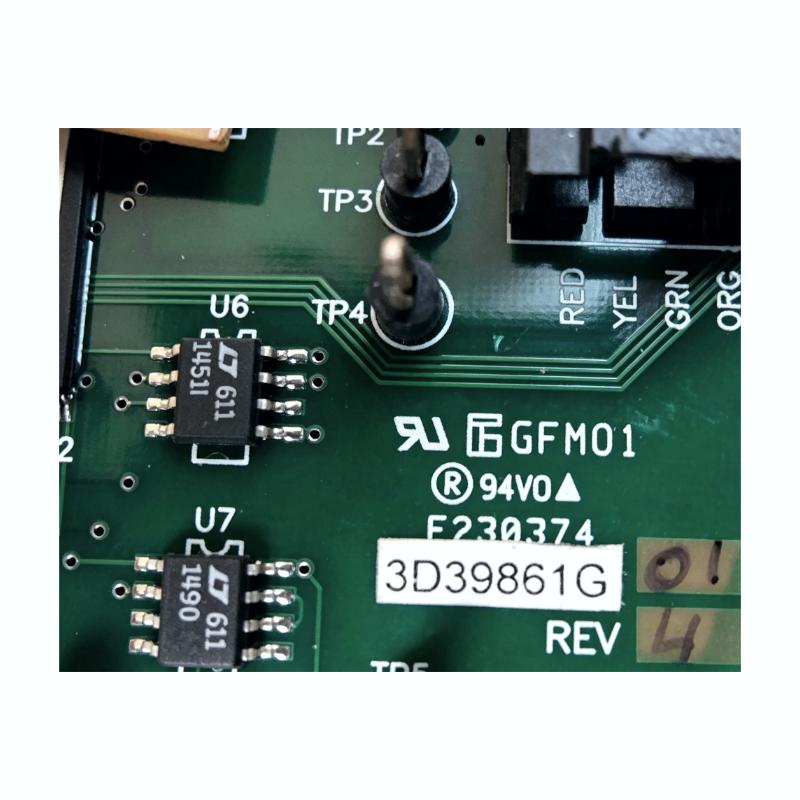
- Verify the assembly identification: Confirm that part number 3D39861G01 matches the required HART electronic configuration.
- Check transmitter compatibility: Verify that the receiving instrument is a compatible Rosemount Oxymitter 4000 configuration.
- Isolate electrical power: Disconnect the transmitter supply and follow the applicable electrical safety procedures before opening the electronics housing.
- Inspect the electronics housing: Check for moisture, contamination, damaged connectors or other conditions that could affect the replacement assembly.
- Document existing connections: Record the wiring and connector positions before removing the installed electronic assembly.
- Inspect the sensing-cell connection: Check the sensor signal connector and associated wiring for loose contacts or visible damage.
- Install the replacement assembly: Fit the electronic board into its designated position and secure the mounting points according to the equipment’s service procedure.
- Reconnect the wiring: Restore the sensing-cell, heater and other applicable electrical connections to their correct positions.
- Check the output interface: Verify the 4–20 mA loop wiring and HART communication connections where applicable.
- Restore power and inspect diagnostics: Check the transmitter’s status indications and available diagnostic information after re-energization.
- Verify measurement and calibration: Confirm that the oxygen reading is plausible and perform the required calibration following electronic-board replacement.
- Record commissioning results: Document the replacement part number, diagnostic status, calibration results and output checks for future maintenance.
Related Components
| Component | Function | Relationship to the Electronic Assembly |
|---|---|---|
| Oxygen Sensing Cell | Measures oxygen concentration through its electrochemical response | Supplies the signal processed by the electronic board |
| Probe Heater Assembly | Maintains the sensing element at its operating temperature | Supports the conditions required for oxygen measurement |
| Electronic Housing | Encloses the transmitter electronics | Holds and protects the installed assembly |
| Local Operator Interface (LOI) | Provides local display and operator interaction where fitted | Supports configuration and instrument status access |
| Membrane Keypad | Provides local controls for supported functions | Enables local operation on compatible configurations |
| Termination Block | Provides electrical connection points | Connects instrument wiring to the relevant circuits |
| 4–20 mA Output Loop | Transfers the process measurement | Carries the oxygen concentration signal to control equipment |
| HART Communicator | Provides digital configuration and diagnostic access | Communicates with the HART-enabled transmitter |
| Calibration Gas Equipment | Supplies gas for instrument calibration | Supports calibration checks after servicing |
| Probe Signal Cable | Connects the sensing probe to the electronics | Carries measurement and associated signals |
| PLC or DCS | Receives process data and executes control logic | Uses the transmitter output for combustion monitoring |
Recommended Related Models
| Model / Product | Product Type | Relationship | Selection Consideration |
|---|---|---|---|
| Emerson 3D39861G01 | Rosemount Oxymitter 4000 Electronic Board Assembly (HART) | Main product | Match the electronic communication configuration |
| Emerson 6A00115G01 | Local Operator Interface (LOI) Module | Related operator-interface component | Check the installed display and local-operation configuration |
| Emerson 4849B72H01 | Membrane Keypad | Related local-control component | Confirm the required keypad language and compatible housing |
| Emerson 6A00170G01 | Electronics Cover with Window | Related housing component | Match the cover to the installed electronics arrangement |
| Emerson 08732-0002-0001 | Standard Termination Block | Related electrical connection component | Verify the required termination configuration |
| Emerson 08732-0002-0002 | Transient-Protected Termination Block | Related electrical connection component | Check the installed termination and protection requirements |
| Emerson Rosemount Oxymitter 4000 | In-Situ Oxygen Transmitter | Complete instrument family | Confirm probe, electronics and communication compatibility |
Key Advantages
- Supports HART-enabled oxygen measurement in the Oxymitter 4000.
- Processes signals from the oxygen sensing system.
- Supports the transmitter’s 4–20 mA measurement interface.
- Allows servicing of the electronic section separately from the complete probe assembly.
- Integrates with compatible transmitter diagnostics and calibration functions.
Technical FAQs
What is the function of the 3D39861G01 electronic assembly?
It is the HART electronic board assembly used in the Rosemount Oxymitter 4000. It processes the oxygen sensing signal and supports the transmitter’s measurement output and communication functions.
Is the 3D39861G01 a complete oxygen transmitter?
No. It is an electronic replacement assembly. The complete measurement instrument also requires the compatible sensing probe, housing, electrical connections and associated transmitter components.
Does the Oxymitter 4000 require recalibration after replacing this board?
Yes. The instrument’s service documentation specifies recalibration after electronic-card or sensing-cell replacement. Calibration should follow the applicable instrument procedure.
What should be checked if the oxygen reading is incorrect after replacement?
Check the sensing-cell connections, heater circuit, wiring, transmitter diagnostics and analog output configuration. Also verify the sensing cell’s condition and perform the required calibration before concluding that the replacement assembly is faulty.