

ProductPRODUCT
Featured products
Contact Us
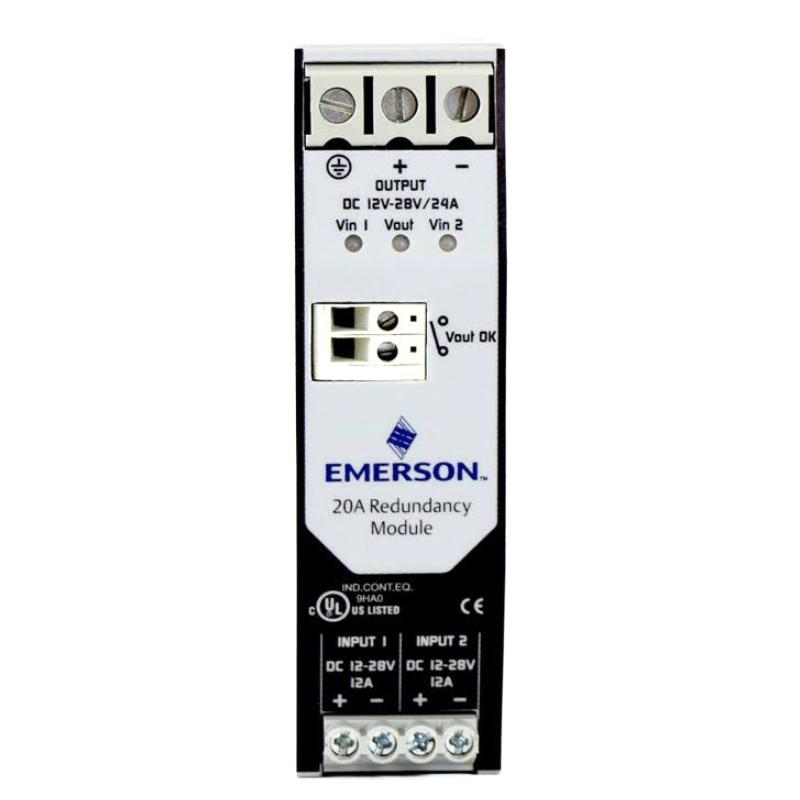
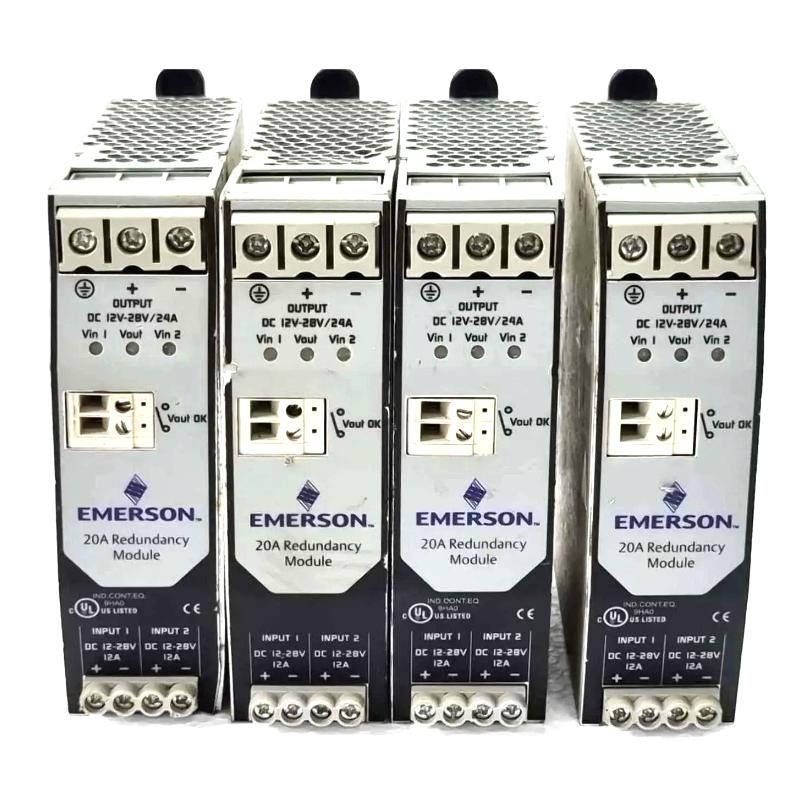
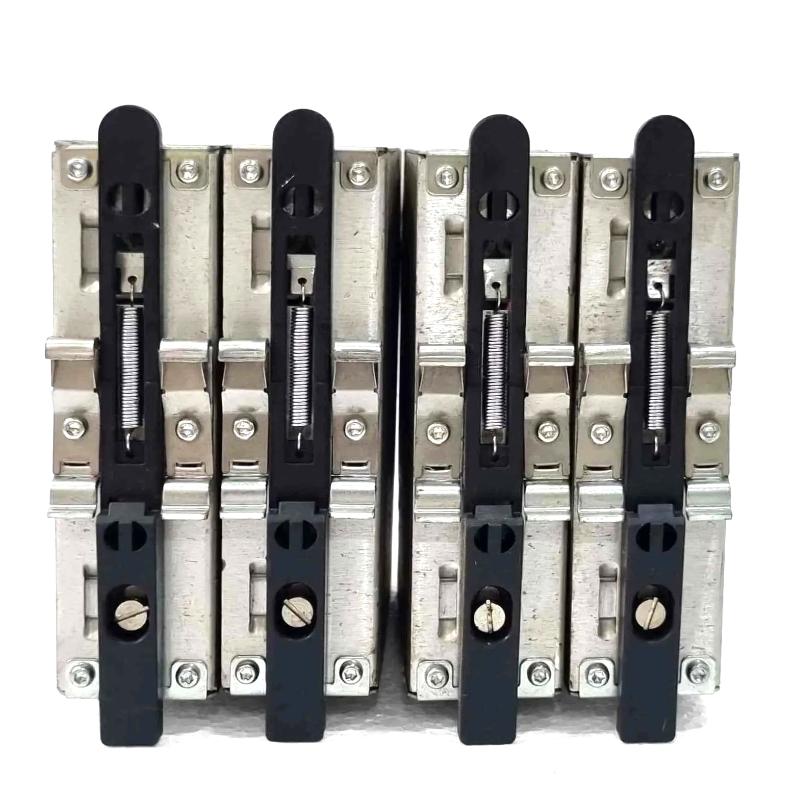
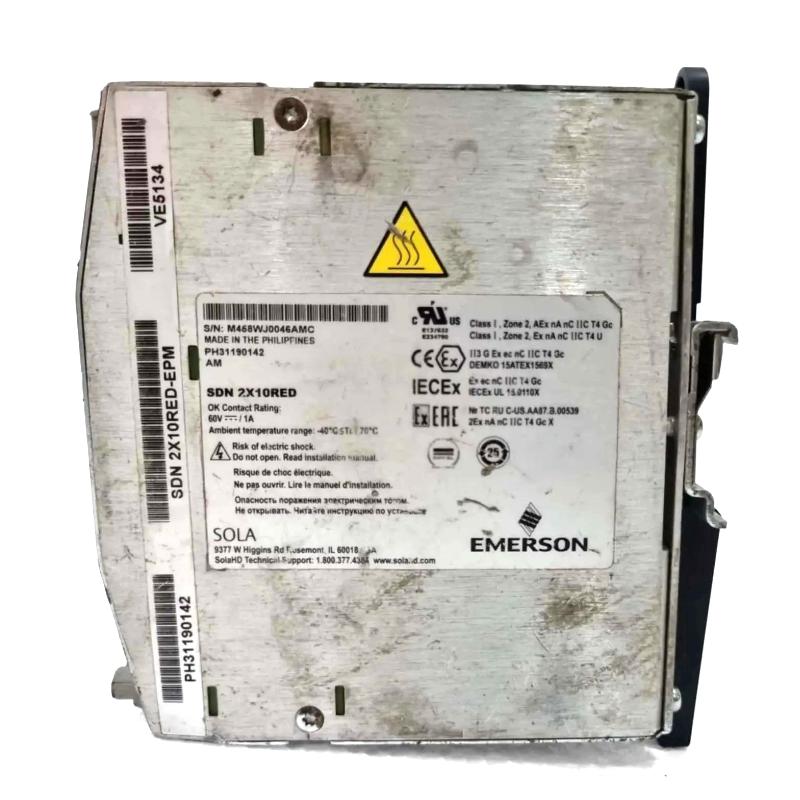
- Emerson
- VE5135
- Bulk Power Supply Redundancy Module
- USA
- 123.2 × 35 × 113.3 mm
- 0.36 kg
- Xiamen, China
- New & In Stock
- T/T, PayPal, Western Union
- 1 Year
- 1-3 Working Days
- DHL, UPS, TNT, FedEx and EMS.
- 24-Hour Service
- COO
- 5
Our advantage

Global Logistics
We have a 10-year logistics and express cooperation agreement, so our products can be shipped to any place in the world.

Brand new and original
Our products are imported in bulk from the place of origin. Because of the cooperative relationship, our products are all original and 100% new.

24-hour service
We provide 7*24 hours service to our customers. We will be there whenever you need us.

Price advantage
All our products are priced very favorably because we have our own warehouse and supply.
| Company Information | |||
| [email protected] | |||
| Mobile | +8615980777398 | ||
| +8615980777398 | |||
| 15980777398 |
Product Overview
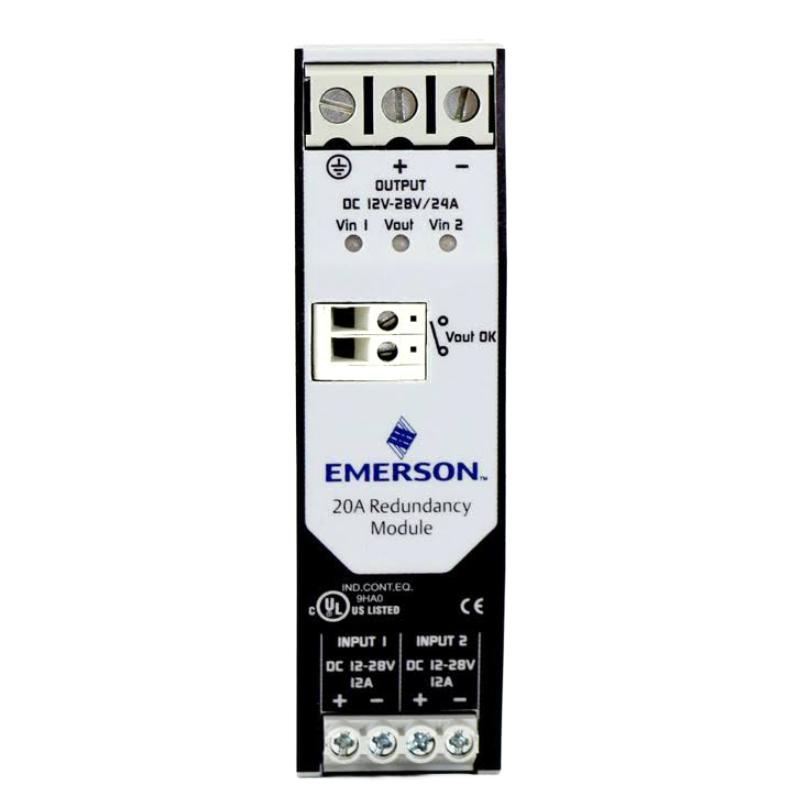
The Emerson VE5135 DeltaV Bulk Power Supply Redundancy Module is a DC power management component used to improve power availability in industrial control cabinets. It supports redundant power configurations by combining compatible DC supply paths while isolating the sources, helping prevent a fault in one supply from unnecessarily interrupting the other supply’s contribution to the load.
In a DeltaV control system, maintaining stable DC power is essential for connected control equipment, I/O interfaces, and instrumentation. The VE5135 belongs in the power distribution path between the DC sources and downstream loads. It does not replace the bulk power supplies themselves; instead, it supports the redundant power architecture and helps maintain the shared output when one source becomes unavailable.
Correct application requires checking the connected power supplies, load current, output voltage requirements, and the intended fault response. The module must be incorporated into a properly rated arrangement in which the remaining supply can support the required load if the other source fails.
Technical Specifications
| Parameter | Specification |
|---|---|
| Brand | Emerson |
| Model | VE5135 |
| Product Type | DeltaV Bulk Power Supply Redundancy Module |
| Product Series | DeltaV |
| Module Function | DC power redundancy and source isolation |
| Input Type | DC |
| Input Configuration | Dual DC power inputs |
| Output Type | DC |
| Output Configuration | Common DC output for connected loads |
| Redundancy Function | Isolates parallel DC supply paths |
| Power Conversion | No AC-to-DC conversion |
| Status Monitoring | Depends on the module’s supported status interface and installation |
| Application | Industrial control-system power distribution |
| Dimensions | 123.2 × 35 × 113.3 mm |
| Weight | 0.36 kg |
Product Features
- Redundant DC supply arrangement: Supports the use of two compatible DC power sources feeding a common load.
- Source isolation: Helps prevent one supply’s output fault from directly pulling down the other source.
- Common load connection: Simplifies routing of redundant power to downstream distribution circuits.
- Industrial control integration: Can be incorporated into suitable DeltaV power architectures.
- Reduced dependence on a single supply: Helps maintain power availability when one source fails, provided the remaining supply can carry the load.
- DC power-path operation: Functions as a redundancy component rather than an AC-to-DC conversion unit.
- System-level monitoring support: Can be incorporated into a cabinet’s power-status monitoring arrangement where the installed configuration supports it.
Working Principle
The VE5135 operates in the DC power path between compatible power supplies and the connected load. Each source is connected to its designated input. Internal isolation circuitry prevents the sources from being directly coupled in a way that would allow a fault on one supply to unnecessarily affect the other. The module then feeds the shared output from the available source or sources.
The module does not independently generate or regulate the DC supply voltage. Its output depends on the connected power supplies and the voltage drop through the module. The power system must therefore be configured so that the downstream equipment receives an appropriate voltage under both normal operation and single-source operation.
Power flow: DC power supply A + DC power supply B → isolated input paths → common DC output → protected distribution circuits → DeltaV and field loads.
Role in a DeltaV Control Architecture
The VE5135 occupies the power distribution layer of a DeltaV control architecture. It works with compatible DC power supplies to establish a redundant supply path for downstream loads. Controllers, I/O modules, and field instruments continue to perform their own control and signal-processing functions; the redundancy module supports their power arrangement rather than processing control logic or fieldbus communications.
For a redundant arrangement to work as intended, each source must be connected to the correct input, the shared output must be appropriately protected, and the surviving supply must be rated for the complete load. A redundancy module alone does not guarantee uninterrupted operation if both power sources fail or a downstream fault interrupts the output circuit.
| System Element | Role in the Architecture |
|---|---|
| DC power supply A | Provides the first DC source |
| DC power supply B | Provides the alternative DC source |
| VE5135 redundancy module | Isolates source paths and feeds the shared output |
| DC distribution terminals | Route output power to individual branches |
| Branch circuit protection | Protects downstream wiring and loads |
| DeltaV controllers and I/O equipment | Perform control and process-signal functions using their required power sources |
| Field instruments and interface devices | Consume DC power according to their electrical requirements |
| Power monitoring circuit | Monitors available status signals when supported by the configuration |
Industrial Applications
| Application | How the VE5135 Is Used |
|---|---|
| Distributed control system cabinets | Supports redundant DC power distribution for compatible control-system loads |
| Oil and gas installations | Helps maintain power availability for selected instrumentation and control circuits |
| Chemical processing plants | Supports redundant power arrangements for process monitoring and automation equipment |
| Water and wastewater facilities | Provides source isolation in suitable control-panel power systems |
| Power generation | Supports DC power continuity for compatible control and monitoring loads |
| Continuous manufacturing | Helps reduce the impact of a single power-supply failure on connected equipment |
| Remote instrumentation panels | Combines compatible DC source paths for selected field-interface equipment |
| Control-system upgrades | Adds a redundancy stage where the existing power architecture supports it |
Installation and Maintenance
- Verify the model identification: Confirm that the module is VE5135 and that it matches the intended power-system design.
- Check the DC sources: Confirm that both power supplies provide compatible voltage and are suitable for the redundancy arrangement.
- Confirm the current rating: Verify the module’s applicable current limits and ensure that the connected load remains within those limits.
- Check surviving-source capacity: Ensure that either supply can support the full load if the other source becomes unavailable.
- Verify mounting suitability: Confirm that the cabinet arrangement supports the module and allows access for wiring and maintenance.
- Isolate power before wiring: Disconnect the DC sources and follow the facility’s electrical safety procedures before installation or servicing.
- Connect the input channels correctly: Follow the equipment wiring diagram and verify each supply’s connection to its designated input.
- Observe DC polarity: Check positive and negative terminals before energizing the circuit.
- Use suitable conductors: Select wire sizes and terminal connections according to current demand, installation conditions, and applicable electrical requirements.
- Check the shared output: Confirm that the output voltage is suitable for downstream devices under normal and single-source operating conditions.
- Test the redundancy arrangement: Where the maintenance procedure permits, verify that the remaining source can maintain the required load when one source is isolated.
- Inspect during scheduled maintenance: Check terminal tightness, wiring condition, signs of overheating, mounting security, and the correct operation of the overall power arrangement.
Related Components
| Component | Function |
|---|---|
| Compatible DC bulk power supply | Provides regulated DC power to the redundancy module |
| Second DC power supply | Provides the alternative source for redundant operation |
| DC distribution terminals | Distribute the shared output to downstream circuits |
| Branch circuit protection | Protects individual output circuits and wiring |
| DeltaV controllers and I/O equipment | Use the distributed power according to their electrical requirements |
| Field instrumentation | Receives DC power through the control cabinet’s distribution system where compatible |
| Power monitoring circuit | Monitors available power-status signals |
| Cabinet grounding and wiring system | Supports installation safety and correct electrical integration |
Recommended Related Models
| Model | Product Description | Typical Use |
|---|---|---|
| VE5132 | DeltaV Bulk Power Supply Redundancy Module | Related redundancy module for compatible DC power arrangements |
| VE5123 | DeltaV Bulk Power Supply, 24 V DC, 10 A | Lower-current DC power supply applications |
| VE5126 | DeltaV Bulk Power Supply, 24 V DC, 20 A | Intermediate DC power requirements |
| VE5128 | DeltaV Bulk Power Supply, 24 V DC, 40 A | Higher-current DC power supply applications |
| VE5138 | DeltaV Bulk Power Supply, 24 V DC, 5 A | Smaller DC loads |
Key Advantages
- Redundant source support: Enables two compatible DC supplies to feed a common load.
- Fault isolation: Helps limit the effect of a single supply fault on the other input path.
- Simplified distribution: Provides a shared output for downstream DC circuits.
- System continuity support: Helps reduce single-source dependency when the surrounding architecture is correctly rated.
- Industrial control compatibility: Supports redundant power arrangements in suitable control cabinets.
- Flexible system integration: Can be combined with suitable DC supplies, branch protection, and power monitoring.
Technical FAQs
What is the primary function of the VE5135?
The VE5135 is a bulk power supply redundancy module. It isolates compatible DC supply paths and feeds a common output so that one supply can continue powering the load when the other source becomes unavailable, provided the remaining supply has sufficient capacity.
Does the VE5135 replace a DeltaV bulk power supply?
No. It performs the redundancy and source-isolation function rather than the primary AC-to-DC conversion. The system still requires suitable DC power supplies to provide the voltage and current needed by the connected equipment.
What determines whether the VE5135 can support a particular load?
The decision depends on the module’s electrical ratings, the voltage and current available from the connected supplies, the total downstream load, and the wiring and protection arrangement. The surviving supply must be capable of supporting the complete load during single-source operation.
How should the redundancy function be verified during commissioning?
Check the input connections, output voltage, load current, and status-monitoring arrangement where available. A controlled single-source test can confirm whether the remaining supply maintains the required output, but it should be performed only under an approved procedure that protects the process and connected equipment.