

ProductPRODUCT
Featured products
Contact Us
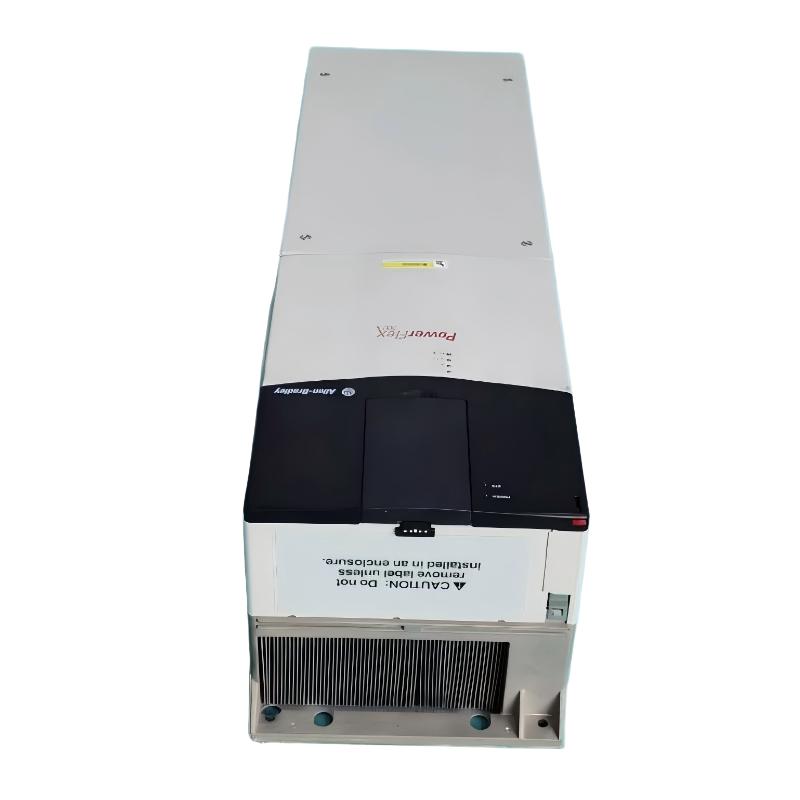
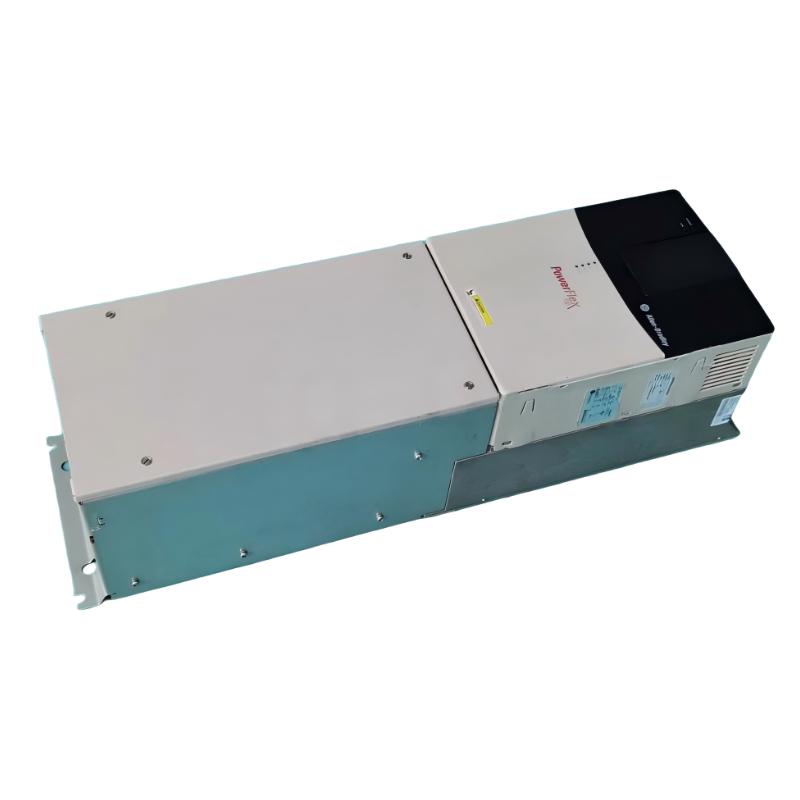
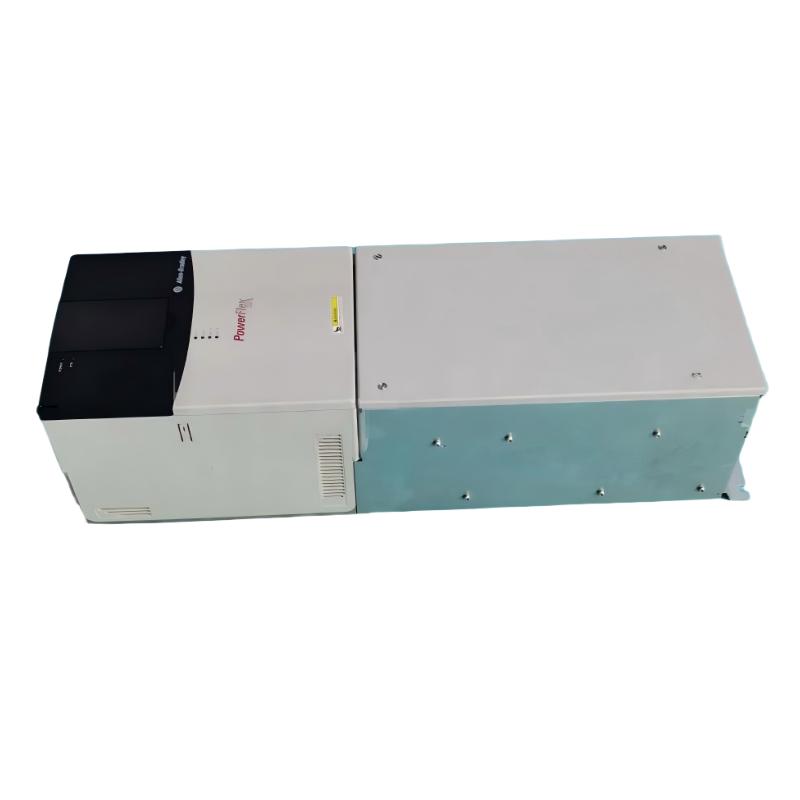
- Allen Bradley
- 20BC140A3ANNACC0
- PowerFlex AC Drive
- USA
- 689.6 × 308.9 × 275.4 mm
- 37.19kg
- Xiamen, China
- New & In Stock
- T/T, PayPal, Western Union
- 1 Year
- 1-3 Working Days
- DHL, UPS, TNT, FedEx and EMS.
- 24-Hour Service
- COO
- 6
Our advantage

Global Logistics
We have a 10-year logistics and express cooperation agreement, so our products can be shipped to any place in the world.

Brand new and original
Our products are imported in bulk from the place of origin. Because of the cooperative relationship, our products are all original and 100% new.

24-hour service
We provide 7*24 hours service to our customers. We will be there whenever you need us.

Price advantage
All our products are priced very favorably because we have our own warehouse and supply.
| Company Information | |||
| [email protected] | |||
| Mobile | +8615980777398 | ||
| +8615980777398 | |||
| 15980777398 |
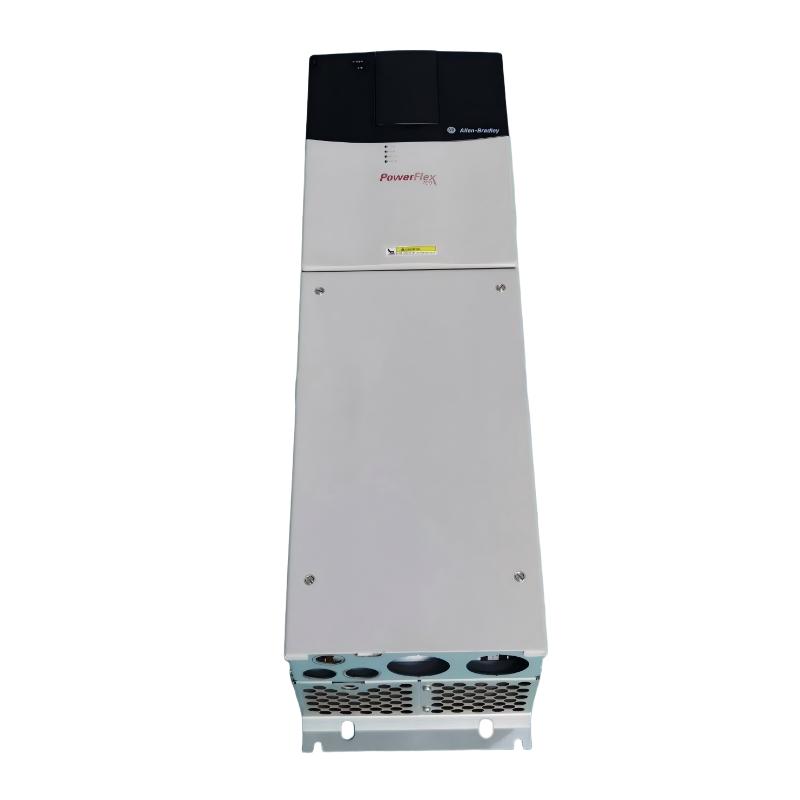
Allen-Bradley 20BC140A3ANNACC0 AC Drive — Technical Specifications, Product Overview, Applications and Related Models
1. Product Introduction
The Allen-Bradley 20BC140A3ANNACC0 is a variable-frequency AC drive in the PowerFlex 700 series, designed for industrial three-phase AC motor control. It is intended for applications that need adjustable motor speed, controlled acceleration and deceleration, and integration with industrial automation equipment.
The model belongs to the 140 A class of the PowerFlex 700 family. The associated drive rating is approximately 75 kW under normal-duty conditions and 55 kW under heavy-duty conditions, with a 400 V-class three-phase supply. These ratings make the series relevant to a range of industrial machinery, including pumps, fans, conveyors, mixers and process equipment.
The catalog number contains several configuration identifiers. In particular, the CC portion is associated with a ControlNet communication option in related PowerFlex 700 catalog configurations. However, the complete suffix should be checked against the unit’s nameplate or configuration record before assuming the exact communications hardware, feedback arrangement, braking options or operator interface.
The PowerFlex 700 family is a legacy product line. When evaluating this model for an existing installation, it is important to consider not only its electrical ratings but also the availability of compatible components, maintenance support and a practical replacement strategy.
2. Brand and Product Series
|
Item |
Specification |
|---|---|
|
Model |
|
|
Brand |
Allen-Bradley |
|
Series |
PowerFlex 700 |
|
Drive family |
20B |
|
Product type |
Variable-frequency AC drive |
|
Main function |
Industrial AC motor speed and torque control |
|
Input voltage class |
400 V AC |
|
Input phases |
Three-phase |
|
Rated output current |
140 A class |
|
Normal-duty power rating |
75 kW |
|
Heavy-duty power rating |
55 kW |
|
Communication option |
ControlNet coaxial communication configuration |
|
Enclosure class |
IP20 / NEMA Type 1 |
|
Typical installation |
Indoor industrial electrical cabinet |
|
Product lifecycle |
Legacy/discontinued family; verify support for the exact unit |
3. Detailed Technical Parameters
The following table summarizes the key ratings and configuration characteristics associated with this model. Dimensions and weight are provided as preliminary planning values and should be checked against the exact frame drawing and unit nameplate before installation.
|
Parameter |
Specification |
|---|---|
|
Model |
20BC140A3ANNACC0 |
|
Brand |
Allen-Bradley |
|
Series |
PowerFlex 700 |
|
Product category |
AC variable-frequency drive |
|
Rated input voltage |
400 V AC nominal |
|
Supported voltage class |
380–480 V AC |
|
Input frequency |
50 Hz nominal |
|
Input phase |
Three-phase |
|
Output phase |
Three-phase |
|
Rated output current |
140 A class |
|
Normal-duty motor rating |
75 kW |
|
Heavy-duty motor rating |
55 kW |
|
Maximum output frequency |
Up to 420 Hz, subject to drive settings and application limits |
|
Control type |
Vector-control configuration |
|
Control I/O voltage |
24 V DC |
|
Analog inputs |
2 |
|
Analog outputs |
2 |
|
Digital inputs |
6 |
|
Digital outputs |
3 |
|
Communication option |
ControlNet coaxial |
|
Operator interface |
LCD display and full numeric keypad expected for the A3 configuration; verify the installed HIM |
|
Encoder feedback |
No feedback option specified in the associated configuration; confirm the actual unit |
|
Internal braking IGBT |
Not included in the related configuration; verify the exact catalog record |
|
Internal braking resistor |
Not included |
|
EMC filter |
EMC filter configuration |
|
Common-mode choke |
Included in the associated filter configuration |
|
Enclosure protection |
IP20 |
|
NEMA enclosure type |
Type 1 |
|
Normal operating ambient |
Typically up to 40°C under applicable rated conditions; derating may apply |
|
Maximum altitude without derating |
Approximately 1,000 m, subject to installation requirements |
|
Relative humidity |
5–95%, non-condensing |
|
Approximate dimensions (H × W × D) |
689.6 × 308.9 × 275.4 mm; verify exact frame drawing |
|
Approximate weight |
14.5–37.2 kg, preliminary range only; confirm the actual unit and whether accessories or packaging are included |
|
Installation type |
Protected industrial cabinet |
|
Lifecycle status |
Legacy/discontinued PowerFlex 700 family |
3.1 Voltage and Current
The drive is intended for a three-phase supply in the 400 V class, with a supported drive voltage range commonly associated with 380–480 V AC equipment. The 140 A output-current class makes it suitable for compatible industrial motors when the motor’s full-load current and overload requirements fall within the drive’s rating.
When selecting a drive, the motor nameplate current should be checked alongside rated power. Two motors with the same kilowatt rating may have different current requirements because of voltage, efficiency, power factor and operating conditions.
3.2 Normal-Duty and Heavy-Duty Ratings
The 75 kW normal-duty rating and 55 kW heavy-duty rating represent different operating conditions. Normal-duty selection may be appropriate for loads with less demanding overload requirements, while heavy-duty selection should be considered for applications that require greater overload capability.
The final selection should take account of starting torque, acceleration time, load inertia, operating cycle and ambient conditions. The two ratings should not be treated as interchangeable without checking the manufacturer’s applicable rating definitions.
3.3 Vector Control
Vector control can provide more precise motor-speed and torque regulation than basic frequency-only control. Depending on commissioning and the selected control mode, it can help improve speed response under changing load conditions.
Actual performance depends on correct motor data, parameter settings, tuning and the presence or absence of feedback. If an application requires encoder-based closed-loop speed control, verify that the exact hardware configuration supports it.
3.4 ControlNet Communication
The CC portion of this catalog configuration is associated with a ControlNet coaxial communication option. This can be relevant when the drive is being integrated into an existing industrial network.
Before connecting it to a control system, confirm the communication interface, network topology, supported protocol configuration, cabling and controller compatibility. A communication option should never be assumed to be present solely because a similar catalog number includes it.
3.5 Operator Interface
The A3 configuration is associated with an operator interface featuring an LCD display and numeric keypad. This interface can support local monitoring, parameter entry and commissioning tasks.
The actual HIM fitted to a used or refurbished drive should be checked before purchase. If local operation is important, verify that the display and keypad are present and functioning.
3.6 Braking and Feedback
The related configuration does not specify an internal braking resistor, and the internal braking IGBT should be verified for this exact catalog number. Applications involving rapid deceleration, high-inertia loads or energy returned from the driven machine may need a separately engineered braking arrangement.
Likewise, encoder feedback should be treated as an option that requires confirmation. A drive suitable for open-loop speed control may not meet the requirements of an application that needs closed-loop speed regulation or precise positioning.
3.7 Enclosure and Mechanical Installation
The IP20 / NEMA Type 1 enclosure classification is intended for a suitable protected installation. The drive should not be exposed directly to rain, washdown or heavy contamination.
The stated dimensions are preliminary reference values. Confirm the exact drawing before designing the cabinet, drilling mounting holes or calculating cable clearances. The stated weight range is not a substitute for a verified mechanical specification; frame, accessories and packaging can change the measured figure.
4. Product Applications
The 20BC140A3ANNACC0 is intended for industrial motor-control tasks where the motor’s electrical requirements match the drive’s ratings. Its potential applications extend across manufacturing, material handling, process equipment and factory utilities.
4.1 Industrial Pump Systems
The drive can be considered for compatible water pumps, circulation pumps, cooling-water systems and industrial process-fluid applications.
Variable-speed operation allows the pump to adjust its output to changing demand. In suitable systems, this can reduce throttling losses and lower energy consumption when full-speed operation is unnecessary.
Before installation, check the pump curve, required flow and pressure, minimum operating speed, motor current and whether the application needs special protection against dry running or other process faults.
4.2 Industrial Fans and Ventilation
Fans and air-handling systems often operate under changing airflow requirements. A variable-frequency drive can adjust motor speed to match the required airflow and provide controlled acceleration.
Potential applications include factory ventilation, cooling fans, industrial exhaust systems and process-air equipment. Correct cabinet ventilation is particularly important because the drive itself generates heat during operation.
4.3 Conveyor and Material-Handling Systems
Conveyors benefit from controlled starts and stops, particularly when sudden acceleration can cause belt slip, material movement or mechanical shock.
The drive can be used for compatible belt conveyors, transfer conveyors, production-line material handling and feeding systems. The application should be checked for loaded-start torque, braking needs, stopping distance and the effects of a sudden loss of power.
4.4 Mixers and Agitators
Mixers and agitators often require different operating speeds during different production stages. Variable-speed control can help operators adjust mixing intensity and match the process to changing material conditions.
The main selection factors are starting torque, load inertia, duty cycle and the number of starts and stops per hour. For high-torque or heavy-starting applications, the heavy-duty rating and overload requirements deserve particular attention.
4.5 Process and Production Machinery
The drive may be suitable for compatible industrial processing equipment, auxiliary machinery and fixed production-line systems that use three-phase AC motors.
For equipment requiring precise synchronization, encoder feedback or positioning, verify that the specific drive configuration provides the necessary control functions. A standard AC drive is not automatically a replacement for a dedicated servo or motion-control system.
4.6 Industrial Network-Controlled Equipment
The ControlNet option can be relevant in installations that use a compatible ControlNet-based control architecture. It may allow the drive to exchange control and status information with the wider machine-control system.
Network compatibility depends on the installed module, controller configuration, firmware and network design. These items should be confirmed before commissioning.
5. Main Product Advantages
5.1 High-Current Industrial Motor Control
The 140 A class makes the drive suitable for a range of larger industrial motors when their current, power and duty requirements fit the drive’s limits.
The normal-duty and heavy-duty power ratings provide a useful starting point for engineering selection, although motor current and overload capability remain essential sizing criteria.
5.2 Adjustable Speed and Process Control
The drive can adjust motor speed to suit changing production requirements. This can make a process easier to control and may improve operating efficiency in variable-torque applications.
The actual benefit depends on the machine, load profile, operating speed and control strategy. Energy savings should be evaluated for the complete system rather than assumed from the presence of a drive alone.
5.3 Controlled Starting and Stopping
Programmable acceleration and deceleration can help reduce abrupt mechanical loading. This may extend the service life of belts, couplings, gearboxes and other components when the ramp settings are correctly configured.
For high-inertia loads or applications requiring rapid stops, the braking system must also be evaluated. A controlled deceleration ramp cannot replace a braking system when one is required.
5.4 Vector-Control Capability
Vector control provides a flexible approach to regulating motor speed and torque. With appropriate motor data and commissioning, it can support applications that need more consistent speed regulation under changing load conditions.
The level of performance available depends on the exact control configuration and whether the application requires feedback.
5.5 ControlNet Integration
For a plant already using compatible ControlNet equipment, the communication option may help integrate the drive into the existing automation architecture.
This can reduce the need for separate hardwired signals for every command and status point, depending on the control design. Compatibility must be confirmed for the installed network and controller.
5.6 Local Monitoring and Parameter Access
Where the expected LCD and numeric keypad are fitted, the operator interface can make local parameter adjustment and status monitoring more convenient during commissioning and maintenance.
The actual interface should be inspected on the individual unit, especially when purchasing refurbished equipment.
5.7 EMC Filter Configuration
The EMC filter and common-mode choke configuration can help address electromagnetic interference in appropriate installations. Correct grounding, cable shielding, motor-cable routing and cabinet layout remain necessary to achieve good electromagnetic compatibility.
5.8 Suitable for Industrial Cabinet Installation
The IP20 / NEMA Type 1 design is intended for a protected installation. A properly designed cabinet can provide environmental protection and allow the drive to be integrated with circuit protection, control equipment and other components.
Cabinet design must account for heat dissipation, service access, cable entry and electrical clearances.
5.9 Familiarity with Existing PowerFlex Installations
For maintenance teams already working with PowerFlex 700 equipment, a compatible drive from the same family may simplify some aspects of troubleshooting and replacement planning.
However, catalog-number differences can represent important hardware changes. Communications, feedback, braking, operator interfaces and control configurations should be checked individually.
5.10 Lifecycle Planning
The PowerFlex 700 family is a legacy product line. An existing installation may continue to operate effectively, but long-term plans should consider serviceability, replacement stock, repair options and migration to a supported drive family.
For a new installation, compare the total cost of the legacy unit with the cost of a newer alternative, including commissioning, control-system changes and future maintenance.
6. Five Related Models from the Same Series or a Similar Configuration
The following models provide useful comparison points for a 140 A PowerFlex 700 installation. The most appropriate choice depends on the motor rating, communication requirements, control method and required hardware options.
The mechanical information is deliberately identified as preliminary where the exact suffix-specific drawing has not been established. Confirm dimensions and weight from the actual model’s mechanical documentation before using them for panel construction or shipment planning.
|
Model |
Series |
Main electrical parameters |
Configuration / application notes |
Dimensions (H × W × D) |
Weight (kg) |
|---|---|---|---|---|---|
|
20BC140A0ANNACC0 |
PowerFlex 700 |
400 V class, 140 A, 75 kW normal duty / 55 kW heavy duty |
ControlNet coaxial configuration; check operator-interface option |
Approx. 689.6 × 308.9 × 275.4 mm; verify drawing |
Verify exact unit |
|
20BC140A3ANNANC0 |
PowerFlex 700 |
400 V class, 140 A, 75 kW normal duty / 55 kW heavy duty |
Related 140 A vector-control configuration; no ControlNet option indicated by this suffix |
Verify exact frame drawing |
Verify exact unit |
|
20BC140A3ANNACC0 |
PowerFlex 700 |
400 V class, 140 A, 75 kW normal duty / 55 kW heavy duty |
Target model; ControlNet coaxial configuration |
Approx. 689.6 × 308.9 × 275.4 mm; verify drawing |
Verify exact unit |
|
20BC140A3ANNANA0 |
PowerFlex 700 |
400 V class, 140 A, 75 kW normal duty / 55 kW heavy duty |
Same general current class; verify communication and operator-interface options |
Verify exact frame drawing |
Verify exact unit |
|
20BC125A3ANNANC0 |
PowerFlex 700 |
400 V class, 125 A, 55 kW normal duty / 45 kW heavy duty |
Lower-current alternative for appropriately sized motors |
Approx. 689.6 × 308.9 × 275.4 mm; verify drawing |
Approx. 37.19; verify unit |
Model Comparison Notes
20BC140A0ANNACC0
This is a related 140 A configuration with ControlNet coaxial communications. It is worth comparing when the required network interface is more important than the operator-interface arrangement. Confirm the complete catalog suffix and the actual hardware fitted to the unit.
20BC140A3ANNANC0
This is a useful comparison model in the same general current and power class. The catalog number differs in the communication-related portion, so check whether the existing control system requires ControlNet or a different method of control.
20BC140A3ANNACC0
The target model is the relevant option when a compatible ControlNet interface and the required operator-interface arrangement are part of the application. The exact feedback and braking configuration should still be verified.
20BC140A3ANNANA0
This is another related catalog configuration to assess when comparing drives in the same current class. Do not assume it contains the same communication module or operator interface as the target model.
20BC125A3ANNANC0
This lower-current model may suit a smaller motor or a less demanding application. It should only be chosen if its current and overload ratings are adequate for the actual motor and load.
7. Five Other Popular Models from the Same Brand
The following drives cover compact applications and more advanced industrial control requirements. They are not direct replacements for a 140 A PowerFlex 700; each must be checked against the motor rating, supply voltage, load duty and control requirements.
|
Model |
Series |
Main parameters |
Typical applications |
Dimensions (H × W × D) |
Weight (kg) |
|---|---|---|---|---|---|
|
25B-D017N104 |
PowerFlex 525 |
480 V class; approximately 17 A output-current class |
Compact machinery, small conveyors, pumps and fans |
Verify exact frame drawing |
Verify exact unit |
|
25B-D024N104 |
PowerFlex 525 |
480 V class; approximately 24 A output-current class |
General-purpose machine control and variable-speed applications |
Verify exact frame drawing |
Verify exact unit |
|
22B-D017N104 |
PowerFlex 40 |
480 V class; approximately 17 A output-current class |
Smaller industrial motors and basic speed control |
Verify exact frame drawing |
Verify exact unit |
|
20F11NC015JA0NNNNN |
PowerFlex 753 |
Industrial AC drive; exact current and power depend on voltage and catalog configuration |
Process equipment and demanding industrial motor applications |
Verify exact frame and enclosure drawing |
Verify exact unit |
|
20G11NC022JA0NNNNN |
PowerFlex 755 |
Industrial AC drive; exact current and power depend on voltage and catalog configuration |
Advanced industrial motor control and system integration |
Verify exact frame and enclosure drawing |
Verify exact unit |
7.1 PowerFlex 525 — 25B-D017N104
The PowerFlex 525 family is suited to compact machine-control applications where variable-speed operation and practical integration are important.
This model’s current class is substantially lower than that of the 20BC140A3ANNACC0. It may be appropriate for smaller motors or auxiliary machinery, but not as a direct replacement for the target drive without a complete engineering assessment.
7.2 PowerFlex 525 — 25B-D024N104
This model is another option for general-purpose motor control. It may be considered for conveyors, pumps, fans and similar applications when its electrical ratings match the motor.
Check the exact input voltage, current, overload capability, communication requirements and mechanical dimensions before selecting it.
7.3 PowerFlex 40 — 22B-D017N104
The PowerFlex 40 family is associated with general-purpose adjustable-speed control. It may suit simpler applications where a compact drive and straightforward speed control are sufficient.
Its current and power class are far below those of the target 140 A drive, so it should be considered for smaller motors or separate machine functions.
7.4 PowerFlex 753 — 20F11NC015JA0NNNNN
The PowerFlex 753 family is relevant to industrial applications that need a broader set of motor-control and integration capabilities.
Before selecting this model, establish its exact voltage class, rated current, power rating, feedback options, communications and enclosure configuration. These factors determine whether it is a suitable replacement or a better fit for a new application.
7.5 PowerFlex 755 — 20G11NC022JA0NNNNN
The PowerFlex 755 family is worth evaluating for more advanced industrial motor-control requirements. Depending on the configuration, it may support control and integration functions beyond those available in a basic compact drive.
A proper comparison should include drive sizing, control method, network interface, feedback requirements, braking, safety architecture and the modifications required to the existing panel.
8. Installation and Maintenance Recommendations
Electrical Sizing
Check the motor nameplate, supply voltage, rated current, frequency and overload requirements. The selected drive must support the motor’s current and the load’s actual duty cycle.
Control-System Compatibility
Confirm that the installed ControlNet option matches the control system and network architecture. Check the controller, communication module, cabling and configuration before commissioning.
Operator Interface
Inspect the drive to establish whether the LCD and numeric keypad are installed and functioning. Do not rely on the catalog number alone when assessing a used or refurbished unit.
Braking Requirements
Review the machine’s stopping time, inertia and any energy returned during deceleration. If a braking resistor or braking transistor is needed, verify the exact hardware and design the complete braking circuit accordingly.
Cabinet Design
Use the correct mechanical drawing to establish the mounting dimensions, weight, ventilation clearances and cable access. The drive should be installed in a suitable protected environment with adequate thermal management.
Preventive Maintenance
Regularly inspect the cabinet environment, cooling airflow, electrical connections and signs of contamination. Maintenance should follow the applicable installation and service instructions, with the equipment isolated and made safe before work begins.
Replacement Planning
Because the PowerFlex 700 family is discontinued, consider the availability of repair services, spare parts and compatible units. When planning a transition to another drive family, account for wiring changes, network compatibility, parameter migration, commissioning and operator training.
9. Final Technical Summary
|
Key item |
Summary |
|---|---|
|
Model |
20BC140A3ANNACC0 |
|
Brand |
Allen-Bradley |
|
Series |
PowerFlex 700 |
|
Product type |
Variable-frequency AC drive |
|
Input voltage class |
400 V AC |
|
Input phases |
Three-phase |
|
Output current class |
140 A |
|
Normal-duty power rating |
75 kW |
|
Heavy-duty power rating |
55 kW |
|
Communication configuration |
ControlNet coaxial |
|
Control arrangement |
Vector-control configuration; verify exact unit |
|
Enclosure |
IP20 / NEMA Type 1 |
|
Dimensions (H × W × D) |
Approx. 689.6 × 308.9 × 275.4 mm; confirm exact drawing |
|
Weight |
Confirm exact unit and mechanical documentation |
|
Main applications |
Pumps, fans, conveyors, mixers and compatible industrial machinery |
|
Main advantages |
Adjustable speed, controlled acceleration, vector-control capability and industrial network integration |
|
Lifecycle consideration |
Legacy/discontinued product family |
The Allen-Bradley 20BC140A3ANNACC0 is a 140 A-class PowerFlex 700 drive intended for industrial motor-control applications. Its ControlNet configuration makes network compatibility an important part of selection, while the motor’s current, load profile, braking requirements and mechanical installation remain central engineering considerations.
For a replacement project, begin with the related PowerFlex 700 models and compare their complete catalog numbers, not just their power ratings. For a new design, other drive families may be worth considering, but their voltage, current, control and mechanical characteristics must be matched to the application.
The dimensions and weight should be treated as unconfirmed planning information until the exact unit’s mechanical drawing is available. This is especially important for cabinet design, shipping arrangements and direct replacement work.