

ProductPRODUCT
Featured products

Contact Us
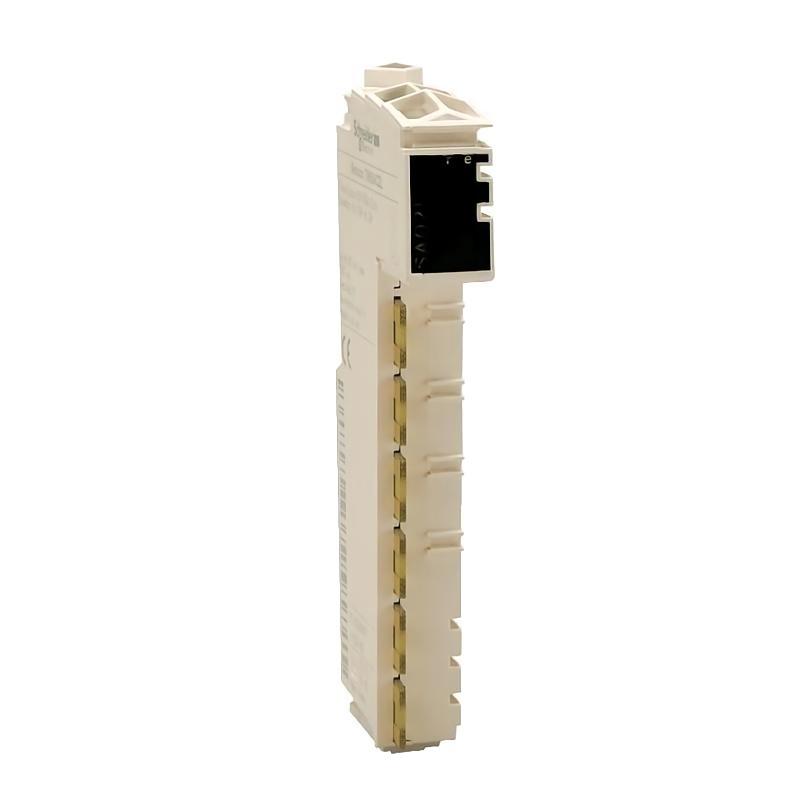
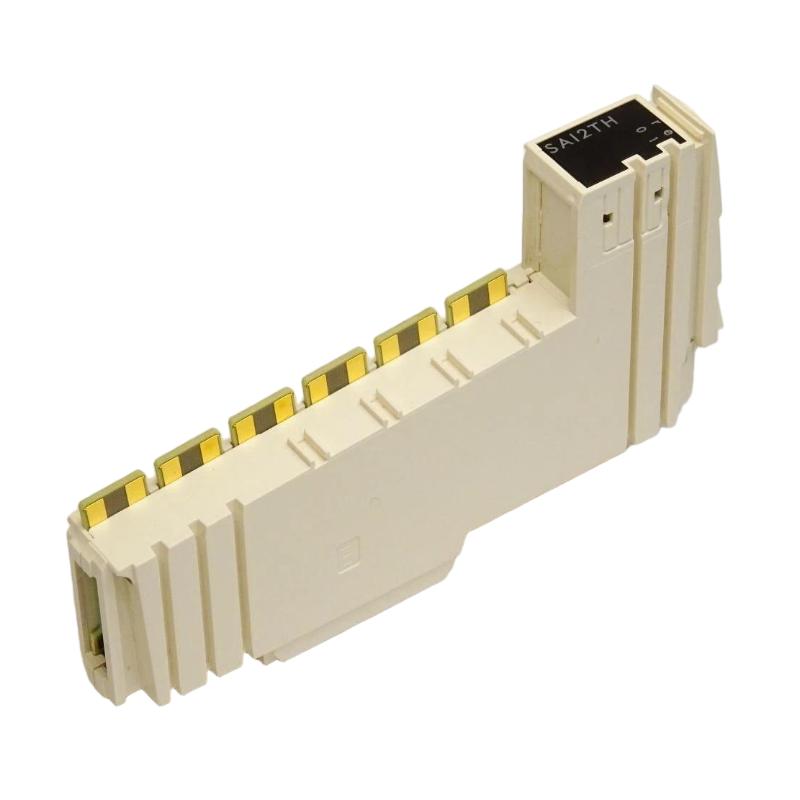
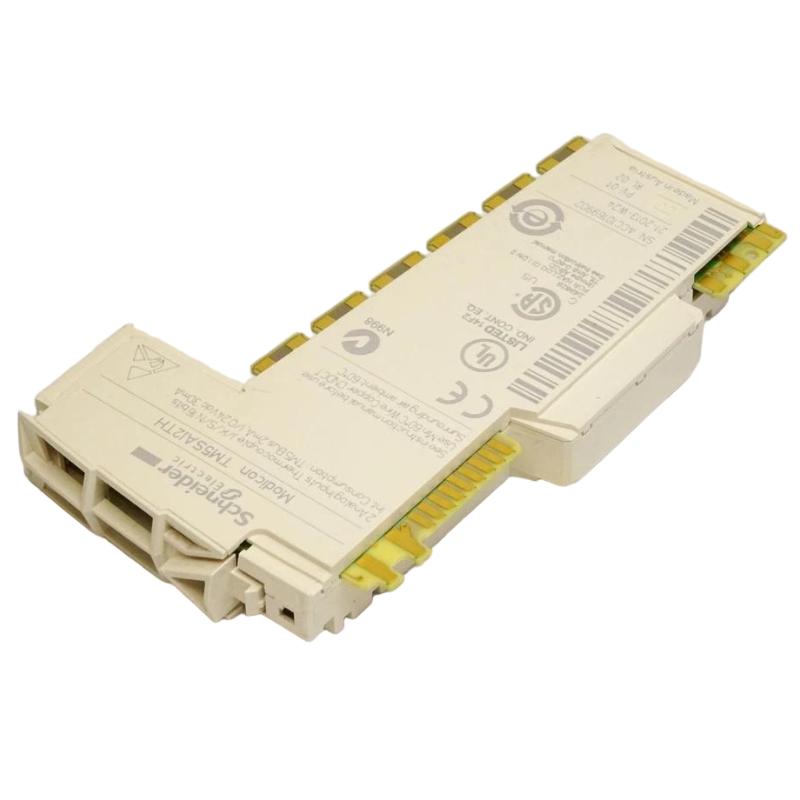
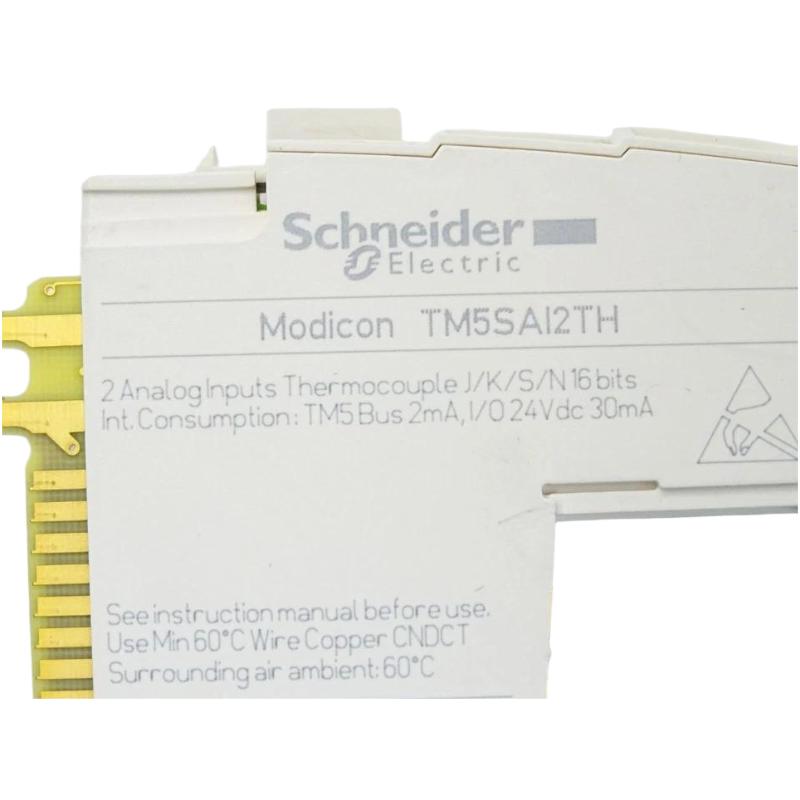
- Schneider
- TM5SAI2TH
- Analog Input Module
- France
- 99 × 12.5 × 75 mm
- 0.025 kg
- Xiamen, China
- New & In Stock
- T/T, PayPal, Western Union
- 1 Year
- 1-3 Working Days
- DHL, UPS, TNT, FedEx and EMS.
- 24-Hour Service
- COO
- 7
Our advantage

Global Logistics
We have a 10-year logistics and express cooperation agreement, so our products can be shipped to any place in the world.

Brand new and original
Our products are imported in bulk from the place of origin. Because of the cooperative relationship, our products are all original and 100% new.

24-hour service
We provide 7*24 hours service to our customers. We will be there whenever you need us.

Price advantage
All our products are priced very favorably because we have our own warehouse and supply.
| Company Information | |||
| [email protected] | |||
| Mobile | +8615980777398 | ||
| +8615980777398 | |||
| 15980777398 |
Product Overview
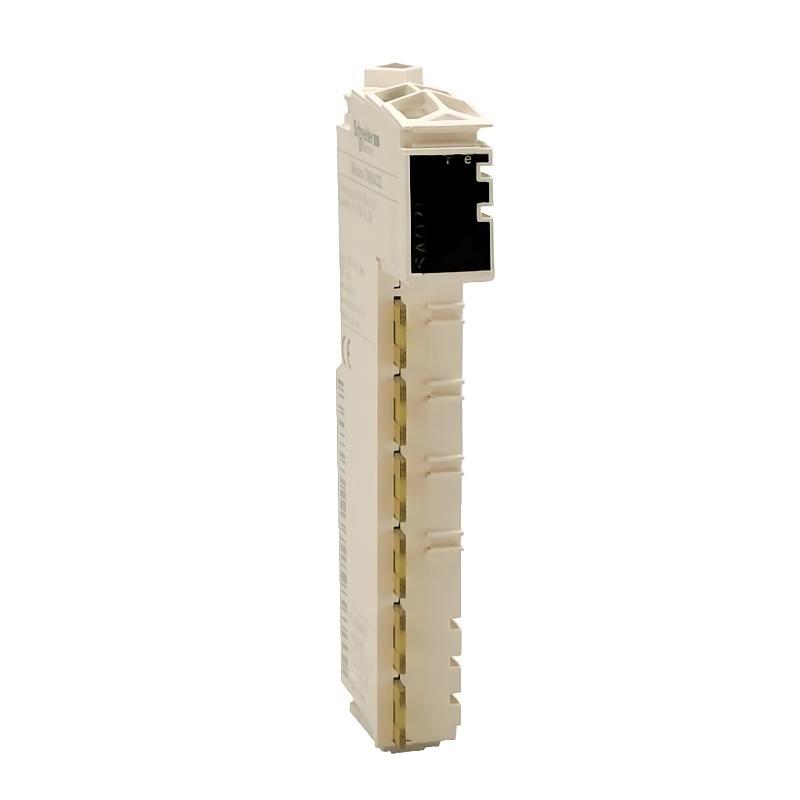
The Schneider Electric TM5SAI2TH Analog Input Module is an industrial automation component identified for analog signal acquisition within compatible control systems. Analog input modules allow a controller to receive information from field instruments that represent continuously changing process conditions. Depending on the connected instrumentation and system configuration, these measurements may be used for monitoring, control logic, alarms, and process optimization.
In industrial environments, many important process variables cannot be represented adequately by a simple ON/OFF signal. Temperature, pressure, flow, level, and other physical quantities may change gradually during normal operation. Compatible transmitters and sensors convert these physical conditions into electrical signals that an analog input interface can acquire for use by a controller.
The TM5SAI2TH is identified by its supplied product description as an analog input module. Its listed dimensions are 99 × 12.5 × 75 mm, and its listed weight is 0.025 kg (25 g). This compact size can be useful in control installations where modular construction and efficient use of cabinet space are important.
For engineering, maintenance, and procurement purposes, the complete part number should be verified against the installed device and the applicable Schneider Electric documentation. The exact input types, supported signal ranges, resolution, channel configuration, temperature-sensor compatibility, and installation requirements should be confirmed before the module is connected to field instrumentation.
Technical Specifications
| Parameter | Specification |
|---|---|
| Manufacturer | Schneider Electric |
| Model | TM5SAI2TH |
| Product Type | Analog Input Module |
| Product Family | TM5 modular automation range, subject to exact catalog verification |
| Primary Function | Acquisition of compatible analog input signals |
| Signal Type | Analog; exact supported input types require verification |
| Application | Industrial process measurement and automation |
| Dimensions | 99 × 12.5 × 75 mm |
| Weight | 0.025 kg (25 g) |
| Installation | Compatible modular control-system arrangement; verify the required base and mounting configuration |
| Controller Compatibility | Confirm against the host controller and hardware configuration |
| Input Channel Count | Verify from the exact product specification |
| Input Range and Resolution | Verify from the applicable technical documentation |
| Typical Applications | Process monitoring, machine automation, and industrial instrumentation |
The dimensions and weight above are based on the supplied product information. Electrical specifications are intentionally not assumed because the exact hardware configuration must be established before selecting sensors, designing wiring, or configuring the controller.
What Is the Schneider TM5SAI2TH?
An analog input module is an interface between field instrumentation and an automation controller. It receives electrical signals that represent measured process variables and makes the acquired information available to the control system.
For example, a compatible temperature transmitter may produce an analog signal corresponding to the measured temperature. A pressure transmitter may provide a signal representing pressure in a pipeline, while a level transmitter can report the level of liquid in a storage tank.
The analog input module processes the incoming signal according to its supported electrical design. The controller can then use the resulting measurement in its program to evaluate operating conditions and determine the appropriate response.
A simplified signal path is:
Process Variable → Sensor or Transmitter → Analog Input Module → Controller → Monitoring or Control Action
The exact arrangement depends on the connected instrumentation, controller architecture, and configured measurement range.
Function and Working Principle
1. Analog Signal Acquisition
The primary function of an analog input module is to receive supported electrical signals from field devices. Unlike a digital input, which generally represents a discrete state, an analog input carries information that varies across a defined range.
Depending on the verified capabilities of the selected module, an analog measurement system may be designed to acquire signals from compatible transmitters or sensors. The supported signal types must be checked before wiring because voltage inputs, current inputs, resistance measurements, and temperature-sensor inputs require different electrical interfaces.
2. Signal Conditioning
Analog signals can be affected by wiring resistance, electrical interference, grounding problems, and variations in the field environment. An analog input interface is designed to handle its supported signal types within specified electrical limits.
Signal conditioning and filtering behavior depend on the exact module. Engineers should consult the product specification to determine the supported filtering options, input impedance, isolation arrangement, and other characteristics relevant to the application.
3. Conversion into Digital Data
A controller processes digital data, while many field instruments provide continuously varying electrical signals. An analog acquisition system therefore converts the supported input signal into a numerical representation.
The conversion range and resolution determine how the measured signal is represented. These values affect measurement granularity and should be considered when selecting instruments for applications that require particular levels of accuracy.
The exact conversion method, resolution, and performance specifications of the TM5SAI2TH should be confirmed from the relevant product documentation.
4. Measurement Scaling
After the input data is acquired, the controller program can scale the value into engineering units. For example, a correctly configured input may be interpreted as a temperature, pressure, liquid level, or flow measurement.
Scaling requires the field instrument’s output range, the input module’s supported range, and the controller configuration to match. Incorrect scaling can cause a valid electrical signal to be displayed as an incorrect process value.
5. Process Monitoring and Control
Once the measurement is available to the controller, the program can compare it with configured operating limits. Depending on the application, the controller may display the value, generate an alarm, record a trend, or adjust a control output.
The module acquires the signal; the controller program and associated control equipment determine how the measurement affects the process.
Role in Industrial Control Systems
Analog input modules are an important part of automation systems that rely on continuous process information. They help bridge the gap between physical conditions in the field and the digital logic used by industrial controllers.
In a typical installation, field instruments are connected to an analog input interface, and the controller processes the resulting measurements. Operator interfaces and supervisory systems may then display the information or use it for higher-level monitoring.
| System Component | Typical Function |
|---|---|
| Temperature Sensor or Transmitter | Measures temperature and provides a compatible signal |
| Pressure Transmitter | Converts pressure into an electrical measurement signal |
| Flow Transmitter | Provides a signal representing flow |
| Level Transmitter | Reports liquid or material level |
| Analog Input Module | Acquires compatible analog signals |
| PLC or Automation Controller | Processes measurements and executes control logic |
| Analog Output Interface | Provides variable control signals where required |
| HMI Panel | Displays process values, alarms, and operating status |
| Supervisory Monitoring System | Collects process information for monitoring and analysis |
| Industrial Power Supply | Provides appropriately rated control power |
The actual components used with the TM5SAI2TH must be selected according to its confirmed specifications and the host system’s requirements.
Industrial Applications
Process Temperature Monitoring
Industrial production often requires temperature measurements to remain within defined operating limits. A compatible temperature instrument and acquisition arrangement can provide the controller with information for monitoring, alarms, and process sequencing.
The specific sensor type must match the module’s supported input interface. A temperature-related model designation alone should not be treated as proof that every temperature sensor can be connected directly.
Pressure Monitoring
Pressure transmitters are commonly installed in fluid-handling equipment, hydraulic systems, and industrial process lines. Their measurements can help operators identify changes in operating conditions and allow a controller to respond to pressure-related events.
Successful integration requires matching the transmitter’s output signal to the input module’s electrical characteristics.
Flow Measurement
Flow instruments can provide continuous measurements for liquid, gas, or other process media. When a compatible signal is available, the controller can use the measurement for monitoring consumption, evaluating process performance, or coordinating equipment operation.
Liquid-Level Monitoring
Storage tanks, vessels, and process containers may require continuous level monitoring. An appropriate transmitter can provide an analog signal that the automation system interprets as a level measurement.
The controller may use this information for display, alarm generation, or coordinated filling and emptying operations.
Manufacturing and Machine Automation
Analog measurements are also used in manufacturing equipment where a process variable must be monitored continuously. Depending on the instrumentation and application, these measurements can support quality monitoring, machine adjustment, and process consistency.
Utilities and Industrial Facilities
Utility systems may use analog measurements to monitor operating conditions in water systems, compressed-air installations, heating and cooling equipment, and other industrial infrastructure. Suitability depends on the input characteristics of the module and the signals produced by the connected instruments.
Installation and System Integration
Correct installation helps ensure that the analog input module acquires signals accurately and operates reliably within the automation system.
Verify the Product Identity
Before installation, confirm the complete model designation TM5SAI2TH and check it against the existing hardware, project records, and applicable product documentation.
Confirm the required mounting base, terminal arrangement, hardware revision, and host-controller compatibility. Modules within the same product family may have similar physical dimensions while supporting different electrical functions.
Confirm Sensor Compatibility
Before connecting any field instrument, verify:
- Supported input signal types
- Permitted input ranges
- Channel configuration
- Input impedance and electrical loading
- Sensor excitation or power requirements, if applicable
- Isolation and grounding requirements
- Wiring and terminal assignments
- Required hardware and software configuration
These details are essential when selecting a sensor or transmitter. Do not assume that a voltage signal, current signal, resistance sensor, or temperature sensor is supported without checking the exact specification.
Prepare the Control Cabinet
Install the module using the prescribed mounting arrangement and maintain the environmental conditions required by the hardware. Allow sufficient room for wiring, inspection, and servicing.
Organize analog signal wiring carefully. Where required by the installation design, keep low-level signal cables separated from high-power conductors and switching equipment to reduce interference.
Connect the Field Instruments
Follow the verified wiring diagram for each input channel. Confirm polarity where applicable, identify signal conductors, and ensure that the field device and module share the intended electrical reference or isolation arrangement.
Before energizing the installation, inspect the wiring for loose terminals, damaged insulation, accidental shorts, and incorrect connections.
Configure the Controller
Configure the hardware using the engineering environment supported by the host automation system. Select the correct module entry and establish the input assignments according to the project configuration.
Set the appropriate measurement range and scaling parameters where required. The configuration must correspond to the connected instrument and the actual electrical interface.
Commission and Validate Measurements
During commissioning, compare the controller’s displayed measurement with a suitable reference instrument or known process condition. Check the input at several points across the expected operating range where practical.
Verify that the controller displays the correct engineering units and responds appropriately to changes in the field signal. Document the final configuration, channel assignments, and test results.
Troubleshooting the TM5SAI2TH Analog Input Module
Analog measurement problems may originate from the field instrument, signal wiring, input configuration, controller program, or module itself. A systematic check of the complete signal path is more effective than replacing hardware immediately.
No Analog Value Is Available
Possible causes include:
- Loss of field-instrument power
- Disconnected or damaged wiring
- Incorrect terminal assignment
- Unsupported signal type
- Incorrect module configuration
- Missing or incorrect channel assignment
- Hardware seating or connection problems
- A defective instrument or module
Begin by checking the field instrument’s power and output. Inspect the wiring and verify the input configuration. If necessary, use an appropriate measuring instrument and qualified procedures to compare the actual signal with the module’s specified input range.
Measurement Is Too High or Too Low
Incorrect readings may result from mismatched signal ranges, incorrect scaling, unsuitable wiring, an incorrectly configured instrument, or a sensor fault.
Confirm the instrument’s output range and compare it with the input range configured in the controller. Check the engineering-unit conversion and ensure that the selected hardware configuration matches the installed module.
Measurement Is Unstable
Fluctuating analog values can be caused by electrical interference, loose terminals, damaged cables, unstable instrument power, poor grounding, or genuine variations in the process.
Inspect the signal wiring and its route through the cabinet. Compare the field signal with the value reported by the controller to help determine whether the problem originates in the instrument, wiring, or acquisition system.
Measurement Is Fixed at One Value
A constant reading may indicate a field instrument that is not responding, an output signal that is stuck, incorrect scaling, or a problem with the acquisition channel.
Check whether the instrument’s physical measurement is changing and whether its output signal follows that change. Then verify the module’s configuration and the controller’s interpretation of the input data.
Controller Reports a Hardware or Configuration Fault
If the control system reports a module-related diagnostic, verify the full product number, module seating, terminal connections, configuration selection, and controller compatibility.
Record diagnostic information before making changes. Follow the applicable isolation and electrostatic-discharge precautions when handling electronic hardware.
Maintenance Recommendations
Routine inspection and documentation can help maintain the quality of analog measurements.
Inspect field wiring: Check for damaged insulation, loose terminals, moisture, corrosion, and cable-routing problems.
Check the instruments: Confirm that connected sensors and transmitters operate correctly and produce signals within their specified ranges.
Review measurement trends: Gradual changes or unusual fluctuations may indicate sensor drift, wiring degradation, or a genuine process change.
Verify scaling: Ensure that engineering units, measurement ranges, and controller calculations remain consistent with the installed instruments.
Maintain the installation environment: Keep the cabinet within the specified environmental limits and protect the hardware from contamination and mechanical damage.
Document replacements and changes: Record the complete module identification, configuration, wiring assignments, and commissioning results whenever maintenance work is performed.
Maintenance intervals should be determined according to the equipment requirements, process conditions, and the importance of measurement reliability.
Compatible System Components
The TM5SAI2TH may be part of a modular automation installation containing several functional component types. Compatibility must be confirmed for the exact hardware configuration.
| Component Type | Purpose |
|---|---|
| Compatible Automation Controller | Processes input data and executes control logic |
| Analog Sensors and Transmitters | Measure physical process variables |
| Modular Mounting or Connection Base | Provides the required mechanical and electrical interface, where applicable |
| Digital Input Modules | Acquire discrete field signals |
| Digital Output Modules | Provide discrete control signals |
| Analog Output Modules | Provide variable output signals where required |
| Terminal Blocks | Organize field wiring |
| Industrial Power Supply | Provides rated power to the control system |
| HMI Panel | Displays measurements and alarm information |
| Engineering Software | Supports configuration, diagnostics, and maintenance |
This list describes typical functional roles in a modular automation system. It does not establish direct compatibility with any particular controller, base, or accessory. Confirm the supported system architecture before selecting related hardware.
Replacement and Procurement Considerations
When purchasing or replacing the Schneider TM5SAI2TH, verify the complete part number and compare it with the existing module and project documentation.
Important considerations include:
- Exact model and hardware revision
- Supported analog signal types
- Input range and channel configuration
- Resolution and accuracy requirements
- Terminal and mounting arrangement
- Host-controller compatibility
- Required accessories and configuration
- Product condition and traceability
The listed dimensions are 99 × 12.5 × 75 mm, and the listed weight is 0.025 kg. These values are useful for inventory management, cabinet-space planning, and shipping calculations, but they do not establish electrical compatibility.
A replacement should be tested after installation. Confirm that each connected instrument produces the expected controller value and that the complete measurement chain operates correctly under the intended process conditions.
Key Advantages of Analog Input Integration
Access to Continuous Process Information
Analog acquisition allows a compatible control system to use continuously varying measurement data rather than relying exclusively on discrete ON/OFF states.
Support for Process Monitoring
When paired with suitable instruments, analog input interfaces can provide information about operating conditions such as temperature, pressure, flow, or level.
Integration with Automated Control Logic
The controller can use acquired measurements to support alarms, sequencing, monitoring, and control strategies appropriate to the application.
Compact Physical Design
With supplied dimensions of 99 × 12.5 × 75 mm and a weight of 25 g, the module has a compact listed physical profile. Actual installation space depends on the required mounting arrangement and adjacent components.
Improved Maintenance Visibility
Documented input assignments, signal ranges, and measurement trends help maintenance teams investigate instrument faults and diagnose abnormal process values.
Technical FAQs
What is the Schneider TM5SAI2TH?
The TM5SAI2TH is identified by the supplied product description as a Schneider Electric analog input module for acquiring compatible analog signals in an industrial automation system.
What is the primary function of an analog input module?
It receives supported electrical measurement signals from field instruments and makes the corresponding data available to a compatible controller for monitoring and control logic.
What are the dimensions of the TM5SAI2TH?
The supplied dimensions are 99 × 12.5 × 75 mm.
How much does the TM5SAI2TH weigh?
The supplied weight is 0.025 kg, equivalent to 25 g.
Which sensors can be connected to this module?
Sensor compatibility depends on the module’s verified electrical input types and ranges. Check the exact product documentation before connecting a temperature sensor, transmitter, or other field instrument.
Does the module measure temperature directly?
The model designation alone is not sufficient to establish the supported sensor types. Confirm whether the exact hardware accepts the intended temperature-sensor signal directly or requires a compatible transmitter or separate interface.
What causes an incorrect analog reading?
Common causes include incorrect scaling, a mismatched signal range, sensor faults, wiring errors, electrical interference, grounding problems, and configuration mismatches.
Can another Schneider analog input module replace the TM5SAI2TH?
Not automatically. Confirm the input type, channel arrangement, electrical characteristics, mounting requirements, and controller compatibility before treating another module as a replacement.
How can measurement accuracy be checked?
Compare the reported value with a suitable reference measurement across the expected operating range. Verify the sensor output, wiring, input configuration, and engineering-unit scaling.
Conclusion
The Schneider Electric TM5SAI2TH Analog Input Module is identified as a modular industrial automation component intended to acquire analog measurement signals for use by a compatible control system. Analog input acquisition supports monitoring of continuously changing process conditions and allows controllers to incorporate measurement data into alarms, operating sequences, and appropriate control strategies.
With supplied dimensions of 99 × 12.5 × 75 mm and a weight of 0.025 kg, the module offers a compact physical profile for suitable control installations. Reliable operation depends on selecting compatible field instruments, verifying the electrical input requirements, configuring the controller correctly, and validating measurements during commissioning.
Before installation or replacement, confirm the complete TM5SAI2TH model designation and its applicable hardware specifications. Careful wiring, accurate signal scaling, systematic troubleshooting, and documented maintenance help support dependable analog measurement and long-term industrial automation performance.