

ProductPRODUCT
Featured products
Contact Us
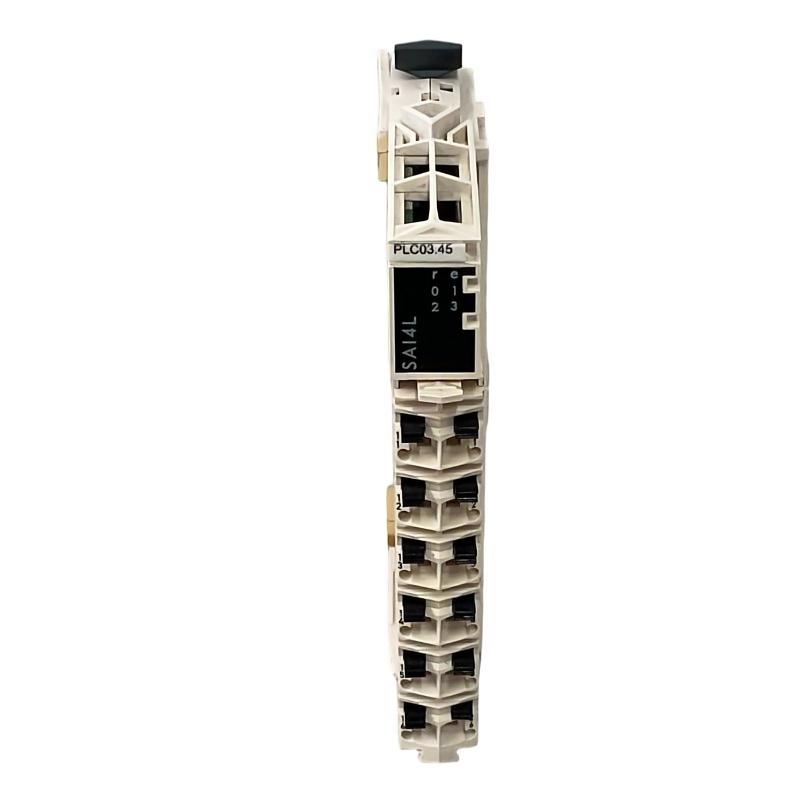
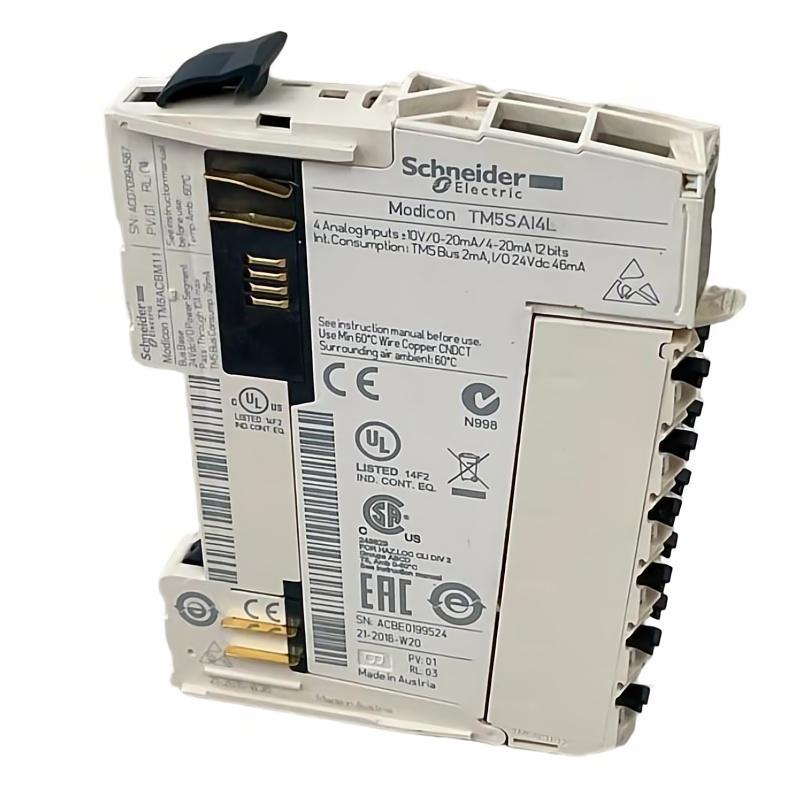
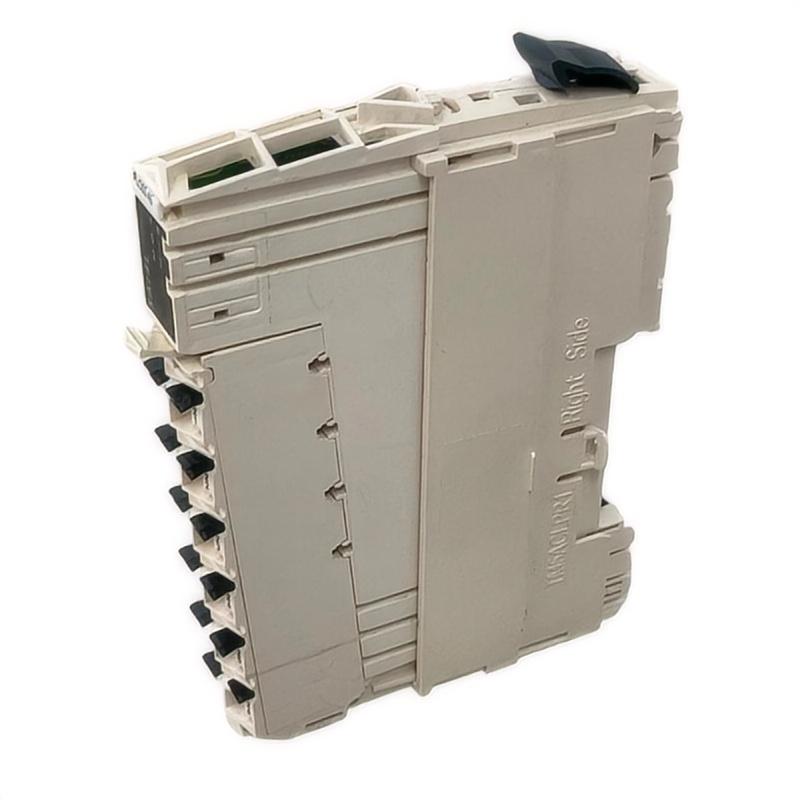
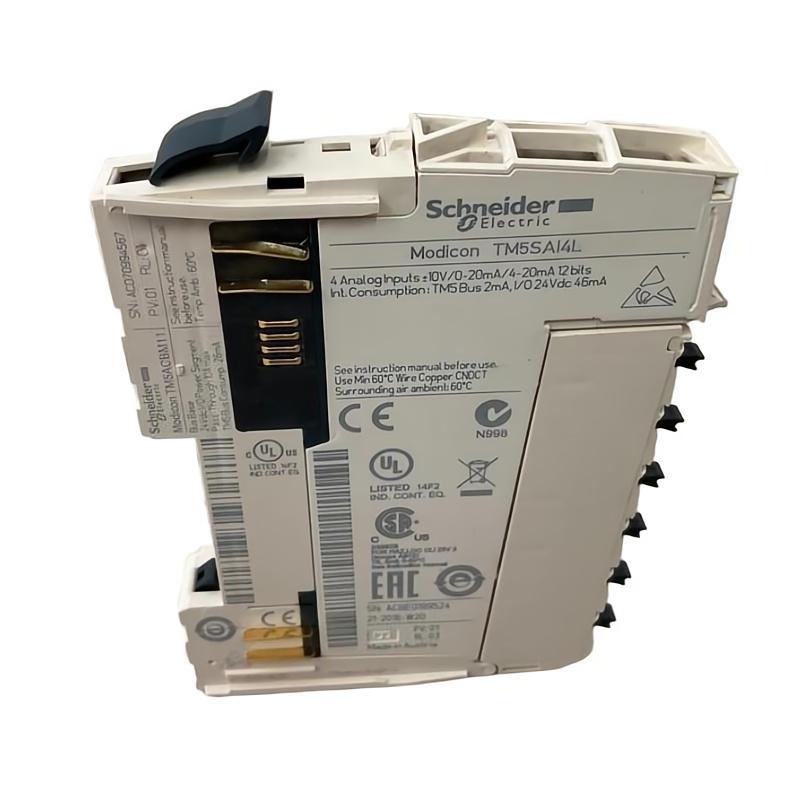
- Schneider
- TM5SAI4L
- Analog Input Module
- France
- 99 × 12.5 × 75 mm
- 0.025 kg
- Xiamen, China
- New & In Stock
- T/T, PayPal, Western Union
- 1 Year
- 1-3 Working Days
- DHL, UPS, TNT, FedEx and EMS.
- 24-Hour Service
- COO
- 3
Our advantage

Global Logistics
We have a 10-year logistics and express cooperation agreement, so our products can be shipped to any place in the world.

Brand new and original
Our products are imported in bulk from the place of origin. Because of the cooperative relationship, our products are all original and 100% new.

24-hour service
We provide 7*24 hours service to our customers. We will be there whenever you need us.

Price advantage
All our products are priced very favorably because we have our own warehouse and supply.
| Company Information | |||
| [email protected] | |||
| Mobile | +8615980777398 | ||
| +8615980777398 | |||
| 15980777398 |
Product Overview
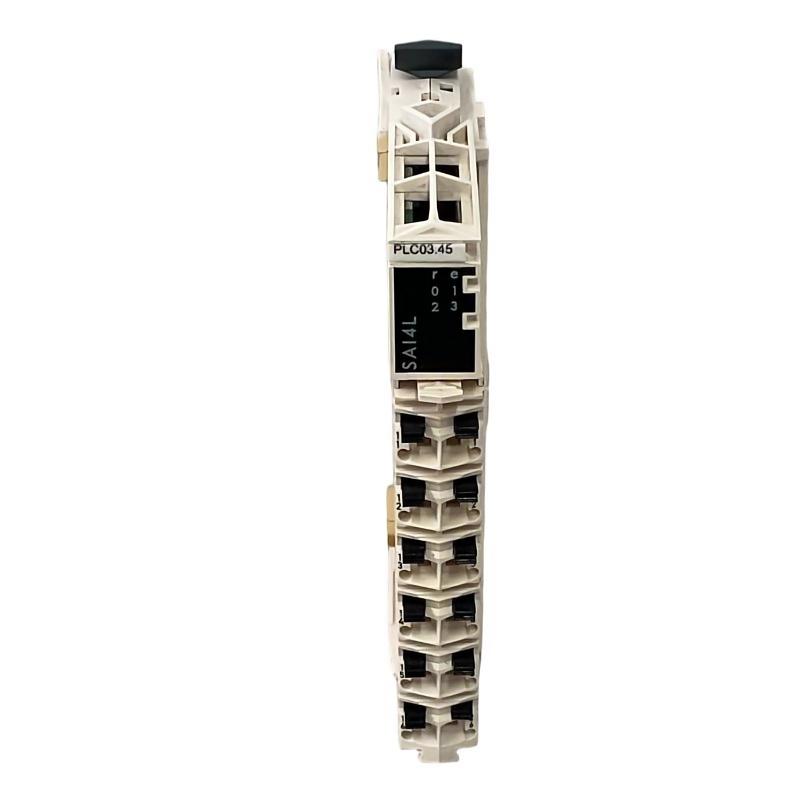
The Schneider Electric TM5SAI4L Analog Input Module is an industrial automation component identified for analog signal acquisition within a compatible control system. Analog input modules enable controllers to receive measurement signals from field instruments and use the resulting data for process monitoring, equipment regulation, and automated decision-making.
Unlike digital input modules, which generally detect discrete ON/OFF states, analog input modules are designed to acquire signals representing continuously varying process conditions. Depending on the supported electrical interface and connected instrument, analog measurements can represent variables such as temperature, pressure, flow, liquid level, and other process parameters.
In a typical industrial installation, a field transmitter converts a physical measurement into an electrical signal. The analog input interface receives the signal and makes the corresponding measurement data available to the controller. The control program can then compare the measurement with configured limits, display operating values, generate alarms, or adjust equipment through appropriate output devices.
The Schneider Electric TM5SAI4L has supplied physical dimensions of 99 × 12.5 × 75 mm and a weight of approximately 0.025 kg (25 g). Its compact dimensions are useful when planning control-system layouts where space efficiency and organized signal wiring are important.
Before installation, verify the exact product designation, supported signal types, channel configuration, terminal arrangement, and compatibility with the intended Schneider Electric automation platform. These characteristics should be confirmed from the product label and applicable hardware documentation rather than inferred from the model name alone.
Technical Specifications
| Parameter | Specification |
|---|---|
| Manufacturer | Schneider Electric |
| Model | TM5SAI4L |
| Product Type | Analog Input Module |
| Product Category | Industrial Automation / Signal Acquisition |
| Primary Function | Acquisition of analog measurement signals |
| Signal Type | Analog; supported electrical ranges require verification |
| System Role | Interface between compatible field instruments and a controller |
| Dimensions | 99 × 12.5 × 75 mm |
| Weight | 0.025 kg (25 g) |
| Installation | Compatible mounting and connection arrangement; verify before installation |
| Typical Applications | Process monitoring, measurement acquisition, and automated control |
| System Compatibility | Confirm against the exact controller, hardware configuration, and product documentation |
Specification note: The dimensions and weight above follow the supplied product information. The number of channels, supported voltage or current ranges, resolution, accuracy, conversion time, isolation characteristics, and sensor compatibility have not been independently established here and should be checked before procurement or commissioning.
What Is the Schneider TM5SAI4L Analog Input Module?
An analog input module is used to acquire electrical signals that vary over a range rather than simply switching between two states. These signals allow an industrial controller to work with measured process values instead of relying exclusively on discrete status information.
For example, a pressure transmitter may provide a signal corresponding to the pressure inside a pipeline. A level transmitter may represent the amount of liquid in a tank, while a flow transmitter may provide information about the rate of material moving through a process.
The analog input module provides the electrical interface through which compatible measurement signals can be acquired. The controller then uses the measurement data according to the configured application logic.
A simplified measurement chain is:
Physical Process → Sensor or Transmitter → Analog Signal → TM5SAI4L Interface → Controller Processing → Monitoring or Control Response
The exact signal path depends on the installed hardware and the electrical interface supported by the module.
Function and Working Principle
1. Analog Signal Acquisition
The module receives measurement signals from compatible field instruments. These signals may represent changing process values such as pressure, flow, temperature, or level, depending on the sensor and supported input type.
Before connecting an instrument, the user must verify that its output signal matches the module’s electrical requirements. A mismatch between the transmitter output and the input interface can produce invalid measurements or damage equipment.
2. Signal Conditioning
Analog measurement signals can be affected by electrical noise, cable resistance, grounding arrangements, and field-device behavior. Depending on the module design, the input interface may incorporate circuitry for receiving and conditioning the incoming signal.
The actual conditioning method and any supported filtering or isolation functions must be confirmed from the exact product specification.
Correct wiring, suitable cable routing, and compliance with the installation requirements are essential for reliable measurement acquisition.
3. Analog-to-Digital Conversion
Industrial controllers process measurement information in digital form. An analog input system therefore converts the received analog signal into numerical data that can be used by the controller.
The conversion process and resulting measurement quality depend on the hardware’s resolution, accuracy, supported input range, and configuration. These values should not be assumed without verifying the specific module’s technical data.
4. Measurement Scaling
The electrical signal received from a field instrument often represents a physical engineering value. The controller may need to apply scaling so that the acquired data corresponds to units such as degrees Celsius, bar, liters per minute, or millimeters.
Correct scaling depends on the transmitter configuration, the module’s supported signal range, and the PLC program. Incorrect scaling can cause an otherwise valid electrical measurement to appear inaccurate.
5. Controller Processing
After acquisition and configuration, the measurement data can be used by the control program. Depending on the application, the controller may compare the value with a setpoint, calculate a process deviation, activate an alarm, or adjust an output.
The module provides the measurement interface; the controller program and wider control system determine how that measurement is used.
Role in Industrial Control Systems
The TM5SAI4L is identified as an analog input module, a category of hardware used to connect measurement instruments with industrial control systems. In an automated installation, analog measurement acquisition complements digital status monitoring and enables more detailed observation of process conditions.
For example, a digital input may indicate whether a pump is running, while an analog measurement may provide pressure or flow information associated with the same process. Combining these data types gives the controller a more complete view of equipment operation.
Typical system responsibilities include:
- Acquiring measurement signals from compatible field instruments
- Making process data available to controller logic
- Supporting continuous process monitoring
- Providing data for alarms and operating limits
- Enabling closed-loop control when the complete system is designed for that purpose
- Supplying measurement information for operator displays and supervisory systems
The precise role of the TM5SAI4L depends on the confirmed hardware configuration and the application in which it is installed.
Industrial Applications
Process Measurement and Monitoring
Industrial processes often depend on accurate measurements of physical variables. Analog input interfaces can support the acquisition of signals from compatible transmitters so that the controller can monitor changing conditions and identify deviations from configured operating limits.
Water and Wastewater Systems
Water-treatment installations may monitor level, flow, pressure, and other process measurements. Analog measurement data can help operators assess system performance and support automated control strategies.
The suitability of a particular input module depends on its supported signal types and the requirements of the connected instruments.
Pumping and Fluid Handling
Pumping systems may use pressure and flow transmitters to provide information about operating conditions. A controller can use acquired measurements to identify abnormal trends, coordinate equipment, or regulate a process when the required control hardware is present.
Manufacturing Equipment
Manufacturing systems may incorporate analog measurements for monitoring process variables, equipment conditions, or product-related measurements. The controller can combine these values with discrete sensor states to coordinate production sequences.
HVAC and Building Services
Heating, ventilation, and air-conditioning systems commonly use transmitters and sensors to measure environmental or equipment conditions. Analog measurement data can support monitoring and regulation when the field signal is compatible with the installed input interface.
Industrial Utilities
Compressed-air systems, cooling circuits, and other utility installations may use analog transmitters to monitor operating parameters. Measurement acquisition can help support maintenance planning and process visibility.
These examples describe common uses of analog input technology, not confirmed application approvals for every configuration of the TM5SAI4L.
Installation and System Integration
Correct installation requires verification of the module’s electrical specifications, mounting arrangement, and compatibility with the host automation system.
Verify Product Identification
Check the complete model number TM5SAI4L on the product label and compare it with the equipment records. Confirm the applicable hardware revision and the controller platform in which the module is intended to operate.
Do not assume that modules with similar dimensions or similar model designations share the same electrical characteristics.
Confirm Input Signal Compatibility
Before connecting a field instrument, verify:
- Supported input signal type
- Permitted voltage or current range
- Number and assignment of input channels
- Terminal layout and polarity
- Sensor and transmitter compatibility
- Required grounding and shielding arrangements
- Isolation requirements
- Controller configuration requirements
These checks are especially important when replacing an existing module, because the field wiring may have been designed for a different input interface.
Prepare the Installation Environment
Install the module using the mounting method specified for the actual hardware. Ensure that the control cabinet provides the required environmental protection, cable access, and clearance for servicing.
Keep signal wiring organized and separate it from power conductors where required by the installation design. Appropriate cable routing can reduce the risk of electrical interference affecting measurement stability.
Connect the Field Instruments
Use the verified wiring diagram to connect each transmitter or sensor. Check conductor identification, polarity, terminal assignment, and signal reference before energizing the system.
Do not apply a signal to an input until its permitted electrical range has been confirmed. Incorrect connections can cause unreliable readings or hardware damage.
Configure the Automation System
If the module requires a hardware configuration entry, select the correct product identification and configure the module according to the supported controller environment.
The PLC program may also require channel addressing, measurement scaling, engineering-unit conversion, and alarm limits. Ensure that the configured hardware matches the physical module.
Commission and Validate Measurements
During commissioning, compare the controller’s reported measurement with a suitable reference instrument or known test condition. Check the full signal path, from the field transmitter to the displayed or processed value.
Record the channel assignment, instrument tag, expected measurement range, engineering units, and commissioning results. This information helps technicians troubleshoot future measurement problems.
Troubleshooting the TM5SAI4L Analog Input Module
Analog measurement faults may originate from the sensor, transmitter, wiring, input module, configuration, or control program. Troubleshooting should therefore begin with the complete measurement chain.
No Measurement Available
If the controller does not receive a valid measurement, possible causes include:
- Missing transmitter power
- Disconnected or damaged signal wiring
- Incorrect terminal assignment
- Incompatible input signal
- Incorrect hardware configuration
- Incorrect channel addressing
- A faulty field instrument or interface
- A module or connector fault
Check the field instrument and its supply first. Then inspect the wiring and verify the signal at the appropriate test points using a suitable instrument and approved procedures.
Measurement Remains at a Fixed Value
A measurement that does not change with the process may indicate a failed or disconnected transmitter, a short circuit, an incorrect input connection, a frozen process value, or a problem with controller logic.
Compare the physical process condition with the transmitter output and the controller’s acquired value. If the signal changes at the field instrument but not in the controller, investigate the wiring, input interface, and configuration.
Reading Is Too High or Too Low
Incorrect measurements can result from incorrect scaling, an incompatible signal range, incorrect wiring, transmitter calibration problems, grounding issues, or an unsuitable configuration.
Check the transmitter’s configured range and compare it with the scaling applied in the PLC program. Verify the module’s supported electrical range before changing any settings.
Unstable or Noisy Measurement
Fluctuating readings may be associated with electrical interference, loose connections, unstable transmitter power, poor shielding, grounding problems, or a process that is genuinely changing.
Inspect signal cables and terminals, review the installation’s grounding arrangement, and compare the acquired value with the field signal. Filtering should only be adjusted where the hardware and application support it, because excessive filtering may delay detection of genuine process changes.
Channel or Hardware Diagnostic Fault
If the controller reports a hardware or channel-related diagnostic, record the message and verify the module’s complete identification, configuration, connections, and compatibility.
Where applicable, inspect connectors and mounting arrangements after following the required isolation and electrostatic-discharge procedures. Replace the module only after reasonable checks have ruled out the field device, wiring, and configuration.
Maintenance Recommendations
Regular inspection helps maintain measurement reliability and reduces unnecessary component replacement.
Inspect field wiring: Check terminals, cable insulation, shielding, and conductor labels for signs of damage or poor connection.
Verify transmitter operation: Confirm that connected instruments operate within their specified ranges and have the correct configuration.
Review measurement trends: Gradual drift, unexplained fluctuations, or recurring out-of-range values may indicate sensor degradation, calibration issues, or changes in process conditions.
Maintain cabinet conditions: Keep the installation within the environmental limits specified for the actual equipment and protect it from excessive moisture, dust, heat, and vibration.
Check configuration records: Maintain documentation of channel assignments, signal ranges, scaling, engineering units, and alarm thresholds.
Follow safe servicing procedures: Isolate equipment where required and use appropriate handling precautions before inspecting or replacing electronic modules.
Maintenance intervals should reflect the manufacturer’s requirements, operating conditions, measurement criticality, and the maintenance policy of the facility.
Compatible System Components
A complete analog measurement system typically includes several components that work together. The following table describes their general functions; it does not confirm compatibility with specific model numbers.
| Component | Function |
|---|---|
| Analog Sensors and Transmitters | Convert physical process conditions into electrical measurement signals |
| Analog Input Module | Acquires compatible analog signals |
| Compatible PLC or Controller | Processes measurement data and executes control logic |
| Industrial Power Supply | Provides the required power to supported system components |
| Terminal Blocks | Organize and distribute field wiring |
| Shielded Signal Cables | Carry measurement signals where required by the installation |
| HMI Panel | Displays process values, alarms, and equipment status |
| Engineering Software | Supports hardware configuration, program maintenance, and diagnostics |
| Industrial Communication Equipment | Transfers data between compatible automation devices where required |
Before combining components, verify the module’s supported platform, electrical characteristics, connector arrangement, and configuration requirements. Physical fit alone is not sufficient to establish compatibility.
Replacement and Procurement Considerations
When sourcing a replacement for the Schneider Electric TM5SAI4L Analog Input Module, begin by checking the exact product identification on the original hardware and the associated system documentation.
Important considerations include:
- Complete model number and hardware revision
- Supported input signal types and electrical ranges
- Input-channel count and assignment
- Terminal arrangement and connection method
- Compatibility with the host controller
- Configuration and software requirements
- Mounting and environmental requirements
- Condition of the module and associated connectors
The supplied dimensions are 99 × 12.5 × 75 mm, and the supplied weight is 0.025 kg (25 g). These values are useful for preliminary cabinet-layout planning, inventory management, and shipping preparation.
Do not select a substitute solely on the basis of appearance, dimensions, or a similar model number. An electrically incompatible module may fail to acquire measurements correctly or may require a different hardware configuration.
After replacement, verify the configured input channels, test the connected instruments, compare readings with a suitable reference, and document the commissioning results before returning the system to normal service.
Key Advantages
Analog Measurement Integration
Analog input technology allows compatible field measurements to become available to the control system for monitoring and processing.
Support for Process Visibility
When integrated with appropriate instruments and controller logic, analog measurements help operators observe changing process conditions rather than relying only on discrete status signals.
Compact Physical Dimensions
The supplied dimensions of 99 × 12.5 × 75 mm and weight of 25 g provide useful physical information for equipment planning and handling.
Integration into Automated Control Strategies
Measurement data can support alarms, process calculations, and closed-loop regulation when the module, controller, field instruments, and application program are correctly configured.
Maintainable Measurement Architecture
Clearly documented wiring, channel assignments, and scaling parameters make measurement systems easier to inspect and troubleshoot.
Technical FAQs
What is the Schneider Electric TM5SAI4L?
The TM5SAI4L is identified in the supplied product information as an analog input module for acquiring compatible analog measurement signals in an industrial automation system.
What is the purpose of an analog input module?
An analog input module receives electrical signals representing measured conditions and makes the resulting data available to a compatible controller. The controller can use the data for monitoring, alarms, calculations, and process regulation.
What are the dimensions of the TM5SAI4L?
The supplied dimensions are 99 × 12.5 × 75 mm.
How much does the TM5SAI4L weigh?
The supplied weight is approximately 0.025 kg, or 25 g.
Which signal types does the TM5SAI4L support?
The supported voltage and current ranges and other input characteristics should be confirmed from the exact product documentation before connecting any field instrument.
Can it measure temperature directly?
Whether a specific temperature sensor can connect directly depends on the module’s supported input types. Some temperature measurement arrangements require a transmitter or a dedicated temperature-input interface.
Why might an analog reading be inaccurate?
Potential causes include incorrect scaling, transmitter calibration problems, unsuitable signal ranges, wiring errors, electrical interference, poor grounding, or a fault in the measurement chain.
Can another Schneider Electric analog module replace the TM5SAI4L?
Not automatically. Verify the replacement’s electrical characteristics, input configuration, mounting arrangement, controller compatibility, and hardware configuration requirements before installation.
How should the module be maintained?
Maintenance should include inspection of wiring and connectors, verification of field-instrument operation, review of measurement trends, and confirmation that the controller configuration remains correct.
Conclusion
The Schneider Electric TM5SAI4L Analog Input Module is identified as an industrial automation interface for acquiring analog measurements from compatible field instruments. Analog input functionality enables a controller to process changing process values and use them for monitoring, alarms, calculations, and automated control.
With supplied dimensions of 99 × 12.5 × 75 mm and a weight of 0.025 kg, the module has a compact physical profile suitable for consideration in space-conscious control-system layouts. Its effective operation depends on correct product identification, compatible electrical signals, appropriate wiring, accurate configuration, and systematic commissioning.
For installation, maintenance, or replacement, confirm the exact TM5SAI4L designation and its supported electrical and system characteristics before connecting field equipment. Careful verification and documented testing help maintain reliable measurement acquisition and consistent industrial control performance.