

ProductPRODUCT
Featured products
Contact Us
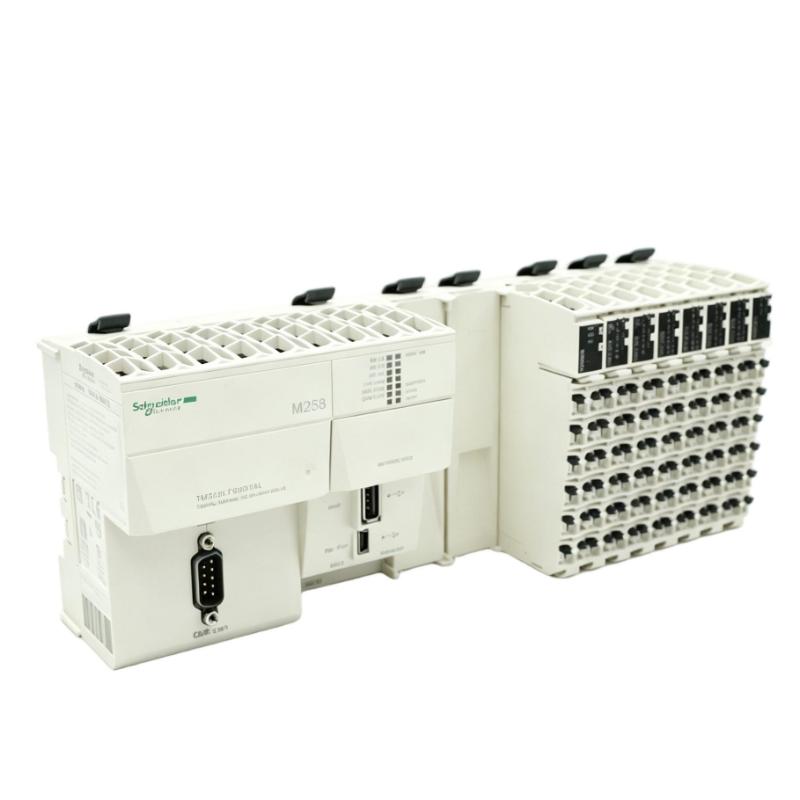
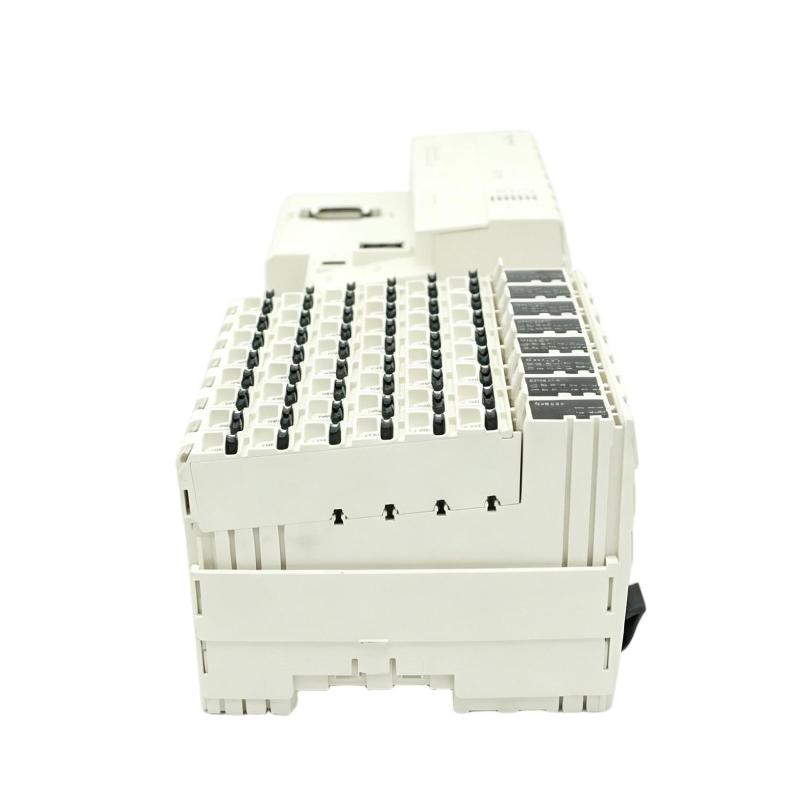
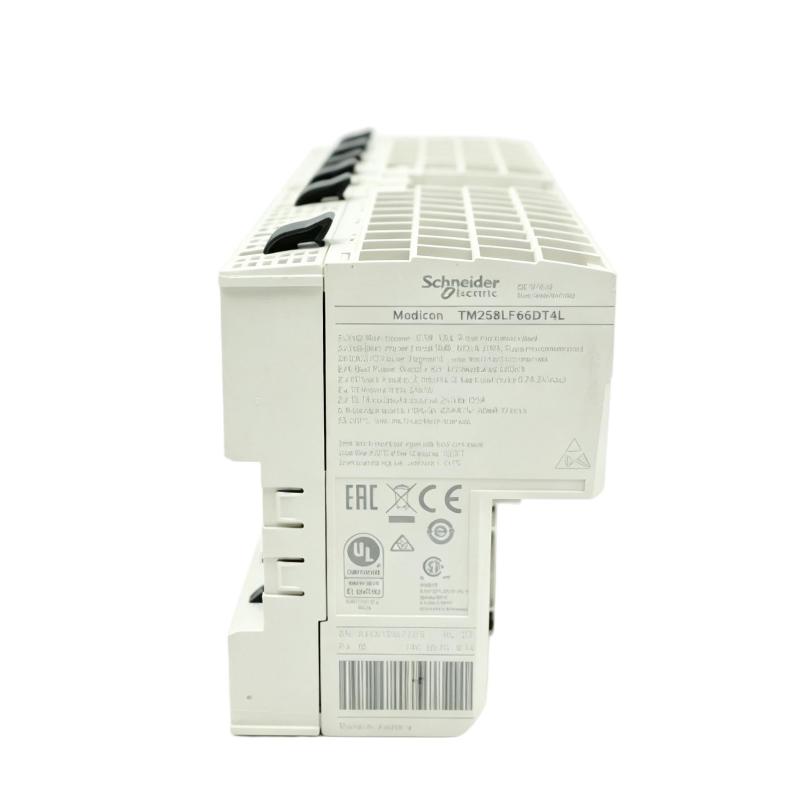
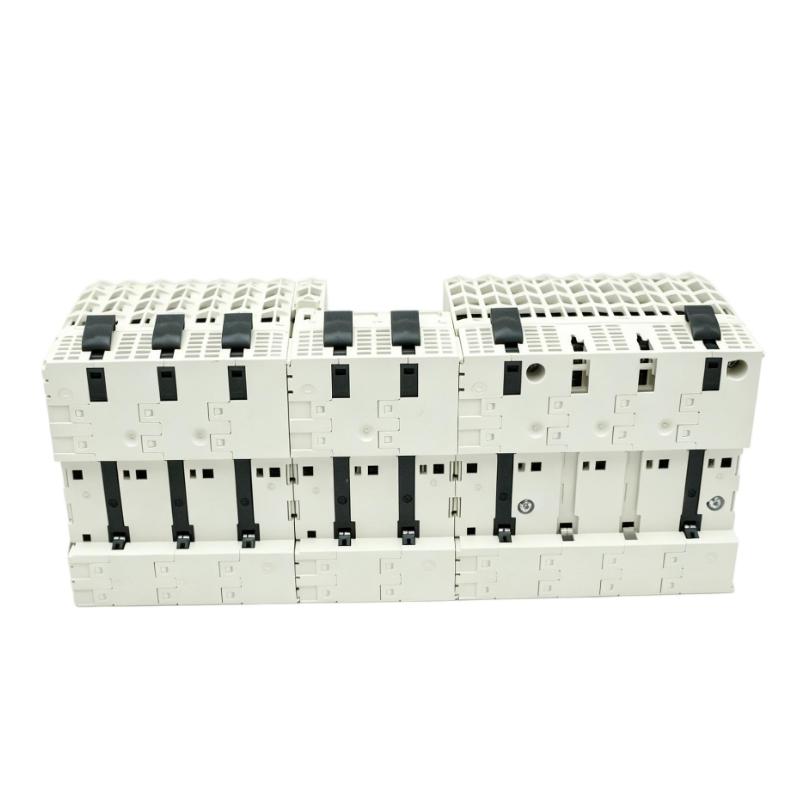
- Schneider
- TM258LF66DT4L
- Logic Controller
- France
- 262.5 × 99 × 85 mm
- 0.8 kg
- Xiamen, China
- New & In Stock
- T/T, PayPal, Western Union
- 1 Year
- 1-3 Working Days
- DHL, UPS, TNT, FedEx and EMS.
- 24-Hour Service
- COO
- 7
Our advantage

Global Logistics
We have a 10-year logistics and express cooperation agreement, so our products can be shipped to any place in the world.

Brand new and original
Our products are imported in bulk from the place of origin. Because of the cooperative relationship, our products are all original and 100% new.

24-hour service
We provide 7*24 hours service to our customers. We will be there whenever you need us.

Price advantage
All our products are priced very favorably because we have our own warehouse and supply.
| Company Information | |||
| [email protected] | |||
| Mobile | +8615980777398 | ||
| +8615980777398 | |||
| 15980777398 |
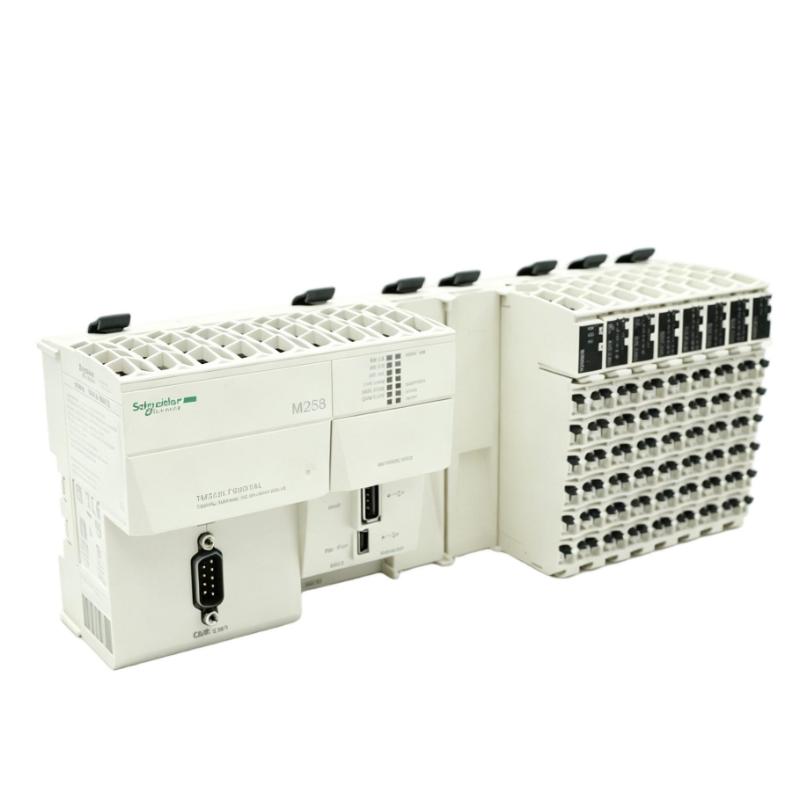
Product Overview
The Schneider TM258LF66DT4L is a Modicon M258 Logic Controller intended for machine automation applications that require coordinated control of logic, motion-related functions, communication, and distributed I/O. It can serve as the main controller in a machine control cabinet, handling application logic while exchanging process data with field devices and other automation equipment.
In a typical machine, the controller receives signals from sensors, switches, and intelligent devices, processes the application program, and sends commands to actuators, drives, valves, and other outputs. Its role becomes particularly useful in applications where several machine functions need to operate in a coordinated sequence rather than through isolated relay logic.
The TM258 platform is suited to modular machine architectures in which local I/O, communication interfaces, drives, and operator devices work together around a central controller. This makes the controller applicable to packaging equipment, material handling systems, assembly machines, and other automated production machinery.
For retrofit projects, the controller can also be used as part of a broader Modicon-based automation system where the control program, I/O configuration, and communication structure need to be organized around a dedicated machine controller.
Technical Specifications
| Parameter | Specification |
|---|---|
| Manufacturer | Schneider Electric |
| Model / Part Number | TM258LF66DT4L |
| Product Type | Modicon M258 Logic Controller |
| Series | Modicon M258 |
| Application | Machine automation and control |
| Controller Role | Central machine controller |
| Dimensions | 262.5 × 99 × 85 mm |
| Weight | 0.8 kg |
Product Features
- Modicon M258 controller platform — Provides a dedicated control platform for demanding machine automation applications.
- Centralized machine logic — Executes the application program and coordinates machine sequences from a central controller.
- Modular automation architecture — Can operate with distributed I/O, communication devices, drives, and operator interfaces within the same control system.
- Coordinated device control — Suitable for applications where sensors, actuators, motors, and process devices must work according to programmed sequences.
- Machine-oriented architecture — Fits applications where the controller needs to manage multiple machine functions rather than a simple single-purpose control loop.
- Industrial communication integration — Can form part of a networked automation system connecting field devices and higher-level control equipment.
- Service-friendly system structure — The controller can be integrated into an organized cabinet architecture with clearly separated controller, I/O, communication, and field-device functions.
Working Principle
The TM258LF66DT4L operates as the control center of the machine automation system. Input information is collected from connected field devices and I/O modules, then evaluated by the controller according to the application program. Based on machine status and programmed conditions, the controller updates the corresponding outputs and commands.
A typical control sequence can be represented as:
Sensors / Switches → Input Devices → TM258LF66DT4L Controller → Output / Communication Modules → Drives / Actuators → Machine Process
For example, a sensor may detect the arrival of a workpiece. The controller evaluates this signal together with other operating conditions, determines the next machine step, and issues the required command to a motor drive, valve, or actuator. Feedback from the machine is then returned to the controller so the next sequence can be executed.
In a more complex machine, several sequences can run under the same controller program. Communication with drives, remote I/O, HMI equipment, and other controllers allows process information to be exchanged without relying on independent control circuits for every machine function.
Role in a Modicon M258 Control Architecture
The TM258LF66DT4L can occupy the central controller position in a Modicon M258 machine automation architecture.
Field Sensors → I/O → TM258LF66DT4L → Drives / Actuators / Remote Devices → Machine → Feedback
| System Element | Function |
|---|---|
| Field Sensors | Detect machine position, product presence, process conditions, and operating states |
| Local or Distributed I/O | Converts field signals into controller-readable data and distributes output commands |
| TM258LF66DT4L | Executes the control program and coordinates machine sequences |
| Variable Speed Drives | Receive motor commands and return operating information to the controller |
| Actuators and Valves | Execute physical machine actions according to controller commands |
| HMI | Provides operator control, status monitoring, alarms, and parameter access |
| Industrial Network | Transfers control and diagnostic data between the controller and connected automation devices |
| Engineering Software | Used for application programming, configuration, commissioning, and troubleshooting |
This architecture allows the controller to remain the main decision-making point while field devices and peripheral automation equipment handle individual sensing, actuation, communication, and operator functions.
Industrial Applications
| Application | Controller Function |
|---|---|
| Packaging Machinery | Coordinates product detection, conveyor movement, sequencing, and machine interlocks |
| Material Handling | Controls conveyors, transfer mechanisms, sensors, and motorized equipment |
| Assembly Machines | Manages step-by-step assembly sequences and synchronization between machine stations |
| Automated Production Lines | Coordinates several machine sections and exchanges status information between devices |
| Machine Tools | Handles programmed machine sequences and interfaces with drives, sensors, and auxiliary equipment |
| Food and Beverage Machinery | Supports coordinated control of conveying, filling, handling, and packaging processes |
| Printing and Converting Equipment | Coordinates material movement, machine sequences, and auxiliary control functions |
| General OEM Machinery | Provides a central programmable controller for customized machine automation systems |
Installation and Maintenance
- Verify the controller model — Confirm that TM258LF66DT4L matches the machine control design and application program before installation.
- Check the cabinet arrangement — Leave sufficient space around the controller and adjacent equipment for wiring, inspection, and heat dissipation.
- Use an appropriate mounting method — Install the controller securely on the designated mounting structure and prevent mechanical movement caused by cabinet vibration.
- Separate power and signal wiring — Keep control wiring organized and avoid unnecessary routing of low-level signals alongside high-noise power conductors.
- Check terminal connections — Inspect wiring before energizing the system, paying particular attention to loose conductors, incorrect terminals, and damaged connectors.
- Verify I/O assignments — Compare the physical field wiring with the controller program and I/O configuration before commissioning.
- Confirm communication connections — Check network cables, addressing, device configuration, and communication status when external devices are connected.
- Load the correct application program — Make sure the controller contains the intended machine program and configuration before placing the equipment into operation.
- Check machine interlocks — Test emergency circuits, permissive conditions, interlocks, and sequence restrictions before running the machine under normal production conditions.
- Monitor controller diagnostics — Use controller status information and connected engineering tools to identify configuration, communication, or program-related faults.
- Inspect the installation periodically — Check wiring, terminals, mounting condition, cabinet contamination, and signs of overheating during scheduled maintenance.
- Back up the application — Maintain a current copy of the controller program and configuration so the machine can be restored efficiently after controller replacement or memory-related problems.
Compatible System Components
| Component Type | Typical Role |
|---|---|
| Modicon M258 I/O Devices | Extend the controller with additional machine input and output points |
| Modicon TM3 I/O Modules | Provide additional digital or analog field interfaces where the system architecture supports them |
| Schneider Variable Speed Drives | Control motors used by conveyors, pumps, fans, and machine mechanisms |
| Schneider HMI Panels | Provide operator commands, process visualization, alarms, and diagnostics |
| Industrial Ethernet Devices | Connect the controller with drives, I/O stations, HMIs, and other networked equipment |
| Machine Sensors | Supply position, presence, speed, pressure, temperature, or process feedback |
| Contactors and Relays | Interface controller outputs with selected machine loads and control circuits |
| Actuators and Solenoid Valves | Convert controller commands into physical machine movement |
Recommended Related Models
| Model | Product Type | Typical Relationship |
|---|---|---|
| Schneider TM258LF42DT4L | Modicon M258 Logic Controller | Related M258 controller for machine automation architectures |
| Schneider TM258LF42DT4 | Modicon M258 Logic Controller | Related controller model for M258-based applications |
| Schneider TM258LF42DT | Modicon M258 Logic Controller | M258 family alternative for controller selection |
| Schneider TM3 Series | Modicon TM3 I/O System | Modular I/O expansion for compatible machine architectures |
| Schneider HMIGTO Series | Magelis HMI | Operator interface option for machine control systems |
| Schneider Altivar Series | Variable Speed Drive | Motor control equipment commonly integrated with machine controllers |
Key Advantages
- Centralized control of complex machine sequences
- Suitable for modular Modicon machine architectures
- Supports integration with distributed automation devices
- Practical for coordinated sensor, actuator, and drive control
- Well suited to OEM and production-machine applications
- Simplifies organization of machine logic and control functions
- Can support structured diagnostics and maintenance workflows
Technical FAQs
Can the TM258LF66DT4L be used as the main controller of an automated machine?
Yes. The TM258LF66DT4L can serve as the central programmable controller in a machine automation architecture, coordinating field inputs, outputs, communication devices, drives, and other machine functions through the application program.
What type of equipment can be connected to a TM258LF66DT4L system?
Depending on the system architecture and configured interfaces, the controller can work with I/O modules, drives, HMI devices, sensors, actuators, and networked automation equipment. Compatibility should be checked against the communication and I/O requirements of the specific machine.
What should be checked if connected devices are not responding correctly?
Start with controller status and diagnostics, then check the physical wiring, I/O assignment, device configuration, communication settings, and application logic. For networked equipment, the device address and communication status should also be verified.
What should be considered when replacing an existing TM258 controller?
The replacement should match the original controller’s hardware requirements and application architecture. The control program, I/O configuration, communication settings, connected devices, and machine interlocks should all be reviewed before commissioning the replacement unit.