

ProductPRODUCT
Featured products
Contact Us
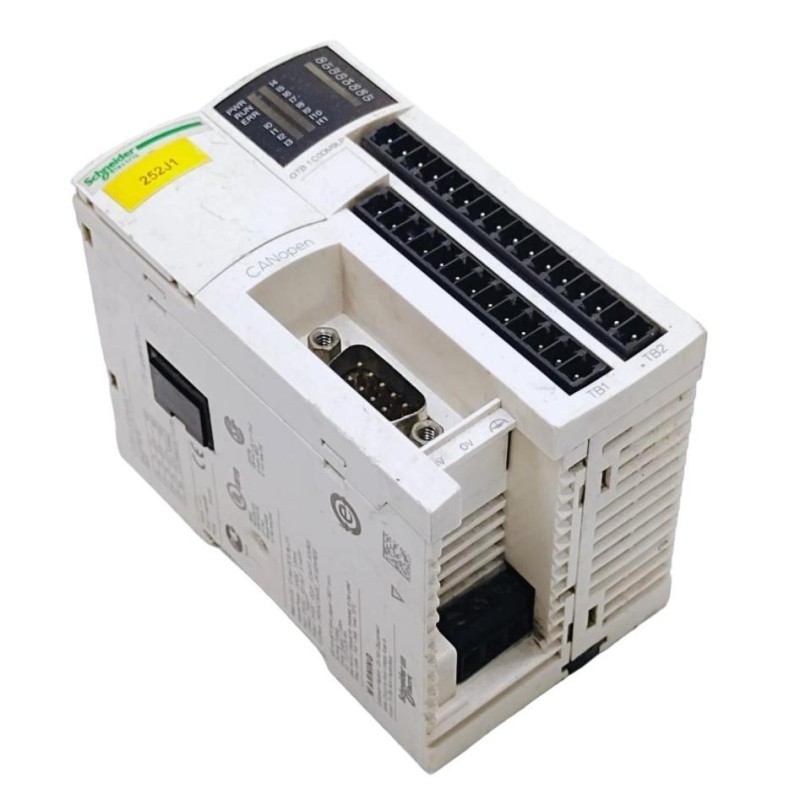
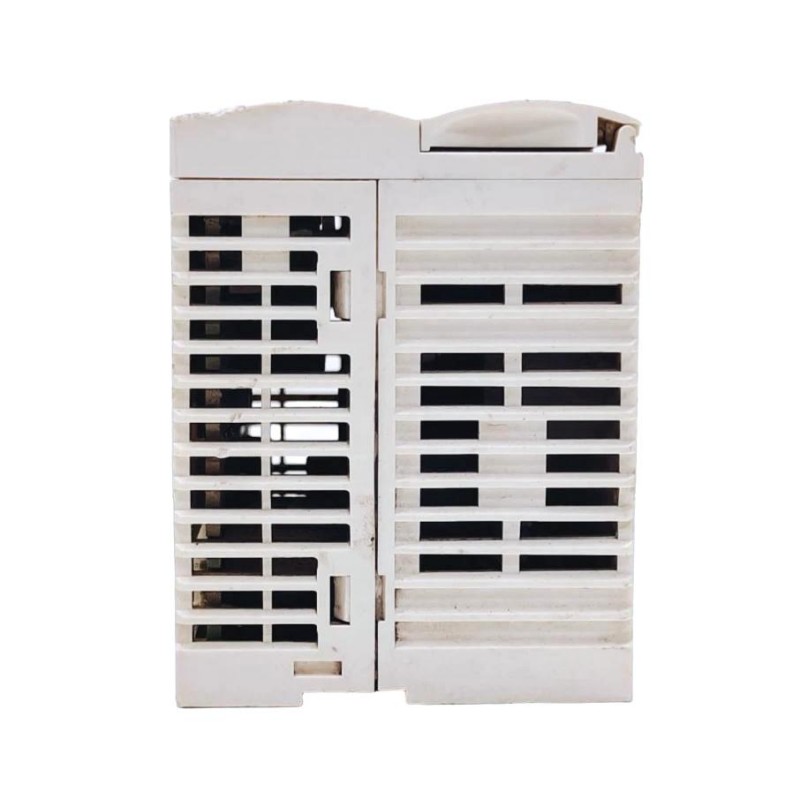
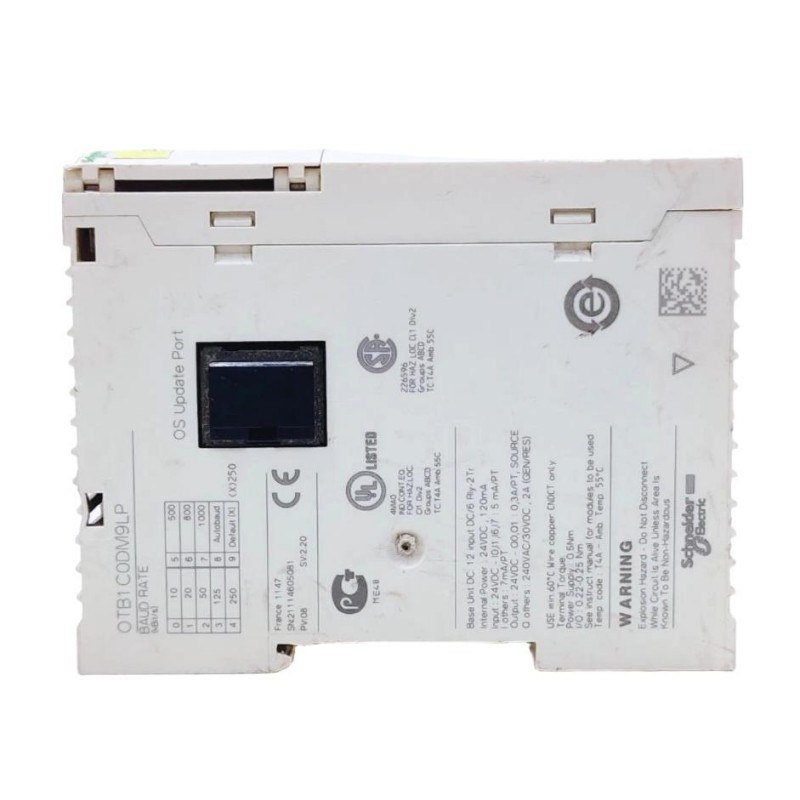
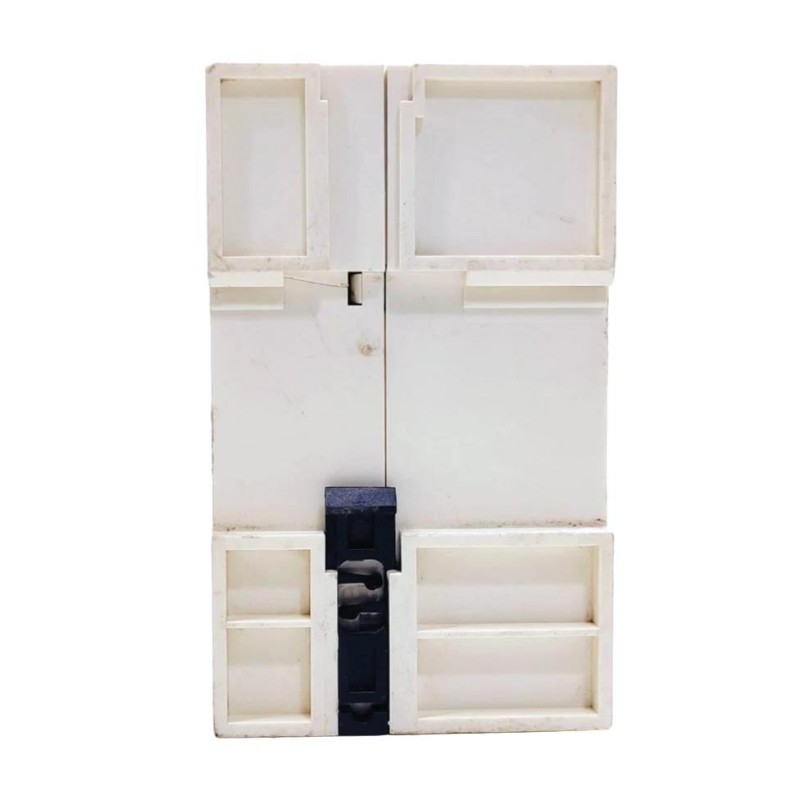
- Schneider
- OTB1C0DM9LP
- I/O Distributed Module
- France
- 84.6 × 90 × 55 mm
- 0.195 kg
- Xiamen, China
- New & In Stock
- T/T, PayPal, Western Union
- 1 Year
- 1-3 Working Days
- DHL, UPS, TNT, FedEx and EMS.
- 24-Hour Service
- COO
- 40
Our advantage

Global Logistics
We have a 10-year logistics and express cooperation agreement, so our products can be shipped to any place in the world.

Brand new and original
Our products are imported in bulk from the place of origin. Because of the cooperative relationship, our products are all original and 100% new.

24-hour service
We provide 7*24 hours service to our customers. We will be there whenever you need us.

Price advantage
All our products are priced very favorably because we have our own warehouse and supply.
| Company Information | |||
| [email protected] | |||
| Mobile | +8615980777398 | ||
| +8615980777398 | |||
| 15980777398 |
Product Overview
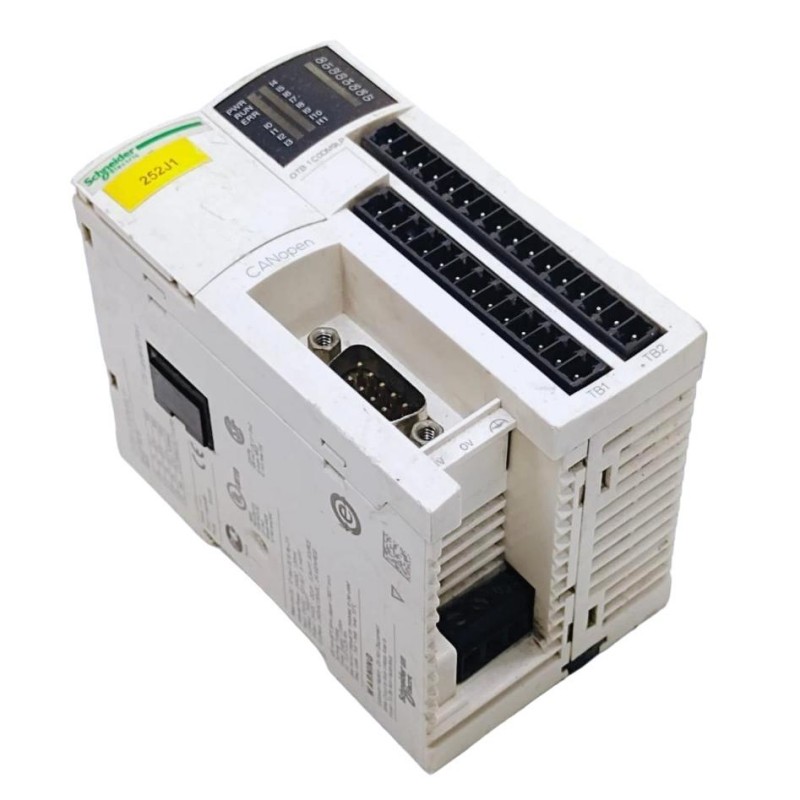
The Schneider OTB1C0DM9LP Modicon OTB I/O Distributed Module is a distributed I/O interface used to connect machine-level sensors and actuators with a control system over a field communication network. It provides a compact way to place I/O close to the equipment being controlled rather than bringing every field signal back to a central control cabinet.
The module is suited to automated machines where distributed signal collection and output control can simplify cabinet wiring. It can be installed near conveyors, assembly stations, packaging equipment, material-handling mechanisms, and other machine sections containing multiple discrete field devices.
In operation, the OTB module exchanges I/O data with the associated controller or network master. Input signals from connected field devices are collected by the distributed I/O system, while output commands received from the controller are transferred to connected actuators.
The OTB1C0DM9LP therefore belongs to the field I/O layer rather than the main PLC processing layer. Its value in a distributed architecture comes from placing signal interfaces closer to the machine equipment and reducing long individual point-to-point wiring runs.
Technical Specifications
| Parameter | Specification |
|---|---|
| Manufacturer | Schneider Electric |
| Model | OTB1C0DM9LP |
| Product Family | Modicon OTB |
| Product Type | I/O Distributed Module |
| Primary Function | Distributed field signal interfacing |
| System Role | Remote I/O |
| Application | Machine automation and distributed I/O systems |
| Dimensions | 84.6 × 90 × 55 mm |
| Weight | 0.195 kg |
Product Features
- Modicon OTB distributed I/O module for machine automation.
- Provides a local interface for connected field signals.
- Reduces the need for individual field wiring back to a central PLC cabinet.
- Suitable for distributed machine architectures.
- Supports connection of sensors, switches, and actuators through the I/O layer.
- Can be positioned close to the machine section being controlled.
- Suitable for packaging, assembly, conveying, and material-handling systems.
- Integrates distributed field signals into a controller-based automation network.
Working Principle
The OTB1C0DM9LP collects electrical signals from connected field devices and exchanges the resulting I/O information with the control system through its distributed communication interface. Input information can include the states of switches, sensors, and other discrete devices installed around the machine.
For output operation, the controller sends the required output states through the network. The distributed I/O module then applies the corresponding output signals to connected field equipment such as relays, solenoids, indicators, or other actuators.
Field Sensors / Switches → OTB1C0DM9LP → Distributed Network → PLC / Controller
PLC / Controller → Distributed Network → OTB1C0DM9LP → Actuators / Indicators
This arrangement separates the physical field connection point from the central controller. A communication interruption can therefore affect multiple I/O points even when the connected sensors and actuators remain electrically intact.
Role in a Modicon OTB Distributed I/O Control Architecture
The OTB1C0DM9LP occupies the distributed field-interface layer between the machine equipment and the controller network. It allows I/O points to be located closer to the equipment while the PLC remains responsible for the application logic.
PLC / Controller → Field Network → OTB1C0DM9LP → Sensors / Actuators → Machine
| System Element | Function |
|---|---|
| PLC / Controller | Executes machine sequencing and control logic |
| Field Network | Transfers I/O data between controller and remote module |
| OTB1C0DM9LP | Interfaces distributed field signals |
| Sensors / Switches | Provide machine status and process inputs |
| Actuators | Execute output commands from the control system |
| Machine Equipment | Performs the physical production operation |
| HMI | Provides operator monitoring and machine interaction |
The distributed I/O arrangement can reduce cabinet wiring and make field connections easier to organize around individual machine sections.
Industrial Applications
| Application | Typical Use |
|---|---|
| Packaging Machinery | Distributed sensor and actuator connections |
| Assembly Equipment | Local I/O for individual machine stations |
| Conveyor Systems | Field signal connection near conveyor equipment |
| Material Handling | Distributed control of sensors and actuators |
| Automated Production | Remote I/O for machine sections |
| Machine Cells | Localized field signal interfacing |
| OEM Machinery | Compact distributed I/O installation |
| Control Panels | Extension of PLC I/O closer to field equipment |
Installation and Maintenance
- Verify that the OTB1C0DM9LP is compatible with the intended Modicon OTB network configuration.
- Isolate applicable control power before wiring or removing the distributed I/O module.
- Identify all connected field devices and communication connections before installation.
- Inspect the module terminals and connectors for physical damage or contamination.
- Install the module securely at the designated machine or control-panel location.
- Connect field wiring according to the approved electrical documentation and I/O assignment.
- Verify communication wiring and network connections before applying power.
- Check the controller configuration to ensure the distributed I/O node is correctly addressed and configured.
- Test individual input points by operating the associated field devices under controlled conditions.
- Test output points and confirm that connected actuators respond to the intended controller commands.
- If multiple I/O points become unavailable simultaneously, check the communication path and module power before replacing individual field devices.
- After replacement, verify network communication, I/O status, field-device operation, and the complete machine sequence before returning the equipment to service.
Compatible System Components
| Component | Function |
|---|---|
| Schneider Modicon PLC | Executes machine and process control logic |
| Modicon OTB | Distributed I/O platform |
| Field Network Master | Manages communication with distributed I/O |
| Digital Sensors | Provide machine status and detection signals |
| Switches | Provide discrete machine-state inputs |
| Relays / Contactors | Interface I/O outputs with electrical loads |
| Solenoid Valves | Execute discrete pneumatic or hydraulic commands |
| HMI | Provides machine monitoring and operator interaction |
Recommended Related Models
| Model / Product Family | Product Type | Typical Application |
|---|---|---|
| Schneider Modicon OTB | Distributed I/O System | Machine-level remote I/O |
| Schneider Modicon OTB I/O | Distributed I/O Modules | Distributed field signal interfacing |
| Schneider Modicon STB | Distributed I/O System | Modular remote I/O applications |
| Schneider Modicon X80 | I/O Platform | Distributed control-system I/O |
| Schneider Modicon M340 | PLC Platform | Machine and process control |
| Schneider Modicon M580 | PLC Platform | Advanced industrial automation |
| Schneider Harmony HMI | Human-Machine Interface | Operator monitoring and control |
| Schneider Lexium | Motion Control Family | Servo and machine-axis applications |
Key Advantages
- Places field I/O closer to the machine equipment.
- Reduces individual field wiring between remote machine devices and the central controller.
- Provides a compact distributed I/O interface for machine automation.
- Simplifies organization of sensors and actuator connections in distributed machine sections.
- Fits Modicon-based control architectures using distributed field I/O.
- Useful for machine expansion, maintenance, and replacement of distributed I/O nodes.
Technical FAQs
When is distributed OTB I/O preferable to centralized PLC I/O?
Distributed I/O can be advantageous when field devices are spread across different machine sections or when long individual wiring runs would make a centralized arrangement cumbersome. The OTB module allows the I/O connection point to be placed closer to the field devices.
What does a communication failure look like at the OTB1C0DM9LP?
A network or node-level communication problem can make several connected I/O points unavailable at the same time. When this occurs, check module power, communication wiring, network status, and controller configuration before troubleshooting individual sensors.
Can the OTB1C0DM9LP execute PLC control logic?
No. The distributed I/O module handles field signal exchange. The PLC or network controller remains responsible for application logic, sequencing, interlocking, and higher-level machine-control decisions.
What should be tested after replacing an OTB1C0DM9LP?
Verify the module’s network connection and controller configuration first, then test representative input and output points. The final check should confirm that the distributed I/O operates correctly within the complete machine sequence.