

ProductPRODUCT
Featured products


Contact Us
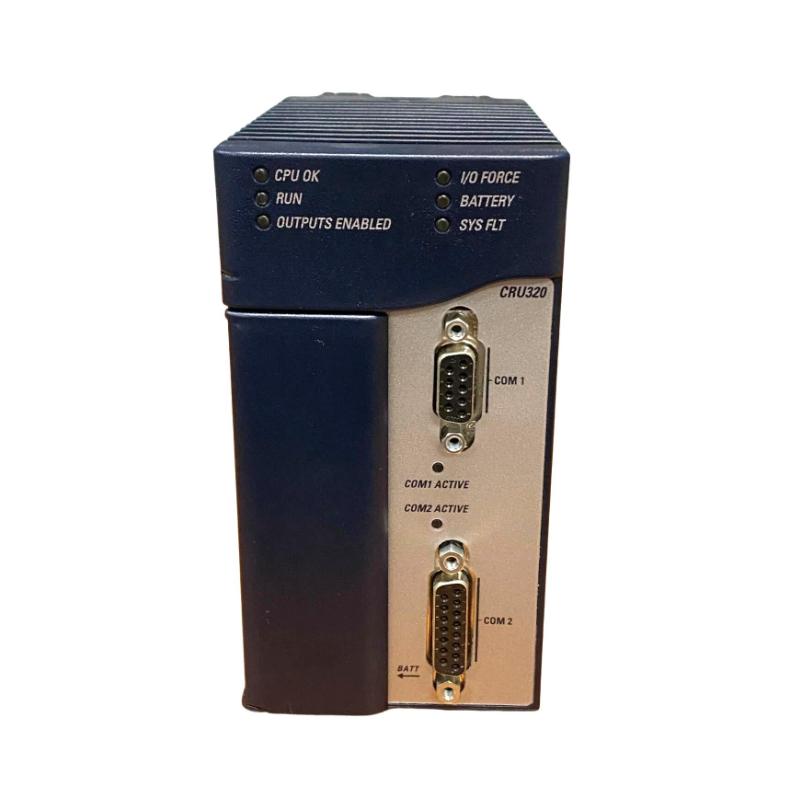
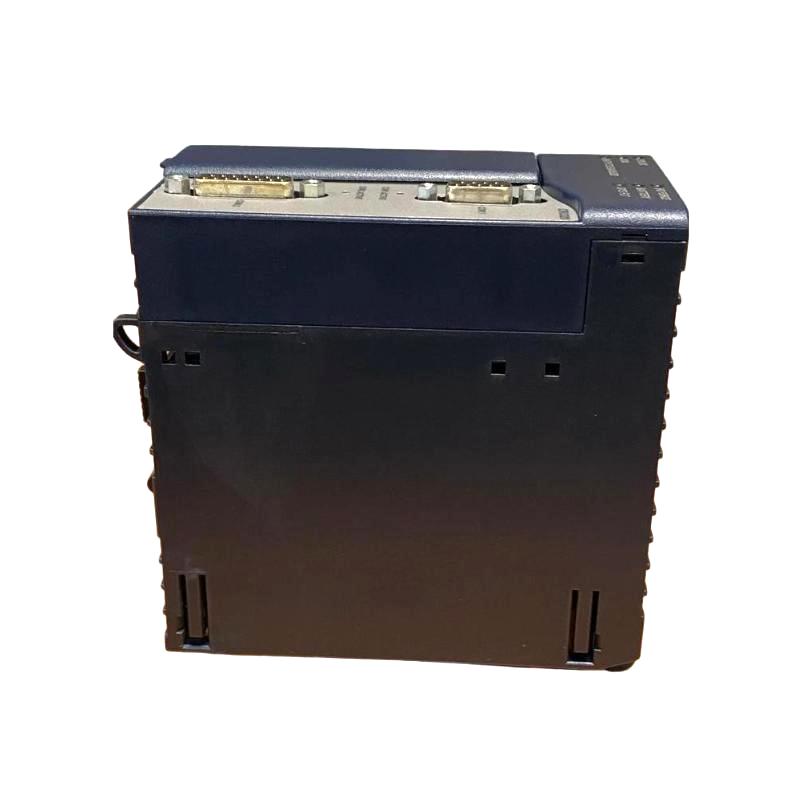
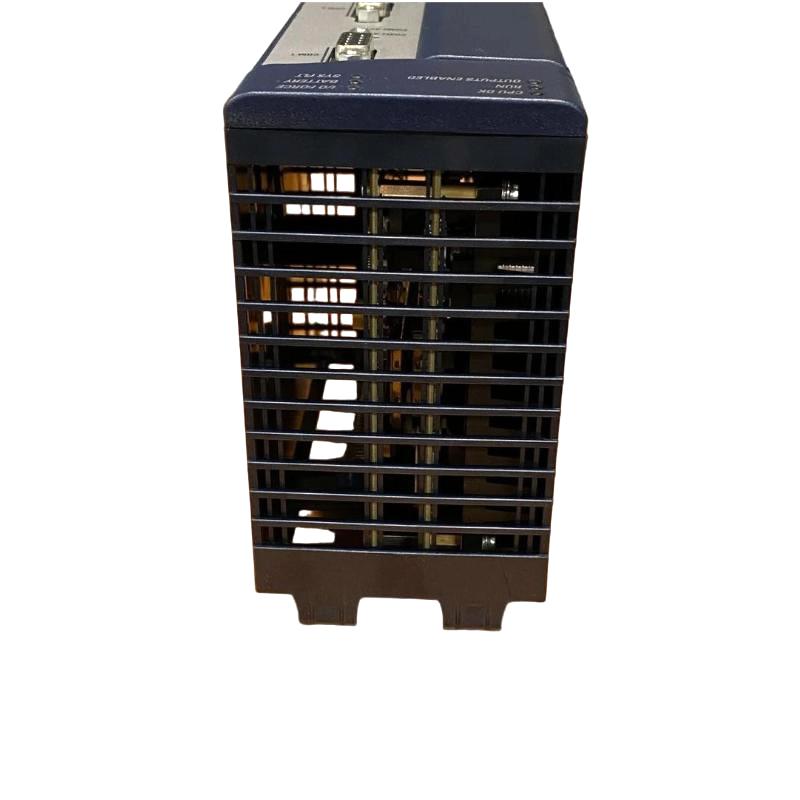
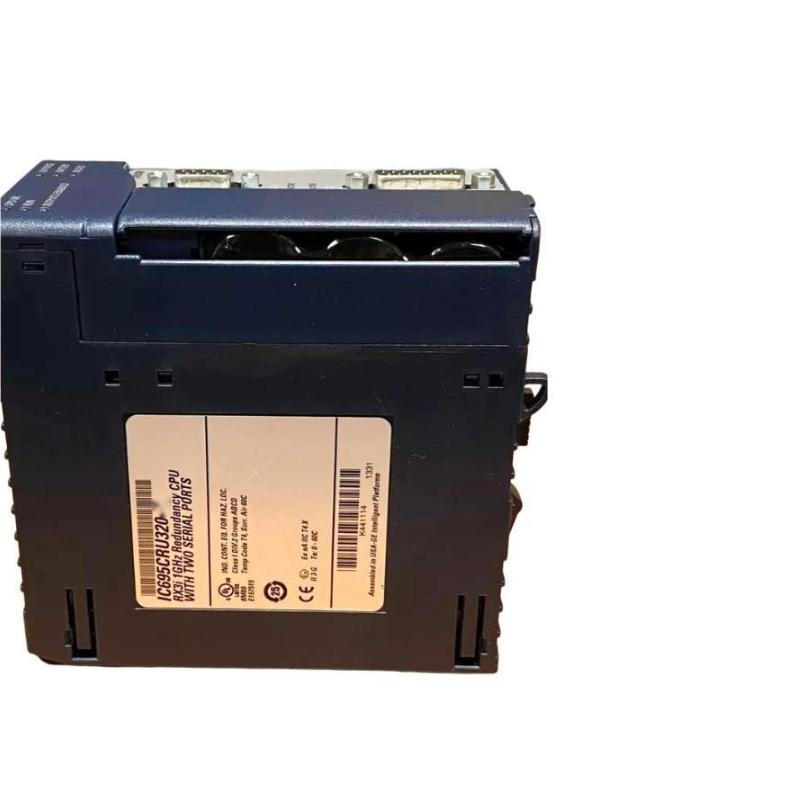
- GE
- IC695CRU320
- PACSystem RX3i Redundant CPU Module
- USA
- 200 × 130 × 90 mm
- 0.91 kg
- Xiamen, China
- New & In Stock
- T/T, PayPal, Western Union
- 1 Year
- 1-3 Working Days
- DHL, UPS, TNT, FedEx and EMS.
- 24-Hour Service
- COO
- 43
Our advantage

Global Logistics
We have a 10-year logistics and express cooperation agreement, so our products can be shipped to any place in the world.

Brand new and original
Our products are imported in bulk from the place of origin. Because of the cooperative relationship, our products are all original and 100% new.

24-hour service
We provide 7*24 hours service to our customers. We will be there whenever you need us.

Price advantage
All our products are priced very favorably because we have our own warehouse and supply.
| Company Information | |||
| [email protected] | |||
| Mobile | +8615980777398 | ||
| +8615980777398 | |||
| 15980777398 |
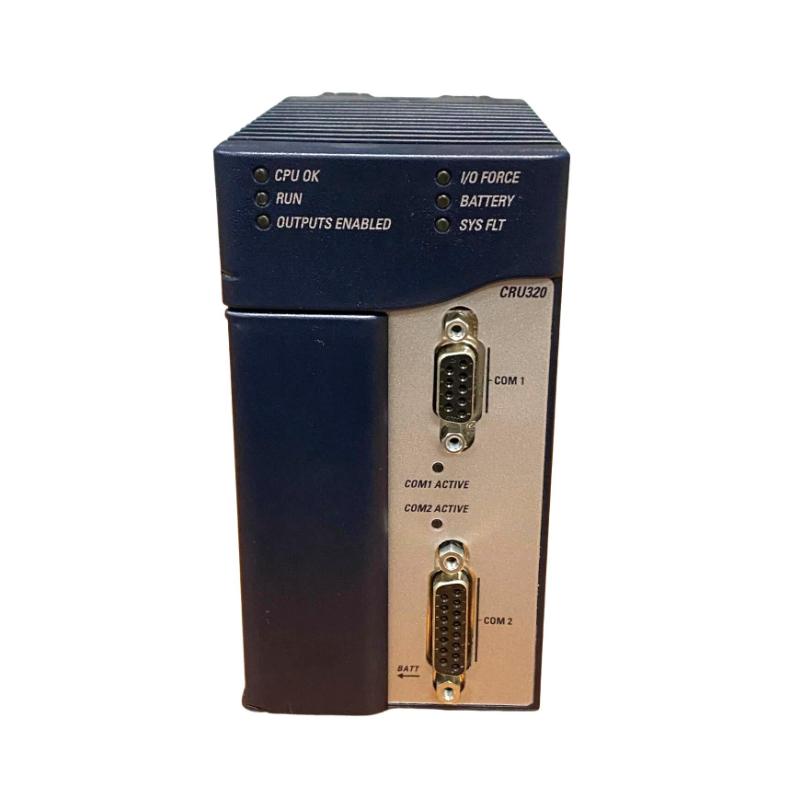
Product Overview
The GE IC695CRU320 is a PACSystems RX3i Redundant CPU Module designed for high-availability industrial automation architectures where controller redundancy and system continuity are important. Unlike a conventional single-controller arrangement, a redundant control architecture uses coordinated CPU resources to improve system resilience and reduce the impact of a controller-related failure.
The IC695CRU320 plays an important role in redundant control applications by participating in the coordinated operation of the control system. Depending on the system architecture and configuration, redundant CPU arrangements can help maintain control availability when a primary control resource or associated component encounters a fault.
The specified dimensions of the GE IC695CRU320 are 200 × 130 × 90 mm, with a weight of approximately 0.91 kg.
Because redundant control systems are more configuration-sensitive than standard PLC installations, correct rack arrangement, communication connections, synchronization, software configuration, and diagnostic monitoring are especially important.
This guide covers product identification, operating principles, installation, commissioning, redundancy checks, troubleshooting, preventive maintenance, and replacement procedures.
Product Identification
| Parameter | Specification |
|---|---|
| Manufacturer | GE |
| Product Family | PACSystems RX3i |
| Model | IC695CRU320 |
| Product Type | Redundant CPU Module |
| System Architecture | PACSystems RX3i |
| Primary Function | Redundant CPU Control |
| Dimensions | 200 × 130 × 90 mm |
| Weight | 0.91 kg |
| Installation | RX3i Control System |
| Application | High-Availability Industrial Automation |
| System Role | Redundant Control Processor |
Technical Specifications
| Technical Item | Specification |
|---|---|
| Product Series | PACSystems RX3i |
| Part Number | IC695CRU320 |
| Module Type | Redundant CPU Module |
| Height | 200 mm |
| Width | 130 mm |
| Depth | 90 mm |
| Weight | Approximately 0.91 kg |
| Control Architecture | Redundant PLC / PAC |
| Installation Environment | Industrial Control Cabinet |
| Primary Role | Redundant Control Processing |
| System Integration | RX3i Redundant Architecture |
What Is the GE IC695CRU320?
The IC695CRU320 is a redundant CPU module intended for PACSystems RX3i control architectures.
In a conventional PLC system, a single CPU can represent a critical point of failure. In a redundant system, multiple coordinated processing resources can be used to improve control availability.
A simplified redundant architecture can be represented as:
Field Devices
↓
RX3i I/O System
↓
Redundant Control Architecture
↙ ↘
CPU Resource A CPU Resource B
↘ ↙
Coordinated Control
↓
Industrial Process
The exact redundancy architecture depends on the overall system configuration and the hardware and software used with the CPU modules.
Why CPU Redundancy Is Important
Industrial processes often cannot tolerate unexpected controller downtime.
A controller failure can result in:
- Machine stoppage
- Production interruption
- Process instability
- Loss of control availability
- Extended restart procedures
- Increased maintenance requirements
A properly configured redundant control system can reduce these risks by providing an alternative processing resource.
The redundancy mechanism is intended to allow the system to continue operating or recover in a controlled manner when an eligible fault occurs.
Redundant CPU Operating Principle
The redundant control architecture generally involves several important functions.
Control Processing
The CPU executes the configured control application and manages system operations.
State Coordination
The redundant control resources maintain coordinated operating information according to the system design.
Synchronization
The redundant processors exchange required information so that the standby resource can maintain an appropriate system state.
Fault Monitoring
The system monitors CPU status, synchronization, communication, and other conditions.
Fault Response
When a supported failure occurs, the system can transition control responsibility according to the configured redundancy strategy.
Because redundancy depends on precise synchronization, communication, and configuration, a system may lose redundancy even while the primary CPU continues controlling the process.
This distinction is important during troubleshooting.
Role in High-Availability Automation
The IC695CRU320 is particularly relevant to applications where continuous operation is important.
Typical applications include:
- Continuous-process automation
- Power systems
- Water treatment
- Oil and gas
- Chemical processing
- Pharmaceutical production
- Large manufacturing systems
- Critical material-handling systems
- Infrastructure automation
- Process-control systems
In these environments, maintaining control availability can be more important than simply maximizing controller processing capacity.
System Integration
A redundant RX3i system may include:
| Component | Typical Function |
|---|---|
| IC695CRU320 | Redundant CPU processing |
| Primary CPU Resource | Active control processing |
| Secondary CPU Resource | Standby or coordinated redundant processing |
| RX3i Power Supply | System power |
| RX3i Backplate | Module mounting and backplane connection |
| Redundancy Communication Path | CPU coordination |
| Digital Input Modules | Discrete signal acquisition |
| Digital Output Modules | Discrete control |
| Analog Input Modules | Analog process measurement |
| Analog Output Modules | Analog control |
| Engineering Workstation | Configuration and diagnostics |
The exact hardware arrangement should be determined from the validated system design.
Installation Requirements
Before installing an IC695CRU320, verify:
- Correct RX3i rack architecture
- Correct CPU redundancy design
- Compatible power arrangement
- Correct module position
- Redundancy communication path
- Hardware configuration
- Application configuration
- Required software configuration
Redundant systems should not be treated as ordinary single-CPU systems. Every redundancy-related connection should be verified before commissioning.
Installation Guide
1. Verify the Module
Confirm:
GE IC695CRU320 PACSystems RX3i Redundant CPU Module
Check the product identification against the engineering documentation.
2. Inspect the Module
Inspect the module for:
- Housing damage
- Connector damage
- Mounting damage
- Contamination
- Bent or damaged contacts
- Signs of overheating
Do not install a visibly damaged module.
3. Verify the Rack
Confirm that the intended RX3i rack is suitable for the planned redundant architecture.
Check:
- Rack configuration
- Module position
- Power supply
- Backplane
- Adjacent modules
- Redundancy-related connections
4. Prepare the Cabinet
Specified dimensions:
200 × 130 × 90 mm
Provide sufficient clearance for:
- Installation
- Adjacent modules
- Cable routing
- Ventilation
- Inspection
- Maintenance
- Future replacement
Keep the module away from excessive heat, moisture, vibration, and corrosive contaminants.
5. Back Up the Configuration
Before replacing an existing redundant CPU, back up:
- PLC application
- Hardware configuration
- Redundancy configuration
- Communication configuration
- Relevant parameters
- Diagnostic records
Maintaining a complete backup is particularly important in redundant systems because both the primary and standby configurations must remain consistent.
6. Shut Down the System
Before installation:
- Stop the controlled process when required.
- Follow the approved system shutdown procedure.
- Remove power as required.
- Verify a safe maintenance condition.
- Apply lockout/tagout procedures where applicable.
7. Install the Module
Install the IC695CRU320 into its designated RX3i position.
Verify:
- Correct orientation
- Correct slot
- Proper alignment
- Full engagement
- Secure mechanical retention
Do not force the module into the rack.
8. Connect Redundancy Interfaces
Connect the required redundancy communication interfaces according to the system design.
Pay particular attention to:
- Connector security
- Correct connection points
- Cable routing
- Cable integrity
- Separation from high-power wiring
A single defective redundancy connection can prevent the system from achieving the intended redundant state.
9. Verify the Configuration
Compare the physical installation against the engineering project.
Confirm:
- CPU module
- CPU roles
- Rack arrangement
- Redundancy connections
- I/O configuration
- Communication configuration
10. Restore Power
After installation:
- Restore system power.
- Observe CPU status indicators.
- Allow initialization.
- Check redundancy status.
- Review diagnostic information.
- Confirm communication.
Commissioning Procedure
Step 1 — Physical Verification
Inspect both sides of the redundant architecture and confirm correct installation.
Step 2 — Power Verification
Verify stable power to all required control-system components.
Step 3 — CPU Startup
Start the redundant controller system according to the approved commissioning procedure.
Step 4 — Status Check
Review CPU and system status indicators.
Step 5 — Configuration Check
Verify that the physical configuration matches the engineering configuration.
Step 6 — Synchronization Check
Confirm that the redundant CPU resources achieve the expected synchronized condition.
Step 7 — I/O Verification
Test representative digital and analog I/O.
Step 8 — Communication Verification
Confirm communication with connected automation equipment.
Step 9 — Redundancy Test
Where permitted by plant procedures, perform a controlled redundancy transition or fault test.
The test should be conducted only under safe and controlled conditions.
Step 10 — Process Test
Return the system to operation under supervision and monitor CPU status.
Troubleshooting Guide
Fault 1 — Redundant CPU Does Not Start
Possible causes:
- Power problem
- Incorrect rack installation
- Poor module seating
- Configuration mismatch
- CPU hardware fault
Recommended Checks
- Verify system power.
- Inspect module seating.
- Check backplane connections.
- Review CPU status indicators.
- Check diagnostic information.
Fault 2 — CPU Is Not Recognized
Possible causes:
- Incorrect slot
- Poor connector engagement
- Backplane problem
- Hardware configuration mismatch
- Module failure
Verify the physical rack against the engineering configuration.
Fault 3 — System Runs but Is Not Redundant
This is an important condition.
The primary CPU may continue controlling the process even though redundancy has been lost.
Possible causes include:
- Standby CPU fault
- Synchronization failure
- Redundancy communication problem
- Configuration mismatch
- Power problem affecting the secondary side
- Hardware incompatibility
Do not assume that normal process operation means the redundant architecture is healthy.
Fault 4 — Redundant CPUs Fail to Synchronize
Possible causes:
- Communication path problem
- Configuration mismatch
- Application mismatch
- Hardware fault
- Startup sequence problem
- Synchronization data issue
Recommended Approach
Check:
- CPU status.
- Redundancy communication.
- Hardware configuration.
- Application consistency.
- Diagnostic records.
Fault 5 — Redundancy Is Lost Intermittently
Possible causes:
- Intermittent communication connection
- Electrical interference
- Loose connector
- Power instability
- Excessive temperature
- Hardware degradation
Monitor the system over time rather than testing only once.
Fault 6 — Unexpected CPU Switchover
Possible causes:
- Primary CPU fault
- Communication failure
- Power interruption
- Hardware condition
- Configuration issue
Review diagnostic history to determine what event initiated the transition.
Fault 7 — I/O Operation Is Abnormal After Switchover
Possible causes:
- I/O configuration mismatch
- Synchronization problem
- Communication issue
- I/O hardware fault
- Application-state problem
Verify I/O operation under both normal and redundant operating conditions.
Fault 8 — Communication Problems After Redundancy Transition
Possible causes:
- Communication configuration issue
- Network device behavior
- CPU state transition
- Incorrect system configuration
- External communication fault
Test the communication path after the controller reaches a stable operating state.
Fault 9 — CPU Reports a Fault After Replacement
Possible causes:
- Configuration mismatch
- Incorrect CPU role
- Incomplete application restoration
- Redundancy configuration problem
- Hardware incompatibility
Compare the replacement CPU’s configuration with the validated redundant-system configuration.
Fault 10 — Redundant System Cannot Return to Normal
Possible causes:
- Standby CPU remains faulty
- Synchronization has not completed
- Redundancy communication remains unavailable
- Configuration mismatch
- Hardware fault
Resolve the underlying condition before attempting repeated redundancy transitions.
Diagnostic Workflow
For redundant CPU problems, use a more detailed troubleshooting sequence:
System Power
↓
RX3i Backplane
↓
IC695CRU320
↓
Redundancy Communication
↓
CPU Synchronization
↓
Hardware Configuration
↓
PLC Application
↓
I/O System
↓
Network Communication
↓
Field Devices
This approach is particularly useful because a redundant system can continue controlling the process while its redundancy function has already been compromised.
Preventive Maintenance
CPU Inspection
Inspect:
- Housing
- Connectors
- Mounting
- Status indicators
- Signs of overheating
Redundancy Inspection
Regularly verify:
- CPU synchronization
- Redundancy status
- Communication paths
- Diagnostic records
- Standby readiness
Rack Inspection
Check:
- Backplane
- Module seating
- Power connections
- Grounding
- Mounting hardware
Environmental Inspection
Monitor:
- Cabinet temperature
- Dust
- Moisture
- Vibration
- Ventilation
- Electrical interference
Preventive Maintenance Checklist
| Inspection Item | Recommended Action |
|---|---|
| CPU Module | Inspect housing and connectors |
| Module Seating | Verify secure installation |
| Backplane | Inspect rack interface |
| Redundancy Communication | Check connection and status |
| CPU Synchronization | Verify healthy redundant state |
| Power Supply | Monitor stability |
| Cabinet Temperature | Monitor operating conditions |
| Ventilation | Keep cooling paths clear |
| PLC Program | Maintain current backup |
| Redundancy Configuration | Maintain validated copy |
| Diagnostic Logs | Review abnormal events |
Redundant CPU Replacement Procedure
Replacing an IC695CRU320 requires greater planning than replacing a conventional single CPU.
Step 1 — Back Up the System
Save:
- PLC application
- Hardware configuration
- Redundancy configuration
- Communication settings
- Diagnostic records
Step 2 — Determine CPU Status
Identify which CPU is currently controlling the process and which CPU is in standby or secondary operation.
Step 3 — Confirm the Maintenance Strategy
Follow the plant’s approved redundancy-maintenance procedure.
Where possible, isolate the faulty CPU without unnecessarily interrupting the active control process.
Step 4 — Prepare the Replacement
Verify:
- Correct model
- Physical condition
- Configuration compatibility
- Required software support
- Correct hardware role
Step 5 — Remove the Faulty Module
Follow the approved power and module-removal procedure.
Step 6 — Inspect the Rack
Check the backplane connector and module mounting interface.
Step 7 — Install the Replacement
Install the replacement IC695CRU320.
Step 8 — Restore Connections
Reconnect the required redundancy and system interfaces.
Step 9 — Restore Configuration
Load the validated hardware and redundancy configuration.
Step 10 — Check Synchronization
Allow the replacement CPU to initialize and verify that synchronization progresses correctly.
Step 11 — Check Redundant Status
Confirm that the system returns to the intended redundant operating state.
Step 12 — Test I/O and Communication
Verify representative I/O and communication functions.
Step 13 — Perform Controlled Redundancy Testing
If permitted, perform a controlled test to verify the intended redundancy behavior.
Step 14 — Return to Service
Return the system to normal operation only after all required diagnostic and redundancy checks have passed.
Key Advantages
- Designed for PACSystems RX3i redundant control architectures
- Supports high-availability automation strategies
- Provides redundant CPU processing capability
- Suitable for critical industrial processes
- Compact 200 × 130 × 90 mm form factor
- Approximately 0.91 kg weight
- Supports coordinated controller operation
- Helps reduce the impact of individual controller failures
- Suitable for process and machine automation
- Provides a structured platform for redundant control-system design
Frequently Asked Questions
What is the GE IC695CRU320?
The GE IC695CRU320 is a PACSystems RX3i Redundant CPU Module designed for automation systems that require coordinated redundant controller operation.
What are the dimensions?
The specified dimensions are:
200 × 130 × 90 mm
What is the weight?
Approximately 0.91 kg.
Why use a redundant CPU system?
Redundant control architectures are used to improve controller availability and reduce the impact of a single control-processing failure.
Can the process continue operating if redundancy is lost?
Depending on the system configuration, the active CPU may continue controlling the process while the system operates in a non-redundant condition. However, this should be treated as a maintenance condition because the backup control resource may no longer be available.
Why do redundant CPUs fail to synchronize?
Possible causes include communication problems, configuration mismatch, application inconsistency, power issues, or hardware faults.
What should be checked if the system runs but redundancy is unavailable?
Check CPU status, redundancy communication, synchronization state, hardware configuration, power conditions, and diagnostic information.
What should be backed up before replacing an IC695CRU320?
Maintain current backups of the PLC application, hardware configuration, redundancy configuration, communication settings, and relevant diagnostic records.
Is replacing a redundant CPU the same as replacing a standard PLC CPU?
No. Redundant systems require additional attention to CPU roles, synchronization, communication, and controlled transition procedures.
Conclusion
The GE IC695CRU320 PACSystems RX3i Redundant CPU Module is designed for industrial automation applications where controller availability and system resilience are important. With specified dimensions of 200 × 130 × 90 mm and a weight of approximately 0.91 kg, it provides a dedicated component for redundant RX3i control architectures.
The primary advantage of redundant control is not simply additional processing capacity. Its purpose is to reduce the operational impact of controller-related failures by maintaining coordinated control resources and enabling an appropriate transition when supported fault conditions occur.
For reliable operation, the IC695CRU320 must be installed within a correctly designed RX3i redundant architecture. Rack configuration, power, communication, CPU synchronization, application consistency, and diagnostic monitoring all have a direct influence on redundancy performance.
During troubleshooting, technicians should distinguish between loss of control and loss of redundancy. A system can continue operating normally while the standby CPU or synchronization mechanism has already developed a fault. Regularly checking redundancy status, communication, synchronization, and diagnostic information is therefore essential.
With proper installation, validated configuration backups, preventive maintenance, and controlled replacement procedures, the IC695CRU320 can support reliable high-availability control strategies for demanding industrial automation environments.