
NewsNEWCENTER
Featured products
Contact Us
Schneider Electric Strengthens Industrial Automation and Energy Management as Smart Factories Demand More Efficient Control Systems
2026-08-18Industrial Automation Is Expanding Beyond Machine Control
Manufacturing companies are facing a new combination of challenges.
They need higher productivity.
They need more flexible production.
They need better equipment reliability.
They need stronger cybersecurity.
At the same time, they need to reduce energy consumption.
This means industrial automation can no longer focus only on machine movement.
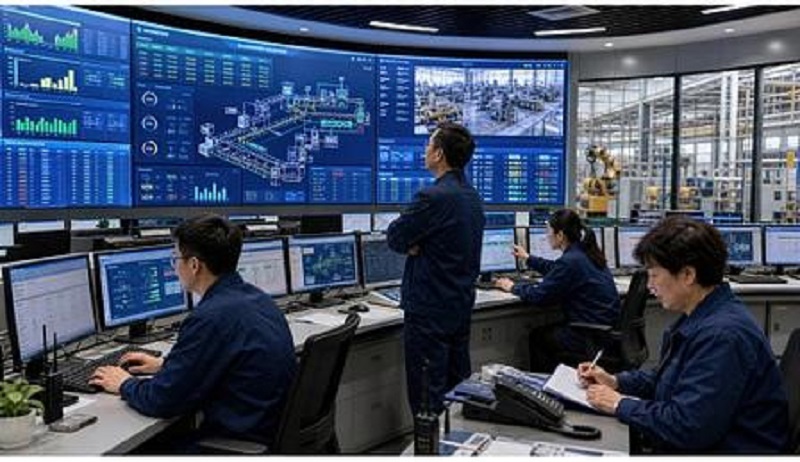
Modern automation systems increasingly need to understand the relationship between:
- Production
- Energy
- Equipment condition
- Data
- Environmental performance
Schneider Electric has continued developing technologies that combine automation, electrification, energy management and industrial software.
This convergence is becoming one of the most important trends in modern manufacturing.
PLC Systems Remain Central to Industrial Control
At the heart of many automated production systems is a PLC.
The controller continuously receives information from:
- Sensors
- Switches
- Encoders
- Process instruments
It then executes programmed logic to control:
- Motors
- Valves
- Actuators
- Conveyors
- Pumps
The reliability of this control layer remains critical.
Even advanced digital factories depend on deterministic control.
The difference is that modern systems increasingly add intelligent software above the PLC layer.
Automation and Energy Management Are Converging
Energy has traditionally been managed separately from production.
A factory might monitor electricity consumption at the facility level while production engineers focus on machine performance.
This separation is gradually disappearing.
Modern automation systems can connect energy information directly with production data.
For example, engineers can compare:
Machine operating time → Production output → Energy consumption
This makes it possible to determine whether increased production actually results in efficient energy utilization.
Variable Speed Drives Can Improve Motor Efficiency
Electric motors are among the most important energy consumers in industrial facilities.
They operate:
- Pumps
- Fans
- Compressors
- Conveyors
- Mixers
Many applications do not require a motor to operate at full speed continuously.
Variable speed drives can adjust motor speed according to process requirements.
This provides two important benefits:
- Better process control
- Potentially lower energy consumption
The drive therefore becomes both a motion-control component and an energy-management component.
Energy Data Can Help Identify Process Inefficiencies
Energy consumption can reveal problems that are not immediately visible.
Suppose a production machine begins consuming more electricity than usual.
Possible causes include:
- Mechanical friction
- Bearing wear
- Incorrect operating parameters
- Overloaded motors
- Production changes
By comparing energy data with historical operating conditions, engineers can investigate the cause.
This makes energy monitoring another useful diagnostic tool.
Industrial Software Connects Production and Energy Information
A modern industrial software platform can collect information from multiple systems.
This may include:
- PLCs
- Drives
- Energy meters
- Sensors
- Production equipment
The information can then be presented through dashboards.
Operators can monitor:
- Production output
- Machine status
- Energy consumption
- Downtime
- Equipment performance
This creates a more complete view of factory operations.
AI Can Improve Industrial Energy Optimization
Artificial intelligence provides opportunities to analyze complex energy patterns.
For example, AI can compare energy consumption with:
- Production schedules
- Machine loads
- Environmental conditions
- Operating temperatures
- Production volumes
It can then identify abnormal or inefficient patterns.
Potential applications include:
- Peak load reduction
- Production scheduling
- Equipment optimization
- Energy forecasting
This can help manufacturers make energy management more proactive.
Smart Manufacturing Requires Better Industrial Networks
Connected automation depends on communication.
A factory may contain:
- PLCs
- HMIs
- Drives
- Robots
- Sensors
- Energy meters
- Industrial PCs
Industrial Ethernet and other automation networks allow these systems to exchange information.
Network architecture therefore becomes an important part of system design.
Engineers must consider:
- Communication speed
- Reliability
- Redundancy
- Cybersecurity
- Scalability
Cybersecurity Becomes a Design Requirement
As automation systems become more connected, cybersecurity becomes increasingly important.
A modern industrial network may connect production equipment to higher-level software systems.
This can create additional risks.
Manufacturers need to protect:
- Controllers
- Engineering systems
- Production networks
- Industrial computers
- Operational data
Cybersecurity should therefore be incorporated during system design.
It should not be added only after the factory has already been connected.
Predictive Maintenance and Energy Monitoring Can Work Together
Energy information can be combined with other equipment data.
For example:
- Motor current
- Vibration
- Temperature
- Speed
- Energy consumption
can be analyzed together.
A change across several parameters may provide stronger evidence of equipment degradation than any single signal.
This creates a more comprehensive predictive maintenance strategy.
Automation Modernization Does Not Always Require Complete Replacement
Many factories still operate legacy equipment.
Replacing the entire control system can be expensive and disruptive.
A more practical strategy may involve gradual modernization.
Manufacturers can upgrade:
- Networks
- HMIs
- Data collection
- Edge computing
- Energy monitoring
while keeping selected existing control equipment.
This allows companies to obtain new digital capabilities without immediately replacing every installed asset.
Smart Factories Need Flexible Automation
Manufacturing requirements are changing quickly.
Products may have shorter lifecycles.
Customers may demand greater customization.
Production volumes can fluctuate.
Flexible automation allows manufacturers to adapt.
Modern PLC systems can support more modular machine architectures.
Software-based configuration can also make production changes faster.
The Future of Industrial Automation and Energy Management
The factory of the future will increasingly treat energy as a production variable.
Automation systems will monitor:
- Machine operation
- Production performance
- Electrical consumption
Software will analyze the information.
AI will identify optimization opportunities.
Engineers will use the results to improve both productivity and efficiency.
This creates a more integrated industrial operating model.
Conclusion
Schneider Electric’s continued development across automation, electrification, industrial software and energy management reflects a fundamental change in manufacturing.
Industrial automation is no longer limited to controlling machines.
It is increasingly becoming a platform for managing production, energy, equipment health and operational data.
For manufacturers, this creates an opportunity to improve efficiency without sacrificing reliability.
The combination of PLC control, variable speed drives, industrial networking, energy monitoring and AI-based analytics will play an increasingly important role in the development of intelligent and sustainable factories.