

ProductPRODUCT
Featured products
Contact Us
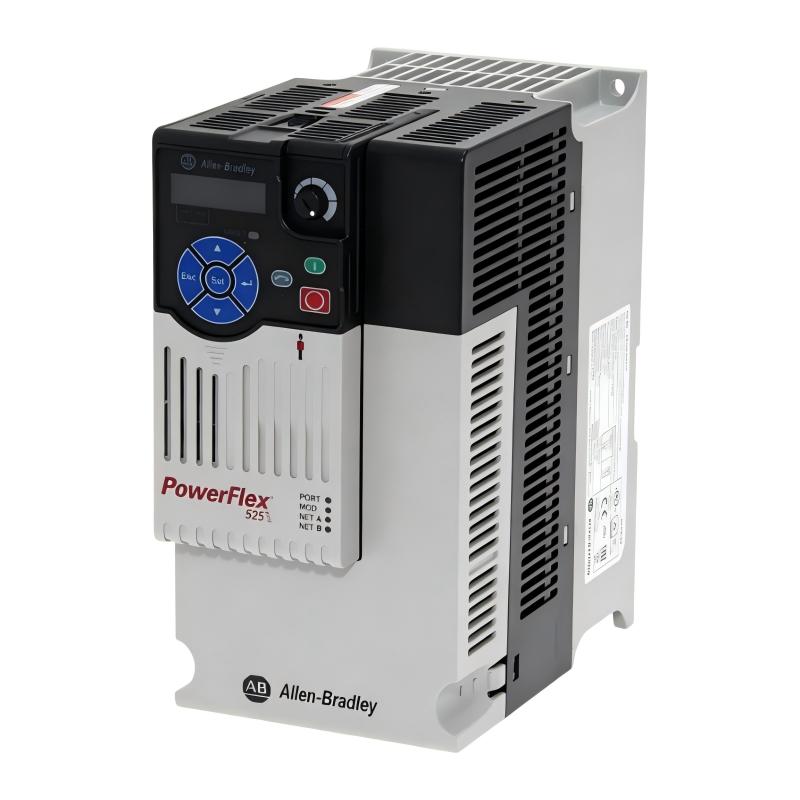
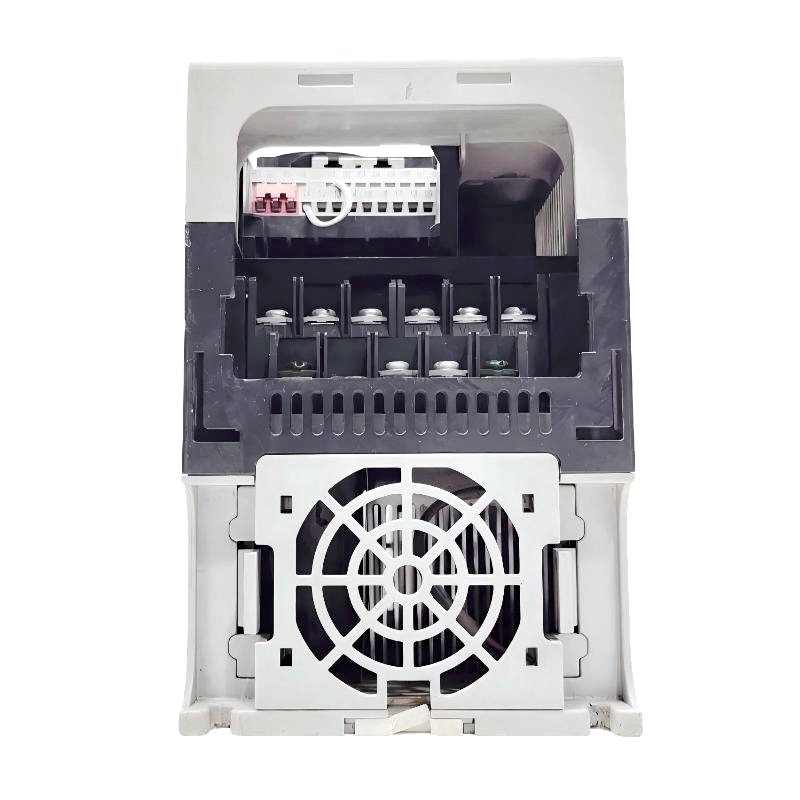
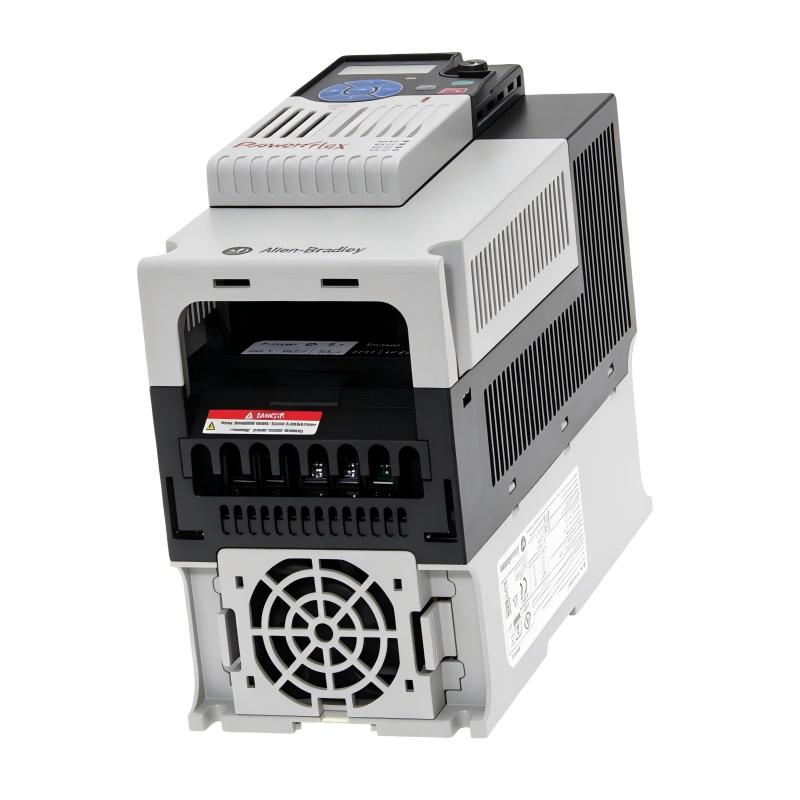
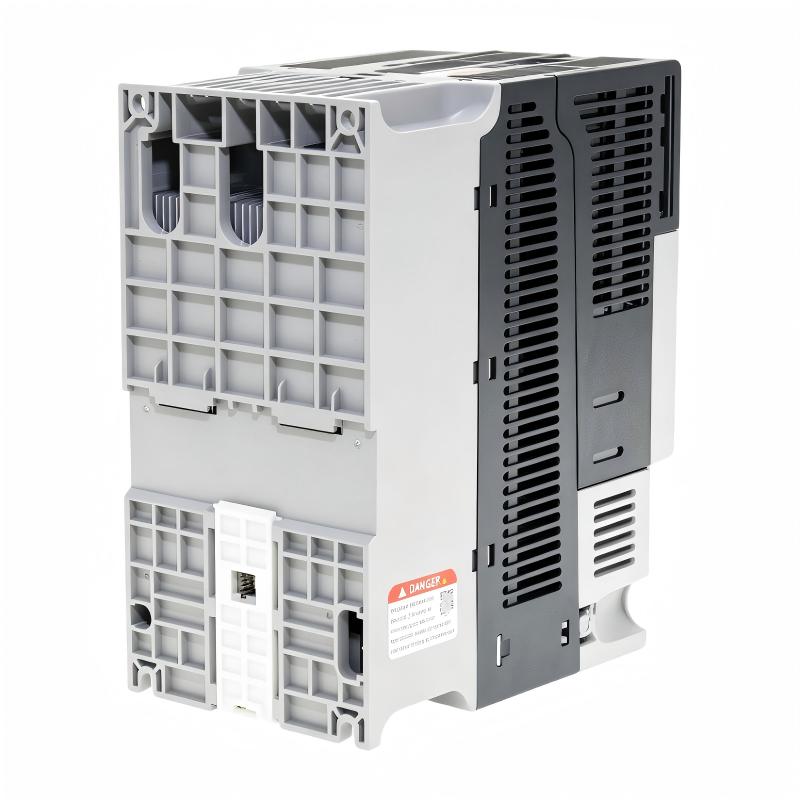
- Allen Bradley
- 25B-D013N114
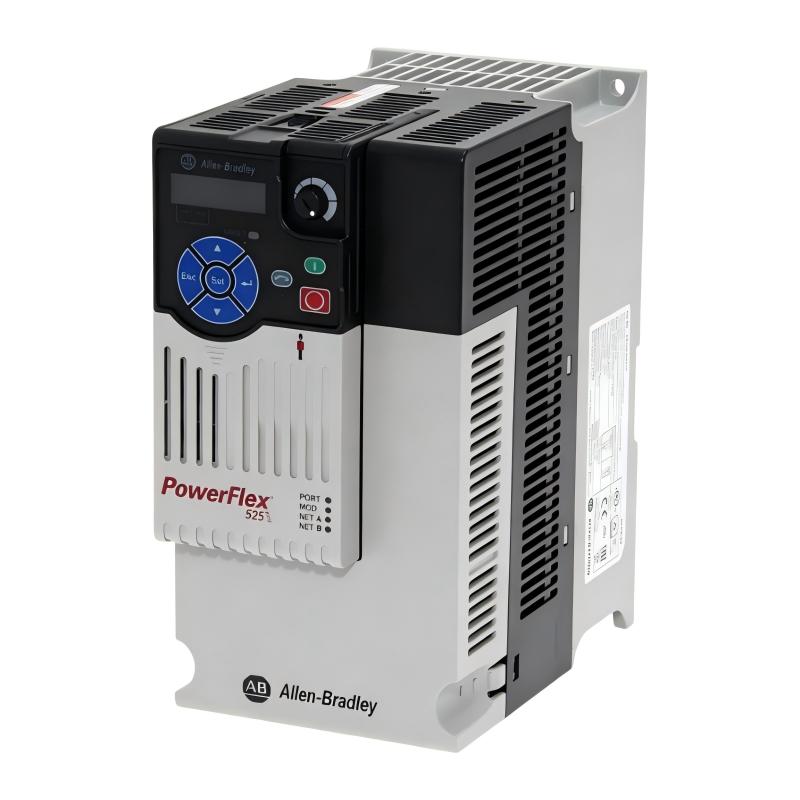
- PowerFlex 525 AC Drive
- USA
- 220 × 109 × 184 mm
- 2.3 kg
- Xiamen, China
- New & In Stock
- T/T, PayPal, Western Union
- 1 Year
- 1-3 Working Days
- DHL, UPS, TNT, FedEx and EMS.
- 24-Hour Service
- COO
- 64
Our advantage

Global Logistics
We have a 10-year logistics and express cooperation agreement, so our products can be shipped to any place in the world.

Brand new and original
Our products are imported in bulk from the place of origin. Because of the cooperative relationship, our products are all original and 100% new.

24-hour service
We provide 7*24 hours service to our customers. We will be there whenever you need us.

Price advantage
All our products are priced very favorably because we have our own warehouse and supply.
| Company Information | |||
| [email protected] | |||
| Mobile | +8615980777398 | ||
| +8615980777398 | |||
| 15980777398 |
Product Overview
The Allen Bradley 25B-D013N114 PowerFlex 525 AC Drive is an adjustable frequency drive for controlling three-phase AC motors in industrial automation equipment. It belongs to the PowerFlex 525 family, a drive platform commonly used where motor speed, acceleration, deceleration, and PLC-based coordination need to be managed from a compact control system.
This model is intended for the higher-current range within the PowerFlex 525 family compared with smaller Frame A units. Its 380–480 V AC three-phase supply class makes it suitable for industrial motor installations using common medium-voltage-class low-voltage distribution systems.
The drive can be used for applications where a motor should not simply run at a fixed line frequency. A conveyor, fan, pump, or machine spindle can operate at different speeds according to the production process, while acceleration and deceleration can be controlled through drive parameters.
The PowerFlex 525 platform also fits well into Rockwell Automation control architectures. Network communication allows the drive to exchange operating commands, speed references, status information, and diagnostic data with the PLC, reducing the need for extensive hardwired control signals.
Technical Specifications
| Parameter | Specification |
|---|---|
| Manufacturer | Allen-Bradley / Rockwell Automation |
| Model | 25B-D013N114 |
| Product Family | PowerFlex 525 |
| Product Type | Adjustable Frequency AC Drive |
| Input Voltage Class | 380–480 V AC |
| Input Phase | 3 Phase |
| Output Current | 13 A |
| Motor Control | Variable-Frequency AC Motor Control |
| Communication | Embedded EtherNet/IP |
| Safety | Integrated Safety Functionality |
| Enclosure | IP20 / NEMA Open Type |
| Frame Size | Frame B |
| Application | Industrial Motor Speed Control |
| Dimensions | 220 × 109 × 184 mm |
| Weight | 2.3 kg |
Product Features
The 25B-D013N114 combines variable-speed motor control with networked automation functions in the PowerFlex 525 platform.
Key characteristics include:
- PowerFlex 525 adjustable frequency drive
- 380–480 V AC three-phase supply class
- 13 A output-current class
- Frame B construction
- Embedded EtherNet/IP communication
- Integrated safety functionality
- Adjustable motor acceleration and deceleration
- Variable-speed operation
- Suitable for PLC-based motor control
- IP20 / NEMA Open Type construction
- Suitable for industrial control cabinets
- Local drive operation and parameter access
- Suitable for machine-level automation
- Compatible with networked Rockwell Automation control architectures
The 13 A current class gives this model a broader application range than the smaller PowerFlex 525 drives. Actual motor compatibility should still be determined from the motor nameplate current and the required duty rather than selecting the drive only from the motor’s horsepower.
Working Principle
The 25B-D013N114 regulates motor speed by converting the incoming AC supply into a controlled variable-frequency output.
A simplified power path is:
Three-Phase AC Supply → PowerFlex 525 → Variable-Frequency Output → AC Motor → Mechanical Load
The drive controls the frequency and voltage delivered to the motor. Because motor speed is related to the applied electrical frequency, changing the output frequency allows the motor to operate at different speeds.
For example, a conveyor may need a low speed during product loading and a higher speed during transportation. The drive can receive the required speed reference and adjust the motor accordingly.
Acceleration and deceleration parameters determine how quickly the motor changes speed. This is useful where abrupt speed changes could place unnecessary stress on belts, couplings, gearboxes, pumps, or other mechanical components.
When integrated through EtherNet/IP, the PowerFlex 525 can receive commands from the PLC and return operating information. The PLC can therefore coordinate motor operation with sensors, other drives, valves, and machine sequences.
Role in a PLC-Based Motor Control System
The 25B-D013N114 normally occupies the motor-control layer between the electrical supply and the driven machine.
A typical arrangement is:
PLC → EtherNet/IP → PowerFlex 525 → Three-Phase Motor → Mechanical Equipment
The PLC determines when and how the machine should operate, while the PowerFlex 525 performs the electrical control required to achieve the requested motor speed.
This separation is useful in automated machinery. The PLC can manage production logic and sequence control, while the drive handles frequency generation, motor acceleration, deceleration, operating status, and drive-level diagnostics.
For a replacement project, the communication architecture should be checked as carefully as the motor wiring. A drive may operate correctly from its local interface while still failing to communicate correctly with the PLC because of an incorrect network configuration or control method.
Industrial Applications
The 25B-D013N114 is suitable for industrial machinery requiring variable-speed control of appropriately rated three-phase motors.
| Application | Typical Use |
|---|---|
| Conveyors | Variable belt speed and controlled acceleration |
| Pumps | Flow and pressure-related speed control |
| Fans | Adjustable airflow |
| Material Handling | Coordinated motor movement |
| Packaging Machinery | Synchronizing motor speed with machine cycles |
| Machine Tools | Variable-speed motor operation |
| Process Machinery | Maintaining required operating speed |
| Industrial Production Equipment | PLC-controlled motor applications |
The 13 A output-current class makes this model suitable for a wider range of motors than lower-current PowerFlex 525 variants. The final selection should consider motor current, overload requirements, acceleration profile, ambient conditions, and braking requirements.
Installation and Maintenance
Installation should be carried out inside an enclosure appropriate for an IP20 / NEMA Open Type drive. Adequate cabinet ventilation and separation from heat-generating equipment are important for maintaining acceptable operating conditions.
Before commissioning, compare the drive configuration with the motor nameplate and the machine’s electrical requirements.
Recommended checks include:
- Confirm the complete 25B-D013N114 catalog number.
- Verify the incoming three-phase supply.
- Check the motor rated voltage.
- Compare motor full-load current with the drive rating.
- Verify motor wiring and phase connections.
- Confirm protective-earth connections.
- Inspect incoming and motor-side terminals.
- Check the control wiring.
- Verify EtherNet/IP network connections.
- Confirm the PLC communication configuration.
- Review acceleration and deceleration parameters.
- Check the commanded motor direction.
- Perform a controlled initial startup.
- Monitor drive status and diagnostic information.
- Inspect cabinet ventilation and surrounding temperature.
- Review the machine’s stopping and braking requirements.
If the drive trips during acceleration, check the motor current, acceleration time, mechanical load, motor connection, and supply conditions before assuming an internal drive failure. A heavy mechanical load can produce symptoms similar to an electrical fault.
Related Components
The PowerFlex 525 is normally integrated with electrical protection, control, communication, and mechanical components.
| Component | Function |
|---|---|
| Three-Phase AC Motor | Converts electrical power into mechanical motion |
| PLC / Controller | Executes machine control logic |
| EtherNet/IP Network | Transfers commands and drive data |
| Circuit Protection | Protects the drive and feeder circuit |
| Disconnect Device | Provides electrical isolation |
| Motor Cable | Connects the drive to the motor |
| Control Cabinet | Houses the drive and associated hardware |
| Safety Circuit | Handles required machine safety functions |
| Braking Components | Support controlled stopping where required |
| Mechanical Coupling | Transfers motor torque to the machine |
| Sensors | Provide process or machine feedback to the control system |
The exact component arrangement depends on the machine and the required control functions.
Recommended Related Models
When comparing PowerFlex 525 drives, the key selection factors are input-voltage class, output current, motor rating, enclosure requirements, communication needs, and application duty.
| Model / Product Family | Product Type | Typical Application |
|---|---|---|
| Allen-Bradley 25B-D013N114 | PowerFlex 525 AC Drive | 380–480 V, 13 A motor-control applications |
| Allen-Bradley 25B-D1P4N104 | PowerFlex 525 AC Drive | Smaller 380–480 V motor applications |
| Allen-Bradley 25B-D2P3N104 | PowerFlex 525 AC Drive | Lower-current 380–480 V applications |
| Allen-Bradley 25B-D6P0N104 | PowerFlex 525 AC Drive | Higher-current motor applications |
| Allen-Bradley 25B-D010N114 | PowerFlex 525 AC Drive | Similar voltage class with different current capacity |
| Allen-Bradley PowerFlex 525 Series | Adjustable Frequency Drive Family | General-purpose networked motor control |
| Allen-Bradley PowerFlex 523 Series | Adjustable Frequency Drive Family | Compact machine-level motor control |
The 25B-D1P4N104 is appropriate for a substantially smaller current requirement, while the 25B-D013N114 belongs to a higher-current class. These models should not be substituted based solely on the PowerFlex 525 family name; motor current and application duty must be checked first.
Key Advantages
- PowerFlex 525 adjustable frequency AC drive.
- 380–480 V AC three-phase supply class.
- 13 A output-current class.
- Embedded EtherNet/IP communication.
- Integrated safety functionality.
- Variable-speed motor control.
- Adjustable acceleration and deceleration.
- Suitable for PLC-based automation.
- Suitable for conveyors, pumps, fans, and material-handling equipment.
- Frame B construction.
- Suitable for industrial control cabinets.
- Supports networked motor diagnostics and control.
Technical FAQs
What makes the 25B-D013N114 different from a smaller PowerFlex 525 model?
The primary selection difference is its higher output-current capability. The 25B-D013N114 is in the 13 A class, making it suitable for larger motor loads than low-current PowerFlex 525 variants. The replacement drive should always be matched to the motor’s actual rated current and application duty.
Can the 25B-D013N114 be controlled entirely through EtherNet/IP?
It can be integrated into an EtherNet/IP-based automation architecture, allowing a compatible controller to exchange drive commands, references, status information, and diagnostics. The actual control arrangement depends on the PLC program and drive configuration.
What should be considered when using this drive on a high-inertia load?
The acceleration and deceleration profile should be evaluated together with motor current, load inertia, stopping frequency, and braking requirements. A high-inertia machine can demand significantly more from the drive during acceleration and deceleration than a lightly loaded motor.
Why should the complete catalog number be checked during replacement?
PowerFlex 525 catalog numbers identify specific electrical and configuration characteristics. Two drives from the same family can differ in voltage class, current capacity, filtering, and other options. Matching only the PowerFlex 525 family is therefore not sufficient for a like-for-like replacement.