

ProductPRODUCT
Featured products
Contact Us
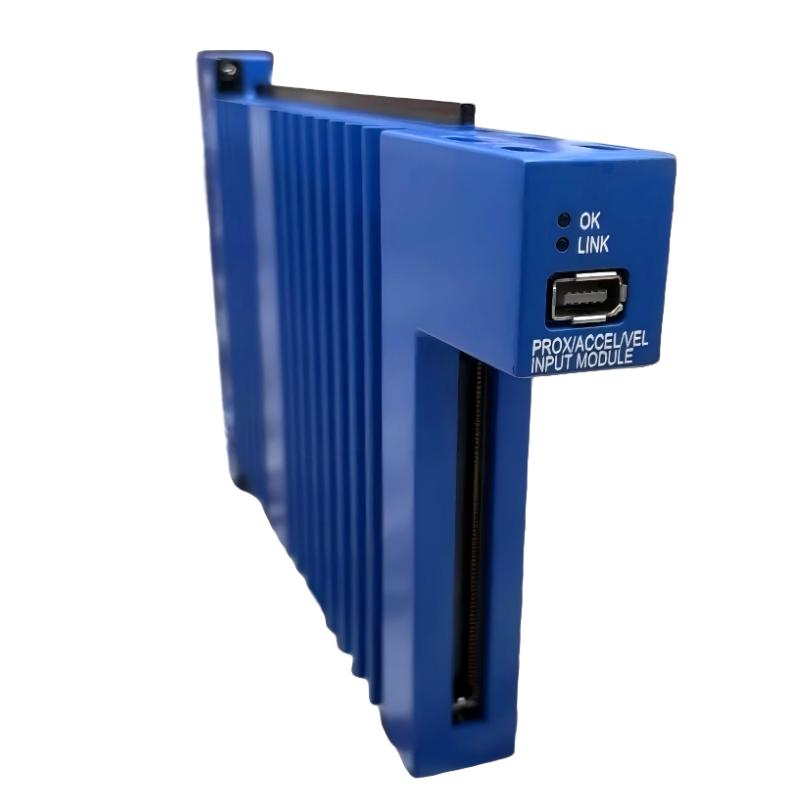
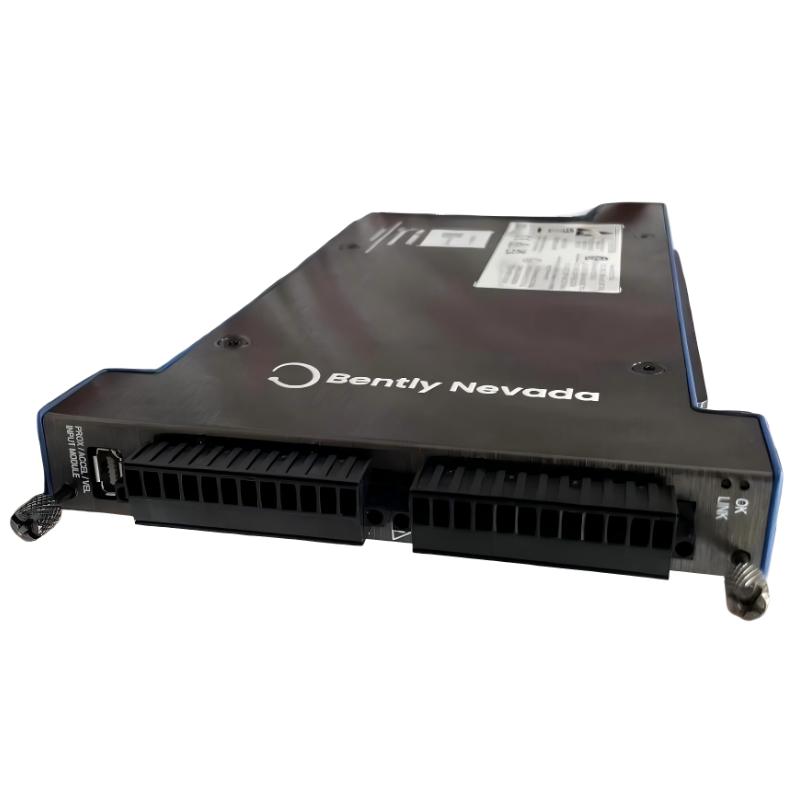
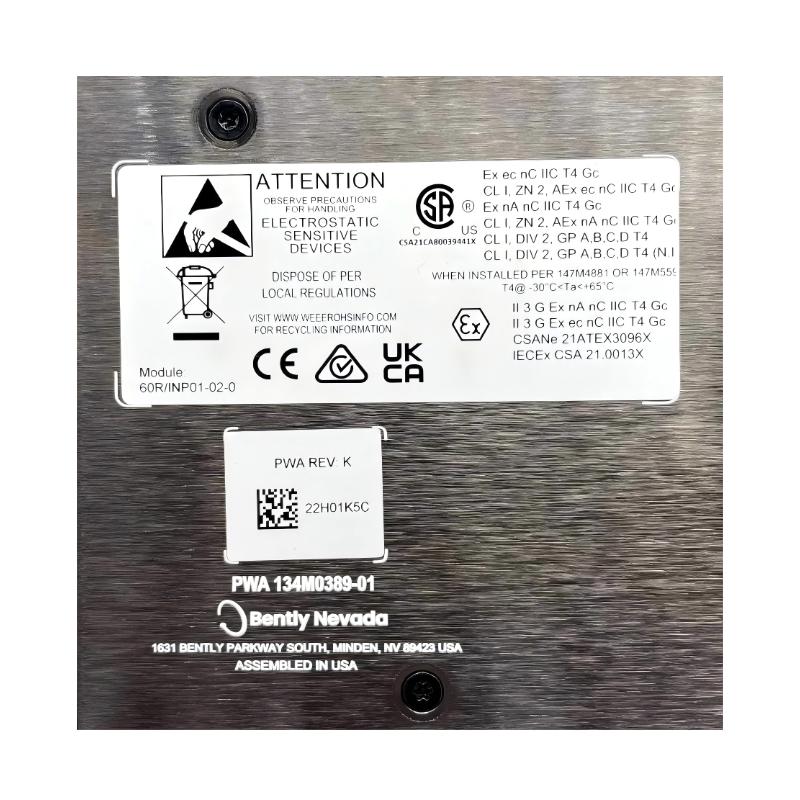
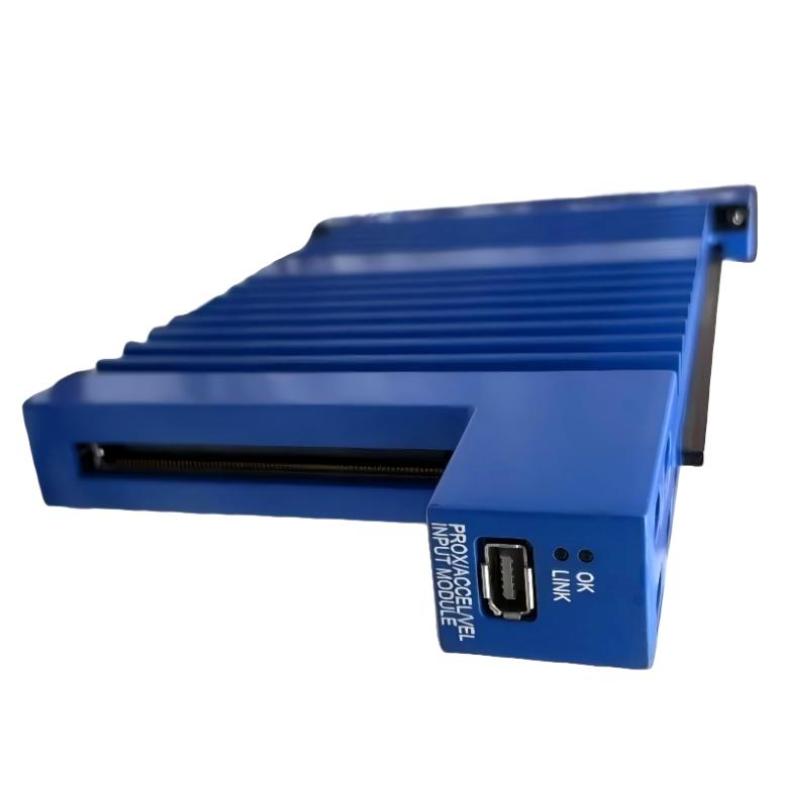
- Bently Nevada
- 60R/INP01
- Dynamic Input Module
- USA
- 132.1 × 20.3 × 245.6 mm
- 1.2 kg
- Xiamen, China
- New & In Stock
- T/T, PayPal, Western Union
- 1 Year
- 1-3 Working Days
- DHL, UPS, TNT, FedEx and EMS.
- 24-Hour Service
- COO
- 5
Our advantage

Global Logistics
We have a 10-year logistics and express cooperation agreement, so our products can be shipped to any place in the world.

Brand new and original
Our products are imported in bulk from the place of origin. Because of the cooperative relationship, our products are all original and 100% new.

24-hour service
We provide 7*24 hours service to our customers. We will be there whenever you need us.

Price advantage
All our products are priced very favorably because we have our own warehouse and supply.
| Company Information | |||
| [email protected] | |||
| Mobile | +8615980777398 | ||
| +8615980777398 | |||
| 15980777398 |
Product Overview
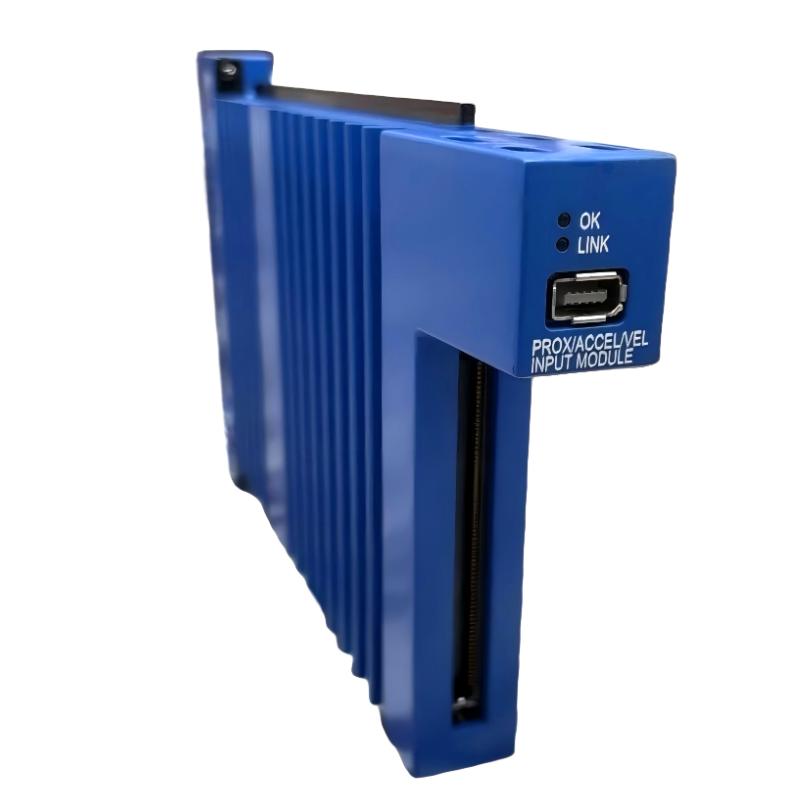
The Bently Nevada 60R/INP01 Dynamic Input Module is a signal acquisition module for the Orbit 60 Series condition monitoring platform. Its primary role is to receive dynamic signals from compatible machinery-monitoring sensors and bring those signals into the Orbit 60 monitoring architecture for further processing.
The INP01 operates closer to the field measurement layer than a communication gateway or condition-monitoring processor. In a typical installation, sensors installed on rotating equipment generate electrical signals representing machine behavior, and the Dynamic Input Module provides the interface through which those signals enter the monitoring system.
This makes the module particularly relevant to vibration monitoring, rotating machinery analysis, and condition-based maintenance. Applications can include turbines, compressors, pumps, motors, generators, gearboxes, and other equipment where changes in dynamic behavior can indicate developing mechanical problems.
The module is installed within the Orbit 60 chassis and works with other system components to create a complete measurement and monitoring chain. It should therefore be selected according to the sensor type, signal characteristics, required monitoring functions, and overall Orbit 60 architecture rather than as a standalone input card.
Technical Specifications
| Parameter | Specification |
|---|---|
| Manufacturer | Bently Nevada |
| Product Series | Orbit 60 |
| Model | 60R/INP01 |
| Product Type | Dynamic Input Module |
| Primary Function | Dynamic Signal Acquisition |
| System Application | Machinery Condition Monitoring |
| Installation | Orbit 60 Chassis |
| Chassis Occupancy | 1 Slot |
| Signal Application | Dynamic Machine Measurements |
| Typical Measurement | Vibration and Other Dynamic Signals |
| Dimensions | 132.1 × 20.3 × 245.6 mm |
| Weight | 1.2 kg |
The actual measurement capability of an INP01 installation depends on the connected sensor and the configuration of the complete Orbit 60 system. Sensor compatibility, signal type, wiring arrangement, and required monitoring parameters should therefore be checked before commissioning.
Product Features
The 60R/INP01 is intended to provide a dedicated interface between field-mounted dynamic sensors and the Orbit 60 monitoring system.
Its position in the signal chain makes it particularly important for applications where the quality and consistency of the acquired dynamic signal affect subsequent condition-monitoring results.
Key characteristics include:
- Orbit 60 Series dynamic input module
- Designed for dynamic signal acquisition
- Suitable for machinery condition monitoring
- Installed within the Orbit 60 chassis
- One-slot modular architecture
- Interfaces with compatible dynamic sensors
- Suitable for vibration-monitoring applications
- Supports integration with Orbit 60 processing functions
- Can form part of continuous machinery monitoring systems
- Suitable for critical rotating equipment
- Compact 132.1 × 20.3 × 245.6 mm dimensions
- 1.2 kg stated weight
The module is best considered as part of a complete measurement chain. The sensor, field cable, input module, processing module, and communication system all influence the quality of the final monitoring information.
Working Principle
A typical signal path can be represented as:
Machine → Dynamic Sensor → 60R/INP01 → Orbit 60 Processing → Communication Gateway → PLC / DCS / Monitoring System
When rotating machinery operates, mechanical movement generates dynamic signals that can be detected by suitable sensors.
For example, a vibration sensor installed on a bearing housing may produce an electrical signal that changes with the machine’s vibration behavior. The 60R/INP01 receives the compatible dynamic signal and introduces it into the Orbit 60 measurement architecture.
The acquired signal can then be processed by the appropriate monitoring functions within the system. Depending on the overall configuration, the resulting information may be used for machine-status evaluation, alarm handling, trending, or communication to external control and monitoring systems.
The important point is that the INP01 is responsible for the input side of the monitoring chain. It does not replace the physical sensor and does not perform the same system-level communication role as a gateway module.
If the signal arriving at the input module is incorrect, downstream processing cannot produce a meaningful machine-condition result. For this reason, sensor selection and field wiring are just as important as the input module itself.
Role in a Machinery Condition Monitoring System
The 60R/INP01 sits at the boundary between the field measurement layer and the Orbit 60 monitoring layer.
A practical architecture can be organized as:
Proximity Probes / Vibration Sensors → 60R/INP01 → 60R/CMM01 → 60R/CGW01 → Plant Control System
Each component has a different responsibility.
The sensor detects physical machine behavior. The INP01 receives the corresponding dynamic electrical signal. The CMM01 performs condition-monitoring processing, while a communication gateway can make selected information available to a PLC, DCS, HMI, or other host system.
This separation is useful in large machinery-monitoring installations because field acquisition, condition evaluation, and plant-level communication do not have to be handled by the same hardware.
When diagnosing a missing or abnormal signal, engineers should therefore trace the complete path rather than immediately replacing the input module.
Industrial Applications
The 60R/INP01 is suited to industrial equipment where dynamic measurements are required to evaluate machine condition.
| Application | Typical Use |
|---|---|
| Steam Turbines | Dynamic vibration and machinery monitoring |
| Gas Turbines | Monitoring rotating equipment behavior |
| Compressors | Detecting changes in vibration condition |
| Pumps | Monitoring bearings and rotating assemblies |
| Generators | Continuous condition monitoring |
| Motors | Monitoring mechanical vibration |
| Gearboxes | Detecting abnormal dynamic behavior |
| Rotating Machinery | Continuous machine-condition measurement |
| Power Generation | Monitoring critical rotating assets |
| Oil & Gas Equipment | Supporting machinery protection and maintenance |
The module becomes particularly valuable on equipment where mechanical degradation can develop gradually and where early detection can reduce unplanned shutdowns.
Installation and Maintenance
The 60R/INP01 should be installed in a compatible Orbit 60 chassis and connected to the appropriate field-monitoring hardware.
Before commissioning, engineers should confirm that the selected sensor is compatible with the input architecture and that the field wiring is correctly terminated.
Recommended checks include:
- Confirm the complete 60R/INP01 model.
- Verify Orbit 60 chassis compatibility.
- Confirm the intended module position.
- Check module seating and connectors.
- Verify the connected sensor type.
- Inspect sensor mounting.
- Check field cable continuity.
- Inspect cable shielding and grounding arrangements.
- Check for loose terminals or damaged connectors.
- Verify expected input signal behavior.
- Compare the channel response with known machine conditions.
- Check for missing or unstable measurements.
- Review downstream condition-monitoring values.
- Inspect the module and chassis during scheduled maintenance.
When a dynamic measurement appears abnormal, the sensor should be checked before assuming that the input module has failed. A damaged probe, poor sensor mounting, cable deterioration, grounding problem, or incorrect configuration can all create symptoms that resemble an input-module fault.
For rotating machinery, it is also useful to compare the signal against operating speed and machine load. A change that occurs only during a particular operating condition may be related to the machine rather than the acquisition hardware.
Related Components
The INP01 normally works with several other components within the monitoring architecture.
| Component | Function |
|---|---|
| Orbit 60 Chassis | Provides module mounting and system interconnection |
| Dynamic Sensors | Detect machine vibration or other dynamic behavior |
| Proximity Probes | Measure shaft displacement and relative movement |
| Accelerometers | Provide vibration measurements |
| Field Cables | Transfer sensor signals to the input module |
| 60R/CMM01 | Performs condition-monitoring processing |
| 60R/CGW01 | Transfers selected monitoring data to external systems |
| 60R/SIM01 | Supports system interface functions |
| Orbit 60 Power Module | Provides system operating power |
| PLC / DCS | Receives selected machine-condition information |
The sensor and input module should be considered as a matched measurement path. A technically correct input module cannot compensate for an unsuitable sensor or poor field installation.
Recommended Related Models
The following Orbit 60 components are useful when designing or maintaining a system around the 60R/INP01.
| Model / Component | Product Type | Typical Application |
|---|---|---|
| Bently Nevada 60R/INP01 | Dynamic Input Module | Dynamic signal acquisition |
| Bently Nevada 60R/CMM01 | Condition Monitoring Module | Condition processing and machine evaluation |
| Bently Nevada 60R/CGW01 | Communication Gateway | Ethernet integration with PLC / DCS |
| Bently Nevada 60R/CGW02 | Communication Gateway | Alternative external communication |
| Bently Nevada 60R/SIM01 | System Interface Module | System-level integration |
| Bently Nevada 60R/CHA02 | 3U Panel Chassis | Orbit 60 module installation |
The 60R/CMM01 is the most natural companion when the application requires condition-monitoring processing after dynamic signal acquisition. The 60R/CGW01 becomes relevant when processed information needs to be transferred to an external Ethernet-based control system.
For a replacement, however, the existing sensor type, wiring configuration, chassis arrangement, and monitoring architecture should all be checked before selecting a related module.
Key Advantages
- Orbit 60 Series dynamic input module.
- Dedicated interface for dynamic machinery signals.
- Suitable for vibration-monitoring applications.
- Supports rotating machinery condition monitoring.
- Integrates with the Orbit 60 modular architecture.
- One-slot chassis installation.
- Works with compatible dynamic sensors.
- Suitable for continuous machine monitoring.
- Can feed acquired information into condition-monitoring processing functions.
- Suitable for turbines, compressors, pumps, generators, motors, and gearboxes.
- Compact 132.1 × 20.3 × 245.6 mm design.
- 1.2 kg stated weight.
Technical FAQs
What determines whether a sensor is suitable for the 60R/INP01?
The sensor should be evaluated according to its measurement principle, electrical output characteristics, operating range, installation method, and compatibility with the Orbit 60 input architecture. The physical connector alone is not sufficient to establish compatibility.
How can an engineer distinguish an input-module problem from a faulty vibration sensor?
A useful approach is to trace the signal from the sensor toward the monitoring system. Inspect the sensor installation first, then the field cable and connections, followed by the input channel and downstream processing. Comparing the affected channel with a known-good channel can also help isolate whether the problem follows the sensor or remains with the input path.
Why can poor sensor installation affect the data received by the INP01?
Dynamic measurements are sensitive to mechanical mounting and signal integrity. A loose sensor, damaged cable, poor shielding, or inappropriate installation location can introduce noise or alter the measured signal. The input module may therefore appear to be producing incorrect data even though the actual problem is at the measurement point.
What should be considered when adding additional dynamic monitoring channels?
The engineer should review the available Orbit 60 chassis capacity, compatible input hardware, sensor types, field wiring, system power requirements, processing capacity, and the required communication path to the plant control system. Adding an input channel is a system-level change rather than simply installing another module.