

ProductPRODUCT
Featured products
Contact Us
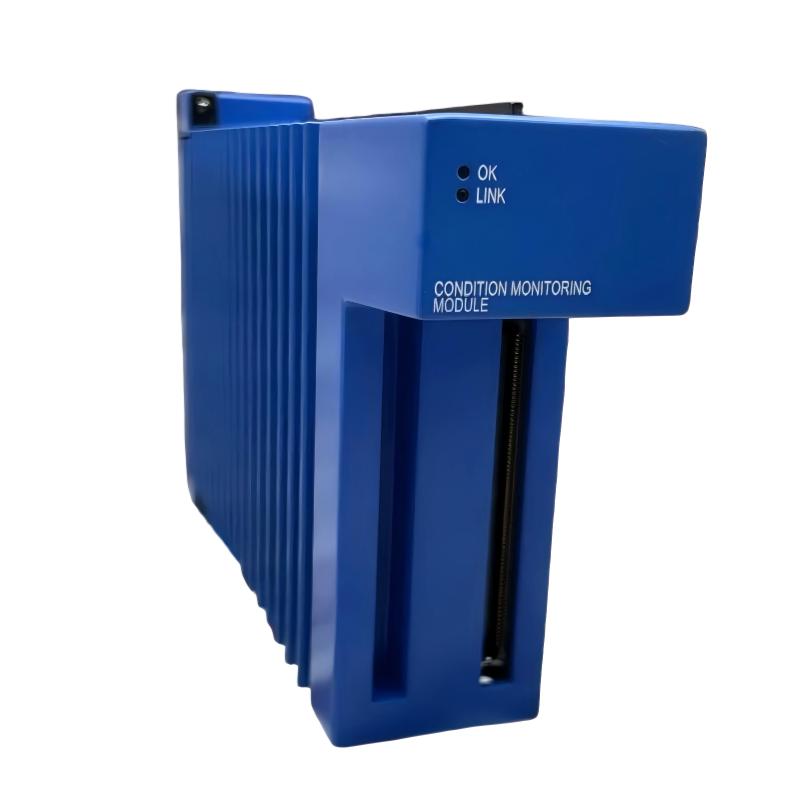
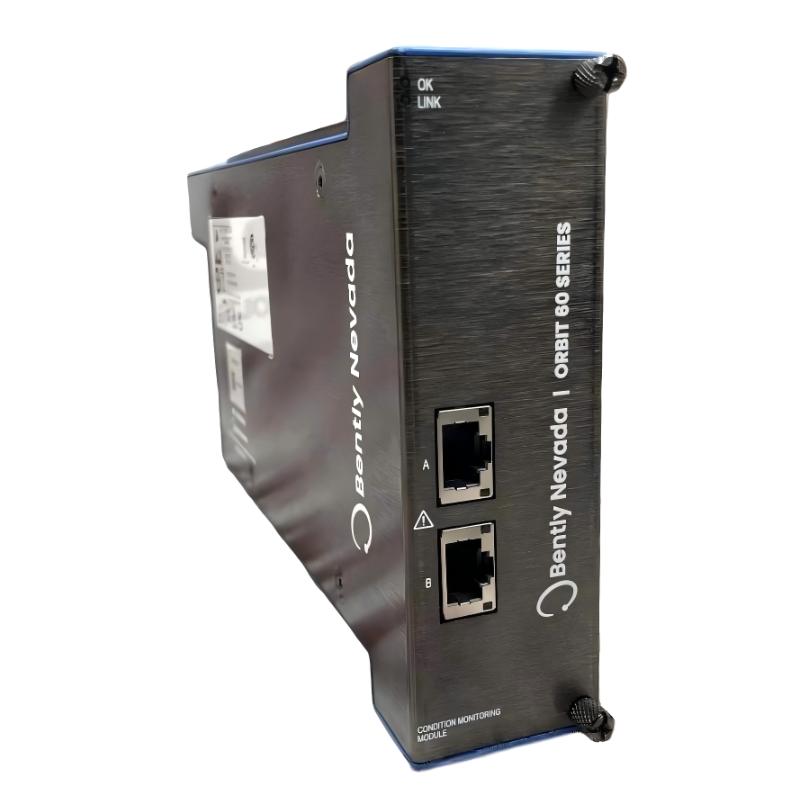
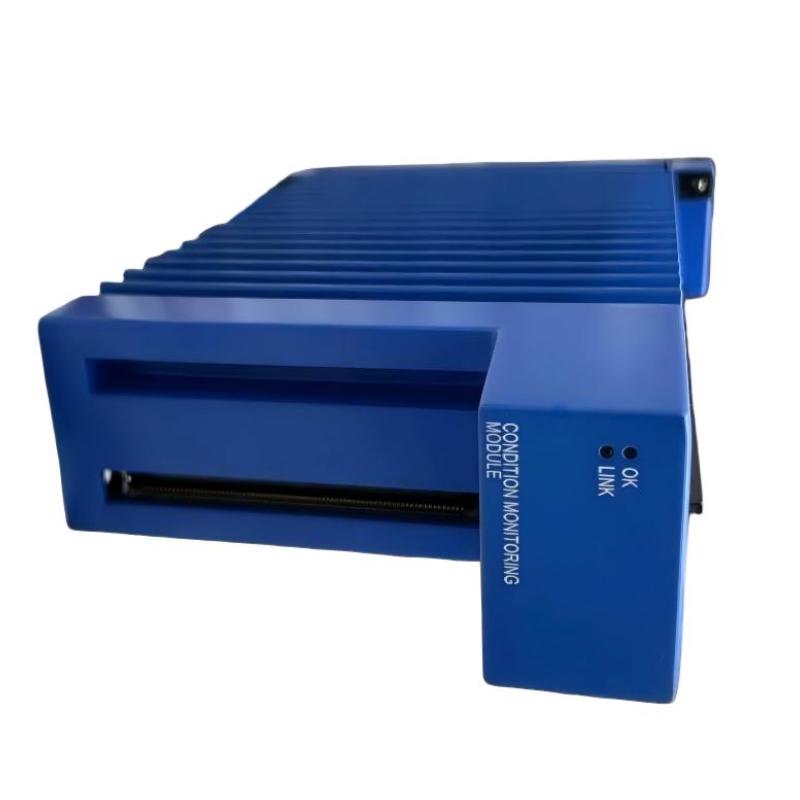
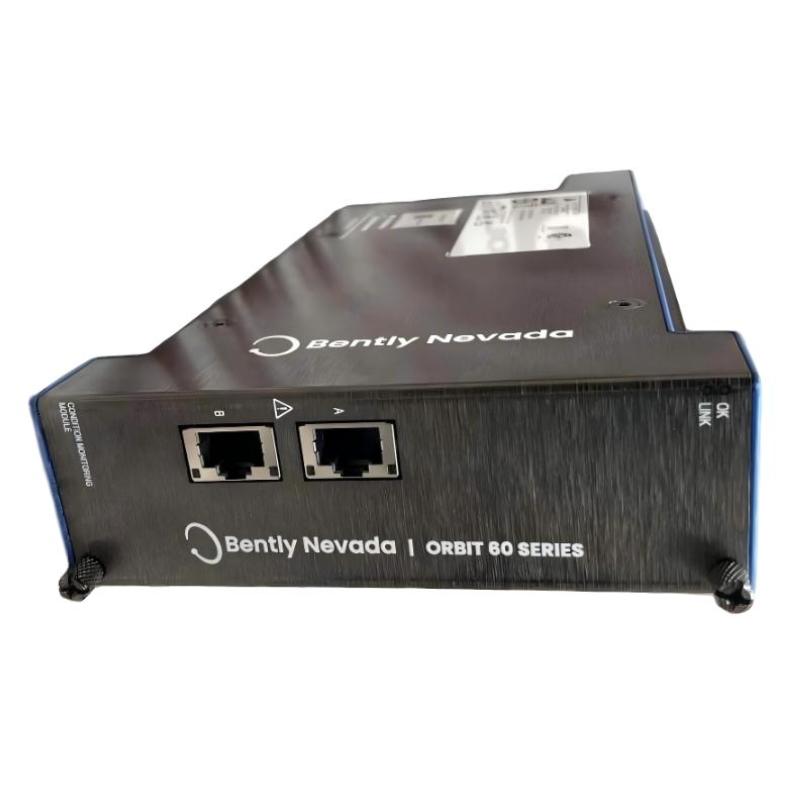
- Bently Nevada
- 60R/CMM01
- Condition Monitoring Module
- USA
- 132.1 × 20.3 × 245.6 mm
- 1.2 kg
- Xiamen, China
- New & In Stock
- T/T, PayPal, Western Union
- 1 Year
- 1-3 Working Days
- DHL, UPS, TNT, FedEx and EMS.
- 24-Hour Service
- COO
- 5
Our advantage

Global Logistics
We have a 10-year logistics and express cooperation agreement, so our products can be shipped to any place in the world.

Brand new and original
Our products are imported in bulk from the place of origin. Because of the cooperative relationship, our products are all original and 100% new.

24-hour service
We provide 7*24 hours service to our customers. We will be there whenever you need us.

Price advantage
All our products are priced very favorably because we have our own warehouse and supply.
| Company Information | |||
| [email protected] | |||
| Mobile | +8615980777398 | ||
| +8615980777398 | |||
| 15980777398 |
Product Overview
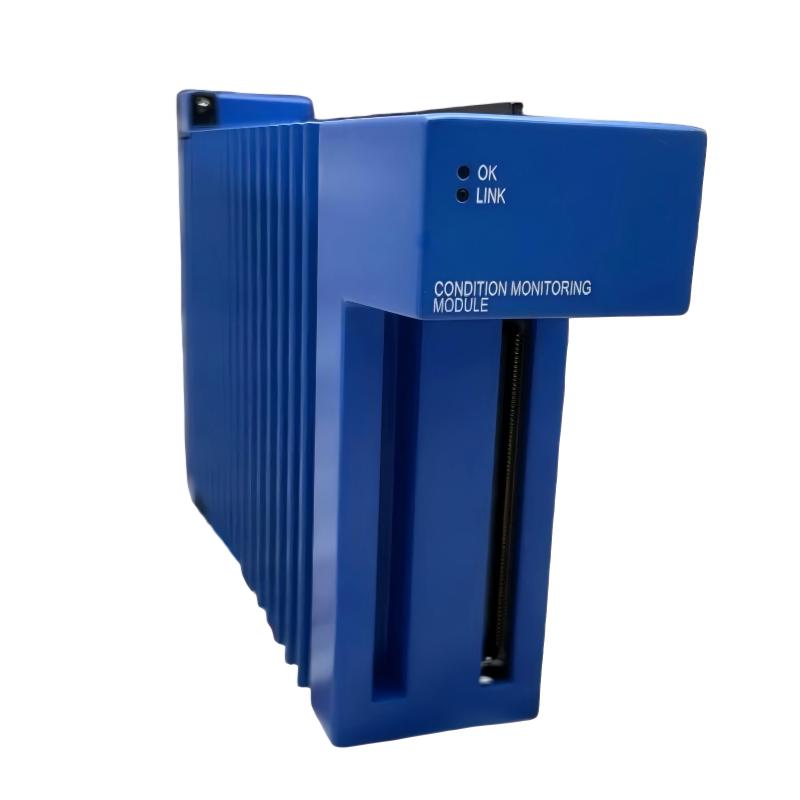
The Bently Nevada 60R/CMM01 Condition Monitoring Module is a core processing module in the Orbit 60 Series condition monitoring platform. It is used to process machine-condition information collected by the monitoring system and make that information available for local monitoring, alarming, system-level processing, and communication with other control equipment.
The CMM01 should be viewed as a processing element rather than a simple signal input card. Field sensors and monitoring modules acquire information from rotating equipment, while the CMM provides the computing and condition-monitoring functions needed to evaluate that information.
This architecture is particularly useful for machinery where vibration, position, speed, or other dynamic measurements need to be monitored continuously. Typical equipment includes compressors, pumps, turbines, generators, motors, gearboxes, and other critical rotating machinery.
The module is installed within the Orbit 60 chassis and works together with the system’s power, input, interface, and communication modules. In a complete installation, the CMM01 sits between the measurement layer and the higher-level plant control or monitoring system.
Technical Specifications
| Parameter | Specification |
|---|---|
| Manufacturer | Bently Nevada |
| Product Series | Orbit 60 |
| Model | 60R/CMM01 |
| Product Type | Condition Monitoring Module |
| Primary Function | Machinery Condition Monitoring and Processing |
| System Architecture | Orbit 60 Modular Monitoring System |
| Installation | Orbit 60 Chassis |
| Chassis Occupancy | 1 Slot |
| Application | Continuous Machinery Monitoring |
| Typical Equipment | Turbines, Compressors, Pumps, Motors, Generators, Gearboxes |
| Dimensions | 132.1 × 20.3 × 245.6 mm |
| Weight | 1.2 kg |
The exact monitoring capability available from a CMM01 installation depends on the overall Orbit 60 configuration, including the installed input modules, sensors, system interfaces, and communication architecture.
Product Features
The 60R/CMM01 is intended for applications where machinery condition needs to be monitored continuously rather than checked only during periodic maintenance.
Its modular design allows the condition-monitoring processor to operate as part of a larger Orbit 60 system. This makes it possible to separate field signal acquisition, condition evaluation, system communication, and power functions into appropriate modules.
Key characteristics include:
- Orbit 60 Series condition monitoring module
- Dedicated machinery condition-monitoring function
- Modular chassis installation
- One-slot Orbit 60 system architecture
- Suitable for continuous machine monitoring
- Supports monitoring of critical rotating equipment
- Works with compatible Orbit 60 input modules
- Integrates with Orbit 60 communication architecture
- Suitable for alarm and machine-status applications
- Designed for industrial condition-monitoring systems
- Compact 132.1 × 20.3 × 245.6 mm dimensions
- 1.2 kg stated weight
The CMM01 is particularly valuable in systems where raw measurement data needs to be turned into useful machine-condition information for operators, maintenance personnel, or control systems.
Working Principle
A simplified Orbit 60 monitoring path can be represented as:
Machine → Sensors → Orbit 60 Input Modules → 60R/CMM01 → Communication / Monitoring System
Sensors installed on the machine generate electrical signals corresponding to physical conditions such as vibration, shaft position, or rotational behavior.
The compatible Orbit 60 input hardware receives these field signals and passes the acquired information into the monitoring architecture. The CMM01 then performs the associated condition-monitoring processing required by the system configuration.
The resulting information can be used to determine whether machinery is operating within expected conditions or whether an abnormal condition requires attention.
For example, a rotating machine may gradually develop increasing vibration. A monitoring system can track the changing condition and provide useful status or alarm information before the mechanical problem develops into a more serious failure.
The CMM01 therefore serves as a processing layer between the physical machine measurements and the higher-level monitoring or control environment.
Role in an Orbit 60 Condition Monitoring System
The CMM01 occupies an important position in the Orbit 60 architecture because it connects measurement acquisition with condition evaluation.
A typical arrangement can be viewed as:
Vibration / Position Sensors → Input Modules → CMM01 → Communication Gateway → PLC / DCS / HMI
The input modules deal with the electrical interface to field sensors. The CMM01 handles the condition-monitoring side of the architecture, while a communication gateway such as the 60R/CGW01 can transfer selected information to external control systems.
This division of functions is useful when a plant needs both detailed machinery monitoring and integration with a process-control system.
For instance, a compressor train may have multiple vibration measurement points. The monitoring system can process these signals while the plant DCS receives selected machine-status and alarm information through the communication layer.
If the monitoring values are correct locally but are not reaching the DCS, the CMM01 should not automatically be identified as the fault. The communication gateway, network, data mapping, and external control-system configuration should also be checked.
Industrial Applications
The 60R/CMM01 is intended for critical machinery applications where continuous condition information is useful for equipment protection, maintenance planning, and operational decision-making.
| Application | Typical Monitoring Requirement |
|---|---|
| Steam Turbines | Continuous monitoring of rotating machinery condition |
| Gas Turbines | Monitoring critical dynamic machine behavior |
| Compressors | Detecting changes in operating condition |
| Pumps | Monitoring rotating equipment condition |
| Generators | Supporting continuous machinery monitoring |
| Motors | Tracking abnormal vibration or mechanical behavior |
| Gearboxes | Monitoring condition changes in rotating assemblies |
| Industrial Machinery | Supporting predictive maintenance programs |
| Power Generation Equipment | Continuous condition-based monitoring |
| Oil & Gas Machinery | Monitoring critical rotating assets |
The CMM01 is most valuable on equipment where an unexpected mechanical failure could result in significant downtime, maintenance cost, or process disruption.
Installation and Maintenance
The CMM01 should be installed in a compatible Orbit 60 chassis with the appropriate supporting modules.
Before installation, the complete monitoring architecture should be reviewed. The CMM01 does not operate as an isolated field sensor interface, so the input modules, power arrangement, communication interface, and connected sensors all need to be considered.
Recommended installation and maintenance checks include:
- Confirm the complete 60R/CMM01 model.
- Verify compatibility with the Orbit 60 chassis.
- Check the intended module position.
- Inspect the module connector before installation.
- Confirm that the module is fully seated.
- Verify the system power arrangement.
- Check connected input modules.
- Inspect sensor wiring and field connections.
- Confirm communication-module connections.
- Check alarm and status information after startup.
- Review monitoring values for abnormal or missing channels.
- Compare questionable readings with known machine operating conditions.
- Inspect the chassis and module connections during scheduled maintenance.
- Keep cabinet temperature and ventilation within the required operating conditions.
When troubleshooting an abnormal measurement, technicians should follow the signal path from the machine toward the control system. A useful sequence is sensor → field wiring → input module → CMM processing → communication gateway → PLC/DCS.
This approach helps distinguish a sensor problem from an acquisition problem, processing issue, or communication fault.
Related Components
The CMM01 normally forms part of a larger Orbit 60 condition-monitoring installation.
| Component | Function |
|---|---|
| Orbit 60 Chassis | Houses and interconnects system modules |
| Orbit 60 Input Modules | Interface with field monitoring sensors |
| 60R/CGW01 | Transfers monitoring information through Ethernet |
| 60R/CGW02 | Provides an alternative communication interface |
| 60R/SIM01 | Supports system-level interface functions |
| Orbit 60 Power Module | Provides system operating power |
| Proximity Probes | Measure shaft position or displacement |
| Accelerometers | Provide vibration measurements |
| Velocity Sensors | Monitor machine vibration |
| Speed / Keyphasor Sensors | Provide rotational reference information |
| PLC / DCS | Receives selected machine-condition information |
The actual combination of components depends on the machinery being monitored and the measurements required by the application.
Recommended Related Models
When planning an Orbit 60 condition-monitoring system, the following components are useful comparison points.
| Model / Component | Product Type | Typical Application |
|---|---|---|
| Bently Nevada 60R/CMM01 | Condition Monitoring Module | Condition processing and machinery monitoring |
| Bently Nevada 60R/CGW01 | Communication Gateway | Ethernet integration with PLC / DCS |
| Bently Nevada 60R/CGW02 | Communication Gateway | Alternative external communication architecture |
| Bently Nevada 60R/SIM01 | System Interface Module | Orbit 60 system-level integration |
| Bently Nevada 60R/CHA02 | 3U Panel Chassis | Housing and interconnection of Orbit 60 modules |
| Orbit 60 Input Modules | Monitoring Input Modules | Sensor signal acquisition |
The 60R/CMM01 should not be selected solely based on the number of monitoring points. The required sensor types, input modules, processing requirements, communication architecture, and machine-monitoring strategy should be considered together.
For a replacement project, matching the existing CMM01 part number and Orbit 60 architecture is generally more appropriate than selecting a physically similar module from another function.
Key Advantages
- Orbit 60 Series condition monitoring module.
- Dedicated processing role within the machinery monitoring architecture.
- Suitable for continuous condition monitoring.
- Integrates with compatible Orbit 60 input modules.
- Suitable for critical rotating equipment.
- Supports machine-condition and alarm monitoring applications.
- Works with Orbit 60 communication modules.
- Suitable for PLC, DCS, and supervisory-system integration through the appropriate communication architecture.
- Modular one-slot installation.
- Compact 132.1 × 20.3 × 245.6 mm design.
- 1.2 kg stated weight.
- Suitable for predictive maintenance and condition-based monitoring systems.
Technical FAQs
What type of information does the 60R/CMM01 process?
The CMM01 operates within the Orbit 60 condition-monitoring architecture and processes information supplied by compatible monitoring hardware. Depending on the system configuration, this can relate to dynamic machine measurements and associated machinery-condition information rather than simply acting as a raw analog input channel.
How does the CMM01 differ from an Orbit 60 input module?
An input module provides the field-level interface for connected sensors, while the CMM01 performs the associated condition-monitoring processing within the system architecture. They therefore serve different stages of the signal chain and are normally used together rather than as substitutes.
What is the correct troubleshooting approach when a vibration value appears abnormal?
Start at the measurement source and work toward the processing system: inspect the sensor, mechanical mounting, field wiring, input-channel condition, and then the CMM processing path. If the local monitoring information is normal but the value displayed by a PLC or DCS is incorrect, the communication layer should be investigated separately.
Why is the CMM01 important in a predictive maintenance application?
Raw sensor signals are difficult to use directly for maintenance decisions. A condition-monitoring processor allows the system to evaluate machine behavior and present meaningful condition information, making it easier to identify developing abnormalities and determine when further mechanical inspection is justified.