

ProductPRODUCT
Featured products
Contact Us
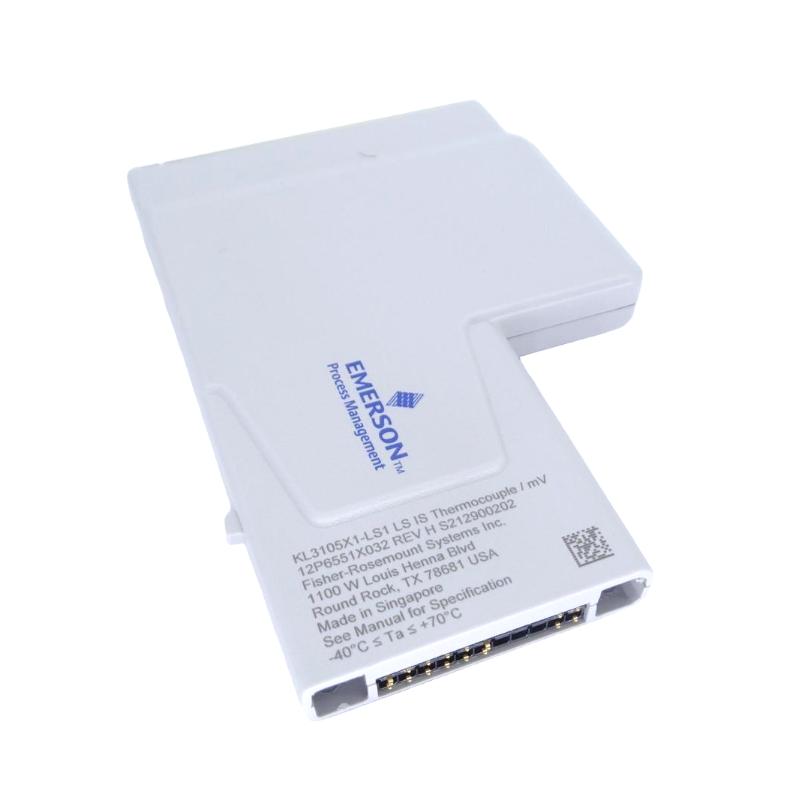
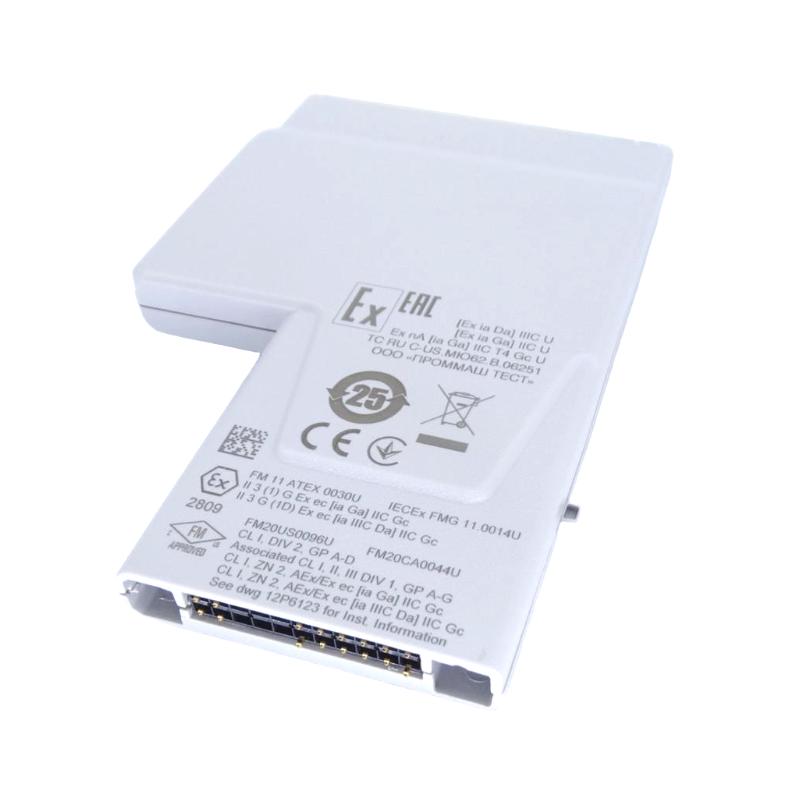
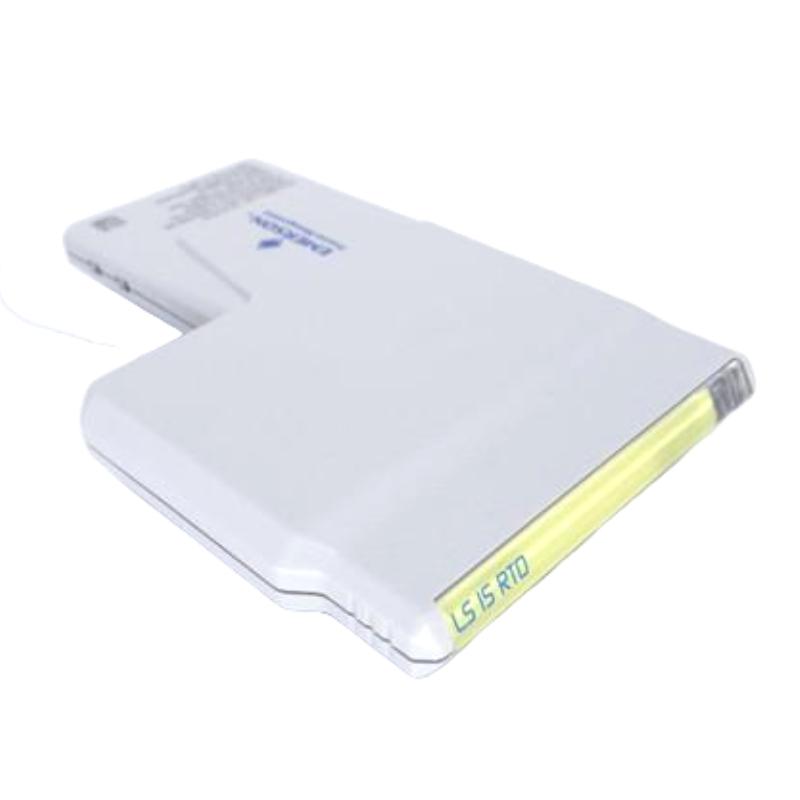
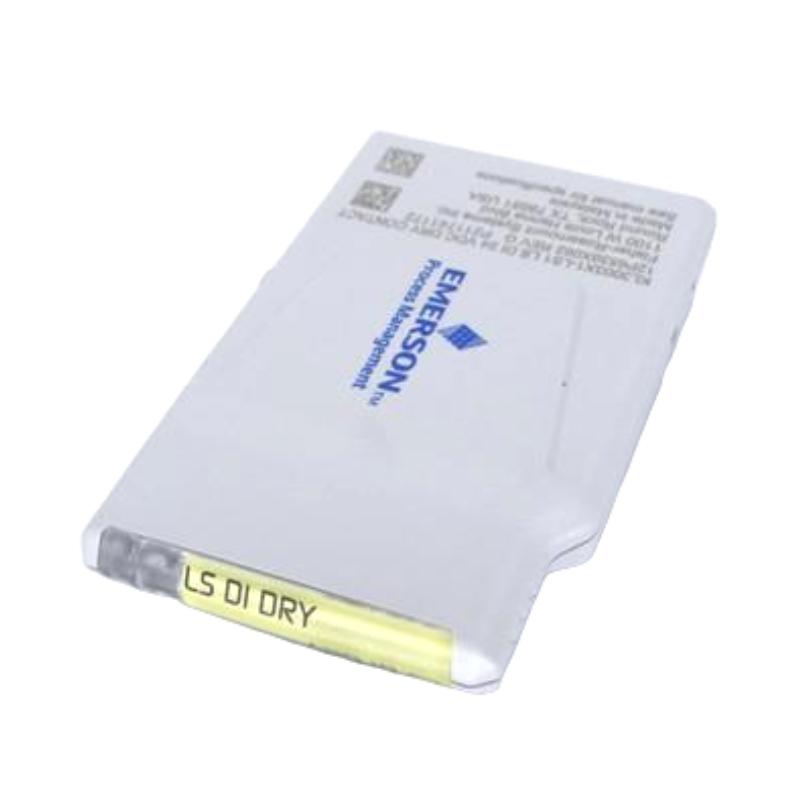
- Emerson
- KL3105X1-LS1
- Safety Thermocouple/mV CHARM Module
- USA
- 150 × 100 × 35 mm
- 0.113 kg
- Xiamen, China
- New & In Stock
- T/T, PayPal, Western Union
- 1 Year
- 1-3 Working Days
- DHL, UPS, TNT, FedEx and EMS.
- 24-Hour Service
- COO
- 47
Our advantage

Global Logistics
We have a 10-year logistics and express cooperation agreement, so our products can be shipped to any place in the world.

Brand new and original
Our products are imported in bulk from the place of origin. Because of the cooperative relationship, our products are all original and 100% new.

24-hour service
We provide 7*24 hours service to our customers. We will be there whenever you need us.

Price advantage
All our products are priced very favorably because we have our own warehouse and supply.
| Company Information | |||
| [email protected] | |||
| Mobile | +8615980777398 | ||
| +8615980777398 | |||
| 15980777398 |
Product Overview
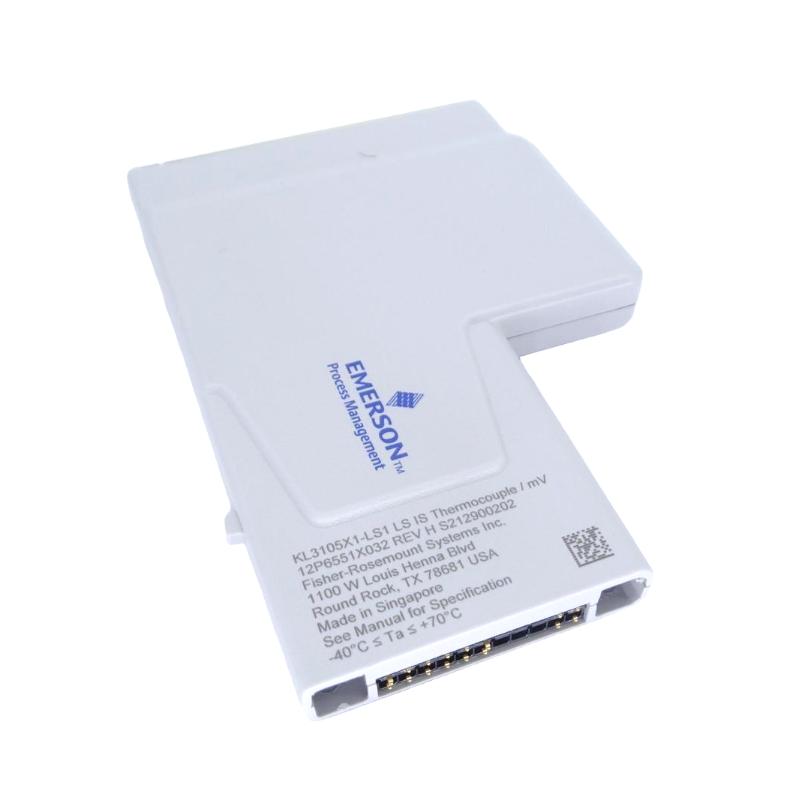
The Emerson KL3105X1-LS1 Safety Thermocouple/mV CHARM Module is a safety-oriented temperature and millivolt input module for the Emerson DeltaV CHARMs I/O architecture. It is used to bring thermocouple or low-level millivolt signals from field devices into the control and safety system.
A thermocouple generates a small voltage that changes with temperature. The input module receives this low-level signal, processes it according to the configured measurement requirements, and makes the resulting process information available to the DeltaV system.
In an actual plant, this type of module can be used with temperature sensors installed on process vessels, furnaces, heat exchangers, piping, reactors, or other equipment where temperature is a critical operating or safety parameter.
The safety aspect is particularly relevant in applications where a temperature measurement is not used simply for display or routine process monitoring. A temperature signal may also form part of a protective function, shutdown strategy, or safety-related control sequence. In such installations, the complete safety architecture must be considered, including the field sensor, wiring, I/O module, logic solver, configuration, and final control element.
Technical Specifications
| Parameter | Details |
|---|---|
| Manufacturer | Emerson |
| Model | KL3105X1-LS1 |
| Product Type | Safety Thermocouple/mV CHARM Module |
| System | Emerson DeltaV |
| I/O Architecture | DeltaV CHARMs |
| Input Type | Thermocouple / mV |
| Main Function | Temperature and Millivolt Signal Acquisition |
| Application | Safety and Process Measurement |
| System Role | Safety-Related Field I/O |
| Typical Device | Thermocouple or mV Signal Source |
| Installation | DeltaV CHARMs I/O System |
| Dimensions | 150 × 100 × 35 mm |
| Weight | 0.113 kg |
Product Features
The KL3105X1-LS1 combines thermocouple and millivolt input capability with a safety-oriented CHARM architecture.
Key characteristics include:
- Safety-oriented DeltaV CHARMs functionality
- Thermocouple input capability
- Millivolt input capability
- Suitable for temperature measurement
- Interface for low-level field signals
- Intended for safety-related applications
- Suitable for process instrumentation
- Supports distributed field I/O architectures
- Can be used in temperature monitoring and protective functions
- Dimensions of 150 × 100 × 35 mm
- Stated weight of 0.113 kg
The module should be evaluated as part of the complete safety system. Sensor type, wiring, I/O configuration, application logic, diagnostics, and the required safety function all need to correspond to the plant’s design.
Working Principle
The signal path can be simplified as:
Thermocouple / mV Device → Field Wiring → KL3105X1-LS1 → DeltaV CHARMs → Safety / Control Logic
A thermocouple produces a small voltage according to the temperature difference between its measurement junction and reference point. The input module receives this low-level electrical signal and converts it into usable measurement information for the DeltaV system.
For example, a thermocouple installed near a high-temperature process vessel may be used to monitor process temperature. Under normal conditions, the temperature value can be displayed and trended. If the measurement forms part of a safety function, the same field signal may also be evaluated against predefined process limits.
Millivolt signals can also originate from other low-level measurement devices, depending on the application and configuration.
In a safety application, the input signal is only one part of the overall protection chain. The sensor, wiring, input module, logic processing, and final response must work together for the intended safety function to operate correctly.
Industrial Applications
The KL3105X1-LS1 is suited to process environments where thermocouple or millivolt measurements are associated with safety-related monitoring or control functions.
| Application | Typical Use |
|---|---|
| Chemical Processing | High-temperature process monitoring |
| Oil and Gas | Temperature-related protective functions |
| Power Generation | Equipment and process temperature monitoring |
| Furnaces | High-temperature measurement |
| Reactors | Process temperature supervision |
| Heat Exchangers | Temperature monitoring and protection |
| Process Skids | Distributed safety-related measurements |
| Industrial Process Systems | Thermocouple and mV signal acquisition |
Applications involving elevated temperature or hazardous process conditions often require careful consideration of sensor placement and failure behavior. The I/O module should therefore be selected as part of the complete safety and instrumentation architecture.
Compatible System Components
The KL3105X1-LS1 normally operates with several components in a DeltaV CHARMs-based safety and control system.
| Component | Function |
|---|---|
| Thermocouple | Measures process temperature |
| mV Signal Device | Provides a low-level voltage signal |
| Field Wiring | Carries the measurement signal |
| Terminal Assembly | Provides field-side connections |
| DeltaV CHARMs I/O System | Hosts the input module |
| DeltaV Safety System | Processes safety-related signals |
| Logic Solver / Controller | Evaluates process conditions and logic |
| Engineering Workstation | Used for system configuration |
| Operator Station | Displays process conditions and alarms |
| Final Control Element | Performs the required process response |
The exact arrangement depends on how the safety function is implemented. A thermocouple input module should not be considered independently from the logic, final element, and field instrumentation that complete the safety loop.
Installation and Maintenance
The KL3105X1-LS1 should be installed within the appropriate DeltaV CHARMs architecture and according to the requirements of the safety-related system.
Because the module may be used for safety functions, replacement work requires more attention than a routine process I/O replacement. The existing channel configuration, sensor type, field wiring, safety logic, and associated documentation should be checked before removing the installed module.
Recommended checks include:
- Confirm the complete KL3105X1-LS1 model.
- Verify the DeltaV CHARMs architecture.
- Confirm the thermocouple or mV signal type.
- Check field wiring and terminal assignments.
- Verify sensor polarity.
- Inspect connections for looseness or corrosion.
- Check the installed module position.
- Review channel configuration.
- Check relevant diagnostics.
- Verify the safety-system configuration.
- Confirm alarm and trip behavior where applicable.
- Compare the temperature reading with the field condition.
- Perform the required proof or functional test after replacement.
- Follow the plant’s approved safety-system maintenance procedure.
For thermocouple applications, polarity and wiring are particularly important. Reversed connections or incorrect sensor configuration can result in erroneous temperature readings even when the input module itself is operating normally.
Recommended Related Models
For the KL3105X1-LS1, related products should be selected according to the signal type and whether the application requires standard process I/O or safety-related functionality.
| Model / Component | Type | Primary Function | Application |
|---|---|---|---|
| Emerson KL3105X1-LS1 | Safety Thermocouple/mV CHARM | Thermocouple and mV signal acquisition | DeltaV safety applications |
| Emerson DeltaV Thermocouple CHARMs | I/O Module Family | Temperature signal acquisition | Process temperature measurement |
| Emerson DeltaV RTD CHARMs | I/O Module Family | RTD signal acquisition | Resistance-based temperature measurement |
| Emerson DeltaV Analog Input CHARMs | I/O Module Family | Analog signal acquisition | Process transmitters |
| Emerson DeltaV Safety I/O | Safety I/O Family | Safety-related field signal handling | Safety instrumented systems |
| Emerson DeltaV Controllers | Controller | Control and logic processing | Distributed process control |
The KL3105X1-LS1 should not be replaced with a standard thermocouple input simply because both modules accept temperature signals. The safety classification, system architecture, channel configuration, and required application function must all be checked.
Key Advantages
- Safety-oriented CHARM module
- Thermocouple input capability
- Millivolt input capability
- Suitable for temperature measurement
- Intended for safety-related applications
- DeltaV CHARMs architecture
- Suitable for low-level field signals
- Applicable to industrial process instrumentation
- Dimensions of 150 × 100 × 35 mm
- Stated weight of 0.113 kg
Technical FAQs
Why is the KL3105X1-LS1 considered different from a standard thermocouple input module?
The KL3105X1-LS1 is intended for safety-related applications within the DeltaV CHARMs architecture. This means its selection cannot be based only on whether it accepts a thermocouple signal; the complete safety architecture and required safety function also need to be considered.
What can cause an incorrect temperature reading from a thermocouple channel?
Incorrect thermocouple type, reversed polarity, damaged sensor wiring, poor terminal connections, grounding issues, or incorrect channel configuration can all affect the measured value. The field sensor and wiring should be checked before replacing the I/O module.
Why are millivolt signals relevant to this type of CHARM?
Thermocouples produce relatively small voltage signals, so the input circuitry must be capable of handling low-level millivolt measurements. The same input capability can also be relevant to other compatible low-level mV signal sources.
What additional checks are required after replacing a safety-related input module?
The replacement should be followed by the appropriate configuration verification and functional testing required by the plant’s safety procedures. The field signal, channel configuration, diagnostics, alarms, and associated safety logic should all be checked before the function is returned to service.