

ProductPRODUCT
Featured products
Contact Us
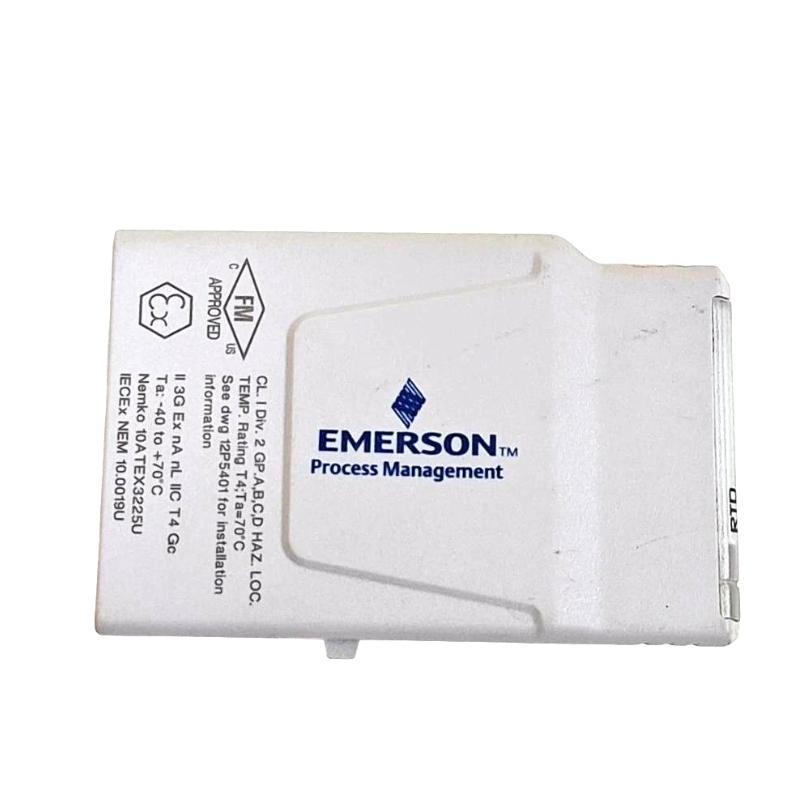
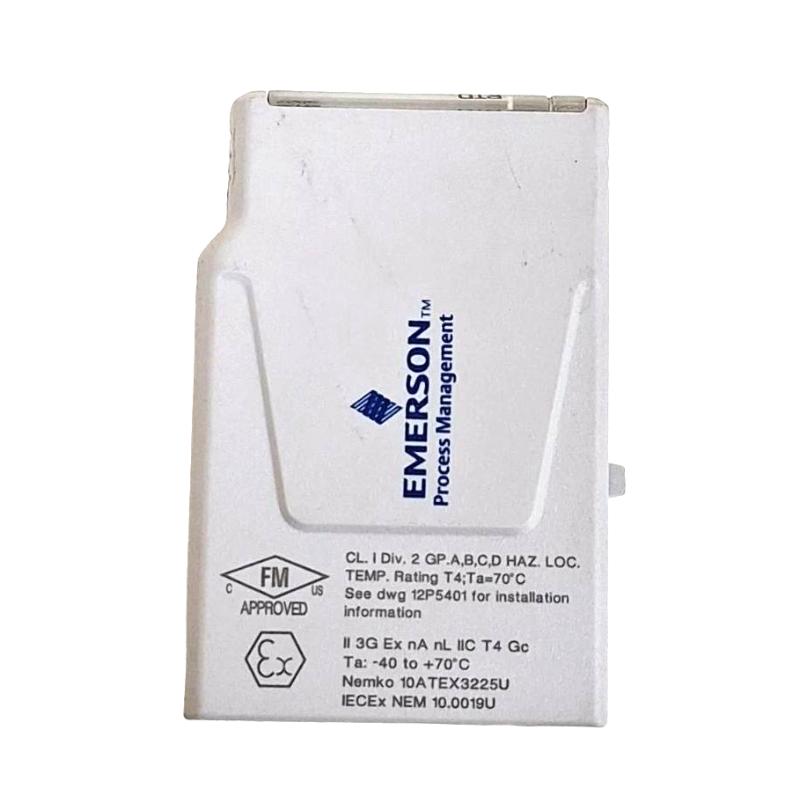
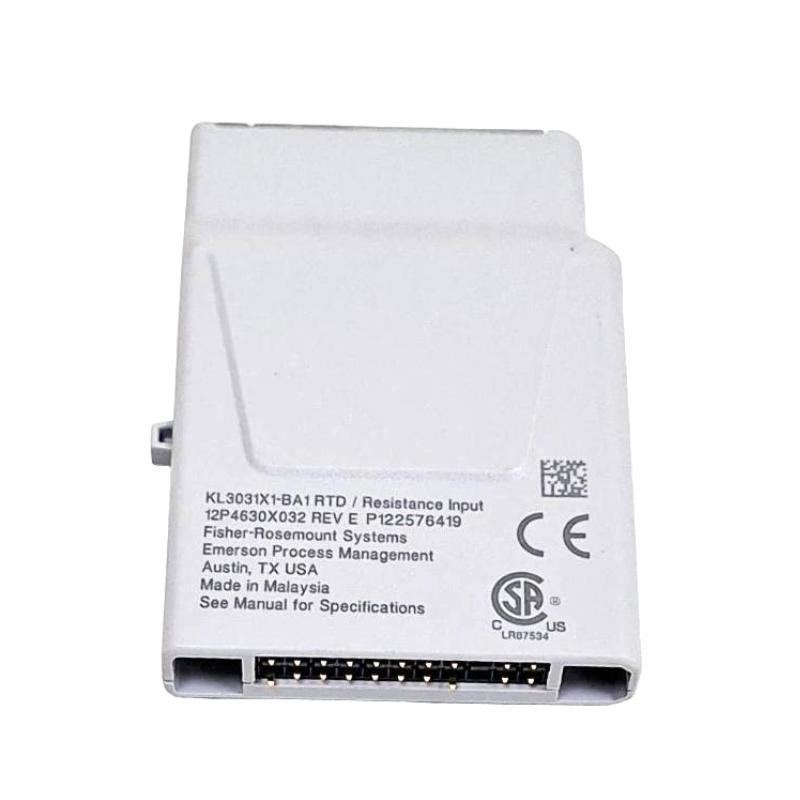
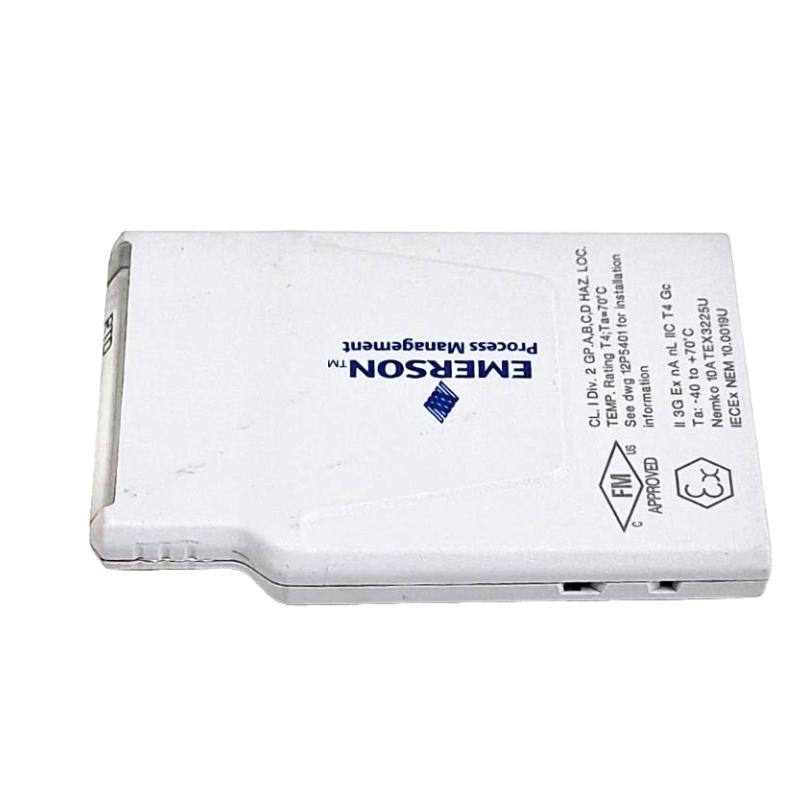
- Emerson
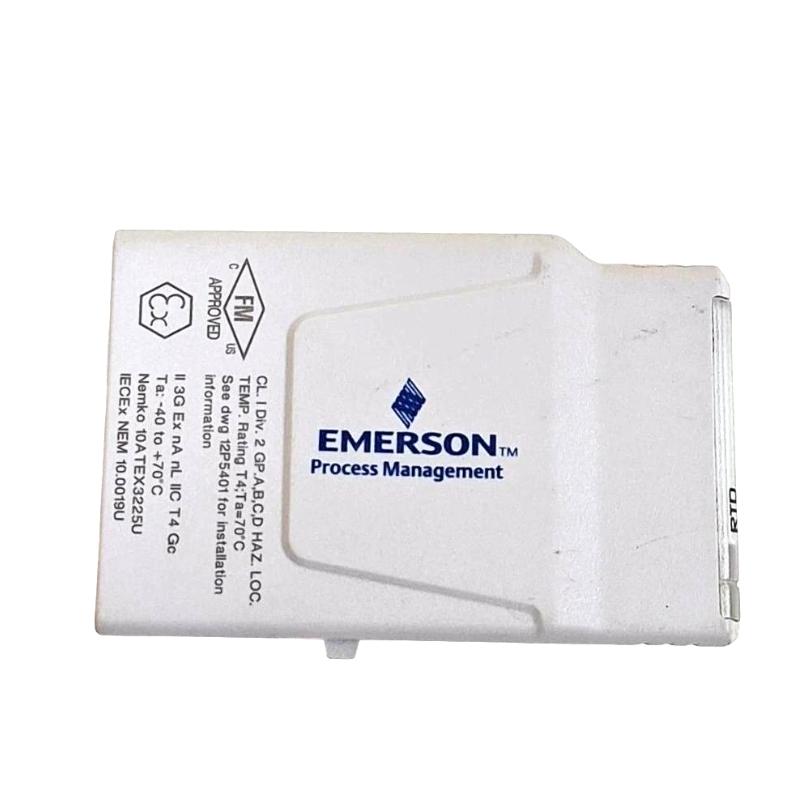
- KL3031X1-BA1
- RTD and Resistance Input CHARM
- USA
- 150 × 103 × 35 mm
- 0.135 kg
- Xiamen, China
- New & In Stock
- T/T, PayPal, Western Union
- 1 Year
- 1-3 Working Days
- DHL, UPS, TNT, FedEx and EMS.
- 24-Hour Service
- COO
- 39
Our advantage

Global Logistics
We have a 10-year logistics and express cooperation agreement, so our products can be shipped to any place in the world.

Brand new and original
Our products are imported in bulk from the place of origin. Because of the cooperative relationship, our products are all original and 100% new.

24-hour service
We provide 7*24 hours service to our customers. We will be there whenever you need us.

Price advantage
All our products are priced very favorably because we have our own warehouse and supply.
| Company Information | |||
| [email protected] | |||
| Mobile | +8615980777398 | ||
| +8615980777398 | |||
| 15980777398 |
Product Overview
The Emerson KL3031X1-BA1 RTD and Resistance Input CHARM is a temperature and resistance input module used within the Emerson DeltaV CHARMs I/O architecture. It is intended for applications where field devices measure temperature through RTDs or provide resistance-based signals that need to be brought into the process control system.
Unlike a conventional analog input card that handles a broader range of process signals, an RTD input CHARM is focused on measurements based on electrical resistance. As the temperature of an RTD changes, its resistance changes accordingly. The input channel measures this change and makes the corresponding process value available to the DeltaV system.
This type of input is common in process skids, chemical plants, pharmaceutical equipment, utilities, power facilities, and other industrial systems where temperature measurement is required at multiple points.
For example, an RTD installed on a process vessel can monitor the temperature of the material inside the vessel. Another RTD may be installed on a pump bearing or heat exchanger. The KL3031X1-BA1 handles the field-side measurement so that the DeltaV control system can monitor the temperature, generate alarms, record trends, or incorporate the measurement into a control strategy.
Technical Specifications
| Parameter | Details |
|---|---|
| Manufacturer | Emerson |
| Model | KL3031X1-BA1 |
| Product Type | RTD and Resistance Input CHARM |
| System | Emerson DeltaV |
| I/O Architecture | DeltaV CHARMs |
| Input Type | RTD / Resistance |
| Main Function | Temperature and Resistance Signal Acquisition |
| Application | Process Measurement and Monitoring |
| System Role | Field I/O Interface |
| Typical Device | RTD Temperature Sensor |
| Installation | DeltaV CHARMs I/O System |
| Dimensions | 150 × 103 × 35 mm |
| Weight | 0.135 kg |
Product Features
The KL3031X1-BA1 is intended for temperature measurement applications that use RTDs or resistance-based field devices.
Key characteristics include:
- Emerson DeltaV CHARMs architecture
- RTD input functionality
- Resistance input functionality
- Intended for temperature measurement
- Suitable for process instrumentation
- Direct interface with compatible field RTD devices
- Useful for distributed temperature measurement
- Suitable for process monitoring and control
- Compact CHARM-based I/O architecture
- Dimensions of 150 × 103 × 35 mm
- Stated weight of 0.135 kg
The module is particularly useful when temperature measurements need to be integrated into a DeltaV system without treating every field signal as a conventional voltage or current input.
Working Principle
The basic measurement path can be represented as:
RTD Sensor → Field Wiring → KL3031X1-BA1 CHARM → DeltaV I/O System → Controller / Operator Station
An RTD changes its electrical resistance as temperature changes. The input CHARM measures the resistance presented by the connected sensor and converts the electrical measurement into a temperature-related process value.
Consider an RTD installed on a process vessel. When the process temperature rises, the sensor resistance changes. The KL3031X1-BA1 detects this change and passes the measurement into the DeltaV system, where the value can be displayed, trended, alarmed, or used by a control strategy.
The quality of the final temperature measurement depends on more than the input module itself. Sensor type, wiring arrangement, cable condition, terminal connections, sensor location, and configuration all influence the measurement.
This is why an RTD input problem should normally be investigated along the entire signal path rather than by replacing the CHARM immediately.
Industrial Applications
The KL3031X1-BA1 is suited to process applications where temperature or resistance measurements are required.
| Application | Typical Use |
|---|---|
| Chemical Processing | Vessel and process temperature monitoring |
| Pharmaceutical Equipment | Temperature monitoring of process equipment |
| Power Generation | Equipment and process temperature measurement |
| Oil and Gas | Temperature monitoring of process systems |
| Water Treatment | Process and equipment temperature measurement |
| Heat Exchangers | Monitoring inlet and outlet temperatures |
| Pumps and Rotating Equipment | Bearing or equipment temperature monitoring |
| Process Skids | Distributed RTD measurement |
Its usefulness is especially apparent in systems with many temperature measurement points, where individual field sensors need to be integrated into a distributed control architecture.
Compatible System Components
The KL3031X1-BA1 normally works with several components within a DeltaV CHARMs installation.
| Component | Function |
|---|---|
| RTD Sensor | Measures process or equipment temperature |
| Field Wiring | Carries the RTD signal to the I/O system |
| Terminal Assembly | Provides field-side wiring connections |
| CHARM I/O System | Hosts and interfaces the input module |
| DeltaV Controller | Processes the acquired measurement |
| Engineering Workstation | Used for I/O and control-system configuration |
| Operator Station | Displays temperature values, alarms, and trends |
| Control Network | Transfers process information within the DeltaV system |
| Process Equipment | Provides the temperature measurement point |
Correct system integration requires more than matching the CHARM itself. The RTD type, wiring method, channel configuration, sensor location, and DeltaV database configuration should all correspond to the actual field installation.
Installation and Maintenance
The KL3031X1-BA1 should be installed as part of the appropriate DeltaV CHARMs I/O arrangement. Field wiring should be clearly identified before installation or replacement, particularly in process plants where many temperature channels are installed close together.
Recommended checks include:
- Confirm the complete KL3031X1-BA1 model.
- Verify the DeltaV CHARMs architecture.
- Confirm the connected RTD or resistance device.
- Check field wiring and terminal assignments.
- Verify the sensor wiring arrangement.
- Inspect terminals for loose connections.
- Check for damaged or corroded field wiring.
- Confirm the channel configuration in the DeltaV system.
- Compare the displayed temperature with a known reference where appropriate.
- Check for abnormal sensor resistance.
- Review channel diagnostics.
- Verify correct scaling and engineering units.
- Perform a controlled channel test after replacement.
When a temperature value is unstable or incorrect, the sensor and field wiring should be checked before replacing the CHARM. A damaged RTD, poor terminal connection, cable resistance, or incorrect channel configuration can all produce inaccurate measurements.
Recommended Related Models
For the KL3031X1-BA1, related products are best selected according to the required field signal and DeltaV CHARMs architecture rather than physical appearance alone.
| Model / Component | Type | Primary Function | Application |
|---|---|---|---|
| Emerson KL3031X1-BA1 | RTD / Resistance Input CHARM | Temperature and resistance acquisition | DeltaV temperature measurement |
| Emerson DeltaV RTD Input CHARMs | I/O Module Family | RTD signal acquisition | Temperature monitoring |
| Emerson DeltaV Analog Input CHARMs | I/O Module Family | Analog signal acquisition | Process transmitters |
| Emerson DeltaV Digital Input CHARMs | I/O Module Family | Discrete signal acquisition | Switches and status devices |
| Emerson DeltaV Analog Output CHARMs | I/O Module Family | Analog output control | Valves and actuators |
| Emerson DeltaV Controllers | Controller | Process control execution | Distributed control systems |
The KL3031X1-BA1 should not be replaced simply with another input module that has similar dimensions. The replacement must match the field sensor type, signal characteristics, CHARM architecture, channel configuration, and system requirements.
Key Advantages
- RTD input capability
- Resistance measurement capability
- DeltaV CHARMs architecture
- Suitable for temperature measurement
- Direct interface with compatible RTD sensors
- Suitable for distributed process instrumentation
- Useful for process monitoring and control
- Suitable for industrial temperature applications
- Dimensions of 150 × 103 × 35 mm
- Stated weight of 0.135 kg
Technical FAQs
What type of field device is normally connected to the KL3031X1-BA1?
The module is intended for RTD and resistance-based measurements. A typical application uses an RTD sensor installed on process equipment, piping, a vessel, heat exchanger, or rotating machinery.
Why can two RTD channels show different temperatures even when the process conditions appear similar?
The difference may come from the sensor itself, installation location, wiring resistance, connection quality, sensor configuration, or actual temperature gradients within the equipment. The physical location of each RTD should be checked before assuming an I/O problem.
What should be checked if the DeltaV temperature value suddenly becomes unstable?
Start with the RTD sensor and field wiring. Loose terminals, damaged cables, poor connections, or an aging sensor can cause fluctuating resistance measurements. Channel configuration and diagnostics should then be reviewed if the field circuit appears normal.
Can the KL3031X1-BA1 be replaced with a standard analog input module?
Not automatically. RTD and resistance signals require an input architecture capable of handling the corresponding measurement method. The replacement must also be compatible with the DeltaV CHARMs installation and the configured field device.