

ProductPRODUCT
Featured products
Contact Us
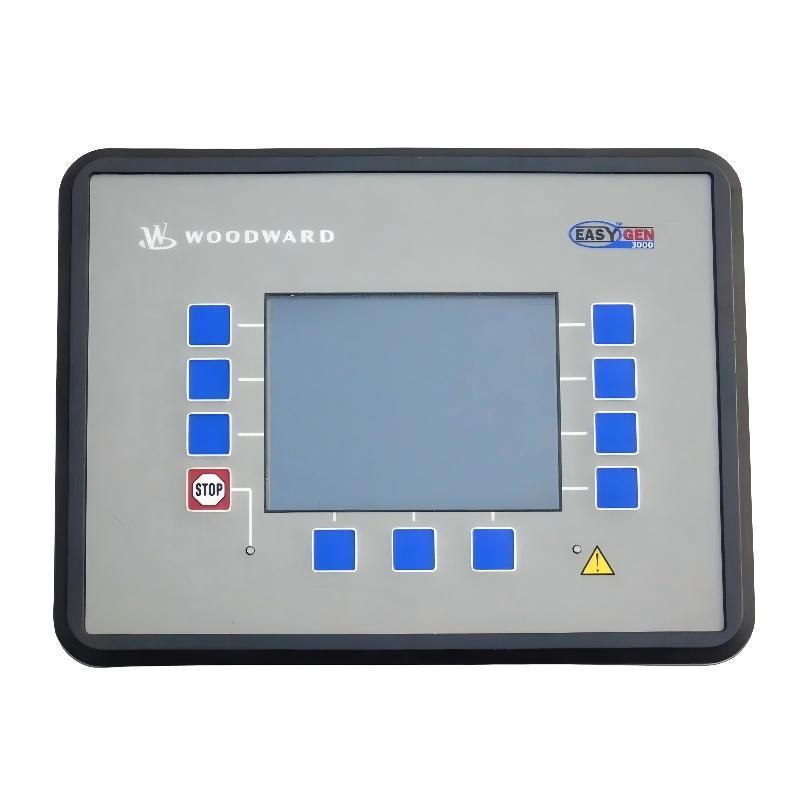
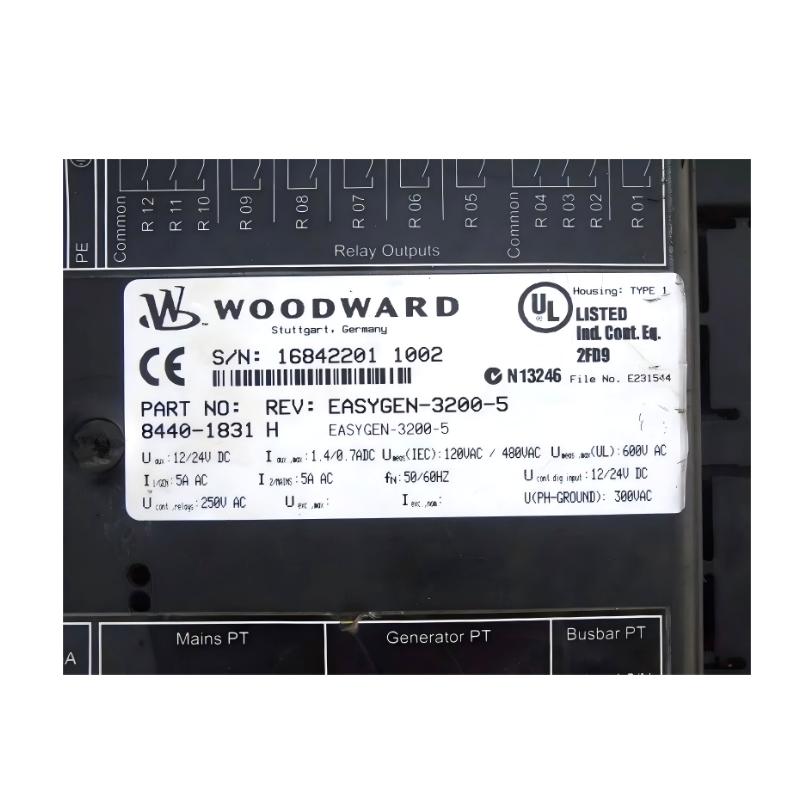
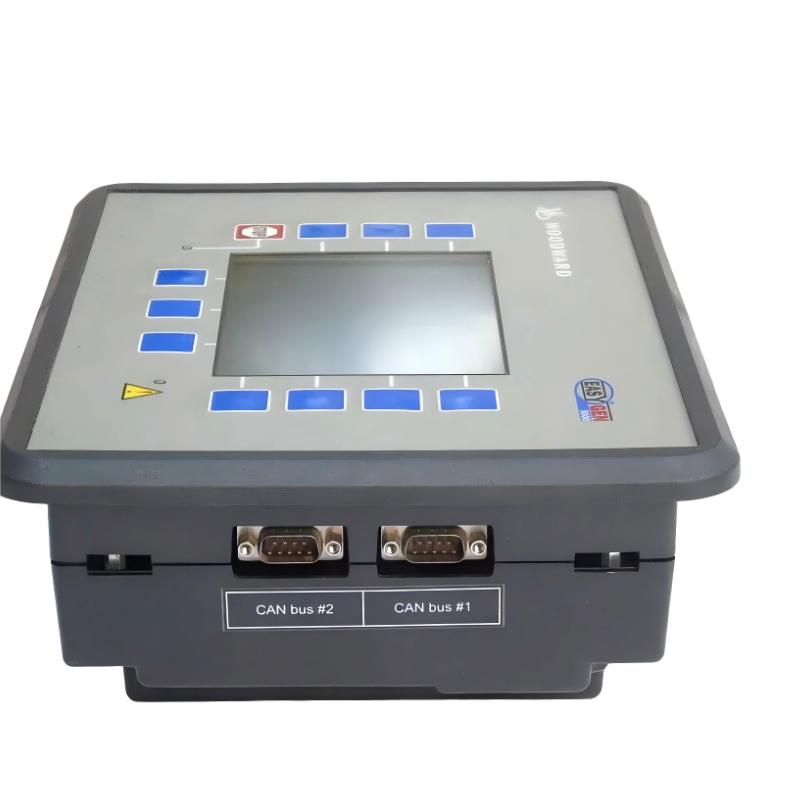
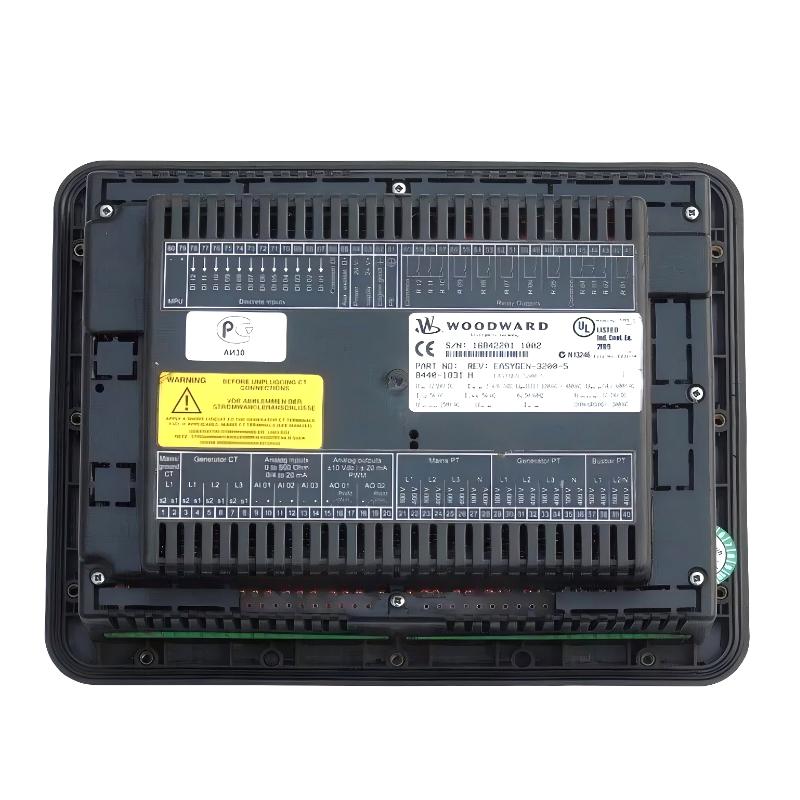
- Woodward
- EASYGEN-3000
- Genset Control
- USA
- 218 × 156 × 71 mm
- 1.85 kg
- Xiamen, China
- New & In Stock
- T/T, PayPal, Western Union
- 1 Year
- 1-3 Working Days
- DHL, UPS, TNT, FedEx and EMS.
- 24-Hour Service
- COO
- 36
Our advantage

Global Logistics
We have a 10-year logistics and express cooperation agreement, so our products can be shipped to any place in the world.

Brand new and original
Our products are imported in bulk from the place of origin. Because of the cooperative relationship, our products are all original and 100% new.

24-hour service
We provide 7*24 hours service to our customers. We will be there whenever you need us.

Price advantage
All our products are priced very favorably because we have our own warehouse and supply.
| Company Information | |||
| [email protected] | |||
| Mobile | +8615980777398 | ||
| +8615980777398 | |||
| 15980777398 |
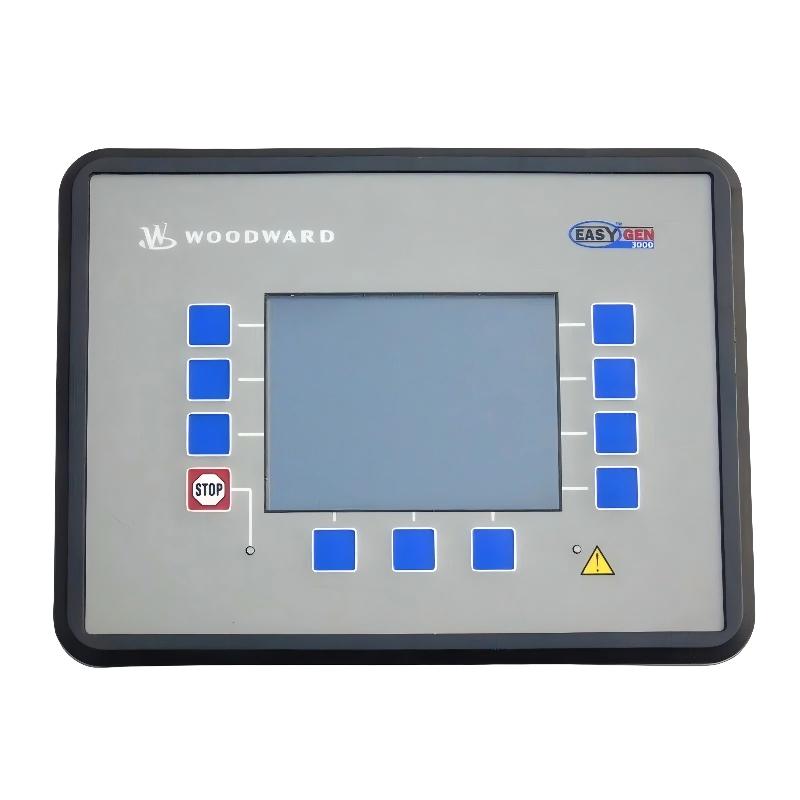
Product Overview
The Woodward EASYGEN-3000 Genset Control is a generator-set controller used to manage and monitor engine-driven generating equipment. It sits at the center of the genset control architecture, coordinating information from the engine, generator, electrical measurement circuits, and operator interface while executing the configured operating sequence.
In an industrial or standby generator installation, the controller handles the interaction between the prime mover and the electrical generating equipment. A start request can initiate the appropriate engine starting sequence, while feedback from the engine and generator allows the controller to determine whether the set has reached the required operating condition. During operation, electrical and engine information can be monitored to support normal running, alarm handling, and controlled shutdown.
The EASYGEN-3000 is also relevant to installations where generator operation needs to be integrated into a larger power-management arrangement. During commissioning or service, the controller should be considered together with the engine interface, generator sensing circuits, protection equipment, starting system, and any external supervisory or plant control connections.
Technical Specifications
| Parameter | Specification |
|---|---|
| Product Model | EASYGEN-3000 |
| Product Type | Genset Control |
| Product Family | Woodward easYgen |
| Series | easYgen Series |
| Component Category | Generator-Set Control Hardware |
| System Role | Genset Control and Monitoring |
| Control Function | Engine and Generator Set Management |
| Monitoring Function | Engine and Electrical Operating Status |
| Application | Generator Set Control |
| System Integration | Engine, Generator, and Electrical Control System |
| Interface Function | Genset Control and Monitoring Interface |
| Control Architecture | Electronic Generator-Set Control |
| Component Type | Genset Controller |
| Installation | Generator Control Panel |
| Dimensions | 218 × 156 × 71 mm |
| Weight | 1.85 kg |
Product Features
- Genset controller for industrial and standby generator applications
- Coordinates engine and generator operating sequences
- Monitors applicable engine and electrical operating conditions
- Interfaces with generator measurement and engine control circuits
- Supports controlled generator start, running, and shutdown operations
- Provides centralized monitoring and control for generator-set equipment
- Can participate in alarm and protective response functions
- Suitable for integration into broader generator and power-management systems
- Useful for commissioning, troubleshooting, and maintenance activities
- Provides a central electronic control point within the genset architecture
Working Principle
The EASYGEN-3000 functions as the control center of an engine-generator set. When a start command is received, the controller initiates the configured starting sequence and monitors the available engine feedback to determine whether the prime mover is operating correctly.
Once the engine is running, generator-side measurements provide information about the electrical condition of the set. The controller combines this information with engine status and configured operating parameters to manage the generator-set sequence. Depending on the installation, the controller can also respond to abnormal operating conditions through the configured alarm, shutdown, or protection functions.
A simplified control sequence is:
Start / Operating Command → EASYGEN-3000 → Engine Control + Generator Control → Engine / Generator → Electrical Output + Operating Feedback → EASYGEN-3000
During normal operation, changes in engine or generator conditions are reflected through the available feedback signals. The controller uses this information to maintain the configured operating state and to initiate the appropriate response when operating conditions move outside the expected range.
The actual control functions depend on the connected engine, generator, sensing equipment, and application configuration. For this reason, commissioning should always follow the system-specific wiring and configuration documentation rather than assuming that every EASYGEN installation uses the same control arrangement.
Role in a Generator-Set Control Architecture
The EASYGEN-3000 occupies the central electronic control layer of the generator-set architecture. It connects operating commands and measurements with the engine and generator equipment while providing the control logic required for the configured genset sequence.
| Control Architecture Layer | Function | Relationship to EASYGEN-3000 |
|---|---|---|
| Supervisory Layer | Provides operator commands and plant-level monitoring | Exchanges operating commands and status |
| Genset Control Layer | Coordinates generator-set operation | EASYGEN-3000 |
| Engine Control Layer | Manages prime-mover operating functions | Receives applicable engine commands |
| Generator Layer | Converts mechanical power into electrical output | Provides electrical feedback |
| Measurement Layer | Monitors engine and electrical conditions | Supplies controller inputs |
| Protection Layer | Responds to configured abnormal conditions | Works with controller protection functions |
| Electrical Distribution Layer | Transfers generator output to the electrical system | Receives generator power |
| Plant Load Layer | Consumes electrical power | Determines generator operating demand |
Industrial Applications
| Application | Typical Use |
|---|---|
| Standby Generator Sets | Controls generator operation during utility-power interruptions |
| Emergency Power Systems | Coordinates generator starting, running, and shutdown |
| Industrial Generator Plants | Provides centralized control of engine-generator equipment |
| Commercial Backup Power | Supports monitoring and control of standby gensets |
| Remote Generator Stations | Provides local control and monitoring of generator equipment |
| Engine-Driven Generators | Coordinates engine and alternator operation |
| Industrial Facilities | Integrates gensets into plant electrical systems |
| Power Generation Equipment | Supports control and monitoring of applicable generating units |
Installation and Maintenance
- Verify the controller model — Confirm that the unit is the Woodward EASYGEN-3000 and that it matches the intended generator-set application.
- Review system documentation — Check the generator wiring diagrams, engine interface documentation, measurement circuits, and configured control sequence before installation.
- Isolate the generator set — Shut down the genset and isolate the relevant electrical and mechanical energy sources before working on the controller.
- Identify existing connections — Document engine, generator, sensing, control, communication, and power-related connections before removing the existing unit.
- Inspect the controller — Check the housing, terminals, mounting points, and accessible surfaces for damage, contamination, or signs of overheating.
- Inspect the control panel — Examine surrounding wiring, relays, terminals, sensors, and related equipment for loose or damaged connections.
- Confirm mounting arrangement — Secure the controller in the intended control-panel position and ensure that connected wiring is properly supported.
- Reconnect system wiring — Restore the documented connections and verify each connection against the applicable generator-set wiring documentation.
- Verify configuration — Confirm the applicable engine, generator, measurement, start/stop, alarm, and control parameters before commissioning.
- Perform a controlled start test — Start the generator set under controlled conditions and verify the expected starting sequence, engine response, and generator operation.
- Monitor operating behavior — Check engine status, generator measurements, alarms, shutdown functions, and available controller diagnostics during testing.
- Document the completed service — Record the controller identification, configuration verification, wiring checks, test results, and corrective actions for future maintenance.
Related Components
| Component | Function |
|---|---|
| Engine | Provides mechanical power for the generator |
| Alternator / Generator | Converts mechanical power into electrical output |
| Engine Control System | Manages applicable engine operating functions |
| Speed Sensor | Provides engine-speed information |
| Voltage and Current Measurement | Provides generator electrical operating information |
| Starting System | Initiates engine cranking during startup |
| Fuel System | Supplies fuel required for engine operation |
| Generator Protection Equipment | Monitors and responds to applicable electrical faults |
| Battery System | Supplies starting and control power |
| Generator Control Panel | Houses the genset controller and associated control hardware |
Recommended Related Models
| Model | Product Type | Series / Family |
|---|---|---|
| Woodward easYgen Series | Genset Control | easYgen |
| Woodward easYgen-1000 Series | Genset Controller | easYgen |
| Woodward easYgen-2000 Series | Genset Controller | easYgen |
| Woodward Generator Control Systems | Generator Control Equipment | Woodward Power Control Systems |
| Woodward Electronic Genset Controllers | Generator-Set Control Hardware | Woodward Control Systems |
Key Advantages
- Provides centralized control of generator-set operation.
- Coordinates engine and generator operating functions.
- Integrates engine status with generator electrical information.
- Supports controlled start, running, and shutdown sequences.
- Provides a central point for genset monitoring and control.
- Suitable for industrial, standby, and emergency generator applications.
Technical FAQs
What is the purpose of the Woodward EASYGEN-3000?
The EASYGEN-3000 is a genset controller used to coordinate and monitor an engine-driven generator set. It integrates engine operating information, generator measurements, control commands, and configured operating functions.
What equipment works with the EASYGEN-3000?
The controller forms part of a complete genset system that can include an engine, alternator, engine control circuits, electrical measurement devices, starting equipment, protection circuits, and a generator control panel. The exact interfaces depend on the application.
What should be checked when replacing an EASYGEN-3000?
The engine and generator interfaces, measurement wiring, start/stop circuits, control configuration, protection functions, and external connections should be checked before commissioning. The replacement should be verified against the complete genset wiring and configuration.
What can cause incorrect generator-set operation after controller replacement?
Incorrect configuration, wiring errors, faulty measurement signals, engine problems, generator-side abnormalities, or issues in the starting and control circuits can all affect operation. Troubleshooting should compare controller inputs and diagnostics with the actual engine and generator conditions.