

ProductPRODUCT
Featured products
Contact Us
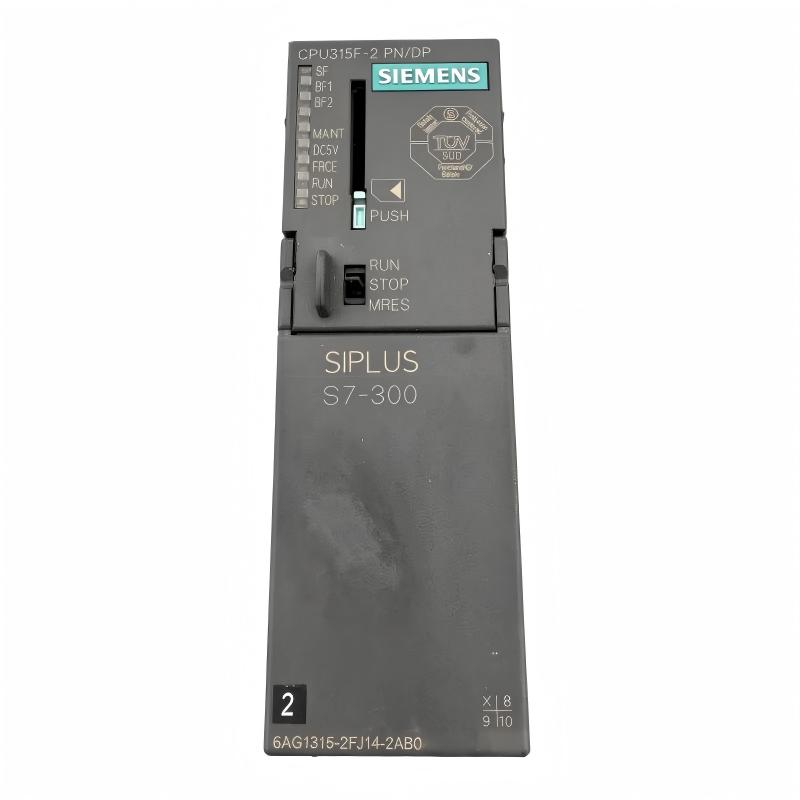
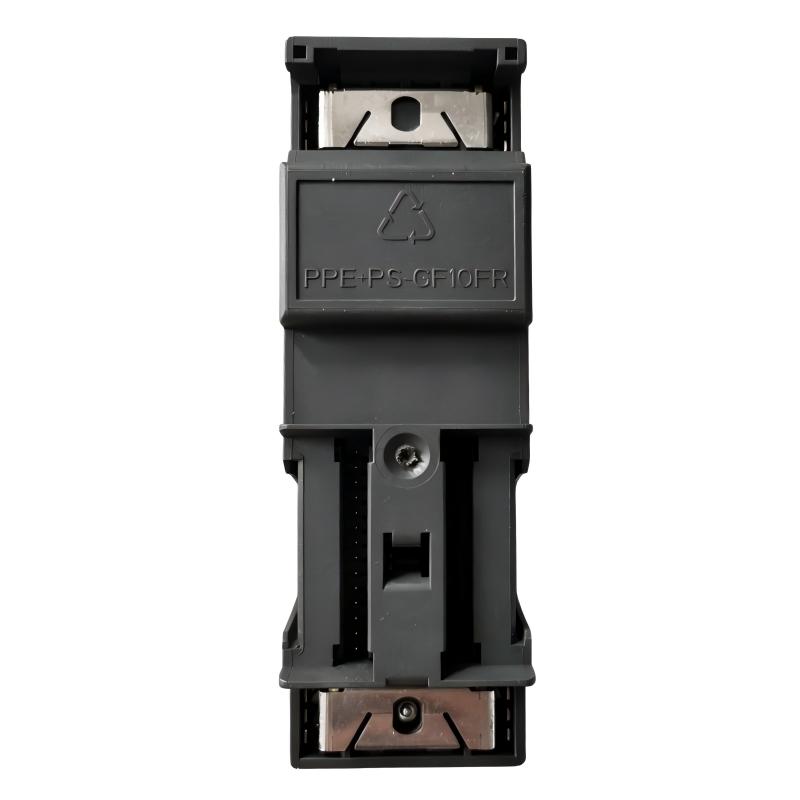
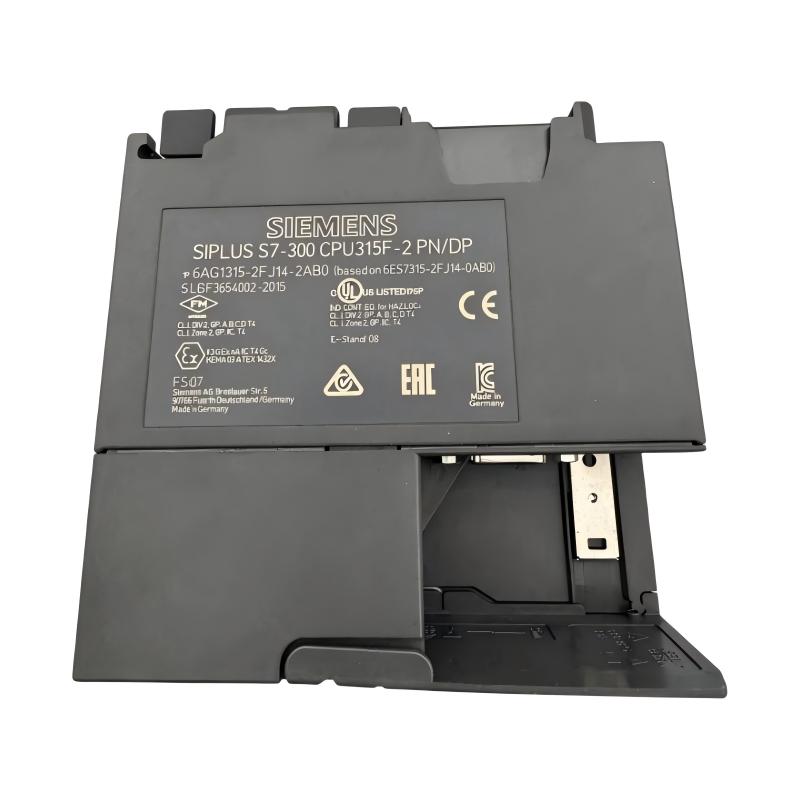
- Siemens
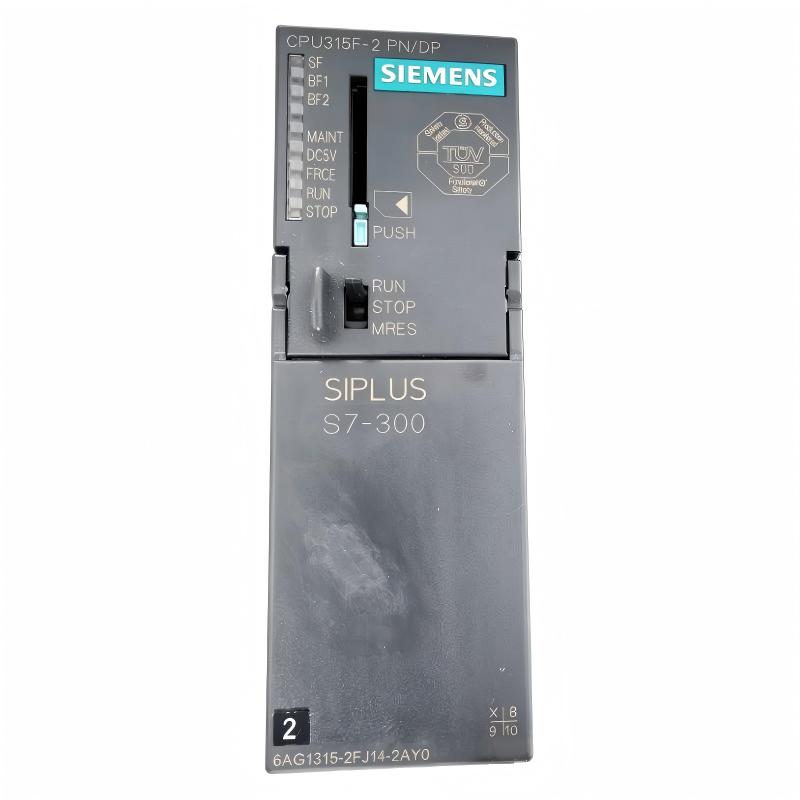
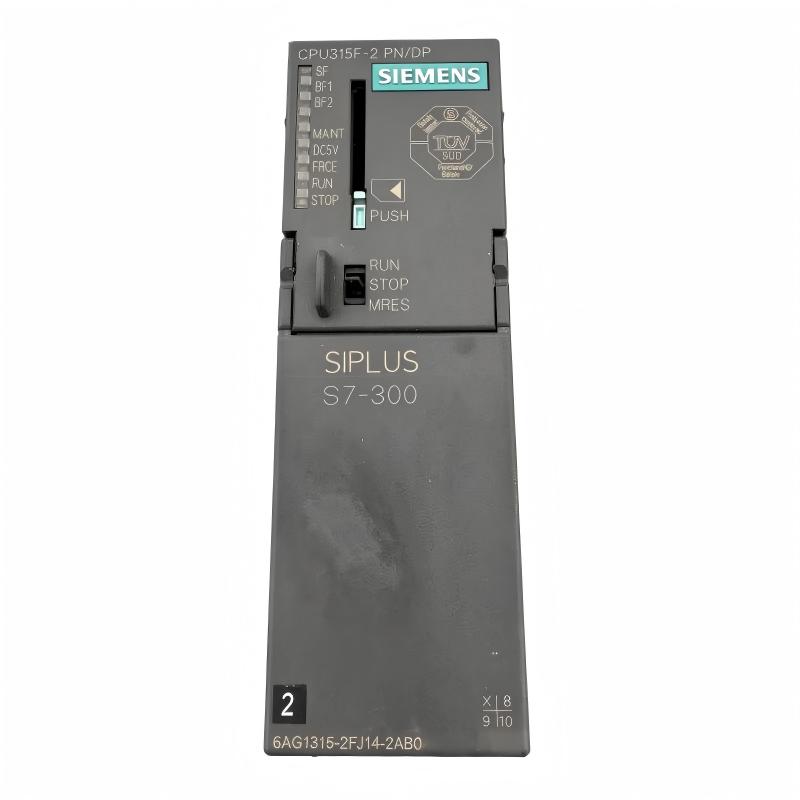
- 6AG1315-2FJ14-2AB0
- Central Processing Unit
- Germany
- 40 × 125 × 130 mm
- 0.399 kg
- Xiamen, China
- New & In Stock
- T/T, PayPal, Western Union
- 1 Year
- 1-3 Working Days
- DHL, UPS, TNT, FedEx and EMS.
- 24-Hour Service
- COO
- 6
Our advantage

Global Logistics
We have a 10-year logistics and express cooperation agreement, so our products can be shipped to any place in the world.

Brand new and original
Our products are imported in bulk from the place of origin. Because of the cooperative relationship, our products are all original and 100% new.

24-hour service
We provide 7*24 hours service to our customers. We will be there whenever you need us.

Price advantage
All our products are priced very favorably because we have our own warehouse and supply.
| Company Information | |||
| [email protected] | |||
| Mobile | +8615980777398 | ||
| +8615980777398 | |||
| 15980777398 |
Product Overview
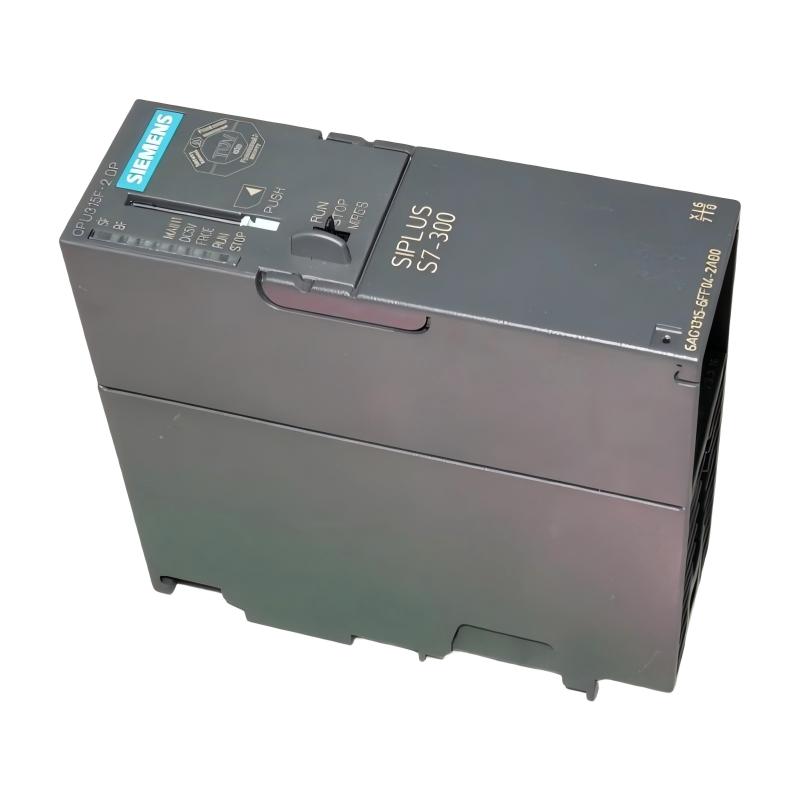
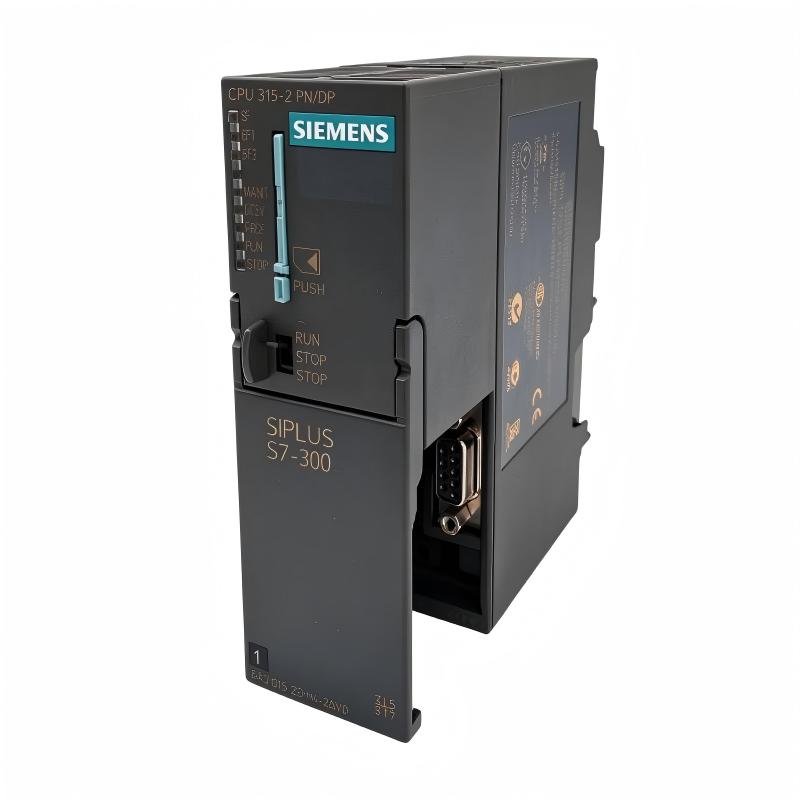
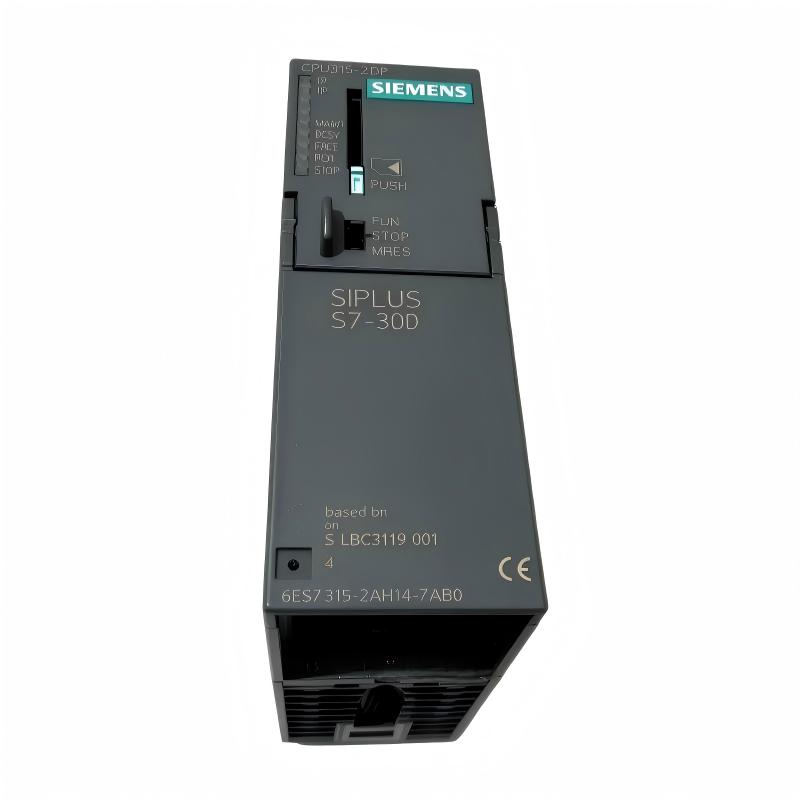
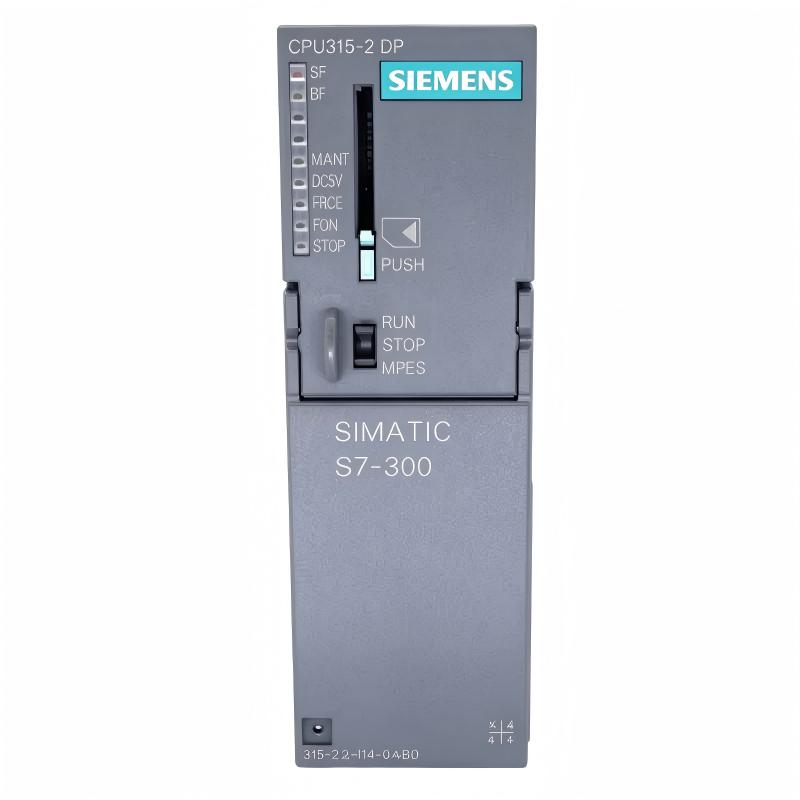
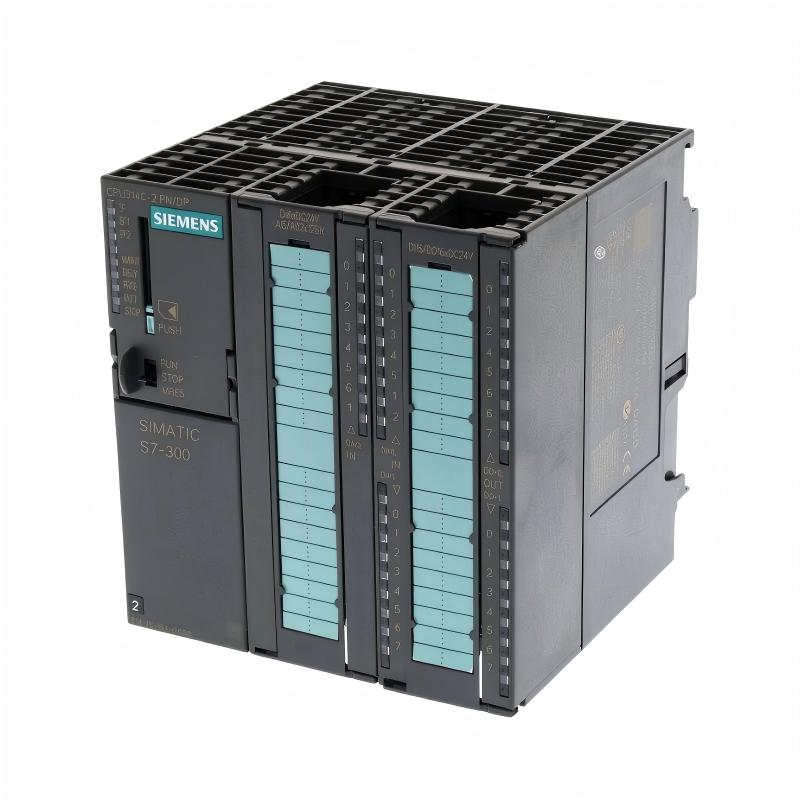
The Siemens 6AG1315-2FJ14-2AB0 is a SIPLUS S7-300 CPU 315F-2 PN/DP central processing unit designed for industrial automation and fail-safe control applications. Based on the standard 6ES7315-2FJ14-0AB0 platform, this SIPLUS version incorporates conformal coating and an extended specified operating temperature range of -25°C to +60°C.
As the central processing unit of an S7-300 automation system, the CPU executes the control program, processes input information, manages output operations, and coordinates communication with distributed devices and other automation components. Its fail-safe capabilities make it suitable for applications in which standard machine control must work alongside an appropriately engineered safety-control system.
The module provides 512 KB of integrated work memory and supports MPI/PROFIBUS DP and PROFINET communication. Its first interface supports MPI/DP communication at up to 12 Mbps, while the second interface provides Ethernet-based PROFINET connectivity through an integrated two-port switch. This arrangement allows the CPU to participate in both traditional fieldbus networks and industrial Ethernet architectures.
The CPU 315F-2 PN/DP is intended for applications requiring coordinated machine control, distributed I/O communication, and safety-related automation functions. It can be used in manufacturing equipment, production lines, material-handling systems, and process machinery where reliable control and communication are important.
A Micro Memory Card (MMC) is required for operation and program storage. Engineering is based on Siemens STEP 7 V5.5 or higher, with Distributed Safety V5.4 SP4 specified for safety-related programming. Correct hardware configuration, firmware compatibility, and safety validation are essential when integrating the CPU into an existing S7-300 installation.
Technical Specifications
| Parameter | Specification |
|---|---|
| Brand | Siemens |
| Product Family | SIPLUS S7-300 |
| Model | 6AG1315-2FJ14-2AB0 |
| CPU Designation | CPU 315F-2 PN/DP |
| Product Type | Fail-Safe Central Processing Unit |
| Base Product | 6ES7315-2FJ14-0AB0 |
| Integrated Work Memory | 512 KB |
| Load Memory | Micro Memory Card required |
| Maximum MMC Capacity | 8 MB |
| First Interface | MPI / PROFIBUS DP |
| MPI/DP Transmission Rate | Up to 12 Mbps |
| Second Interface | Ethernet PROFINET |
| PROFINET Switch | Integrated 2-port switch |
| Supply Voltage | 24 V DC |
| Permissible Supply Range | 20.4–28.8 V DC |
| Rated Current Consumption | 750 mA |
| Typical No-Load Current | 150 mA |
| Typical Inrush Current | 4 A |
| Typical Power Loss | 4.65 W |
| Environmental Protection | Conformal coating |
| Operating Temperature | -25°C to +60°C |
| Programming Software | STEP 7 V5.5 or higher |
| Safety Engineering Software | Distributed Safety V5.4 SP4 |
| Dimensions | 40 × 125 × 130 mm |
| Weight | 0.399 kg |
| Product Family | Siemens S7-300 SIPLUS |
Specifications are based on the identified product configuration. Confirm the CPU hardware revision, firmware, MMC, and engineering-software compatibility before installation.
Function and Working Principle
The CPU 315F-2 PN/DP functions as the main processing unit in an S7-300 PLC system. It executes the user program, evaluates input data, processes logic and control instructions, and updates the outputs or communication data required by the automation process.
1. Central Program Execution
The CPU executes the control program created in Siemens STEP 7. The program defines how the automation system responds to sensor signals, operator commands, machine conditions, and process requirements.
During normal operation, the CPU repeatedly performs its control tasks. It reads process information, evaluates programmed conditions, performs calculations, and updates the relevant output and communication data.
This cyclic processing supports coordinated control of industrial machinery and production equipment.
2. Work Memory Management
The CPU contains 512 KB of integrated work memory. This memory supports the execution of the control program and the processing of program data.
The work memory is integrated into the CPU and is not expandable. Program storage uses a separate Micro Memory Card, which is required for this model.
When planning an application, engineers should consider the program size, data structures, communication requirements, and safety-programming needs. Memory capacity should be evaluated against the actual project rather than estimated from the number of connected I/O points alone.
3. Fail-Safe Control Processing
The CPU 315F-2 PN/DP is designed for fail-safe automation applications. It supports safety-related control functions when configured with suitable safety programming, compatible field devices, and an appropriately designed safety architecture.
Safety logic can monitor defined operating conditions and initiate a safe response when a hazardous or abnormal condition is detected. Depending on the application, this may involve stopping machinery, disabling motion, or placing equipment into a predefined safe state.
The CPU’s fail-safe designation does not automatically make an entire machine safety-compliant. The complete safety system must be engineered, validated, and maintained according to the applicable standards and risk assessment.
4. Communication Management
The CPU provides two principal communication interfaces.
The first interface supports MPI and PROFIBUS DP communication at up to 12 Mbps. It can be used for communication with compatible programming devices, operator interfaces, distributed I/O stations, and other automation equipment.
The second interface provides PROFINET communication through Ethernet and includes an integrated two-port switch. This allows compatible devices to be connected within an industrial Ethernet network.
Using both interfaces allows the controller to participate in different communication layers within the same automation architecture.
5. Environmental Protection
The SIPLUS version includes conformal coating and supports a specified operating temperature range of -25°C to +60°C.
Conformal coating provides additional protection for electronic assemblies against certain environmental influences. It can be useful in installations where temperature variation or atmospheric conditions are more demanding than those found in a conventional control cabinet.
However, coating does not make the CPU waterproof or suitable for unrestricted exposure to dust, chemicals, or condensation. Installation conditions must remain within the manufacturer’s environmental requirements.
Role in Industrial Control Systems
The Siemens 6AG1315-2FJ14-2AB0 serves as the processing and communication center of an S7-300 control system. It coordinates local and distributed automation components and executes both standard control logic and configured fail-safe functions.
PLC System Coordination
The CPU processes information received from digital and analog input modules and uses the control program to determine the required output responses.
For example, in an automated production line, sensors may detect product position, machine status, and equipment movement. The CPU evaluates these signals and coordinates motors, valves, conveyors, and other control devices through the configured output and drive interfaces.
Distributed I/O Communication
Industrial systems often require I/O devices to be installed near machines or production equipment rather than inside one central cabinet.
The CPU’s PROFIBUS DP and PROFINET interfaces support communication with compatible distributed I/O equipment. This allows engineers to organize the control system around the physical layout of the plant.
The selected communication architecture must be supported by the CPU firmware, network configuration, and connected devices.
Safety-Related Machine Control
In suitable applications, the CPU 315F-2 PN/DP can execute fail-safe control programs alongside standard automation tasks.
A safety system may monitor emergency-stop devices, protective doors, light curtains, or other safety-related inputs. When a configured safety condition is triggered, the controller coordinates the required safe response through compatible safety devices and output arrangements.
The final safety function depends on the complete system design, including field devices, wiring, programming, validation, and maintenance.
HMI and Supervisory Integration
The CPU can exchange process information with compatible HMI devices and supervisory systems through the configured communication interfaces.
Operators may use an HMI to view machine status, acknowledge alarms, enter production settings, and monitor process values. Communication parameters and device compatibility must be configured correctly in the engineering project.
Industrial Applications
The CPU 315F-2 PN/DP can be used in industrial installations that require standard PLC control, distributed communication, and fail-safe automation capabilities.
1. Automotive Manufacturing
Automotive production lines use PLC systems to coordinate conveyors, assembly equipment, robotic work cells, and material-transfer operations.
The CPU can manage standard machine sequences while supporting safety-related functions in a properly designed control architecture. Its PROFINET interface allows communication with compatible distributed devices and industrial network components.
2. Packaging and Production Machinery
Packaging equipment requires coordinated control of product feeding, filling, sealing, labeling, and conveying operations.
The CPU can execute sequence logic, process sensor information, and coordinate connected I/O equipment. Safety-related functions can also be incorporated where the application requires monitored access or controlled machine stopping.
3. Material Handling Systems
Automated warehouses, conveyor networks, and material-transfer installations depend on reliable communication between central controllers and distributed equipment.
The CPU’s MPI/DP and PROFINET interfaces provide communication options for suitable field devices and distributed control components.
4. Process Automation
Industrial process equipment may require continuous monitoring of operating conditions and coordinated control of pumps, valves, motors, and auxiliary machinery.
The CPU can process field information and coordinate control actions through the connected S7-300 modules. Application-specific process instrumentation and control strategies must be configured according to the plant requirements.
5. Industrial Machinery with Safety Functions
Machinery with access doors, emergency-stop circuits, or other safety-related requirements may use a fail-safe PLC architecture.
The CPU 315F-2 PN/DP can form part of such an architecture when combined with compatible safety I/O, field devices, engineering software, and validated safety logic.
6. Equipment Operating in Demanding Environments
The SIPLUS configuration is intended for applications that require a broader specified operating temperature range and additional protection for electronic assemblies.
It may be considered for control cabinets exposed to more demanding ambient conditions, provided that the complete installation remains within the product’s environmental limits.
Installation and System Integration
Correct installation and configuration are essential for reliable operation of the Siemens 6AG1315-2FJ14-2AB0.
1. Verify the Power Supply
The CPU requires a 24 V DC supply. The permissible voltage range is 20.4–28.8 V DC.
The rated current consumption is 750 mA, while typical no-load current consumption is 150 mA. The power supply must provide adequate capacity for the CPU and other connected equipment.
Siemens specifies a recommendation of at least 2 A external protection for the power supply lines. The final protective-device selection should follow the manufacturer’s installation requirements and the system’s electrical design.
2. Install the Required Micro Memory Card
A Siemens Micro Memory Card is required for this CPU. The card provides the load-memory storage used for the PLC program and associated data.
Before commissioning, verify that the MMC is compatible with the CPU and contains the correct project data. A replacement CPU may require the appropriate memory card and a compatible program version to restore the intended machine operation.
3. Mount the CPU in the S7-300 Rack
Install the CPU in the correct position within the S7-300 mounting arrangement. Confirm compatibility with the rack, power supply, and adjacent modules.
The supplied dimensions are 40 × 125 × 130 mm. Allow adequate space for wiring, module removal, and maintenance access.
Check the module’s mechanical engagement and ensure that connectors and backplane connections are correctly seated.
4. Configure MPI and PROFIBUS DP
The first interface supports MPI and PROFIBUS DP communication at up to 12 Mbps.
During engineering, configure the appropriate interface mode, network address, communication rate, and connected device parameters.
When connecting distributed I/O or other PROFIBUS devices, verify the network topology, termination, cable routing, and device configuration.
5. Configure PROFINET Communication
The second interface supports PROFINET communication and includes a two-port switch.
Configure the PROFINET network using the appropriate STEP 7 engineering environment. Assign the required device names, IP addresses, and hardware configuration.
Check that all connected devices are supported and that the network topology matches the project design.
6. Develop and Validate the Safety Program
Safety-related functions require suitable engineering tools and a properly designed safety architecture.
The specified engineering environment includes STEP 7 V5.5 or higher and Distributed Safety V5.4 SP4. Engineers must verify the installed software version, hardware configuration, and applicable safety requirements before modifying or downloading a safety program.
After commissioning, validate the safety functions according to the machine risk assessment and relevant standards. Record the validated configuration for future maintenance.
7. Test the Complete System
Before production operation, verify the CPU’s power supply, status indicators, memory card, communication links, and program execution.
Test standard machine sequences and communication with connected I/O devices. Safety functions must undergo their own documented validation procedures.
Keep a backup of the PLC project, hardware configuration, firmware information, and safety-program documentation.
Compatible System Components
The CPU 315F-2 PN/DP is designed to work within a Siemens S7-300 automation system.
| Component | Function | Integration Considerations |
|---|---|---|
| Siemens S7-300 power supply | Provides system power | Confirm the required supply configuration and current capacity |
| S7-300 digital input modules | Receive discrete field signals | Verify electrical signal type and channel configuration |
| S7-300 digital output modules | Control field devices | Check output type, voltage, current, and load requirements |
| S7-300 analog input modules | Measure analog process signals | Verify signal ranges and module compatibility |
| S7-300 analog output modules | Provide analog control signals | Confirm connected actuator requirements |
| PROFIBUS DP devices | Support distributed field communication | Configure addresses, bus rate, and network termination |
| PROFINET I/O devices | Support industrial Ethernet communication | Verify device names, IP configuration, and compatibility |
| Siemens Micro Memory Card | Stores program and load-memory data | Required for CPU operation |
| Siemens HMI | Provides operator monitoring and control | Configure the communication interface and HMI project |
| Safety-related I/O devices | Support fail-safe input and output functions | Verify safety compatibility and validation requirements |
| Industrial Ethernet switch | Connects network equipment | Check network topology and communication requirements |
The table identifies typical system components. Actual compatibility depends on the hardware revision, firmware, engineering configuration, and application requirements.
Alternative Models and Replacement Considerations
The 6AG1315-2FJ14-2AB0 belongs to the SIPLUS S7-300 family. Replacement selection should consider both its fail-safe functionality and its environmental configuration.
| Alternative Model or Family | Description | Replacement Considerations |
|---|---|---|
| Siemens 6ES7315-2FJ14-0AB0 | Standard S7-300 CPU 315F-2 PN/DP platform | Closely related base product, but environmental protection and temperature specifications differ |
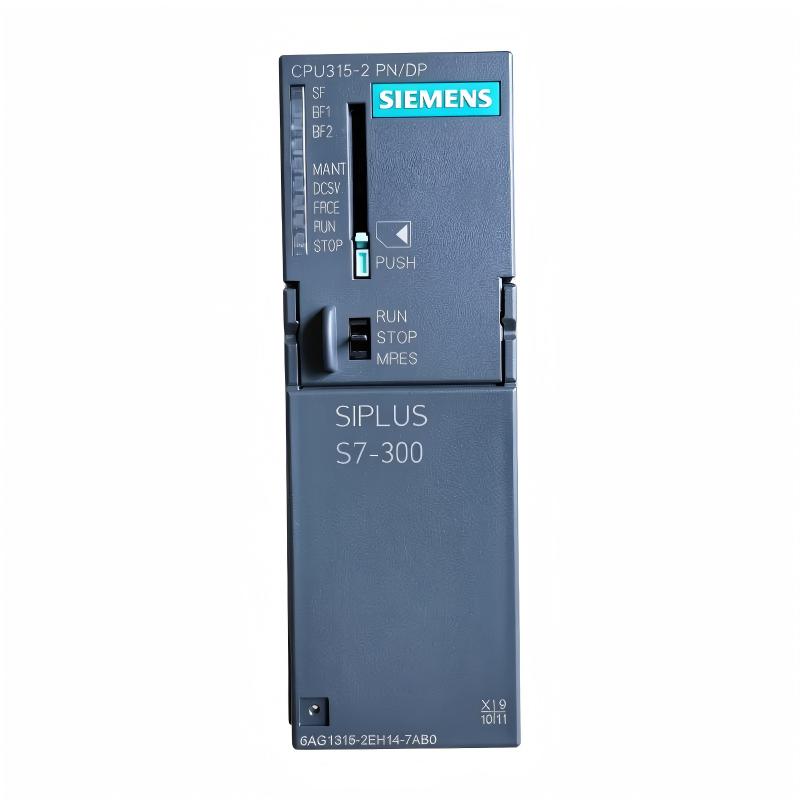
| Siemens 6AG1315-2EH14-7AB0 | SIPLUS S7-300 CPU 315-2 PN/DP | Different CPU configuration; verify fail-safe functionality before considering it |
| Siemens 6AG1317-2FK14-2AB0 | SIPLUS S7-300 CPU 317F-2 PN/DP family | Higher-level CPU option requiring project and hardware compatibility checks |
| Siemens S7-1500F CPU family | Modern fail-safe PLC platform | Usually requires engineering migration, program conversion, and hardware redesign |
| Siemens ET 200SP F-CPU family | Distributed fail-safe control platform | Suitable for selected modernization projects, subject to architecture review |
Before replacing the 6AG1315-2FJ14-2AB0, compare:
- Fail-safe CPU functionality and supported safety features.
- Integrated work-memory capacity.
- MMC requirements and stored program data.
- MPI/PROFIBUS DP communication requirements.
- PROFINET interface and network configuration.
- Hardware and firmware revisions.
- Operating temperature and environmental protection.
- S7-300 rack and backplane compatibility.
- STEP 7 and Distributed Safety software versions.
- Safety-program validation and commissioning requirements.
The standard 6ES7315-2FJ14-0AB0 is the underlying base product, but it should not be assumed to provide the same SIPLUS environmental characteristics. A replacement must be assessed against the actual installation conditions and safety requirements.
Key Advantages
Fail-Safe Control Capability
The CPU 315F-2 PN/DP is designed for applications that require safety-related control functions alongside standard automation tasks.
Dual Communication Interfaces
The combination of MPI/PROFIBUS DP and PROFINET supports integration with a range of compatible automation devices and network architectures.
Integrated PROFINET Two-Port Switch
The two-port switch simplifies the connection of compatible PROFINET devices within an industrial Ethernet network.
512 KB Work Memory
The integrated work memory supports PLC program execution and application data processing.
SIPLUS Environmental Design
Conformal coating and a specified operating temperature range of -25°C to +60°C make this version suitable for selected applications with more demanding environmental conditions.
Established S7-300 Platform
The CPU belongs to the widely deployed S7-300 automation family, which is used in many existing industrial control installations.
Flexible System Integration
The CPU can coordinate distributed I/O, HMI equipment, and compatible automation devices through its supported communication interfaces.
Technical FAQs
1. What is the Siemens 6AG1315-2FJ14-2AB0?
It is a SIPLUS S7-300 CPU 315F-2 PN/DP fail-safe central processing unit. It is designed for industrial automation applications requiring PLC control, PROFINET communication, and safety-related processing.
2. How much work memory does this CPU provide?
The CPU has 512 KB of integrated work memory. Its work memory is not expandable. A Micro Memory Card is required for load-memory storage.
3. Which communication interfaces are available?
It provides an MPI/PROFIBUS DP interface supporting up to 12 Mbps and a PROFINET Ethernet interface with an integrated two-port switch.
4. What power supply does the CPU require?
The CPU uses a 24 V DC supply with a permissible range of 20.4–28.8 V DC. The rated current consumption is 750 mA.
5. Does this model support fail-safe applications?
Yes. It is a CPU 315F-2 PN/DP fail-safe controller. However, a complete safety application also requires compatible safety devices, correct safety programming, and documented validation.
6. What is the operating temperature range?
The specified operating temperature range is -25°C to +60°C. This is one of the environmental characteristics of the SIPLUS version.
7. Is a Micro Memory Card required?
Yes. A compatible Siemens Micro Memory Card is required for program and load-memory storage. The specified maximum load-memory card capacity is 8 MB.
8. Which software is used to program the CPU?
The specified engineering environment is STEP 7 V5.5 or higher. Distributed Safety V5.4 SP4 is specified for safety-related engineering. Verify software compatibility before editing or downloading an existing project.
9. Can this CPU communicate with both PROFIBUS and PROFINET devices?
Yes. It provides an MPI/PROFIBUS DP interface and a separate PROFINET interface. The actual devices and network configuration must be supported by the CPU hardware and firmware.
10. Can the standard 6ES7315-2FJ14-0AB0 replace this SIPLUS version?
Not automatically. The 6ES7315-2FJ14-0AB0 is the base product on which the SIPLUS version is based, but the 6AG model has additional environmental characteristics. Replacement suitability depends on the installation temperature, environmental conditions, hardware configuration, and safety requirements.
Procurement and Maintenance Recommendations
When purchasing the Siemens 6AG1315-2FJ14-2AB0, verify the complete order number on the product label. Confirm that the CPU designation is 315F-2 PN/DP and that the unit has the required SIPLUS environmental configuration.
For replacement projects, check the hardware revision, firmware version, MMC compatibility, communication settings, and existing STEP 7 project. The safety program and its associated configuration require particular attention. Do not assume that transferring a standard PLC project alone is sufficient to restore a validated safety system.
For used or refurbished units, request clear photographs of the front label, connectors, and housing. Confirm the physical condition, available test information, and whether a compatible Micro Memory Card is included. Ask suppliers to clarify the warranty and return conditions.
During maintenance, inspect the CPU’s mounting, connectors, supply wiring, network cables, and status indicators. Keep the control cabinet within the specified environmental limits and prevent moisture or contamination from affecting the module.
Maintain current backups of the standard PLC program, safety program, hardware configuration, and communication settings. Document changes made during maintenance so that the system can be restored and validated correctly.
Conclusion
The Siemens 6AG1315-2FJ14-2AB0 SIPLUS S7-300 CPU 315F-2 PN/DP is a fail-safe central processing unit designed for industrial automation systems that require dependable PLC processing, distributed communication, and safety-related control capabilities.
With 512 KB of work memory, MPI/PROFIBUS DP communication, PROFINET connectivity through an integrated two-port switch, and a specified operating temperature range of -25°C to +60°C, it provides a combination of control and communication functions for demanding industrial applications.
For maintenance and replacement projects, engineers should verify the complete model number, Micro Memory Card, software compatibility, environmental conditions, and safety-system configuration before installation.