

ProductPRODUCT
Featured products
Contact Us
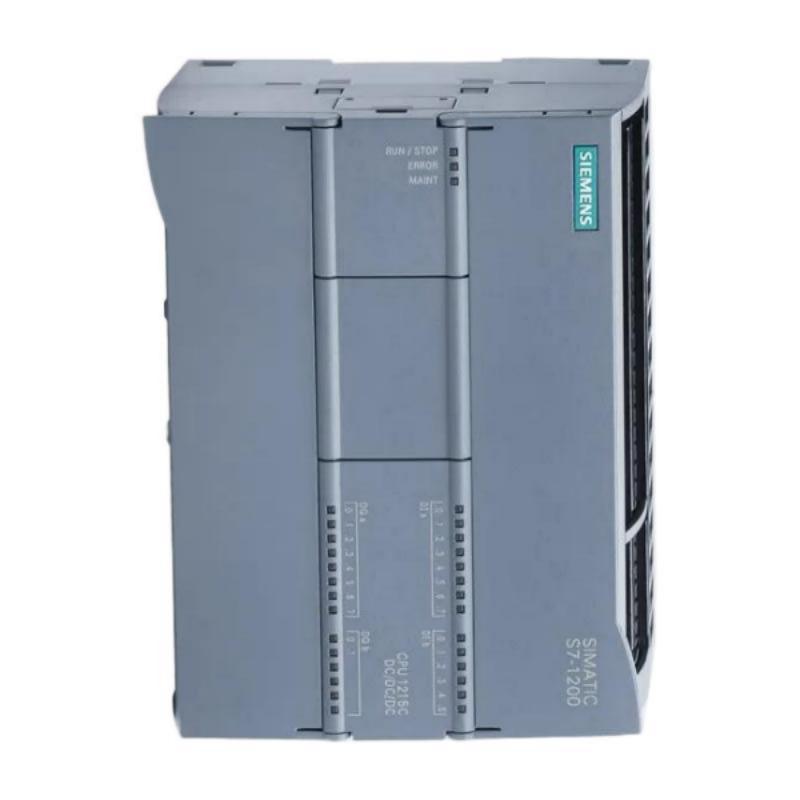
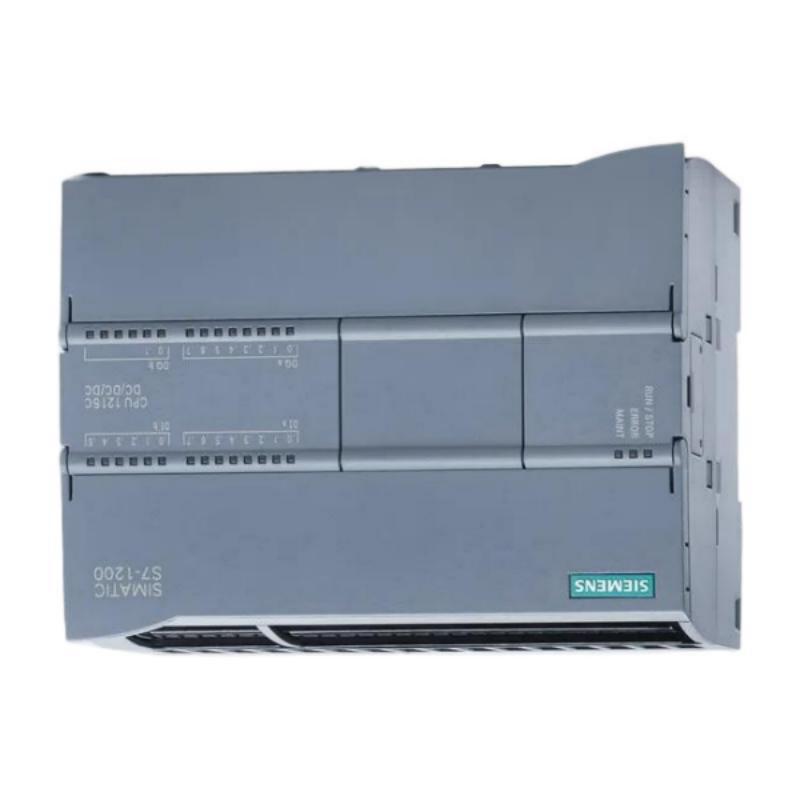
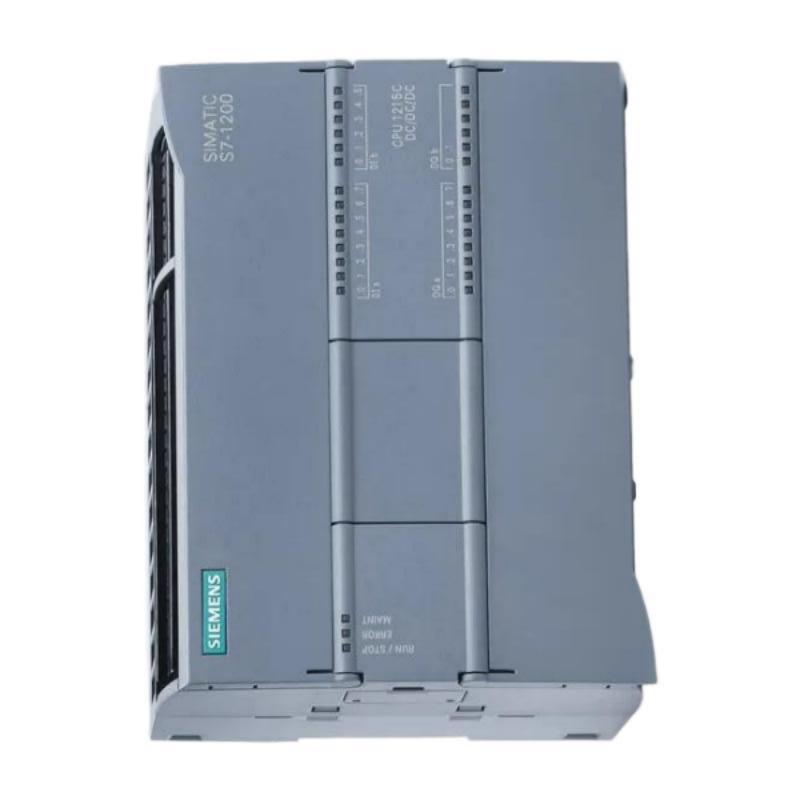
- Siemens
- 6AG1222-1HH32-4XB0
- SIPLUS S7-1200 SM 1222 8DQ RLY
- Germany
- 45 × 100 × 75 mm
- 0.25kg
- Xiamen, China
- New & In Stock
- T/T, PayPal, Western Union
- 1 Year
- 1-3 Working Days
- DHL, UPS, TNT, FedEx and EMS.
- 24-Hour Service
- COO
- 4
Our advantage

Global Logistics
We have a 10-year logistics and express cooperation agreement, so our products can be shipped to any place in the world.

Brand new and original
Our products are imported in bulk from the place of origin. Because of the cooperative relationship, our products are all original and 100% new.

24-hour service
We provide 7*24 hours service to our customers. We will be there whenever you need us.

Price advantage
All our products are priced very favorably because we have our own warehouse and supply.
| Company Information | |||
| [email protected] | |||
| Mobile | +8615980777398 | ||
| +8615980777398 | |||
| 15980777398 |
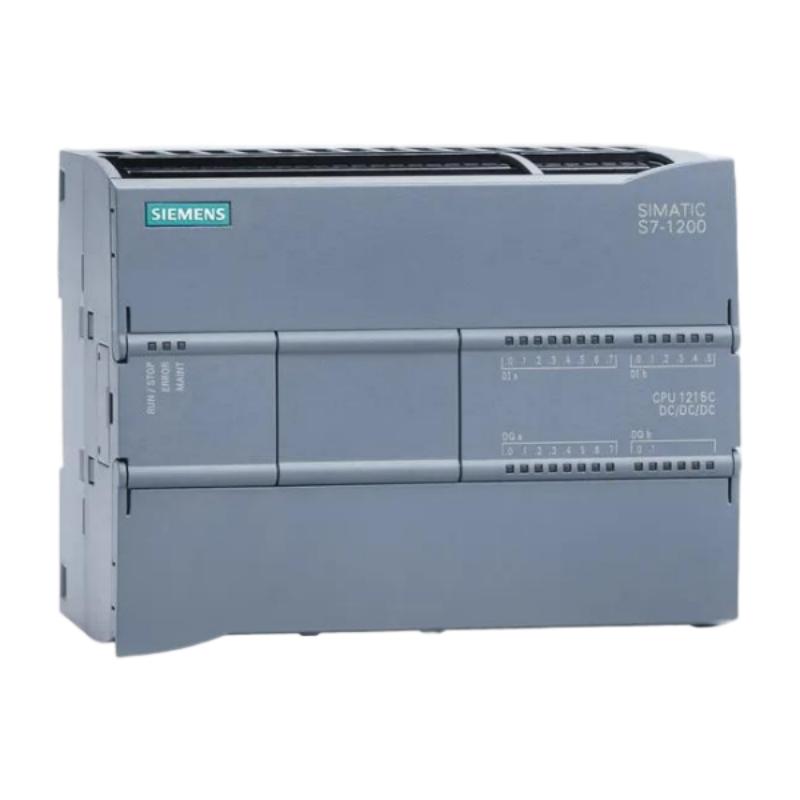
Siemens 6AG1222-1HH32-4XB0 — Product Specifications, Technical Overview, Applications, Advantages, and Related Models
1. Product Overview
The Siemens 6AG1222-1HH32-4XB0 is associated with the SIPLUS S7-1200 family of industrial automation products. It belongs to the SM 1222 digital output module category, which provides programmable logic controllers (PLCs) with additional output points for operating external electrical devices.
Digital output modules form an important link between a PLC’s control program and the equipment installed in the field. They convert the controller’s logical commands into switching actions that can be used to operate suitable relays, contactors, indicator lamps, solenoid valves, and other discrete control devices.
The model number is closely related to the 16-channel relay output configuration found in the SM 1222 family. However, the -4XB0 suffix must be checked against the exact product specification before the module is ordered or used as a replacement. Specifications from the similar -2XB0 variant should not automatically be applied to the -4XB0 version, particularly for environmental limits, dimensions, weight, and electrical ratings.
The following description covers the module’s intended role, the principal selection considerations, typical applications, and related products. Where an exact suffix-specific figure cannot be established confidently, it is marked for verification rather than presented as a guaranteed specification.
2. Technical Specifications
The 6AG1222-1HH32-4XB0 provides 16 relay digital outputs. Each output is designed to switch compatible electrical loads, with a maximum resistive-load switching current of 2 A under the specified operating conditions.
The module is based on the standard 6ES7222-1HH32-0XB0 configuration and incorporates conformal coating. Its specified ambient operating temperature range is -20°C to +60°C.
| Parameter | Technical specification |
|---|---|
| Model number | 6AG1222-1HH32-4XB0 |
| Brand | Siemens |
| Product family | SIPLUS S7-1200 |
| Module series | SM 1222 |
| Product type | Digital output module |
| Output configuration | 16 digital outputs |
| Output technology | Relay |
| Base model | 6ES7222-1HH32-0XB0 |
| Maximum switching current per output | 2 A with a resistive load, under specified conditions |
| Rated DC switching voltage | 5–30 V DC |
| Rated AC switching voltage | 5–250 V AC |
| Relay coil rated voltage | 24 V DC |
| Permissible relay coil supply range | 20.4–28.8 V DC |
| Maximum backplane bus current | 135 mA at 5 V DC |
| Typical power dissipation | 8.5 W |
| Maximum lamp load | 30 W DC or 200 W AC, under specified conditions |
| Maximum switching delay, OFF to ON | 10 ms with a resistive load |
| Maximum switching delay, ON to OFF | 10 ms with a resistive load |
| Number of relay outputs | 16 |
| Mechanical relay life | Up to 10 million switching operations |
| Electrical relay life | Up to 100,000 switching operations at rated load conditions |
| Total output current per group | Up to 10 A under specified installation and temperature conditions |
| Short-circuit protection | Not integrated; external protection is required |
| Diagnostic alarm | Supported |
| Output status indication | LED indication |
| Circuit-board protection | Conformal coating |
| Operating ambient temperature | -20°C to +60°C |
| Protection rating | IP20 |
| Dimensions (W × H × D) | 45 × 100 × 75 mm |
| Approximate net weight | 0.248 kg |
| Front connector | Required |
| Installation | Compatible S7-1200 PLC assembly |
| Typical application | Industrial discrete-load switching |
2.1 Output configuration and channel capacity
The module offers 16 relay output channels, allowing the PLC to operate multiple devices through separate control signals. The exact number of channels required depends on the machine’s I/O list, the number of controlled devices, and the planned allowance for future expansion.
For instance, a packaging machine may use individual output points for a warning lamp, an auxiliary relay, a valve circuit, and a series of machine enable commands. Keeping these functions on a clearly documented output module can make the wiring layout and maintenance process easier to manage.
2.2 Switching voltage and current
The relay contacts support compatible AC and DC switching circuits within the specified ratings. The maximum resistive-load switching current is 2 A per output, but the actual permissible load depends on voltage, load characteristics, switching frequency, and other conditions specified for the module.
The 2 A rating should not be treated as a universal rating for every type of load. Inductive loads, such as solenoid valves and contactor coils, may generate transient voltages during switching. Suitable suppression devices and external circuit protection should be considered when designing the field wiring.
2.3 Power supply requirements
The relay coil supply is nominally 24 V DC, with a permissible range of 20.4–28.8 V DC. This supply requirement is separate from the voltage switched by the relay contacts.
The module also draws current from the PLC backplane. The maximum specified backplane current is 135 mA at 5 V DC, and typical power dissipation is approximately 8.5 W. These figures should be included in the system’s electrical and thermal calculations.
2.4 Switching time and relay life
The specified maximum switching delay is approximately 10 ms for each transition under resistive-load conditions. This is suitable for many conventional machine-control operations, including auxiliary switching, status indication, and sequence-based control.
Relay contacts are mechanical components, so their service life depends on the load, switching frequency, and electrical stress. The mechanical life can reach 10 million operations, while electrical life at rated load conditions is lower. Applications involving frequent switching should therefore be evaluated carefully.
2.5 Environmental characteristics
The operating temperature range is -20°C to +60°C. The module’s conformal coating is intended to improve protection of the electronic assembly against certain environmental influences.
The coating does not make the module waterproof or dust-tight. The IP20 rating means the module must be installed in a suitable enclosure and protected from direct water exposure, excessive dust, and other conditions outside its specified limits.
2.6 Dimensions and weight
The module measures 45 mm wide × 100 mm high × 75 mm deep and has a net weight of approximately 0.248 kg.
These dimensions are useful for preliminary control-cabinet planning. The installation should allow additional space for the front connector, wiring ducts, cable bending radius, ventilation, and maintenance access.
The stated weight is the module’s net weight, not the total shipping weight with packaging or accessories.
3. Product Introduction
The Siemens 6AG1222-1HH32-4XB0 is a 16-channel relay output module intended for compatible S7-1200 programmable logic controller systems. Its main purpose is to expand the number of discrete output signals available to the PLC and provide a switching interface between the control program and external electrical devices.
In an industrial automation system, the PLC receives signals from sensors, switches, and other input devices. The control program evaluates these signals and determines which actions should take place. The output module then switches the relevant field circuits, allowing the machine or process to carry out the programmed sequence.
The relay-based output design is useful when the application needs to switch compatible AC or DC control circuits. This makes the module suitable for many conventional control tasks, including operating auxiliary relays, switching indicator lamps, commanding selected solenoid valves, and enabling external control circuits.
The 16-channel configuration provides a practical balance between output capacity and cabinet space. It can be useful in machinery with multiple operating stations, several auxiliary devices, or a range of discrete control functions that need to be managed by a single PLC.
As part of the SIPLUS S7-1200 family, the module incorporates conformal coating and is specified for an ambient operating temperature range of -20°C to +60°C. These characteristics may be useful in industrial installations where the environment is more demanding than a typical temperature-controlled electrical room.
The module should be viewed as one component within a complete control system. Reliable operation also depends on appropriate power supplies, circuit protection, correct wiring, suitable enclosures, compatible field devices, and a properly designed PLC program.
4. Main Applications
4.1 Industrial automation machinery
The module can be used in automated production equipment where multiple discrete switching commands are required. Typical examples include assembly machines, material-handling equipment, packaging systems, and specialized production stations.
Common control functions include operating auxiliary relays, switching signal lamps, enabling external devices, and controlling compatible valve circuits. The 16 available output points allow several functions to be organized within one PLC expansion module.
4.2 Conveyor systems
Conveyor equipment uses discrete signals to coordinate movement, transfer stations, gates, diverters, and warning indicators. The module can provide output signals for suitable interface devices used in these systems.
For example, when a sensor detects a product at a transfer point, the PLC can activate an output that commands a diverter or auxiliary control circuit. The control program determines the sequence, while the output module performs the required switching action.
For motor control, the output module should normally operate an appropriately rated contactor or motor-control interface rather than switch a motor directly.
4.3 Packaging and filling equipment
Packaging machinery often contains conveyors, actuators, reject mechanisms, signal lamps, and auxiliary equipment. A 16-channel relay output module can support many of the discrete switching functions needed to coordinate these devices.
Typical applications include:
-
Activating product diverters.
-
Switching warning and status indicators.
-
Operating suitable pneumatic valve circuits.
-
Enabling auxiliary control equipment.
-
Issuing discrete commands to external control devices.
For equipment with frequent switching cycles, relay contact life should be considered during the design stage. A transistor output module may be more suitable if the application requires high-frequency switching of compatible DC loads.
4.4 Assembly stations
Automated assembly stations use programmed sequences to coordinate fixtures, actuators, positioning mechanisms, and status signals. The module can provide the output points needed to command compatible discrete devices.
For example, a PLC may issue an output command to an interface relay when the required input conditions have been satisfied. A feedback sensor can then confirm whether the expected movement or state change has occurred.
The output command itself does not confirm that a field device has operated successfully. Where confirmation is required, the system should include appropriate feedback signals and fault-handling logic.
4.5 Pumping and fluid-handling systems
The module can be used for selected auxiliary control tasks in pumping equipment, fluid-handling skids, and process-support systems. These tasks may include operating interface relays, switching valve circuits, and activating alarm indicators.
In a system with multiple pumps, the PLC may use output signals to enable suitable control circuits according to operating conditions. Motor starters, contactors, or drives should be selected for the actual motor loads, with the required overload protection and interlocking.
4.6 HVAC and utility equipment
Heating, ventilation, air-conditioning, and utility systems often require discrete commands for fans, dampers, valves, alarms, and auxiliary devices.
The module can support suitable on/off control functions within its ratings. Its operating temperature range may be relevant to installations where the control cabinet experiences wider ambient-temperature variation.
The environmental conditions inside the cabinet must be considered, including heat generated by nearby equipment, ventilation, condensation, and exposure to contaminants.
4.7 Process equipment
Industrial process systems frequently use discrete outputs to operate auxiliary devices and indicate operating states. The module can be integrated into compatible PLC systems for applications involving process skids, production support equipment, and automated handling stations.
For process-critical applications, the design should include suitable monitoring, fault handling, circuit protection, and any required independent safety measures. A standard digital output module should not be assumed to provide safety-rated control.
4.8 Control cabinets with enhanced environmental requirements
The SIPLUS version may be appropriate for installations where conformal coating and its specified environmental characteristics are relevant.
Potential uses include selected industrial control cabinets exposed to greater temperature variation or environmental contamination than typical office or indoor equipment rooms. The exact installation conditions must remain within the product’s specified limits.
The conformal coating does not replace a suitable enclosure, and the IP20 rating must be respected when designing the installation.
5. Product Advantages
5.1 Sixteen output channels
The module provides 16 relay output points in one compact unit. This allows a PLC system to control several discrete functions without necessarily requiring multiple lower-channel-count output modules.
For machines with a larger I/O list, the higher channel count can simplify cabinet layout and help organize field wiring. It also provides flexibility when planning additional control functions, provided the PLC system supports the expansion.
5.2 AC and DC switching flexibility
Relay contacts can switch compatible AC and DC circuits within their specified ratings. This is useful when a control cabinet contains field circuits with different voltage requirements.
This flexibility distinguishes relay outputs from transistor outputs, which are generally designed for compatible DC loads. The correct output technology should be selected according to the electrical characteristics of the connected devices.
5.3 Conformal coating
The SIPLUS version includes conformal coating intended to improve protection of the circuit-board assembly against certain environmental influences.
This feature can be beneficial in industrial installations where environmental stress is an important selection factor. It does not, however, eliminate the need for suitable enclosure protection or guarantee suitability for every corrosive, wet, or dusty environment.
5.4 Defined environmental operating range
The specified operating range of -20°C to +60°C gives engineers a defined temperature range to consider during system design.
The cabinet’s internal temperature should be evaluated rather than relying only on the ambient temperature measured elsewhere in the facility. Nearby power supplies, drives, and other electronic modules may contribute additional heat.
5.5 Compact physical design
The nominal dimensions of 45 × 100 × 75 mm make the module relatively compact for an industrial PLC expansion device.
This can help when expanding an existing control system where available cabinet space is limited. The final layout must still allow room for wiring, connectors, ventilation, and maintenance access.
5.6 Straightforward integration into a compatible PLC system
The module is designed for use within the S7-1200 automation platform. It can be considered when an existing compatible system requires additional digital output capacity.
Before installation, the controller configuration, available expansion capacity, power budget, addressing, and engineering-software compatibility should be checked.
5.7 Practical for conventional machine control
Relay outputs are well suited to many general-purpose discrete control functions. The module can operate compatible interface circuits, signal indicators, and auxiliary devices according to the PLC program.
This makes it a useful option for machines that rely on programmed on/off sequences rather than high-speed output switching.
5.8 Clear separation between logic and field wiring
The output module provides an interface between the PLC’s internal logic and external electrical circuits. When the I/O list and wiring documentation are well organized, this arrangement can simplify commissioning and troubleshooting.
Each output should have a clear designation, terminal reference, field-device name, and corresponding program address. Consistent labeling reduces the time required to identify faults during maintenance.
6. Brand and Product Series
| Item | Description |
|---|---|
| Brand | Siemens |
| Automation platform | SIMATIC |
| Product family | S7-1200 |
| Enhanced-environment product family | SIPLUS |
| Module series | SM 1222 |
| Product category | Digital output module |
| Output technology | Relay |
| Number of outputs | 16 |
| Base model | 6ES7222-1HH32-0XB0 |
| Operating temperature | -20°C to +60°C |
| Dimensions (W × H × D) | 45 × 100 × 75 mm |
| Approximate net weight | 0.248 kg |
The SM 1222 designation identifies the digital output module family. The full order number distinguishes the specific output configuration and environmental variant.
When purchasing a replacement, the complete model number should be compared with the installed unit. Modules from the same family may have different channel counts, output technologies, and operating limits, so family-level similarity alone is not enough to establish interchangeability.
7. Five Related Models from the Same Series or Product Family
The following models are related to the SIPLUS S7-1200 digital I/O family. They provide alternatives for different output counts, output technologies, and combinations of input and output functions.
Where the exact dimensions or net weight of a related variant are not stated confidently, the table marks them for confirmation rather than substituting figures from a different model.
| Model | Product type | Principal technical parameters | Dimensions (W × H × D) | Weight (kg) |
|---|---|---|---|---|
| 6AG1222-1HF32-2XB0 | SIPLUS SM 1222 relay output | 8 relay outputs; 2 A per output under specified conditions; -40°C to +70°C operating range | 45 × 100 × 75 mm | Approx. 0.190 |
| 6AG1222-1HH32-2XB0 | SIPLUS SM 1222 relay output | 16 relay outputs; 2 A per output under specified conditions; -40°C to +70°C operating range | 45 × 100 × 75 mm | Approx. 0.260 |
| 6AG1222-1BF32-2XB0 | SIPLUS SM 1222 transistor output | 8 transistor outputs; 24 V DC output system; exact current ratings depend on the model specification | Verify exact variant | Verify exact variant |
| 6AG1222-1BH32-4XB0 | SIPLUS SM 1222 transistor output | 16 transistor outputs; 24 V DC; up to 0.5 A per output under specified conditions; -20°C to +60°C operating range | Verify exact variant | Approx. 0.206 |
| 6AG1223-1PH32-2XB0 | SIPLUS SM 1223 combined digital I/O | Combined digital input and relay output functions; verify exact channel configuration | Verify exact variant | Verify exact variant |
7.1 6AG1222-1HF32-2XB0 — Eight-channel relay output module
This model provides eight relay outputs and is useful when the application requires fewer output points than the 16-channel main model.
It may suit compact machinery, small control cabinets, and applications with a relatively short output list. The lower channel count may be sufficient for a small machine, while a 16-channel version may be preferable when more outputs are needed or future expansion is expected.
7.2 6AG1222-1HH32-2XB0 — Wide-temperature sixteen-channel relay output module
This model shares the 16-channel relay output configuration but has a different specified environmental range. Its operating temperature range is -40°C to +70°C, with a specified startup capability down to -25°C.
It may be worth considering where low-temperature startup or a wider operating-temperature range is a key requirement. The final choice should be based on the installation conditions and the exact product specification.
7.3 6AG1222-1BF32-2XB0 — Eight-channel transistor output module
This model uses transistor outputs rather than relay contacts. It is intended for compatible DC loads and may be suitable when faster or more frequent switching is required.
Transistor outputs do not provide the same AC/DC switching flexibility as relay contacts. The field device’s voltage, current, polarity, and switching characteristics must be checked before selecting this alternative.
7.4 6AG1222-1BH32-4XB0 — Sixteen-channel transistor output module
This model provides 16 transistor output points for compatible 24 V DC loads, with a specified maximum current of 0.5 A per output under applicable conditions.
It can be a useful alternative where many DC control signals are needed and switching frequency is an important consideration. It should not be used as a direct substitute for a relay output module when the application requires AC switching or contact-based switching.
7.5 6AG1223-1PH32-2XB0 — Combined digital I/O module
A combined digital I/O module integrates input and output functions in one unit. It can be helpful in compact machines where the controller must read sensor states and operate external devices.
Its main advantage is the ability to consolidate different I/O functions in a limited space. Before choosing it, confirm the exact input count, output count, output technology, current ratings, and system compatibility.
8. Five Additional Popular Models from the Same Brand
These models cover common functions used in PLC-based automation systems. Some are direct alternatives to the main module, while others perform complementary functions, such as reading field signals or supplying control power.
| Model | Product category | Principal technical parameters | Dimensions (W × H × D) | Weight (kg) |
|---|---|---|---|---|
| 6ES7222-1HH32-0XB0 | Standard SM 1222 relay output module | 16 relay outputs; 2 A per output under specified conditions; standard base version | 45 × 100 × 75 mm | Approx. 0.260 |
| 6ES7222-1HF32-0XB0 | Standard SM 1222 relay output module | 8 relay outputs; 2 A per output under specified conditions | 45 × 100 × 75 mm | Approx. 0.190 |
| 6ES7222-1BH32-0XB0 | Standard SM 1222 transistor output module | 16 transistor outputs; 24 V DC; up to 0.5 A per output under specified conditions | Verify exact variant | Verify exact variant |
| 6ES7221-1BF32-0XB0 | SM 1221 digital input module | 8 digital inputs; receives compatible discrete signals from switches and sensors | Verify exact variant | Verify exact variant |
| 6ES7223-1PH32-0XB0 | SM 1223 combined digital I/O module | Combined digital inputs and relay outputs; verify exact channel configuration | Verify exact variant | Verify exact variant |
8.1 6ES7222-1HH32-0XB0 — Standard sixteen-channel relay output module
This is the standard S7-1200 base model associated with the SIPLUS 6AG1222-1HH32-4XB0. It provides 16 relay outputs for conventional discrete control applications.
It may be considered where the installation falls within the standard version’s environmental limits and does not require the SIPLUS variant’s specific environmental characteristics. The two variants should not be treated as interchangeable without checking their respective specifications.
8.2 6ES7222-1HF32-0XB0 — Standard eight-channel relay output module
This module provides eight relay outputs and can be suitable for smaller machines or systems that need only a limited number of switching points.
It may be more economical in terms of module count when the required output list is small. If the machine is expected to grow or already needs many output points, a 16-channel version may provide more flexibility.
8.3 6ES7222-1BH32-0XB0 — Standard sixteen-channel transistor output module
This module provides transistor outputs for compatible DC loads. It may be suitable for systems with many electronic control signals or devices that require frequent switching.
The output technology must match the field devices. A transistor module is not a universal replacement for a relay module, particularly when AC switching is required.
8.4 6ES7221-1BF32-0XB0 — Digital input module
A digital input module receives signals from field devices and communicates their states to the PLC. Typical devices include push buttons, limit switches, proximity sensors, and compatible auxiliary contacts.
Digital input and output modules perform complementary functions. Inputs allow the PLC to monitor what is happening in the machine, while outputs allow the PLC to command external equipment.
8.5 6ES7223-1PH32-0XB0 — Combined digital I/O module
A combined digital I/O module can be useful when a compact system needs both input points and relay output points.
For example, a small automated station may need to read switches and sensors while also operating several auxiliary devices. A combined module can reduce the number of separate modules required, provided its channel arrangement matches the application’s I/O list.
9. Installation and Selection Recommendations
9.1 Confirm the complete model number
Use the complete order number, 6AG1222-1HH32-4XB0, when purchasing, replacing, or configuring the module.
The suffix is important because similar model numbers may have different operating-temperature ranges and environmental specifications. Do not assume that a specification for the -2XB0 version also applies to the -4XB0 version.
9.2 Verify each connected load
Check the voltage, current, load type, and switching frequency of every field device before connecting it to the module.
The 2 A maximum resistive-load rating does not guarantee that every load drawing 2 A is suitable. Inductive loads and devices with high inrush current may require additional consideration, including suitable suppression and external circuit protection.
9.3 Check the relay switching frequency
Relay outputs are mechanical devices, and their electrical service life depends on how often they switch and what they switch.
If the application requires very frequent switching, compare the relay output option with a compatible transistor output module. The best choice depends on the load type and required switching behavior.
9.4 Maintain the specified environmental limits
The operating temperature range is -20°C to +60°C. The installation should remain within this range, including the effects of heat generated by adjacent components.
Conformal coating adds protection to the electronic assembly but does not make the module waterproof or dust-tight. The IP20 rating must be considered when choosing the enclosure and planning the installation.
9.5 Check the PLC configuration and power budget
Before adding the module, confirm that the PLC configuration supports the intended module arrangement. Check the available expansion capacity, backplane current, total power dissipation, I/O addressing, front connector, and engineering-software compatibility.
The module’s typical power dissipation is approximately 8.5 W, and its maximum backplane bus current is 135 mA at 5 V DC. These values should be included in the system’s electrical and thermal planning.
9.6 Provide suitable wiring and protection
The module requires a front connector. Wiring should be selected according to the field-circuit voltage, load current, installation method, and applicable electrical requirements.
Because short-circuit protection is not integrated into the output channels, appropriate external protection must be included in the circuit design. Protection should be coordinated with conductor size, load characteristics, and the required fault response.
9.7 Treat safety functions separately
A standard digital output module should not be assumed to provide a safety-rated emergency stop or safety interlock function.
Safety-related functions require an appropriately designed safety system and components selected for the required safety performance. The complete machine design should include risk assessment, appropriate protective measures, and functional verification.
10. Overall Product Assessment
The Siemens 6AG1222-1HH32-4XB0 is a 16-channel relay digital output module in the SIPLUS S7-1200 family. It is designed to expand the discrete output capacity of a compatible PLC and switch external control circuits through relay contacts.
Its principal advantages are the 16-output configuration, AC/DC switching flexibility within the specified ratings, compact dimensions, and conformal coating. These characteristics make it a candidate for conventional industrial machine control, auxiliary switching, status indication, and compatible valve or relay circuits.
The key specifications to consider are the 2 A resistive-load switching rating, 24 V DC relay coil supply, 8.5 W typical power dissipation, IP20 protection rating, and -20°C to +60°C operating temperature range. The module measures approximately 45 × 100 × 75 mm and weighs about 0.248 kg.
For applications requiring fewer relay outputs, an eight-channel module may be sufficient. Where the system needs frequent switching of compatible DC loads, a transistor output module may be more appropriate. If both field-signal acquisition and output control are required, a combined digital I/O module may offer a more compact configuration.
The final selection should be based on the actual electrical loads, operating environment, switching frequency, and PLC configuration. Confirming the exact suffix-specific data before installation helps ensure that the chosen module is suitable for the intended application.