

ProductPRODUCT
Featured products
Contact Us
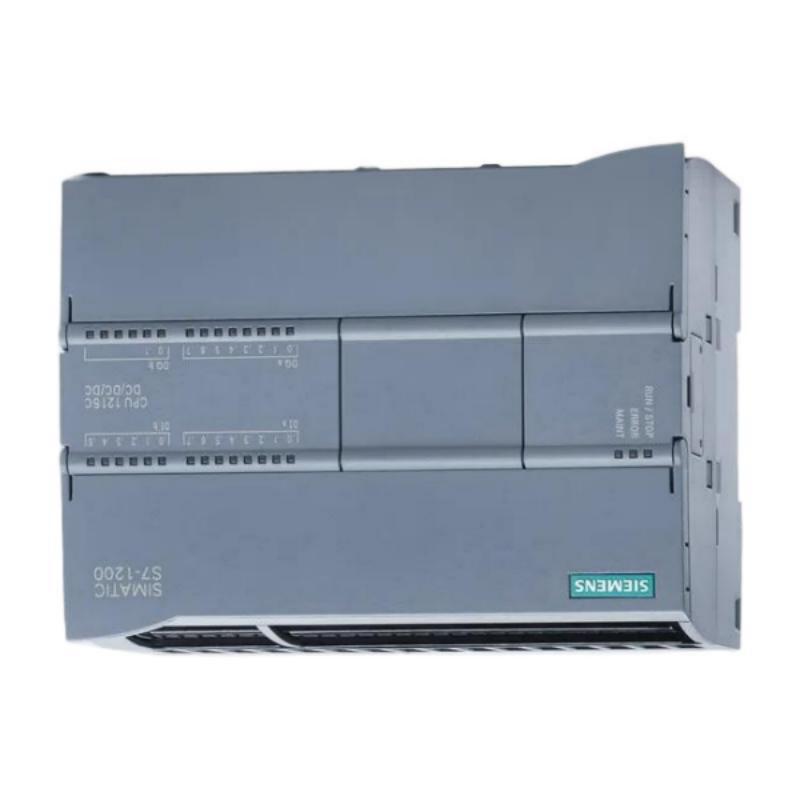
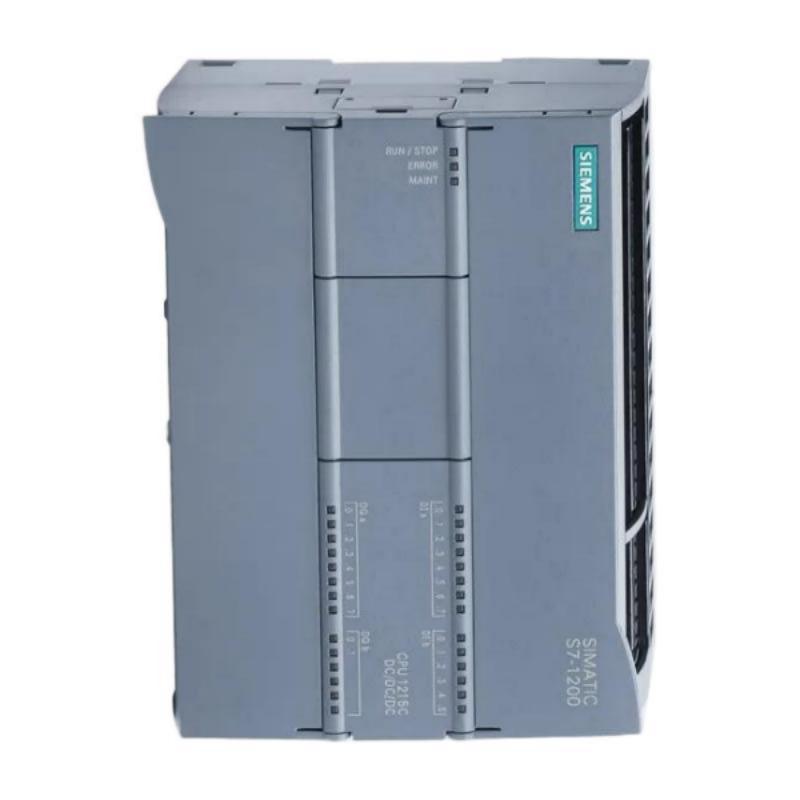
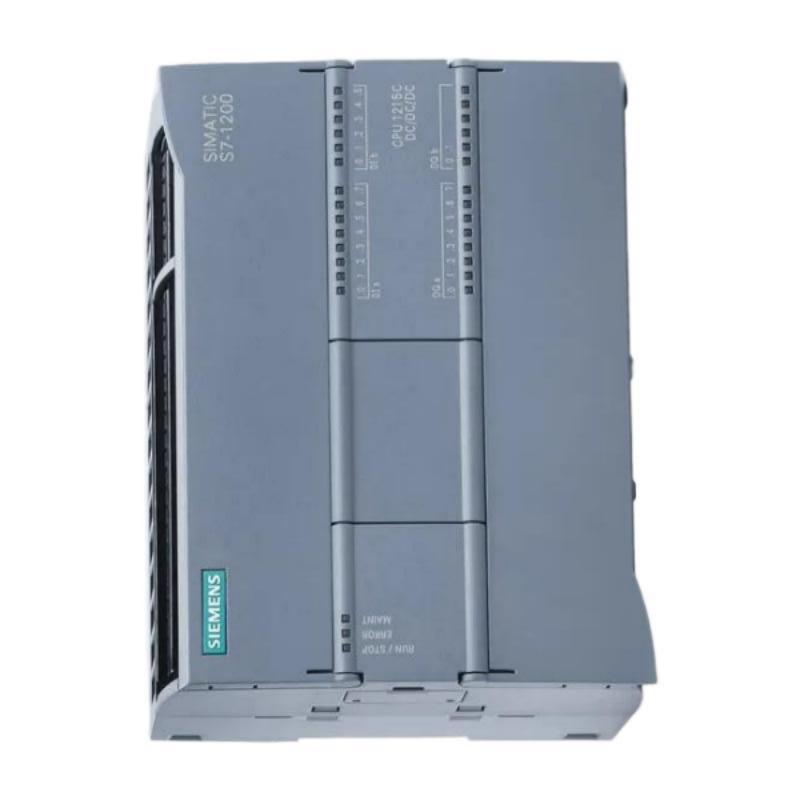
- Siemens
- 6AG1223-1PH32-4XB0
- SIPLUS S7-1200 SB 1223 2DI/2DQ
- Germany
- 45 × 100 × 75 mm
- 0.21kg
- Xiamen, China
- New & In Stock
- T/T, PayPal, Western Union
- 1 Year
- 1-3 Working Days
- DHL, UPS, TNT, FedEx and EMS.
- 24-Hour Service
- COO
- 6
Our advantage

Global Logistics
We have a 10-year logistics and express cooperation agreement, so our products can be shipped to any place in the world.

Brand new and original
Our products are imported in bulk from the place of origin. Because of the cooperative relationship, our products are all original and 100% new.

24-hour service
We provide 7*24 hours service to our customers. We will be there whenever you need us.

Price advantage
All our products are priced very favorably because we have our own warehouse and supply.
| Company Information | |||
| [email protected] | |||
| Mobile | +8615980777398 | ||
| +8615980777398 | |||
| 15980777398 |
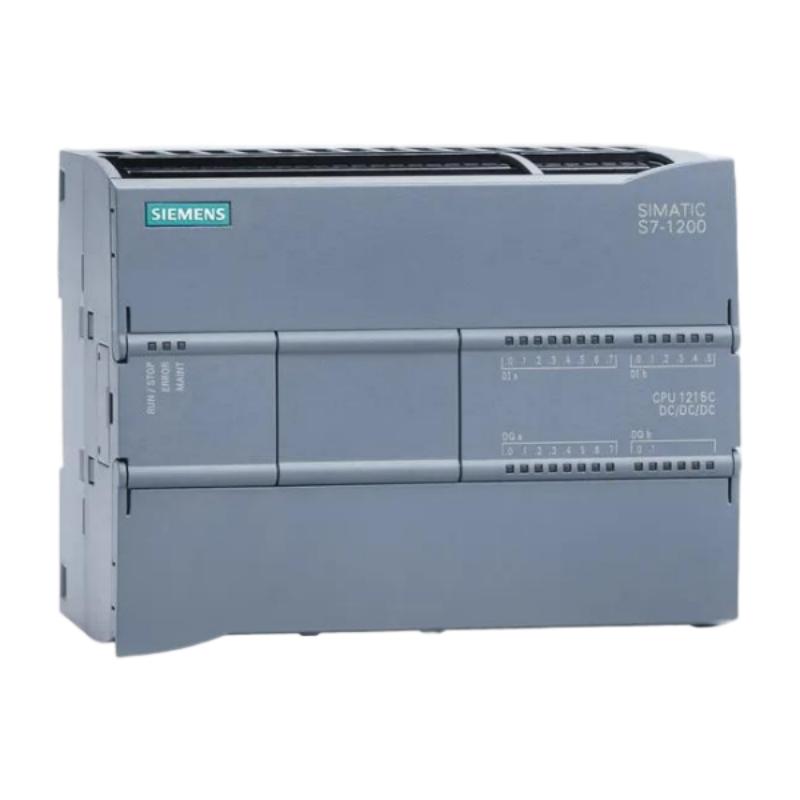
Siemens 6AG1223-1PH32-4XB0 Digital Input/Output Module: Product Introduction, Technical Parameters, Applications, and Related Models
1. Product Introduction
The Siemens 6AG1223-1PH32-4XB0 belongs to the SIPLUS S7-1200 family of programmable logic controller (PLC) signal modules. It is designed to expand a compatible PLC system’s digital input and output capacity, allowing the controller to receive signals from field devices and operate external control circuits.
Digital input/output modules are an important part of industrial automation systems. They provide the connection between a PLC’s control program and the devices installed on a machine or production line. Input signals can indicate whether a push button has been pressed, a sensor has detected a workpiece, or a mechanism has reached a particular position. Output signals can be used to operate suitable relays, indicator lamps, contactor coils, and other control devices.
The SIPLUS product designation identifies an environmental variant intended for applications where environmental conditions are an important part of equipment selection. However, the precise temperature limits, coating characteristics, electrical ratings, and mechanical details must always be matched to the complete order number.
Important model-identification note: The model number is similar to other SM 1223 modules, including versions with different output technologies and channel counts. The information below describes the expected 8-input/8-relay-output configuration associated with the 6AG1223-1PH32 family. Confirm the exact configuration, electrical ratings, dimensions, and weight against the module label or its technical datasheet before using these figures for purchasing, replacement, or final engineering design.
2. Brand and Product Series
| Item | Details |
|---|---|
| Brand | Siemens |
| Product model | 6AG1223-1PH32-4XB0 |
| Product family | SIPLUS S7-1200 |
| Product series | SM 1223 digital input/output modules |
| Module type | Digital input and relay output module |
| Input configuration | 8 digital inputs, 24 V DC |
| Output configuration | 8 relay outputs |
| Output switching technology | Electromechanical relay |
| Environmental feature | Conformal coating |
| Specified operating temperature | -20°C to +60°C |
| Standard product basis | 6ES7223-1PH32-0XB0 |
| Typical installation | Industrial PLC control cabinet |
| Main function | Connect field signals to a PLC and switch external control circuits |
| Product role | Expansion of compatible S7-1200 PLC systems |
The SM 1223 series is intended for applications that need both digital inputs and digital outputs in one module. Rather than installing separate modules for every input and output requirement, a combined module can make a small or medium-sized control system more compact.
The SIPLUS version adds environmental protection features for demanding industrial applications. The specific -4XB0 variant is rated for an operating temperature of -20°C to +60°C. It should not be assumed to have the same temperature limits as every other SIPLUS variant with a similar model number.
3. Detailed General Technical Parameters
| Parameter | Specification |
|---|---|
| Model number | 6AG1223-1PH32-4XB0 |
| Product designation | SM 1223, DI 8 × 24 V DC, DQ 8 × relay |
| Number of digital inputs | 8 |
| Number of digital outputs | 8 |
| Total digital I/O points | 16 |
| Rated supply voltage | 24 V DC |
| Permissible supply voltage, minimum | 20.4 V DC |
| Permissible supply voltage, maximum | 28.8 V DC |
| Input signal type | 24 V DC digital signals |
| Input characteristic | IEC 61131 Type 1 |
| Output type | Relay contact |
| Rated relay output current | 2 A per output, subject to load conditions |
| DC output switching voltage | 5–30 V DC |
| AC output switching voltage | Suitable AC loads within the specified product limits; verify the exact rating before use |
| Maximum backplane current consumption | Approx. 145 mA at 5 V DC |
| Typical power dissipation | Approx. 5.5 W |
| Conformal coating | Yes |
| Operating temperature | -20°C to +60°C |
| Protection rating | IP20 |
| Mounting | Compatible S7-1200 installation arrangement |
| Product dimensions (W × H × D) | 45 × 100 × 75 mm |
| Approximate net weight | 0.210–0.230 kg |
| Recommended application | Industrial digital signal acquisition and relay switching |
Electrical note: The rated 2 A relay output current must be considered together with the permitted switching voltage, load type, switching frequency, and applicable electrical-life ratings. Do not treat the current rating as a universal rating for all AC and DC loads.
4. Digital Input Parameters
The input section receives binary signals from external devices. These signals are interpreted by the PLC as ON or OFF states, allowing the control program to respond to operator commands, sensor activity, and equipment feedback.
| Input parameter | Specification |
|---|---|
| Model number | 6AG1223-1PH32-4XB0 |
| Number of digital inputs | 8 |
| Rated input voltage | 24 V DC |
| Permissible module supply range | 20.4–28.8 V DC |
| Input signal type | DC digital signal |
| Input characteristic | IEC 61131 Type 1 |
| Signal level for logic 0 | Up to 5 V DC at 1 mA |
| Signal level for logic 1 | From 15 V DC at 2.5 mA |
| Typical input current at logic 1 | Approx. 4 mA |
| Minimum input current at logic 1 | Approx. 2.5 mA |
| Maximum permissible quiescent current at logic 0 | Approx. 1 mA |
| Input grouping | Groups of 2 |
| Configurable input delay | 0.2, 0.4, 0.8, 1.6, 3.2, 6.4 or 12.8 ms |
| Typical input devices | Push buttons, limit switches, proximity sensors, photoelectric sensors |
| Dimensions (W × H × D) | 45 × 100 × 75 mm |
| Approximate weight | 0.210–0.230 kg |
Input Signal Handling
The digital inputs allow the PLC to detect changes in the connected field devices. When a sensor changes state, the module passes the signal to the PLC so the control program can make a decision.
For example, a photoelectric sensor can detect a product on a conveyor. The PLC reads the input state and decides whether to stop the conveyor, activate a diverter, or begin the next processing step.
The configurable input delay can help filter brief signal fluctuations in appropriate applications. The delay must be selected with the actual process in mind. Excessive filtering can delay the detection of a legitimate signal, particularly when the machine operates quickly.
Typical Input Applications
-
Push buttons for start, stop, reset, and manual commands.
-
Limit switches for end-position detection.
-
Proximity sensors for non-contact object detection.
-
Photoelectric sensors for product counting and presence detection.
-
Auxiliary contacts for monitoring the status of external equipment.
-
Selector switches for operating-mode selection.
Safety-related signals require a properly designed safety system. A standard digital input module alone should not be regarded as a safety-rated input device.
5. Relay Output Parameters
The output section contains eight relay outputs. Each output uses relay contacts to switch an external circuit when commanded by the PLC program.
This arrangement is useful for control applications that require relay switching and where the connected load remains within the module’s electrical ratings.
| Output parameter | Specification |
|---|---|
| Model number | 6AG1223-1PH32-4XB0 |
| Number of digital outputs | 8 |
| Output technology | Electromechanical relay |
| Rated output current | 2 A per output, subject to operating conditions |
| DC switching voltage | 5–30 V DC |
| AC switching voltage | Confirm the applicable AC rating for the specific load |
| Output signal | Binary ON/OFF switching |
| Integrated short-circuit protection | No |
| Typical applications | Interface relays, pilot lamps, contactor coils, compatible control loads |
| Load compatibility | Must be checked against the specified voltage, current, and switching-power limits |
| Recommended protection | Appropriate external protection and load suppression where required |
| Dimensions (W × H × D) | 45 × 100 × 75 mm |
| Approximate weight | 0.210–0.230 kg |
Advantages of Relay Outputs
Relay contacts can be useful when a control circuit requires contact-based switching or when the connected circuit is not suitable for a transistor output. Depending on the application and product ratings, relay outputs can switch suitable AC or DC control loads.
However, relay contacts are mechanical components. Their service life depends on the load current, voltage, switching frequency, and type of load. An inductive load, such as a solenoid or contactor coil, can produce a voltage transient when switched off. Suitable suppression may therefore be required.
For larger loads, frequent switching, or loads with high inrush current, it may be more appropriate to use the PLC output to operate an interface relay or contactor instead of switching the load directly.
6. Environmental and Mechanical Parameters
The 6AG1223-1PH32-4XB0 is designed for industrial applications where environmental conditions are relevant to product selection. Its conformal coating and specified operating-temperature range distinguish it from a standard module that may have a narrower environmental rating.
| Environmental parameter | Specification |
|---|---|
| Model number | 6AG1223-1PH32-4XB0 |
| Product family | SIPLUS S7-1200 |
| Conformal coating | Yes |
| Minimum operating temperature | -20°C |
| Maximum operating temperature | +60°C |
| Protection rating | IP20 |
| Width | 45 mm |
| Height | 100 mm |
| Depth | 75 mm |
| Dimensions (W × H × D) | 45 × 100 × 75 mm |
| Approximate net weight | 0.210–0.230 kg |
| Installation environment | Industrial control cabinet or approved enclosure |
| Mounting compatibility | S7-1200-compatible system arrangement |
| Environmental design considerations | Temperature, humidity, condensation, dust, chemical exposure, and cabinet ventilation |
Conformal coating provides additional protection for electronic assemblies against certain environmental contaminants. It does not eliminate the need for a suitable enclosure or make the module suitable for every corrosive or wet environment.
The control cabinet should be designed to maintain acceptable operating conditions for all installed components. Ventilation, heat dissipation, wiring practices, grounding, and electromagnetic compatibility remain important even when an environmentally enhanced module is selected.
7. Product Applications
7.1 Industrial Machine Control
The module can be used in machine-control systems that need to monitor a limited number of digital signals and operate several external control circuits. Inputs can receive signals from push buttons and sensors, while relay outputs can switch suitable devices or interface circuits.
In a simple automated machine, for example, the PLC might detect that a component is in position, confirm that the operator has requested a cycle, and then activate an output to begin the next operation.
7.2 Packaging Machinery
Packaging equipment often needs to monitor product presence, material position, operating-mode selection, and equipment status. Digital inputs can provide these signals to the PLC, while relay outputs can operate suitable control devices.
The module can be useful in smaller packaging stations or as part of a larger distributed control arrangement. Applications requiring very rapid switching or high-speed pulse control should be assessed carefully because relay outputs are not intended for every high-frequency switching task.
7.3 Conveyor Systems
Conveyor systems use digital signals to coordinate product movement, monitor end-of-line conditions, and control the sequence between different stations.
The module can collect sensor signals from the conveyor and provide relay-switched commands to compatible interface circuits. The actual motor current should normally be handled by appropriately rated motor starters, contactors, or drives rather than being supplied directly through a small PLC relay output.
7.4 Assembly Equipment
Assembly equipment often includes multiple work positions, sensors, clamps, indicators, and operator controls. The eight input channels can monitor the relevant binary states, while the eight relay outputs can control suitable switching circuits.
This is particularly useful when a compact PLC system needs a combination of feedback signals and relay-switched control signals without requiring separate input and output modules.
7.5 Equipment Monitoring
The module can monitor the status of equipment through auxiliary contacts and other suitable digital signals. The PLC can use these signals to determine whether a device has responded to a command.
For example, the PLC may command a contactor to energize and then read an auxiliary contact to verify the expected state. This provides more useful diagnostic information than relying on the command signal alone.
7.6 Industrial Installations with Environmental Requirements
The SIPLUS variant can be considered for installations where its specified temperature range and conformal coating are beneficial. Potential applications include industrial machinery in locations with wider temperature fluctuations or equipment exposed to certain environmental contaminants.
The installation conditions must still be checked against the product’s environmental specifications. The -20°C to +60°C rating of the -4XB0 variant should not be confused with the different operating range of the -2XB0 variant.
8. Product Advantages
8.1 Combined Input and Output Functionality
The module integrates eight digital inputs and eight relay outputs into a single unit. This can simplify the hardware layout for applications that need a balanced combination of input signals and switching outputs.
Using one combined module can reduce the need for separate input-only and output-only modules in small control systems. It can also make terminal allocation and the I/O list easier to organize.
8.2 Flexible Relay Switching
The relay output arrangement allows suitable external AC or DC circuits to be switched within the module’s specified ratings. This makes the module useful where relay contacts are preferred over transistor outputs.
The main benefit is flexibility in the control circuit, not unlimited load capability. Voltage, current, power, inrush, and electrical life must all be considered before a load is connected.
8.3 Environmental Protection Features
The conformal coating and specified -20°C to +60°C operating range provide environmental characteristics suited to certain industrial installations.
This can be helpful when choosing equipment for a cabinet that may experience temperature changes or environmental conditions beyond those assumed for a typical indoor installation.
8.4 Compact Size
With dimensions of approximately 45 × 100 × 75 mm, the module occupies relatively little space in a compatible PLC assembly. Its approximate net weight of 0.210–0.230 kg is also modest.
A compact form factor can help reduce cabinet space requirements, but wiring access, ventilation, separation from noisy circuits, and maintenance clearance must still be planned properly.
8.5 Integration with the S7-1200 Platform
The module belongs to the S7-1200 ecosystem and can be considered for compatible PLC configurations requiring additional digital I/O points.
Its inputs and outputs can be incorporated into a PLC program that manages sensors, operator commands, machine sequencing, and external control devices. CPU compatibility and the complete hardware configuration should be confirmed before installation.
8.6 Suitable for System Expansion
The module can be useful when an existing automation system needs more signal capacity. Instead of replacing the complete PLC, an engineer may be able to expand the system with a compatible signal module.
For replacement projects, however, it is essential to compare the complete order numbers. A module with a similar appearance may have a different output technology, input voltage, environmental rating, or terminal arrangement.
9. Five Related Models from the Same Series or Product Family
The following models are related to the S7-1200 digital I/O range. Some provide a similar combination of digital inputs and outputs, while others provide more channels or a different output technology.
The dimensions and weights are approximate planning figures for the listed models. Check the exact order number and mechanical specification before using them in a formal engineering drawing.
| Model | Product type | Main parameters | Dimensions (W × H × D) | Weight (kg) |
|---|---|---|---|---|
| 6ES7223-1PH32-0XB0 | Standard SM 1223 digital I/O | 8 digital inputs, 24 V DC; 8 relay outputs; standard environmental version | 45 × 100 × 75 mm | Approx. 0.230 |
| 6AG1223-1PH32-2XB0 | SIPLUS SM 1223 digital I/O | 8 digital inputs, 24 V DC; 8 relay outputs; extended temperature range of -40°C to +70°C; startup down to -25°C | 45 × 100 × 75 mm | Approx. 0.222 |
| 6ES7223-1BH32-0XB0 | SM 1223 digital I/O | 8 digital inputs, 24 V DC; 8 transistor outputs; suitable for compatible DC switching loads | Approx. 45 × 100 × 75 mm | Approx. 0.200 |
| 6ES7223-1PL32-0XB0 | SM 1223 digital I/O | 16 digital inputs, 24 V DC; 16 relay outputs; greater signal capacity than an 8 DI / 8 relay module | Approx. 70 × 100 × 75 mm | Approx. 0.330 |
| 6ES7223-1BL32-0XB0 | SM 1223 digital I/O | 16 digital inputs, 24 V DC; 16 transistor outputs; suited to compatible electronic DC switching applications | Approx. 70 × 100 × 75 mm | Approx. 0.310 |
Related Model Selection Guide
6ES7223-1PH32-0XB0 — Standard environmental version
This model is worth considering when the application needs the same general 8 DI / 8 relay arrangement but does not require the specific environmental characteristics of the SIPLUS version. The operating environment must remain within the standard model’s rated limits.
6AG1223-1PH32-2XB0 — Extended-temperature SIPLUS version
This variant is suitable for consideration when the application’s temperature requirements fall outside the range of the -4XB0 version but remain within the -2XB0 version’s specification. Its environmental rating differs, so the two models should not be treated as interchangeable without checking the installation requirements.
6ES7223-1BH32-0XB0 — Transistor-output version
This model is relevant when the control system requires transistor outputs rather than relay contacts. Transistor outputs can be useful for compatible DC loads and applications involving more frequent switching, provided the output’s current and voltage limits are respected.
6ES7223-1PL32-0XB0 — Higher-channel relay version
This model offers more input and relay-output points for applications that need additional signals. It may reduce the number of separate modules required, but its larger size and overall power requirements should be considered when planning the cabinet.
6ES7223-1BL32-0XB0 — Higher-channel transistor version
This model provides a larger digital I/O count with transistor outputs. It may be a better fit for applications with many compatible DC switching loads where relay contacts are unnecessary.
10. Five Popular Models for Broader Automation Projects
These models cover several common roles in an S7-1200 control system, including the CPU, digital input expansion, digital output expansion, and analog signal acquisition. They complement the 6AG1223-1PH32-4XB0 but do not all serve the same function.
| Model | Product category | Main parameters | Dimensions (W × H × D) | Weight (kg) |
|---|---|---|---|---|
| 6ES7212-1AE40-0XB0 | CPU 1212C PLC | Compact PLC CPU with onboard digital I/O and expansion capability; suitable for smaller automation systems | Approx. 90 × 100 × 75 mm | Approx. 0.295 |
| 6ES7214-1AG40-0XB0 | CPU 1214C PLC | PLC CPU for more involved machine-control applications, with onboard I/O and system expansion capability | Approx. 110 × 100 × 75 mm | Approx. 0.320 |
| 6ES7221-1BH32-0XB0 | SM 1221 digital input module | 16 digital inputs at 24 V DC; for systems that need additional sensor and status inputs | Approx. 45 × 100 × 75 mm | Approx. 0.150–0.200 |
| 6ES7222-1BH32-0XB0 | SM 1222 digital output module | 16 transistor outputs at 24 V DC; for compatible electronic switching loads | Approx. 45 × 100 × 75 mm | Approx. 0.200–0.250 |
| 6ES7231-4HF32-0XB0 | SM 1231 analog input module | Analog signal acquisition for supported sensors and transmitters; channel configuration and input ranges depend on the model | Approx. 45 × 100 × 75 mm | Approx. 0.180 |
Mechanical data in this table is indicative. Verify the exact variant’s dimensions and weight before finalizing a cabinet design or preparing a formal bill of materials.
10.1 CPU 1212C — Compact PLC Control
The CPU 1212C is suited to smaller automation systems where the controller needs to manage a modest number of digital signals and execute a relatively compact control program.
It can serve as the main controller for small machines, local equipment stations, and basic process-control tasks. A compatible digital I/O expansion module can be considered if the built-in I/O capacity is insufficient.
10.2 CPU 1214C — Expanded Control Capacity
The CPU 1214C is a potential choice for applications requiring more extensive program logic or greater onboard I/O capacity than a smaller controller can provide.
It can be used for conveyor control, production machinery, and multi-stage equipment. When expanding the system, the designer should check the CPU’s supported module configuration, power requirements, and engineering-software compatibility.
10.3 SM 1221 — Additional Digital Inputs
The SM 1221 is an input-only expansion option. It is useful when an application needs to collect more sensor signals, limit-switch states, operator commands, or equipment feedback but does not need more outputs.
An input-only module can be a more economical fit when the project has many inputs and relatively few outputs. The exact input voltage and channel count must match the field devices.
10.4 SM 1222 — Additional Digital Outputs
The SM 1222 is an output-only expansion option. A transistor-output version can be suitable for compatible DC switching loads, especially where electronic switching is preferred.
It should not be considered a direct replacement for a relay-output module in every application. Confirm whether the connected load requires AC switching, contact-based switching, or a particular isolation arrangement.
10.5 SM 1231 — Analog Input Acquisition
The SM 1231 analog input family is used where the PLC needs measurement values rather than simple ON/OFF states. Depending on the specific model, it can be configured for supported analog signals from sensors and transmitters.
Applications may include temperature, pressure, flow, and level monitoring. The sensor’s output type, signal range, resolution, and wiring arrangement should be matched to the selected analog input module.
11. Installation and Wiring Recommendations
11.1 Verify the Complete Order Number
Before installation or replacement, check the complete order number printed on the module. The 6AG1223-1PH32-4XB0 is an 8 DI / 8 relay-output SIPLUS variant rated for -20°C to +60°C.
Do not assume that a model with a similar number has the same input configuration, relay rating, or operating-temperature range.
11.2 Confirm the Power Supply
The digital input circuits use a 24 V DC arrangement. Check that the supply remains within the specified 20.4–28.8 V DC range under normal operating conditions.
The power supply must be sized for the CPU, expansion modules, sensors, and other connected devices. Voltage drop, startup current, and the shared reference arrangement should be reviewed during the wiring design.
11.3 Check Every Relay Load
Each relay output must remain within its applicable electrical ratings. The 2 A figure should not be used in isolation from switching voltage, switching power, load type, and electrical-life limits.
For inductive loads, consider suitable suppression. For high-current or high-inrush loads, use a properly rated external relay or contactor where appropriate.
11.4 Organize the Wiring
Use clear terminal labels and a consistent I/O address list. Keep signal wiring appropriately separated from power wiring and other sources of electrical interference.
Proper wiring practices make commissioning easier and reduce troubleshooting time. Check that all terminals are secure and that cable routing is compatible with the control cabinet’s grounding and electromagnetic-compatibility requirements.
11.5 Plan Cabinet Space and Heat Dissipation
The module’s dimensions are approximately 45 × 100 × 75 mm. The actual cabinet layout must allow space for field wiring, ventilation, access to terminals, and maintenance.
The typical power dissipation is approximately 5.5 W, so its heat contribution should be included when assessing the temperature inside a densely populated control cabinet.
11.6 Test Before Returning Equipment to Service
After wiring, check the PLC hardware configuration, verify each input with its intended field device, and test each output with a suitable load or approved test procedure.
Confirm the program’s startup sequence, interlocks, alarm response, and expected machine behavior before returning the equipment to normal operation.
12. Troubleshooting Guide
| Problem | Possible cause | Recommended action |
|---|---|---|
| Input signal is not detected | Incorrect wiring, missing 24 V supply, faulty sensor, or incorrect common reference | Check the field supply, sensor output, terminal connections, and input address |
| Input state fluctuates | Electrical interference, loose wiring, or unsuitable signal levels | Inspect wiring, grounding, shielding, and sensor signal quality |
| Relay output does not switch | Incorrect program logic, output not enabled, wiring fault, or damaged relay contact | Check PLC status, program logic, output address, and external circuit |
| Relay output switches but the device does not operate | Missing external supply, faulty load, or incorrect load wiring | Check the load supply, wiring diagram, and device condition |
| Relay contacts wear out quickly | Excessive inrush current, inductive load, or frequent switching | Reassess the load and use appropriate suppression or an external switching device |
| PLC configuration reports an error | Incorrect model selected in the project or incompatible configuration | Verify the complete order number and supported CPU configuration |
| Module operates unreliably at temperature extremes | Cabinet temperature or supply voltage outside the required range | Check ambient temperature, power-supply stability, and installation conditions |
| Output circuit is damaged | Voltage, current, or switching power exceeds the applicable limit | Recalculate the load and select a suitable interface device or output module |
A good troubleshooting process starts with the simplest checks: verify the supply, wiring, PLC status, and external device. Then test the affected channel and determine whether the problem is caused by the program, the module, or the field circuit.
13. Final Product Summary
The Siemens 6AG1223-1PH32-4XB0 is a SIPLUS S7-1200 SM 1223 digital input/output module with eight 24 V DC digital inputs and eight relay outputs. Its main role is to connect field signals to a compatible PLC and provide relay-switched control signals to suitable external circuits.
Its principal advantages are the combined input/output arrangement, relay switching flexibility, conformal coating, and specified operating-temperature range of -20°C to +60°C. Its compact dimensions of approximately 45 × 100 × 75 mm and approximate net weight of 0.210–0.230 kg can also be helpful when planning a control cabinet.
For a system requiring the same I/O arrangement but a different environmental rating, the related 6AG1223-1PH32-2XB0 is worth evaluating. For applications needing more signal points, a 16 DI / 16 relay-output module may be more appropriate. Where the loads are compatible with transistor switching, a transistor-output module may be a better fit.
The most important selection criteria are the exact order number, input signal compatibility, relay load requirements, operating temperature, PLC compatibility, and the physical space available in the cabinet. When these factors are checked carefully, the module can be integrated into an automation system with a clear understanding of its capabilities and limitations.