

ProductPRODUCT
Featured products
Contact Us
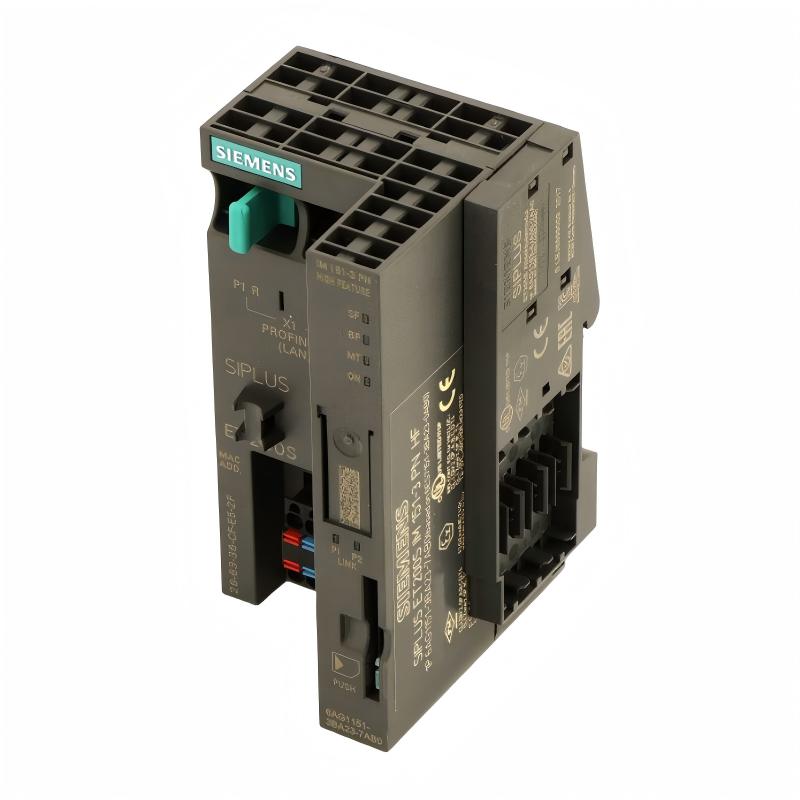
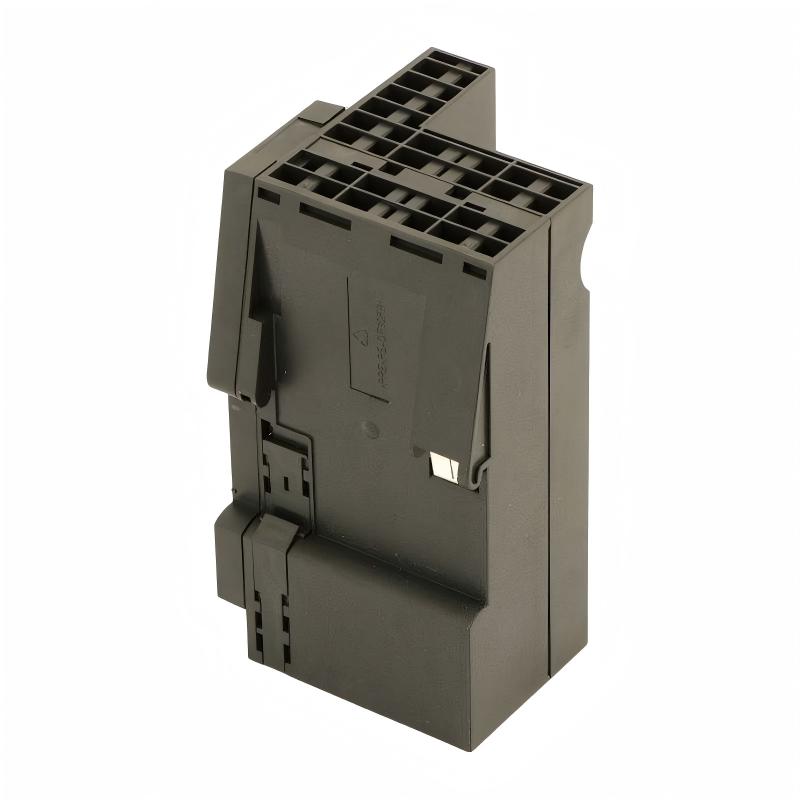
- Siemens
- 6AG1151-3BA23-7AB0
- SIPLUS ET 200S IM 151-1 Standard
- Germany
- 60 × 119.5 × 75 mm
- 0.2kg
- Xiamen, China
- New & In Stock
- T/T, PayPal, Western Union
- 1 Year
- 1-3 Working Days
- DHL, UPS, TNT, FedEx and EMS.
- 24-Hour Service
- COO
- 4
Our advantage

Global Logistics
We have a 10-year logistics and express cooperation agreement, so our products can be shipped to any place in the world.

Brand new and original
Our products are imported in bulk from the place of origin. Because of the cooperative relationship, our products are all original and 100% new.

24-hour service
We provide 7*24 hours service to our customers. We will be there whenever you need us.

Price advantage
All our products are priced very favorably because we have our own warehouse and supply.
| Company Information | |||
| [email protected] | |||
| Mobile | +8615980777398 | ||
| +8615980777398 | |||
| 15980777398 |
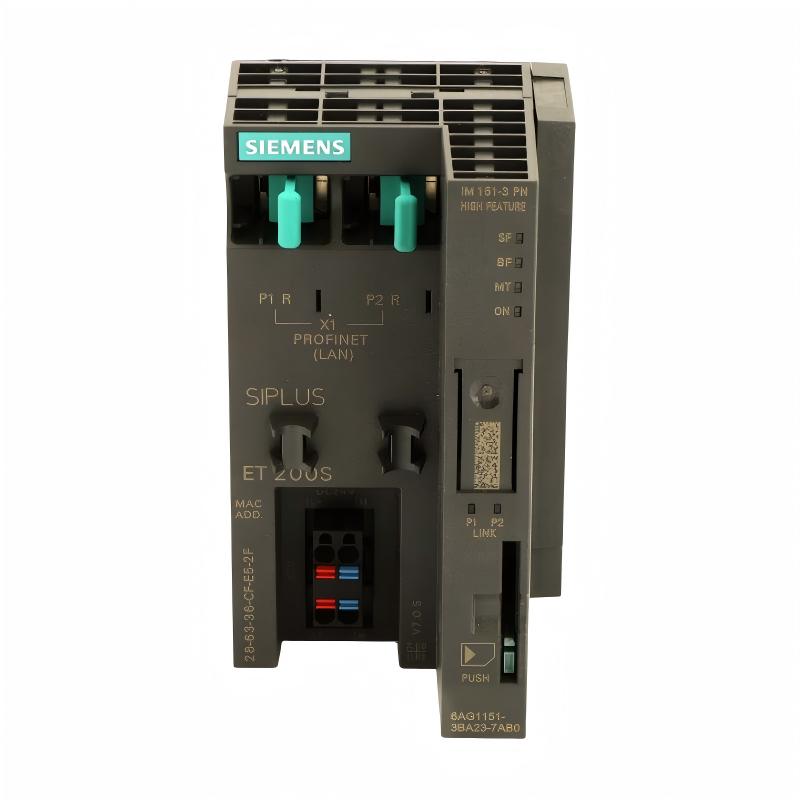
Siemens 6AG1151-3BA23-7AB0 — Product Profile, Technical Specifications, Applications and Related Models
1. Product Overview
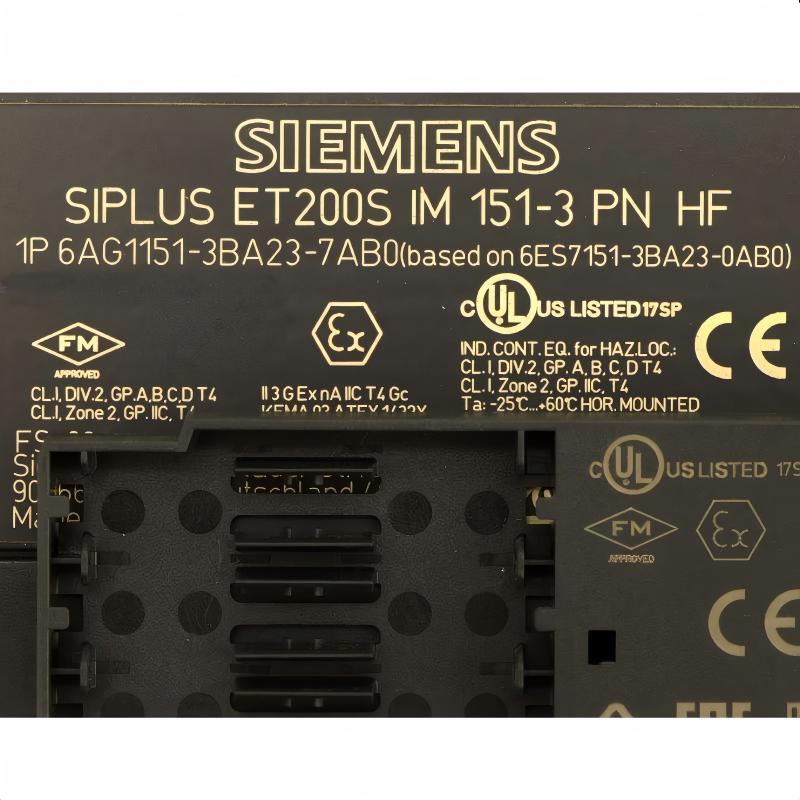
The Siemens 6AG1151-3BA23-7AB0 is identified by its order-number format as a SIPLUS industrial automation product. The model number suggests a relationship to the ET 200S distributed I/O platform, specifically the IM 151-3 PN HF family of PROFINET interface modules.
An interface module connects a distributed I/O station to a higher-level automation controller. It allows the controller to exchange process data with compatible input and output modules located near the machinery, reducing the need to route every individual field signal back to a central control cabinet.
The SIPLUS product designation is relevant to industrial installations because environmental characteristics can differ from those of a standard product. However, the exact environmental ratings, hardware revision, and full specifications must be matched to the complete order number.
Identification note: I cannot independently establish every model-specific detail for 6AG1151-3BA23-7AB0 here. The profile below distinguishes the likely product family and general operating role from technical values that require exact-model confirmation. Dimensions and weight are included in the tables, but unverified values are marked accordingly rather than invented.
3. Detailed Technical Parameters
3.1 General Specifications
| Parameter | Specification |
|---|---|
| Model number | 6AG1151-3BA23-7AB0 |
| Product designation | SIPLUS ET 200S IM 151-3 PN HF |
| Base model | 6ES7151-3BA23-0AB0 |
| Brand | Siemens |
| Product family | SIPLUS |
| Automation series | SIMATIC ET 200S |
| Module type | High-feature PROFINET interface module |
| Main function | Connects distributed I/O modules to a PROFINET IO controller |
| Communication network | PROFINET IO |
| Maximum transmission rate | 100 Mbit/s |
| Maximum number of connectable I/O modules | Up to 63 |
| Maximum station width | Up to 2 m |
| Network ports | 2 × RJ45 |
| Integrated switch | Yes |
| Termination module | Included |
| Environmental coating | Conformal coating |
| Operating temperature | -25°C to +70°C |
| Width | 60 mm |
| Height | 119.5 mm |
| Depth | 75 mm, with mounting rail |
| Net weight | 0.205 kg |
| Product lifecycle status | Discontinued; replacement and spare-part availability must be checked |
| Typical application | Industrial distributed I/O and machine automation |
3.2 Communication Parameters
| Parameter | Specification |
|---|---|
| Industrial communication protocol | PROFINET IO |
| Ethernet transmission rate | Up to 100 Mbit/s |
| Physical connectors | 2 × RJ45 |
| Integrated network switch | Yes |
| Supported topology | Line topology and other compatible configurations |
| Controller role | Distributed I/O device connected to a compatible controller |
| Cyclic process-data exchange | Supported |
| Device configuration | Requires compatible hardware configuration |
| Network identification | Must be configured in the automation project |
| Diagnostic capability | Depends on the module, controller, and engineering configuration |
| Maximum station width | 2 m |
| Maximum connectable I/O modules | 63, subject to station configuration |
| Included accessory | Termination module |
The module is designed for PROFINET IO communication rather than PROFIBUS DP. This distinction matters when choosing a replacement: a module that belongs to the same ET 200S family but uses a different communication interface may not be suitable for the existing network.
The two RJ45 ports and integrated switch support practical network layouts in which distributed stations are connected along a machine or production line. Actual network performance depends on the connected devices, cable installation, network configuration, and controller capabilities.
3.3 Electrical Parameters
| Parameter | Specification |
|---|---|
| Rated system supply | Confirm the detailed electrical requirements for the exact hardware configuration |
| Supply voltage range | Must be checked against the module’s electrical data |
| Typical power loss | Confirm against the exact technical data before cabinet heat calculations |
| Network interface | PROFINET over industrial Ethernet |
| Connector type | RJ45 |
| Network speed | Up to 100 Mbit/s |
| Connected module capacity | Up to 63 modules, subject to system restrictions |
| Power supply for attached I/O modules | Determined by the station’s power modules and configuration |
| Grounding | Follow the installation requirements for the ET 200S assembly |
| Cable shielding | Follow the installation requirements for the industrial network |
| Electrical installation | Must comply with the requirements of the complete station |
For cabinet design, it is important to distinguish the interface module’s own electrical consumption from the power required by the entire station. The connected modules, sensors, actuators, and any additional station components must be included when sizing the power supply.
The exact voltage and power-loss values should be verified before finalizing a new installation. This is particularly important when replacing a discontinued module in a system whose original electrical design is already established.
3.4 Environmental and Mechanical Parameters
| Parameter | Specification |
|---|---|
| Minimum operating temperature | -25°C |
| Maximum operating temperature | +70°C |
| Environmental design | SIPLUS |
| Conformal coating | Yes |
| Width | 60 mm |
| Height | 119.5 mm |
| Depth | 75 mm, with mounting rail |
| Net weight | 0.205 kg |
| Packaging dimensions | Approximately 125 × 84 × 70 mm |
| Mounting arrangement | Modular ET 200S station |
| Installation environment | Suitable industrial control cabinet or enclosure |
| Resistance to specified environmental influences | Depends on the applicable environmental classification |
| Protection of unused connectors | Keep supplied covers fitted where required |
| Maintenance | Inspect connectors, cables, station mounting, and environmental condition |
The operating-temperature range of -25°C to +70°C is one of the important distinguishing features of this SIPLUS version. It allows the module to be considered for certain installations with a wider temperature range than conventional indoor equipment.
The conformal coating provides additional protection under specified environmental conditions. It does not make the device universally resistant to moisture, immersion, condensation, or every aggressive chemical. The complete installation must still meet the relevant environmental and electrical requirements.
4. Product Introduction
4.1 What Is the 6AG1151-3BA23-7AB0?
The 6AG1151-3BA23-7AB0 is a high-feature interface module in the SIPLUS ET 200S family. Its primary purpose is to connect a modular distributed I/O station to a PROFINET IO controller.
In industrial automation, a central controller often needs to collect signals from sensors and send commands to actuators located throughout a machine. A distributed I/O station makes it possible to place the required signal modules close to the equipment rather than routing every individual field wire to the main control cabinet.
The interface module provides the communication connection for that station. It exchanges process data with the controller while the connected I/O modules handle the individual input and output functions.
4.2 The Role of the IM 151-3 PN HF
The IM 151-3 PN HF is the high-feature PROFINET interface variant. Its network interface allows the distributed station to communicate over industrial Ethernet at a maximum transmission rate of 100 Mbit/s.
The station can accommodate up to 63 compatible I/O modules, with a maximum overall width of 2 m, subject to the applicable system configuration restrictions.
The high-feature designation is relevant when selecting an interface for an existing automation design. It should not be assumed that a standard-feature interface will provide every function available on the HF version.
4.3 How the Module Fits into a Distributed I/O System
A typical distributed I/O installation includes the following elements:
-
A PLC or other compatible PROFINET IO controller.
-
The ET 200S interface module.
-
Compatible digital, analog, or function modules.
-
The appropriate mounting and terminal components.
-
The station power supply and field wiring.
-
Industrial Ethernet cables connecting the station to the automation network.
The controller exchanges input and output data with the interface module. The interface module then makes that data available to the compatible modules in the station.
The exact number and types of supported modules depend on the complete station design. The stated limit of 63 modules should therefore be treated as a maximum configuration limit, not as a guarantee that every module combination will work.
4.4 Environmental Design of the SIPLUS Version
The SIPLUS version is intended for specified demanding industrial conditions. Its -25°C to +70°C operating-temperature range and conformal coating make environmental suitability an important consideration when selecting the product.
This can be useful in installations where ambient temperatures fluctuate or where the environmental classification is more demanding than that of a typical clean control cabinet.
The product must still be installed within its rated limits. Appropriate enclosure protection, cable routing, grounding, and protection of unused connectors remain necessary.
5. Product Applications
5.1 Factory Automation
The module can be used in manufacturing equipment that relies on PROFINET IO to communicate with distributed field devices.
Typical applications include collecting sensor signals, monitoring machine states, controlling compatible output modules, and connecting multiple machine sections to a common controller.
A distributed I/O arrangement can reduce the amount of individual field wiring returning to the main cabinet. It can also make the overall system easier to divide into functional areas.
5.2 Conveyor and Material-Handling Systems
Conveyor systems often contain sensors and actuators at many points along the line. A distributed I/O station allows these signals to be collected locally and exchanged with the central controller through PROFINET.
Common applications include:
-
Detecting the presence and position of products.
-
Monitoring transfer points and conveyor sections.
-
Collecting signals from proximity and photoelectric sensors.
-
Controlling compatible local output modules.
-
Connecting multiple equipment sections to a common automation system.
The interface module provides the communication link. The actual sensor and actuator functions are performed by the appropriate I/O modules and field devices.
5.3 Packaging Machinery
Packaging machines frequently combine several operations, such as product feeding, positioning, filling, sealing, labeling, and discharge. Each section may contain its own group of sensors and actuators.
Distributed I/O can organize these signals into local stations, allowing the controller to communicate with each station through the industrial network.
The module may therefore be useful in packaging lines where a compatible ET 200S architecture is already in use. It should be selected according to the required network features and the configuration of the complete machine.
5.4 Assembly Lines
Assembly equipment commonly uses multiple stations, each with its own sensors, actuators, and local signal requirements.
The interface module can connect a local ET 200S station to the controller, allowing the controller to coordinate the machine’s operating sequence and monitor the status of individual stations.
This arrangement can improve wiring organization and make fault-finding more straightforward when the installation is properly labeled and documented.
5.5 Industrial Equipment in Demanding Environments
The SIPLUS version may be suitable for industrial installations where the operating temperature or specified environmental conditions make a standard module less appropriate.
Potential applications include equipment installed in industrial production areas with variable ambient temperatures or other environmental influences covered by the module’s ratings.
The suitability of the product must be assessed against the actual conditions. The conformal coating does not remove the need to protect the equipment against unsupported chemical exposure, condensation, or direct liquid ingress.
5.6 Maintenance of Existing ET 200S Systems
This model may be relevant when maintaining an existing ET 200S station that uses the same interface-module variant.
Because the model is discontinued, replacement planning should include checking available spare stock, confirming the full part number, and identifying a technically compatible alternative if the original device cannot be obtained.
A replacement should not be chosen solely because it has a similar appearance or belongs to the same product family. Communication protocol, feature set, environmental ratings, station configuration, and engineering compatibility all need to be checked.
6. Product Advantages
6.1 PROFINET IO Communication
The module provides a PROFINET IO connection for the distributed I/O station. This enables the controller to exchange process data with compatible field-level modules over an industrial Ethernet network.
For a PROFINET-based machine, this allows the I/O station to form part of the same automation architecture as the controller and other compatible network devices.
6.2 High-Speed Network Interface
The module supports transmission rates up to 100 Mbit/s.
This is suitable for many industrial automation applications that require regular cyclic data exchange between the controller and distributed I/O. Actual system performance depends on the network configuration and the requirements of all connected devices.
6.3 Integrated Two-Port Switch
The two RJ45 connections and integrated switch support line-topology arrangements. This can simplify network wiring along a machine or production line and may reduce the need for additional switching hardware in suitable configurations.
The topology should still be planned carefully, particularly where network availability, redundancy, or specific real-time requirements are important.
6.4 High Module Capacity
The module supports up to 63 compatible I/O modules, with a station width of up to 2 m, subject to the applicable configuration limits.
This capacity allows a station to combine multiple types of field signals in a single modular assembly. The final design must account for module compatibility, station width, electrical requirements, and the controller’s configuration limits.
6.5 Extended Operating Temperature
The -25°C to +70°C operating-temperature range is a significant advantage for installations that operate outside the temperature range of many conventional indoor control environments.
It may provide additional flexibility when selecting equipment for industrial locations with wider ambient-temperature variations, provided the remaining environmental requirements are also met.
6.6 Conformal Coating
The conformal coating provides additional protection under specified environmental conditions.
This can be important in industrial environments where contamination or exposure to certain environmental influences must be considered as part of equipment selection. It should not be confused with a general waterproof rating or unlimited chemical resistance.
6.7 Compact Mechanical Design
The module measures 60 × 119.5 × 75 mm, with a net weight of 0.205 kg.
Its compact form helps integrate the interface into a modular control assembly. Cabinet planning should nevertheless allow sufficient room for Ethernet connectors, cable bend radius, wiring access, and maintenance.
6.8 Simplified Distributed Wiring
By placing I/O modules near the field equipment, the system designer can reduce the need for long individual signal cables returning to the main controller cabinet.
This can help improve wiring organization and make it easier to separate a large machine into manageable control sections.
7. Five Related Models in the Same Series or Related Families
The following models are useful candidates for comparison. They do not all provide identical functions, so compatibility should be checked before considering any of them as a replacement.
| Model | Product designation | Main parameters | Dimensions (W × H × D) | Weight (kg) |
|---|---|---|---|---|
| 6ES7151-3BA23-0AB0 | ET 200S IM 151-3 PN HF | Standard base model; PROFINET IO; up to 100 Mbit/s; two RJ45 ports; up to 63 I/O modules; station width up to 2 m | 60 × 119.5 × 75 mm | Verify exact net weight |
| 6AG1151-3AA23-7AB0 | SIPLUS ET 200S IM 151-3 PN ST | Related SIPLUS PROFINET interface; two RJ45 ports; suitable for compatible ET 200S stations; feature set differs from HF | 60 × 119.5 × 75 mm | Verify exact net weight |
| 6ES7151-3AA23-0AB0 | ET 200S IM 151-3 PN ST | Standard-feature PROFINET interface; related station architecture; check feature differences before substitution | 60 × 119.5 × 75 mm | Verify exact net weight |
| 6AG1151-1AA06-7AB0 | SIPLUS ET 200S IM 151-1 ST | PROFIBUS DP interface variant; relevant to existing PROFIBUS-based ET 200S stations | 45 × 119.5 × 75 mm | Approx. 0.172 |
| 6AG1151-1BA02-2AB0 | SIPLUS ET 200S IM 151 HF | High-feature PROFIBUS DP interface; different network from the PROFINET model; verify the exact feature set and environmental specifications | Verify exact dimensions | Verify exact net weight |
How to Choose Between These Models
6ES7151-3BA23-0AB0 is the most direct comparison because it is the standard base model for the target SIPLUS interface.
The ST versions may be suitable for applications that do not need all the functions of the HF model, but their capabilities should be compared carefully before replacing the existing interface.
The IM 151-1 models are associated with PROFIBUS DP rather than the PROFINET interface used by the target product. They should only be considered when the network architecture and controller configuration support the relevant communication protocol.
8. Five Popular Models for a Broader Automation System
The following products represent common categories of industrial automation equipment. They serve different purposes and are not direct replacements for the ET 200S IM 151-3 PN HF interface module.
| Model | Series | Product type | Main parameters | Dimensions (W × H × D) | Weight (kg) |
|---|---|---|---|---|---|
| 6ES7214-1AG40-0XB0 | SIMATIC S7-1200 | PLC | Compact controller for machine automation; I/O and communication capabilities depend on the exact CPU variant | Verify exact model data | Verify exact value |
| 6ES7511-1AK02-0AB0 | SIMATIC S7-1500 | PLC | Industrial controller for more demanding automation applications; verify the exact memory, performance, and interface specifications | Verify exact model data | Verify exact value |
| 6ES7155-6AU01-0BN0 | SIMATIC ET 200SP | Distributed I/O interface | Interface for a modular ET 200SP station; network and module compatibility depend on the selected configuration | Verify exact model data | Verify exact value |
| 6EP1333-2BA20 | SITOP | Industrial power supply | 24 V DC power supply; confirm rated current, protection features, and mounting dimensions for the exact variant | Verify exact model data | Verify exact value |
| 6AV2123-2GB03-0AX0 | SIMATIC HMI Basic Panel | Operator interface | Human-machine interface for displaying machine status, alarms, and operator controls; confirm screen and interface specifications | Verify exact model data | Verify exact value |
These models are commonly relevant when designing or maintaining a broader automation system, but each performs a distinct role.
A PLC executes the control program. A distributed I/O interface connects field modules to the network. A power supply provides the required electrical power, while an HMI enables operators to view system information and interact with the machine.
The ET 200SP interface belongs to a different distributed I/O platform. It should be treated as an alternative for a suitably designed system rather than a direct replacement for the ET 200S module.
9. Installation and Configuration Considerations
9.1 Confirm the Exact Part Number
The complete order number is important because standard and SIPLUS variants can have different environmental characteristics.
Before replacement, confirm the full model number, the original station configuration, and the environmental requirements of the installation.
9.2 Check PROFINET Compatibility
The module must be configured as a compatible PROFINET IO device in the automation project.
The controller’s hardware configuration, device identification, network settings, and installed I/O modules must correspond to the actual hardware.
9.3 Plan the Network Layout
The two RJ45 ports and integrated switch support line topology. The network design should account for cable specifications, connectors, cable routing, and the requirements of the other connected devices.
If the installation requires a special redundancy arrangement or specific real-time functions, confirm that the complete network supports them.
9.4 Confirm Module Count and Station Width
The maximum configuration allows up to 63 I/O modules and a station width of up to 2 m. The actual permissible configuration depends on the selected modules and the applicable system restrictions.
Check the mechanical layout before adding modules or replacing the interface.
9.5 Account for Environmental Conditions
The module’s stated operating-temperature range is -25°C to +70°C. The environmental classification and installation requirements should also be considered when assessing humidity, contamination, chemical exposure, and protection of unused connectors.
9.6 Consider Product Lifecycle
The model has been discontinued. For an existing installation, it is sensible to confirm the availability of original spare parts and evaluate compatible alternatives in advance.
If an alternative is selected, the network protocol, module feature set, controller configuration, environmental ratings, and mechanical dimensions must all be checked before installation.
10. Product Selection Summary
| Requirement | Recommended approach |
|---|---|
| Maintaining an existing station | Confirm the original model and station configuration first |
| Finding the closest standard equivalent | Evaluate 6ES7151-3BA23-0AB0 |
| Using a standard-feature interface | Compare 6ES7151-3AA23-0AB0 and confirm the required features |
| Replacing a SIPLUS module | Check environmental ratings as well as communication compatibility |
| Existing network uses PROFIBUS DP | Consider a compatible IM 151-1 model rather than a PROFINET-only interface |
| Designing a new distributed I/O system | Compare the ET 200S and ET 200SP platforms based on controller compatibility and system requirements |
| Planning spare parts | Confirm availability because the target model is discontinued |
11. Final Assessment
The Siemens 6AG1151-3BA23-7AB0 is the SIPLUS ET 200S IM 151-3 PN HF interface module, based on 6ES7151-3BA23-0AB0. It connects a compatible distributed I/O station to a PROFINET IO controller and provides two RJ45 network ports with an integrated switch.
Its principal characteristics include a maximum network transmission rate of 100 Mbit/s, support for up to 63 I/O modules, a station width of up to 2 m, conformal coating, and an operating-temperature range of -25°C to +70°C.
The main advantages are its PROFINET integration, support for modular distributed I/O, convenient network connections, and environmental design for specified demanding industrial conditions. These features make it relevant to existing production machinery, conveyor systems, packaging lines, and other automation installations built around the compatible ET 200S platform.
The physical dimensions are 60 × 119.5 × 75 mm, and the net weight is 0.205 kg.
Because the model is discontinued, the most practical next step for replacement planning is to compare it with 6ES7151-3BA23-0AB0, then confirm that the alternative meets the original system’s communication, module-configuration, environmental, and mechanical requirements.