

ProductPRODUCT
Featured products
Contact Us
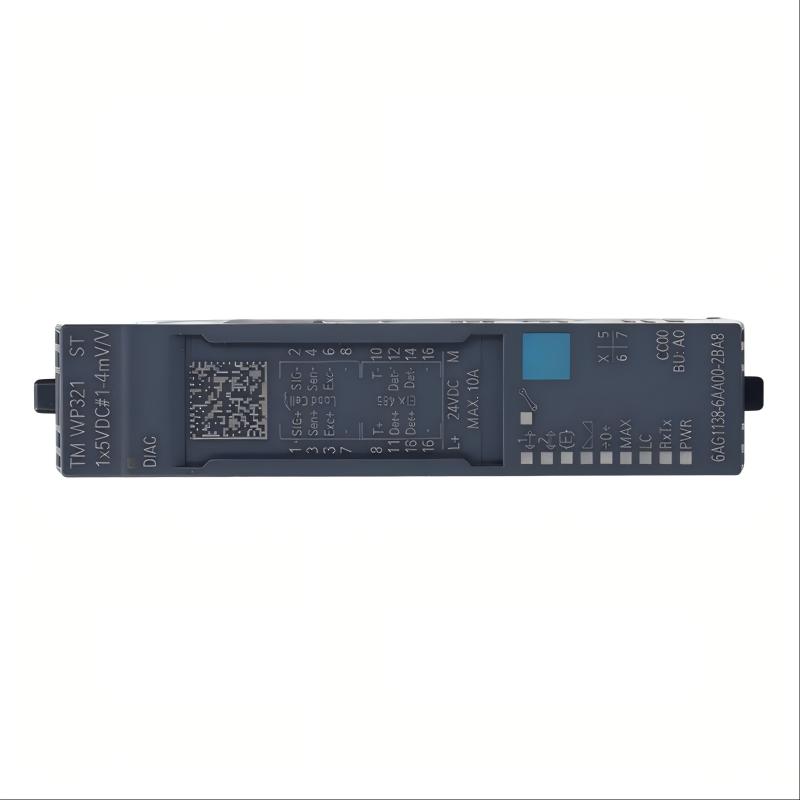
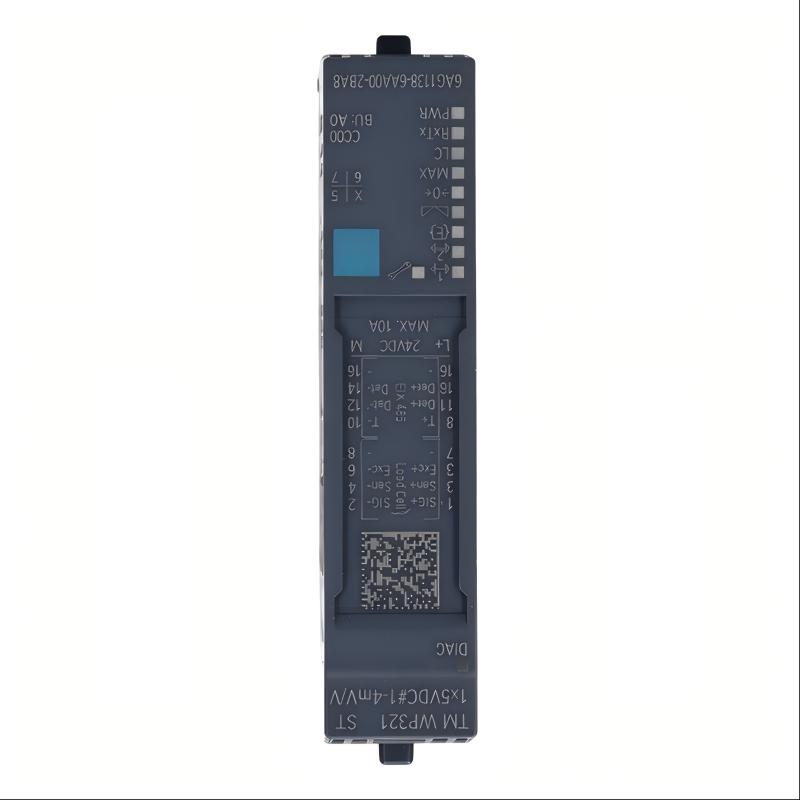
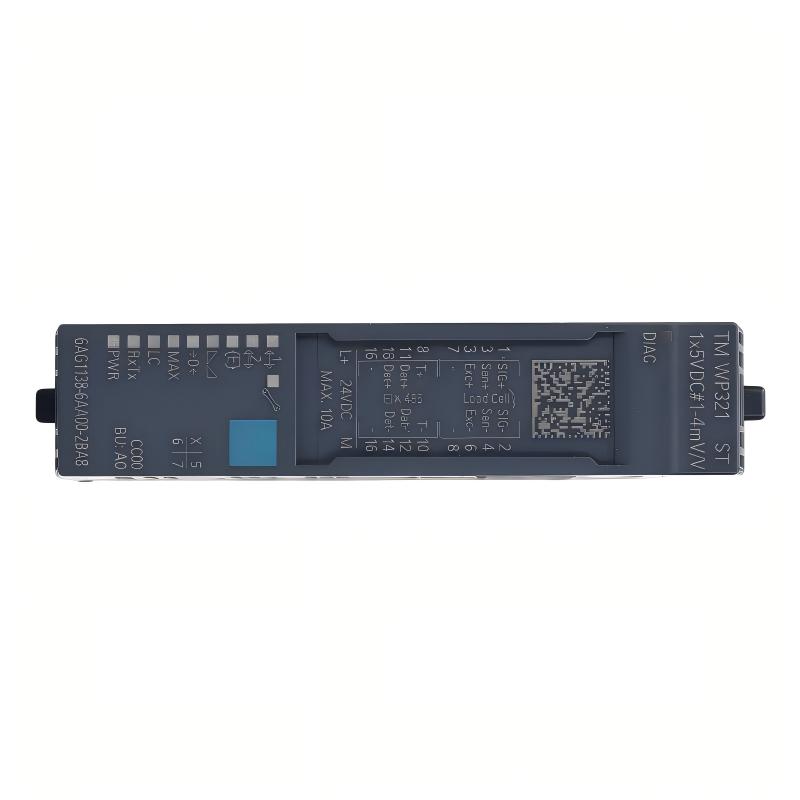
- Siemens
- 6AG1138-6AA00-2BA8
- SIPLUS ET 200S EM 1 Count Counter Module
- Germany
- 15 × 73 × 58 mm
- 0.03kg
- Xiamen, China
- New & In Stock
- T/T, PayPal, Western Union
- 1 Year
- 1-3 Working Days
- DHL, UPS, TNT, FedEx and EMS.
- 24-Hour Service
- COO
- 5
Our advantage

Global Logistics
We have a 10-year logistics and express cooperation agreement, so our products can be shipped to any place in the world.

Brand new and original
Our products are imported in bulk from the place of origin. Because of the cooperative relationship, our products are all original and 100% new.

24-hour service
We provide 7*24 hours service to our customers. We will be there whenever you need us.

Price advantage
All our products are priced very favorably because we have our own warehouse and supply.
| Company Information | |||
| [email protected] | |||
| Mobile | +8615980777398 | ||
| +8615980777398 | |||
| 15980777398 |
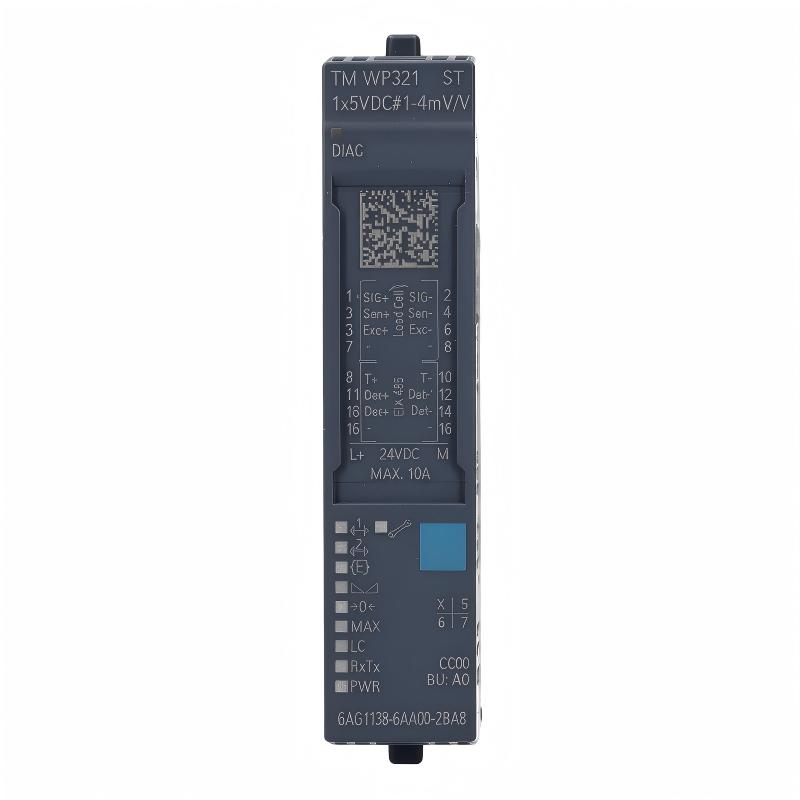
Siemens 6AG1138-6AA00-2BA8 — Product Specifications, Introduction, Applications, Advantages, and Related Models
1. Product Overview
SIPLUS ET 200SP SIWAREX WP321 ST
Single-channel electronic weighing module for strain-gauge load cells
Model number
6AG1138-6AA00-2BA8
Product series
SIPLUS ET 200SP / SIWAREX
Main function
Electronic weighing and load-cell signal processing
Measurement channels
1 weighing channel
Load-cell input
Strain-gauge full bridge, 1–4 mV/V
Operating temperature
-40°C to +60°C
The Siemens 6AG1138-6AA00-2BA8 is a SIPLUS ET 200SP SIWAREX WP321 ST electronic weighing module. It is designed to measure weight using strain-gauge load cells connected to a compatible SIMATIC ET 200SP station.
The module receives the low-level electrical signal generated by the load cell, processes the measurement, and makes weighing data available to the automation system. It is intended for applications such as weighing tanks, hoppers, platforms, bins, and other equipment where weight needs to be measured as part of an industrial process.
The model is based on the standard 7MH4138-6AA00-0BA0 and adds conformal coating for improved resistance to selected environmental stresses. Its specified operating temperature range is -40°C to +60°C.
In addition to its weighing function, the module provides an RS-485 interface for supported service software and compatible remote displays. This is useful for commissioning, calibration, parameter adjustment, diagnostics, and certain local display arrangements.
The 6AG1138-6AA00-2BA8 is a specialized weighing module rather than a general-purpose digital or analog input card. Its suitability depends on the type of load cell, the mechanical weighing arrangement, the required accuracy, and the ET 200SP configuration in which it will be installed.
2. Technical Parameters
2.1 General product specifications
| Parameter | Specification |
|---|---|
| Brand | Siemens |
| Complete model number | 6AG1138-6AA00-2BA8 |
| Product designation | SIPLUS ET 200SP SIWAREX WP321 ST |
| Product category | Electronic weighing module |
| Product series | SIPLUS ET 200SP / SIWAREX |
| Standard reference model | 7MH4138-6AA00-0BA0 |
| Measurement function | Electronic weight measurement |
| Number of weighing channels | 1 |
| Supported load-cell type | Strain-gauge (DMS) full-bridge load cell |
| Load-cell signal range | 1–4 mV/V |
| Load-cell connection | 4-wire or 6-wire, according to the supported wiring arrangement |
| BaseUnit compatibility | BaseUnit type A0 |
| Service interface | RS-485 |
| RS-485 purpose | SIWATOOL, compatible remote display, and supported service functions |
| Maximum RS-485 transmission rate | 115.2 kbit/s |
| Rated supply voltage | 24 V DC |
| Permitted supply range | 19.2–28.8 V DC |
| Conformal coating | Yes |
| Operating temperature | -40°C to +60°C |
| Module width | 15 mm |
| Module height | 73 mm |
| Module depth | 58 mm |
| Dimensions (W × H × D) | 15 × 73 × 58 mm |
| Approximate weight | 0.031 kg |
| Alternative catalog weight listing | Approximately 0.030 kg |
| Installation | Compatible SIMATIC ET 200SP station |
| Main application | Industrial weighing, load monitoring, and weight-based process control |
The module itself weighs approximately 30–31 g, equivalent to around 0.030–0.031 kg. For a technical bill of materials, 0.031 kg is a reasonable approximate component weight; use the exact catalog value required by your purchasing or inventory system.
2.2 Electrical and measurement parameters
| Parameter | Specification |
|---|---|
| Supply voltage, rated | 24 V DC |
| Permitted supply voltage | 19.2–28.8 V DC |
| Number of measurement channels | 1 |
| Measurement principle | Strain-gauge full-bridge measurement |
| Load-cell rated output | 1–4 mV/V |
| Load-cell wiring | 4-wire or 6-wire, subject to the specified connection arrangement |
| Supported sensor type | DMS full-bridge load cell |
| Primary measured quantity | Weight or force-related load represented by the weighing arrangement |
| RS-485 interface count | 1 |
| Maximum RS-485 transmission rate | 115.2 kbit/s |
| Service software | SIWATOOL V7, where supported |
| Remote display | Compatible display devices supported by the module |
| Calibration | Performed through the supported weighing configuration and tools |
| Parameter adjustment | Supported through the applicable service interface and software |
| Diagnostics | Supported weighing and module diagnostic functions |
| BaseUnit | Type A0 |
| System integration | SIMATIC ET 200SP |
| Measurement performance | Depends on the complete weighing system, load cell, mechanics, calibration, and installation |
The load-cell signal range is an important selection criterion. A full-bridge load cell rated for a 1–4 mV/V output is appropriate for this module’s specified sensor input range, provided the remaining electrical and mechanical requirements are also met.
2.3 Dimensions and weight
| Parameter | Value |
|---|---|
| Width | 15 mm |
| Height | 73 mm |
| Depth | 58 mm |
| Dimensions (W × H × D) | 15 × 73 × 58 mm |
| Approximate module weight | 0.031 kg |
| Alternative approximate catalog weight | 0.030 kg |
| Mounting system | ET 200SP |
| BaseUnit type | A0 |
| Installation space | Allow for the module, BaseUnit, wiring, and service access |
These dimensions refer to the electronic module. The complete installed arrangement also requires the appropriate BaseUnit, wiring, and sufficient clearance for maintenance.
2.4 Environmental specifications
| Parameter | Specification |
|---|---|
| Product version | SIPLUS environmental-protected version |
| Conformal coating | Yes |
| Minimum specified operating temperature | -40°C |
| Maximum specified operating temperature | +60°C |
| Biologically active substances | Class 3B2 under the applicable environmental classification |
| Chemically active substances | Class 3C4 under defined conditions, including specified salt-spray resistance |
| Mechanically active substances | Class 3S4, including specified sand and dust exposure |
| Process-industry environmental classification | Defined resistance under specified conditions; check the exact application limits |
| Unused interface protection | Supplied plug covers must remain fitted over unused interfaces during operation |
| Condensation management | Observe the applicable installation and operating restrictions |
| Enclosure requirements | Determined by the actual installation environment |
| Environmental suitability | Must be checked against the documented limits and site conditions |
The conformal coating improves resistance to selected environmental stresses. It does not make the module waterproof or suitable for unrestricted exposure to corrosive liquids, aggressive chemicals, or any outdoor environment.
3. Product Introduction
3.1 What is the SIWAREX WP321 ST?
The SIWAREX WP321 ST is a single-channel electronic weighing module designed to measure weight using strain-gauge load cells.
A load cell converts mechanical force into a small electrical signal. As a load is applied to the weighing platform, tank, or hopper, the load cell’s strain gauges change resistance, producing a corresponding bridge-output signal.
The WP321 receives and processes this signal, allowing the automation system to use the resulting weighing information in a control application.
For example, a process controller can use the measured weight to monitor the contents of a tank, control a filling operation, determine the amount of material being dispensed, or record the quantity of product in a container.
The SIPLUS version adds conformal coating and an operating temperature range of -40°C to +60°C, making it suitable for selected industrial installations that need additional environmental resistance.
3.2 How the weighing module works
The module forms part of a complete weighing system. Its operation involves several stages.
1. Mechanical load measurement: Material is placed on a weighing platform, tank, hopper, or other supported weighing structure.
2. Load-cell signal generation: The strain-gauge load cell produces a low-level electrical signal proportional to the applied load.
3. Signal acquisition: The WP321 receives the full-bridge signal through the supported 4-wire or 6-wire connection.
4. Measurement processing: The module processes the weighing signal according to its configured parameters and calibration.
5. Data exchange: The weighing information is made available to the compatible automation system for monitoring, control, and process calculations.
6. Service and calibration: Supported service tools and the RS-485 interface can be used for configuration, adjustment, diagnostics, and other supported maintenance functions.
The accuracy of the final measurement depends on more than the electronic module. The load cell, mounting structure, mechanical forces, wiring, grounding, calibration, temperature, and installation quality all affect the result.
3.3 Role within the ET 200SP platform
ET 200SP is a modular distributed I/O system. It allows electronic modules with different functions to be installed in a common automation station.
The WP321 adds specialized weighing capability to this platform. Instead of using a general-purpose analog input to acquire a low-level load-cell signal and implementing all weighing functions independently, the system can use a dedicated weighing module designed for the intended sensor type.
This can simplify the integration of weighing data into an automation application and help keep weighing hardware organized within the existing control architecture.
The module requires the appropriate BaseUnit type A0 and a compatible ET 200SP configuration.
3.4 Difference between a weighing module and an ordinary analog input
A standard analog input module is generally intended to acquire signals such as voltage or current from compatible transmitters. A weighing module is specifically designed for the signal and operating requirements of a weighing system.
| Feature | SIWAREX WP321 ST | Standard analog input module |
|---|---|---|
| Primary purpose | Weighing and load-cell signal processing | General analog signal acquisition |
| Sensor type | Strain-gauge full-bridge load cell | Depends on the analog input type |
| Input signal | 1–4 mV/V full-bridge output | Commonly voltage or current signals |
| Weighing-specific functions | Supported by the dedicated weighing design | Usually require additional external processing |
| Calibration workflow | Weighing-oriented configuration and calibration | Depends on the sensor and control program |
| Service interface | RS-485 for supported tools and displays | Depends on the module |
| Typical application | Tanks, hoppers, platforms, filling systems | Pressure, temperature transmitters, flow signals, and other analog measurements |
| BaseUnit requirement | Type A0 for this module | Depends on the selected module |
The WP321 is a better fit when the task is to measure weight directly from a compatible load cell. An ordinary analog input may be appropriate for a transmitter that already converts weight into a standard voltage or current signal.
3.5 Purpose of the SIPLUS version
The SIPLUS designation identifies a version designed for selected industrial environments requiring additional environmental protection.
For the 6AG1138-6AA00-2BA8, the key characteristics are conformal coating and the specified operating range of -40°C to +60°C.
This can be useful where temperature variation, humidity-related environmental stresses, or certain contaminants are concerns. The actual suitability must still be checked against the module’s specified environmental classes and the conditions at the installation site.
4. Typical Applications
4.1 Tank and vessel weighing
Industrial tanks and vessels are often used to store liquids, powders, granules, and other bulk materials.
A weighing arrangement can measure the combined load of the vessel and its contents. Once the empty-vessel weight and the relevant calibration parameters are established, the automation system can determine the amount of material present.
The WP321 can be used where a compatible full-bridge load-cell arrangement is required and the weighing data must be integrated into an ET 200SP-based automation system.
4.2 Hopper and silo weighing
Hoppers and silos are used to hold bulk materials such as pellets, grains, powders, and raw ingredients.
Weighing the structure can provide information about remaining inventory, material consumption, or the quantity transferred to another process stage.
The WP321 may be suitable for these applications when the load cells, mechanical mounting, and total weighing range are compatible with the system design.
4.3 Filling and dosing systems
Filling systems need to deliver a specified quantity of material into each container, bag, drum, or vessel.
Weight-based filling can use the load-cell measurement to determine when the target quantity has been reached. The automation controller can then command a valve, feeder, or other dispensing mechanism to stop or reduce material flow.
The WP321 supplies the weighing information for a compatible system, while the overall control program handles the filling sequence, cutoff behavior, alarms, and process interlocks.
4.4 Batch preparation and mixing
Batch processes often combine several ingredients in a defined quantity.
A weighing system can measure the amount of each ingredient added to a mixer or process vessel. The controller can use the measurement to manage ingredient dosing, verify target quantities, and record batch data.
The WP321 can support this arrangement when the weighing mechanics and load-cell specification are suitable for the application.
4.5 Material inventory monitoring
Some facilities monitor stock by measuring the weight of material held in a bin, hopper, tank, or other storage structure.
Weight-based inventory can be useful when the material level is difficult to measure directly or when the material’s bulk density varies.
The weighing module provides measurement data for inventory calculations, material-consumption monitoring, and replenishment decisions.
4.6 Packaging and production equipment
Packaging machinery may need to measure product weight before, during, or after filling.
A dedicated weighing module can be integrated into a compatible automation system to provide weight data for the production sequence. The overall machine design determines how that information is used for filling control, product checks, alarms, or production records.
The WP321 should be selected only when its specified weighing function meets the required measurement range, performance, and process conditions.
4.7 Industrial weighing in demanding environments
The SIPLUS version may be useful in selected industrial environments where the standard module’s environmental characteristics are insufficient.
Its specified temperature range of -40°C to +60°C can help accommodate certain installations with low ambient temperatures or greater temperature variation.
Environmental suitability should be evaluated alongside the load-cell rating, mechanical structure, enclosure, cable protection, and prevention of prohibited operating conditions.
4.8 Remote display and service access
The RS-485 interface supports connection to compatible service tools and remote display arrangements.
This can be useful during commissioning or maintenance, when technicians need to adjust parameters, perform calibration-related work, inspect diagnostics, or view weighing information using supported equipment.
The exact functions depend on the selected software, display, wiring, and module configuration.
5. Product Advantages
5.1 Dedicated weighing functionality
The primary advantage of the WP321 is that it is designed specifically for load-cell weighing.
This is useful when an application requires direct acquisition of a strain-gauge full-bridge signal rather than a conventional voltage or current signal from a transmitter.
A dedicated weighing module can make the weighing arrangement easier to integrate and maintain within the automation system.
5.2 Single-channel weighing design
The module provides one weighing channel.
For applications involving a single tank, hopper, platform, or other weighing point, this arrangement can provide the required functionality without introducing unnecessary additional weighing channels.
For systems with multiple independent weighing points, the number of modules and the overall station configuration must be planned according to the application requirements.
5.3 Support for 1–4 mV/V load cells
The supported load-cell output range is an important advantage when selecting compatible strain-gauge sensors.
The module is designed to work with full-bridge load cells in the 1–4 mV/V range. This provides a defined selection basis for the sensor, although rated output alone is not enough to establish compatibility.
The load cell’s capacity, excitation requirements, bridge resistance, wiring, accuracy, and mechanical installation must also be checked.
5.4 4-wire and 6-wire connection support
The module supports the specified 4-wire or 6-wire load-cell connection arrangements.
The correct wiring method should be chosen according to the sensor documentation and the weighing system’s electrical requirements. Where long cable runs or demanding measurement conditions are involved, the selected wiring arrangement can affect the quality and stability of the measurement.
5.5 Integration with ET 200SP
The WP321 is designed for a compatible ET 200SP station using BaseUnit type A0.
For an existing ET 200SP installation, this can simplify the physical integration of weighing functionality with the wider automation system.
It also allows the weighing function to be planned alongside the station’s other supported I/O functions.
5.6 Conformal coating
The SIPLUS variant includes conformal coating for additional protection against specified environmental stresses.
This can improve its suitability for selected industrial installations where contamination or temperature variation is a concern.
The coating does not eliminate the need for appropriate cabinet design, correct cable installation, or compliance with the product’s environmental limits.
5.7 Wide specified operating temperature range
The specified operating range is -40°C to +60°C.
This is useful for installations that may experience low ambient temperatures or significant variation in operating conditions. The temperature at the module itself must remain within the specified range, taking account of cabinet heating and nearby equipment.
5.8 RS-485 service interface
The RS-485 interface provides a supported connection for service tools and compatible remote displays.
This can make commissioning and maintenance more convenient by allowing technicians to work with the module’s supported service functions without relying exclusively on the primary automation network.
The interface supports a maximum transmission rate of 115.2 kbit/s, subject to the supported configuration and connected device.
5.9 Calibration and diagnostic support
Weighing systems need a controlled calibration process to establish the relationship between the electrical signal and the actual applied weight.
The WP321 supports weighing-oriented configuration and service functions. This can help technicians set parameters, carry out calibration-related tasks, inspect diagnostic information, and maintain the weighing arrangement.
Good calibration practice still requires suitable reference weights or another approved calibration method, a stable mechanical installation, and documented procedures.
5.10 Compact dimensions and low weight
The module measures approximately 15 × 73 × 58 mm and weighs around 0.030–0.031 kg.
Its compact dimensions can be useful in installations where cabinet space is limited or where a dedicated weighing function must be incorporated into an existing modular station.
The complete installation must also allow for the BaseUnit, wiring, cable routing, and maintenance access.
6. Brand and Product Series
| Item | Details |
|---|---|
| Brand | Siemens |
| Automation platform | SIMATIC |
| Distributed I/O series | ET 200SP |
| Specialized product family | SIWAREX |
| Environmental product range | SIPLUS |
| Product designation | SIWAREX WP321 ST |
| Product category | Electronic weighing module |
| Standard reference model | 7MH4138-6AA00-0BA0 |
| Number of weighing channels | 1 |
| Sensor type | Strain-gauge full-bridge load cell |
| Service interface | RS-485 |
| Required BaseUnit type | A0 |
| Main application | Industrial weighing and weight-based automation |
6.1 Siemens
Siemens is an industrial automation brand whose products include programmable controllers, distributed I/O, weighing systems, drives, industrial communication equipment, and operator interfaces.
For this model, the relevant areas are SIMATIC automation, ET 200SP distributed I/O, and SIWAREX weighing technology.
6.2 SIMATIC ET 200SP
ET 200SP is a modular distributed I/O platform used to integrate signal acquisition and specialized automation functions into a control system.
Its modular structure allows different supported electronic modules to be installed in a station, with the appropriate BaseUnits and interface hardware.
The WP321 adds a dedicated weighing function to this platform rather than serving as a general-purpose analog input module.
6.3 SIWAREX
SIWAREX is the specialized weighing product family associated with industrial weighing applications.
Its products are designed for different measurement requirements, ranging from straightforward weighing tasks to more specialized weighing and process-control applications.
The WP321 is a single-channel weighing module intended for integration with ET 200SP. Other SIWAREX products may offer different channel arrangements, application functions, or integration methods.
6.4 SIPLUS
SIPLUS identifies the environmental-protected version of the product.
In this case, the SIPLUS variant has conformal coating and a specified operating temperature range of -40°C to +60°C. These characteristics are relevant when selecting hardware for the intended industrial environment.
7. Five Related Models in the Same Series or Functional Group
The following models provide useful comparisons for industrial weighing, load-cell measurement, and ET 200SP-based automation. They serve different purposes and should not be considered direct replacements without checking the application requirements.
| Model | Product description | Main parameters | Dimensions (W × H × D) | Weight (kg) |
|---|---|---|---|---|
| 7MH4138-6AA00-0BA0 | Standard SIWAREX WP321 ST | Single-channel weighing, strain-gauge full bridge, 1–4 mV/V, RS-485, 24 V DC | 15 × 73 × 58 mm, verify exact revision | Approx. 0.030–0.031 |
| 7MH4960-2AA01 | SIWAREX WP231 weighing module | Compact weighing electronics for supported industrial weighing applications; verify exact interface and weighing functions | Verify exact hardware revision | Verify exact revision |
| 7MH4980-1AA01 | SIWAREX WP521 ST | Weighing module for compatible automation configurations; confirm supported channel and application functions | Verify exact hardware revision | Verify exact revision |
| 7MH4980-2AA01 | SIWAREX WP522 ST | Related SIWAREX weighing module; verify the required measurement and interface configuration | Verify exact hardware revision | Verify exact revision |
| 7MH4965-2AA01 | SIWAREX WP251 | Specialized weighing electronics for supported industrial weighing and dosing applications | Verify exact hardware revision | Verify exact revision |
Model-selection note: The standard WP321 model is the closest comparison to the SIPLUS WP321. The other SIWAREX models belong to the wider weighing product family but can differ in their application functions, interfaces, hardware requirements, and engineering workflow.
The exact order number and current hardware documentation should be checked before using any of these models as a replacement.
7.1 Standard SIWAREX WP321
The standard WP321 is the closest reference when comparing the SIPLUS model with a version intended for environments that do not require the same additional environmental protection.
It retains the same general weighing purpose: acquiring a compatible strain-gauge full-bridge signal and integrating the weighing function into an automation application.
The decision between the standard and SIPLUS versions should be based on the actual operating environment and the specified product limits.
7.2 SIWAREX WP231
The WP231 is another SIWAREX weighing product used in industrial weighing applications.
It may be relevant when the required system architecture or application functions differ from those of the WP321. The exact capabilities, interfaces, configuration requirements, and compatibility must be checked against the selected model.
7.3 SIWAREX WP521 ST
The WP521 ST is a related weighing product for supported automation applications.
It may be worth considering when reviewing a broader weighing-system design, but it should not be assumed to share the WP321’s exact interfaces, mounting requirements, or configuration.
7.4 SIWAREX WP522 ST
The WP522 ST belongs to the same broader weighing product family.
It can be considered during a system design or replacement assessment where a different weighing configuration is needed. Verify the exact functions, channel arrangement, and required system hardware before selection.
7.5 SIWAREX WP251
The WP251 is another specialized weighing product. It may be relevant for applications where the weighing process requires functionality beyond a straightforward single-channel load-cell measurement.
The required control sequence, dosing functions, interfaces, and system architecture should determine whether it is appropriate.
8. Five Popular Models from the Same Brand
The following models are common reference points for industrial automation projects. They are not direct replacements for the SIWAREX WP321, but they may form part of the wider control system in which weighing equipment is installed.
| Model | Product family | Main parameters | Dimensions (W × H × D) | Weight (kg) |
|---|---|---|---|---|
| 6ES7214-1AG40-0XB0 | SIMATIC S7-1200 CPU | Compact programmable controller for machine automation and supported communication functions | Verify exact hardware revision | Verify exact revision |
| 6ES7511-1AK02-0AB0 | SIMATIC S7-1500 CPU | PLC for more demanding control applications; features depend on the exact CPU version | Verify exact hardware revision | Verify exact revision |
| 6ES7155-6AU01-0BN0 | SIMATIC ET 200SP interface module | Interface for a compatible ET 200SP distributed I/O station | Verify exact hardware revision | Verify exact revision |
| 6EP1333-2BA20 | SITOP power supply | Industrial 24 V DC power supply; output-current rating and protection features depend on the exact variant | Verify exact hardware revision | Verify exact revision |
| 6AV2123-2GB03-0AX0 | SIMATIC HMI Basic Panel | Operator interface for machine status, alarms, process visualization, and supported operator commands | Verify exact hardware revision | Verify exact revision |
8.1 SIMATIC S7-1200
The S7-1200 family is used in compact automation applications, including smaller machines and production equipment.
It can perform logic control, sequence management, and supported communication tasks. In a weighing system, a compatible controller can use weight information to manage filling, dosing, material transfer, and process monitoring.
The exact controller and communication architecture must be chosen according to the required application.
8.2 SIMATIC S7-1500
The S7-1500 family is intended for more demanding automation applications.
It may be appropriate where the system requires more advanced control, communication, diagnostics, or processing capability. For a weighing application, the selected controller must be compatible with the chosen weighing module and the required data-exchange method.
8.3 SIMATIC ET 200SP interface module
An ET 200SP interface module connects a compatible distributed I/O station to its automation network.
It is part of the wider station architecture that allows weighing and other I/O functions to be integrated into a control system. The exact interface type and network compatibility must be checked for the application.
8.4 SITOP power supply
A stable 24 V DC power supply is essential for many industrial control cabinets.
When choosing a supply, consider the combined current demand of the controller, I/O modules, sensors, and actuators. Startup current, protection requirements, and any redundancy needs should also be included in the design.
8.5 SIMATIC HMI Basic Panel
An HMI panel can display measured weight, process status, alarms, and operator instructions when supported by the configured application.
It can provide a convenient interface for operators to monitor filling processes or view the current weight of a tank or hopper. It does not replace the weighing module’s signal-processing function or the controller’s process logic.
9. Installation and Engineering Considerations
9.1 Select the correct load cell
The module is designed for strain-gauge full-bridge load cells with a rated output of 1–4 mV/V.
Check the load cell’s rated capacity, output sensitivity, bridge resistance, supply requirements, connection arrangement, and mechanical suitability. The load cell must also be appropriate for the load distribution and the intended weighing range.
9.2 Choose the correct BaseUnit
The 6AG1138-6AA00-2BA8 is specified for BaseUnit type A0.
The BaseUnit must match the module and the station configuration. Confirm the mechanical and electrical arrangement before installing the module in an existing ET 200SP station.
9.3 Plan the mechanical weighing structure
Good weighing performance depends on the mechanical installation as much as the electronic measurement.
The platform, tank, hopper, or vessel should transfer the intended load to the load cells without introducing excessive side loads, binding, or unintended mechanical contact. Pipes, cables, supports, and attached structures should not impose forces that distort the measurement.
9.4 Use suitable load-cell wiring
Follow the load-cell manufacturer’s wiring diagram and the module’s supported connection arrangement.
Correct wiring, shielding, grounding, and cable routing help reduce electrical interference and measurement instability. Avoid routing low-level load-cell signals alongside high-current switching conductors where this could introduce noise.
9.5 Calibrate the complete weighing system
Calibration establishes the relationship between the measured signal and the actual applied weight.
The process should use an appropriate reference method and account for the installed mechanical structure, the load cell, the expected working range, and the required measurement performance.
Calibration records should be retained where required by the process or quality system. If a load cell or mechanical component is replaced, the weighing system may need to be checked and recalibrated.
9.6 Confirm the RS-485 connection
The RS-485 interface supports compatible service tools and remote display arrangements.
Check the required pin assignment, cable type, grounding, communication settings, and supported peripheral device before connecting equipment. The maximum stated transmission rate is 115.2 kbit/s, but the practical arrangement depends on the connected equipment and configuration.
9.7 Maintain environmental protection
The SIPLUS version has conformal coating and a specified temperature range of -40°C to +60°C.
The installation must still comply with the environmental limits. Keep unused interface covers fitted where required, prevent prohibited condensation, and use an enclosure appropriate to the actual site conditions.
9.8 Distinguish module weight from packaging weight
The module’s approximate weight is 0.030–0.031 kg. Catalog logistics entries may report different values or packaging dimensions.
For cabinet-load calculations, use the physical component weight. For shipping, warehouse storage, or purchase-order records, use the relevant packaged-product data.
10. Final Summary
The Siemens 6AG1138-6AA00-2BA8 is a SIPLUS ET 200SP SIWAREX WP321 ST electronic weighing module designed to acquire and process signals from compatible strain-gauge full-bridge load cells.
Its main specifications are:
-
One weighing channel.
-
Support for full-bridge load cells rated at 1–4 mV/V.
-
Compatible 4-wire and 6-wire load-cell connection arrangements.
-
A 24 V DC rated supply, with a permitted range of 19.2–28.8 V DC.
-
One RS-485 interface supporting a maximum transmission rate of 115.2 kbit/s.
-
Compatibility with BaseUnit type A0.
-
Conformal coating and a specified operating temperature range of -40°C to +60°C.
-
Dimensions of 15 × 73 × 58 mm.
-
Approximate module weight of 0.030–0.031 kg.
The module is most suitable for industrial weighing applications in which weight data must be integrated into an ET 200SP automation system. Typical uses include tank weighing, hopper weighing, filling, dosing, batch preparation, and material inventory monitoring.
The closest comparison is the standard SIWAREX WP321, model 7MH4138-6AA00-0BA0. Other SIWAREX models can be considered when the application requires different weighing functions or a different system arrangement.
For reliable results, the load cell, mechanical structure, wiring, calibration, module configuration, and environmental conditions should be evaluated as one complete weighing system.