

ProductPRODUCT
Featured products
Contact Us
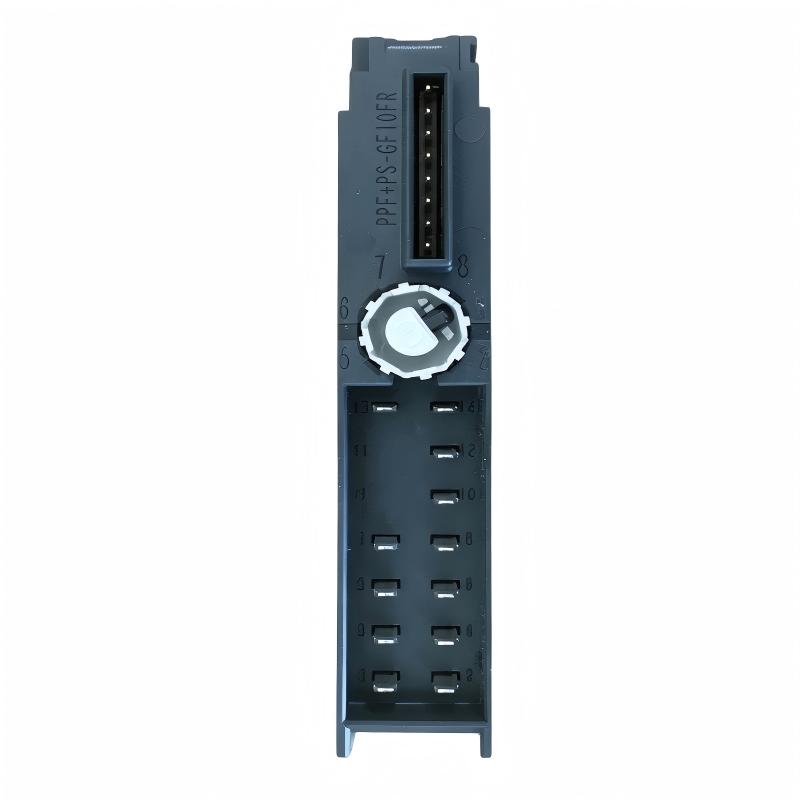
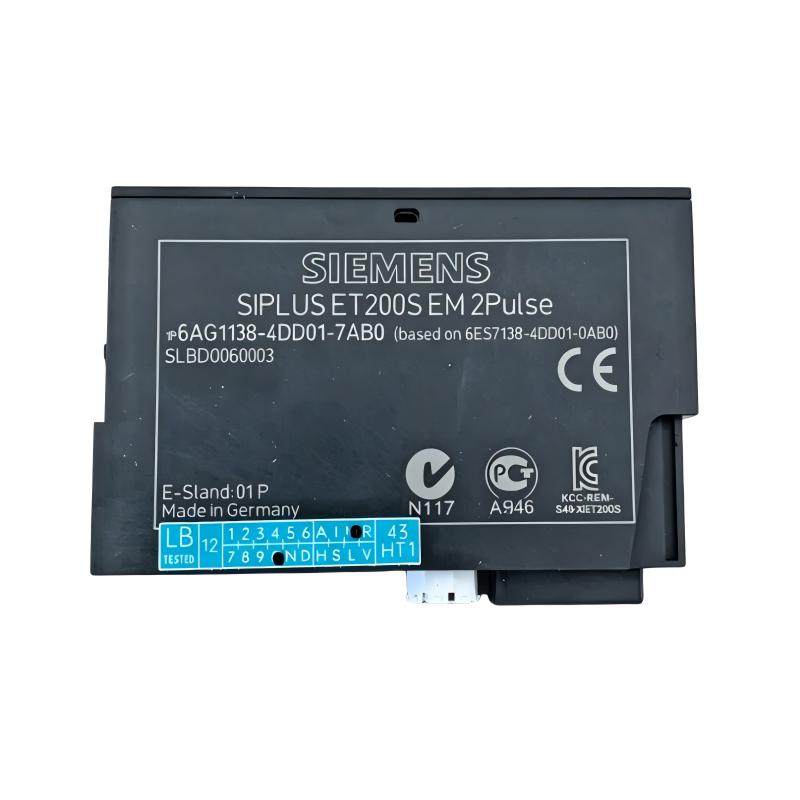
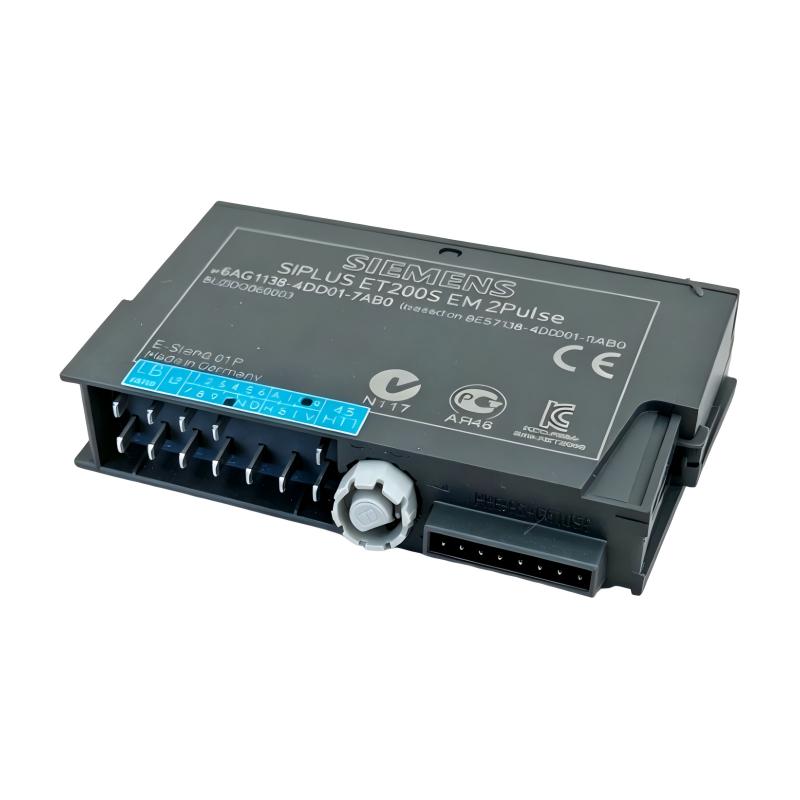
- Siemens
- 6AG1138-4DD01-7AB0
- SIPLUS ET 200S EM 1 Count Counter Module
- Germany
- 15 × 81 × 52 mm
- 0.04kg
- Xiamen, China
- New & In Stock
- T/T, PayPal, Western Union
- 1 Year
- 1-3 Working Days
- DHL, UPS, TNT, FedEx and EMS.
- 24-Hour Service
- COO
- 5
Our advantage

Global Logistics
We have a 10-year logistics and express cooperation agreement, so our products can be shipped to any place in the world.

Brand new and original
Our products are imported in bulk from the place of origin. Because of the cooperative relationship, our products are all original and 100% new.

24-hour service
We provide 7*24 hours service to our customers. We will be there whenever you need us.

Price advantage
All our products are priced very favorably because we have our own warehouse and supply.
| Company Information | |||
| [email protected] | |||
| Mobile | +8615980777398 | ||
| +8615980777398 | |||
| 15980777398 |
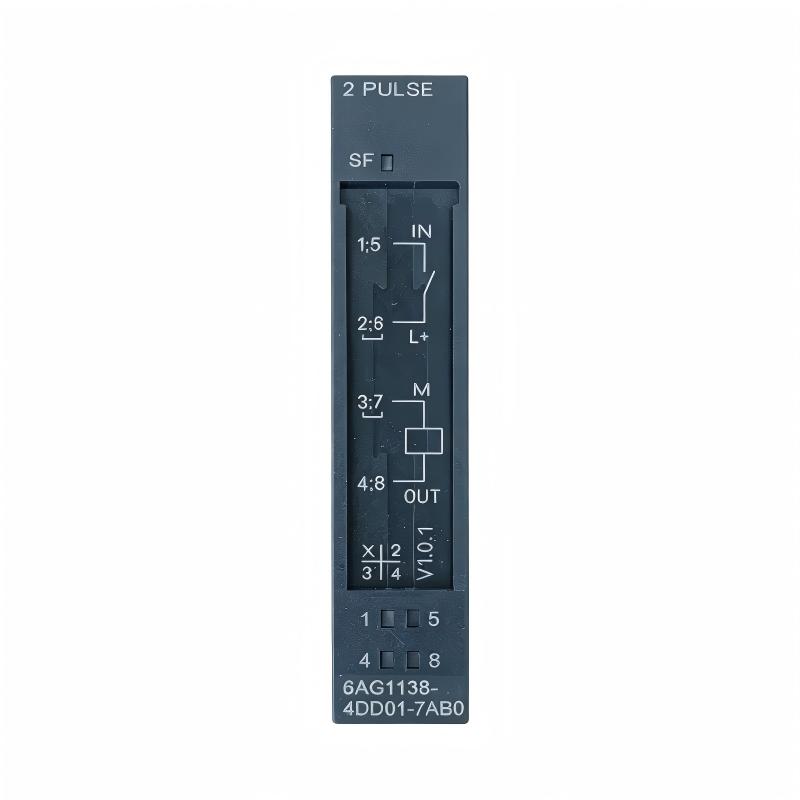
Siemens 6AG1138-4DD01-7AB0 — Product Overview, Technical Parameters, Applications, Advantages, and Related Models
1. Product Introduction
The Siemens 6AG1138-4DD01-7AB0 belongs to the SIPLUS industrial automation product range associated with SIMATIC distributed I/O systems. When evaluating this model, the most important considerations are its exact module function, compatible ET 200S station configuration, electrical interface, and environmental operating limits.
The SIPLUS range includes products intended for industrial environments where temperature conditions and environmental stresses may be more demanding than those in a conventional control cabinet. Depending on the exact product variant, SIPLUS models may feature an extended operating temperature range and protective coating.
Because the precise function and technical specification of 6AG1138-4DD01-7AB0 cannot be established reliably from the model number alone here, its detailed electrical ratings and functional description should not be inferred from a similar-looking ET 200S model. The tables below distinguish general product-family information from model-specific details that require confirmation. This avoids treating an adjacent model number as if it were the same product.
2. Basic Product Information
| Parameter | Description |
|---|---|
| Brand | Siemens |
| Model | 6AG1138-4DD01-7AB0 |
| Product family | SIPLUS |
| Automation platform | SIMATIC; exact module family and station compatibility require confirmation |
| Product type | Industrial automation module; exact functional type requires confirmation |
| Primary role | Depends on the specific module function |
| Electrical interface | Requires confirmation from the exact product specification |
| Supply voltage | Not verified for this exact model |
| Input/output configuration | Not verified for this exact model |
| Operating temperature | Must be confirmed for this exact SIPLUS variant |
| Protective coating | SIPLUS variants may include protective coating; confirm for this model |
| Mounting arrangement | Depends on the exact module and compatible station |
| Dimensions (W × H × D) | Not verified |
| Weight (kg) | Not verified |
| Intended environment | Industrial automation installation, subject to the model’s specified limits |
| Product selection note | Confirm exact function, ordering code, hardware revision, and compatibility before purchase |
The complete ordering code matters. Products in the same automation family can have different functions, electrical connections, operating modes, and hardware requirements even when their model numbers look similar.
For this reason, dimensions, weight, voltage, channel count, and performance ratings should not be copied from another ET 200S module without confirmation.
3. Detailed Technical Specifications
The exact product designation is SIPLUS ET 200S EM 2 Pulse. It is a two-channel pulse generator and timer module, based on the standard ET 200S module 6ES7138-4DD01-0AB0. Its intended role is generating pulse signals and handling timing-related functions within a compatible distributed automation system.
3.1 General Specifications
| Parameter | Specification |
|---|---|
| Brand | Siemens |
| Model | 6AG1138-4DD01-7AB0 |
| Product family | SIPLUS |
| Automation family | SIMATIC ET 200S |
| Module designation | EM 2 Pulse |
| Module type | Pulse generator and timer module |
| Number of channels | 2 |
| Module width | 15 mm |
| Rated load voltage | 24 V DC |
| Permissible supply range | 19.2–28.8 V DC |
| Reverse-polarity protection | Yes |
| Maximum input current from load voltage L+, without load | 40 mA |
| Maximum current from 3.3 V backplane bus | 10 mA |
| Sensor/output supply voltage | Approximately L+ minus 0.8 V |
| Rated output current | 500 mA |
| Short-circuit protection | Yes |
| Typical power loss | 1.8 W |
| Operating temperature | −25°C to +70°C |
| Protective coating | Conformal coating |
| Dimensions (W × H × D) | 15 × 81 × 52 mm |
| Weight (kg) | Approximately 0.040 kg |
| Mounting | Compatible ET 200S station |
| Enclosure protection | IP20 for the module installation |
| Main application | Pulse generation and timer-based control |
| System role | Functional module within a distributed automation system |
The module is designed to be installed as part of an ET 200S station rather than used as a standalone controller. Its operation depends on a compatible station configuration, power module, wiring arrangement, and control program.
The SIPLUS variant is designed for a specified operating temperature range of −25°C to +70°C and includes conformal coating. These characteristics make it suitable for certain demanding industrial environments, but they do not remove the need for an appropriate enclosure and correct installation practices.
3.2 Power Supply and Electrical Parameters
| Parameter | Specification |
|---|---|
| Nominal load voltage | 24 V DC |
| Permissible voltage range | 19.2–28.8 V DC |
| Load voltage source | Supplied through a compatible power module |
| Reverse-polarity protection | Yes |
| Maximum current from load voltage L+, without load | 40 mA |
| Maximum backplane bus current at 3.3 V DC | 10 mA |
| Output supply voltage | L+ minus approximately 0.8 V |
| Rated output current | 500 mA |
| Short-circuit protection | Yes |
| Typical power loss | 1.8 W |
| Dimensions (W × H × D) | 15 × 81 × 52 mm |
| Weight (kg) | Approximately 0.040 kg |
The module uses a 24 V DC industrial control supply. The power source must be compatible with the ET 200S station and must provide sufficient capacity for the connected loads.
The rated output current of 500 mA is an important selection parameter. The current requirements of the connected device must be checked before the module is used to supply or drive an external load.
The stated power loss is also relevant when calculating cabinet heat dissipation. Although the module is physically small, its power loss contributes to the total thermal load of the installed station.
3.3 Pulse Generation and Timing Functions
| Parameter | Specification |
|---|---|
| Primary function | Pulse generation and timer control |
| Number of channels | 2 |
| Signal type | Pulse-based digital signals |
| Timing control | Supported through the module’s configured functions |
| Pulse output | Available according to the selected operating mode and wiring |
| Control method | Configured and controlled through the compatible automation system |
| Load voltage | 24 V DC nominal |
| Maximum rated output current | 500 mA |
| Typical power loss | 1.8 W |
| Dimensions (W × H × D) | 15 × 81 × 52 mm |
| Weight (kg) | Approximately 0.040 kg |
The two-channel design is useful when a machine needs two pulse or timing functions within a compact module arrangement. Depending on the application, these functions can be incorporated into machine sequencing, timed switching, or other pulse-based control tasks.
The module should not be assumed to support every possible pulse frequency, duty cycle, timing resolution, or output configuration. Those values must be established from the exact operating mode and technical documentation for the module.
3.4 Mechanical and Environmental Parameters
| Parameter | Specification |
|---|---|
| Product construction | Industrial electronic module |
| Module width | 15 mm |
| Module height | 81 mm |
| Module depth | 52 mm |
| Dimensions (W × H × D) | 15 × 81 × 52 mm |
| Weight (kg) | Approximately 0.040 kg |
| Operating temperature | −25°C to +70°C |
| Protective treatment | Conformal coating |
| Installation environment | Industrial control cabinet or suitable protected enclosure |
| Mounting arrangement | Compatible ET 200S assembly |
| Protection class | IP20 for the module arrangement |
| Thermal design consideration | Allow for the module’s typical 1.8 W power loss |
The compact mechanical design allows the module to be installed alongside other compatible ET 200S modules. The 15 mm width is particularly useful in cabinets where the available DIN-rail space is limited.
The stated dimensions refer to the module body. Additional clearance may be required for terminal modules, wiring, cable bends, and maintenance access.
The module’s IP20 rating does not mean that it can be installed unprotected in a wet, dusty, or outdoor environment. The SIPLUS coating provides an additional layer of protection, but the installation still requires an appropriate enclosure.
4. How the Product Works
The 6AG1138-4DD01-7AB0 provides pulse generation and timing functions within a compatible ET 200S automation station. Rather than operating as a complete programmable controller, it performs a specific task under the supervision of the wider control system.
A typical operating sequence consists of the following stages.
1. Configuration: The module is installed in the ET 200S station and configured in the automation project.
2. Parameter setting: The engineer defines the relevant pulse or timing behavior supported by the module and the intended application.
3. Control command: The PLC program supplies the necessary control information or operating commands.
4. Signal generation: The module performs the configured pulse-generation or timing function.
5. Machine response: The resulting signal is used by connected equipment or incorporated into the wider machine sequence.
6. Monitoring: The control program and maintenance personnel monitor the system’s operating condition and respond to faults or abnormal behavior.
This approach separates specialized signal-generation tasks from the main control program. It can be useful when a machine requires predictable pulse or timer functions without implementing every detail through general-purpose software logic.
5. Product Applications
5.1 Industrial Machine Timing
The module can be considered for machines that require timing-related digital signals as part of their operating sequence.
Potential applications include timed switching, controlled intervals between machine operations, and coordination of repeated actions.
For example, a machine may need a control signal after a specified interval or require a repeated pulse pattern to coordinate a mechanical operation. The PLC can manage the overall sequence while the functional module handles its configured pulse or timing task.
5.2 Pulse-Based Control
Pulse signals are commonly used in industrial automation to represent repeated events or provide timing references.
Depending on the selected configuration, the module can support applications in which a pulse output is required for coordination between control elements.
Examples include:
-
Repeated control pulses in automated machinery.
-
Timing-related signals for machine sequences.
-
Pulse-based interface tasks.
-
Control of compatible external equipment.
-
Repetitive operations that require consistent signal timing.
The output’s electrical and timing limits must be checked before using it to control an external device.
5.3 Packaging and Production Equipment
Packaging machines often rely on repeatable cycles and precise timing between operations.
A pulse or timer module may be used as part of the control architecture for tasks such as coordinating machine actions, generating a timed signal, or supporting repeated sequences.
Examples include packaging stations, material-feed mechanisms, and production machines where timing relationships between operations are important.
The module does not independently control an entire packaging process. The PLC program, sensors, actuators, mechanical design, and other I/O components determine the complete machine behavior.
5.4 Conveyor and Material-Handling Systems
In conveyor systems, the module may be incorporated into the control architecture where pulse-based signals or timer-controlled actions are needed.
Potential applications include timed actuation, coordination between sequential conveyor sections, and generation of control pulses for compatible equipment.
For example, a PLC-controlled material-handling system may need to trigger an operation after a defined interval. The module can provide an appropriate timing or pulse function when the required behavior is supported by its configuration.
5.5 Automated Assembly Machinery
Assembly equipment often contains multiple stages that must operate in a defined order.
Pulse and timer functions can help coordinate actions such as indexing, timed actuation, or repetitive machine movements.
The module may be useful where two related pulse or timing functions are required in a compact station. Its suitability depends on the specific timing requirements and electrical interface of the application.
5.6 Test Benches and Equipment Sequencing
Industrial test benches sometimes require controlled timing intervals or repeated signal sequences to operate test equipment and supporting mechanisms.
The module can form part of a larger PLC-based test system when its available functions match the required sequence.
Applications may include repetitive actuation, timing-related control signals, and coordination of equipment during a test cycle.
It should not be treated as a dedicated measurement instrument unless the relevant measurement capability is explicitly supported by the selected hardware.
6. Main Product Advantages
6.1 Two-Channel Design
The module provides two channels in a compact form factor. This can reduce the need to allocate separate module positions for two compatible pulse or timing functions.
The practical benefit depends on how the functions are configured and whether both channels can be used as required in the target application.
6.2 Compact Installation
With a width of only 15 mm, the module is suitable for installations where DIN-rail space is limited.
This is useful in machine control cabinets that already contain PLCs, power modules, input/output modules, relays, and other automation components.
6.3 SIPLUS Environmental Design
The SIPLUS variant is specified for operation from −25°C to +70°C and incorporates conformal coating.
These characteristics can be beneficial where the installation experiences wider temperature variations or other environmental stresses than a conventional indoor control cabinet.
However, the specified environmental limits must be respected, and the module must still be installed in a suitable enclosure.
6.4 Integrated Pulse and Timer Functionality
The module combines pulse-generation and timing functions in a dedicated functional module.
This can simplify the architecture of a compatible automation system when the application needs specialized signal behavior rather than only ordinary digital input and output signals.
6.5 Integration with ET 200S
The module is intended for a compatible SIMATIC ET 200S station. It can therefore be incorporated into an existing distributed-I/O architecture without treating it as a separate standalone controller.
This is particularly relevant for maintenance, repair, and extension projects involving established ET 200S systems.
6.6 Protected Output Design
The module includes short-circuit protection for the relevant output supply arrangement. This is helpful in industrial wiring environments where accidental shorts may occur.
Protection should not be regarded as a substitute for correct wiring, suitable cable sizing, and compliance with the module’s electrical limits.
6.7 Low Physical Weight
At approximately 0.040 kg, the module is lightweight and compact.
Its small size helps minimize the physical space and weight allocated to the functional module within the automation station.
6.8 Clear Role in the Control Architecture
A dedicated pulse and timer module gives the engineer a clearly defined hardware component for the relevant signal-generation task.
This can make the system architecture easier to understand and maintain, provided that the module configuration and PLC logic are documented properly.
7. Five Related Models to Consider
The following models are related to the ET 200S/SIPLUS functional-module family or are relevant alternatives for industrial automation applications. Some perform different functions, so they should not be regarded as direct replacements without checking the technical specifications.
| Model | Product series / type | Main parameters | Dimensions (W × H × D) | Weight (kg) |
|---|---|---|---|---|
| 6ES7138-4DD01-0AB0 | SIMATIC ET 200S EM 2 Pulse | Standard counterpart; two-channel pulse generator and timer module; 24 V DC nominal | 15 × 81 × 52 mm | Approx. 0.040 |
| 6AG1138-4DD00-7AB0 | SIPLUS ET 200S EM 2 Pulse | Related SIPLUS pulse module; verify exact hardware revision and functional differences | 15 × 81 × 52 mm* | Approx. 0.040* |
| 6AG1138-4DA04-2AB0 | SIPLUS ET 200S EM 1COUNT | Counter and measurement module; 24 V pulse input; up to 100 kHz | Approx. 15 × 81 × 52 mm | Approx. 0.047 |
| 6AG1138-4DF01-7AB0 | SIPLUS ET 200S EM 1SI | Serial interface module; exact interface mode depends on the model specification | 15 × 81 × 52 mm* | Approx. 0.040* |
| 6AG1138-4DF11-7AB0 | SIPLUS ET 200S EM 1SI RS232/422 | Serial communication module; RS232/422 and supported serial communication modes | 15 × 81 × 52 mm* | Approx. 0.040* |
*Dimensions and weights marked with an asterisk are indicative of the compact ET 200S module format and should be verified against the exact ordering code and hardware revision before procurement.
How to Select a Related Model
– 6ES7138-4DD01-0AB0: The first model to compare when evaluating the standard version of the same two-channel pulse and timer module.
– 6AG1138-4DD00-7AB0: Worth evaluating when sourcing another SIPLUS variant in the same functional family. Confirm the precise revision and whether its operating characteristics match the original module.
– 6AG1138-4DA04-2AB0: More appropriate when the application requires high-speed counting and measurement rather than pulse generation and timer functions.
– 6AG1138-4DF01-7AB0: Relevant when the system needs a serial interface rather than a pulse or timer module.
– 6AG1138-4DF11-7AB0: Relevant when a compatible serial interface with RS232/422-related communication functions is required.
The most suitable replacement is determined by the required function, electrical interface, wiring, PLC configuration, and environmental conditions—not by model-number similarity alone.
8. Five Popular Siemens Automation Models
The following table covers five widely used product categories within the Siemens industrial automation portfolio. These are complementary products for PLC-based systems rather than direct replacements for the ET 200S pulse module.
| Model | Product series | Main parameters | Dimensions (W × H × D) | Weight (kg) |
|---|---|---|---|---|
| 6ES7214-1AG40-0XB0 | SIMATIC S7-1200 | Compact PLC; integrated control and I/O functions; suitable for machine automation | Verify exact hardware revision | Verify |
| 6ES7511-1AK02-0AB0 | SIMATIC S7-1500 | PLC for industrial control; PROFINET communication; application-dependent I/O expansion | Verify exact hardware revision | Verify |
| 6ES7155-6AU01-0BN0 | SIMATIC ET 200SP | Distributed-I/O interface; modular I/O architecture; station configuration dependent | Verify exact configuration | Verify |
| 6EP1333-2BA20 | SITOP | Industrial 24 V DC power supply; used to power compatible automation equipment | Verify exact revision | Verify |
| 6AV2123-2GB03-0AX0 | SIMATIC HMI Basic Panel | Operator interface; display and input functions for machine operation | Verify exact panel revision | Verify |
These products serve different roles within an automation system:
– S7-1200 and S7-1500 PLCs execute control logic and coordinate machine operations.
– ET 200SP distributed I/O provides a modular means of connecting field signals to a compatible controller.
– SITOP power supplies provide DC power to compatible control equipment.
– SIMATIC HMI panels provide operators with access to machine status, alarms, settings, and process information.
The exact dimensions and weight of each model must be checked against the relevant hardware revision. Product names alone are not sufficient to establish the complete mechanical specification.
9. Comparison of the Main Model and Its Closest Alternative
| Comparison item | 6AG1138-4DD01-7AB0 | 6ES7138-4DD01-0AB0 |
|---|---|---|
| Product family | SIPLUS ET 200S | SIMATIC ET 200S |
| Module type | EM 2 Pulse | EM 2 Pulse |
| Primary function | Pulse generation and timer functions | Pulse generation and timer functions |
| Number of channels | 2 | 2 |
| Nominal load voltage | 24 V DC | 24 V DC nominal |
| Environmental variant | SIPLUS | Standard |
| Operating temperature | −25°C to +70°C | Verify the exact standard-module limits |
| Conformal coating | Included in this SIPLUS variant | Not equivalent to the SIPLUS coating specification |
| Module width | 15 mm | 15 mm |
| Dimensions (W × H × D) | 15 × 81 × 52 mm | 15 × 81 × 52 mm |
| Weight (kg) | Approx. 0.040 | Approx. 0.040 |
| Best application | Compatible ET 200S installation requiring the SIPLUS environmental specification | Compatible ET 200S installation where the standard version is suitable |
The two models share the same basic module function, but their environmental specifications differ. The SIPLUS model is the more relevant candidate when the extended operating temperature range and protective coating are required.
For a replacement project, confirm the complete ordering code, hardware revision, module configuration, and environmental requirements before substituting one version for the other.
10. Installation and Maintenance Considerations
Electrical Installation
Use a compatible 24 V DC supply and verify that the voltage remains within the specified range under the expected operating conditions.
Check the connected load current carefully. The module’s 500 mA rated output current must not be exceeded, and external devices must be compatible with the output’s electrical characteristics.
Wiring and Signal Integrity
Use suitable industrial wiring practices and keep signal wiring away from strong sources of electrical interference where possible.
Check terminal assignments, grounding, cable routing, and the electrical characteristics of the connected equipment before energizing the station.
PLC Configuration
The module’s configuration must match the intended pulse or timer function.
The PLC program should account for startup behavior, normal operation, abnormal conditions, and the behavior expected when the module or a connected device is unavailable.
Environmental Protection
Maintain the specified operating temperature range and install the module in a suitable enclosure.
The conformal coating is an additional environmental protection measure, not a replacement for correct cabinet design or protection against direct exposure to water and other unsuitable substances.
Spare Parts and Lifecycle Planning
ET 200S belongs to an established automation platform. For existing installations, it is important to check spare-part availability and long-term maintenance requirements.
If the project involves a new machine design, compare the cost of using legacy ET 200S hardware with the engineering and lifecycle implications of a newer distributed-I/O platform.
11. Final Recommendation
The Siemens 6AG1138-4DD01-7AB0 is a SIPLUS ET 200S EM 2 Pulse module designed for two-channel pulse generation and timer-related functions. Its main technical characteristics include a 24 V DC nominal supply, a 500 mA rated output current, a typical power loss of 1.8 W, a 15 mm module width, and a specified operating temperature range of −25°C to +70°C.
Its principal advantages are its compact design, two-channel functionality, integration with a compatible ET 200S station, and SIPLUS environmental protection.
For a like-for-like comparison, start with 6ES7138-4DD01-0AB0, the standard counterpart. For a different functional requirement, consider the related counter or serial-interface modules only after checking their exact capabilities.
For any purchasing or replacement decision, the most important checks are the exact model designation, operating temperature, electrical ratings, module compatibility, dimensions, weight, and availability of the required hardware revision.