

ProductPRODUCT
Featured products
Contact Us
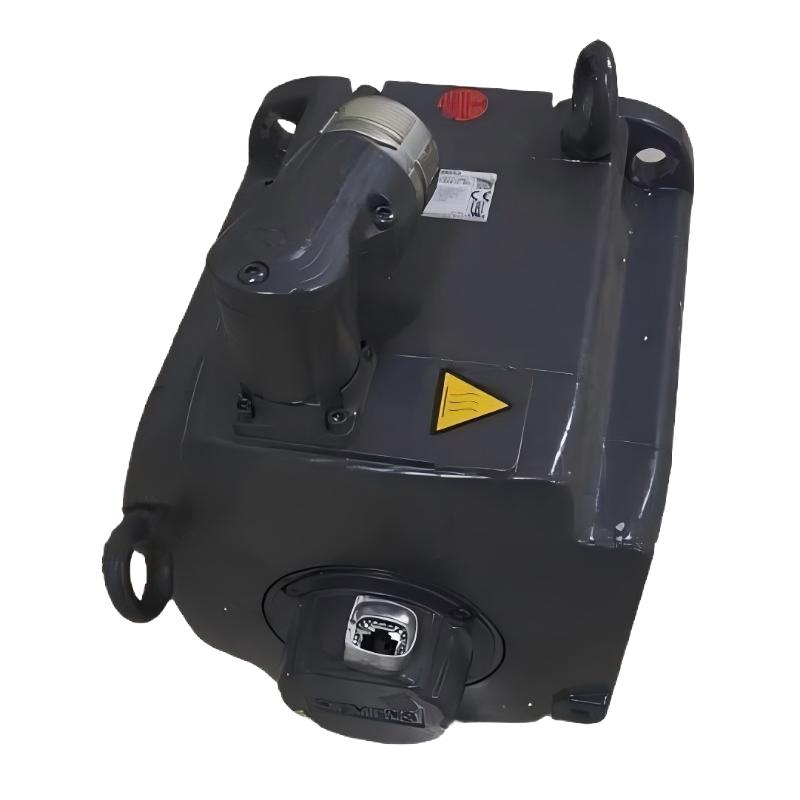
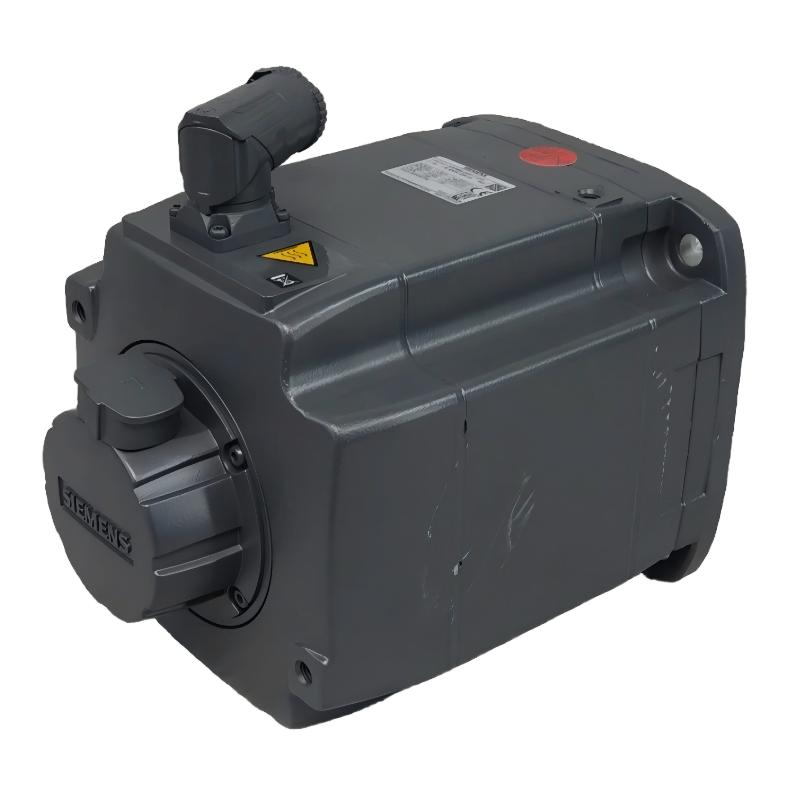
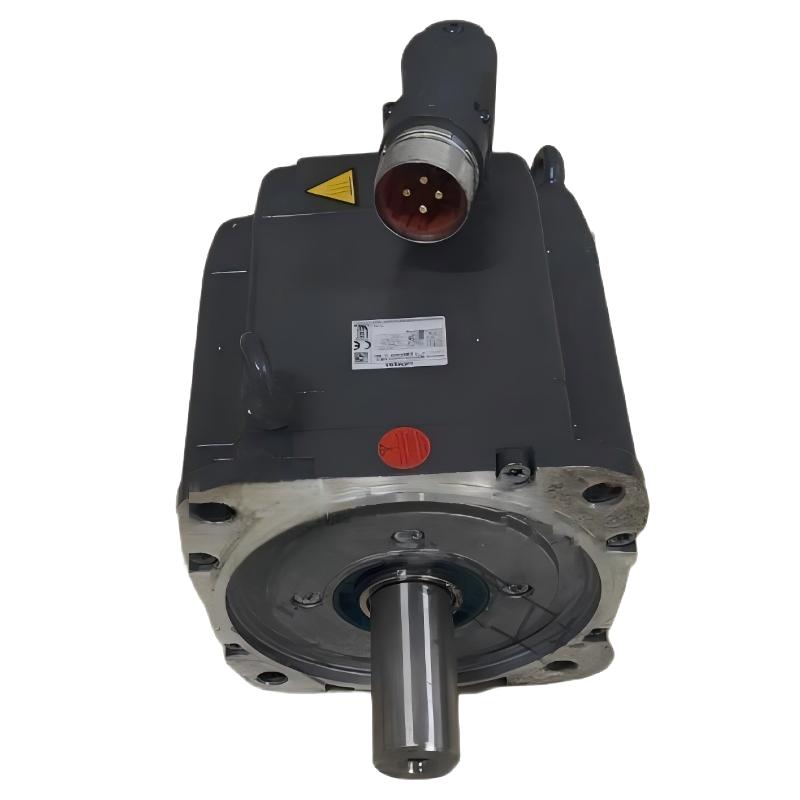
- Siemens
- 1FK7103-2AC71-1RG1
- SIMOTICS S Synchronous Motor
- Germany
- 300 mm x 200 mm x 150 mm
- 23kg
- Xiamen, China
- New & In Stock
- T/T, PayPal, Western Union
- 1 Year
- 1-3 Working Days
- DHL, UPS, TNT, FedEx and EMS.
- 24-Hour Service
- COO
- 4
Our advantage

Global Logistics
We have a 10-year logistics and express cooperation agreement, so our products can be shipped to any place in the world.

Brand new and original
Our products are imported in bulk from the place of origin. Because of the cooperative relationship, our products are all original and 100% new.

24-hour service
We provide 7*24 hours service to our customers. We will be there whenever you need us.

Price advantage
All our products are priced very favorably because we have our own warehouse and supply.
| Company Information | |||
| [email protected] | |||
| Mobile | +8615980777398 | ||
| +8615980777398 | |||
| 15980777398 |
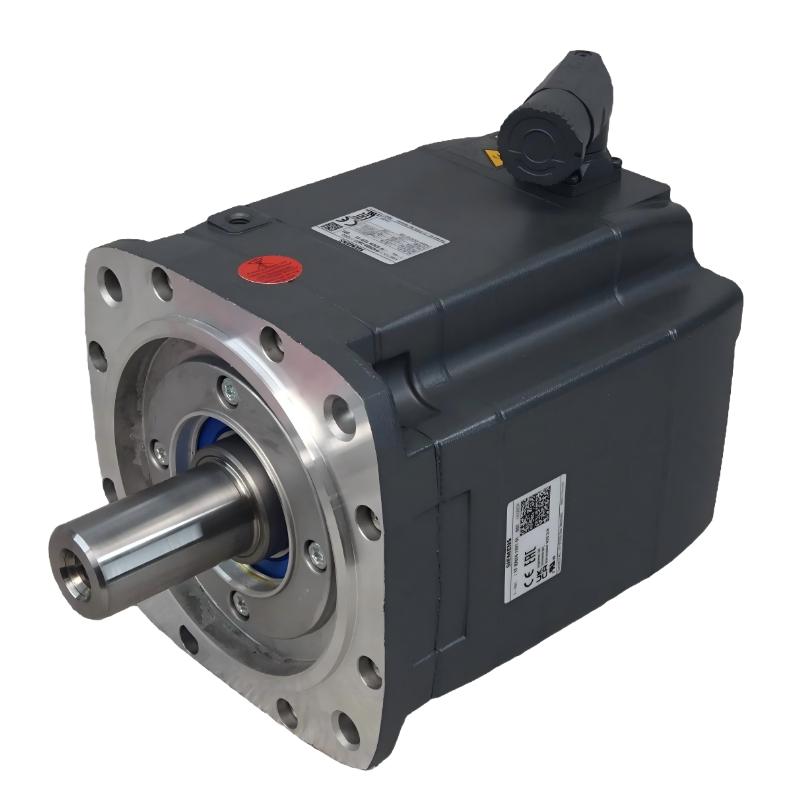
Siemens 1FK7103-2AC71-1RG1 Servo Motor: Technical Specifications, Product Overview, Applications, Advantages, and Related Models
1. Product Overview
The Siemens 1FK7103-2AC71-1RG1 is a servo motor model associated with the SIMOTICS product family and the SIMOTICS S-1FK7 series. This series is designed for industrial motion-control applications that require accurate positioning, controlled speed, responsive acceleration, and repeatable mechanical movement.
Servo motors are commonly used in automated machinery where movement must follow specific commands rather than simply rotate at a fixed speed. When paired with a compatible servo drive, feedback system, and controller, a servo motor can regulate position, speed, and torque according to the requirements of the application.
The 1FK7103-2AC71-1RG1 may be considered for applications such as CNC machinery, packaging equipment, automated assembly systems, material handling equipment, and special-purpose production machinery. Before selecting it for a particular machine, its exact electrical configuration and mechanical dimensions should be verified.
A complete servo motor model number is important because different configurations can have different windings, feedback devices, brakes, shaft designs, connectors, and mounting arrangements. Two motors from the same product family may therefore require different drive settings or may not be mechanically interchangeable.
2. Brand and Product Series
| Parameter | Description |
|---|---|
| Model | 1FK7103-2AC71-1RG1 |
| Brand | Siemens |
| Product family | SIMOTICS |
| Product series | SIMOTICS S-1FK7 |
| Product type | Industrial servo motor |
| Motor technology | Permanent-magnet synchronous servo motor; verify the exact configuration |
| Main function | Controlled rotational motion for industrial automation |
| Typical control functions | Position, speed, and torque control when supported by the complete system |
| Typical system components | Servo motor, compatible drive, feedback system, controller, and mechanical transmission |
| Common application areas | Machine tools, packaging, assembly, positioning, and material handling |
| Installation environment | Industrial machinery, within the specified environmental limits |
About the SIMOTICS S-1FK7 Series
The SIMOTICS S-1FK7 series is designed for industrial applications where precise movement and compact machine integration are important. Motors within this family are available in different sizes and configurations to suit different mechanical loads, operating speeds, mounting requirements, and control-system arrangements.
In a typical installation, the motor receives controlled electrical power from a servo drive. The drive works with the control system and the motor’s feedback arrangement to achieve the required movement. Depending on the machine, the motor may be connected directly to a load or operate through a gearbox, belt, coupling, screw drive, or another transmission mechanism.
Choosing the correct configuration requires more than comparing nominal power. The required torque, speed, acceleration, inertia, mounting dimensions, and feedback compatibility must all be considered.
3. Detailed Technical Specifications
The following table summarizes the main parameters relevant to the Siemens 1FK7103-2AC71-1RG1.
Important: The exact numerical ratings for this complete order number cannot be reliably established from the model designation alone. To avoid presenting unverified values as official specifications, parameters requiring confirmation are clearly identified below.
| Technical parameter | Specification |
|---|---|
| Model | 1FK7103-2AC71-1RG1 |
| Brand | Siemens |
| Product family | SIMOTICS |
| Product series | SIMOTICS S-1FK7 |
| Product category | Industrial servo motor |
| Motor type | Synchronous servo motor; confirm against the exact product documentation |
| Motor phases | Typically three-phase |
| Rated power | Requires confirmation from the matching motor data |
| Rated torque | Requires confirmation from the matching motor data |
| Standstill torque | Requires confirmation |
| Rated speed | Requires confirmation |
| Maximum permissible speed | Requires confirmation |
| Rated current | Requires confirmation |
| Maximum current | Depends on the motor configuration and compatible drive |
| Feedback device | Must be confirmed for the complete order number |
| Holding brake | Presence and specifications require confirmation |
| Shaft design | Confirm whether the exact version uses a plain or keyed shaft |
| Mounting type | Confirm from the mechanical drawing |
| Cooling method | Confirm from the product documentation |
| Protection rating | Confirm from the motor nameplate |
| Frame size | Confirm from the mechanical drawing |
| Shaft height | Confirm from the mechanical drawing |
| Flange dimensions | Confirm from the mechanical drawing |
| Overall motor length | Depends on the exact configuration and fitted options |
| Dimensions (mm) | Exact length × width × height requires confirmation |
| Weight (kg) | Exact net weight requires confirmation |
| Compatible drive | Must support the motor’s electrical and feedback configuration |
| Typical control arrangement | Servo drive and controller with compatible feedback |
| Intended operating environment | Industrial environment within the specified operating limits |
Understanding the Main Parameters
Rated power indicates the motor’s rated mechanical output under specified operating conditions. It should be considered alongside rated speed and torque rather than used as the sole selection criterion.
Rated torque indicates the torque available under the specified rated operating conditions. The required torque depends on the driven load, transmission efficiency, friction, acceleration, and duty cycle.
Rated speed is important when selecting a motor for a particular production process. The motor must meet the machine’s operating-speed requirements without exceeding its permitted limits.
Feedback configuration affects compatibility with the servo drive and controller. A motor with an incompatible feedback arrangement may not operate correctly even if its mechanical dimensions match the existing motor.
Holding brake is relevant when the application needs to hold a load while the motor is stationary. If the motor is installed on a vertical axis, the complete machine must also have suitable measures to prevent uncontrolled movement.
4. Dimensions and Weight
Dimensions and weight are essential when selecting a replacement motor or designing a new machine. The motor must fit the mounting space, align with the driven mechanism, and leave sufficient room for electrical connections and maintenance.
The exact mechanical values for the 1FK7103-2AC71-1RG1 should be confirmed using the drawing corresponding to the complete model number.
| Mechanical parameter | Specification |
|---|---|
| Model | 1FK7103-2AC71-1RG1 |
| Frame size | Requires confirmation |
| Shaft height | Requires confirmation |
| Flange width | Requires confirmation |
| Flange height | Requires confirmation |
| Mounting-hole spacing | Requires confirmation |
| Shaft diameter | Requires confirmation |
| Shaft extension length | Requires confirmation |
| Shaft keyway | Confirm whether applicable |
| Overall length | Requires confirmation for the exact configuration |
| Connector position | Confirm from the mechanical drawing |
| Cable clearance | Must accommodate the connector and cable bend radius |
| Mounting orientation | Confirm the permitted mounting arrangements |
| Overall dimensions (mm) | Exact dimensions not confirmed |
| Net weight (kg) | Exact weight not confirmed |
| Brake-related dimensional difference | Verify if a brake is fitted |
| Installation clearance | Depends on the machine layout and cable arrangement |
For a replacement project, compare the flange mounting pattern, shaft diameter, shaft extension, shaft height, and overall length. Even a small difference in one of these dimensions can prevent direct installation.
The motor’s weight should also be checked before transport, lifting, or installation. Where the motor is fitted with additional components, use the documented weight for that exact configuration rather than relying on a general series estimate.
5. Product Introduction
5.1 Precision Motion Control
The primary purpose of an industrial servo motor is to provide controlled movement. Instead of operating only at a fixed speed, a servo system can follow motion commands issued by the controller.
Depending on the system design, these commands may specify a target position, a desired speed, or a torque limit. This makes servo motors suitable for machines that need to move components to specific locations, coordinate several axes, or repeat the same sequence consistently.
For example, a packaging machine may need to move a film feed mechanism by a precise distance before cutting. An assembly machine may need to position a component before pressing or fastening it. A servo system can provide the controlled movement required for these tasks when the motor and the rest of the system are correctly configured.
5.2 Controlled Acceleration and Deceleration
Industrial machinery often requires rapid changes in speed. A servo drive can control acceleration and deceleration according to the programmed motion profile and the operating limits of the motor.
The achievable response depends on several factors, including motor torque, rotor inertia, load inertia, drive capacity, mechanical rigidity, and control settings. The motor itself cannot compensate for an unsuitable gearbox, a poorly aligned coupling, or a mechanism with excessive friction.
When selecting a motor, the machine’s complete motion cycle should be evaluated. A system that starts and stops frequently may have different torque and thermal requirements from one that operates continuously at a relatively constant speed.
5.3 Integration with Industrial Automation
Servo motors are commonly integrated with programmable controllers, servo drives, sensors, and mechanical transmission systems. The controller defines the required movement, while the drive regulates the electrical power supplied to the motor.
Depending on the application, a servo motor may drive a linear slide, rotary table, belt conveyor, feed mechanism, or positioning axis.
The motor’s feedback system and the controller’s configuration determine how the system responds to commands and disturbances. Correct parameter configuration is therefore essential for achieving reliable motion.
5.4 Suitability for Repetitive Production
Many automated production systems repeat the same motion sequence throughout a shift. A properly selected servo motor can support consistent positioning and controlled movement across repeated operating cycles.
However, actual performance depends on the condition of the complete machine. Backlash, mechanical wear, loose couplings, vibration, excessive load, and incorrect drive tuning can all affect repeatability.
6. Main Applications
6.1 CNC Machine Tools
CNC machines use servo-controlled axes to position workpieces, tools, and machine components. Applications may include feed axes, positioning slides, rotary mechanisms, and other automated movements.
The motor must be selected according to the axis mass, cutting forces, required acceleration, transmission design, and positioning requirements. Torque and speed ratings should be evaluated alongside the mechanical characteristics of the machine.
6.2 Packaging Machinery
Packaging equipment often requires coordinated movement for product feeding, film transport, cutting, sealing, and indexing. Servo motors can help maintain consistent movement distances and synchronize different machine sections.
For high-cycle packaging operations, the motor should be selected with particular attention to peak torque, acceleration, cycle frequency, and thermal loading.
6.3 Automated Assembly Equipment
Automated assembly machines may position parts before pressing, fastening, insertion, inspection, or transfer operations. Servo-controlled movement can help improve the repeatability of these operations.
Applications may include component positioning, indexing mechanisms, and controlled linear or rotary movement. The required precision depends on the motor, feedback system, transmission, sensors, and mechanical design.
6.4 Material Handling Systems
Servo motors can be used in transfer equipment, positioning tables, automated loading systems, and product-handling mechanisms.
The appropriate motor depends on the mass being moved, travel distance, acceleration, stopping requirements, and transmission efficiency. Vertical-axis applications also require particular attention to load holding and safety measures.
6.5 Printing and Converting Equipment
Printing and converting machinery may need synchronized roller movement, controlled material feeding, and accurate cutting positions. Servo systems can support coordination between different machine sections.
The final performance depends on the control strategy, mechanical transmission, load characteristics, and the feedback arrangements used by the equipment.
6.6 Special-Purpose Machinery
Special-purpose machines are often designed around a specific manufacturing process. They may use servo motors for rotary tables, indexing mechanisms, automated feeders, positioning slides, and other controlled movements.
For these applications, the motor should be selected based on the actual motion profile and mounting requirements rather than on its series designation alone.
7. Product Advantages
7.1 Accurate and Repeatable Positioning
When paired with a suitable feedback system and correctly configured drive, a servo motor can support accurate positioning and repeatable movement. This is particularly useful for automated machines that need to stop at defined locations or repeat a motion sequence consistently.
7.2 Controlled Speed and Torque
A compatible servo drive can regulate motor operation according to the selected control mode and configured limits. This allows the system to use different speed and torque settings for different stages of a production cycle.
7.3 Responsive Motion Control
Servo systems can be configured to accelerate, decelerate, and change speed according to the needs of the machine. The actual response depends on motor ratings, drive capability, load inertia, and mechanical stiffness.
7.4 Support for Automated Production
Servo motors are commonly used in systems where multiple movements must be coordinated. With a suitable controller and drive, they can be integrated into automated production sequences and synchronized with sensors or other machine functions.
7.5 Flexible Application Design
A servo motor can be used in different types of motion systems, including positioning axes, rotary mechanisms, feed systems, and automated transfer equipment. Its suitability depends on its exact electrical characteristics and mechanical configuration.
7.6 Potential for More Consistent Production
A correctly sized and commissioned servo system can help reduce movement variation and improve the repeatability of machine cycles. The result also depends on the condition of the mechanical components, control logic, and production process.
7.7 Industrial Application Capability
The SIMOTICS S-1FK7 series is intended for industrial motion-control applications. For any particular installation, the required protection rating, cooling method, mounting arrangement, and operating environment must still be checked against the exact model.
8. Five Related Models from the Same Series
The following models are candidates for technical comparison within the broader SIMOTICS S-1FK7 family. They should not be treated as confirmed direct replacements for the 1FK7103-2AC71-1RG1.
Exact model suffixes can indicate significant configuration differences. The full order number and its corresponding electrical and mechanical specifications should be checked before purchasing.
| Model | Product series | General application | Rated power / torque | Rated speed | Dimensions (mm) | Weight (kg) |
|---|---|---|---|---|---|---|
| 1FK7101-5AF71-1SH0 | SIMOTICS S-1FK7 | Industrial positioning and automation | Confirm exact rating | Confirm exact rating | Confirm by drawing | Confirm by configuration |
| 1FK7101-5AF71-1HH0 | SIMOTICS S-1FK7 | Servo-controlled machinery | Confirm exact rating | Confirm exact rating | Confirm by drawing | Confirm by configuration |
| 1FK7101-5AF71-1SA0 | SIMOTICS S-1FK7 | Motion-control applications | Confirm exact rating | Confirm exact rating | Confirm by drawing | Confirm by configuration |
| 1FK7101-5AF71-1AG0 | SIMOTICS S-1FK7 | Industrial automation equipment | Confirm exact rating | Confirm exact rating | Confirm by drawing | Confirm by configuration |
| 1FK7101-5AF71-1DG5 | SIMOTICS S-1FK7 | Servo-driven machine axes | Confirm exact rating | Confirm exact rating | Confirm by drawing | Confirm by configuration |
These are potential comparison references, not verified drop-in replacements. Their complete model configurations and availability must be confirmed before treating them as selectable products.
Additional Related Models
| Model | Product series | Main selection factors | Dimensions (mm) | Weight (kg) |
|---|---|---|---|---|
| 1FK7083-5AF71-1DG5 | SIMOTICS S-1FK7 | Torque, speed, feedback, mounting | Confirm by exact drawing | Confirm by exact version |
| 1FK7100-5AF71-1DG5 | SIMOTICS S-1FK7 | Output rating, shaft, brake, feedback | Confirm by exact drawing | Confirm by exact version |
| 1FK7101-5AF71-1DG5 | SIMOTICS S-1FK7 | Torque, speed, drive compatibility | Confirm by exact drawing | Confirm by exact version |
| 1FK7103-5AF71-1DG5 | SIMOTICS S-1FK7 | Exact winding and mechanical configuration | Confirm by exact drawing | Confirm by exact version |
| 1FK7105-5AF71-1DG5 | SIMOTICS S-1FK7 | Load requirements, inertia, mounting | Confirm by exact drawing | Confirm by exact version |
The table is intended as a preliminary comparison list. It does not establish that each complete order number is available in the required configuration.
9. Five Other Siemens Motor Models for Comparison
The following models represent additional candidates from Siemens motor families. They may be useful when comparing motor size, system requirements, or application suitability, but they should not be assumed to be direct substitutes for the target model.
| Model | Product family | Typical application category | Parameters to compare | Dimensions (mm) | Weight (kg) |
|---|---|---|---|---|---|
| 1FK7042-5AF71-1EG5 | SIMOTICS S-1FK7 | Compact servo applications | Torque, speed, feedback, shaft, brake | Confirm by exact drawing | Confirm by exact version |
| 1FK7063-5AF71-1EG5 | SIMOTICS S-1FK7 | Automated machine axes | Torque, motor inertia, speed, mounting | Confirm by exact drawing | Confirm by exact version |
| 1FK7083-5AF71-1DG5 | SIMOTICS S-1FK7 | Industrial motion control | Electrical ratings, feedback, mechanical interface | Confirm by exact drawing | Confirm by exact version |
| 1FT7064-series motor | SIMOTICS S-1FT7 | Industrial servo applications | Exact model, torque, cooling, feedback, mounting | Confirm by exact drawing | Confirm by exact version |
| 1PH8-series motor | SIMOTICS S-1PH8 | Industrial drive applications | Exact model, power, speed, cooling, drive compatibility | Confirm by exact drawing | Confirm by exact version |
The last two entries identify model families rather than complete order numbers. A specific model must be selected before meaningful rated values, dimensions, and weight can be stated.
10. Model Comparison and Selection Guide
| Selection factor | What to compare | Why it matters |
|---|---|---|
| Rated torque | Continuous torque under the intended operating conditions | Determines whether the motor can sustain the load |
| Peak torque | Permitted peak torque and duration | Influences acceleration and short-duration load requirements |
| Rated speed | Required operating speed | Ensures the motor suits the machine’s motion profile |
| Rated power | Output required by the application | Helps establish overall motor capacity |
| Rated current | Motor current and drive rating | Prevents electrical mismatch |
| Feedback system | Exact feedback type and interface | Determines whether the drive can operate the motor correctly |
| Holding brake | Brake presence and specifications | Important for load-holding applications |
| Shaft dimensions | Diameter, extension, and keyway | Ensures compatibility with the coupling or transmission |
| Flange dimensions | Mounting-hole pattern and geometry | Determines whether the motor can fit the machine |
| Overall length | Complete motor length, including applicable options | Prevents interference with nearby components |
| Dimensions (mm) | Verified length, width, height, and mounting dimensions | Essential for physical replacement |
| Weight (kg) | Documented weight for the complete configuration | Important for handling and structural support |
| Protection rating | Suitability for the operating environment | Helps determine whether the motor is appropriate for the installation |
| Drive compatibility | Supported motor and feedback configuration | Required for commissioning and reliable operation |
A replacement should be selected by matching the electrical, mechanical, and control requirements together. A motor with a similar frame size may still be unsuitable if its torque, feedback interface, or shaft design differs.
11. Installation and Commissioning
11.1 Mechanical Installation
Before mounting the motor, inspect the flange, shaft, coupling, gearbox, and driven mechanism. Ensure that the mounting surfaces are clean and that the shaft and coupling can be aligned correctly.
Misalignment can cause vibration, increased bearing loads, mechanical noise, and premature wear. The motor should be secured according to the installation requirements for the exact configuration.
11.2 Electrical Connections
Confirm the motor’s electrical data, connector arrangement, grounding requirements, and compatible drive before connecting the system.
The feedback cable must match the motor and drive configuration. Electrical installation should be carried out by qualified personnel with appropriate isolation and safety procedures.
11.3 Drive Configuration
The servo drive should be configured for the exact motor model and feedback arrangement. Incorrect motor data or control parameters can cause faults, unstable operation, or poor positioning performance.
After configuration, follow the prescribed commissioning process and perform initial tests at conservative motion settings.
11.4 Brake and Load-Holding Requirements
If the motor includes a holding brake, verify its voltage, control arrangement, and operating requirements.
For vertical axes or suspended loads, the machine must have suitable measures to prevent uncontrolled movement. A motor holding brake should not be regarded as a substitute for the complete machine’s required safety provisions.
11.5 Initial Operation
During initial testing, observe acceleration, deceleration, positioning behavior, noise, vibration, and drive fault indications. Check that the machine operates correctly before using its normal production cycle.
If the motor overheats or the drive reports repeated faults, investigate the load, wiring, feedback configuration, mechanical alignment, and parameter settings before assuming that the motor itself is defective.
12. Maintenance and Troubleshooting
| Problem | Possible cause | Recommended inspection |
|---|---|---|
| Motor fails to start | Power supply issue, drive fault, incorrect configuration | Check drive status, power, wiring, and motor data |
| Positioning is inaccurate | Feedback issue, mechanical play, poor tuning | Check feedback connections, coupling, transmission, and drive settings |
| Excessive vibration | Misalignment, resonance, damaged mechanical components | Inspect mounting, shaft alignment, and machine structure |
| Motor becomes too hot | Excessive load, frequent acceleration, poor cooling | Review load profile, operating cycle, and cooling conditions |
| Overcurrent fault | Mechanical obstruction, incorrect settings, electrical fault | Inspect the driven mechanism, wiring, and drive limits |
| Brake does not release | Incorrect supply, wiring issue, or brake fault | Verify the brake configuration and electrical connections |
| Intermittent feedback fault | Damaged cable, loose connection, incompatible feedback | Inspect the cable and confirm drive compatibility |
| Unusual noise | Bearing wear, coupling problems, or excessive mechanical load | Inspect the mechanical system and stop operation if necessary |
A systematic troubleshooting process is usually more effective than immediately replacing the motor. The drive’s fault information, machine load, feedback cable, mechanical transmission, and configuration should all be checked.
13. Purchasing Checklist
Before ordering the Siemens 1FK7103-2AC71-1RG1 or selecting an alternative, verify the following items.
For urgent replacement work, matching the original complete order number is generally the best starting point. If that model is unavailable, the replacement should be chosen through a technical comparison of electrical ratings, feedback, mounting dimensions, shaft configuration, and weight.
14. Final Summary
The Siemens 1FK7103-2AC71-1RG1 is a servo motor model associated with the SIMOTICS S-1FK7 series, intended for industrial motion-control applications. It may be considered for machinery that requires controlled movement, repeatable positioning, and coordinated operation within an automated production system.
Potential applications include CNC equipment, packaging machinery, automated assembly systems, material handling equipment, printing and converting machinery, and special-purpose industrial machines.
The main benefits of a properly selected servo system include controlled speed, repeatable positioning, responsive motion control, and integration with automated production processes. Actual performance depends on the exact motor configuration, drive, feedback system, mechanical load, and commissioning settings.
For technical selection or replacement, the most important details are rated torque, rated speed, rated current, feedback configuration, brake arrangement, shaft dimensions, flange geometry, overall dimensions, and weight in kilograms.
The related models listed in this document are preliminary comparison candidates rather than confirmed direct replacements. Their complete order numbers and technical characteristics should be verified before purchasing or installing them.