

ProductPRODUCT
Featured products
Contact Us
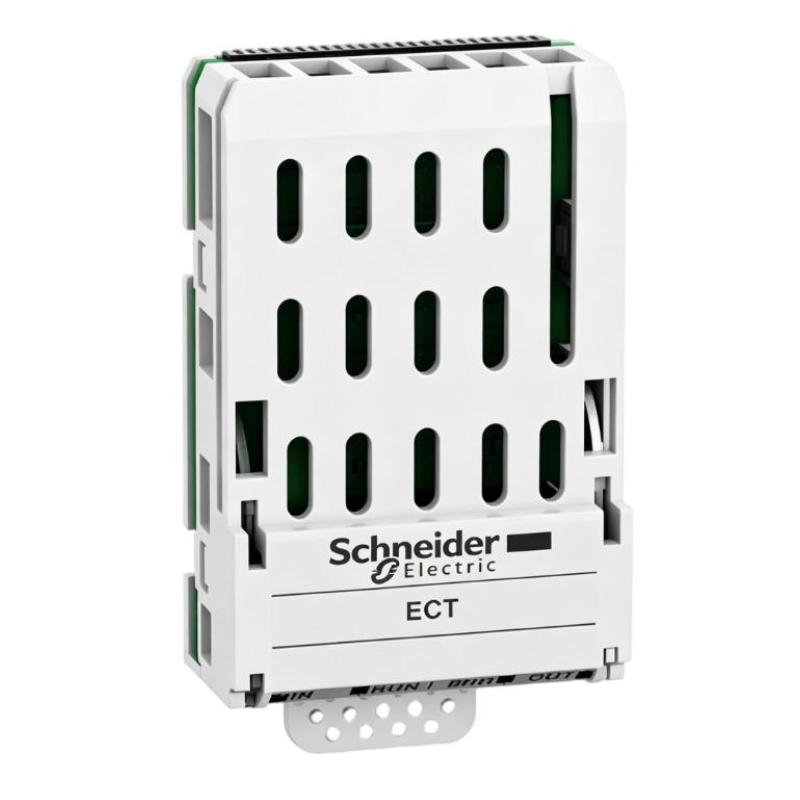
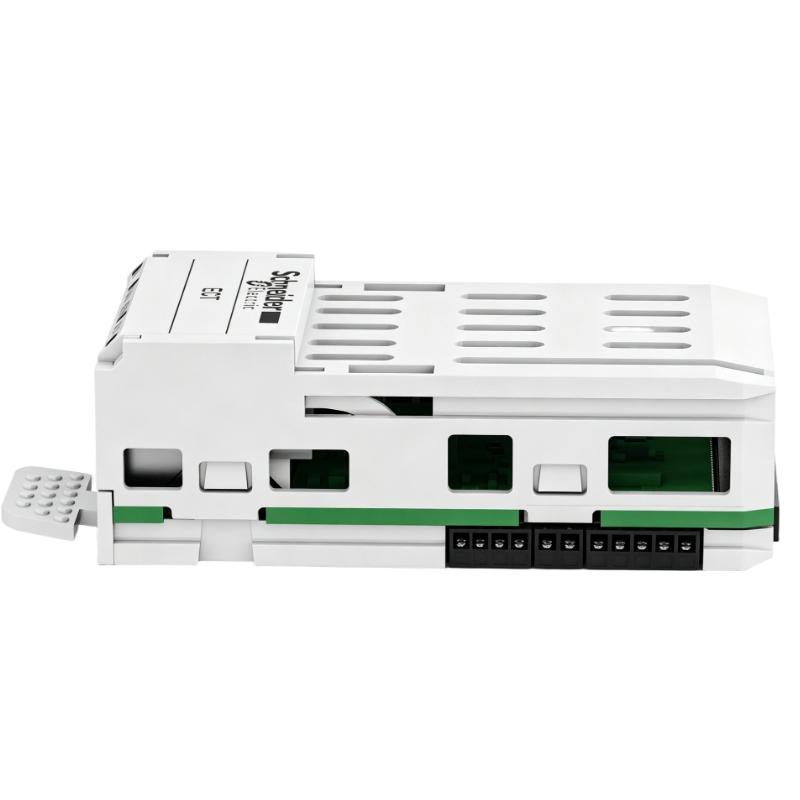
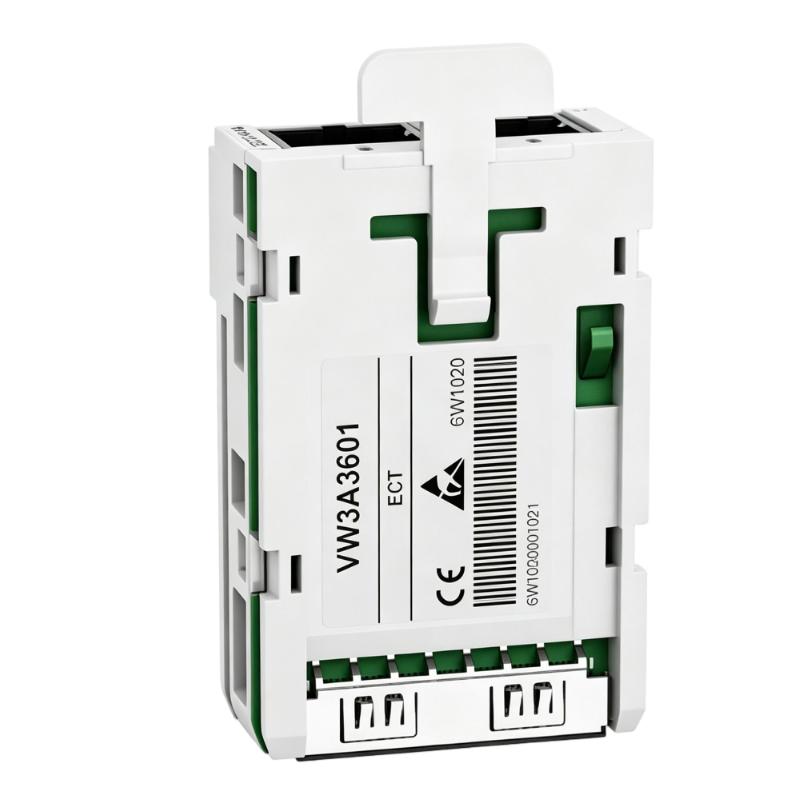
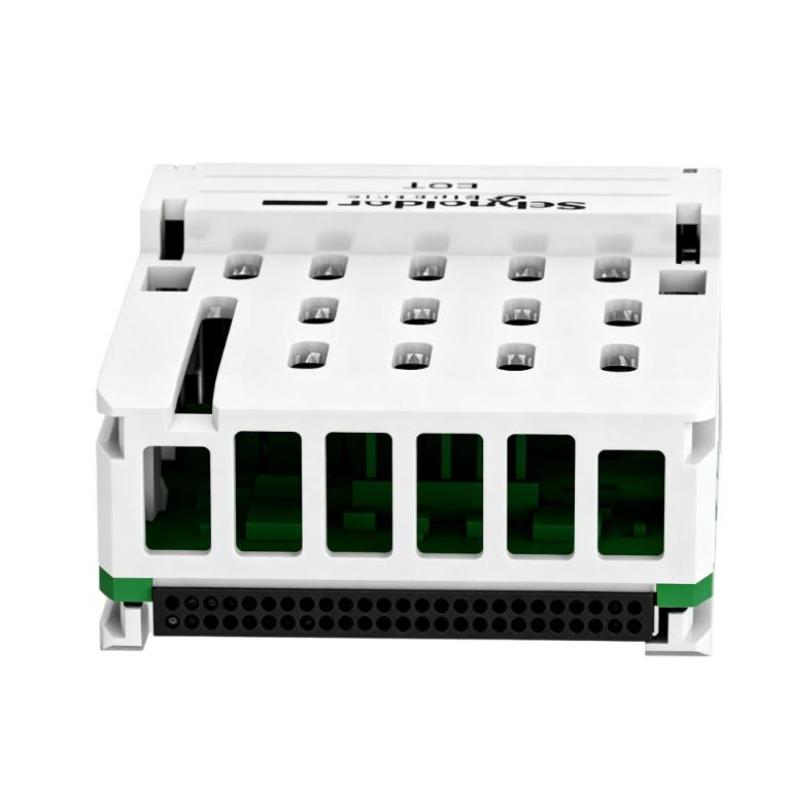
- Schneider
- VW3A3601
- Communication Module
- France
- 45 x 63 x 90 mm
- 0.06 kg
- Xiamen, China
- New & In Stock
- T/T, PayPal, Western Union
- 1 Year
- 1-3 Working Days
- DHL, UPS, TNT, FedEx and EMS.
- 24-Hour Service
- COO
- 5
Our advantage

Global Logistics
We have a 10-year logistics and express cooperation agreement, so our products can be shipped to any place in the world.

Brand new and original
Our products are imported in bulk from the place of origin. Because of the cooperative relationship, our products are all original and 100% new.

24-hour service
We provide 7*24 hours service to our customers. We will be there whenever you need us.

Price advantage
All our products are priced very favorably because we have our own warehouse and supply.
| Company Information | |||
| [email protected] | |||
| Mobile | +8615980777398 | ||
| +8615980777398 | |||
| 15980777398 |
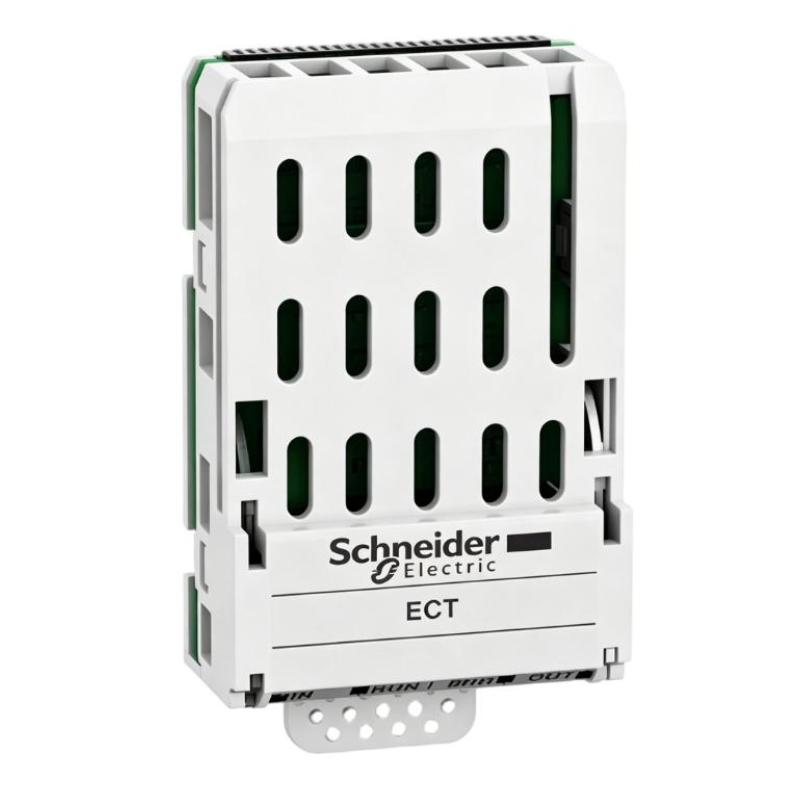
Product Overview
The Schneider Electric VW3A3601 is an EtherCAT communication module designed to connect compatible variable speed drives to EtherCAT-based industrial automation networks. As an optional communication accessory for supported Altivar drive families, it enables the drive to exchange control commands, operating status, reference values, and diagnostic information with a PLC or other compatible EtherCAT controller.
EtherCAT is an industrial Ethernet fieldbus technology developed for fast, deterministic communication between automation devices. In applications requiring coordinated machine operation, accurate speed control, and rapid status feedback, the VW3A3601 provides a communication interface between the drive and the wider control system.
The module features two RJ45 connectors, supporting EtherCAT network connections through designated input and output ports. This dual-port arrangement is useful for line-based network layouts in which communication passes from one device to the next. The module supports a nominal communication rate of 100 Mbps, subject to the capabilities and configuration of the complete network.
The VW3A3601 is intended for compatible Schneider Electric drive products, including supported models in the Altivar 32, Altivar Machine ATV320, Altivar Machine ATV340, and Altivar Process ATV900 families. Compatibility depends on the specific drive model, hardware configuration, firmware version, and any relevant restrictions. The module should therefore be selected according to the drive’s documentation rather than by connector type alone.
In industrial control systems, integrating a drive with EtherCAT can help reduce the need for separate hardwired command and status signals. Instead, appropriate operating commands and feedback values can be exchanged through a configured network connection. This can simplify machine-level integration and provide centralized access to drive operating information.
The VW3A3601 is a communication accessory rather than a standalone variable speed drive or PLC. It does not independently provide motor power or perform the drive’s main motor-control functions. Those functions remain the responsibility of the compatible drive and its configured control system.
Technical Specifications
| Parameter | Description |
|---|---|
| Brand | Schneider Electric |
| Model | VW3A3601 |
| Product Type | EtherCAT Communication Module |
| Product Range | Altivar communication accessories |
| Communication Protocol | EtherCAT |
| Communication Speed | 100 Mbps |
| Network Connectors | 2 × RJ45 |
| Communication Services | Process Data Objects (PDO) and Service Data Objects (SDO) |
| Drive Profile | CiA 402, subject to supported drive configuration |
| Dimensions | 45 × 63 × 90 mm |
| Weight | 0.06 kg |
| Typical Application | Communication between a compatible drive and an EtherCAT controller |
| Installation | Compatible drive option-module slot |
| Configuration Requirements | Compatible drive firmware, module firmware, and EtherCAT device description file |
| Main Function | Exchange of drive commands, references, status, and diagnostic data over EtherCAT |
Note: Dimensions and weight are based on the supplied product listing. Before ordering or installing the module, confirm the exact part number and its mechanical and firmware compatibility with the target drive.
Function and Working Principle
1. EtherCAT Network Communication
The primary function of the VW3A3601 is to provide a communication path between a compatible Altivar drive and an EtherCAT industrial network. The controller and drive exchange information according to the configured network architecture and supported device profile.
The PLC or motion controller can send commands and reference values to the drive. Depending on the application and configuration, the drive can return information such as its operating state, actual values, and fault or warning status. This bidirectional exchange allows the controller to coordinate motor operation with other machine functions.
EtherCAT uses Ethernet physical-layer technology together with an industrial communication mechanism designed for efficient, synchronized data exchange. The VW3A3601 is the drive-side interface for this communication, while the PLC, network configuration, and drive parameters determine how the data is used.
2. Two RJ45 Network Ports
The module has two RJ45 connectors identified for EtherCAT communication. In the relevant configuration, one port functions as the incoming network connection and the other as the outgoing connection.
This arrangement supports daisy-chain network layouts. For example, an EtherCAT line may connect a controller to a drive, continue to another drive, and then proceed to additional compatible devices. The actual network structure must follow the requirements of the EtherCAT master and the connected equipment.
The presence of two RJ45 connectors does not mean the module is a general-purpose Ethernet switch. The ports are intended for the module’s supported EtherCAT topology and should be wired according to the applicable installation documentation.
3. Cyclic Process Data Exchange
Process Data Objects, or PDOs, are used for cyclic communication. They carry frequently updated operating information between the controller and the drive.
Depending on the selected profile and mapping, process data may include:
- Drive control commands.
- Speed or frequency reference values.
- Drive status information.
- Actual operating values.
- Selected diagnostic and application data.
Cyclic exchange is particularly useful when a machine requires regular updates between the control program and the motor drive. The exact process data structure depends on the drive family, supported communication profile, and configuration.
Correct PDO mapping is important. If the controller and drive use different data arrangements, the network may establish communication without delivering the intended control behavior. Commissioning should include verification of the mapped values and their interpretation.
4. Acyclic Parameter Access
Service Data Objects, or SDOs, support access to entries in the device object dictionary. Depending on the supported implementation, this mechanism can be used to read or write parameters and other configuration-related information.
SDO communication complements cyclic PDO exchange. PDOs are generally used for regular process data, while SDOs are used for parameter access and other less time-critical transactions.
The available objects and permitted operations depend on the module and drive implementation. Engineers should consult the relevant device documentation before using SDO access for commissioning or maintenance.
5. CiA 402 Drive Profile
The VW3A3601 supports the CiA 402 drive profile in applicable configurations. This profile defines standardized control and status behavior for drive and motion-control devices.
Using a supported standardized profile can help engineers integrate drives into a controller project without designing every command and status interaction from scratch. However, the exact operating mode, control-word sequence, reference values, and status-word interpretation must match the selected drive configuration.
A successful EtherCAT connection alone does not guarantee that the drive is ready to operate. The control program must also manage the drive’s state transitions, enable conditions, operating limits, and safety-related requirements.
Role in Industrial Automation Systems
PLC and Drive Integration
In a typical automation architecture, a PLC or industrial controller acts as the EtherCAT master. The VW3A3601 connects a compatible drive to the fieldbus, allowing the controller to exchange configured process data with the drive.
This architecture centralizes control logic and makes it easier to coordinate motor operation with sensors, actuators, and other networked equipment. Instead of relying exclusively on discrete wiring for every command and feedback signal, the system can use networked data for supported functions.
The controller remains responsible for the machine sequence and application logic. The drive performs the configured motor-control functions, while the VW3A3601 provides the communication interface between them.
Centralized Monitoring
When the system is configured correctly, the PLC or supervisory system can use drive feedback to monitor operating conditions. Depending on the selected data mapping, this may include drive state, reference and actual values, and selected fault information.
Centralized monitoring helps operators identify abnormal operating conditions and gives maintenance personnel more information for troubleshooting. The information available depends on the drive’s capabilities, the communication configuration, and the data collected by the controller or HMI.
Coordinated Machine Operation
Machines often contain multiple motors that must operate in a coordinated sequence. EtherCAT communication can help the controller distribute commands and collect feedback across compatible devices.
The VW3A3601 may be used in applications where a drive’s operating state must be synchronized with upstream or downstream machine processes. The quality of coordination depends on the controller, network design, drive configuration, and application requirements.
Industrial Applications
Packaging and Material Handling
Packaging machinery commonly uses variable speed drives to control conveyors, feeders, rollers, and other motor-driven mechanisms. Connecting compatible drives through EtherCAT can help the controller coordinate speed references and monitor drive states as part of the machine sequence.
For material-handling equipment, networked drive control can support coordinated starting, stopping, and speed adjustment. Application engineers must still consider mechanical response, load characteristics, stopping distance, and the required safety functions.
Automated Assembly Equipment
Automated assembly systems may contain multiple drive-controlled axes and motorized stations. EtherCAT-based communication can provide a consistent way to exchange commands and operating feedback with supported drive devices.
The VW3A3601 can be useful when the selected Altivar drive must participate in a larger machine-control network. The suitability of a particular drive for motion or positioning tasks must be assessed separately; adding a communication module does not change the fundamental control capabilities of the drive.
Pumping and Process Equipment
Industrial pumps, fans, and other process machines often require speed control based on system demand. In compatible installations, EtherCAT communication allows a controller to send appropriate operating references and receive drive status information.
Examples include process skids, circulation systems, and equipment with centralized monitoring. The module is a communications component and does not itself provide pressure regulation, flow measurement, or process-control logic. Those functions require the relevant sensors, controller programming, and drive configuration.
Manufacturing Lines
Manufacturing lines frequently combine conveyors, transfer mechanisms, and process equipment. Network communication can make it easier to integrate drive control with machine interlocks, operating sequences, and production monitoring.
Where the chosen controller and drive support the required EtherCAT functions, the VW3A3601 can provide a link between motor control and the wider automation architecture.
Machine Retrofit and Equipment Maintenance
The module may also be relevant when maintaining or upgrading existing machinery that already uses compatible Schneider Electric drives. Replacing a failed communication accessory with the same model can help preserve the existing network design, provided that the replacement’s hardware and firmware are suitable.
A retrofit should not be treated as a simple plug-in exchange until the drive model, firmware, configuration files, wiring, and controller project have been checked.
Installation and System Integration
1. Confirm Drive Compatibility
Before installation, identify the exact drive model and hardware variant. The VW3A3601 is associated with several Altivar product families, but not every model or configuration is necessarily compatible.
Firmware versions matter as well. A drive may require a minimum firmware revision to recognize or correctly operate with a particular module version. Certain configurations may have restrictions, so compatibility should be confirmed against the relevant drive-family documentation.
2. Isolate Power Before Installation
Installation and removal must be carried out according to the drive manufacturer’s instructions. Isolate the equipment from its power supply and follow the prescribed waiting time and verification procedures before accessing the option-module slot.
Only qualified personnel should perform electrical installation and commissioning. Do not insert or remove the module while the equipment is energized unless the manufacturer’s documentation explicitly permits the operation.
3. Install the Module Correctly
Locate the designated communication-module slot for the compatible drive. Inspect the module for shipping damage and verify that the catalog number matches the intended component.
Insert the module in accordance with the drive-specific instructions and confirm that it is securely seated. Incorrect installation may result in poor electrical contact, communication errors, or equipment damage.
The physical mounting procedure can differ between drive families. Do not assume that the procedure for an ATV320 is identical to that for an ATV340 or ATV900.
4. Connect the EtherCAT Network
Connect the appropriate industrial Ethernet cables to the designated EtherCAT ports. Use cable types and installation practices that meet the equipment and network requirements.
Observe the intended port direction and topology. Maintain suitable cable routing and separation from power conductors where required, and follow the project’s grounding and shielding practices.
Before applying power, inspect the connections and verify that the network layout matches the controller’s configuration.
5. Configure the EtherCAT Master
The controller engineering environment must recognize the drive and its communication module. Use the appropriate EtherCAT device description file, commonly referred to as an ESI file, for the module and firmware version in use.
The device description helps the engineering tool identify supported communication features and configuration information. A mismatched description file can lead to incorrect configuration or prevent the expected device setup.
Configure the required process data, communication settings, and operating profile according to the drive documentation and the controller project.
6. Verify Process Data and Operating State
After configuration, confirm that the controller detects the device and that the EtherCAT network reaches its expected operational state.
Check that input and output process data correspond to the intended variables. Verify command-word and status-word behavior, reference values, and feedback values before attempting normal production operation.
Test the application’s response to communication interruption and other relevant abnormal conditions. The correct response depends on the machine’s risk assessment and the applicable safety requirements.
7. Complete Commissioning Tests
Commissioning should cover more than network connectivity. Verify drive enable conditions, start and stop commands, direction control where applicable, reference scaling, fault handling, and recovery procedures.
Confirm that the machine behaves safely when communication is lost or a drive reports a fault. Network communication must not be treated as a replacement for the independent safety functions required by the application.
Compatible System Components
The VW3A3601 is a component within a larger drive-control architecture. The following table describes typical system elements; compatibility and functionality depend on the actual equipment and project design.
| Component | Role in the System |
|---|---|
| Compatible Altivar drive | Performs motor-control functions and hosts the communication module |
| PLC or EtherCAT master | Sends commands and references, receives process data, and coordinates machine operation |
| EtherCAT device description file | Provides device information for supported engineering and configuration tools |
| Industrial Ethernet cable | Connects the module to the EtherCAT network |
| HMI or supervisory system | Displays operating states and selected diagnostics through the controller or supported communication path |
| Motor and driven equipment | Converts the drive’s electrical output into mechanical operation |
| Protective and safety devices | Provide the protection and safety functions required by the machine design |
The presence of a compatible connector or similar product family name does not establish full interchangeability. Verify the complete hardware and software configuration before purchasing a replacement or expanding an existing network.
Recommended Alternative Models and Replacement Considerations
Choosing an alternative requires matching the communication protocol, drive compatibility, connector arrangement, firmware support, and required functions. A module designed for another fieldbus should not be assumed to replace the VW3A3601.
| Model or Option | General Description | Replacement Consideration |
|---|---|---|
| Schneider Electric VW3A3601 | EtherCAT communication module with two RJ45 connectors | The reference model for applications requiring this specific EtherCAT interface |
| Schneider Electric VW3A3608 | CANopen communication module with two RJ45 connectors | Uses a different communication protocol; not a direct EtherCAT replacement |
| Built-in drive communication interface | Communication functions integrated into certain drive configurations | May be suitable only if the drive supports the required network protocol and control features |
| Another compatible EtherCAT option | An option module supported by the target drive family | Confirm exact catalog number, firmware, device profile, and controller configuration before use |
Important: The VW3A3608 is listed only as a protocol comparison, not as an interchangeable substitute. CANopen and EtherCAT are different protocols. If the original controller project relies on EtherCAT, changing to CANopen generally requires corresponding changes to the network architecture and control configuration.
When replacing a VW3A3601, the preferred starting point is normally the same catalog number with verified compatibility. If the original model is unavailable, consult the drive documentation and confirm an approved alternative before ordering.
Key Advantages of the VW3A3601
Industrial EtherCAT Connectivity
The module provides a dedicated EtherCAT interface for supported drives, enabling integration with compatible industrial controllers and network architectures.
Dual RJ45 Ports
Two network connectors support appropriate line-based EtherCAT arrangements, helping integrate the drive into a structured industrial communication network.
Cyclic and Acyclic Data Exchange
Supported PDO and SDO services provide mechanisms for regular process-data exchange and parameter access, subject to the selected drive and module configuration.
Integration with Compatible Altivar Drives
The module is designed for use with specified Schneider Electric drive families. Correct selection allows an existing automation system to use supported communication functions without treating the module as a separate controller.
Centralized Control and Diagnostics
When properly configured, network communication can reduce reliance on individual hardwired command and feedback signals and make selected drive data available to the control system.
Compact Accessory Design
The module is a compact drive accessory intended for installation in the designated slot of a compatible product. Its suitability still depends on the exact drive enclosure and mounting arrangement.
Technical FAQs
1. What is the Schneider Electric VW3A3601?
The VW3A3601 is an EtherCAT communication module designed to connect compatible Schneider Electric drives to an EtherCAT industrial network.
2. What communication protocol does it support?
It supports EtherCAT. It should not be confused with CANopen, Modbus, or other industrial communication protocols.
3. How many communication ports does the module have?
The module has two RJ45 connectors for EtherCAT communication. The ports should be connected according to the designated network topology and installation documentation.
4. What is its communication speed?
The listed communication rate is 100 Mbps. Actual network performance also depends on the controller, network configuration, connected devices, and application requirements.
5. Which drives can use the VW3A3601?
Supported applications include compatible models from the Altivar 32, Altivar Machine ATV320, Altivar Machine ATV340, and Altivar Process ATV900 families. The precise model, firmware revision, and configuration must be verified. Some variants or operating configurations may not be supported.
6. Can the module operate as a standalone controller?
No. The VW3A3601 is a communication accessory. It does not replace the PLC, the drive’s motor-control functions, or the application software.
7. Does it support real-time process data?
The module supports EtherCAT process-data communication through PDOs. The actual data mapping and operating behavior depend on the selected drive, profile, and controller configuration.
8. What is an ESI file, and why is it needed?
An EtherCAT Slave Information file provides device information used by compatible engineering tools to configure and identify an EtherCAT device. The file version should match the module and applicable drive configuration.
9. Can the VW3A3601 replace a CANopen communication module?
Not as a direct protocol-for-protocol replacement. EtherCAT and CANopen have different network and configuration requirements. Any change requires a compatibility assessment and may require changes to the controller program and network architecture.
10. What should be checked before purchasing a replacement?
Verify the full catalog number, drive model, hardware variant, firmware versions, connector condition, communication protocol, and required configuration files. Also confirm the physical dimensions and the condition of the supplied module.
11. What should be checked if the drive does not communicate?
Check module installation, cable connections, the controller’s EtherCAT configuration, the correct device description file, firmware compatibility, and the network state indicators. Then verify the configured process-data mapping and drive communication settings.
12. Does EtherCAT communication replace machine safety functions?
No. Communication supports control and monitoring but does not automatically provide the safety functions required by a machine. Safety architecture must be designed and validated separately in accordance with the applicable standards and risk assessment.
Procurement and Maintenance Recommendations
When sourcing the VW3A3601, confirm that the supplied product label clearly identifies the required model. For replacement projects, matching the original catalog number is a useful first step, but it does not remove the need to verify firmware and drive compatibility.
For used or surplus modules, inspect the housing, connectors, contacts, and any signs of impact or contamination. Ask the supplier to clarify the product’s condition, testing status, and return policy before placing an order.
For maintenance teams, retain a record of the drive model, module firmware, EtherCAT configuration, ESI file version, and controller project revision. This information can shorten troubleshooting time and reduce the risk of introducing an incompatible configuration during a replacement.
Keep a backup of the working controller project and relevant drive parameters before carrying out changes. After replacing a communication module, verify network operation, process-data mapping, drive command behavior, fault response, and the complete machine sequence before returning the equipment to production.
Conclusion
The Schneider Electric VW3A3601 EtherCAT Communication Module provides a dedicated communication interface for compatible Altivar drives. With two RJ45 connectors and support for EtherCAT process-data and parameter communication, it enables supported drives to exchange operating information with a compatible industrial controller.
Its value lies in network integration rather than independent motor control. Correct operation depends on selecting a compatible drive, using the appropriate firmware and device description file, configuring the controller correctly, and validating the complete application during commissioning.
For industrial automation maintenance, equipment upgrades, and spare-parts procurement, confirming the exact drive configuration before ordering is essential. With proper compatibility checks and installation, the VW3A3601 can support reliable communication between compatible Schneider Electric drives and EtherCAT-based control systems.