

ProductPRODUCT
Featured products

Contact Us
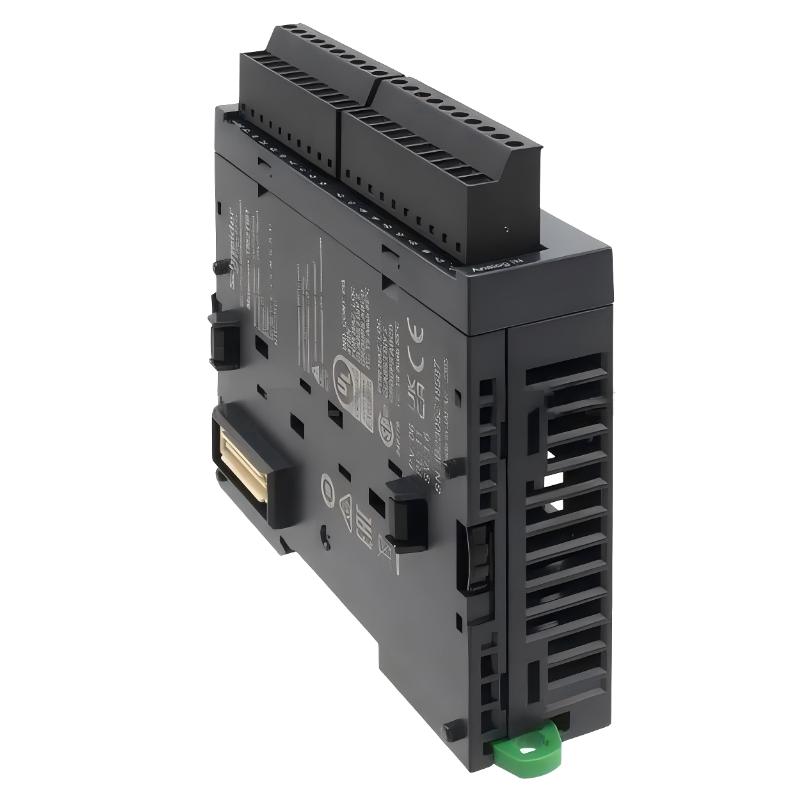
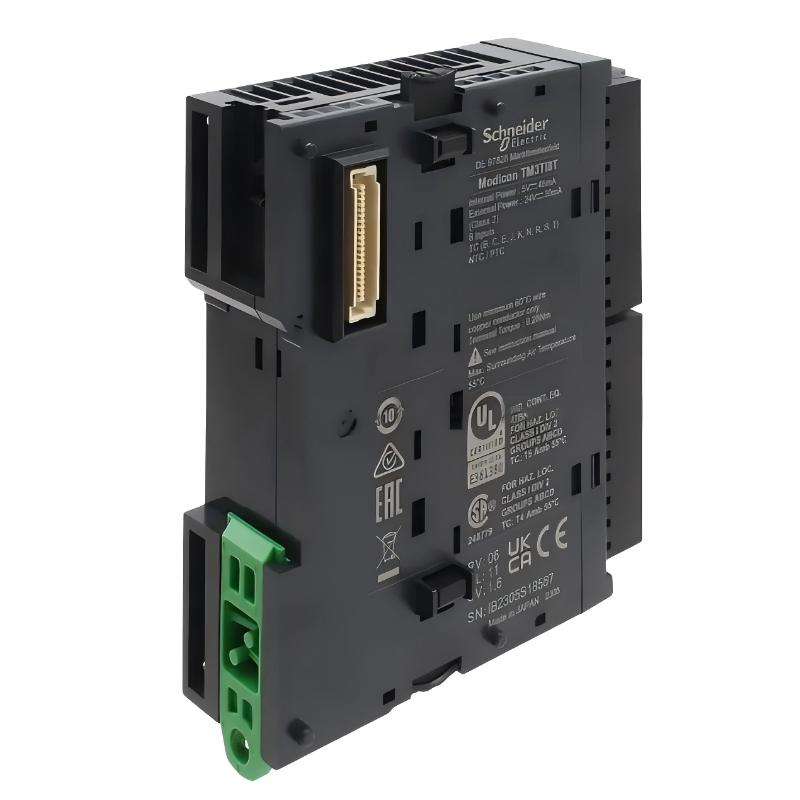
- Schneider
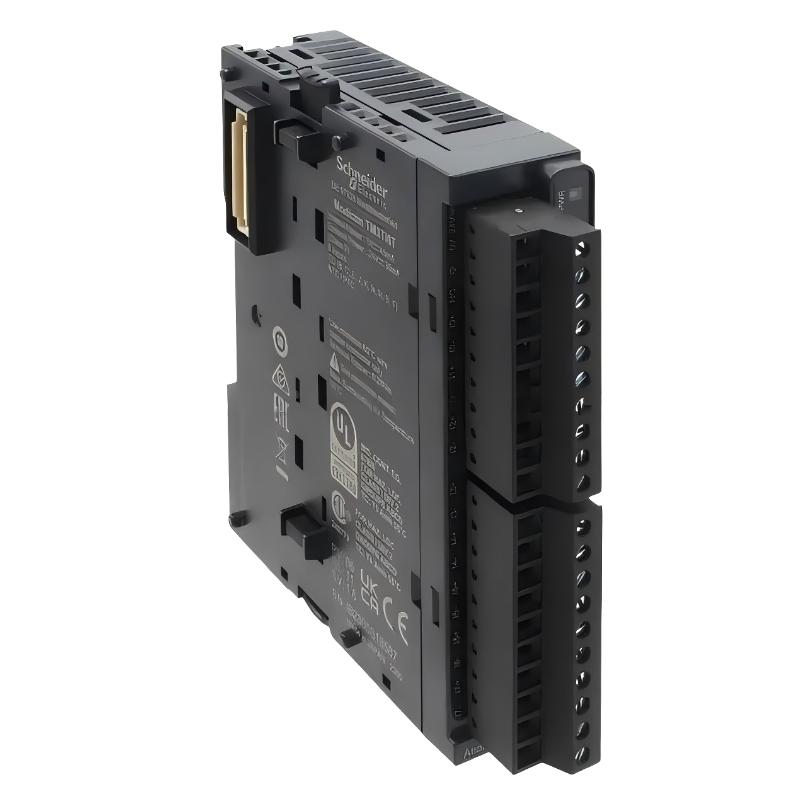
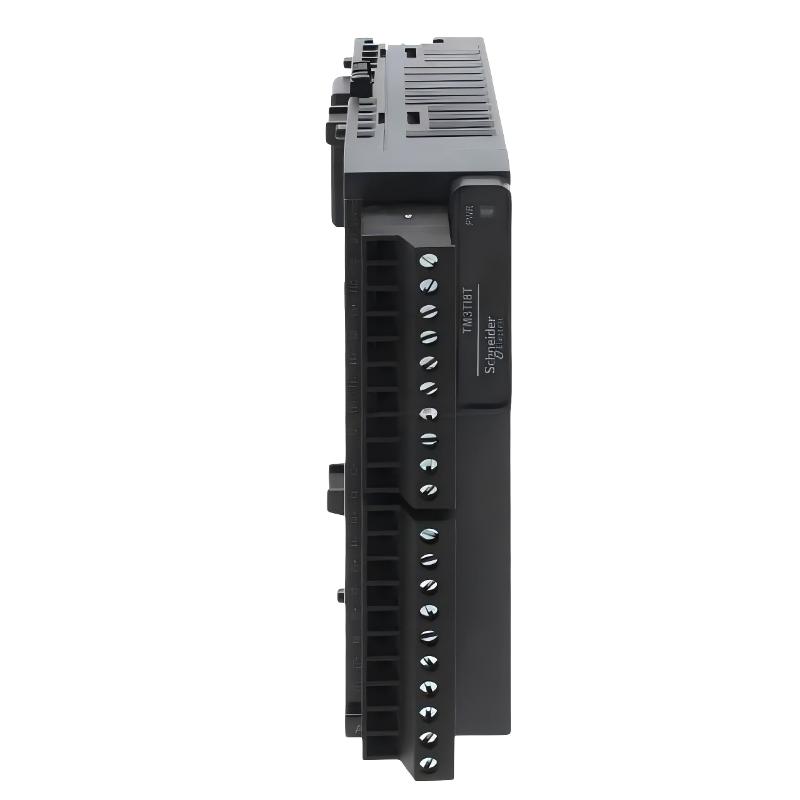
- TM3TI8T
- Analog Input Module
- France
- 90 × 70 × 23.6 mm
- 0.11 kg
- Xiamen, China
- New & In Stock
- T/T, PayPal, Western Union
- 1 Year
- 1-3 Working Days
- DHL, UPS, TNT, FedEx and EMS.
- 24-Hour Service
- COO
- 48
Our advantage

Global Logistics
We have a 10-year logistics and express cooperation agreement, so our products can be shipped to any place in the world.

Brand new and original
Our products are imported in bulk from the place of origin. Because of the cooperative relationship, our products are all original and 100% new.

24-hour service
We provide 7*24 hours service to our customers. We will be there whenever you need us.

Price advantage
All our products are priced very favorably because we have our own warehouse and supply.
| Company Information | |||
| [email protected] | |||
| Mobile | +8615980777398 | ||
| +8615980777398 | |||
| 15980777398 |
Product Overview
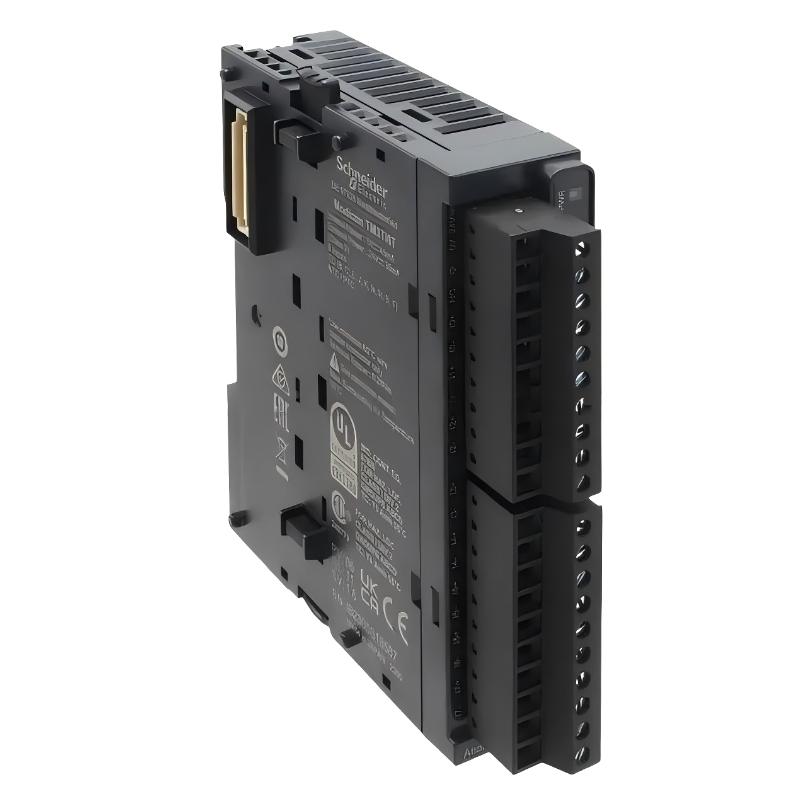
The Schneider TM3TI8T Modicon TM3 Analog Input Module is an expansion I/O module for the Modicon TM3 platform, used to bring temperature-related analog signals into a PLC control system.
In a typical machine, temperature information may come from sensors installed on motors, heaters, process vessels, bearings, cabinets, or other equipment. The controller needs that information not simply as a raw electrical signal, but as a usable process value for monitoring, control, alarm handling, and sequence logic. The TM3TI8T forms part of this signal-acquisition path.
The module is particularly useful when the base PLC does not have enough temperature input capacity for the application. Adding a dedicated TM3 expansion module allows additional temperature measurement points to be integrated without replacing the main controller.
A practical installation might use several temperature sensors distributed across a machine. The signals enter the TM3TI8T, are processed by the I/O system, and become available to the PLC application for functions such as temperature display, high-temperature alarms, heating control, or equipment protection.
For maintenance, the important point is to distinguish between a sensor problem and an I/O problem. An abnormal temperature reading can originate from the sensor, field wiring, terminal connection, input configuration, or the module itself. Checking the complete signal path is therefore preferable to immediately replacing the I/O module.
Technical Specifications
| Parameter | Specification |
|---|---|
| Manufacturer | Schneider Electric |
| Model | TM3TI8T |
| Product Family | Modicon TM3 |
| Product Type | Analog Input Module |
| Module Function | Temperature Signal Acquisition |
| System Role | PLC Expansion I/O |
| Application | Industrial Automation / Machine Control |
| Platform | Modicon TM3 |
| Installation | TM3 Expansion I/O System |
| Dimensions | 90 × 70 × 23.6 mm |
| Weight | 0.11 kg |
Product Features
The TM3TI8T adds temperature-oriented input capability to a Modicon TM3 control architecture.
- Schneider Electric Modicon TM3 Analog Input Module
- Model TM3TI8T
- Intended for temperature signal acquisition
- Expands the I/O capacity of compatible Modicon PLC systems
- Suitable for machine temperature monitoring
- Useful for heating and cooling applications
- Supports integration of multiple temperature measurement points
- Compact expansion-module format
- Suitable for equipment monitoring and process control
- Relevant to PLC expansion and replacement projects
The module should be selected according to the sensor type, input requirements, PLC platform, and application configuration. A visually similar TM3 module may have a completely different input function.
Working Principle
The TM3TI8T sits between the temperature sensors and the PLC application.
A simplified signal path is:
Temperature Sensor → TM3TI8T → Modicon PLC → Control Program → Machine Response
A temperature measurement begins at the field sensor. The electrical signal reaches the corresponding input channel of the TM3TI8T, where the module handles the input signal and makes the measured value available to the PLC system.
The PLC application can then use that value for different purposes.
For example:
Sensor detects rising temperature → TM3TI8T acquires the signal → PLC compares the value with configured limits → Alarm / Cooling / Machine Action
In a heating system, the same measurement can be used as feedback for maintaining a target process temperature.
The module therefore does more than simply add physical inputs. It creates an additional measurement interface between the machine’s temperature sensors and the control logic.
During troubleshooting, engineers should check the sensor and wiring before concluding that an input channel has failed. An open circuit, incorrect sensor connection, poor terminal contact, or incorrect input configuration can all produce abnormal readings.
Role in a Modicon TM3 I/O Architecture
The TM3TI8T is used as an expansion point within a TM3-based control system.
A typical arrangement can be represented as:
Temperature Sensors → TM3TI8T → TM3 / Modicon PLC Architecture → PLC Logic → HMI / Actuators
| System Element | Function |
|---|---|
| TM3TI8T | Acquires temperature-related input signals |
| Modicon PLC | Executes the control program |
| TM3 Expansion Architecture | Extends PLC I/O capacity |
| Temperature Sensors | Measure equipment or process temperature |
| Field Wiring | Carries sensor signals |
| HMI | Displays temperature values and alarms |
| Control Outputs | Operate heaters, fans, valves, or other equipment |
| Alarm Logic | Detects configured temperature conditions |
This arrangement allows temperature measurement to become part of the same PLC-based control strategy used for the rest of the machine.
Temperature Monitoring Considerations
Temperature inputs require more attention than simply checking whether a channel reads a value.
When commissioning or troubleshooting the TM3TI8T, engineers should consider:
- Sensor type
- Sensor wiring
- Channel assignment
- Input configuration
- Terminal connections
- Sensor location
- Expected operating temperature
- Signal behavior during startup
- PLC scaling or processing
- Alarm thresholds
- Comparison with an independent temperature measurement
For example, if one channel suddenly shows an unrealistic temperature while neighboring channels remain normal, checking the sensor and field wiring can quickly determine whether the problem follows the sensor or remains with the input channel.
This approach is especially useful for machines containing multiple temperature measurement points.
Industrial Applications
| Application | Typical Use |
|---|---|
| Machine Tools | Monitoring spindle, motor, or equipment temperature |
| Packaging Machinery | Monitoring heaters and process zones |
| HVAC Equipment | Temperature measurement and control |
| Material Processing | Monitoring process temperatures |
| Food Processing Machinery | Temperature supervision |
| Industrial Heating | Feedback for heating control |
| Pump and Motor Systems | Equipment temperature monitoring |
| Manufacturing Equipment | Monitoring thermal conditions across the machine |
The exact application depends on the sensor technology and control strategy used by the machine.
Installation and Maintenance
Correct sensor identification is essential when installing or replacing a temperature input module.
Recommended practices include:
- Confirm the complete TM3TI8T model.
- Verify the compatible Modicon PLC and TM3 architecture.
- Identify the temperature sensor type.
- Record existing channel assignments.
- Check field wiring before disconnecting the module.
- Inspect terminal connections.
- Verify sensor polarity or wiring arrangement where applicable.
- Compare abnormal readings with an independent measurement when possible.
- Check the PLC input configuration.
- Review diagnostic information.
- Follow the approved electrical isolation procedure before replacement.
- Install the module correctly.
- Reconnect field wiring according to the documented configuration.
- Restore the applicable PLC configuration.
- Check each active temperature channel.
- Compare readings against expected process conditions.
- Test configured high- and low-temperature alarms.
- Confirm the PLC responds correctly to temperature changes.
If only one temperature channel behaves abnormally, testing the corresponding sensor and wiring can often narrow the fault more quickly than replacing the complete module.
Compatible System Components
The TM3TI8T normally forms part of a broader Modicon TM3 control system.
| Component | Function |
|---|---|
| TM3TI8T | Temperature input acquisition |
| Modicon PLC | Executes machine-control logic |
| TM3 Expansion System | Provides additional I/O capacity |
| Temperature Sensors | Generate temperature measurements |
| Field Terminals | Connect sensors to the I/O module |
| HMI | Displays measured values |
| Digital Output Modules | Control discrete equipment |
| Analog Output Modules | Provide analog control signals |
| Industrial Network | Connects the PLC with other systems |
The exact PLC and expansion configuration should be checked before installation or replacement.
Recommended Related Models
For this product, related models are selected around TM3 analog and temperature I/O expansion, rather than unrelated Schneider automation hardware.
| Model / Product Family | Product Type | Typical Application |
|---|---|---|
| Schneider TM3TI8T | Modicon TM3 Analog Input Module | Temperature signal acquisition |
| Schneider TM3TI4 | Modicon TM3 Analog Input Module | Temperature input expansion |
| Schneider TM3AI2H | Modicon TM3 Analog Input Module | Analog signal acquisition |
| Schneider TM3AI4 | Modicon TM3 Analog Input Module | Multi-channel analog inputs |
| Schneider TM3AI8 | Modicon TM3 Analog Input Module | Higher-density analog input applications |
| Schneider TM3AQ2 | Modicon TM3 Analog Output Module | Analog control outputs |
| Schneider TM3AM6 | Modicon TM3 Analog I/O Module | Combined analog I/O expansion |
| Schneider TM3DI8A | Modicon TM3 Digital Input Module | Discrete input expansion |
Key Advantages
- Schneider Electric Modicon TM3 Analog Input Module.
- Model TM3TI8T.
- Adds temperature input capability to a TM3-based control system.
- Suitable for machine and process temperature monitoring.
- Supports additional temperature measurement points.
- Useful for heating, cooling, and equipment protection applications.
- Compact TM3 expansion format.
- Suitable for PLC expansion and replacement work.
Technical FAQs
What should be verified when a TM3TI8T channel displays an abnormal temperature?
Start with the sensor and field wiring associated with that channel. Then check the terminal connection, channel configuration, and PLC-side processing. Comparing the reading with an independent temperature measurement can help determine whether the problem originates in the sensor or the I/O path.
Why is sensor type important when configuring the TM3TI8T?
Different temperature sensors produce different electrical characteristics. The PLC and input module configuration must correspond to the sensor used in the machine; otherwise, the displayed process value may be incorrect even though the wiring appears normal.
Can a faulty temperature sensor look like an I/O module failure?
Yes. An open circuit, damaged sensor, poor connection, or incorrect wiring can result in missing or abnormal temperature data. If only one channel is affected, checking the associated sensor and wiring is a useful first step.
How should temperature inputs be tested after replacing the module?
Test the channels under known operating conditions and compare the displayed values with expected process temperatures. Where practical, use an independent measurement for verification and confirm that configured alarms, heating/cooling control, and protective logic react at the intended limits.