

ProductPRODUCT
Featured products
Contact Us
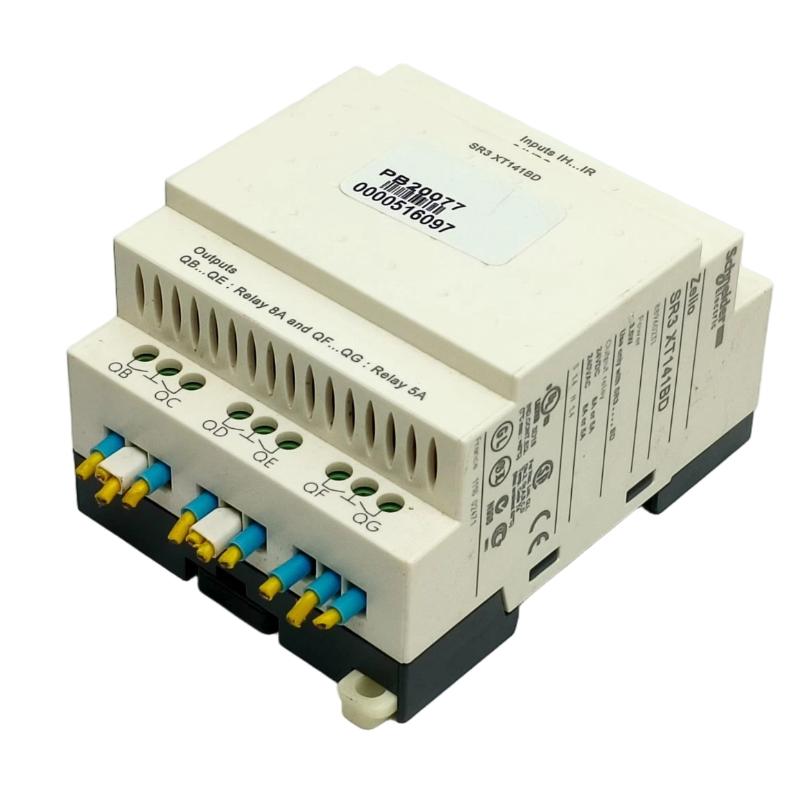
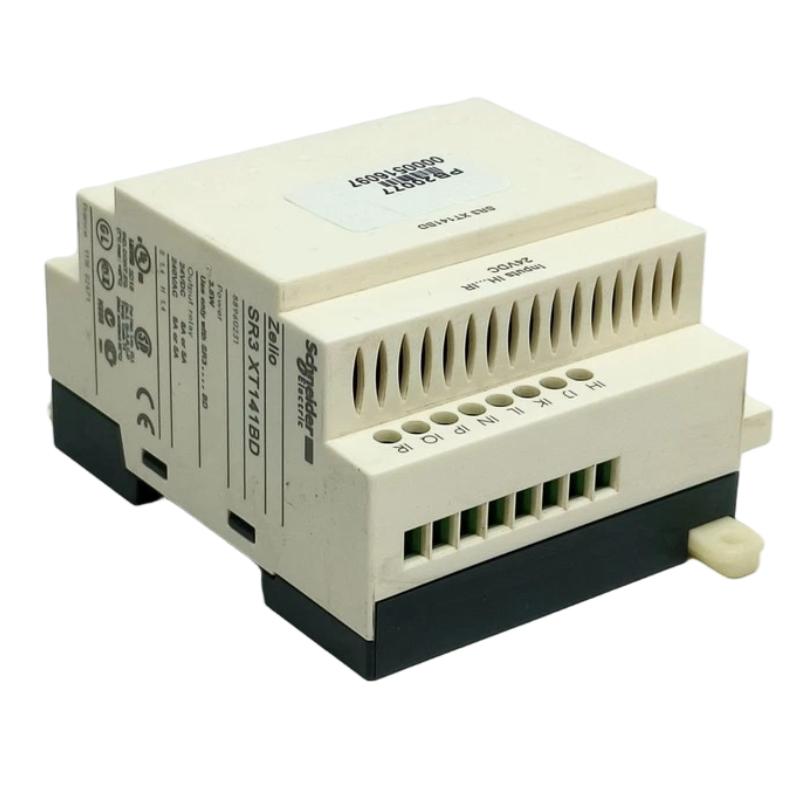
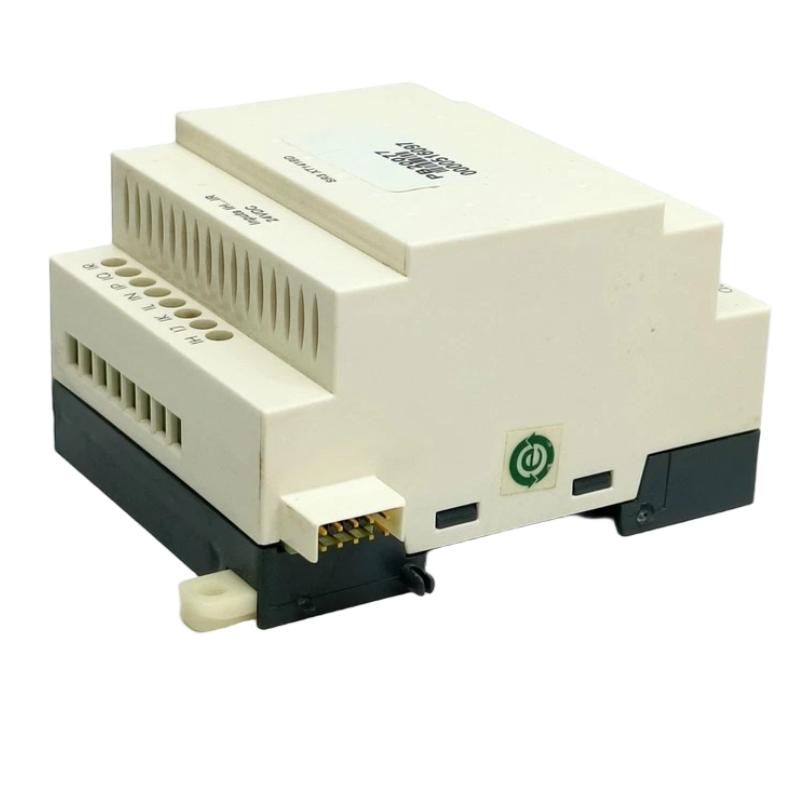
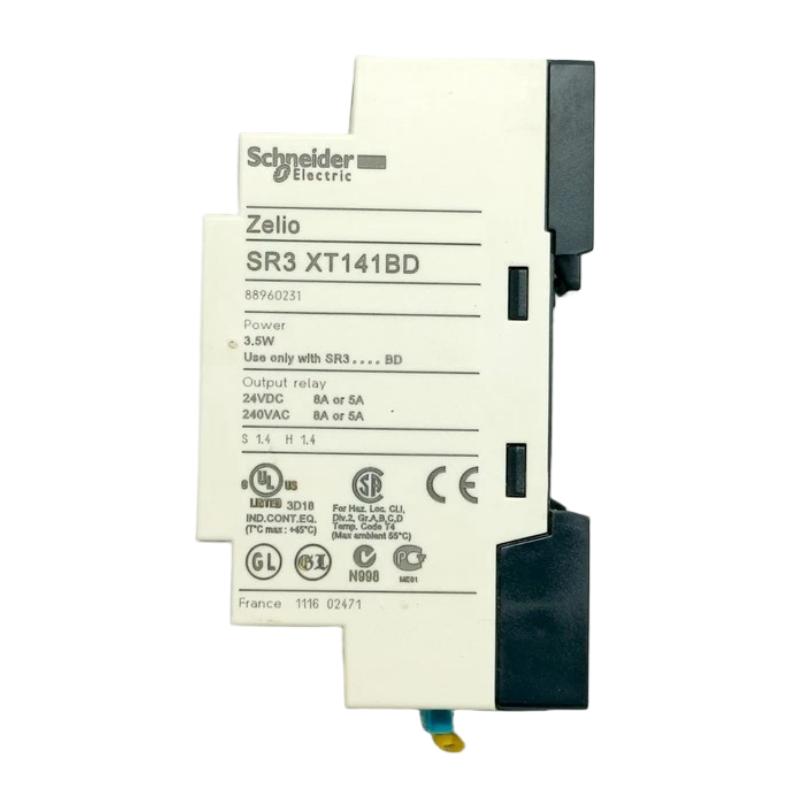
- Schneider
- SR3XT141BD
- Discrete I/O Expansion Module
- France
- 107.6 x 72 x 59.5 mm
- 0.22 kg
- Xiamen, China
- New & In Stock
- T/T, PayPal, Western Union
- 1 Year
- 1-3 Working Days
- DHL, UPS, TNT, FedEx and EMS.
- 24-Hour Service
- COO
- 2
Our advantage

Global Logistics
We have a 10-year logistics and express cooperation agreement, so our products can be shipped to any place in the world.

Brand new and original
Our products are imported in bulk from the place of origin. Because of the cooperative relationship, our products are all original and 100% new.

24-hour service
We provide 7*24 hours service to our customers. We will be there whenever you need us.

Price advantage
All our products are priced very favorably because we have our own warehouse and supply.
| Company Information | |||
| [email protected] | |||
| Mobile | +8615980777398 | ||
| +8615980777398 | |||
| 15980777398 |
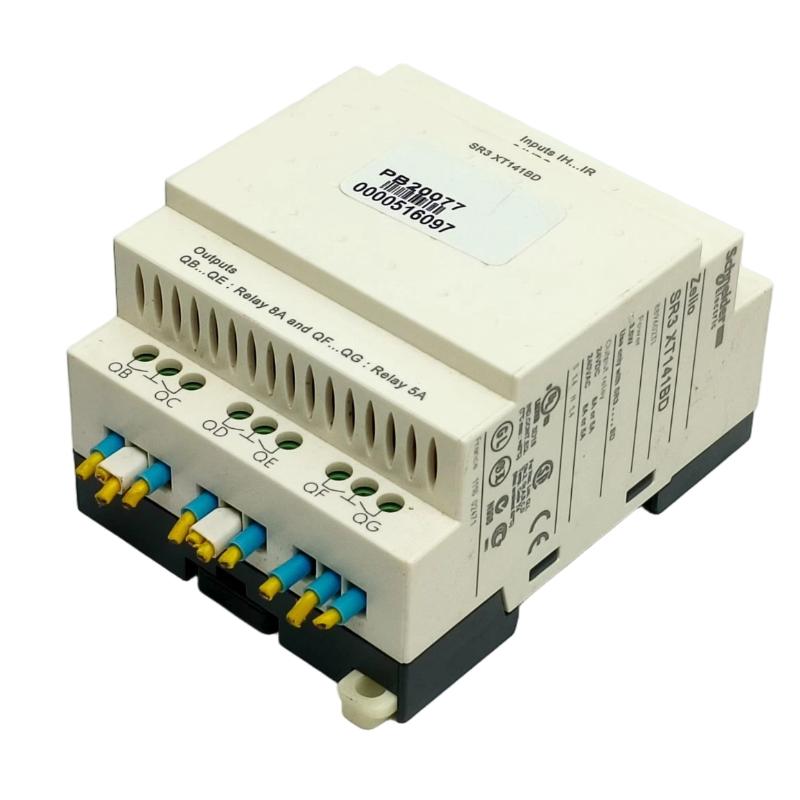
Product Overview
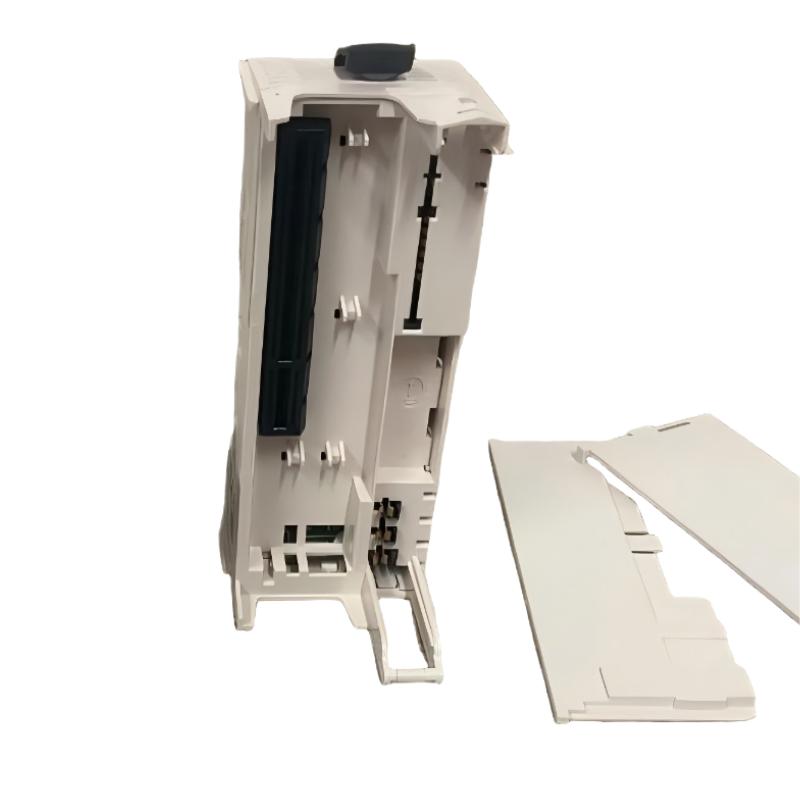
The Schneider SR3XT141BD Discrete I/O Expansion Module is an industrial automation component designed to expand the input and output capabilities of a compatible control system. Expansion modules allow automation engineers to connect additional field devices and control signals without replacing the main controller, helping adapt a system to changing machine requirements.
In industrial applications, a controller may need to monitor switches, push buttons, position sensors, and equipment feedback while also controlling relays, indicator lamps, and other compatible devices. When the built-in I/O capacity is insufficient, a suitable expansion module can provide additional signal connections and simplify the overall control-system layout.
The Schneider SR3XT141BD is identified by the supplied product description as a discrete I/O expansion module. Its listed dimensions are 107.6 × 72 × 59.5 mm, and its listed weight is 0.22 kg. Its compact physical format can be useful in control panels where space, wiring organization, and convenient maintenance are important.
Before installation or replacement, verify the complete model number and the module’s official electrical specifications. The exact number of inputs and outputs, signal types, terminal assignments, and compatibility requirements should be confirmed against the installed controller and applicable product documentation.
Technical Specifications
| Parameter | Specification |
|---|---|
| Manufacturer | Schneider Electric |
| Model | SR3XT141BD |
| Product Type | Discrete I/O Expansion Module |
| Product Category | Industrial Automation / Control System Expansion |
| Primary Function | Expansion of discrete input and output capacity |
| Signal Type | Discrete signals; exact electrical characteristics require verification |
| System Role | Additional field-signal interface for a compatible controller |
| Dimensions | 107.6 × 72 × 59.5 mm |
| Weight | 0.22 kg |
| Installation | Compatible controller and mounting arrangement; verify before installation |
| Typical Applications | Machine control, equipment monitoring, and industrial automation |
| Compatibility | Confirm against the host controller and hardware configuration |
The table reflects the product identification and physical details supplied for this model. Specific electrical ratings, channel counts, output types, and expansion limits should not be assumed from the model name alone.
What Is the Schneider SR3XT141BD?
A discrete I/O expansion module extends the signal-handling capacity of a compatible automation controller. Digital inputs allow the controller to receive information from field devices, while digital outputs allow it to issue control commands to compatible external circuits.
For example, an input can indicate that a limit switch has been activated or that an operator has pressed a button. An output can be used to command a compatible relay interface or activate an indicator, provided the connected load and electrical characteristics meet the module’s specifications.
The expansion module forms part of the larger control architecture rather than operating as an independent controller. The main controller processes the input states and executes the program that determines the required outputs.
A simplified control arrangement is:
Field Sensors and Switches → Discrete I/O Expansion → Compatible Controller → Control Outputs → Industrial Equipment
The actual arrangement depends on the supported expansion architecture and the electrical design of the system.
Function and Working Principle
1. Expansion of Signal Capacity
The main purpose of an I/O expansion module is to provide additional signal capacity when the controller’s existing inputs and outputs are insufficient for the application.
This can be useful when a machine is modified, additional sensors are installed, or more equipment-status signals need to be monitored. Expansion can help retain the existing controller while accommodating additional control requirements, provided the system supports the module.
2. Discrete Input Acquisition
Discrete inputs receive compatible electrical states from field devices. Depending on the verified module specifications, the connected devices may include switches, push buttons, contact feedback, or suitable electronic sensors.
The controller uses the resulting input information to determine whether a machine condition has been met. For example, a position switch may confirm that a mechanism has reached its expected location before the next operation begins.
Input voltage, polarity, common-terminal arrangements, and device compatibility must be verified before wiring.
3. Discrete Output Control
Discrete outputs allow a compatible controller to command external devices through the supported output interface.
Possible application-level uses include controlling indicator lamps, interface relays, and other suitable discrete loads. The actual output technology and permissible load depend on the specific module variant and must be checked before connection.
Loads exceeding the specified limits should not be connected directly. Where necessary, an appropriately rated interface device should be selected according to the electrical design.
4. Controller-Based Logic
The expansion module provides signal interfaces, while the controller executes the application program. The program can combine input states, timers, counters, interlocks, and other logic to determine the correct output behavior.
This arrangement supports repeatable machine sequencing and allows additional field signals to be incorporated into the existing control strategy.
5. Coordinated Equipment Operation
When correctly configured, expanded I/O capacity can help coordinate several machine functions. For example, a controller may use position feedback to determine when a conveyor should move or use equipment-status contacts to determine whether a sequence can continue.
The effectiveness of this arrangement depends on correct wiring, supported hardware configuration, and properly tested control logic.
Role in Industrial Control Systems
The SR3XT141BD, as described, serves as an I/O expansion component within a compatible automation system. Its role is to connect additional field signals to the control architecture and make them available for use by the main controller.
| System Component | Typical Function |
|---|---|
| Main Controller | Executes the control program |
| Discrete I/O Expansion Module | Adds supported discrete signal connections |
| Push Buttons and Selector Switches | Provide operator commands |
| Position and Proximity Sensors | Detect equipment or product conditions |
| Interface Relays | Provide suitable switching interfaces when required |
| Contactors and Actuators | Perform electrical or mechanical operations |
| HMI or Operator Panel | Displays operating status and alarms |
| Industrial Power Supply | Provides appropriately rated control power |
| Terminal Blocks | Organize and distribute field wiring |
The exact arrangement depends on the application and the controller’s supported expansion architecture. The module should not be assumed to support every Schneider Electric controller or automation platform.
Industrial Applications
Packaging Machinery
Packaging systems often use discrete signals to detect product presence, confirm mechanism positions, and coordinate machine sequences. Additional I/O capacity can help accommodate sensors and status signals as packaging equipment is expanded.
Conveyor Systems
Conveyors may require signals from limit switches, photoelectric sensors, motor feedback contacts, and transfer-point detectors. These inputs can help the controller coordinate movement and monitor equipment status.
Assembly and Manufacturing Lines
Assembly machinery frequently relies on discrete input signals to verify workpiece positions and operation completion. Additional output points may be needed to control compatible indicators or interface devices.
Material Handling Equipment
Automated material handling systems can use discrete signals to monitor travel limits, detect objects, and coordinate transfers between machine stations. Correctly integrated I/O expansion can support additional field connections.
General Machine Automation
Industrial machines may require additional discrete signals when new operating modes, sensors, or status indications are introduced. A compatible expansion module can provide a structured way to incorporate those signals into the control system.
Equipment Monitoring
Discrete input points can monitor running status, fault contacts, door states, and other defined conditions. The controller can use these states for alarms, interlocks, or diagnostic messages where the overall system design supports those functions.
Installation and System Integration
Correct installation begins with confirming that the module is suitable for the intended controller and application.
Confirm the Model Number
Check the full SR3XT141BD model designation on the existing module and compare it with the hardware records. Similar-looking expansion modules may have different electrical characteristics or compatibility requirements.
Confirm the supported controller family, permitted expansion position, and any restrictions on the number or arrangement of expansion devices.
Verify Electrical Specifications
Before connecting field wiring, confirm the following details from the exact product documentation:
- Number of discrete inputs and outputs
- Input voltage range and signal thresholds
- Output type and load ratings
- Terminal assignments and common connections
- Power requirements
- Electrical isolation characteristics
- Permitted field-device types
- Expansion and mounting requirements
These details are essential for preventing wiring errors and ensuring reliable signal handling.
Prepare the Installation Area
Install the module using the specified mounting method and maintain the required clearances for wiring, ventilation, and maintenance. The enclosure should provide an appropriate environment for the installed equipment.
Route field wiring neatly and separate signal cables from power conductors where required by the installation design. Label each conductor and terminal to simplify commissioning and future fault diagnosis.
Connect Field Devices
Connect sensors, switches, and output circuits according to the verified wiring diagram. Check polarity, terminal identification, conductor condition, and load requirements before applying power.
Do not connect an external load directly to an output until its current, voltage, and load characteristics have been checked against the module’s ratings.
Configure the Controller
If the controller requires hardware configuration for the expansion module, select the correct supported hardware entry and configure the relevant I/O assignments.
Check that the configured arrangement matches the physical installation. Incorrect configuration can lead to unavailable I/O points, incorrect address mapping, or hardware diagnostic faults.
Commission the System
After installation, test each input and output individually under controlled conditions. Verify that field devices produce the expected input states and that the controller activates the intended outputs.
Record the I/O assignments and the results of functional tests. Any circuits associated with machine protection or safety functions must follow the applicable safety design and validation procedures; a standard discrete I/O expansion module should not be presumed to provide certified safety functionality.
Troubleshooting the SR3XT141BD
I/O faults can arise from the expansion module, field devices, wiring, controller configuration, or the connected load. Troubleshooting should examine the entire signal path.
Expansion Module Is Not Recognized
Possible causes include an incompatible controller, incorrect expansion position, incomplete connection, unsupported hardware configuration, or a defective module.
Check the full model number and the controller’s supported expansion arrangement. Inspect the module connection and review the controller’s diagnostic information before replacing hardware.
Digital Input Does Not Change State
A digital input that remains OFF or ON may indicate a faulty sensor, missing field-device power, incorrect wiring, an unsuitable signal voltage, or a configuration problem.
Check the field device and measure the signal using appropriate equipment and qualified procedures. Compare the result with the module’s verified input specifications and confirm that the controller is monitoring the correct I/O address.
Output Does Not Operate the Connected Device
An output fault may result from incorrect program logic, an inactive control condition, an open circuit, a failed load, or an output rating mismatch.
Verify the controller’s output command and check the field circuit. Confirm the output type and load requirements before conducting further tests. Isolate power and follow approved procedures before inspecting wiring or replacing connected devices.
Intermittent I/O Operation
Intermittent operation can be caused by loose terminals, damaged conductors, vibration, electrical interference, unstable power, or a failing field device.
Inspect wiring and connections, review diagnostic events, and observe the input or output under normal operating conditions. Correct grounding, cable routing, and terminal installation can help reduce recurring faults.
Incorrect I/O Addressing
When the controller displays the wrong signal or a program appears to respond to an unexpected input, verify the hardware configuration and I/O mapping.
Check that the program addresses correspond to the installed module and that recent configuration changes have been applied correctly.
Maintenance Recommendations
Regular maintenance helps keep the expansion module and connected circuits in good condition.
Inspect wiring and terminals. Look for loose connections, damaged insulation, corrosion, and signs of overheating.
Check field devices. Confirm that sensors and switches operate correctly and provide signals within the module’s specified range.
Review controller diagnostics. Record recurring hardware faults, configuration errors, and unexpected input or output behavior.
Maintain cabinet conditions. Keep the enclosure within the required environmental limits and protect the equipment from excessive dust, moisture, heat, and vibration.
Document I/O assignments. Keep wiring diagrams, terminal labels, program addresses, and commissioning records up to date.
Follow safe maintenance procedures. Apply the appropriate power-isolation, lockout, and electrostatic-discharge precautions before servicing the module.
Maintenance intervals should be determined by the equipment requirements, operating environment, and criticality of the application.
Compatible System Components
The SR3XT141BD may be used as part of a larger automation installation containing several functional component types. Compatibility must be confirmed for the exact module and host controller.
| Component Type | Function |
|---|---|
| Compatible Schneider Electric Controller | Executes control logic |
| Discrete Field Sensors | Provide equipment and process-state signals |
| Push Buttons and Selector Switches | Provide operator commands |
| Interface Relays | Adapt switching circuits when required |
| Contactors and Actuators | Perform control actions |
| Industrial Power Supply | Supplies correctly rated control power |
| Terminal Blocks | Organize field wiring |
| HMI Panel | Displays equipment status and alarms |
| Engineering Software | Supports configuration and diagnostics |
| Enclosure and Mounting Hardware | Provides mechanical support and environmental protection |
These are general component categories rather than a list of confirmed compatible part numbers. Check the module’s exact controller family, electrical specifications, and expansion requirements before selecting accessories or replacement hardware.
Replacement and Procurement Considerations
When purchasing a replacement for the Schneider SR3XT141BD Discrete I/O Expansion Module, confirm the complete model designation and the requirements of the existing installation.
Important considerations include:
- Exact model number and hardware identification
- Supported controller and expansion architecture
- Input and output channel arrangement
- Electrical input and output ratings
- Terminal configuration
- Mounting requirements
- Hardware configuration and I/O mapping
- Physical condition and inspection history
The supplied dimensions are 107.6 × 72 × 59.5 mm, and the supplied weight is 0.22 kg. These values can assist with inventory planning, cabinet-space assessment, and shipping preparation, but physical dimensions alone do not establish compatibility.
After replacement, verify the configured I/O assignments and test the connected field devices. Confirm that the controller receives the correct input states and that each output operates the intended load before returning the equipment to normal service.
Key Advantages
Expanded Signal Capacity
A compatible I/O expansion module can add discrete signal connections to a control system when additional field devices need to be integrated.
Flexible Machine Integration
Additional I/O capacity can help accommodate changes to machine layouts, equipment feedback, and operating sequences without automatically requiring a complete controller replacement.
Improved Equipment Monitoring
Discrete input signals provide the controller with information about switches, sensors, and equipment status, supporting alarms and diagnostic logic where appropriately configured.
Organized Control-Cabinet Design
With listed dimensions of 107.6 × 72 × 59.5 mm, the module provides a defined physical footprint for planning the control-panel layout.
Maintainable Automation Architecture
Clear I/O mapping, labeled wiring, and documented commissioning procedures can simplify maintenance and future system modifications.
Technical FAQs
What is the Schneider SR3XT141BD?
It is identified in the supplied product description as a discrete I/O expansion module for a compatible industrial automation controller.
What is the purpose of a discrete I/O expansion module?
It adds supported input and output signal connections, allowing a controller to monitor additional field devices and control compatible external circuits.
What are the dimensions of the SR3XT141BD?
The supplied dimensions are 107.6 × 72 × 59.5 mm.
How much does the SR3XT141BD weigh?
The supplied weight is 0.22 kg.
How many inputs and outputs does it provide?
The exact channel count and input/output arrangement should be confirmed from the product’s official technical specifications for the complete model number.
Can the SR3XT141BD be installed with any Schneider Electric PLC?
No. Compatibility depends on the controller family, supported expansion architecture, hardware configuration, and electrical requirements. Verify the intended system before installation.
What causes an I/O expansion module to stop working correctly?
Possible causes include wiring faults, incompatible field signals, incorrect hardware configuration, poor connections, unsuitable output loads, power problems, or a defective module.
Can a similar expansion module be used as a replacement?
Not automatically. Confirm the full part number, I/O arrangement, electrical ratings, controller compatibility, and terminal configuration before substituting another model.
Conclusion
The Schneider SR3XT141BD Discrete I/O Expansion Module is described as an industrial automation component for extending the discrete signal-handling capacity of a compatible control system. By adding supported input and output connections, an expansion module can help integrate field devices, monitor equipment status, and coordinate automated machine operations.
With supplied dimensions of 107.6 × 72 × 59.5 mm and a weight of 0.22 kg, the SR3XT141BD has a compact physical profile suitable for consideration in control-panel planning. Reliable performance depends on correct controller compatibility, appropriate electrical connections, accurate I/O configuration, and systematic commissioning.
For installation, maintenance, and replacement, verify the complete model designation and the applicable technical specifications before connecting field devices. Correct product identification and documented functional testing are essential to achieving dependable operation in an industrial automation system.