

ProductPRODUCT
Featured products

Contact Us
- Schneider
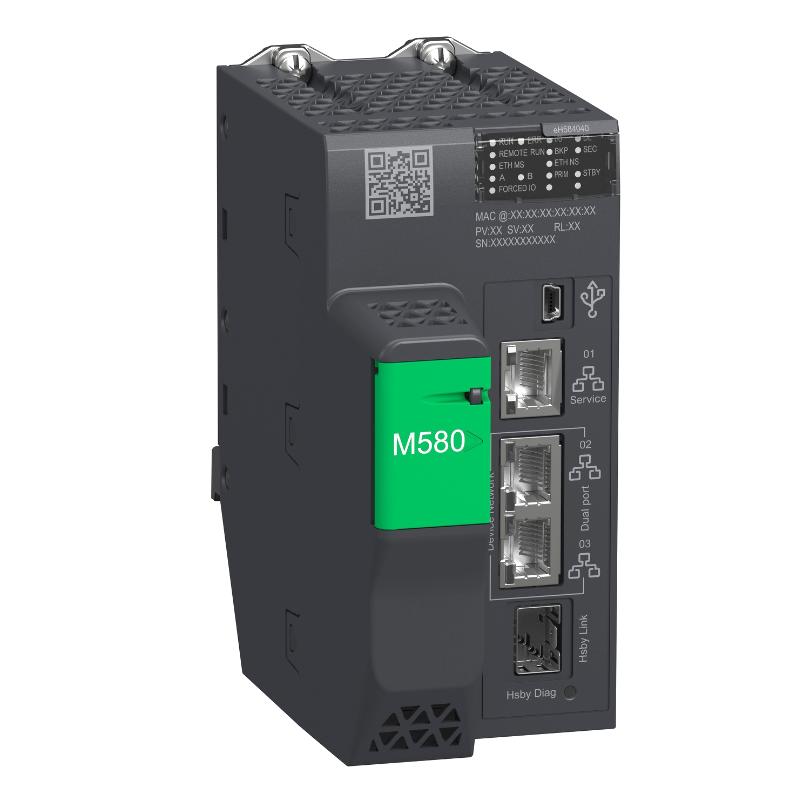
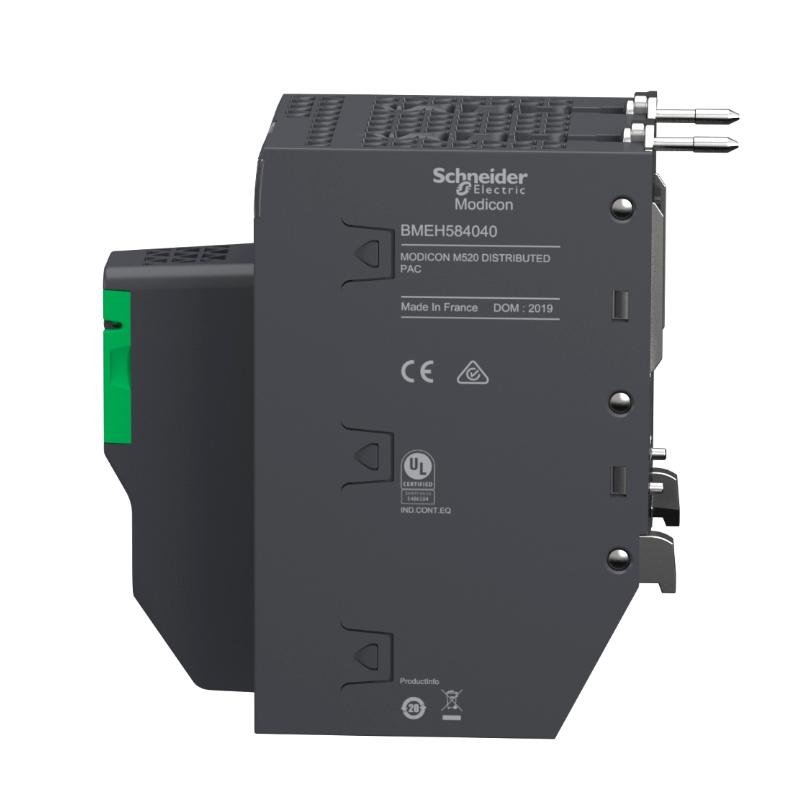
- BMEH584040
- Hot Standby CPU Module
- France
- 134.6 × 64.6 × 130.3 mm
- 0.849 kg
- Xiamen, China
- New & In Stock
- T/T, PayPal, Western Union
- 1 Year
- 1-3 Working Days
- DHL, UPS, TNT, FedEx and EMS.
- 24-Hour Service
- COO
- 49
Our advantage

Global Logistics
We have a 10-year logistics and express cooperation agreement, so our products can be shipped to any place in the world.

Brand new and original
Our products are imported in bulk from the place of origin. Because of the cooperative relationship, our products are all original and 100% new.

24-hour service
We provide 7*24 hours service to our customers. We will be there whenever you need us.

Price advantage
All our products are priced very favorably because we have our own warehouse and supply.
| Company Information | |||
| [email protected] | |||
| Mobile | +8615980777398 | ||
| +8615980777398 | |||
| 15980777398 |
Product Overview
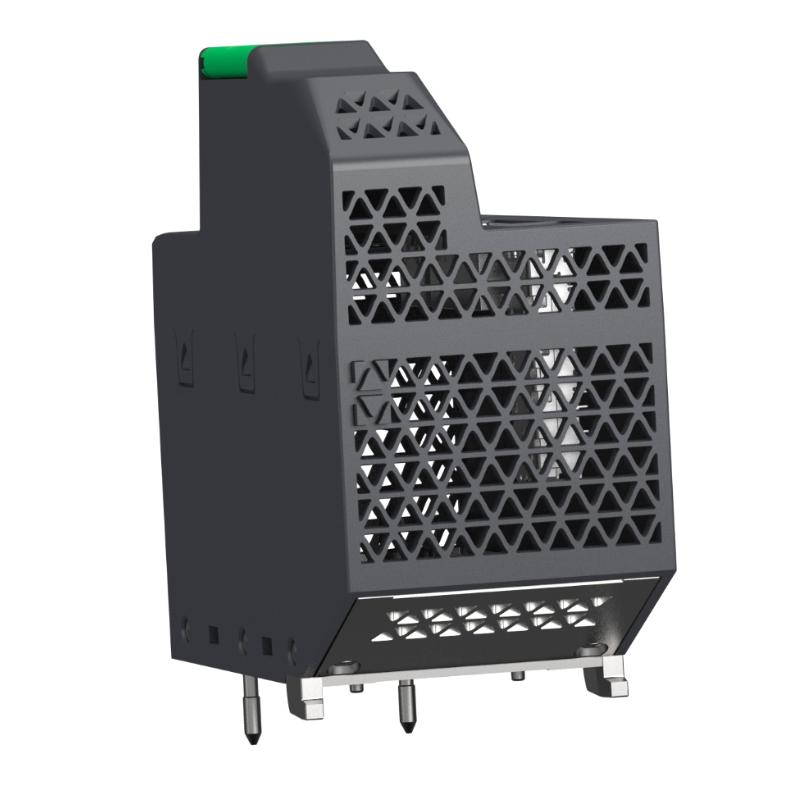
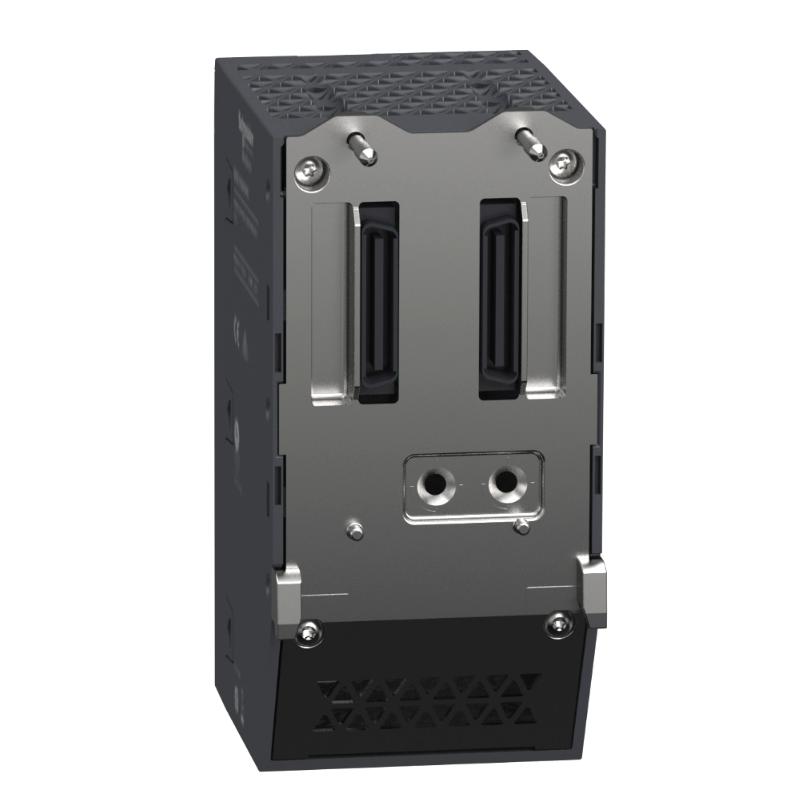
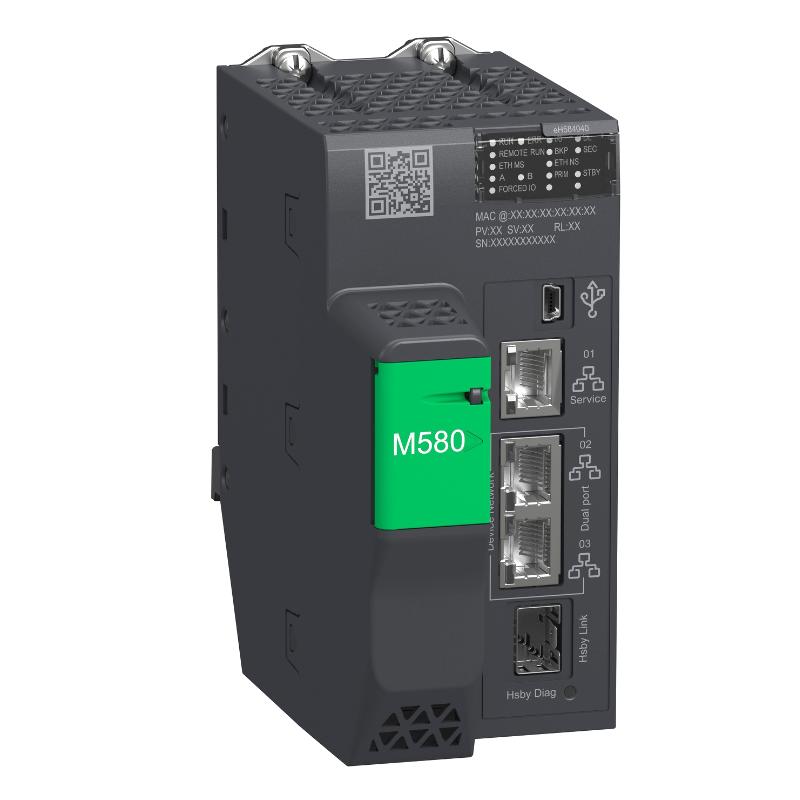
The Schneider BMEH584040 Modicon M580 Hot Standby CPU Module is a high-availability controller component for Modicon M580 automation systems. It is used in control architectures where continued operation is important and a single controller failure should not result in an extended interruption of the process.
Unlike a standard standalone PLC CPU, the BMEH584040 works within a Hot Standby architecture, where redundant controller hardware is arranged so that control responsibility can be transferred when the active controller encounters a qualifying fault or maintenance condition.
This architecture is particularly valuable for processes that are difficult or costly to stop, such as continuous production, infrastructure systems, energy facilities, and process plants. The controller pair maintains synchronization so that the standby unit can assume the control role without requiring the entire automation system to be restarted from scratch.
For replacement projects, the BMEH584040 should be treated as part of the complete M580 Hot Standby configuration. Controller pairing, application synchronization, network connections, rack configuration, and firmware compatibility should all be considered before commissioning.
Technical Specifications
| Parameter | Specification |
|---|---|
| Manufacturer | Schneider Electric |
| Model | BMEH584040 |
| Product Family | Modicon M580 |
| Product Type | Hot Standby CPU Module |
| Primary Function | Redundant PLC Control |
| System Role | High-Availability Controller |
| Application | Process Automation / Industrial Control |
| Architecture | M580 Hot Standby |
| Dimensions | 134.6 × 64.6 × 130.3 mm |
| Weight | 0.849 kg |
Product Features
The BMEH584040 supports controller redundancy within an M580 Hot Standby system.
Key characteristics include:
- Schneider Electric Modicon M580 Hot Standby CPU
- Model BMEH584040
- Intended for high-availability control architectures
- Supports redundant controller operation
- Suitable for applications requiring improved control-system continuity
- Works within an M580 Hot Standby configuration
- Supports synchronized controller operation
- Suitable for process and industrial automation
- Useful for critical control applications
- Designed for maintenance and replacement within compatible M580 systems
The main value of a Hot Standby CPU is not simply additional processing capacity. Its purpose is to maintain a second controller in a synchronized state so that the control system has an alternative CPU available when required.
Working Principle
The BMEH584040 operates as one of the controller units in a redundant M580 Hot Standby architecture.
A simplified relationship is:
Primary CPU ↔ Hot Standby Synchronization ↔ Standby CPU → I/O and Control System
The operating sequence can be understood as follows:
-
Controller Pairing
Two compatible controller units participate in the redundant architecture, with one acting as the primary controller and the other as the standby controller.
-
Application Synchronization
Relevant controller information is synchronized between the two CPUs so that the standby unit maintains an appropriate state relative to the active controller.
-
Normal Operation
The primary controller performs the active control function while the standby controller remains ready to assume control.
-
Fault or Transfer Condition
If the active controller experiences a qualifying failure or a controlled switchover is initiated, the redundant architecture manages the transition to the standby controller.
-
Control Continuity
The standby CPU takes over the active control role, helping reduce the interruption to the controlled process.
-
Redundancy Recovery
After the original controller is restored or replaced, the system can re-establish the intended redundant operating arrangement according to the configured system procedure.
The purpose of this architecture is therefore availability and continuity, rather than simply duplicating PLC hardware.
Role in a Modicon M580 Hot Standby Architecture
The BMEH584040 occupies the central controller layer of a high-availability M580 system.
A typical architecture can be represented as:
BMEH584040 Primary → Redundancy / Synchronization → BMEH584040 Standby → M580 I/O → Field Equipment
The controller works with the broader M580 infrastructure:
| System Element | Function |
|---|---|
| Hot Standby CPU | Executes the control application and supports redundancy |
| Redundancy Connection | Maintains coordination between controller units |
| M580 I/O System | Exchanges field input and output data |
| EIO Network | Connects distributed I/O and control-system components |
| Input Modules | Acquire process information |
| Output Modules | Control field devices |
| Engineering / Programming Environment | Supports application configuration and maintenance |
| Field Equipment | Provides process signals and receives commands |
A redundant CPU arrangement becomes especially useful when a controller fault cannot be tolerated without affecting production or process stability.
Industrial Applications
| Application | Typical Use |
|---|---|
| Process Plants | Maintaining continuous controller availability |
| Water and Wastewater | Redundant control of critical infrastructure |
| Power and Energy Systems | High-availability automation |
| Manufacturing | Reducing controller-related production interruptions |
| Oil and Gas Facilities | Continuous process control |
| Chemical Processing | Redundant process automation |
| Mining Systems | Maintaining critical control functions |
| Large Infrastructure Systems | High-availability distributed control |
The actual suitability depends on the process requirements and the complete M580 Hot Standby architecture.
Installation and Maintenance
Replacing a Hot Standby CPU requires more preparation than replacing a conventional standalone controller.
Recommended practices include:
- Confirm the complete BMEH584040 model.
- Verify the controller’s intended position in the Hot Standby pair.
- Record the existing controller configuration.
- Document network and redundancy connections.
- Check the paired CPU configuration.
- Verify application and firmware compatibility.
- Inspect connectors and communication cables.
- Confirm the condition of the rack and power system.
- Follow the applicable controlled replacement procedure.
- Verify synchronization between the controller pair.
- Confirm which CPU is currently operating as primary.
- Check controller and system diagnostics.
- Verify communication with local and remote I/O.
- Test representative control functions after replacement.
- Confirm that the redundant architecture has returned to the expected operating state.
- Record the final controller configuration.
During maintenance, it is particularly important to distinguish between CPU hardware faults and redundancy or synchronization faults. A controller may remain operational while the Hot Standby relationship itself is degraded.
Related Components
| Component | Function |
|---|---|
| Schneider BMEH584040 | M580 Hot Standby CPU |
| Second Hot Standby CPU | Provides redundant controller capability |
| M580 Main Rack | Hosts controller and associated modules |
| M580 EIO Adapter | Interfaces remote I/O drops |
| M580 I/O Modules | Processes field signals |
| Ethernet EIO Network | Connects distributed I/O |
| Power Supply | Provides system operating power |
| Communication Infrastructure | Supports controller and I/O data exchange |
| Field Devices | Supply process signals and receive control outputs |
Recommended Related Models
| Model / Product Family | Product Type | Typical Application |
|---|---|---|
| Schneider BMEH584040 | M580 Hot Standby CPU Module | High-availability control |
| Schneider Modicon M580 | PAC Platform | Industrial and process automation |
| Schneider M580 EIO Modules | Distributed I/O Hardware | Remote field I/O |
| Schneider BMECRA Series | EIO Drop Adapter | Remote I/O communication |
| Schneider M580 Power Supply Modules | Power Hardware | Controller and rack power |
Key Advantages
- Schneider Electric Modicon M580 Hot Standby CPU.
- Model BMEH584040.
- Supports redundant PLC control architecture.
- Designed for high-availability automation systems.
- Helps reduce controller-related process interruptions.
- Supports synchronized controller operation.
- Suitable for critical industrial control applications.
- Integrates with M580 I/O and Ethernet I/O architectures.
- Useful for maintenance and replacement of existing M580 Hot Standby systems.
Technical FAQs
What is the purpose of using two BMEH584040 controllers in a Hot Standby system?
The two controllers form a redundant control arrangement. One operates as the active controller while the other maintains the standby role, allowing the system to transfer control when the active controller becomes unavailable or when a controlled switchover is required.
How is a Hot Standby CPU different from simply keeping a spare PLC on the shelf?
A spare PLC that is powered off does not continuously maintain the active controller’s operating state. A Hot Standby architecture keeps the redundant controller integrated into the control system so it can participate in the transfer process when required.
What does a loss of controller synchronization indicate?
It means the redundant CPUs are no longer maintaining the expected synchronized relationship. The cause can involve communication, configuration, hardware, firmware, or system conditions. The controller diagnostics and redundancy path should be examined before assuming that the CPU itself has failed.
What should be verified after replacing a BMEH584040?
The controller pair should be checked for correct configuration, communication, synchronization, and primary/standby status. The M580 I/O system should then be verified, followed by functional testing of representative control operations before the system is returned to normal service.