
NewsNEWCENTER
Featured products
Contact Us
: Industrial Automation Enters a New AI-Driven Era as PLC and Edge Computing Converge in 2026
2026-07-01The global industrial automation industry is undergoing a major transformation in 2026 as artificial intelligence (AI), edge computing, and next-generation PLC systems converge into a unified control ecosystem. This shift is redefining how factories operate, how engineers design control systems, and how industrial data is processed in real time.
For decades, PLC (Programmable Logic Controller) systems have been the backbone of discrete manufacturing automation, while DCS (Distributed Control Systems) have dominated process industries such as oil & gas, chemicals, and power generation. However, the traditional separation between PLC and DCS is rapidly disappearing as industries demand higher efficiency, real-time intelligence, and unified control architectures.
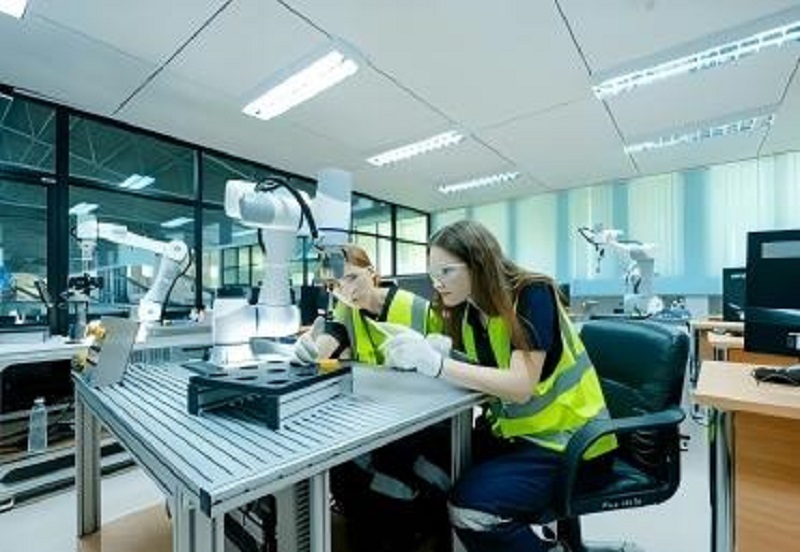
One of the most significant developments in 2026 is the integration of AI directly into industrial automation platforms. Modern PLC systems are no longer limited to deterministic logic execution. Instead, they are now capable of interacting with AI-driven analytics engines that can optimize production parameters, detect anomalies, and predict equipment failures before they occur.
Edge computing is playing a critical role in this transformation. Instead of sending all industrial data to centralized cloud servers, processing is increasingly performed directly at the machine or factory floor level. This reduces latency, improves response time, and ensures that mission-critical control decisions are made locally without delay.
Industrial automation vendors are rapidly upgrading their ecosystems to support this shift. New-generation PLC platforms now include built-in support for edge devices, industrial AI modules, and real-time data orchestration layers. These systems allow manufacturers to combine traditional ladder logic control with advanced machine learning-based decision support.
Cybersecurity has also become a top priority in modern industrial environments. As PLC and DCS systems become more connected through industrial networks, the risk of cyberattacks targeting operational technology (OT) systems has increased significantly. In response, modern automation architectures now integrate zero-trust security models, encrypted communication protocols, and hardware-level protection mechanisms.
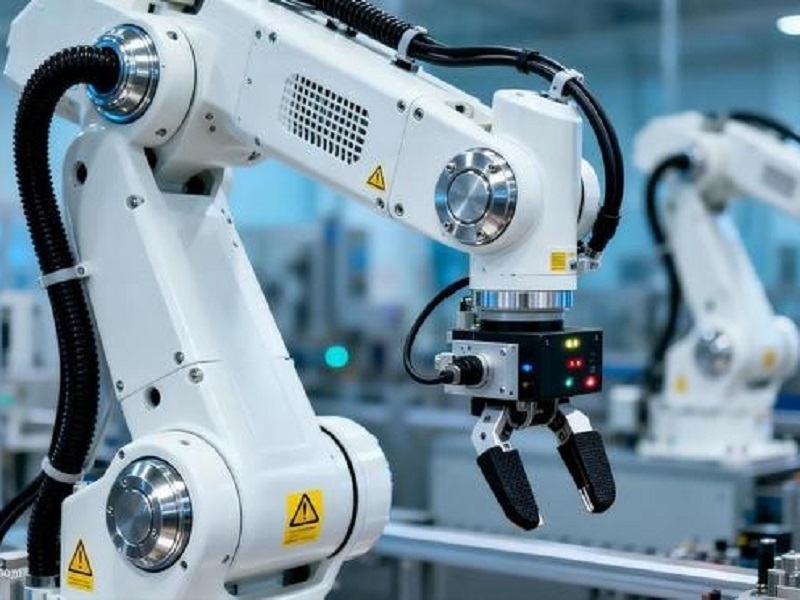
Another key trend shaping the industry is IT/OT convergence. Manufacturing companies are no longer treating automation systems as isolated operational tools. Instead, PLCs, SCADA systems, MES platforms, and cloud analytics are being integrated into a single digital ecosystem. This allows real-time production data to flow seamlessly across enterprise systems, enabling better decision-making and operational efficiency.
The rise of digital twins is further accelerating this transformation. By creating virtual models of physical production lines, engineers can simulate PLC logic, optimize DCS control strategies, and test system performance before deployment. This significantly reduces commissioning time and improves system reliability.
In hybrid industries such as pharmaceuticals, energy, and advanced materials, PLC and DCS integration is becoming a standard requirement. PLC systems handle high-speed discrete operations such as packaging, material handling, and robotics, while DCS platforms manage continuous process control such as temperature, pressure, and flow regulation. Unified automation frameworks now allow both systems to communicate in real time.
As Industry 4.0 evolves into Industry 5.0 concepts, human-machine collaboration is also becoming more advanced. Operators are now supported by intelligent automation assistants that provide real-time diagnostics, maintenance recommendations, and production optimization suggestions.
Overall, the convergence of PLC, DCS, AI, and edge computing is creating a new generation of intelligent factories. These factories are faster, more efficient, more flexible, and more resilient than traditional automation systems.