

ProductPRODUCT
Featured products
Contact Us
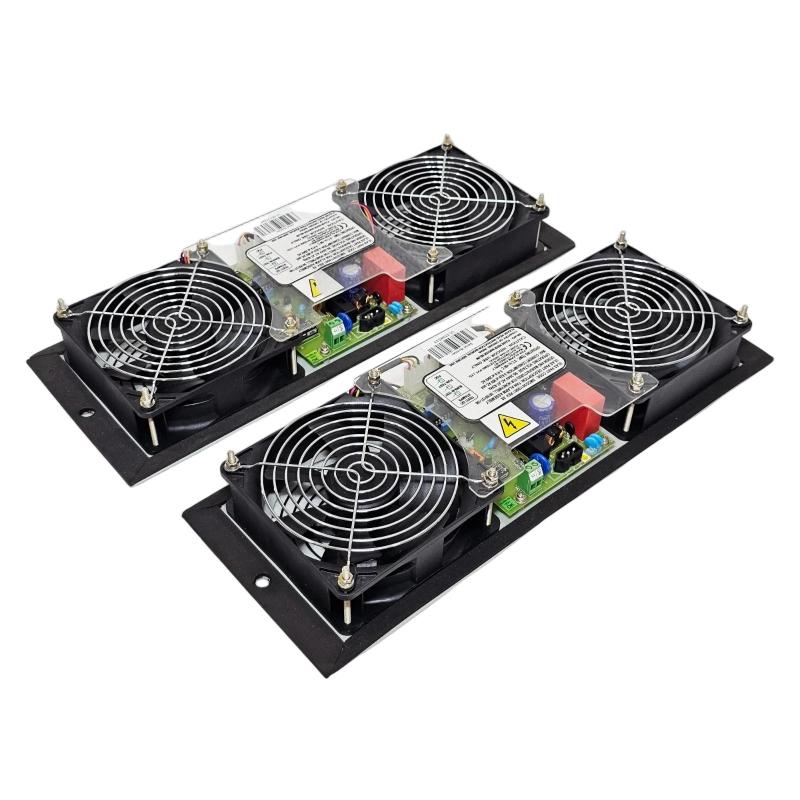
- Honeywell
- SMOD36110001-CE
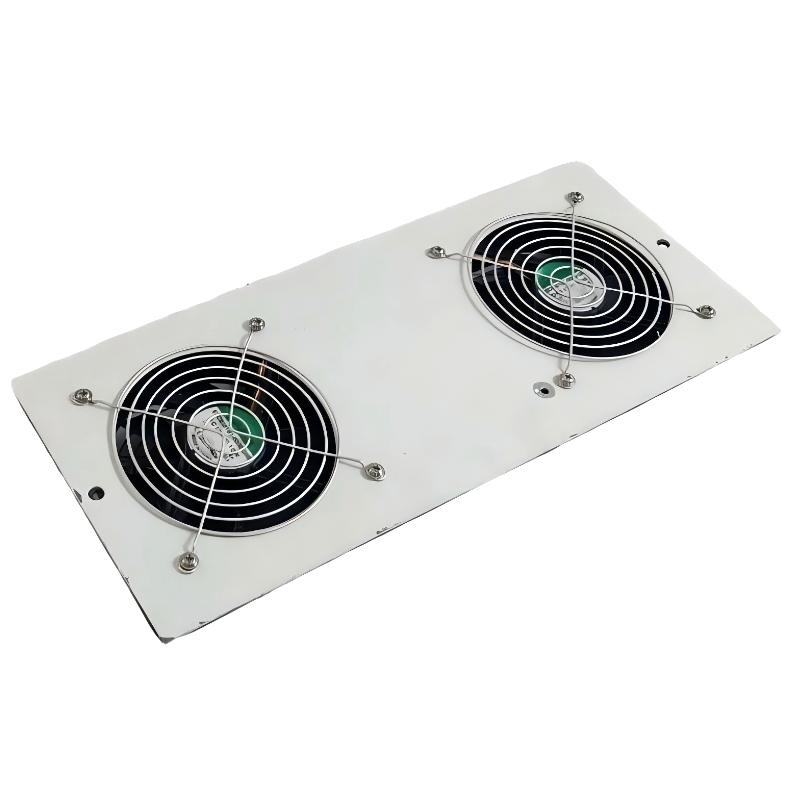
- Cabinet Fan Assembly
- USA
- 430 × 45 × 280 mm
- 1.2 kg
- Xiamen, China
- New & In Stock
- T/T, PayPal, Western Union
- 1 Year
- 1-3 Working Days
- DHL, UPS, TNT, FedEx and EMS.
- 24-Hour Service
- COO
- 71
Our advantage

Global Logistics
We have a 10-year logistics and express cooperation agreement, so our products can be shipped to any place in the world.

Brand new and original
Our products are imported in bulk from the place of origin. Because of the cooperative relationship, our products are all original and 100% new.

24-hour service
We provide 7*24 hours service to our customers. We will be there whenever you need us.

Price advantage
All our products are priced very favorably because we have our own warehouse and supply.
| Company Information | |||
| [email protected] | |||
| Mobile | +8615980777398 | ||
| +8615980777398 | |||
| 15980777398 |
Product Overview
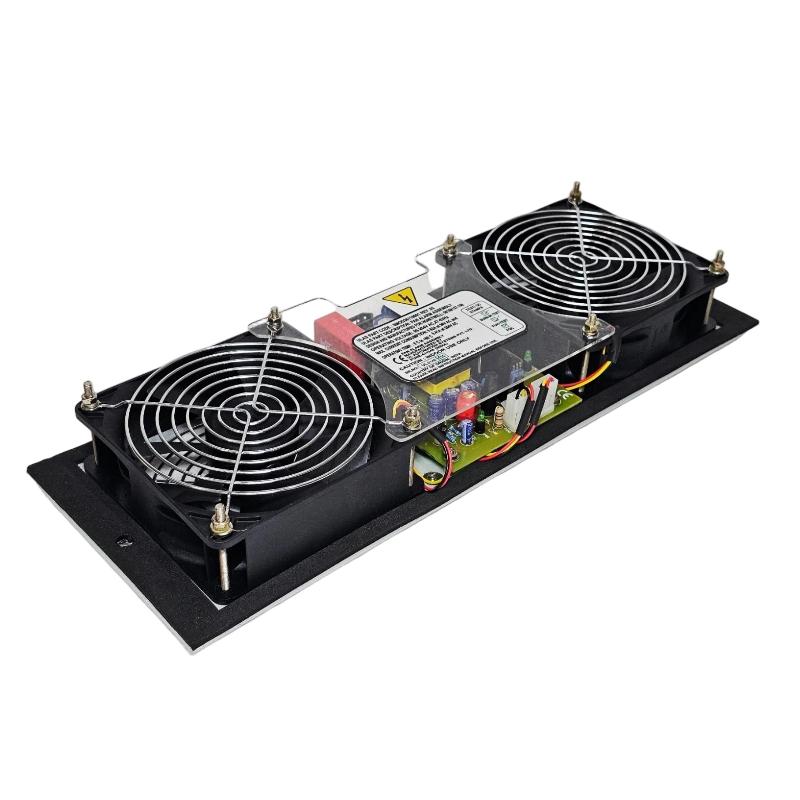
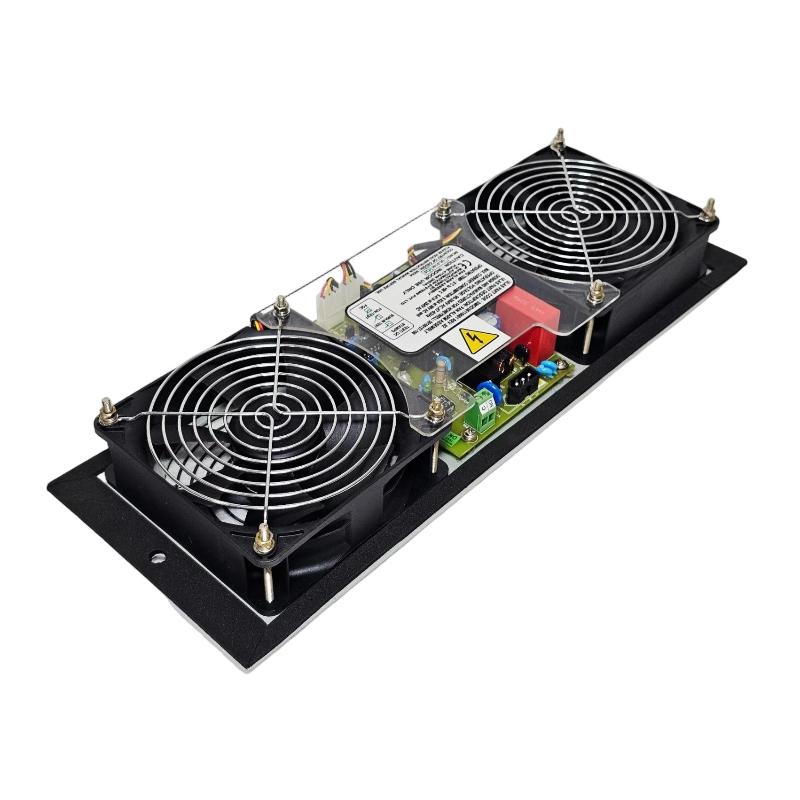
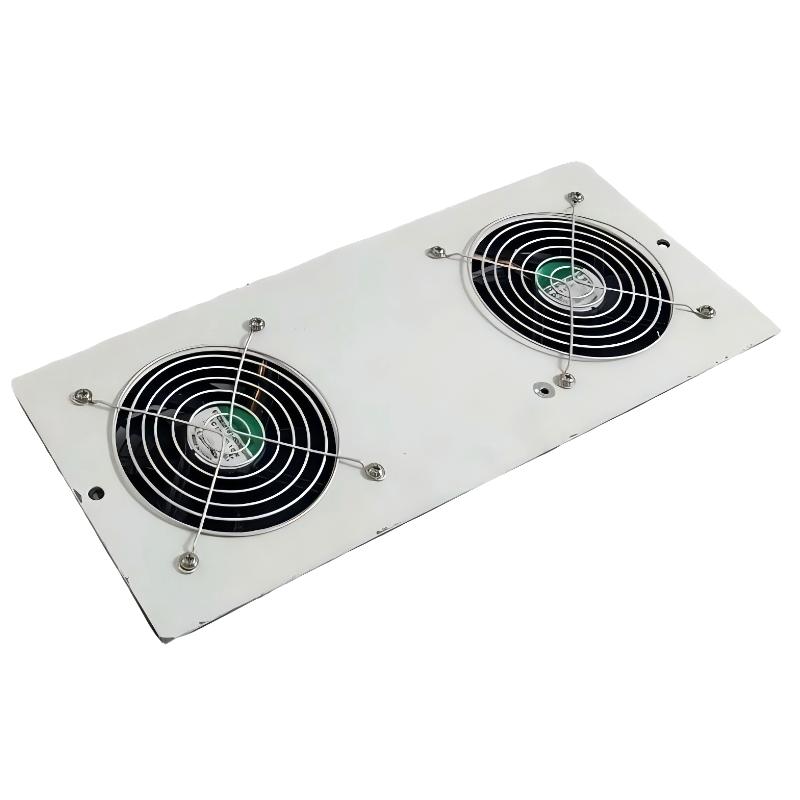
The Honeywell SMOD36110001-CE Cabinet Fan Assembly is a cabinet-level cooling component used to maintain airflow inside industrial control and electronic equipment enclosures. Its function is thermal management rather than signal processing or process control.
In a Honeywell control cabinet, controllers, I/O modules, communication hardware, power supplies, and other electronic assemblies continuously generate heat during operation. The fan assembly helps move cabinet air through the intended ventilation path, reducing stagnant air and limiting the accumulation of heat around temperature-sensitive equipment.
The SMOD36110001-CE is therefore part of the cabinet’s overall environmental-control arrangement. Its performance depends not only on the fan itself but also on the cabinet layout, air inlet and exhaust arrangement, filters, ambient temperature, and total heat generated by the installed equipment.
For maintenance and replacement work, the fan assembly should be evaluated as part of the complete cabinet cooling system rather than as an isolated mechanical component.
Technical Specifications
| Parameter | Specification |
|---|---|
| Manufacturer | Honeywell |
| Model | SMOD36110001-CE |
| Product Type | Cabinet Fan Assembly |
| Primary Function | Cabinet Cooling and Forced-Air Circulation |
| Application | Industrial Control Cabinet |
| System Role | Thermal Management |
| Installation | Control Cabinet / Equipment Enclosure |
| Cooling Method | Forced Air |
| Dimensions | 430 × 45 × 280 mm |
| Weight | 1.2 kg |
The actual cooling effectiveness depends on the cabinet’s airflow design and operating environment. The fan assembly should be installed with the required ventilation path and adequate clearance around air intake and exhaust areas.
Product Features
The SMOD36110001-CE is intended for cabinets where continuous operation of electronic equipment creates a need for controlled air circulation.
Key characteristics include:
- Honeywell cabinet fan assembly
- Forced-air cooling for control cabinets
- Supports thermal management of electronic equipment
- Suitable for industrial automation enclosures
- Helps distribute airflow through the cabinet
- Reduces localized heat accumulation
- Suitable for cabinets containing multiple electronic modules
- Can work with cabinet ventilation and filtration components
- Suitable for continuous industrial operating environments
- Dimensions of 430 × 45 × 280 mm
- Stated weight of 1.2 kg
The practical cooling result depends on airflow through the entire enclosure. A functioning fan cannot compensate for a blocked filter, obstructed air outlet, poor cabinet layout, or excessive heat load.
Working Principle
The SMOD36110001-CE uses forced airflow to transfer heat away from equipment installed inside the cabinet.
A typical thermal path is:
Electronic Equipment → Heat Generation → Cabinet Air → Fan-Assisted Airflow → Ventilation Path → Heat Dissipation
Industrial control equipment generates heat whenever electrical power is converted or processed. If this heat remains trapped inside an enclosure, the internal temperature can rise significantly above ambient conditions.
The fan assembly creates air movement through the cabinet. As air passes around heat-generating components, it carries thermal energy toward the cabinet’s designated exhaust path.
This is different from a cabinet air conditioner. A fan primarily improves air circulation and heat transfer; it does not independently reduce cabinet temperature below the surrounding ambient temperature.
For that reason, cabinet cooling must be considered together with ambient temperature, equipment heat dissipation, ventilation openings, and filter condition.
Role in a Honeywell Control Cabinet Cooling System
The SMOD36110001-CE forms part of the thermal-management layer of the control cabinet.
A practical cabinet architecture can be viewed as:
Power Supply / Controller / I/O / Communication Hardware → Heat Generation → Air Circulation → Exhaust
The fan does not participate directly in control logic, I/O processing, or network communication. Instead, it helps maintain an operating environment in which those electronic components can function within their specified temperature limits.
This becomes particularly important in densely populated cabinets. A cabinet containing several power supplies, processors, I/O assemblies, and communication modules can generate considerably more heat than a lightly loaded enclosure.
The cooling arrangement should therefore consider:
- Total cabinet heat load
- Ambient temperature
- Fan airflow direction
- Air inlet location
- Exhaust location
- Filter condition
- Equipment arrangement
- Internal cable congestion
- Cabinet sealing
- Required service access
Proper airflow management is just as important as fan operation itself.
Industrial Applications
The SMOD36110001-CE can be applied to industrial cabinets where forced-air circulation is required to manage internal temperature.
| Application | Typical Use |
|---|---|
| Honeywell Control Cabinets | Cooling controllers and electronic modules |
| Process Control Systems | Managing cabinet heat generated by control hardware |
| Industrial Automation | Supporting stable thermal conditions for automation equipment |
| Safety System Cabinets | Maintaining airflow around electronic system components |
| I/O Cabinets | Removing heat from densely installed I/O hardware |
| Communication Cabinets | Supporting cooling of network and communication equipment |
| Power Control Panels | Improving heat dissipation around electrical components |
| Plant Automation Systems | Cabinet-level thermal management |
| Equipment Enclosures | Maintaining internal airflow under continuous operation |
The appropriate cooling arrangement should be determined from the actual cabinet heat load and environmental conditions.
Installation and Maintenance
The SMOD36110001-CE should be installed with a clear and correctly directed airflow path. The fan’s location relative to heat-generating equipment and cabinet ventilation openings can significantly affect cooling performance.
Before installation, inspect the cabinet layout and determine how air should enter, circulate through, and leave the enclosure.
Recommended maintenance checks include:
- Confirm the complete SMOD36110001-CE part number.
- Verify the cabinet mounting arrangement.
- Check the available installation space.
- Confirm that airflow openings are unobstructed.
- Inspect the fan assembly for physical damage.
- Check electrical connections.
- Verify normal fan startup and operation.
- Listen for abnormal bearing or motor noise.
- Check for excessive mechanical vibration.
- Inspect air filters for dust accumulation.
- Clean or replace filters as required.
- Check cabinet temperature under normal load.
- Confirm that heated air has a suitable exhaust path.
- Inspect the assembly during scheduled cabinet maintenance.
If cabinet temperature increases unexpectedly, do not assume that the fan itself has failed. A clogged filter, blocked exhaust, increased equipment load, or elevated ambient temperature can produce similar symptoms.
A useful troubleshooting sequence is:
Cabinet Temperature → Airflow → Filter Condition → Fan Operation → Electrical Supply → Overall Heat Load
Related Components
The fan assembly normally works with several other cabinet components.
| Component | Function |
|---|---|
| Honeywell Control Modules | Perform control and processing functions |
| Honeywell I/O Modules | Interface with field signals |
| Honeywell Power Supplies | Supply electrical power and contribute to cabinet heat load |
| Communication Modules | Handle network and system communications |
| Cabinet Air Filters | Reduce dust entering the enclosure |
| Ventilation Grilles | Provide controlled air entry or exhaust |
| Cabinet Thermostat | Monitors or controls cabinet temperature |
| Temperature Sensor | Measures internal cabinet temperature |
| Control Cabinet | Houses the automation equipment |
| Cabinet Wiring | Can affect internal airflow when densely arranged |
The fan should be considered together with these components when evaluating the thermal performance of an industrial control enclosure.
Recommended Related Models
For Honeywell cabinet maintenance, the following related components may be considered alongside the SMOD36110001-CE.
| Model / Component | Product Type | Typical Application |
|---|---|---|
| Honeywell SMOD36110001-CE | Cabinet Fan Assembly | Forced-air cabinet cooling |
| Honeywell Cabinet Filter Assembly | Air Filter | Removing dust from cabinet intake air |
| Honeywell Cabinet Thermostat | Temperature Control | Cabinet temperature management |
| Honeywell Temperature Sensor | Temperature Device | Monitoring enclosure temperature |
| Honeywell Power Supply Modules | Power Supply | System power and heat-load management |
| Honeywell Control Modules | Control Hardware | Equipment requiring cabinet thermal management |
For a direct replacement, the complete SMOD36110001-CE part number should be matched. A fan with similar dimensions may still have different mounting, electrical, airflow, or system-integration characteristics.
Key Advantages
- Honeywell cabinet fan assembly.
- Provides forced-air circulation inside industrial control cabinets.
- Supports thermal management of electronic equipment.
- Helps reduce localized hot-air accumulation.
- Suitable for cabinets containing controllers, I/O, power supplies, and communication hardware.
- Supports continuous industrial operation.
- Can be integrated with cabinet filtration and ventilation arrangements.
- Useful for maintaining consistent cabinet operating conditions.
- Dimensions of 430 × 45 × 280 mm.
- Stated weight of 1.2 kg.
Technical FAQs
How should the airflow direction of the SMOD36110001-CE be determined during installation?
The airflow direction should be coordinated with the cabinet’s complete ventilation path. Engineers should identify the intended air intake and hot-air exhaust locations and position the fan so that heated air is moved away from the main concentration of electronic equipment rather than recirculated inside the enclosure.
What cabinet conditions can reduce the cooling effect even when the fan is operating?
Restricted filters, blocked ventilation openings, excessive cable congestion, poor equipment placement, incorrect airflow direction, and an unusually high internal heat load can all reduce cooling performance. The cabinet temperature and actual airflow path should therefore be checked rather than using fan rotation alone as the acceptance criterion.
When should the fan assembly be investigated as a possible source of rising cabinet temperature?
Reduced airflow, intermittent operation, abnormal noise, increased vibration, or failure to start are direct warning signs. However, the investigation should also verify the fan’s electrical supply and the condition of filters and ventilation openings before concluding that the assembly itself has failed.
Is a cabinet fan sufficient when the surrounding plant environment is already very hot?
Not always. A fan moves air and improves heat transfer, but it does not normally cool the cabinet below the temperature of the surrounding air. If the ambient temperature is already high or the cabinet produces substantial heat, additional thermal-management methods may be required.