

ProductPRODUCT
Featured products
Contact Us
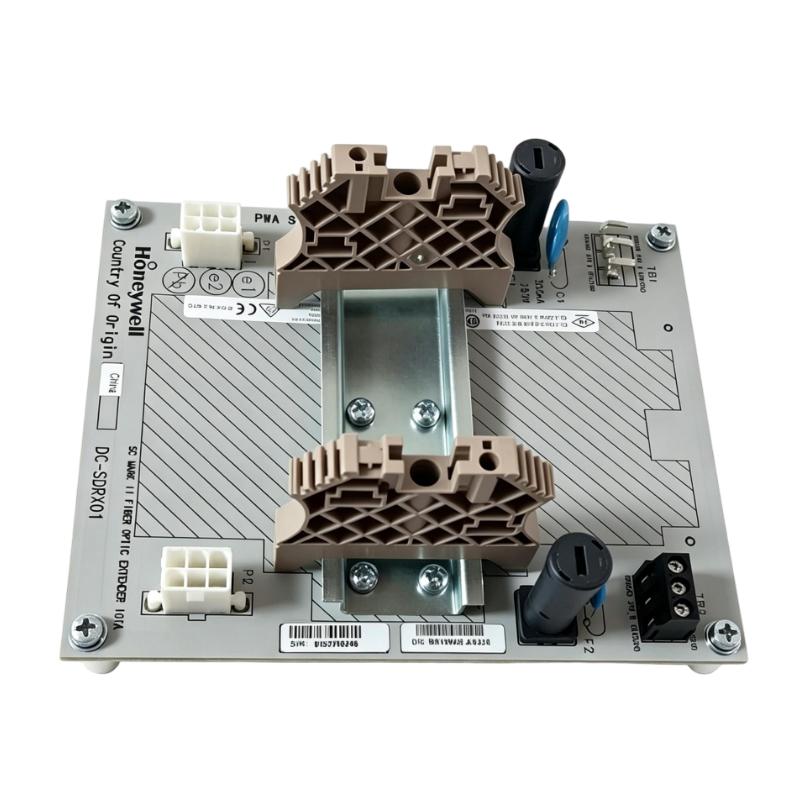
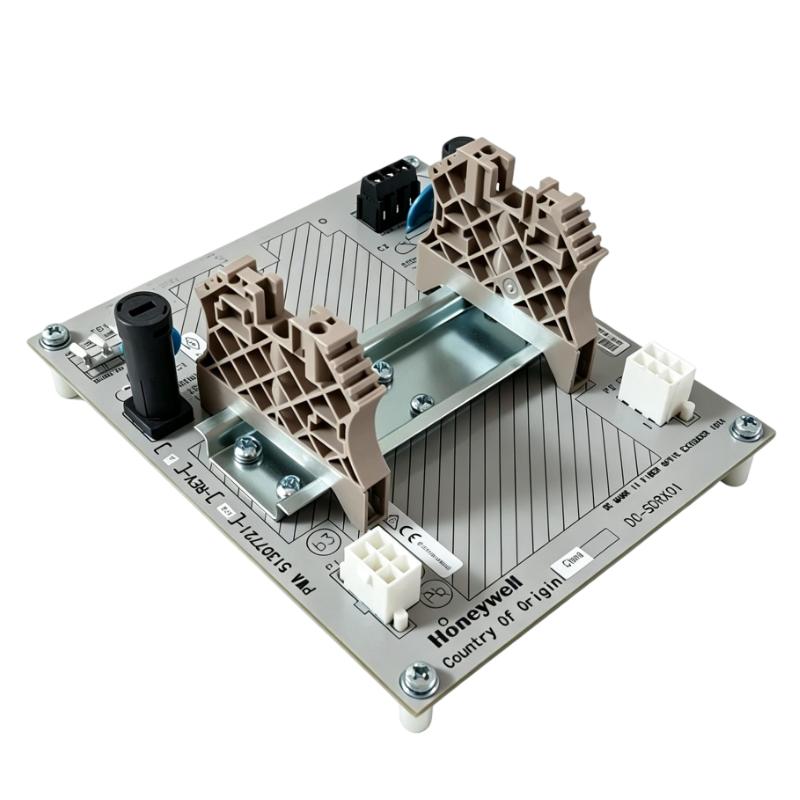
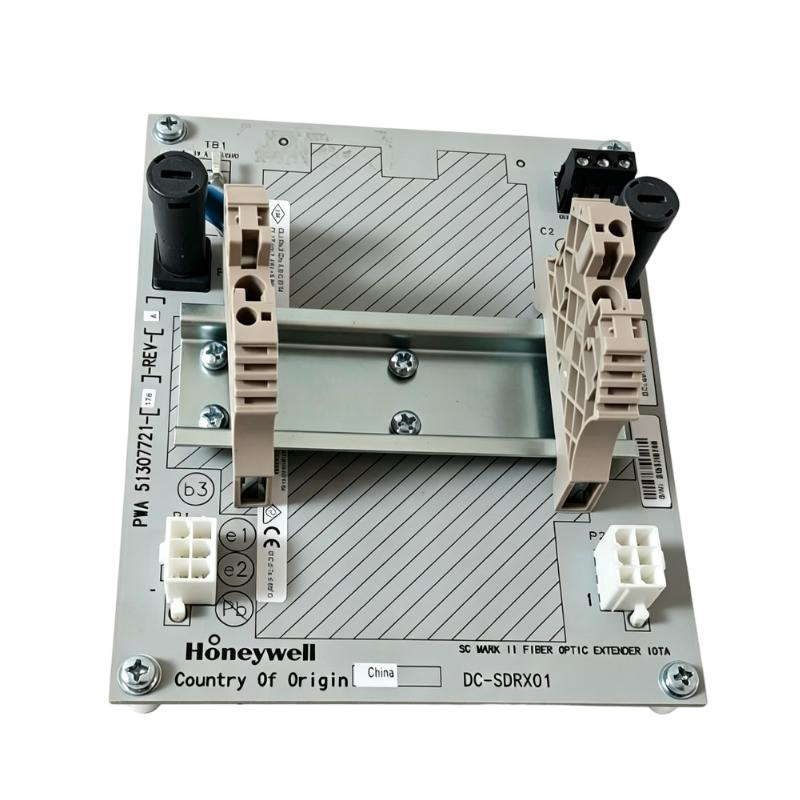
- Honeywell
- DC-SDRX01
- Fiber Optic Converter
- USA
- 175 × 35 × 130 mm
- 0.3 kg
- Xiamen, China
- New & In Stock
- T/T, PayPal, Western Union
- 1 Year
- 1-3 Working Days
- DHL, UPS, TNT, FedEx and EMS.
- 24-Hour Service
- COO
- 9
Our advantage

Global Logistics
We have a 10-year logistics and express cooperation agreement, so our products can be shipped to any place in the world.

Brand new and original
Our products are imported in bulk from the place of origin. Because of the cooperative relationship, our products are all original and 100% new.

24-hour service
We provide 7*24 hours service to our customers. We will be there whenever you need us.

Price advantage
All our products are priced very favorably because we have our own warehouse and supply.
| Company Information | |||
| [email protected] | |||
| Mobile | +8615980777398 | ||
| +8615980777398 | |||
| 15980777398 |
Product Overview
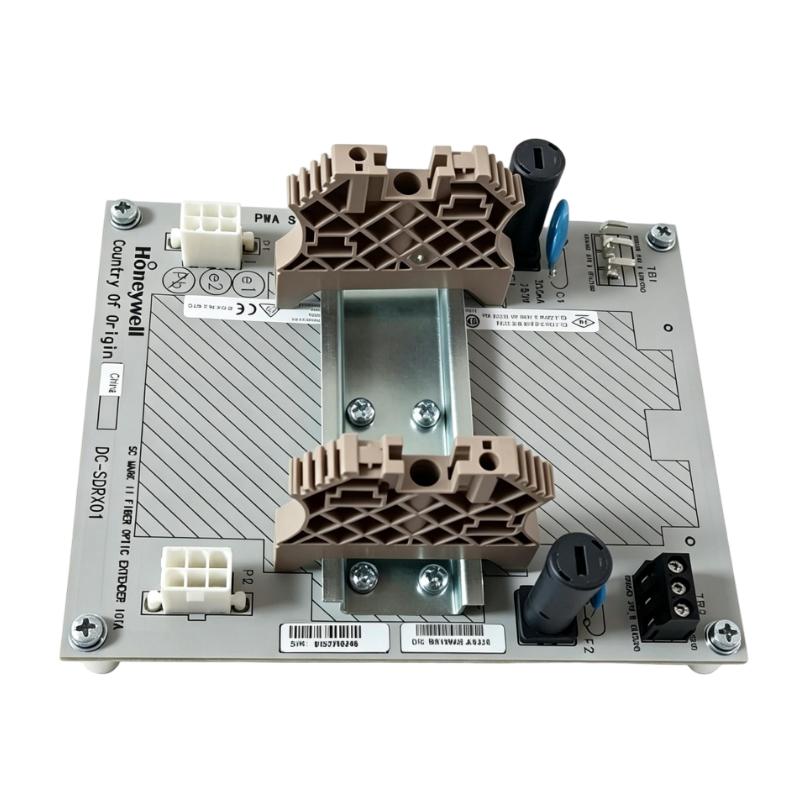
The Honeywell DC-SDRX01 is a fiber optic converter used to interface electrical communication signals with fiber optic transmission paths in industrial control and automation systems. It is suited to installations where communication equipment must exchange data across longer distances or through environments with significant electrical noise.
Fiber optic conversion can be useful in control-system networks where copper communication wiring is affected by electromagnetic interference, ground-potential differences, or the physical separation of control cabinets. The DC-SDRX01 provides the conversion point between the electrical communication interface and the optical communication link.
In a distributed control architecture, the converter is normally installed between compatible communication equipment and the fiber network. It does not execute process-control logic or replace a controller; its function is to maintain the communication path between connected system nodes.
The DC-SDRX01 can therefore be used as part of cabinet-to-cabinet, area-to-area, or other distributed communication arrangements where optical transmission provides advantages over a direct copper connection.
Technical Specifications
| Parameter | Specification |
|---|---|
| Manufacturer | Honeywell |
| Model | DC-SDRX01 |
| Product Family | Honeywell Fiber Optic Communication Components |
| Product Type | Fiber Optic Converter |
| Primary Function | Conversion between electrical and fiber optic signals |
| System Role | Industrial communication interface |
| Application | Control-system and industrial communication networks |
| Dimensions | 175 × 35 × 130 mm |
| Weight | 0.3 kg |
Product Features
- Fiber optic conversion for industrial communication networks.
- Interfaces compatible electrical communication equipment with optical transmission.
- Suitable for distributed control-system communication architectures.
- Helps extend communication paths using fiber optic cabling.
- Useful in electrically noisy industrial environments.
- Supports communication between equipment located in separate control areas.
- Suitable for cabinet-level communication infrastructure.
- Useful for maintenance and replacement of compatible fiber communication interfaces.
Working Principle
The DC-SDRX01 receives a compatible electrical communication signal from connected control or network equipment and converts the signal into an optical communication signal for transmission through a fiber optic link.
At the receiving end of the communication path, the optical signal is converted back into an electrical communication signal for the connected equipment. The converter therefore acts as a bridge between two physical transmission media while preserving the communication path between the system nodes.
Control / Network Equipment → Electrical Interface → DC-SDRX01 → Fiber Optic Link → Remote Converter / Interface → Network Equipment
Fiber communication can reduce susceptibility to electromagnetic interference and allows communication infrastructure to span separated equipment areas. Correct interface compatibility, fiber connections, and cable routing are essential for maintaining communication performance.
Role in an Industrial Control Communication Architecture
The DC-SDRX01 occupies the physical communication-interface layer of an industrial automation network. It connects compatible electrical communication equipment to the optical transmission infrastructure without taking over the control functions performed by the controller.
Controller / Communication Equipment → DC-SDRX01 → Fiber Optic Network → Remote Communication Interface → Distributed Control Equipment
| System Element | Function |
|---|---|
| Control System | Executes process-control and automation functions |
| Communication Equipment | Generates and receives system communication data |
| DC-SDRX01 | Converts between electrical and fiber optic communication |
| Fiber Optic Network | Transmits communication signals between separated locations |
| Remote Interface Equipment | Converts or terminates the communication path at the remote end |
| Field / Control Equipment | Exchanges process and system information |
The converter is therefore part of the communication infrastructure rather than a process I/O or control processor.
Industrial Applications
| Application | Typical Use |
|---|---|
| Distributed Control Systems | Fiber communication between separated control-system nodes |
| Process Automation | Communication between control cabinets and remote equipment |
| Power Generation | Optical communication in electrically noisy plant areas |
| Oil and Gas Facilities | Communication across separated equipment locations |
| Chemical Plants | Fiber-based communication between process areas |
| Industrial Control Networks | Electrical-to-optical communication conversion |
| Control Cabinets | Interface between local communication equipment and fiber |
| Remote Equipment Areas | Extending communication between physically separated systems |
Installation and Maintenance
- Verify that the DC-SDRX01 is compatible with the communication equipment and fiber network before installation.
- Identify the electrical and optical communication connections before removing an existing converter.
- Inspect the converter housing, terminals, connectors, and mounting arrangement for visible damage.
- Confirm that the electrical communication interface is connected to the correct system equipment.
- Inspect fiber optic connectors for contamination, damage, or improper seating.
- Keep fiber connector surfaces protected from dust and other contamination during installation.
- Avoid excessive bending or mechanical stress on connected fiber optic cables.
- Route communication cables away from sources of mechanical damage and excessive electrical interference where practical.
- Verify power connections and communication status before placing the system into normal operation.
- Check both the electrical-side and optical-side communication paths when diagnosing intermittent communication.
- Inspect connections and cable routing during scheduled control-system maintenance.
- After replacement, verify end-to-end communication between the connected control-system nodes before returning the network to normal service.
Compatible System Components
| Component | Function |
|---|---|
| Honeywell Control System | Executes process-control and automation functions |
| Honeywell Communication Modules | Provides system communication interfaces |
| Fiber Optic Cable | Carries optical communication signals |
| Fiber Optic Connectors | Terminates optical communication cables |
| Electrical Communication Cable | Connects local equipment to the converter |
| Network Interface Equipment | Provides communication connections to control-system devices |
| Control Cabinets | Houses communication and automation equipment |
| Remote Communication Interface | Provides the corresponding communication path at remote areas |
Recommended Related Models
| Model / Product Family | Product Type | Typical Application |
|---|---|---|
| Honeywell DC-SDRX01 | Fiber Optic Converter | Industrial communication conversion |
| Honeywell Fiber Optic Converter Series | Fiber Optic Converter | Electrical-to-optical communication |
| Honeywell Fiber Optic Interface Modules | Fiber Communication Interface | Distributed control-system networking |
| Honeywell Communication Modules | Communication Module | Control-system data communication |
| Honeywell TDC 3000 Series | Distributed Control System | Process control and automation |
| Honeywell Experion Series | Process Control System | Industrial process automation |
| Honeywell Fiber Optic Communication Components | Network Interface Equipment | Fiber-based industrial communication |
Key Advantages
- Converts compatible electrical communication signals for fiber optic transmission.
- Suitable for distributed industrial communication networks.
- Helps establish communication links between physically separated equipment.
- Useful in environments where electromagnetic interference is a concern.
- Supports cabinet-to-cabinet and area-to-area communication arrangements.
- Provides a practical interface between electrical communication equipment and fiber infrastructure.
Technical FAQs
Where should the DC-SDRX01 be installed in a control-system network?
It is normally positioned between compatible electrical communication equipment and the fiber optic transmission path. The exact cabinet location depends on the network topology and the equipment interfaces used at each end of the communication link.
What can cause communication failure after replacing the DC-SDRX01?
Incorrect electrical connections, incompatible communication interfaces, contaminated fiber connectors, damaged fiber cables, incorrect cable routing, or problems at the remote communication interface can all interrupt the link. Both ends of the communication path should be checked.
Why use fiber optic communication instead of a direct copper connection?
Fiber provides electrical isolation and is generally less susceptible to electromagnetic interference. It is particularly useful when communication equipment is separated by long cable routes or installed in electrically noisy industrial areas.
How can an intermittent fiber communication fault be investigated?
Check the converter’s power and communication status first, then inspect both electrical and optical connections. Fiber connector cleanliness, cable bending, mechanical stress, and the remote converter or interface should also be examined before replacing additional network equipment.