

ProductPRODUCT
Featured products
Contact Us
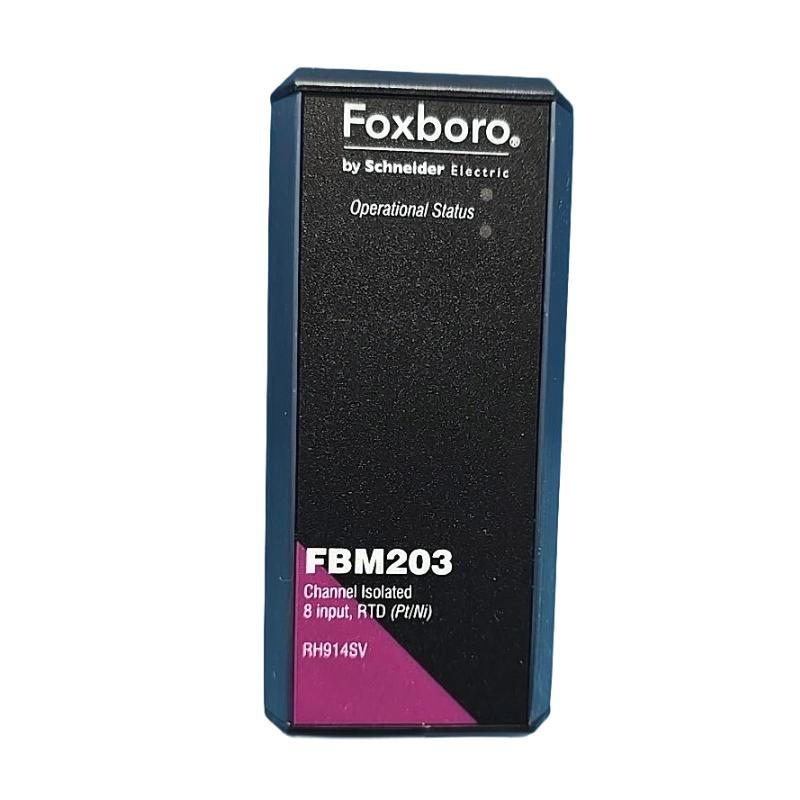
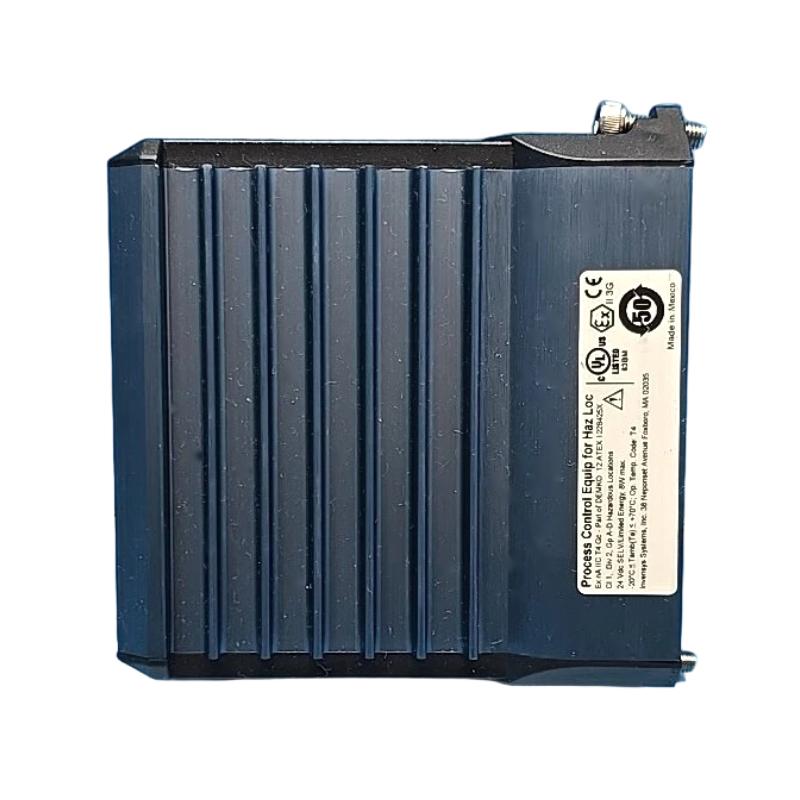
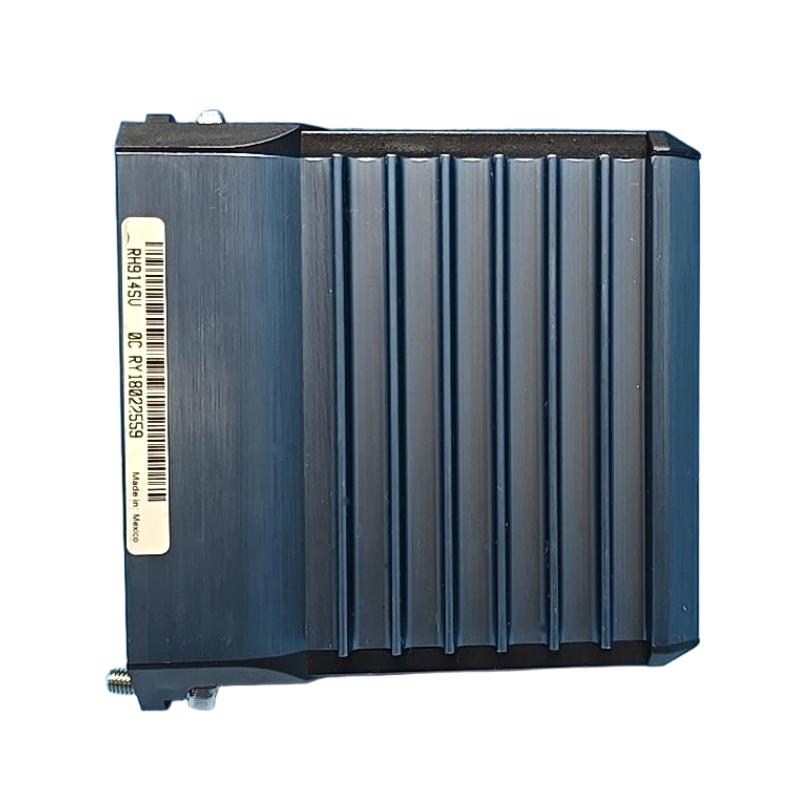
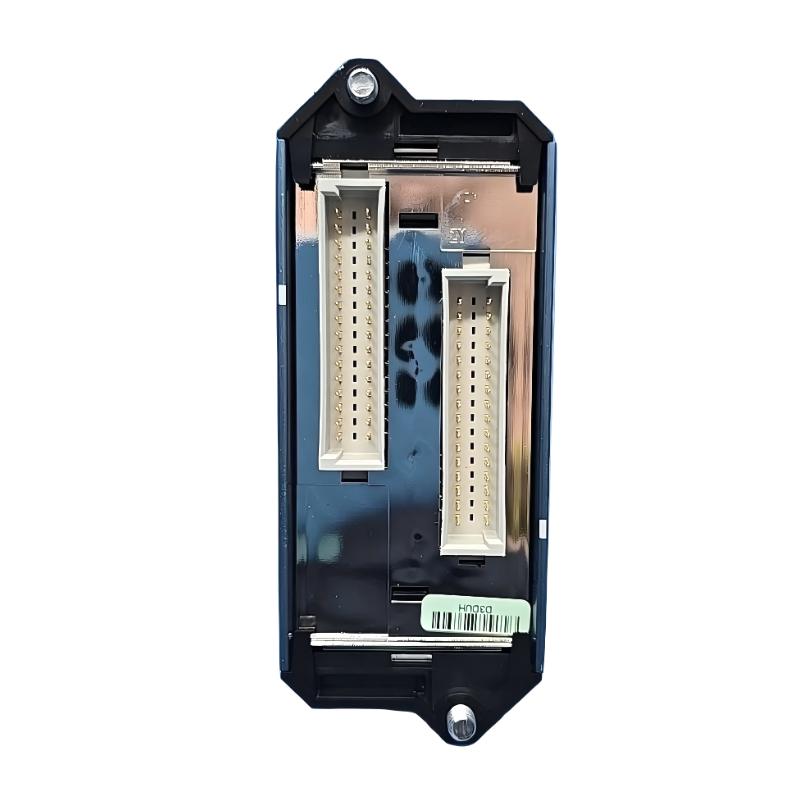
- Foxboro
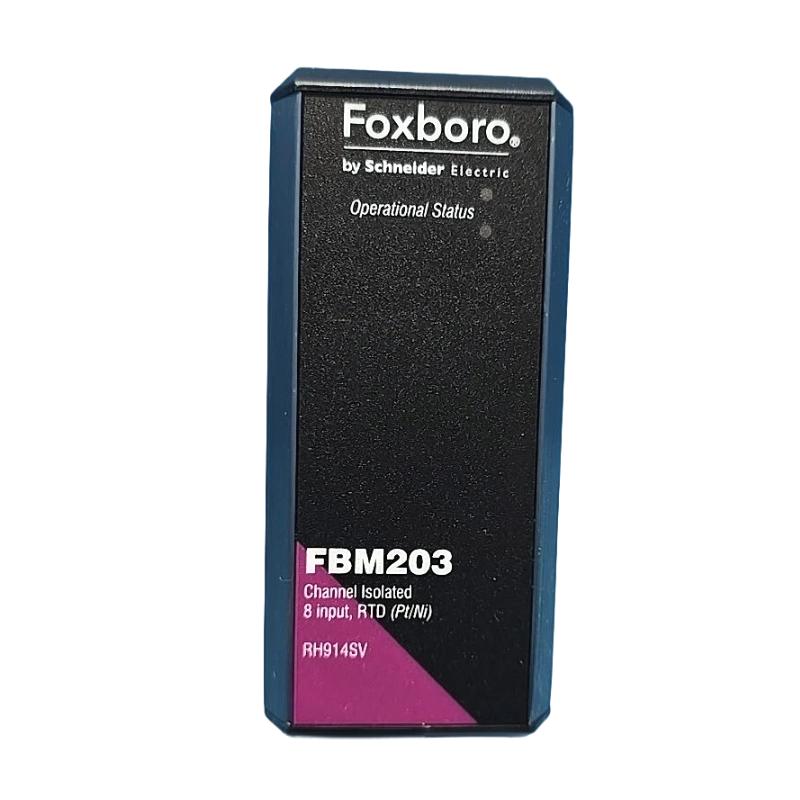
- FBM203 RH914SV
- RTD Input Module
- USA
- 114 × 45 × 104 mm
- 0.284 kg
- Xiamen, China
- New & In Stock
- T/T, PayPal, Western Union
- 1 Year
- 1-3 Working Days
- DHL, UPS, TNT, FedEx and EMS.
- 24-Hour Service
- COO
- 5
Our advantage

Global Logistics
We have a 10-year logistics and express cooperation agreement, so our products can be shipped to any place in the world.

Brand new and original
Our products are imported in bulk from the place of origin. Because of the cooperative relationship, our products are all original and 100% new.

24-hour service
We provide 7*24 hours service to our customers. We will be there whenever you need us.

Price advantage
All our products are priced very favorably because we have our own warehouse and supply.
| Company Information | |||
| [email protected] | |||
| Mobile | +8615980777398 | ||
| +8615980777398 | |||
| 15980777398 |
Product Overview
The Foxboro FBM203 RH914SV is an I/A Series 200 RTD Input Module used to bring resistance temperature measurements from field sensors into a Foxboro distributed control system. It has eight isolated RTD input channels, making it suitable for process areas where several temperature points need to be monitored from the same I/O installation.
This module is typically found in process applications where temperature is a direct operating variable. Reactor vessels, heat exchangers, furnaces, storage tanks, pumps, compressors, and utility systems can all have multiple RTDs installed at different measurement points. Instead of handling each temperature point as a separate standalone instrument, the FBM203 collects the RTD signals at the field I/O level and transfers the resulting measurement data into the DCS.
The RH914SV identifies the FBM203 hardware used with the I/A Series 200 architecture. The module is intended to work with the appropriate Foxboro baseplate, termination assembly, and termination cable rather than being treated as a standalone temperature transmitter.
A typical installation may have RTDs mounted on a process vessel and its associated piping. The sensor wiring terminates at the appropriate field termination assembly, while the FBM203 handles the individual RTD measurement channels. The control system can then use those values for operator displays, high- and low-temperature alarms, equipment protection, process calculations, and control sequences.
The channel-isolated arrangement is particularly useful when temperature sensors are distributed across different parts of a process. It separates the individual measurement channels and helps keep the RTD interface organized within the DCS I/O structure.
For replacement work, the existing RTD type, wiring arrangement, termination assembly, baseplate, cable, and I/A Series configuration should all be checked before installing an FBM203 RH914SV.
Technical Specifications
| Parameter | Specification |
|---|---|
| Manufacturer | Foxboro |
| Model | FBM203 RH914SV |
| Product Family | I/A Series 200 |
| Product Type | RTD Input Module |
| Input Channels | 8 |
| Input Signal | RTD / resistance temperature detector |
| Channel Configuration | Isolated and independent input channels |
| Standard Resistance Range | 0–320 ohms |
| RTD Wiring | 2-wire or 3-wire, depending on application |
| Typical RTD Types | Platinum and Nickel RTDs |
| Sensor Excitation Current | 0.19 mA DC nominal |
| Lead Resistance | Up to 50 ohms per lead for the standard FBM203 configuration |
| Module Communication | Foxboro I/A Series 200 fieldbus architecture |
| Mounting | Modular Baseplate |
| Termination Interface | Requires compatible termination assembly and cable |
| Module Part Number | RH914SV |
| Dimensions | 114 × 45 × 104 mm |
| Weight | 0.284 kg |
Product Features
- I/A Series 200 RTD input module
- Model FBM203 RH914SV
- Eight RTD input channels
- Individual channel isolation
- Supports resistance-based temperature measurement
- Suitable for 2-wire and 3-wire RTD installations
- Supports common industrial platinum and nickel RTD applications
- Intended for process temperature monitoring
- Interfaces with the Foxboro DCS I/O architecture
- Installs on the appropriate modular baseplate
- Uses a dedicated termination assembly and termination cable
- Suitable for distributed temperature measurement in process plants
- Useful for applications requiring multiple temperature points in one I/O location
Working Principle
The FBM203 RH914SV does not receive a conventional 4–20 mA temperature signal. It works directly with the electrical resistance of an RTD.
RTD Sensor → Termination Assembly → FBM203 → I/A Series 200 Fieldbus → DCS
As the temperature changes, the resistance of the RTD element changes. The FBM203 supplies the appropriate sensor excitation and measures the resulting resistance through its input channel. The module converts the measurement into data that can be transferred through the Foxboro I/O architecture to the control system.
For example, a platinum RTD installed on a heat exchanger outlet can be connected to one FBM203 channel. The DCS can use that temperature value to display the operating condition, generate a high-temperature alarm, or compare the measured value with another process variable.
The eight channels are independently isolated, so multiple RTDs can be connected to the same module without treating the eight measurements as one common electrical input.
The wiring method also matters. A 2-wire RTD includes the resistance of the connecting leads in the measurement, while a 3-wire arrangement can compensate for lead resistance under the appropriate configuration. For existing plants, the replacement module should therefore be matched to the original sensor wiring rather than changing the wiring arrangement simply because another option is available.
Role in a Foxboro I/A Series 200 DCS Control Architecture
The FBM203 RH914SV occupies the temperature measurement interface between field RTDs and the Foxboro control system.
RTD Sensors → Termination Assembly → FBM203 → Fieldbus → Control Processor / DCS
| System Element | Function |
|---|---|
| FBM203 RH914SV | Acquires eight isolated RTD measurements |
| RTD Sensor | Detects process or equipment temperature through resistance change |
| Termination Assembly | Provides the field wiring termination for RTD connections |
| Termination Cable | Connects the termination assembly with the FBM installation |
| Modular Baseplate | Provides the physical and electrical mounting interface for the FBM |
| Fieldbus | Transfers I/O data between the FBM installation and the control system |
| Control Processor | Processes the acquired temperature data |
| Foxboro DCS | Displays, alarms, calculates, and uses temperature values in control logic |
| Process Equipment | Provides the physical temperature measurement points |
The exact baseplate, termination assembly, cable arrangement, and controller configuration depend on the existing I/A Series 200 installation.
Industrial Applications
| Application | Typical Use |
|---|---|
| Chemical Processing | Monitoring reactor, vessel, and pipeline temperatures |
| Oil and Gas | Measuring process temperatures at equipment and piping points |
| Refining | Monitoring temperatures around process units and heat-transfer equipment |
| Heat Exchangers | Measuring inlet, outlet, and process-side temperatures |
| Furnaces and Heaters | Monitoring multiple temperature points for operating control |
| Power Utilities | Monitoring equipment and auxiliary process temperatures |
| Water Treatment | Measuring temperatures in tanks, treatment stages, and utility systems |
| Compressor Systems | Monitoring bearing, discharge, oil, or associated equipment temperatures |
| Pump Systems | Monitoring process and equipment temperatures |
| Storage Systems | Monitoring temperature conditions in tanks and process vessels |
Installation and Maintenance
- Confirm that the replacement module is specifically identified as FBM203 RH914SV before removing the existing unit.
- Check the installed Foxboro I/A Series 200 baseplate and confirm that the replacement module matches the existing hardware arrangement.
- Verify the RTD sensor type used by each connected channel before reconnecting field wiring.
- Check whether each temperature point uses a 2-wire or 3-wire RTD configuration.
- Inspect the termination assembly for damaged terminals, loose connections, corrosion, or signs of overheating.
- Check the termination cable and both connector ends before commissioning the replacement module.
- Confirm the channel assignment in the DCS database so each physical RTD corresponds to the correct process tag.
- Compare the configured engineering range with the actual RTD and process measurement requirements.
- During commissioning, check several representative temperature points rather than validating only one channel.
- If a single channel shows an abnormal reading, check the RTD, field wiring, termination point, channel assignment, and connector condition before replacing the FBM.
- If several channels show abnormal behavior at the same time, inspect the common installation hardware, power arrangement, fieldbus connection, and termination interface.
- Record the RTD tag, channel number, sensor type, wiring configuration, and DCS point assignment after maintenance so future troubleshooting does not require tracing every field cable.
When troubleshooting an RTD input, comparing the actual sensor resistance with the value reported by the control system can help determine whether the problem is at the sensor, wiring, termination assembly, input channel, or DCS configuration level.
Related Components
| Component | Function |
|---|---|
| Foxboro Modular Baseplate | Provides the mounting and electrical interface for the FBM |
| RTD Termination Assembly | Provides field termination for RTD sensor wiring |
| Termination Cable | Connects the field termination assembly to the FBM installation |
| Foxboro Fieldbus Interface | Transfers I/O data between the FBM subsystem and control system |
| Control Processor | Processes temperature measurements within the DCS architecture |
| Platinum RTD | Provides resistance-based temperature measurement |
| Nickel RTD | Provides an alternative resistance-based temperature measurement |
| Foxboro I/A Series 200 DCS | Supervises and uses the acquired temperature data |
| 24 V DC System Power | Supports the applicable FBM and I/O installation |
Recommended Related Models
| Model / Product Family | Product Type | Typical Application |
|---|---|---|
| Foxboro FBM203 | RTD Input Module | Standard eight-channel RTD temperature measurement |
| Foxboro FBM203b | Extended-Range RTD Input Module | RTD applications requiring an extended resistance range |
| Foxboro FBM203c | RTD Input Module | Low-resistance RTD applications |
| Foxboro FBM203d | RTD Input Module | Alternative RTD input configuration within the FBM203 family |
| Foxboro FBM202 | Thermocouple / mV Input Module | Temperature measurement using thermocouples or millivolt signals |
| Foxboro FBM201 | Analog Input Module | Current-input process measurement applications |
| Foxboro I/A Series 200 | Distributed I/O Platform | Process instrumentation and DCS field I/O |
Key Advantages
- Eight isolated RTD input channels.
- Direct interface with resistance temperature sensors.
- Supports 2-wire and 3-wire RTD applications.
- Suitable for multi-point process temperature monitoring.
- Integrates with the Foxboro I/A Series 200 architecture.
- Individual channel isolation helps separate field measurement points.
- Suitable for process, equipment, and utility temperature monitoring.
- Uses dedicated Foxboro termination and baseplate hardware.
Technical FAQs
What type of temperature sensors can the FBM203 RH914SV connect to?
The standard FBM203 configuration is intended for RTD measurements and supports common platinum and nickel resistance temperature sensors within its applicable resistance range. The exact sensor type should be checked against the existing DCS configuration before replacement.
Why does the FBM203 use channel isolation for its RTD inputs?
Each RTD channel is isolated from the other input channels. This is useful when multiple temperature sensors are installed on different pieces of process equipment because each measurement can be handled as an independent input rather than treating the entire group as one shared signal circuit.
Can a 2-wire RTD be replaced with a 3-wire RTD without changing the configuration?
Not automatically. The wiring method affects how lead resistance contributes to the temperature measurement. If an existing installation uses 2-wire RTDs, changing to 3-wire sensors requires checking the sensor wiring, termination arrangement, channel configuration, and DCS engineering before making the change.
What should be checked if one FBM203 temperature channel reads incorrectly?
Start with the individual RTD and its field wiring. Measure the sensor resistance, inspect the termination terminals and cable connections, and verify the channel assignment in the DCS. If other channels on the same module are operating normally, a problem isolated to one sensor or wiring path is worth checking before replacing the entire FBM203.